How to Care for Sterling Silver Jewelry
Caring for silver depends not only on the metal, but also on the way its surface has been finished. What works for polished silver can change a satin surface, remove patina, or damage a plated finish.
What kind of jewelry do you have?
Choose the type of surface. The page will take you directly to the relevant care instructions.
Preserve the shine and avoid unnecessary scratches
Small scratches are more visible on a smooth polished surface than on matte or textured silver.
For routine care, a clean soft cloth is usually enough. There is no need to polish silver aggressively after every wear.
Avoid unnecessary contact with abrasive surfaces and store the piece separately so it does not rub against other jewelry.
- soft dry cloth;
- separate storage;
- gentle polishing only when necessary.
- stiff brushes;
- abrasive powders;
- frequent aggressive polishing.
A polished surface gradually develops fine scratches during normal wear. This is a natural change in the metal, not a sign of poor-quality silver.
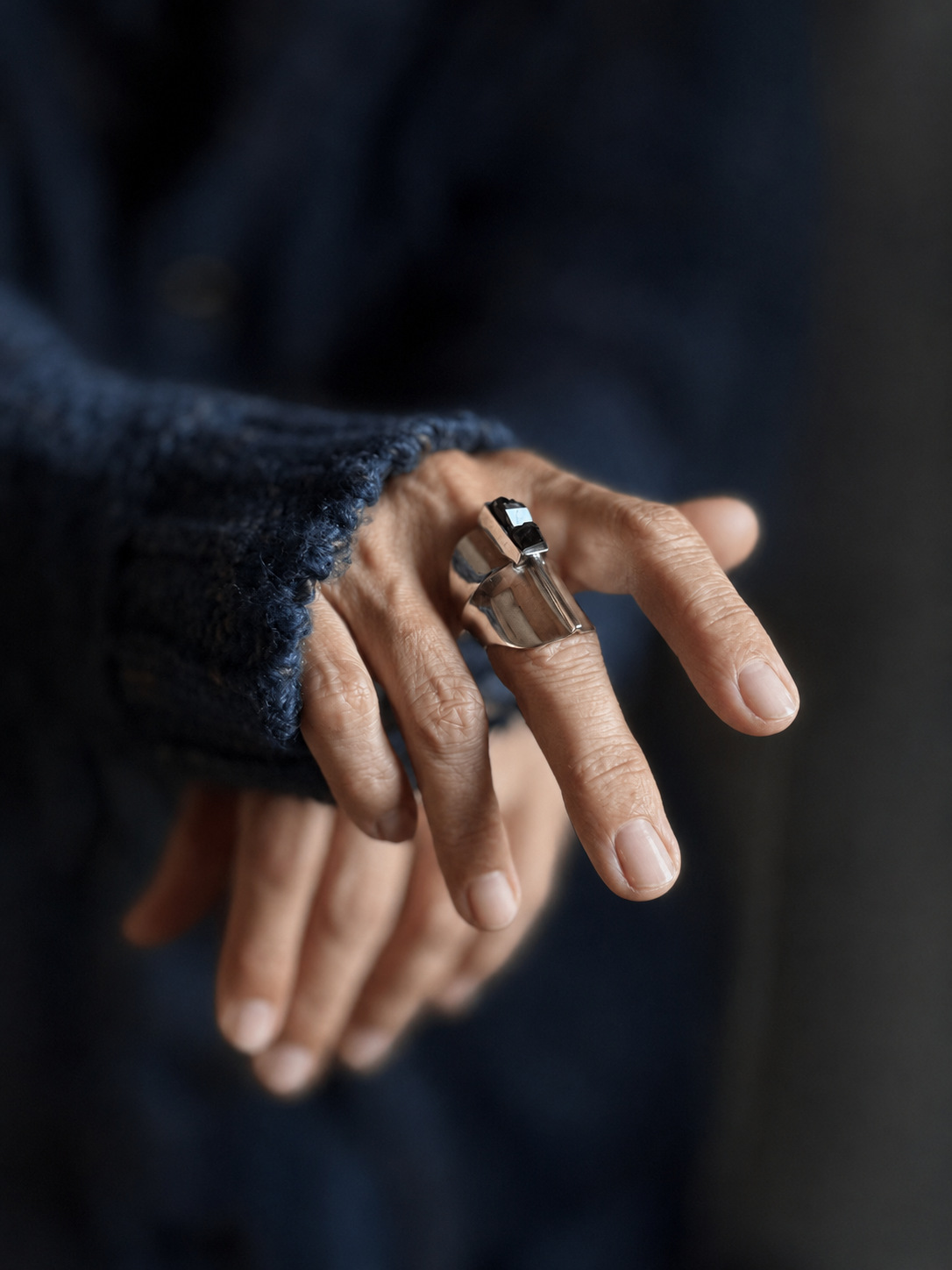
Do not try to make a matte surface shiny
Satin and matte finishes are intentional parts of the character of a piece. They are not simply silver that has not been polished enough.
For routine care, use a soft cloth and remove surface dirt gently.
Polishing cloths and compounds gradually smooth the surface, so repeated polishing can reduce or remove the matte finish.
- soft cloth;
- gentle cleaning;
- professional restoration of the satin finish.
- polishing it to a shine;
- home abrasives;
- trying to recreate the texture yourself.
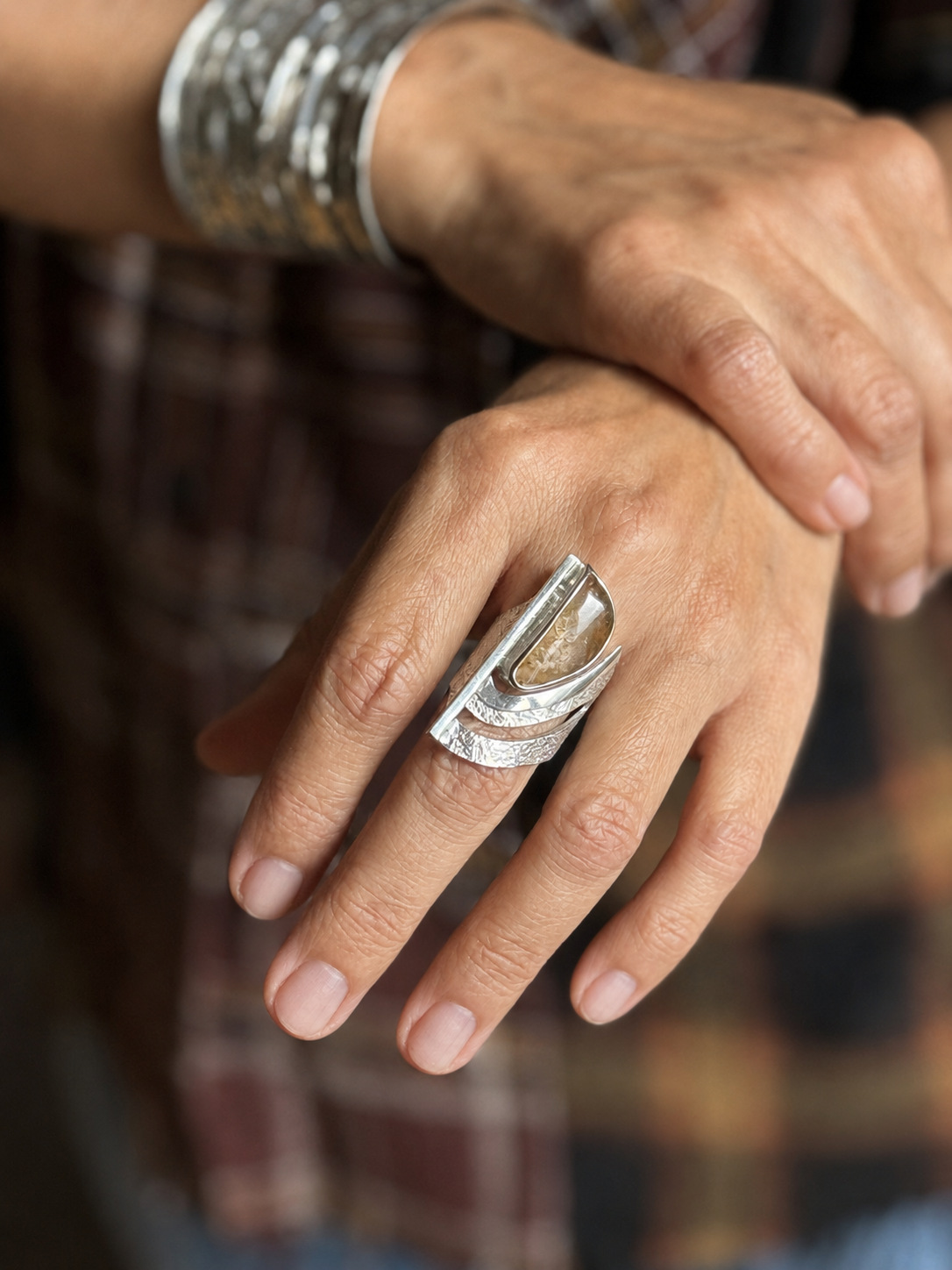
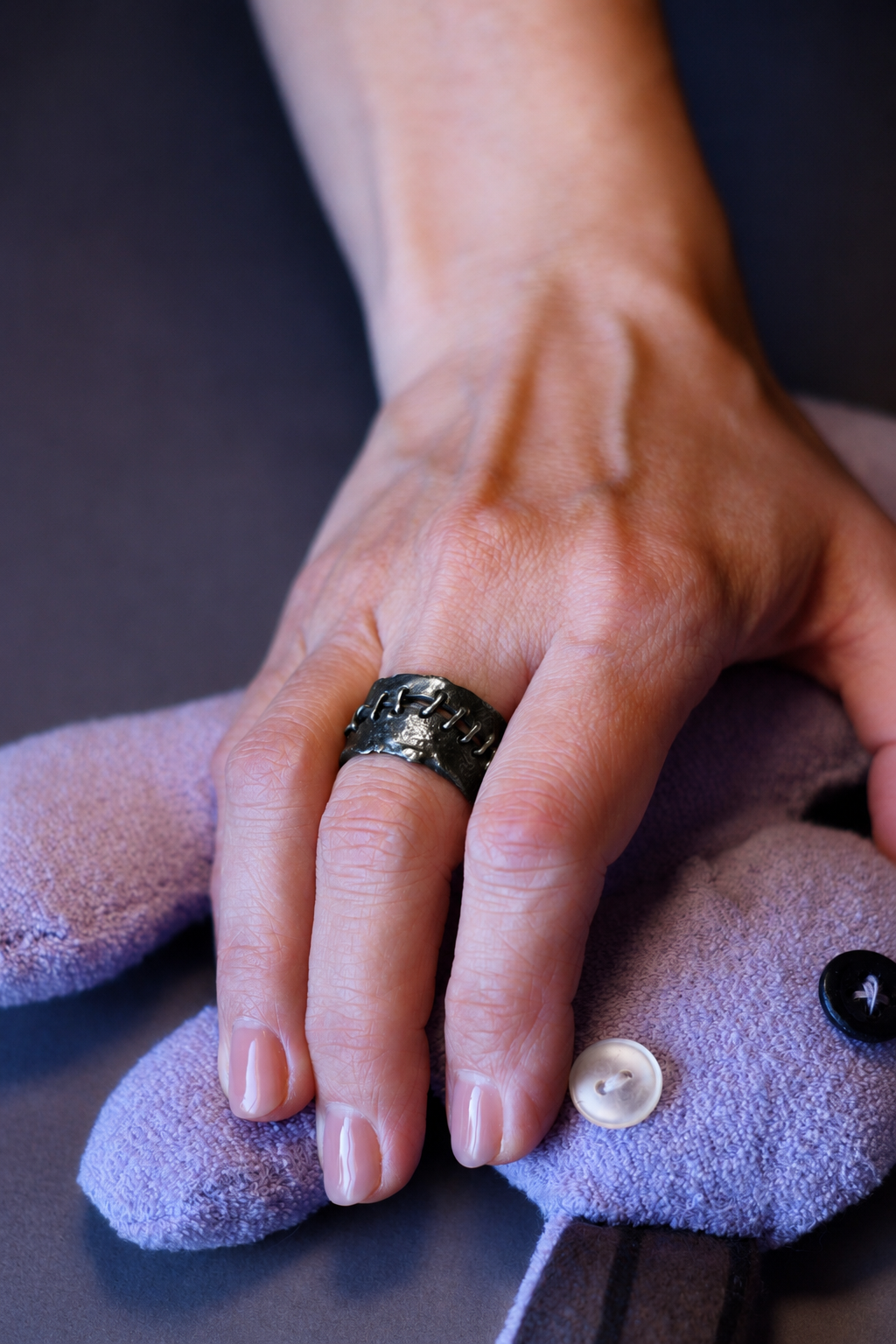
Do not clean patina back to bright silver
The dark surface is created deliberately to emphasize relief, recesses and the shape of the piece.
The safest everyday care is simply a soft dry cloth.
Avoid stiff brushes, abrasive compounds and aggressive polishing. They can gradually remove the patina together with surface dirt.
- soft dry cloth;
- very gentle surface cleaning;
- allowing patina to age naturally.
- stiff brushes;
- abrasives;
- silver polishing compounds;
- cleaning recesses back to bright metal.
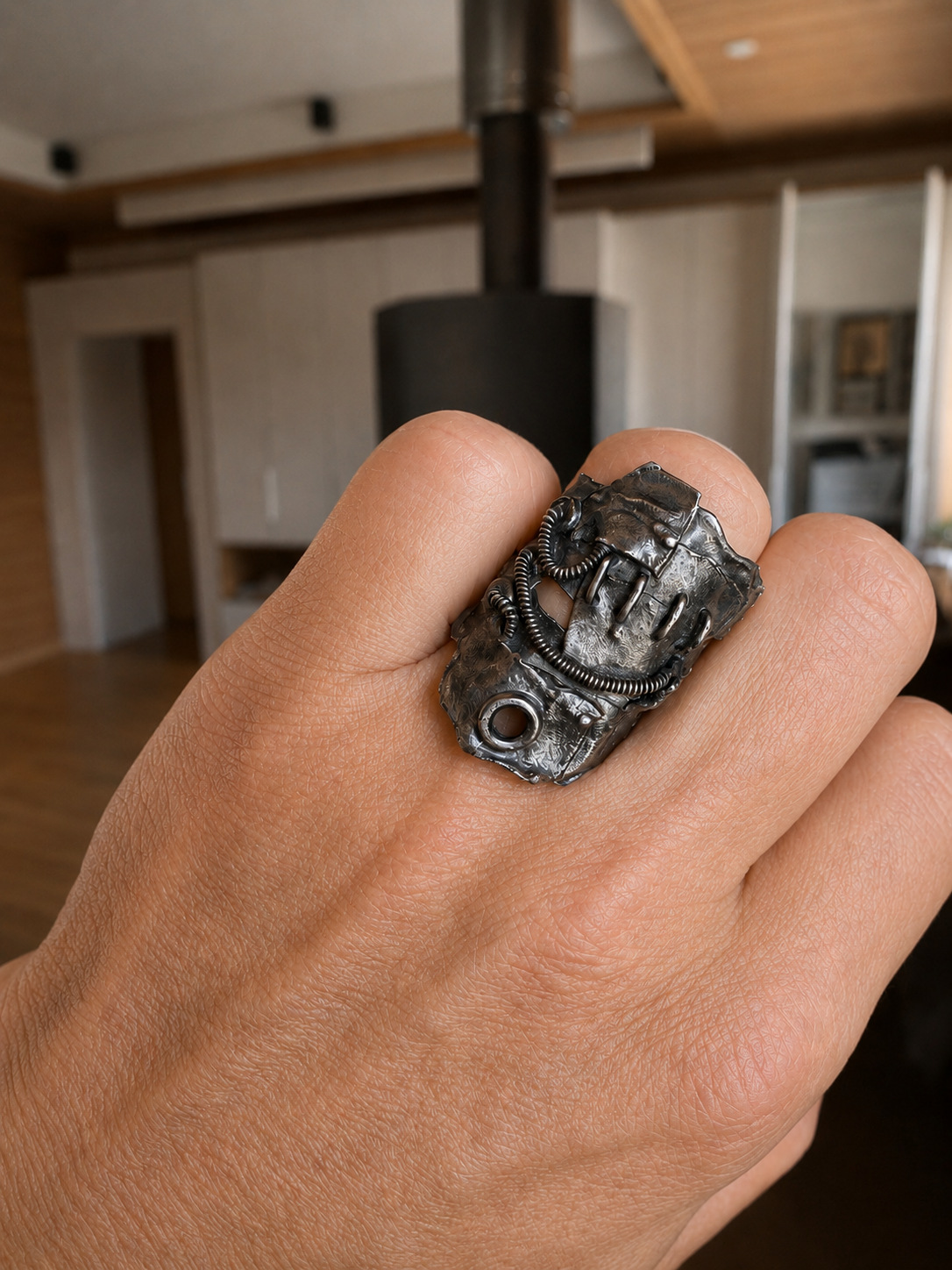
Think about the stone before the silver
A cleaning method that is safe for silver may not be safe for the stone set in the piece.
Natural stones vary widely in hardness, porosity and sensitivity to water, chemicals and heat.
If you are not certain what stone is used or how it has been set, gentle surface cleaning is the safer choice.
- soft cloth;
- avoid prolonged soaking;
- consider the material of the stone.
- ultrasonic cleaning;
- aggressive chemicals;
- acids and alkalis;
- hot water.
It is better to ask the maker one question than to experiment with an unfamiliar stone or finish.
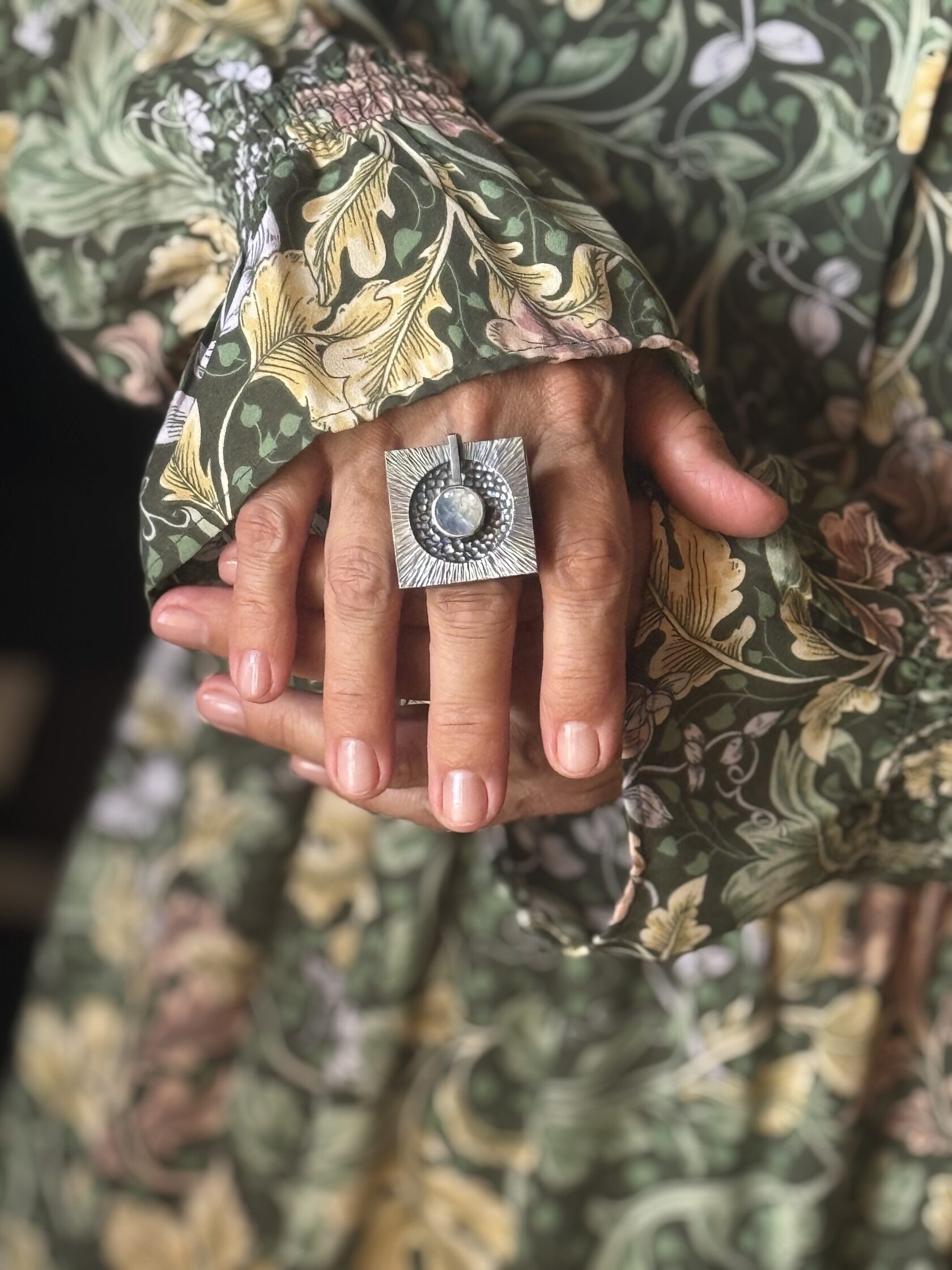
Here you are caring for both the silver and the coating
Rhodium forms a thin surface layer. Aggressive mechanical cleaning gradually wears away the coating itself.
For everyday care, use a soft lint-free cloth without abrasive compounds.
Try to reduce contact with household chemicals, chlorine, cosmetics and perfume.
- soft lint-free cloth;
- careful storage;
- gentle everyday wear.
- abrasive compounds;
- stiff mechanical cleaning;
- frequent contact with chlorine and chemicals.
Four simple rules
If you do not want to use specialized cleaning products, these rules provide a safe basic routine for everyday care.
No jewelry in the pool
Remove silver jewelry before swimming or using chlorine-containing products.
Cosmetics first
Apply perfume, creams and cosmetics before putting on your jewelry.
Store separately
Separate storage reduces rubbing between pieces and helps prevent scratches.
Start with a soft cloth
A soft clean cloth is the safest first step for most silver jewelry.
Silver changes with its owner
Patina becomes lighter on raised areas. Matte surfaces gradually become smoother. Polished silver develops fine scratches. These changes are part of the natural life of a piece of jewelry and do not necessarily mean it has been damaged.
