999
Fine silver
Very soft and highly malleable. It can deform and scratch more easily.
What the number 925 means, why jewelry is usually not made from pure silver, and why copper is commonly added to create sterling silver.
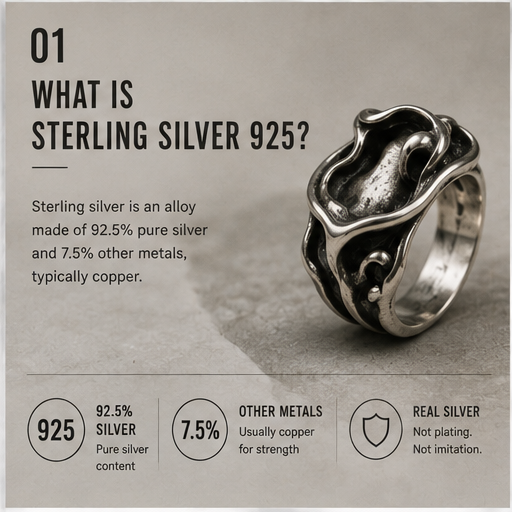
The number 925 describes the amount of silver in the alloy. Out of 1,000 parts of metal, 925 parts are silver.
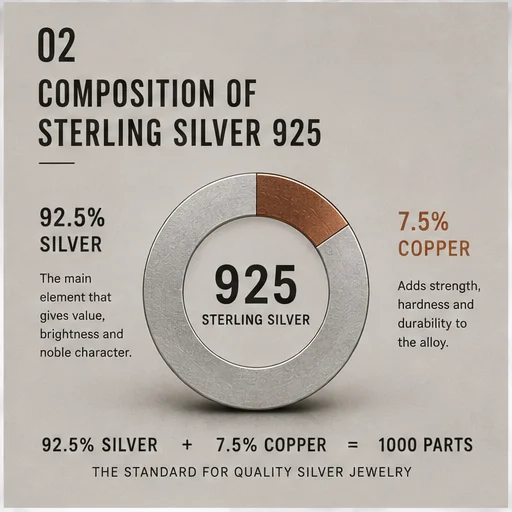
In other words, sterling silver contains 92.5% silver.
The remaining 7.5% consists of alloying metals added to modify the physical properties of pure silver.
The mark describes the silver content of the alloy. It does not mean silver plating.
Traditional sterling silver is typically made from 92.5% silver and 7.5% copper.
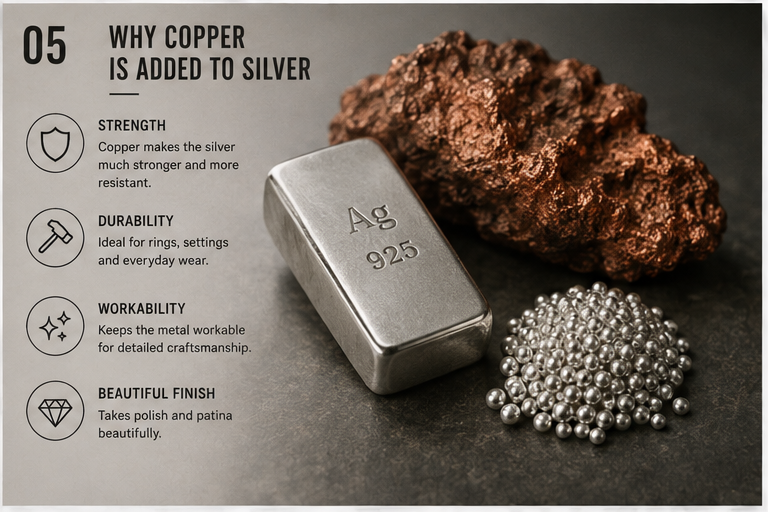
Copper is widely used because it increases the hardness and strength of the metal while still allowing it to remain workable for jewelry making.
The 925 mark primarily specifies the silver content. Different sterling alloys can use slightly different compositions for the remaining 7.5%.
Fine silver is a very soft and malleable metal. That can be useful while working with it, but excessive softness is not always desirable in finished jewelry.
Rings are repeatedly exposed to pressure, impacts, scratches and deformation. Settings and structural elements also need to hold their geometry.
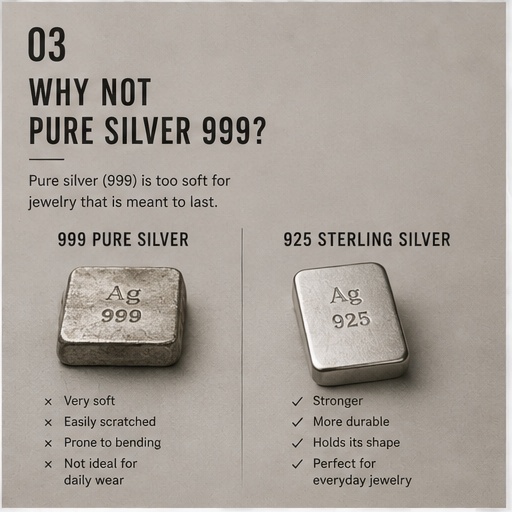
Very soft and highly malleable. It can deform and scratch more easily.
Harder and stronger. It generally keeps its shape better during everyday wear.
In simplified form, the process begins by accurately measuring silver and the alloying metal.
They are placed in a crucible, melted together and cast into an ingot or another usable form.
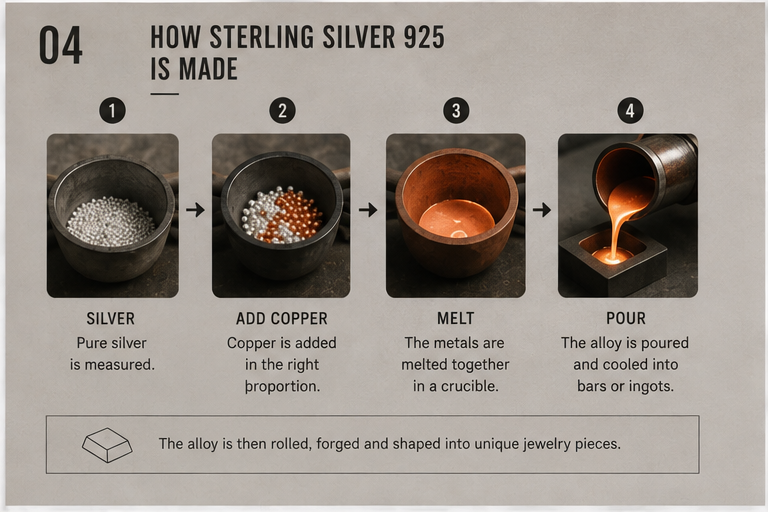
After that, the actual jewelry-making process begins: rolling, forging, forming, soldering, surface treatment and finishing.
Copper helps make silver more suitable for objects that are intended to be worn.
Yes. Sterling silver is a precious-metal alloy containing 92.5% silver by weight.
It is not an imitation of silver and it is not the same as silver plating, where only a thin surface layer is silver.
The difference is that it is an alloy designed to give silver more useful mechanical properties for jewelry.
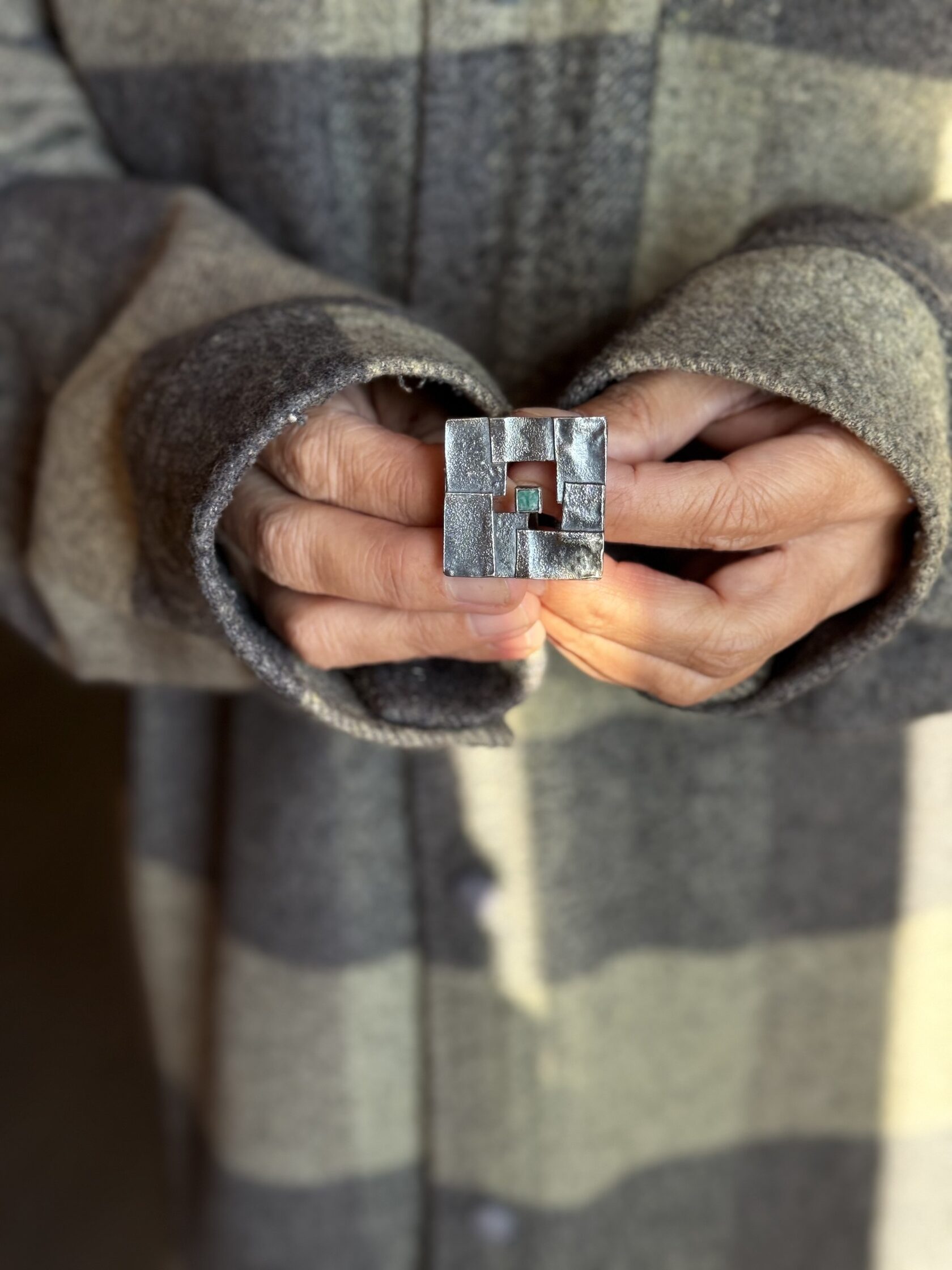
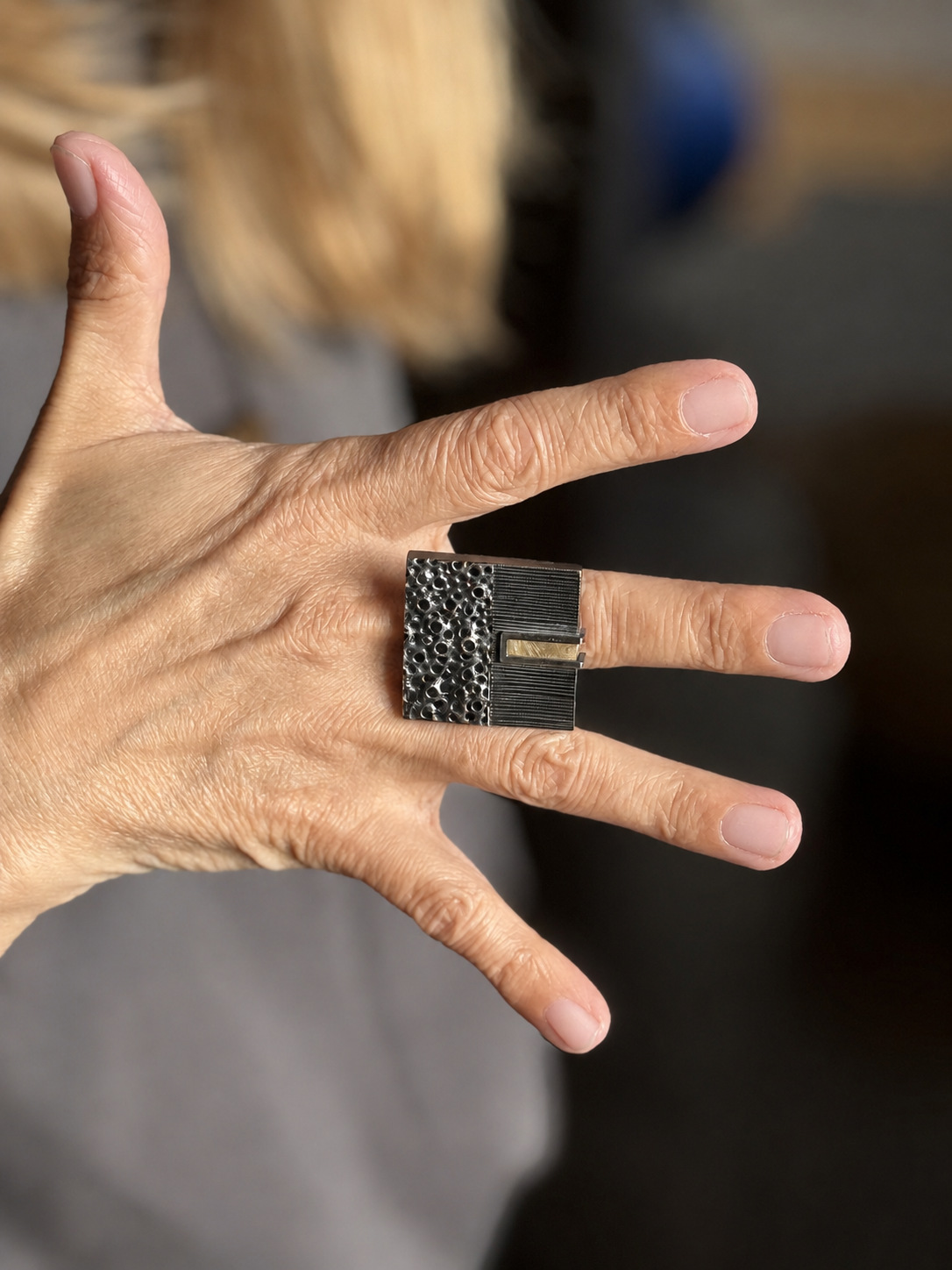
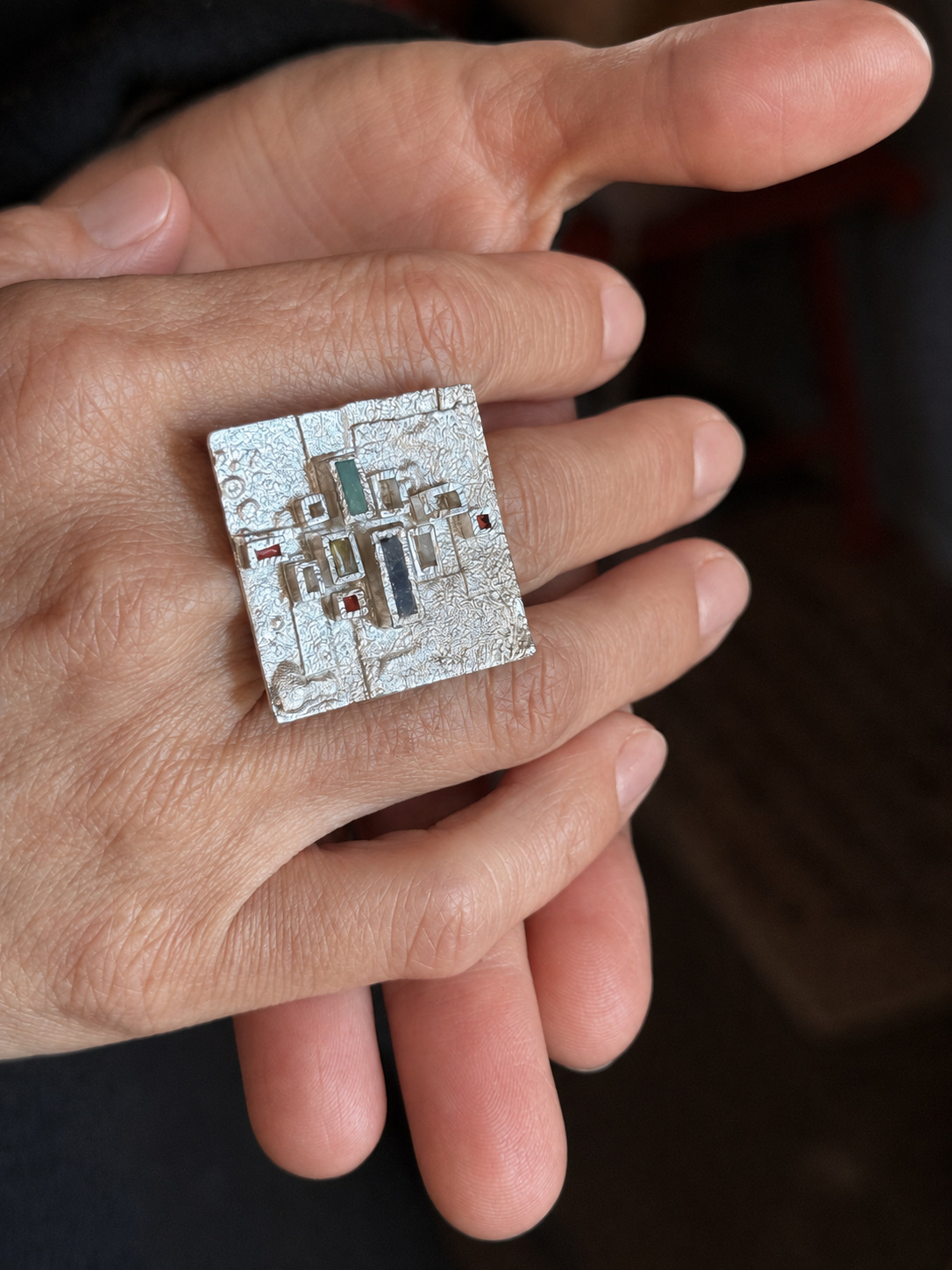
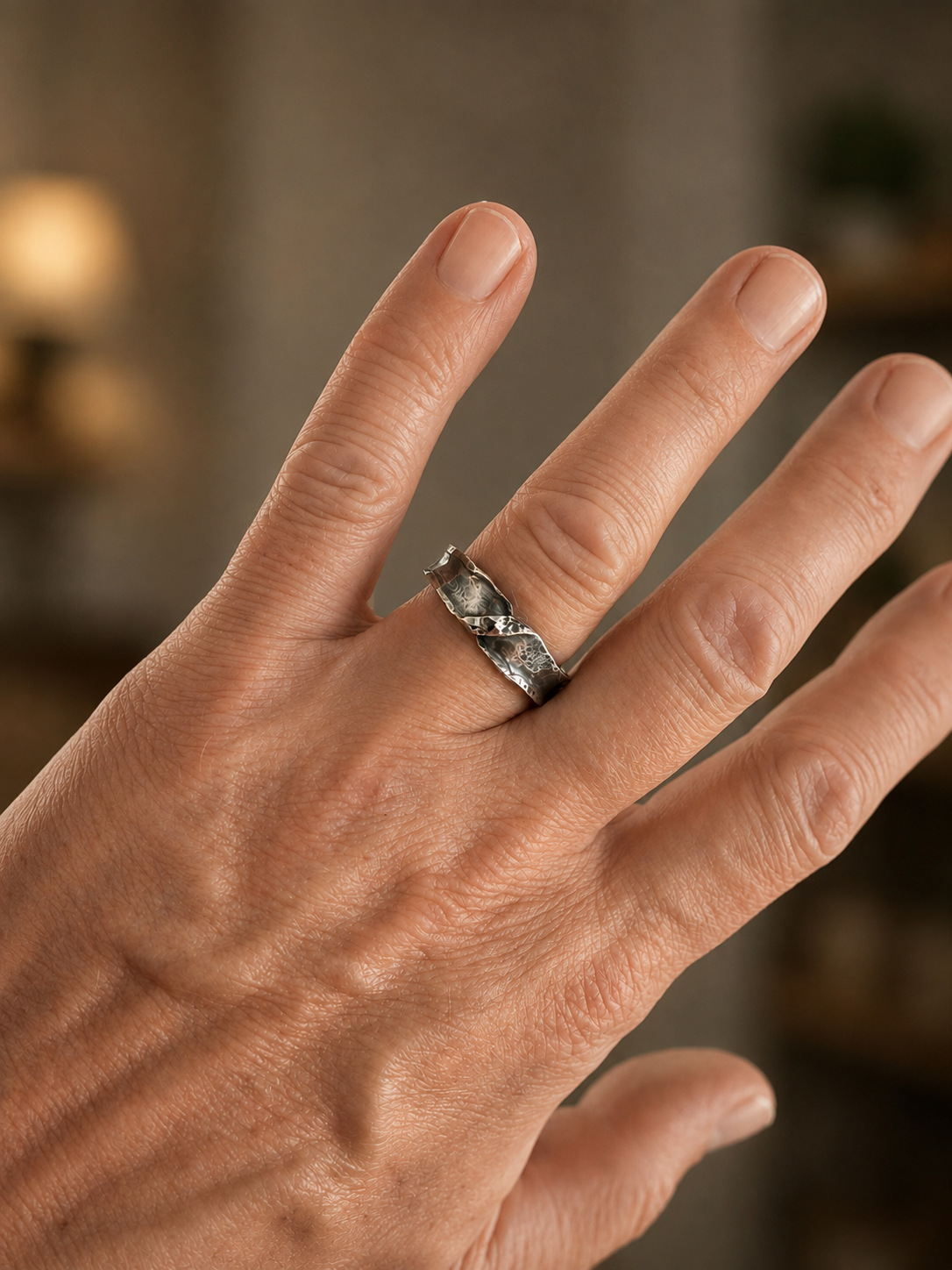
Many NP Studio pieces have large, sculptural or structurally complex forms.
For these objects, the metal needs to remain workable during fabrication while still maintaining its geometry after the piece is finished.
Sterling silver 925 provides that balance: a very high silver content together with mechanical properties that are better suited to wearable jewelry.
It means that 925 parts out of 1,000 are silver, which equals 92.5% silver content.
In normal jewelry terminology, sterling silver refers to a silver alloy containing 92.5% silver.
Fine silver is considerably softer. Sterling silver generally keeps its shape better and is more suitable for jewelry exposed to regular wear.
Tarnishing occurs because the surface of the alloy reacts with substances in its environment. It is a normal characteristic of silver and does not mean the piece is fake.
Copper is the most common alloying metal in traditional sterling silver, but other 925 alloys can use different combinations in the remaining 7.5%.
The 925 mark specifies the silver content but does not identify every metal in the remaining 7.5%. Therefore the mark alone cannot guarantee compatibility with every individual sensitivity.
Sterling silver provides a balance of workability, strength and the visual character of silver. The rest depends on form, surface and craftsmanship.
NP Studio Journal / Silver
