
NP STUDIO / JOURNAL / MATERIAL
What Does 925 Mean on Silver?
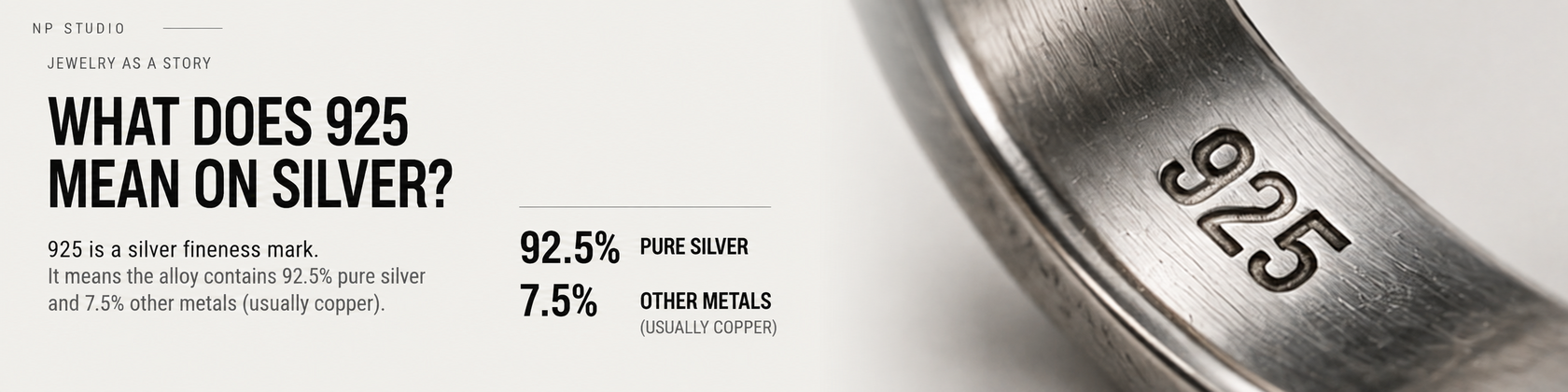
The number 925 on a silver object is not a model number or a date. It is a fineness mark: 925 parts of silver in every 1,000 parts of the alloy. In simple terms, the metal contains 92.5% silver.

925 is a silver fineness mark
For example, 10 grams of a 925 silver alloy contains 9.25 grams of silver and 0.75 grams of other metals. This calculation concerns the alloy itself; stones and other non-metal components are not included.
The remaining 7.5% consists of alloying metals that change the physical properties of silver. In traditional sterling silver, copper is usually the principal alloying metal.
Why not make everything from 999 silver?
High-purity silver is softer and more malleable. That can be useful in certain metalworking techniques, but for a ring, stone setting, clasp or thin structural element, softness can become a disadvantage.
Sterling silver 925 keeps a very high silver content while holding its shape more reliably. That balance is one of the reasons it became such a common material for jewelry.
We look at this in more detail in Sterling Silver vs Pure Silver.
What marks can appear on silver?
Not every silver object will be marked simply “925.” Marking systems vary with composition, country, period of manufacture and the assay or control system under which an object was made.
You may see a numeric fineness mark, the word Sterling, forms such as S925, or other fineness numbers including 999, 900 or 800.
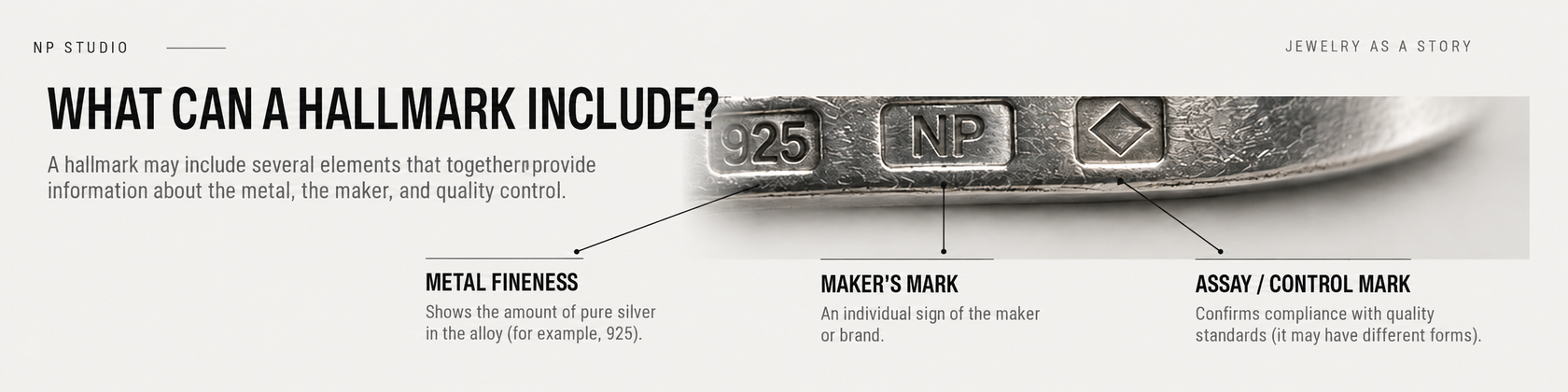
What can a hallmark or mark contain?
The fineness number is only one piece of information that may appear on a silver object. Depending on the marking system, it may sit alongside a maker's mark, an assay or control mark, or other identifying symbols.
These signs are not universal. Hallmarking systems differ from one country to another, and their designs have changed over time. A specific symbol therefore needs to be interpreted in the context of where and when the object was made.
A stamped 925 by itself is not absolute proof of an object's origin or exact composition. If the metal content of an unknown object really matters, it should be tested professionally rather than judged only by a surface mark.
What do 999, 925, 900 and 800 mean?
The principle is the same in each case: the number represents silver content in parts per thousand. So 999 means about 99.9% silver, 925 means 92.5%, 900 means 90%, and 800 means 80%.
A higher number means a higher silver content, but not necessarily a better alloy for every piece of jewelry. Purity, hardness and structural suitability are different properties.

Is 925 silver the same as silver-plated jewelry?
No. Sterling silver 925 is an alloy containing 92.5% silver by mass. Silver-plated jewelry has a layer of silver over another metal; that layer does not make the underlying metal sterling silver.
The distinction between sterling silver and silver plate is explained in the FTC guide to buying precious-metal jewelry.
Does 925 silver tarnish?
Yes. A 925 mark does not mean that a piece will never darken. Silver reacts with sulfur-containing compounds in the environment, and the copper present in sterling silver also affects the behavior of the surface.
Tarnish therefore does not mean that silver is “fake.” It can be a normal material process, and in artist-made jewelry patina is sometimes applied deliberately to emphasize texture and relief.
Deliberate darkening is a separate surface treatment; see What Is Oxidized Silver?.
For more detail, see Why Does Sterling Silver Turn Black?.
How 925 silver looks in NP Studio jewelry
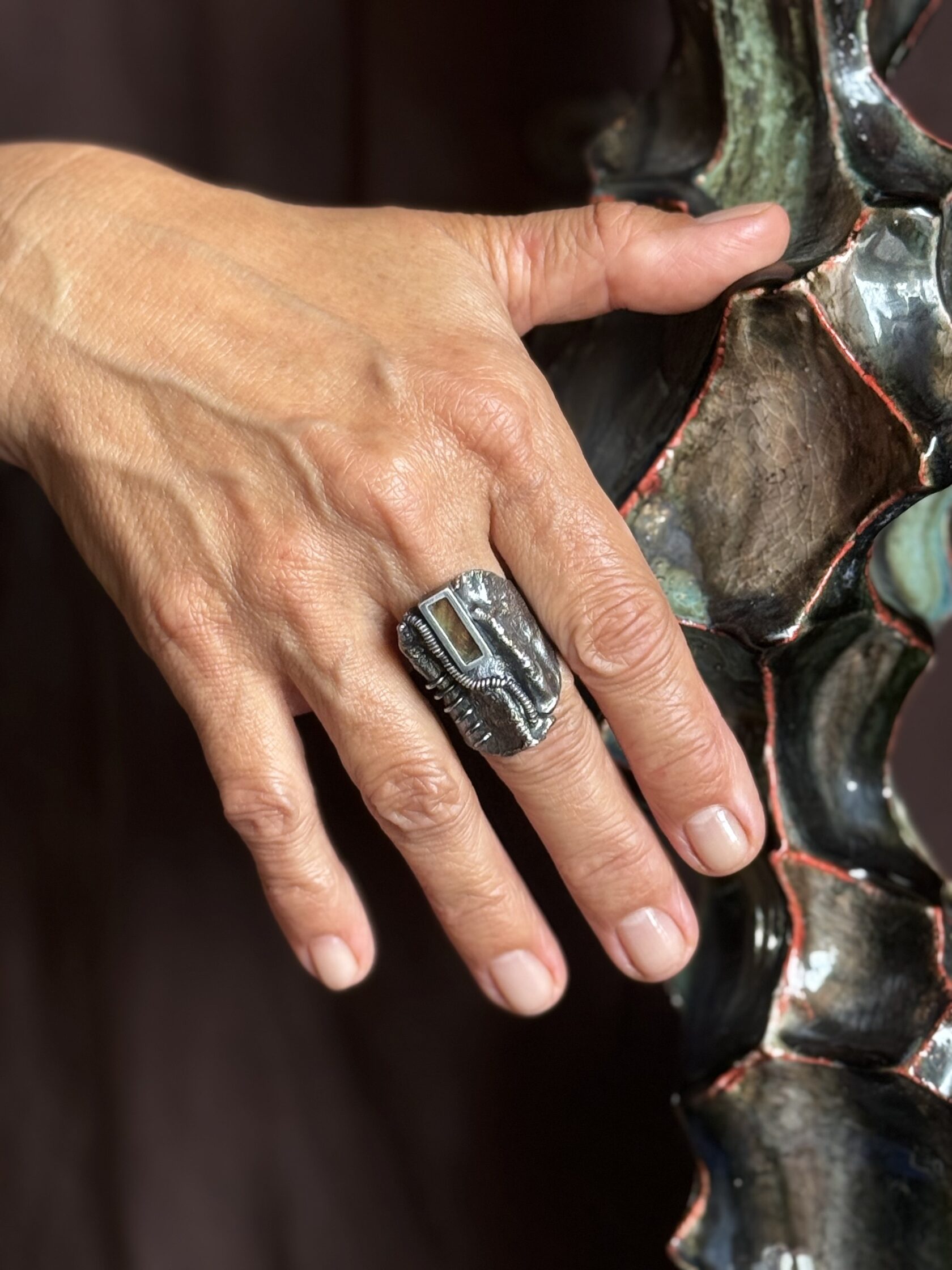
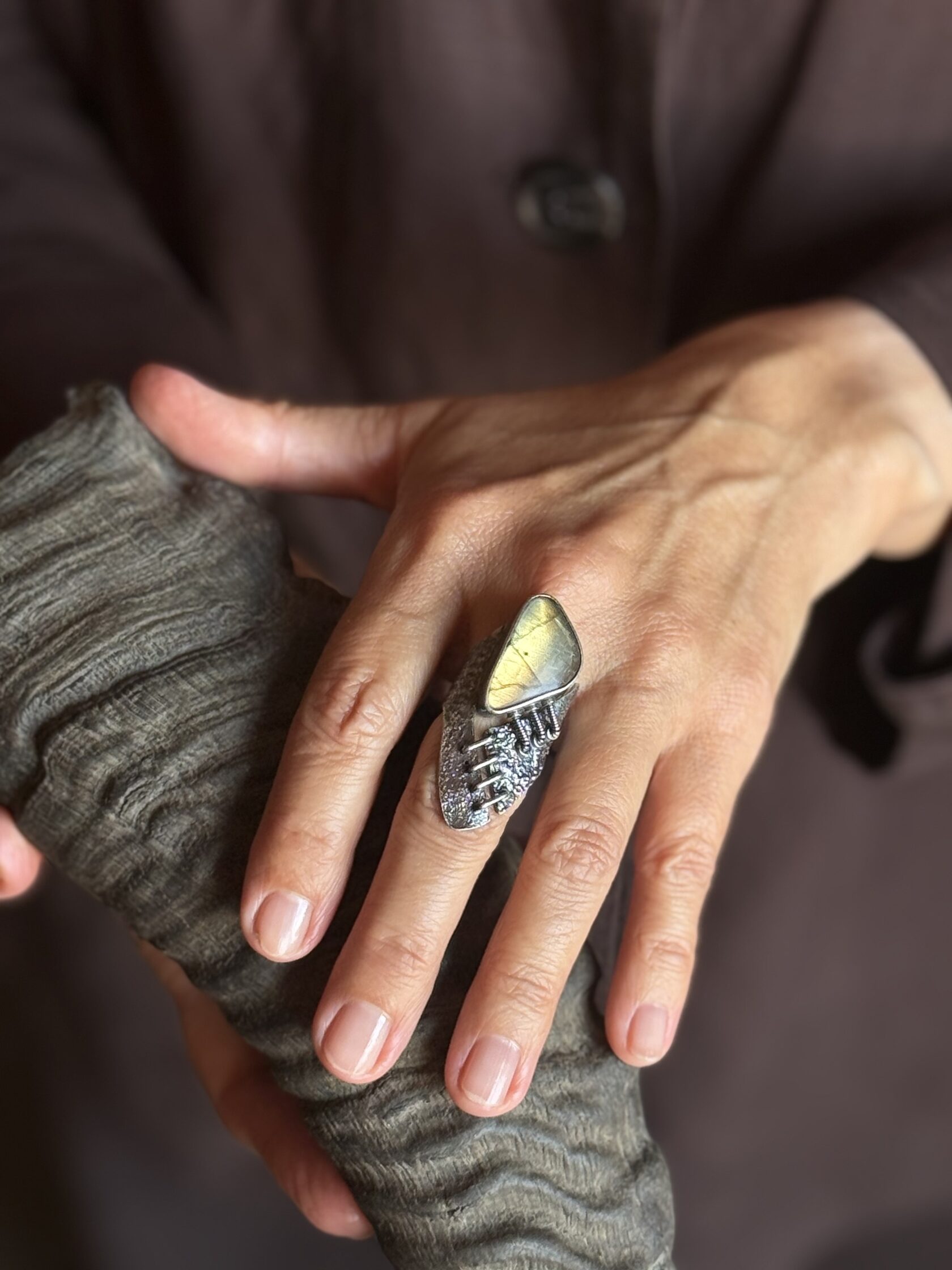
For NP Studio, fineness is only the starting point. Sterling silver can be rolled, heated, soldered, formed, textured, ground and patinated. Two objects made from the same 925 alloy can therefore look completely different.
In short
A 925 mark declares a silver content of 92.5% by mass. It identifies the stated fineness, but the stamp alone does not prove authenticity. If the composition is uncertain, have the metal tested professionally.
Other marks may appear beside the fineness number, including maker's marks, assay or control marks and symbols specific to particular hallmarking systems. Their meaning depends on the country and period in which the object was made.
READ NEXT / NP STUDIO JOURNAL
More about silver
NP Studio Journal / Silver
