
NP STUDIO / JOURNAL / SURFACE
What Is Oxidized Silver?
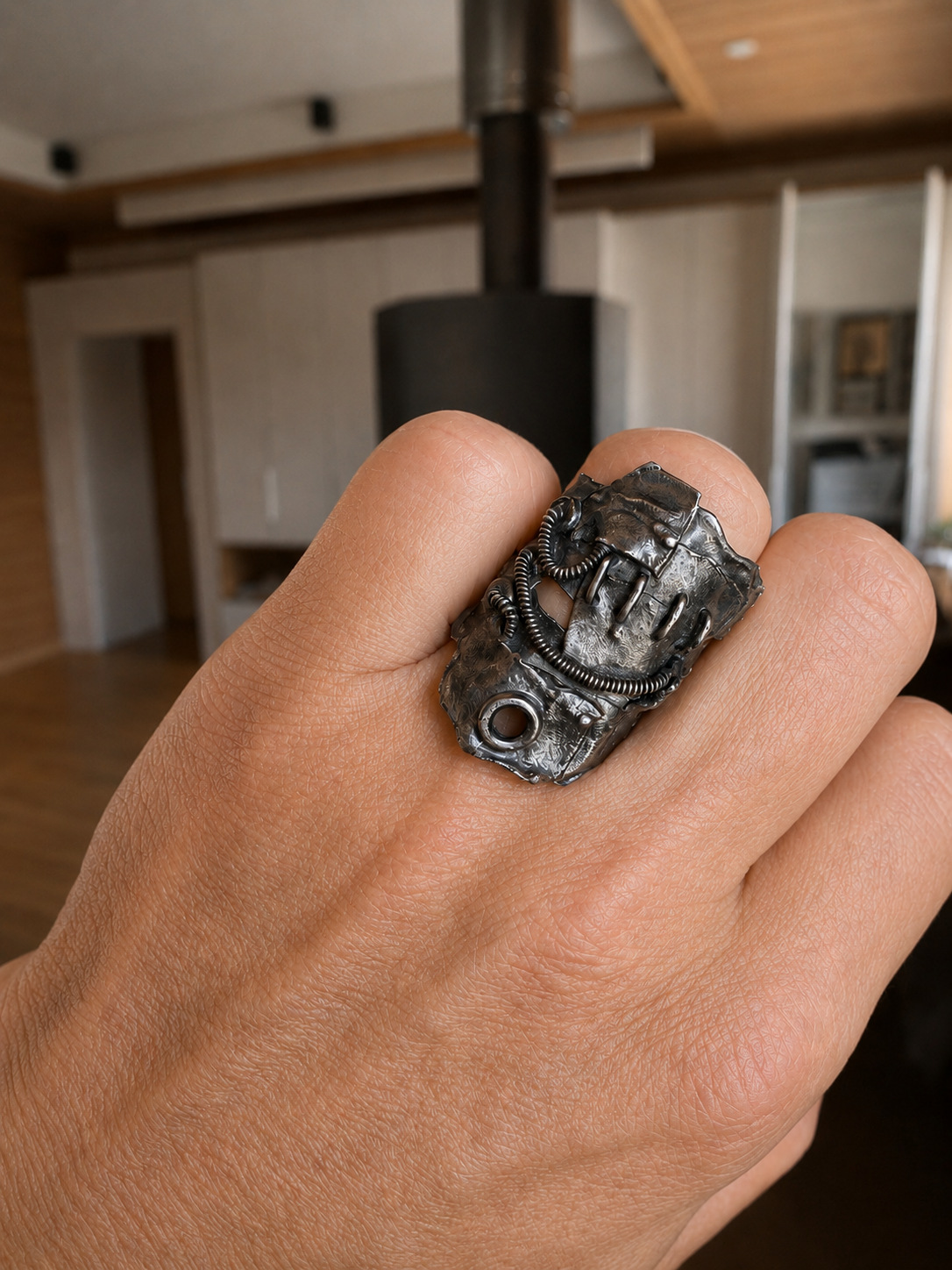
Oxidized silver is not a separate alloy. It is silver jewelry whose surface has been intentionally darkened. In jewelry, that patina is used not only for color but to emphasize relief, depth, folds and the contrast between recessed areas and brighter high points.
Short answer
It is not a different grade of silver and it is not simply accidental tarnish. In jewelry, the darkened surface can be part of the original design.
What “oxidized” means in jewelry
In jewelry language, oxidized silver is an established term for intentionally darkened silver. It refers to a controlled change at the surface rather than to a new alloy.
The purpose can be entirely visual: darkening recessed areas, separating layers of relief, strengthening shadow and creating a background against which brighter raised areas become more legible.
Why silver is intentionally darkened
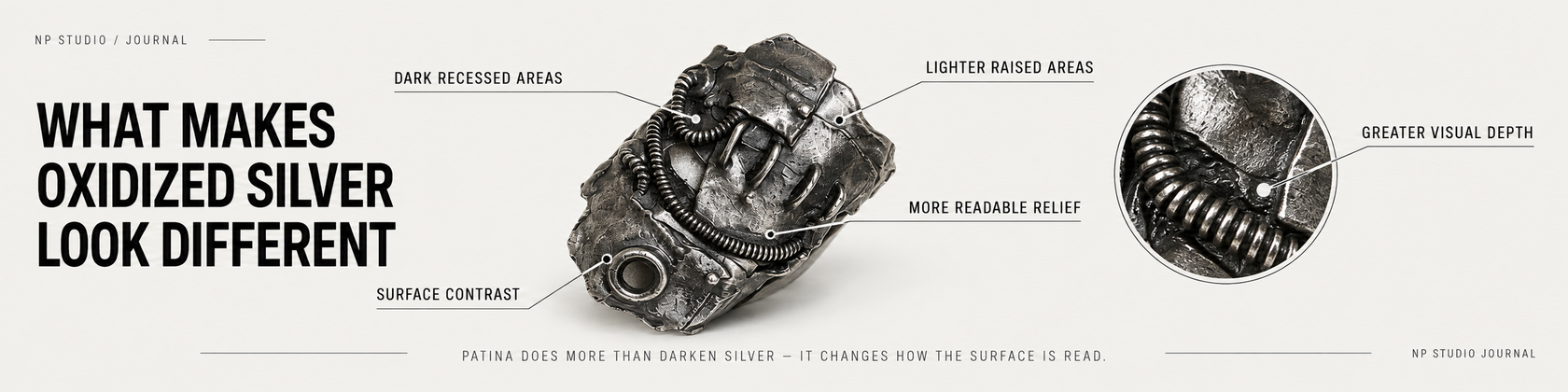
On a complex surface, dark patina acts almost like an additional shadow. It helps the eye read depth, separate layers and understand boundaries within the form. Bright raised areas become more distinct while recesses appear deeper.
That is why patina can be especially useful on relief-rich and sculptural jewelry. The goal does not have to be a uniformly black object; the contrast between dark and light zones can matter more than the overall darkness.
Oxidized silver vs natural tarnish
Intentional patina and natural tarnish can sometimes look similar, but they differ primarily in context and intention. This section stays deliberately compact; the chemistry and causes of natural tarnish belong to a separate article.
| Intentional patina / oxidized silver | Natural tarnish |
|---|---|
| Created intentionally as part of the finish. | Develops over time through environmental exposure. |
| Placement and intensity can be controlled. | Distribution does not follow a design plan. |
| Used to emphasize relief, depth and contrast. | Can appear across any exposed surface. |
| Can be deliberately concentrated in recesses. | Depends on wear and environment. |
Dark color alone does not always reveal the exact finishing process. For natural tarnish, see Why Does Sterling Silver Turn Black? →.
How patina works on relief
Recessed areas remain visually dark, while raised areas catch more light and read as a separate level. This gives a single metal surface additional depth and makes small structural differences easier to see.
On a complex piece, patina and physical shadow work together. The patina does not replace relief; it makes the relief easier to read.
How an oxidized surface changes with wear
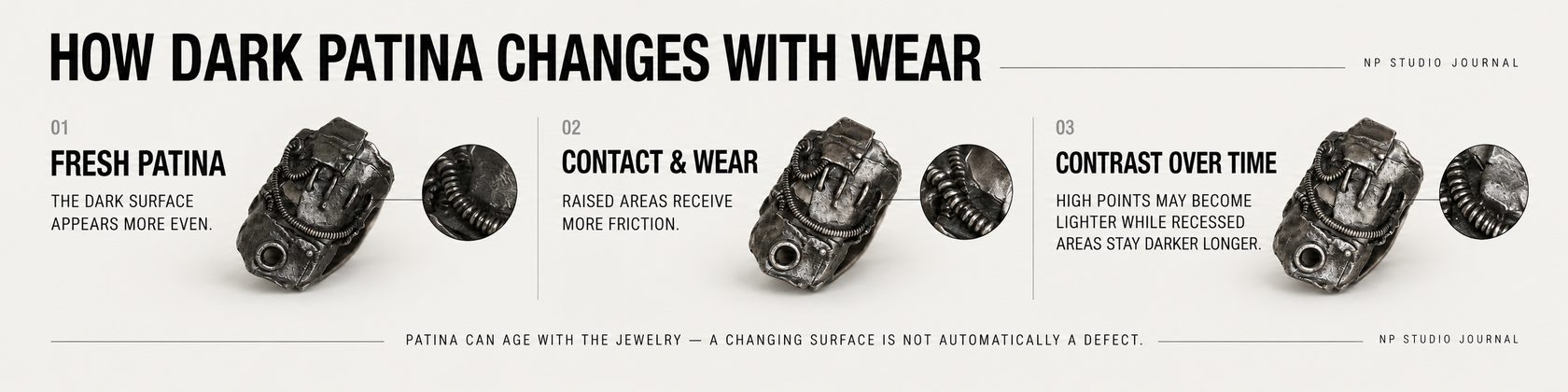
Patina does not have to remain visually identical forever. Raised areas touch skin, clothing and surrounding surfaces more often, so they may gradually become lighter.
Darkened areas in recesses usually remain protected for longer. Over time, this can make the contrast between bright high points and darker recessed areas more pronounced.
Is oxidized silver a coating?
Not necessarily. Surface patina and controlled darkening are one family of finishes, while separate coatings such as black rhodium use a different technology. Paint, lacquer, electroplated coatings and intentional patina should not automatically be treated as the same thing.
For the same reason, not every black surface on silver should be called oxidized silver.
Can you polish oxidized silver?
Aggressive polishing can lighten or remove intentional patina from raised areas. If the dark finish is part of the design, care should take that surface into account.
For detailed care, use the separate guide: How to Care for Sterling Silver →. This page intentionally does not repeat cleaning instructions.
Oxidized silver at NP Studio
At NP Studio, dark patina is used as part of the surface language when it helps define recesses, folds, segmentation and complex relief. It should work with the form rather than simply turn a piece black.
Biomechanics is a confirmed example. The other two real NP Studio surfaces below are shown only as contrasting surface types, not as examples of oxidized silver.
Patinated / oxidizedDark recesses and lighter high points make the relief more legible.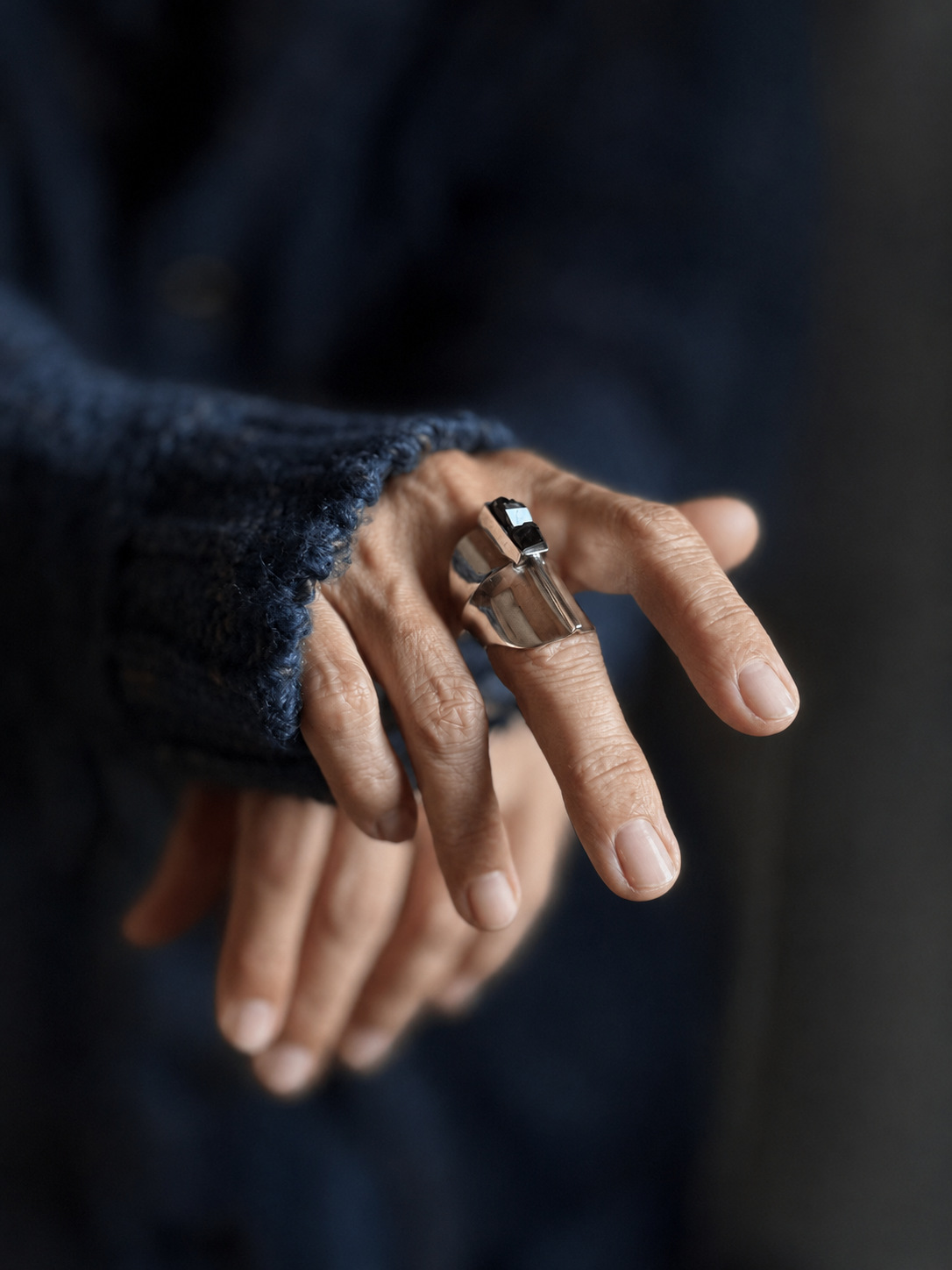 Bright / polished comparisonA bright surface is shown only as a contrast to patina, without describing it as oxidized.
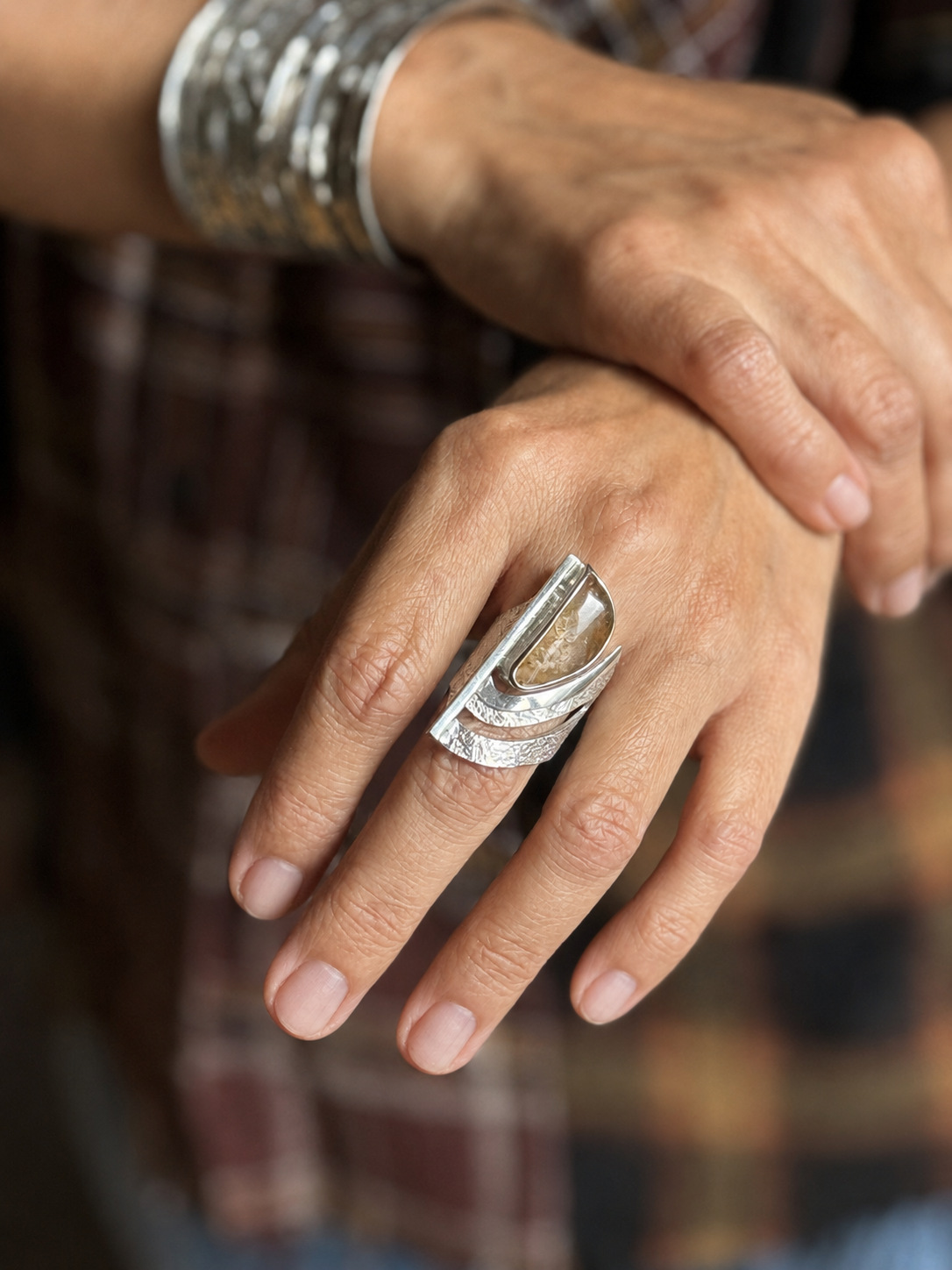 Satin comparisonA satin finish creates a different relationship between light, relief and surface.
Short summary
- Oxidized silver is not a separate metal. It is silver with an intentionally darkened surface.
- In jewelry language, “oxidized” does not guarantee one specific surface compound.
- Patina is used to create contrast, depth and clearer relief.
- Raised areas may become lighter with wear while recesses remain darker for longer.
- Natural tarnish is adjacent to this topic but is not identical to intentional patina.
- Not every black finish on silver is oxidized silver.
Frequently asked questions
Author
Related NP Studio materials
Natural tarnish is covered separately in Why Does Sterling Silver Turn Black?. If the question is care, use the care guide or the cleaning guide. For the material itself, see What Is Sterling Silver?.
