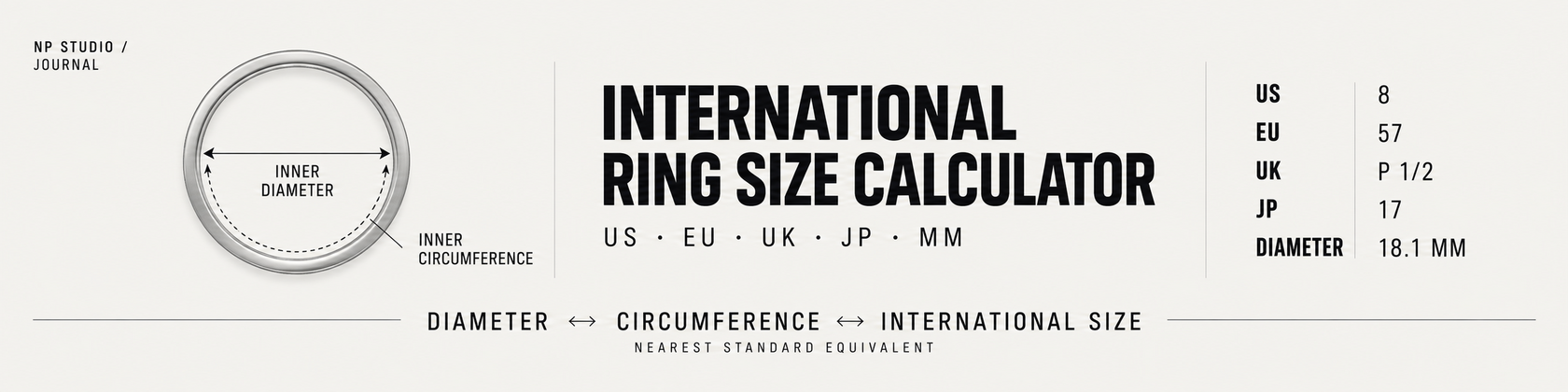
International Ring Size Calculator
Convert between RU, US, EU, UK and JP sizes, inside diameter and circumference in one interactive tool.
OPEN CALCULATOR →Practical guides to sterling silver 925, ring sizing and fit, care, gemstones, custom jewelry, jewelry movements, earrings and handmade process. All 75 guides are organized by intent and connected through one thematic index.
Measurement, international size systems, wide and adjustable rings, changing finger size and resizing a finished sterling silver ring.
Convert between RU, US, EU, UK and JP sizes, inside diameter and circumference in one interactive tool.
OPEN CALCULATOR →Measure a finger or an existing ring and understand the main sources of error.
03Compare common ring-size systems and inside measurements.
04Practical ways to estimate a ring size for a gift.
05Fit over the knuckle, comfort, movement and signs of a wrong size.
06Why a wide band feels tighter and when a larger size may be needed.
07How body changes and age can affect the way a ring fits.
08When a silver ring can be made larger or smaller and what limits the process.
09What an open construction allows and where safe adjustment ends.
What 925 means, how sterling silver is made, how it differs from other materials and how its surface and properties change over time.
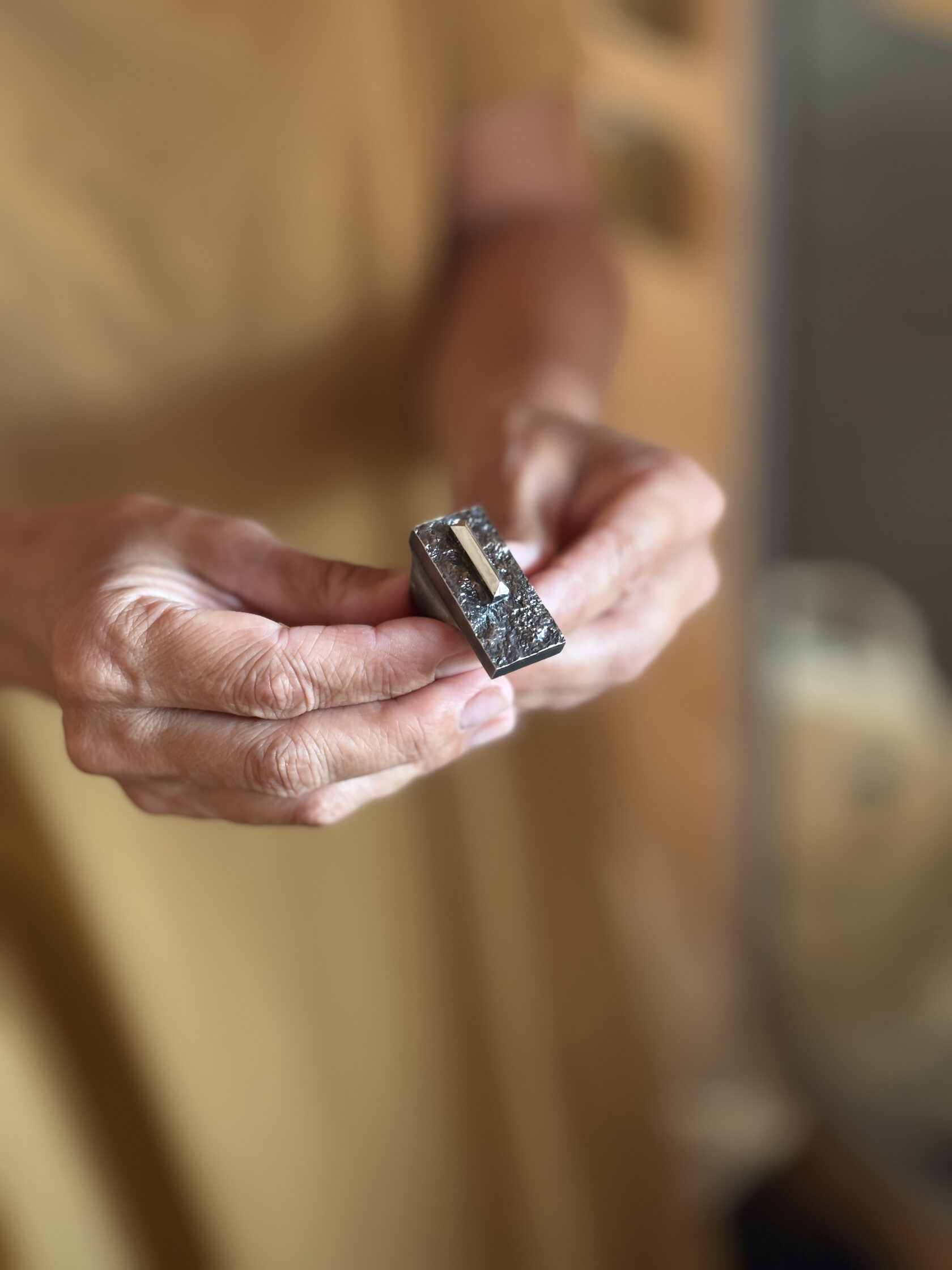
What sterling silver means, why pure silver is alloyed and why 925 became a standard for jewelry.
READ →Hallmarking, fineness and what the number actually tells you.
03925 silver and higher-purity silver: composition and practical differences.
04How pure silver becomes a workable jewelry alloy.
05Solid alloy through the section versus a silver surface coating.
06What can be checked at home and where simple tests can mislead.
07Material longevity, wear and repairability.
08Why skin reaction depends on more than the 925 mark alone.
09Differences in material, surface, maintenance and cost.
10A practical comparison of two materials used for everyday jewelry.
11When sterling silver can work for a high-wear ring and where its limitations matter.
12How a darkened surface is created and how it changes with wear.
13How controlled heating creates a distinctive relief surface.
What happens to sterling silver during wear, water exposure, storage and cleaning, with separate guides for different practical situations.
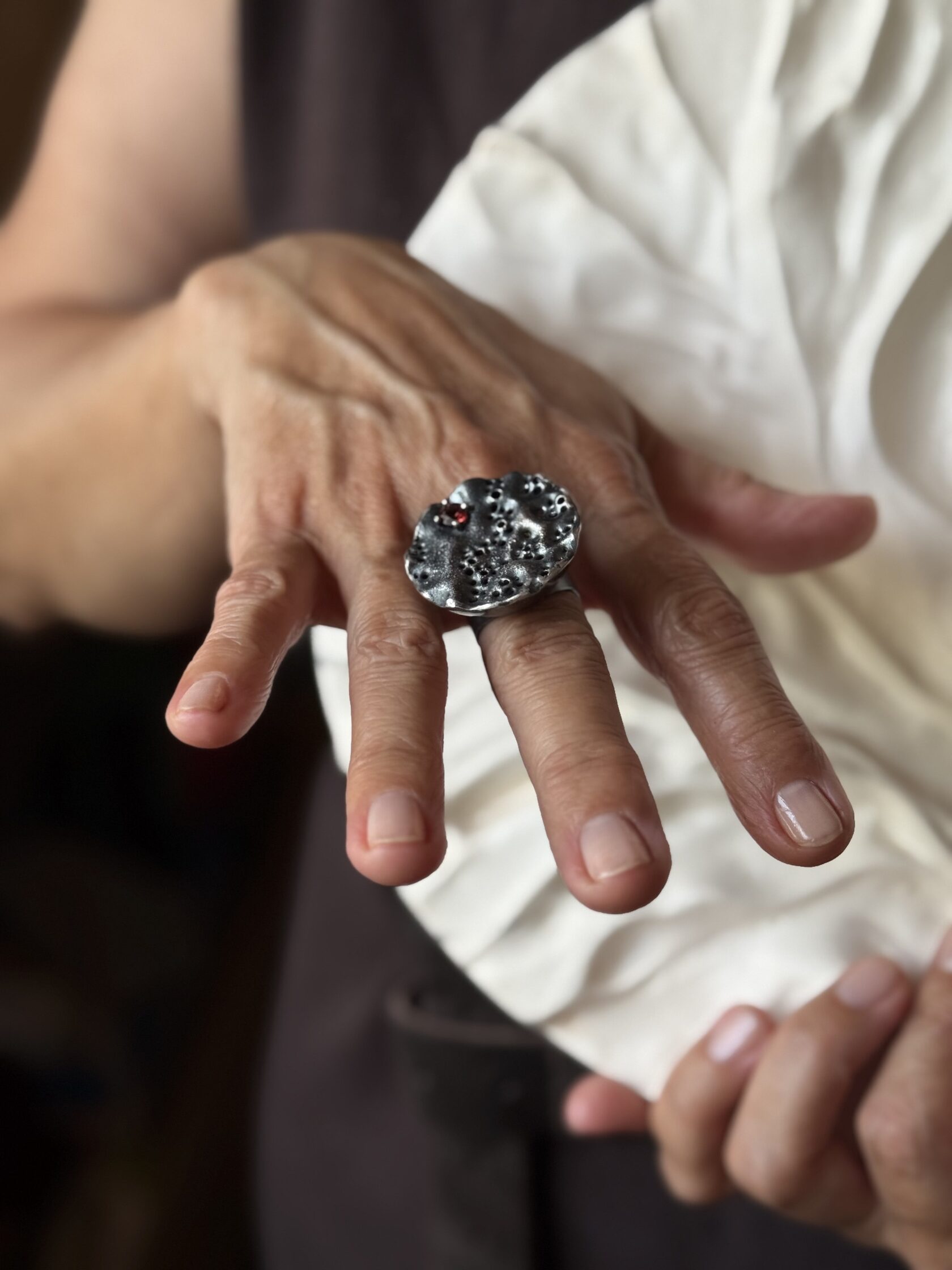
Why sterling silver darkens, what happens at the surface and why tarnish does not automatically mean poor quality.
READ →Basic everyday care for polished, matte and patinated silver.
03Home cleaning without unnecessary aggression toward the surface.
04Ways to slow surface darkening during wear and storage.
05Fresh water, showers, pools, the ocean and important exceptions.
06What repeated daily wear does to the surface and construction.
07Why stones, settings, patina and texture change the cleaning rules.
08Storage, humidity, air exposure and contact between surfaces.
09Why green marks can appear and why they do not automatically mean fake silver.
How a custom project works: references, choosing a jeweler and gemstone, timing, cost, expectations and the limits of handmade production.
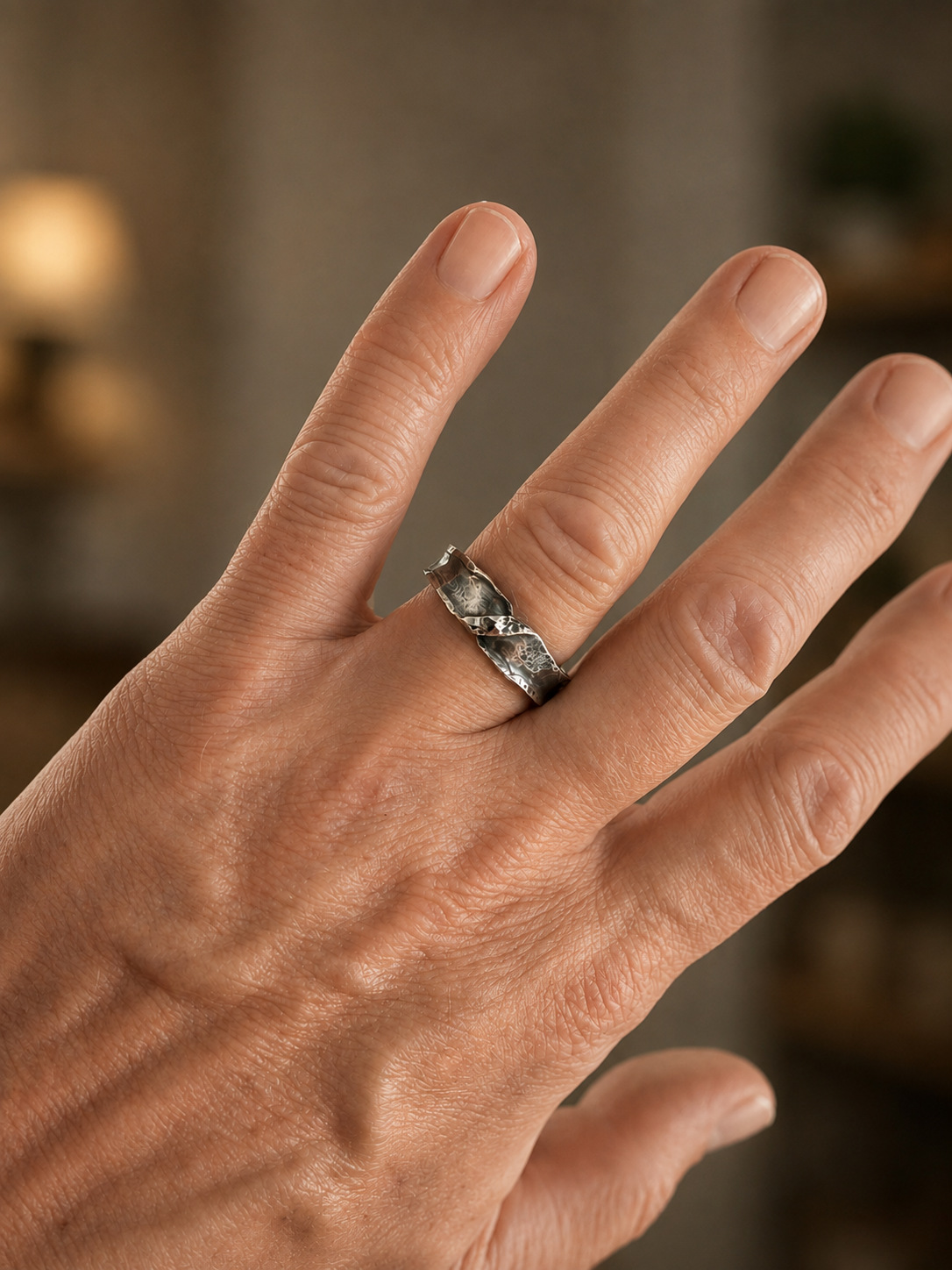
How a custom commission differs from choosing a finished one-of-a-kind piece and which decisions are made with the jeweler.
READ →Size, purpose, gemstone, references and other useful starting information.
03What to decide before the project starts and which questions to discuss early.
04Style, process, communication and signs that a maker is a good fit.
05What determines the timeline and which stages should not be rushed.
06The main factors that shape the price of a custom piece.
07How a reference image can guide a project without directly copying another maker.
08What a jeweler needs to assess before working with a client’s stone.
09Durability, size, color, setting and the character of the finished object.
10A finished authored piece and a commissioned project are two different ways to choose jewelry.
How to choose stones for everyday rings and how setting type, profile, hardness, toughness and cleavage affect real-world wear.
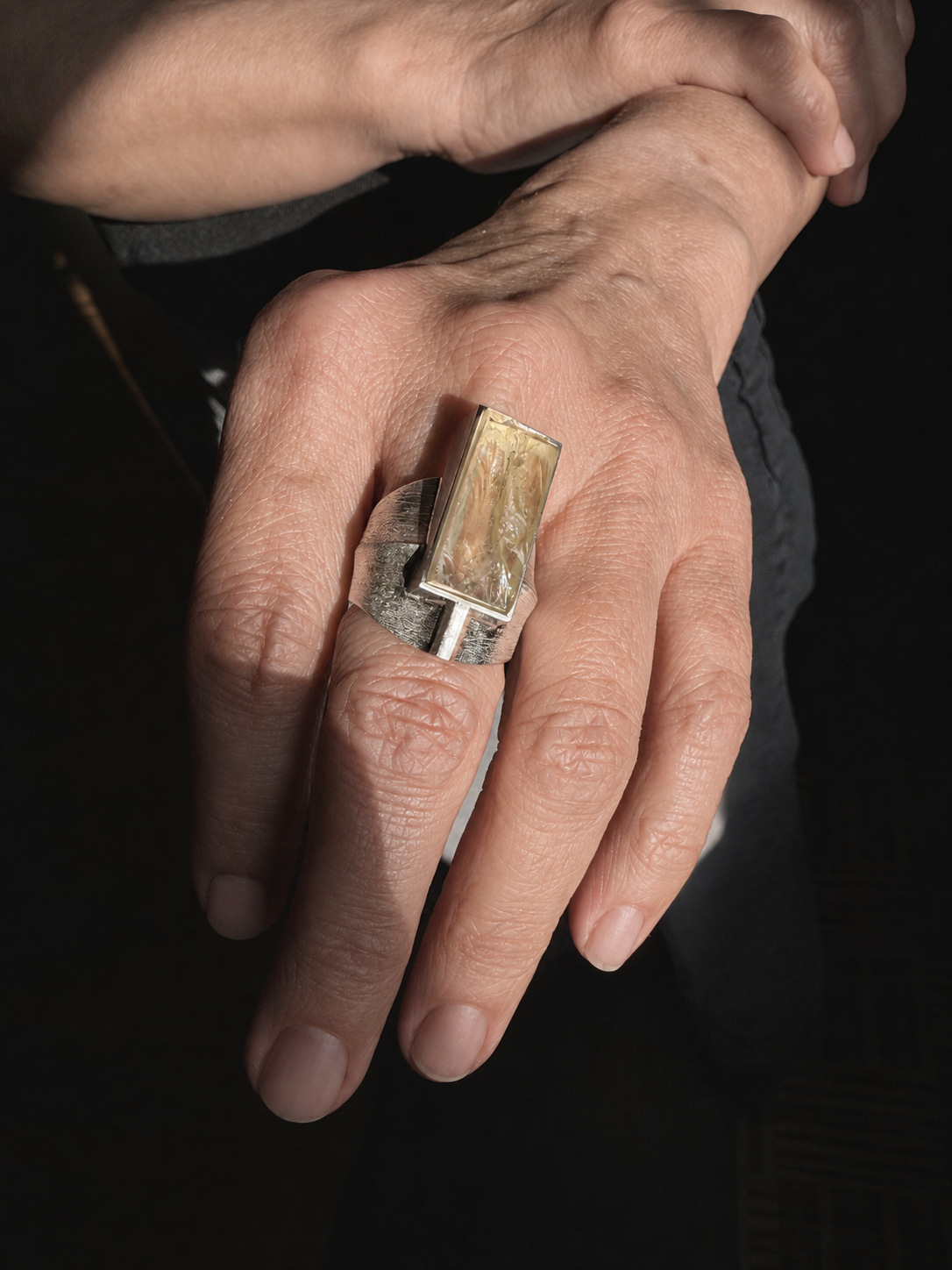
Which stone properties matter beyond hardness alone and why ring construction changes the acceptable level of risk.
READ →Hardness, toughness and cleavage are different properties and should not be confused.
03Protection, light, maintenance and visual structure in two common setting approaches.
04How setting height affects comfort, protection and the silhouette of a ring.
From Art Nouveau and Art Deco to Brutalism, biomorphism and biomechanics — guides to the different ways contemporary jewelry can use form.
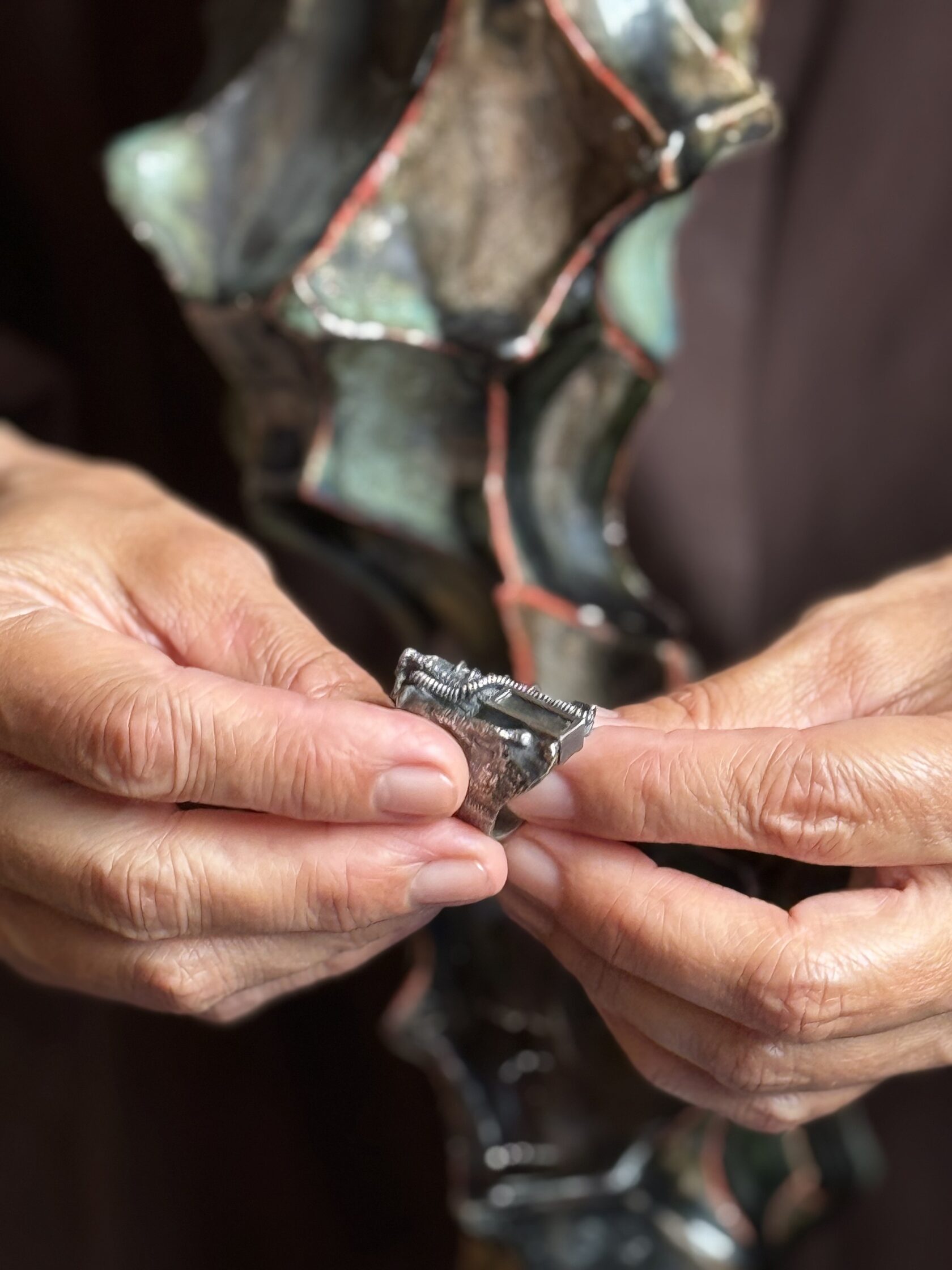
How scale, structure, negative space, mass and movement can turn jewelry into a small object that exists with the body.
READ →Jewelry as an artistic practice rather than only a decorative object.
03Volume, structure, rhythm and spatial thinking in jewelry.
04Experiment with form, material and conventional ideas of jewelry.
05A visual language combining organic structures, mechanics and complex construction.
06Forms that suggest living structures without literally copying nature.
07Mass, structure, material presence and deliberate roughness.
08Historical and contemporary features of Gothic visual language in jewelry.
09Jewelry treated as a three-dimensional form that works with the body.
10How contemporary jewelry expands beyond traditional categories and conventions.
11Geometry, rhythm, contrast and decorative discipline in Art Deco.
12Line, movement and organic plasticity in Art Nouveau.
13When a ring becomes the main visual accent rather than a background accessory.
The main earring constructions — from studs and ear cuffs to huggies, hoops, drops and dangles — plus a practical guide to closure types.
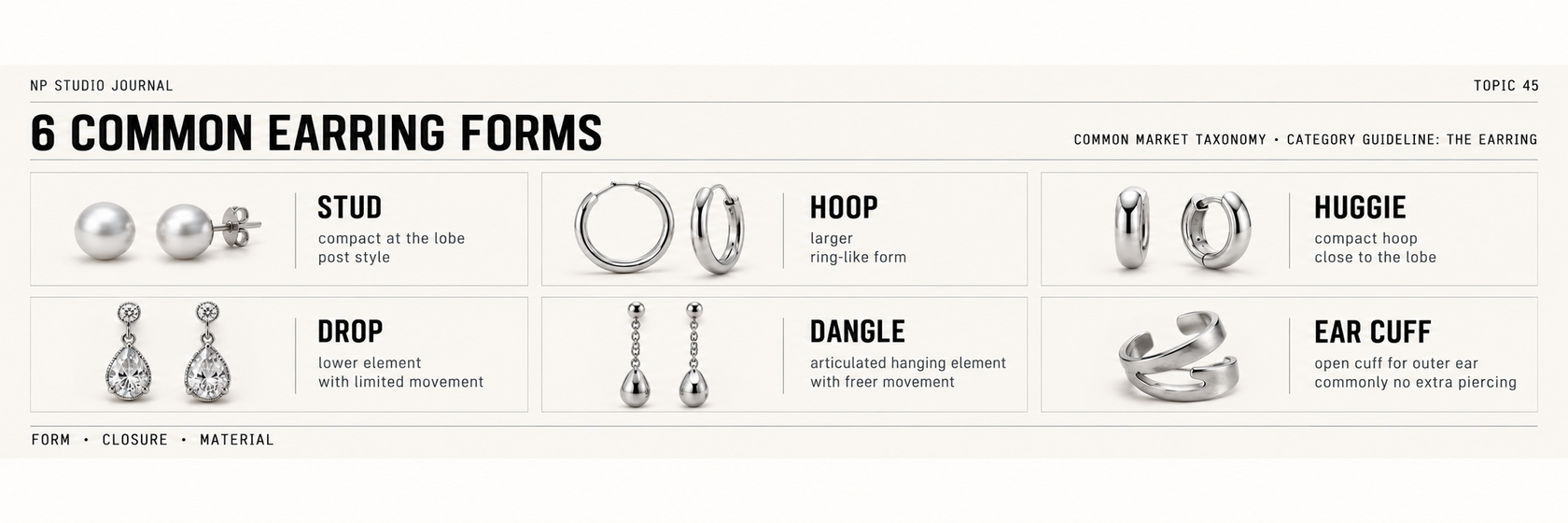
How the main earring types differ in construction, fit, movement and the way they sit on the ear.
READ →How ear cuffs sit on the ear and how they differ from conventional pierced earrings.
03How a close-fitting huggie differs from a classic hoop.
04The difference between a hanging form and a more freely moving earring.
05Construction, fit and the practical limits of stud earrings.
06Push backs, leverbacks and other common closure systems.
How sterling silver rings are made by hand, how handwork differs from casting and mass production, and why traces of process can become part of the object.
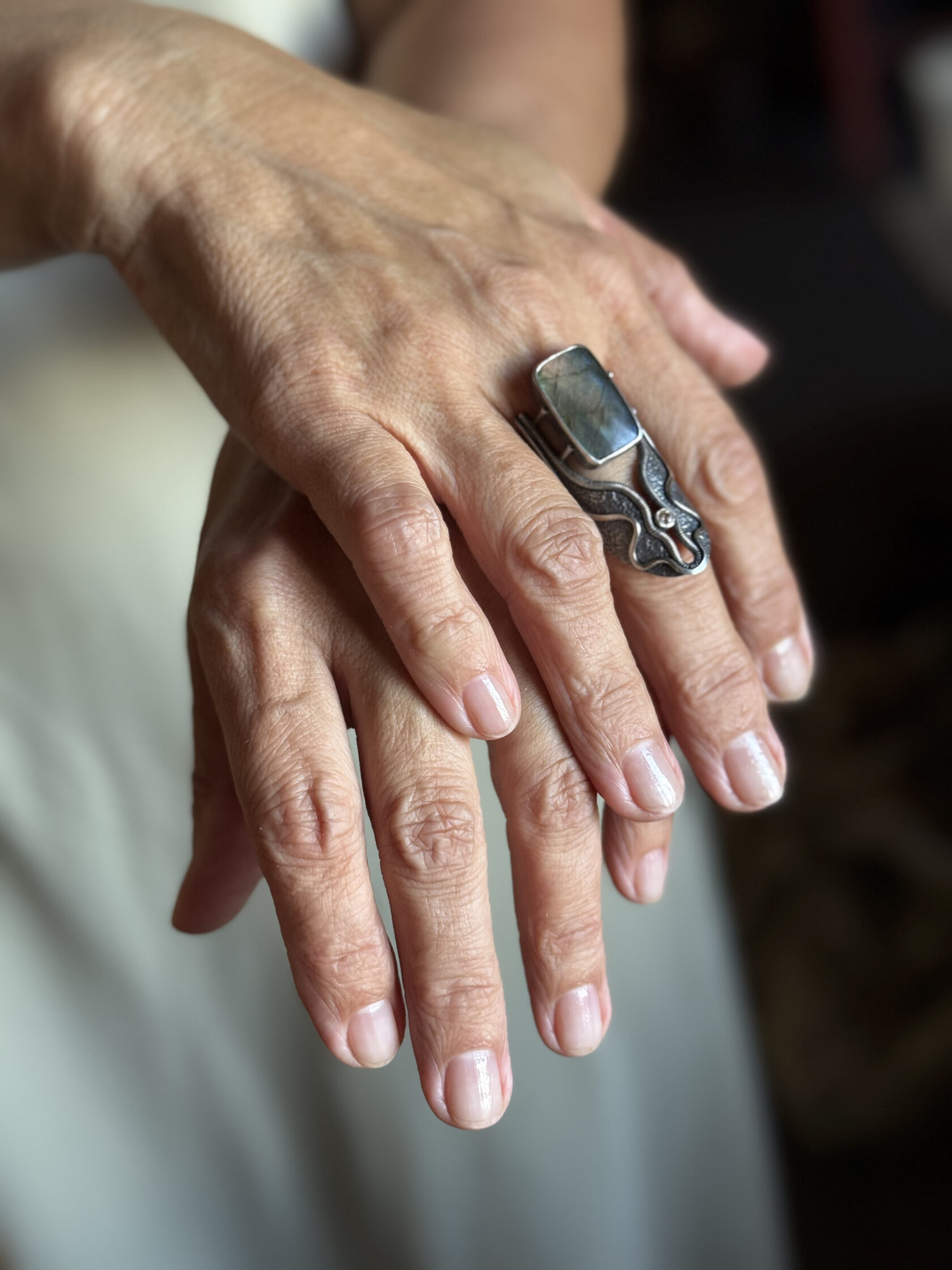
The main stages of making a sterling silver ring by hand, from forming and construction to surface and finishing.
READ →The boundary between evidence of handwork, intentional texture and a defect.
03Differences in process, repetition, variation and author control.
04What the production method actually means and why method alone does not define quality.
05Where the value of handwork comes from beyond the number of hours spent.
06What one-of-a-kind means and how a unique piece differs from repeated production.
Where to find independent makers, how to evaluate a piece and how to match your own style with unusual form and a strong visual presence.
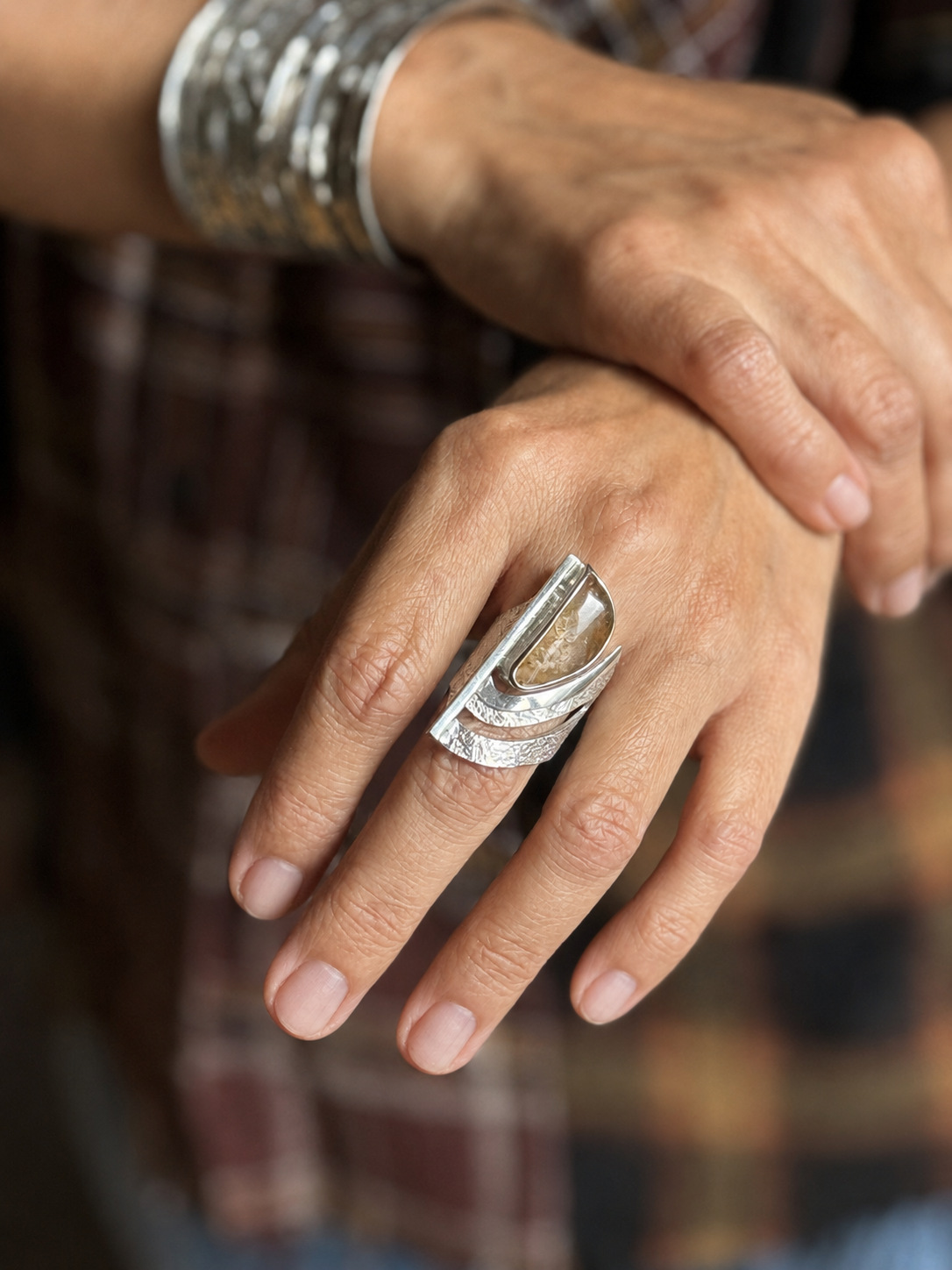
Where to look for independent jewelers and why authored work often sits outside conventional retail channels.
READ →What to look for in style, construction, materials and the maker’s approach.
03What distinguishes authored craft from simply unusual styling.
04Form, fit, surface, stone, handwork and authorship.
05How a visually strong ring interacts with the hand, clothing and other jewelry.
