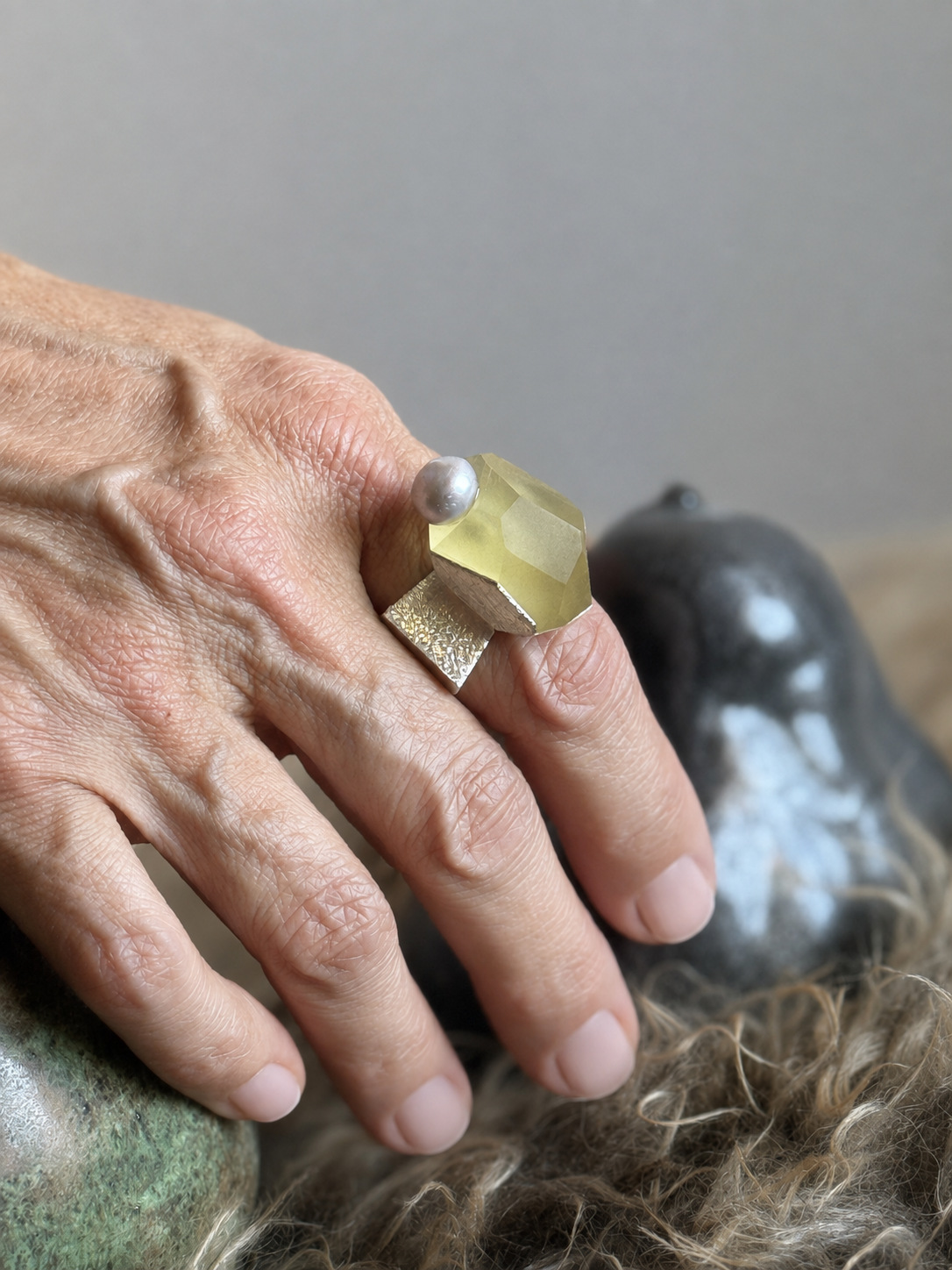
 Lemon CrystalHand-cut matte citrine, a pearl and a restrained silver geometry.
NP STUDIO / JOURNAL / EAR CUFF
What Is an Ear Cuff and How Do You Wear One?
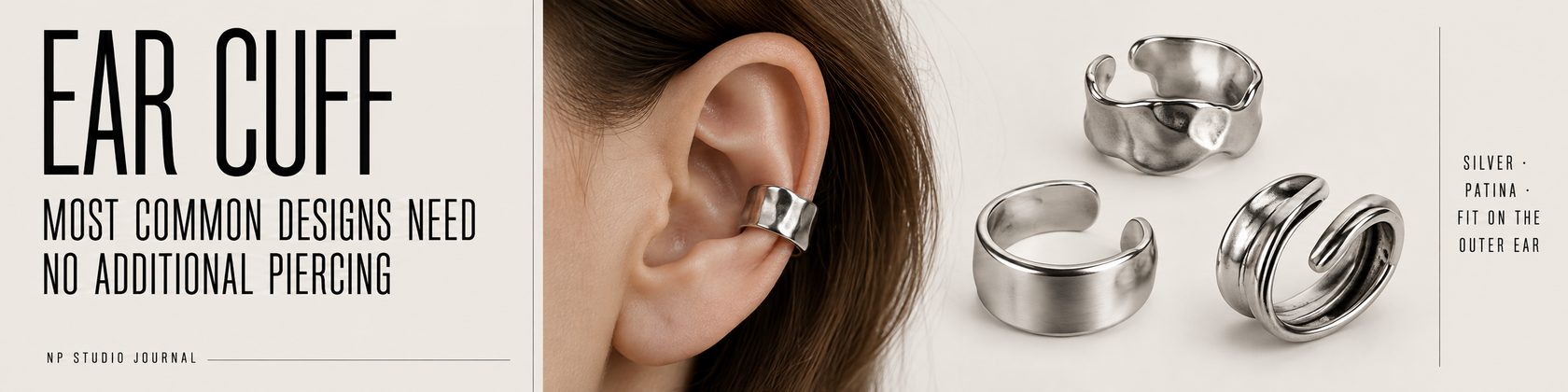
An ear cuff sits on the outer ear and, in most common designs, does not need an additional piercing. The goal is not to clamp it as tightly as possible, but to find a suitable zone and a fit that stays in place without excessive pressure.
Direct answer
An ear cuff is jewelry that wraps around or grips the outer part of the ear. Most modern cuffs are designed to be worn without an additional piercing and stay in place through their geometry and gentle metal tension. A proper fit should be secure enough not to slip, but it should not cause significant pain, numbness or excessive pressure.
These are real NP Studio works. They are not examples of the earring type discussed in this article; they introduce the studio’s visual language through form, surface, scale and construction.
Lemon CrystalHand-cut matte citrine, a pearl and a restrained silver geometry. 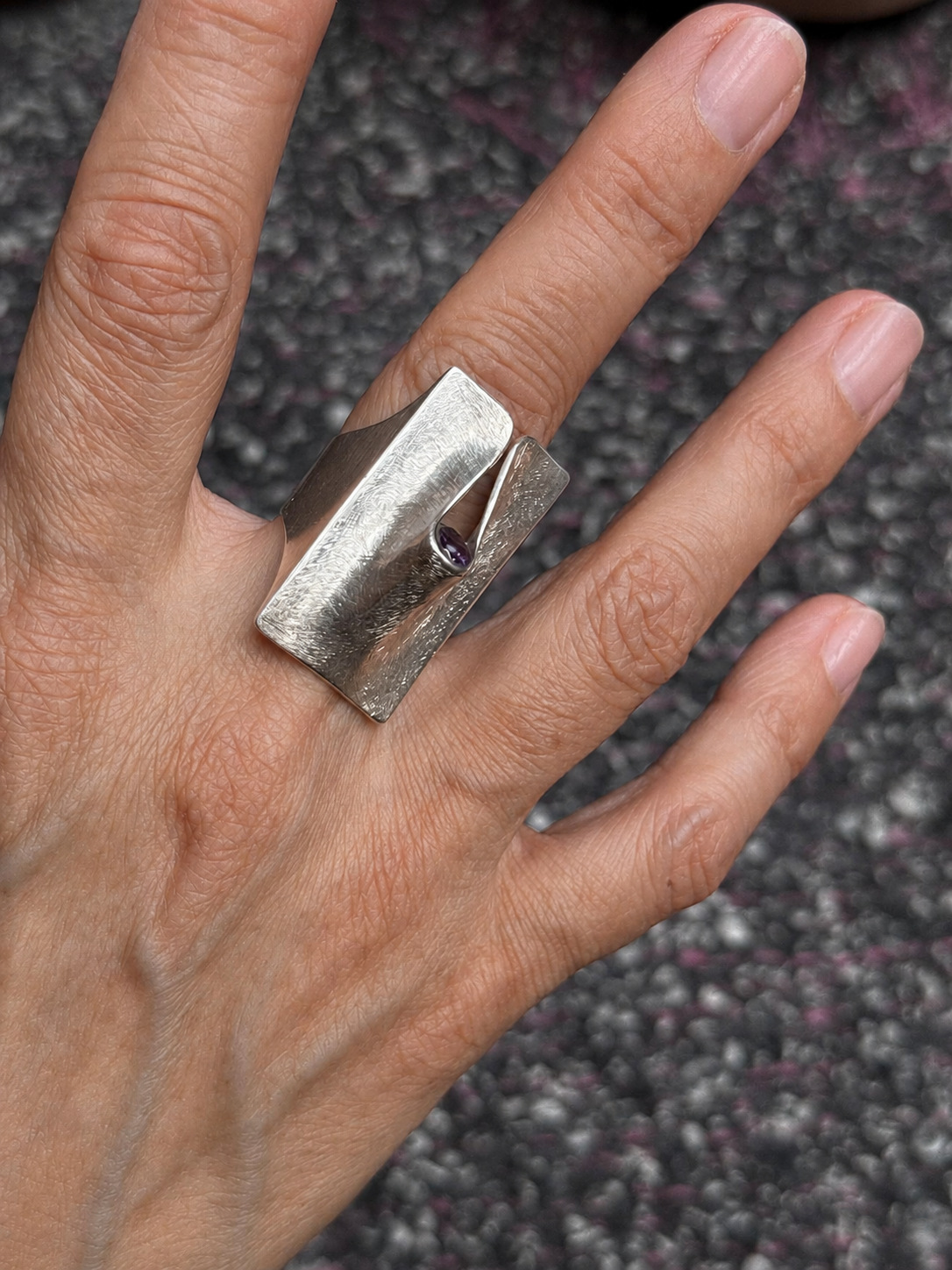 Soft FoldA folded form, amethyst and a silver surface with a skin-like texture.
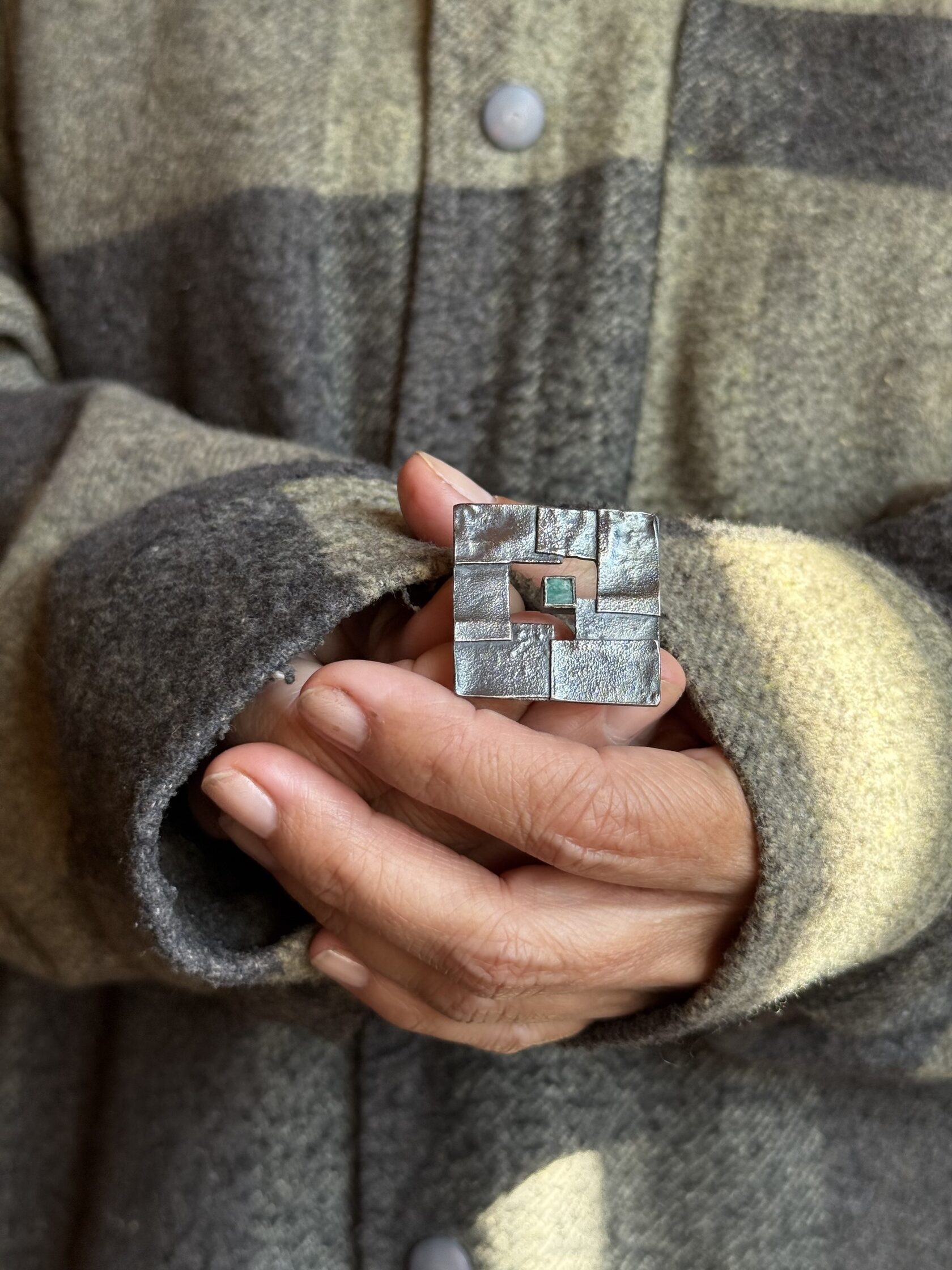 Grid ArchitectureBlock-like silver, fire-formed texture, amazonite and architectural scale.
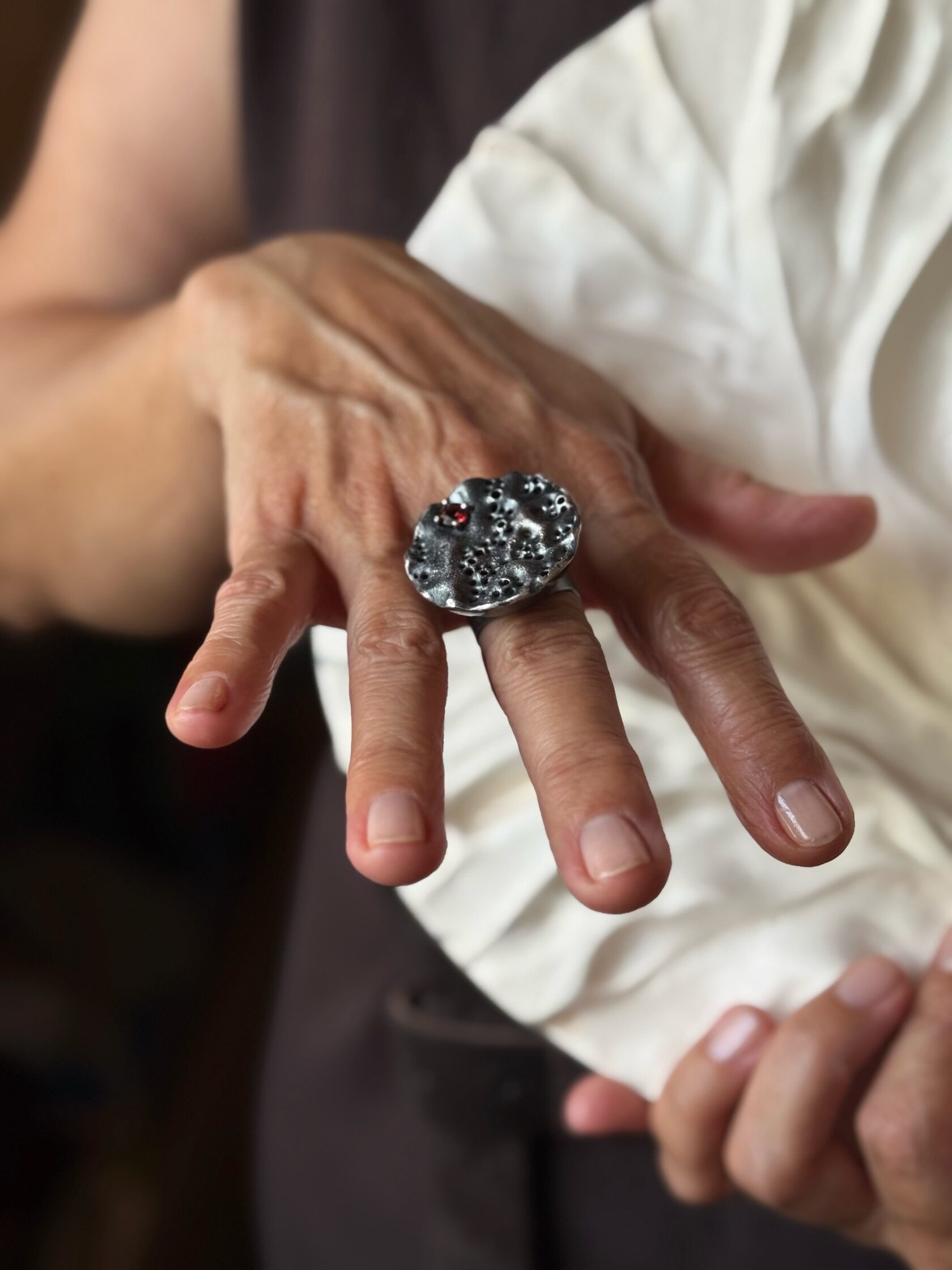 Surface with GarnetDark patina, garnet crystal and an irregular landscape-like surface.
What is an ear cuff?
An ear cuff is jewelry that wraps around or grips the outer edge of the ear. Unlike a stud or a conventional hoop, its basic fit usually does not depend on a post passing through the lobe: the cuff is held directly on the outer ear.
That does not mean every object sold as a “cuff” has identical mechanics. Retail terminology overlaps, but for a common non-pierced ear cuff, the defining idea is outer-ear placement without an additional piercing.
For the broader taxonomy, see Types of Earrings: Studs, Hoops, Huggies, Drops and More. For the attachment hardware used across pierced earring types, see Types of Earring Backs and Closures.
Do you need a piercing?
Most common ear cuffs are designed to be worn without an additional piercing. They stay on through their shape, a small open gap and contact with the outer rim of the ear.
However, brands do not use the term “ear cuff” with perfect consistency. For a specific piece, look at the actual construction and placement rather than relying on the product name alone.
How does an ear cuff stay on?
A non-pierced cuff works through a combination of three things: the cuff’s inner geometry, the shape of the outer ear and gentle metal tension. Correct fit does not mean maximum compression.
The inner line of the cuff needs to match an accessible part of the outer ear closely enough to avoid obvious looseness.
The cuff is moved into a zone where ear geometry helps retain it rather than relying only on pressure.
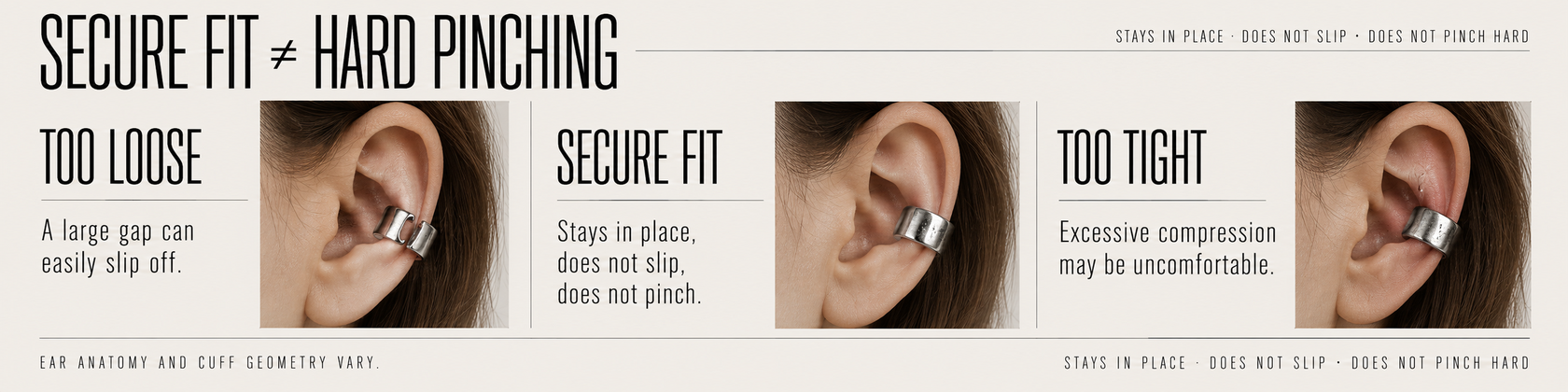
Moderate pressure can help retention, but strong pinching is not the goal.

Where is an ear cuff usually worn?
An ear cuff commonly sits on the outer rim of the ear, often around the helix area. The exact position depends on where the piece can pass over a thinner accessible edge and then settle onto a more stable zone.
There is no one universal placement point for every person and every cuff. Ear anatomy varies, and different cuffs use different inner radii, widths, openings and stiffness.
How to put on an ear cuff
For a typical non-pierced cuff, the process should be gentle and non-invasive:
- Find a thinner accessible edge. The cuff should slide onto that edge without force.
- Guide the open gap over the edge. Do not force it across a section that is too thick.
- Move it toward the intended position. Slide slowly until it reaches a more stable zone.
- Check retention. During normal head movement, the cuff should not slip off easily.
- If the design is adjustable, make only a gentle correction. Avoid repeated large bends.
If the cuff causes significant or persistent pain, numbness or skin injury, remove it and reassess the fit. Strong pressure is not required for a secure cuff.
How should a properly fitted cuff feel?
A workable fit combines two things: the cuff stays in place during ordinary movement, and it does not feel like a hard clamp. Light contact and gentle pressure are expected; pronounced pain or numbness are reasons to remove the piece.
A cuff that is too loose tends to wobble or slide. A cuff that is too tight creates excessive compression, which should not be treated as a sign of security.
Adjustable vs fixed-form cuffs
Not every ear cuff is designed to be adjustable. Some constructions allow a small fit correction through their gap and metal thickness; others are intended to keep a fixed geometry.
Repeated bending should not be treated as the normal way to put on a cuff. With sterling silver in particular, repeated large deformation can fatigue the metal over time. If a cuff needs major opening and closing every time, the fit or construction should be reconsidered.
Why can an ear cuff fall off?
- the opening is too wide for the chosen placement zone;
- the inner geometry does not match the outer-ear shape well;
- the cuff sits too close to a thinner edge and can slide back off;
- the piece has been deformed or opened too far;
- the particular construction simply does not suit that ear anatomy.
There is no universal ear cuff that is guaranteed to fit every ear in the same way.
Ear cuff vs clip-on earring
An ear cuff usually grips the outer ear or cartilage, while a clip-on earring commonly grips the lobe. This is a practical placement distinction rather than a claim that every retailer uses the terminology identically.
When naming is ambiguous, the actual geometry and attachment point are more useful than the label alone.
Material and finish
Material affects weight, stiffness, adjustment behavior and surface feel, but material alone does not determine whether a cuff fits correctly. With sterling silver, “slightly adjustable” should not be confused with “safe to bend indefinitely.”
If the question is specifically about sterling silver and skin sensitivity, see Is Sterling Silver Hypoallergenic?.
NP Studio: form as construction
At NP Studio, form is usually developed together with surface and making process. Silver may be matte, patinated, fire-textured, built into strict geometry or shaped into a more organic line.
For a small object such as a cuff, that relationship matters even more: visual character has to work with real fit, metal thickness and the way the object meets the body. Expression does not replace construction; it grows from it.
Related Journal
FAQ
1. Do you need a piercing for an ear cuff?
Most common ear cuffs do not require an additional piercing: they grip the outer ear through shape and gentle tension. Product naming can vary, so the exact construction should still be checked.
2. Where on the ear do you wear an ear cuff?
An ear cuff commonly sits on the outer rim of the ear, often around the helix area. The exact zone depends on the cuff geometry and the wearer’s ear anatomy.
3. How does an ear cuff stay on without a piercing?
It wraps around an accessible edge of the ear and stays in place through internal geometry, metal shape and moderate pressure. The fit should feel secure, not painful.
4. How do you put on an ear cuff?
A common method is to slide the cuff over a thinner accessible edge of the ear and then move it gently into the intended position. If the design allows adjustment, make only a small change without force.
5. Should an ear cuff squeeze the ear tightly?
No. Strong compression is not a sign of correct fit. The cuff should stay in place during normal movement without significant pain, numbness or excessive pressure.
6. Why does an ear cuff fall off?
Possible causes include an opening that is too wide, unsuitable inner geometry, the wrong placement zone, deformation or a mismatch between the cuff and the wearer’s ear anatomy.
7. Are all ear cuffs adjustable?
No. Some designs allow a small fit adjustment; others are intended to remain in a fixed form. Do not assume every cuff should be bent.
8. Can you keep bending a sterling silver ear cuff?
Repeated large bending should not be treated as normal use. Repeated deformation can fatigue metal, and safe adjustment depends on thickness, shape and the specific design.
9. What is the difference between an ear cuff and clip-on earrings?
An ear cuff usually grips the outer ear or cartilage, while a clip-on earring commonly grips the lobe. Market names can overlap, so the actual placement matters more than the label alone.
10. Does the same ear cuff fit every ear?
Not necessarily. Outer-ear shape, tissue thickness and accessible placement zones vary, so the same cuff can fit different people differently.
NP STUDIO / SELECTED WORKS
Two more real studio works
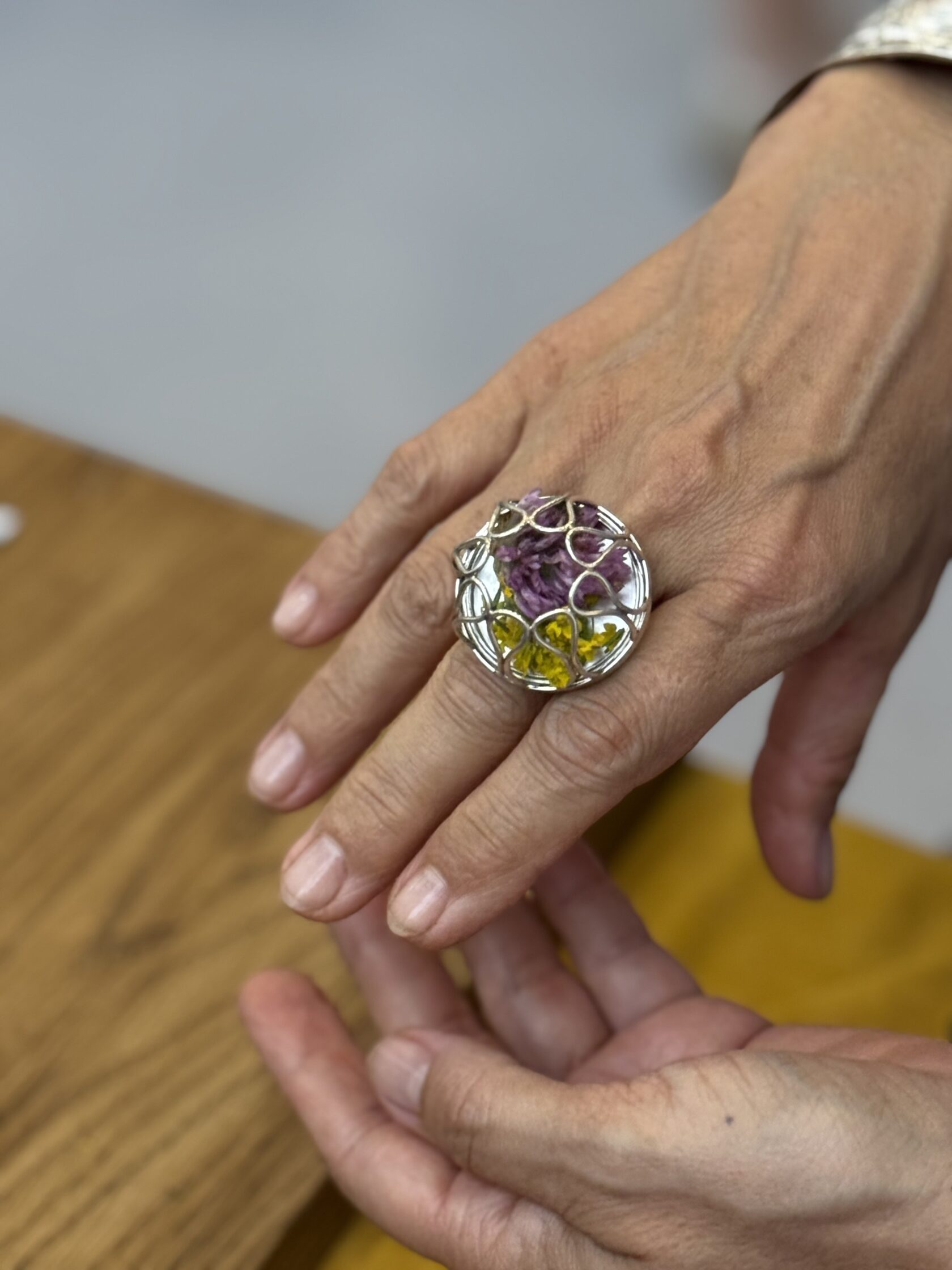
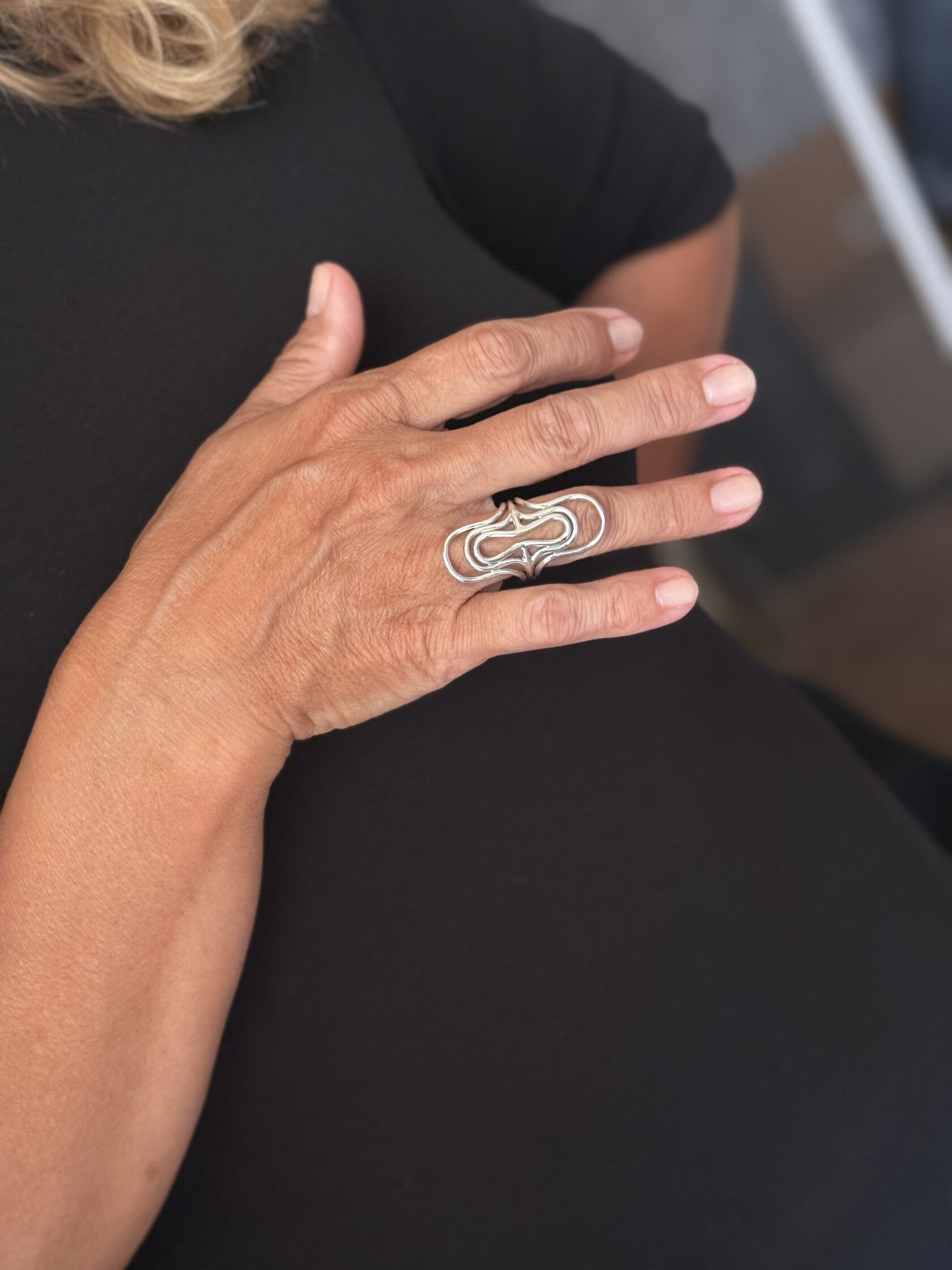
These are not examples of ear cuffs. They return the page to the visual language of NP Studio after the technical explanation.
NEXT / WORKS
Explore Works
The NP Studio archive shows different surfaces, stones, scales and ways of working with sterling silver.
View WorksNEXT / CUSTOM
Discuss a custom piece
If you have a specific form, size or construction in mind, a reference image and short description are enough to start the conversation.
Discuss Custom