Is sterling silver hypoallergenic?
Sterling silver is often well tolerated, but 925 does not mean zero reaction risk for every person. The mark describes silver content, not individual skin tolerance.
NP STUDIO / JOURNAL / STERLING SILVER & SKIN
Sterling silver is often well tolerated, but a 925 mark is not a universal guarantee that no skin reaction will occur. It describes silver fineness, not individual skin tolerance and not the complete recipe of every other metal in the alloy.
The useful questions are therefore separate: what 925 actually means, whether nickel may be present, how allergic contact dermatitis differs from ordinary irritation, and why redness under a ring cannot be diagnosed by appearance alone.
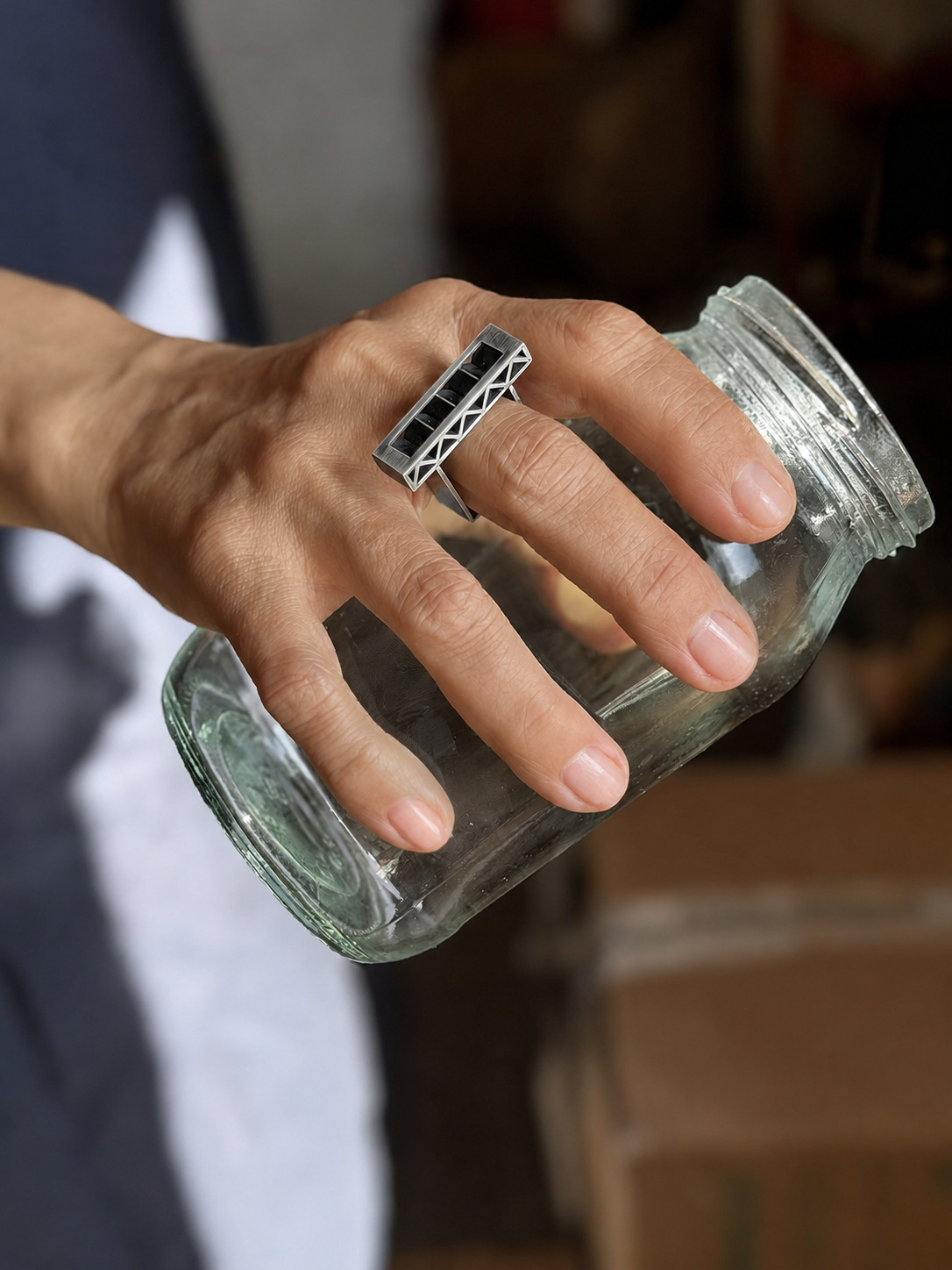
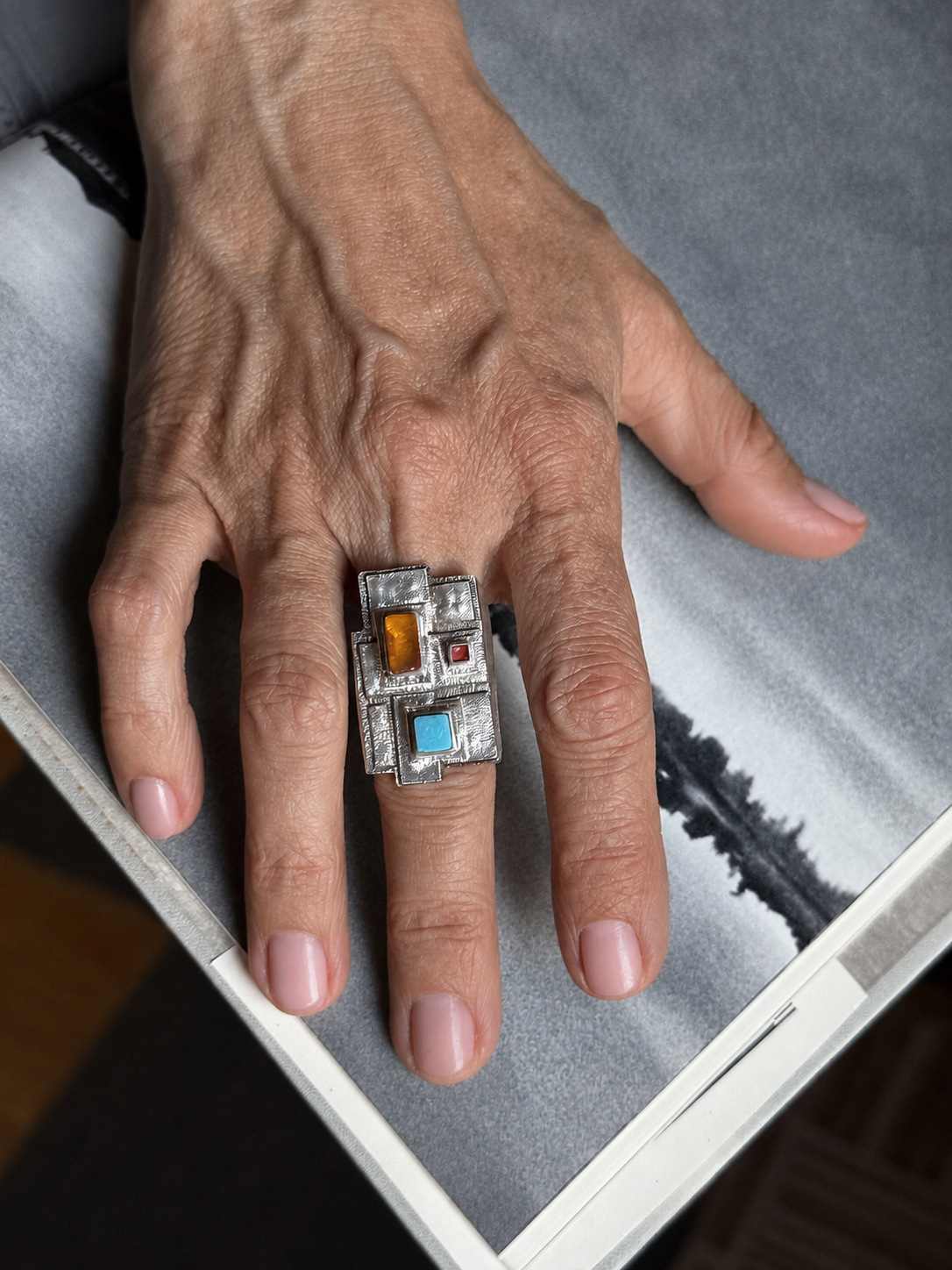
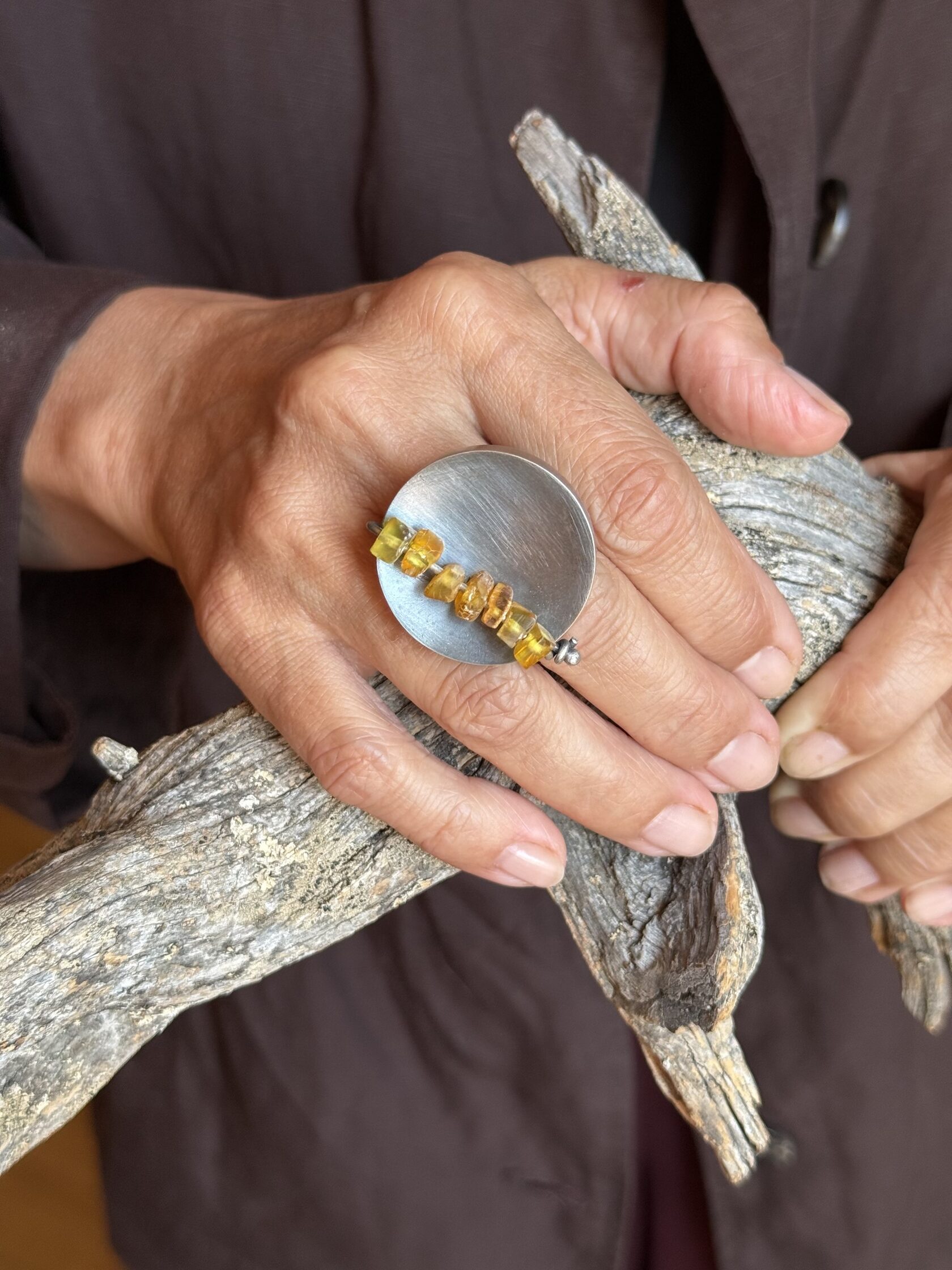
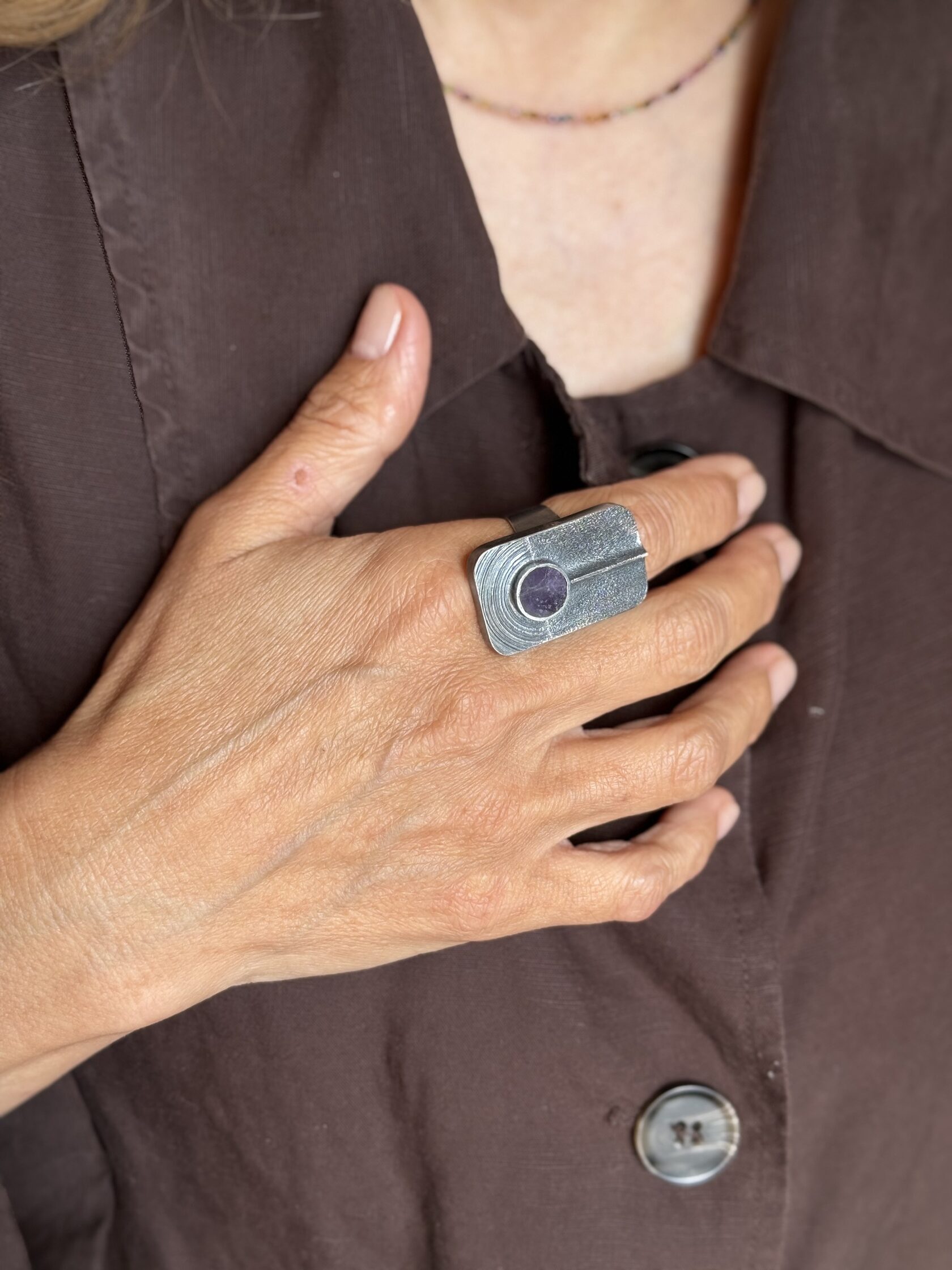
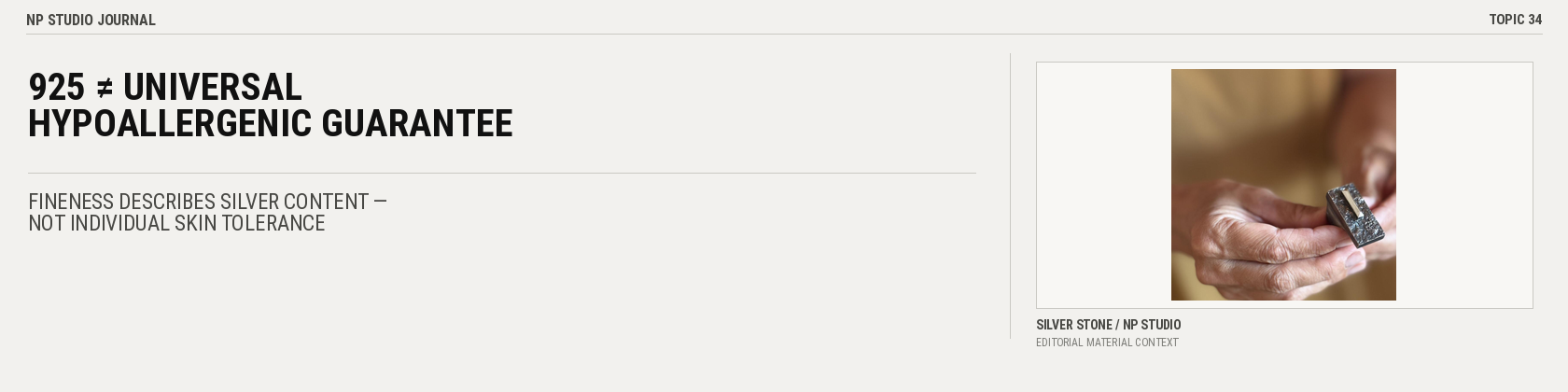
Sterling silver is often well tolerated, but a 925 mark is not a universal guarantee that no skin reaction will occur. It means the alloy contains 92.5% silver, but it does not by itself identify every metal in the remaining 7.5%. Nickel is a common contact allergen, while redness or itching under a ring can also come from irritation caused by friction, soap, water or trapped residue. “925,” “nickel-free” and “hypoallergenic” therefore should not be treated as zero-risk promises for every person.
A 925 mark means 925 parts silver per 1,000, or 92.5% silver. The remaining 7.5% consists of alloying metals that give sterling silver practical working properties.
STERLING SILVER ≠ PURE SILVER. Sterling is an alloy rather than chemically pure silver. And 925 ≠ FULL ALLOY RECIPE: the fineness mark does not list every metal in the remaining 7.5%.
For the detailed composition/definition question, see What Is Sterling Silver?.
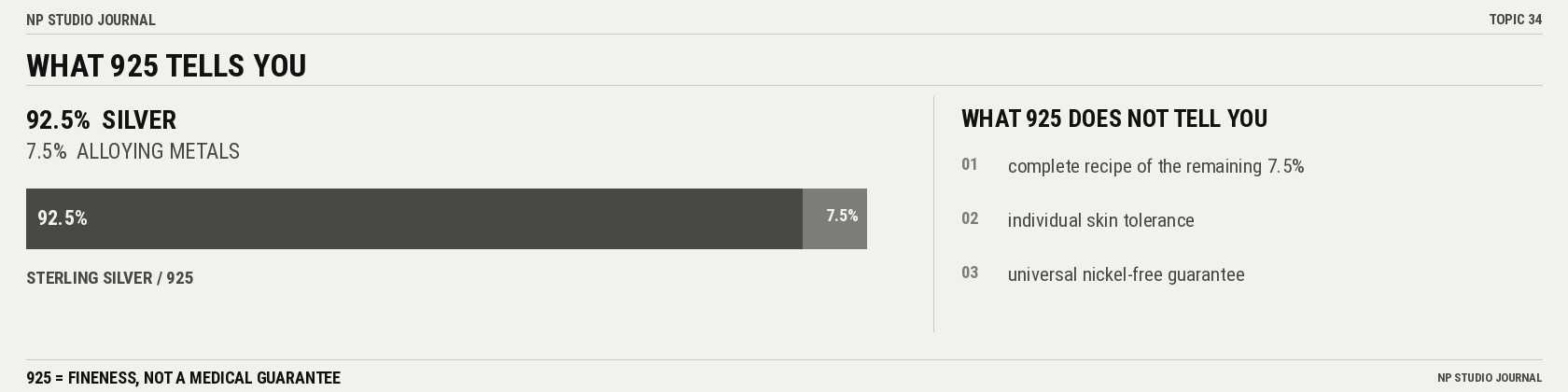
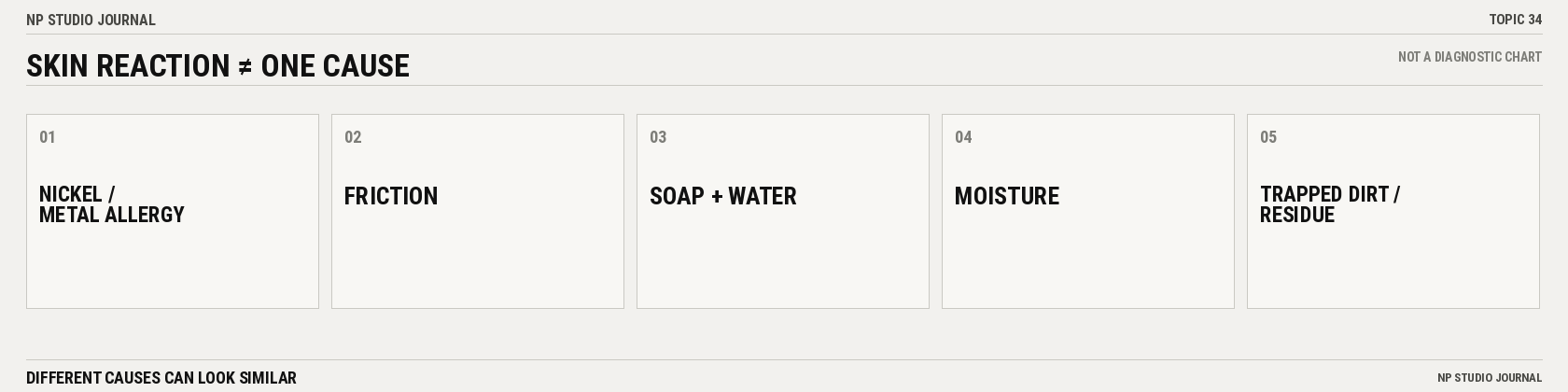
A reaction under a ring does not have one universal cause. A metal allergy is possible, but a visually similar rash or irritation may also be triggered by friction, particles and dirt, soap and water, or moisture trapped beneath jewelry.
PHOTO / RASH APPEARANCE ≠ DIAGNOSIS. Redness, itching or scaling in a photograph does not identify the responsible material or mechanism.
It can, depending on the particular alloy recipe. Sterling silver contains 92.5% silver and is commonly alloyed with copper, but a 925 mark is not a certificate listing every component of the remaining 7.5%. DermNet notes that some sterling alloys may contain traces of other metals, including nickel.
Nickel is a common cause of allergic contact dermatitis and a well-established jewelry allergen.
The mark describes silver fineness. A specific nickel-free claim needs separate information about the alloy or relevant documentation; 925 alone is not enough.
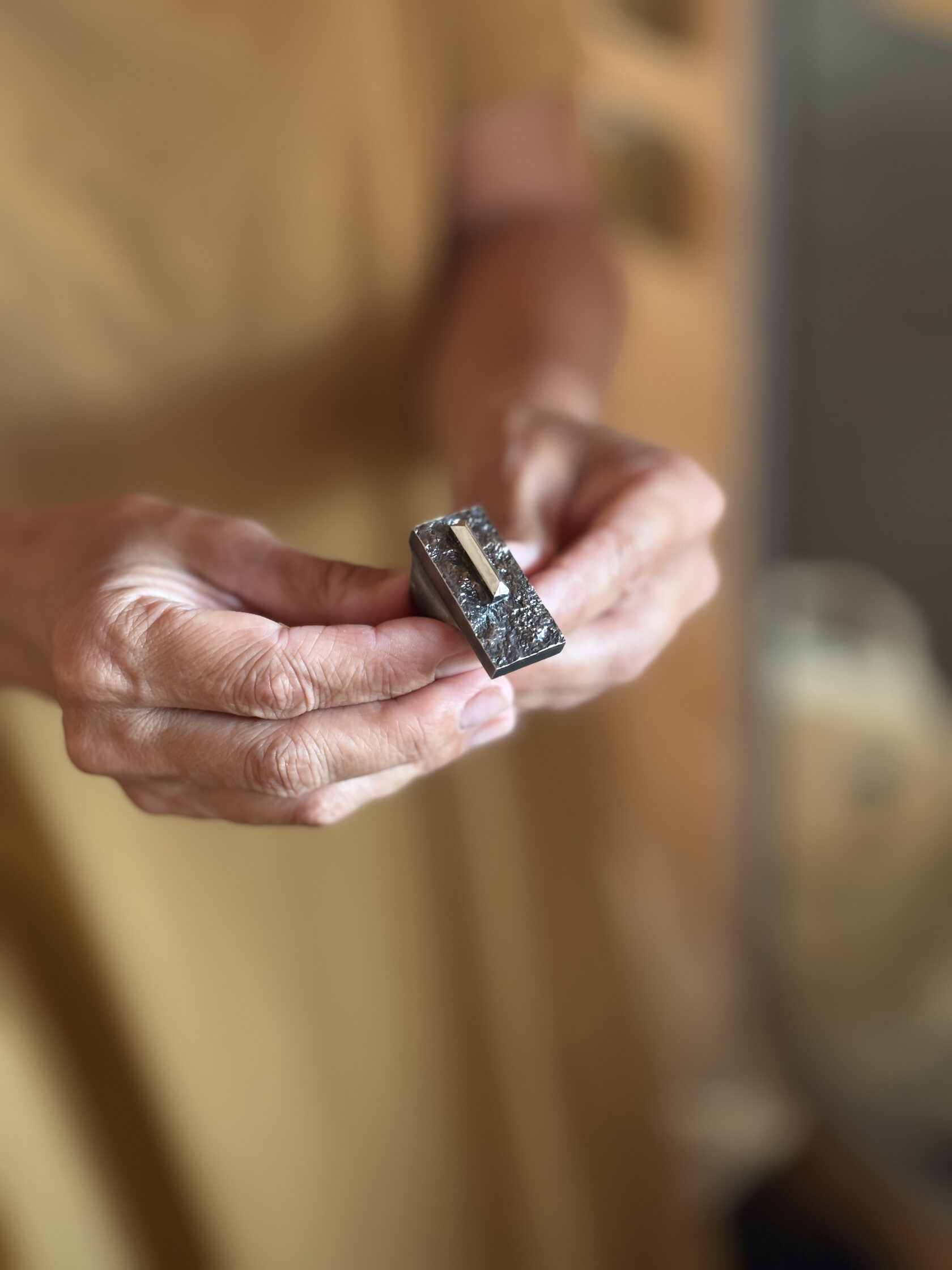
This work makes sterling silver look almost like rough stone: the heated metal was impressed with natural granite. Appearance and process can change radically while “925” still describes fineness—not appearance and not an individual skin reaction.
Allergic contact dermatitis involves an immune response to a substance to which a person has become sensitized. Irritant contact dermatitis does not require an allergy; friction, water, soap, dirt and prolonged moisture under jewelry can all contribute.
| Criterion | Allergic contact dermatitis | Irritant reaction |
|---|---|---|
| Trigger | Contact with an allergen such as nickel in a sensitized person. | Friction, water, soap, dirt, moisture and other irritants. |
| Prior sensitisation | Immune sensitisation is generally involved. | Allergic sensitisation is not required. |
| Can it happen under a ring? | Yes. | Yes. |
| Can the jewelry be genuine sterling? | Yes. Authenticity does not exclude reaction to another component. | Yes. Genuine sterling can still trap moisture or soap or create friction. |
| Can a photo alone diagnose it? | No. | No. |
| Typical next step | Stop contact with a suspect item if the reaction recurs and seek medical assessment when appropriate. | Remove possible irritants; if the reaction persists or returns, seek medical assessment. |
Similar-looking redness does not establish the same cause. This table explains terms; it is not a self-diagnosis tool.
No previous problem is not a lifelong guarantee. Allergic contact dermatitis can develop after previous exposures; DermNet notes that some people develop jewelry dermatitis after wearing metal items for years without symptoms.
Past tolerance is useful history, but it does not guarantee permanent tolerance.
Likewise, NICKEL ALLERGY ≠ SILVER ALLERGY. If a person reacts to jewelry, it is not valid to assume automatically that silver itself is the allergen; another component, coating or a non-allergic mechanism may be responsible.
Nickel-free addresses nickel, not every possible cause of a skin reaction. Even where nickel is absent or nickel release meets a stated requirement, individual sensitivity, other materials and non-allergic irritation can still matter.
Removing one common allergen reduces one specific concern; it does not create a medical zero-reaction guarantee for every person.
The same applies to “hypoallergenic”: HYPOALLERGENIC ≠ ZERO-RISK. It should not be interpreted as a promise that no individual can react.
For articles intended for direct and prolonged contact with skin—including finger rings—the EU restriction addresses the release rate of nickel: no more than 0.5 μg/cm²/week. For post assemblies inserted into pierced parts of the body, the limit is 0.2 μg/cm²/week.
EU COMPLIANT ≠ ZERO NICKEL. The rule controls nickel release/migration; it is not a universal “zero nickel content” requirement.
This is EU regulatory context, not Russian law and not a medical guarantee of individual tolerance.
Sterling silver is an alloy containing 92.5% silver. Silver-plated jewelry is constructed differently: a layer of silver is applied over a base metal. A silver-colored surface therefore does not establish that the entire piece is sterling silver.
STERLING SILVER ≠ SILVER-PLATED. For the material-construction boundary, see Sterling Silver vs Silver-Plated.
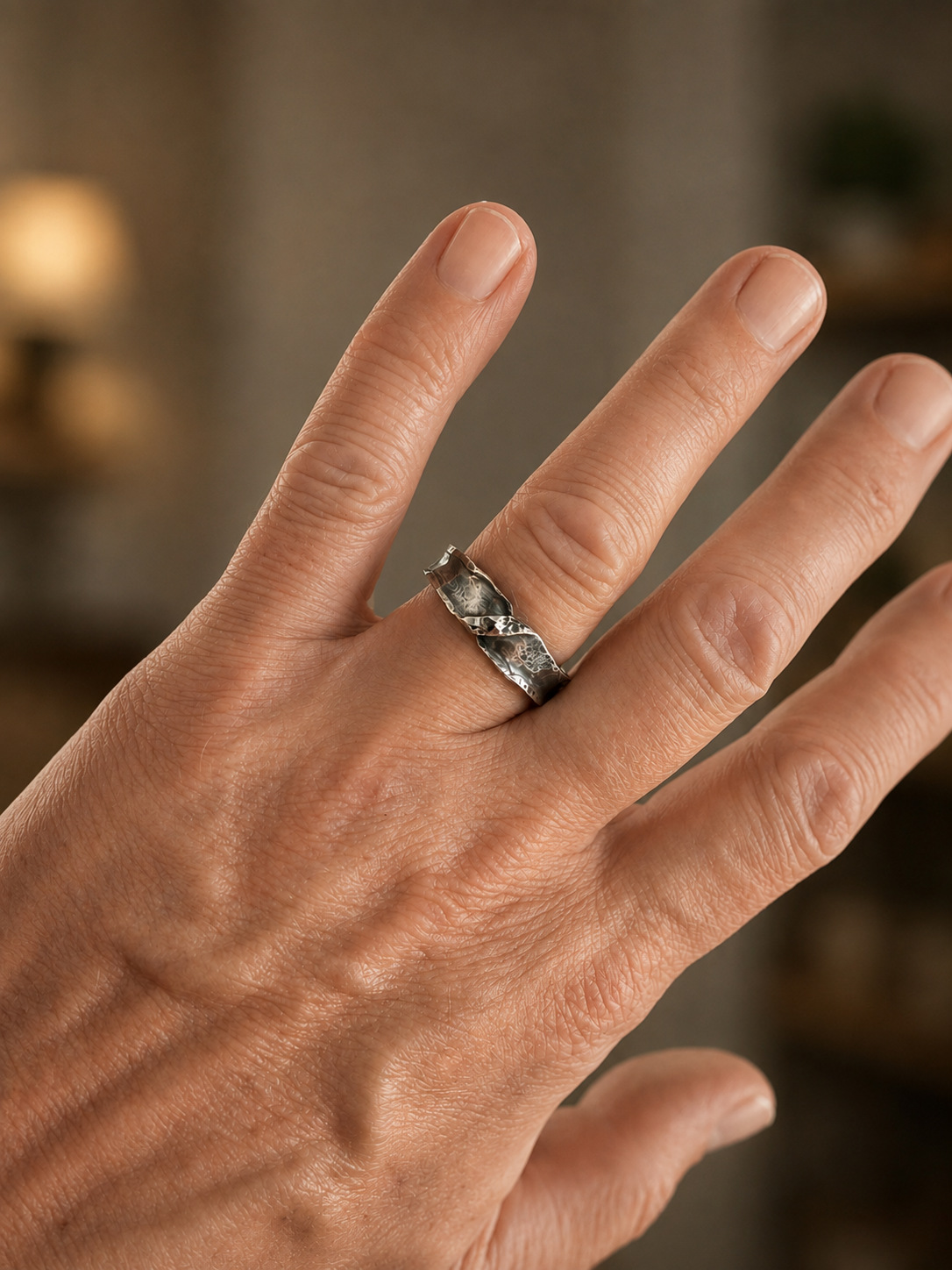
Here sterling silver is shaped with hammers, patinated and selectively polished. The visual surface cannot reveal the complete chemistry of the alloy. Texture, patina color and fineness are different kinds of information.
Tarnish is a surface change in the metal and its compounds; it is not a medical diagnosis. A colored mark on skin also does not by itself establish an allergic mechanism.
TARNISH ≠ ALLERGY.
GREEN / DARK MARK ≠ AUTOMATICALLY ALLERGY.
If the specific question is why silver can leave a green mark, that search intent is treated separately in Why Does Silver Turn Green on Skin?.
Material authenticity is a separate question from skin compatibility. For authenticity checks, see How to Tell If Silver Is Real.
If a reaction repeatedly returns with a particular item, is significant, blisters, appears infected or does not settle after contact stops, the cause is better assessed medically rather than from an article or photograph.
PHOTO / RASH APPEARANCE ≠ DIAGNOSIS. A dermatologist can assess exposure history and, when appropriate, use clinical methods such as patch testing to investigate contact allergy.
This article provides general material and skin-compatibility education. It does not diagnose a condition or prescribe treatment.
In the works shown here, NP Studio uses sterling silver as a primary structural material—from the stone-free Bridge to pieces combining silver with amber, turquoise, enamel or other elements.
That describes material and studio practice. NP STUDIO USES 925 ≠ MEDICAL GUARANTEE. Fineness is not a promise of universal skin tolerance and does not replace exact alloy information or medical assessment when a reaction repeatedly occurs.
Sterling silver is often well tolerated, but 925 does not mean zero reaction risk for every person. The mark describes silver content, not individual skin tolerance.
A reaction to jewelry is possible, but symptoms do not prove that silver itself is the allergen. Other alloy components or non-allergic irritation may be involved.
Alloy recipes vary. Sterling is commonly alloyed with copper, while some alloys may contain traces of other metals including nickel. A 925 stamp alone does not guarantee nickel-free composition.
It means 92.5% silver, or 925 parts silver per 1,000 parts of alloy. It does not list the complete composition of the remaining 7.5%.
Copper is commonly used as an alloying metal in sterling silver, but redness or itching cannot be assigned to copper from appearance alone. Jewelry reactions have multiple causes, while nickel and cobalt are well-established common metal allergens.
Allergic contact dermatitis involves an immune response to an allergen. Irritation can occur without allergy—for example from friction, soap, water, dirt or moisture under a ring.
No. 925 describes the proportion of silver; it is not a complete certificate of the other alloying metals.
With confirmed nickel allergy, it is important to avoid jewelry that provides relevant nickel exposure. A 925 stamp alone does not provide enough information about the exact item, so composition claims should be checked and individual sensitivity discussed with a clinician.
Possible causes include metal allergy, but also friction, soap, water, moisture or trapped residue. Appearance alone cannot reliably identify the cause.
Stop contact with the suspect item and seek medical assessment if the reaction repeatedly returns, is significant, blisters, appears infected or does not settle.
NEXT STEP / WORKS
Fineness is only one part of a material. Across NP Studio works, sterling silver becomes structure, surface, volume and a base for combinations with stones and other elements.
See how NP Studio works with sterling silver