
NP STUDIO / JOURNAL / MATERIAL
Why Does Silver Turn Green on Skin?
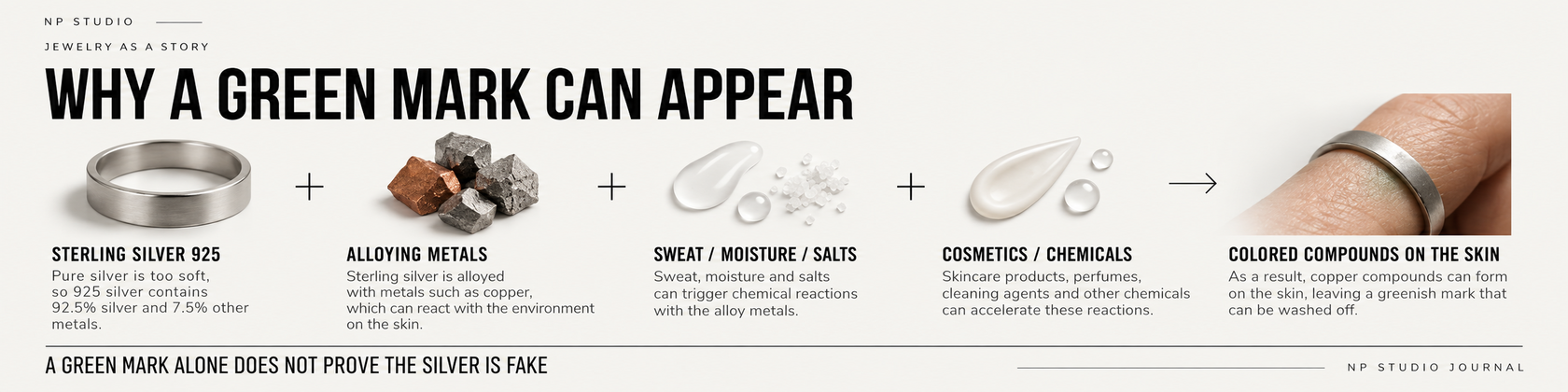
Yes, sterling silver can sometimes leave a green or greenish-dark mark on the skin, and that does not by itself mean the jewelry is fake. Sterling silver is 92.5% silver and 7.5% other metals, often including copper. Sweat, moisture, salts, cosmetics and household products can promote reactions that leave colored compounds on the skin. The effect can vary from person to person and from one day to another.
Short answer: why silver can leave a green mark
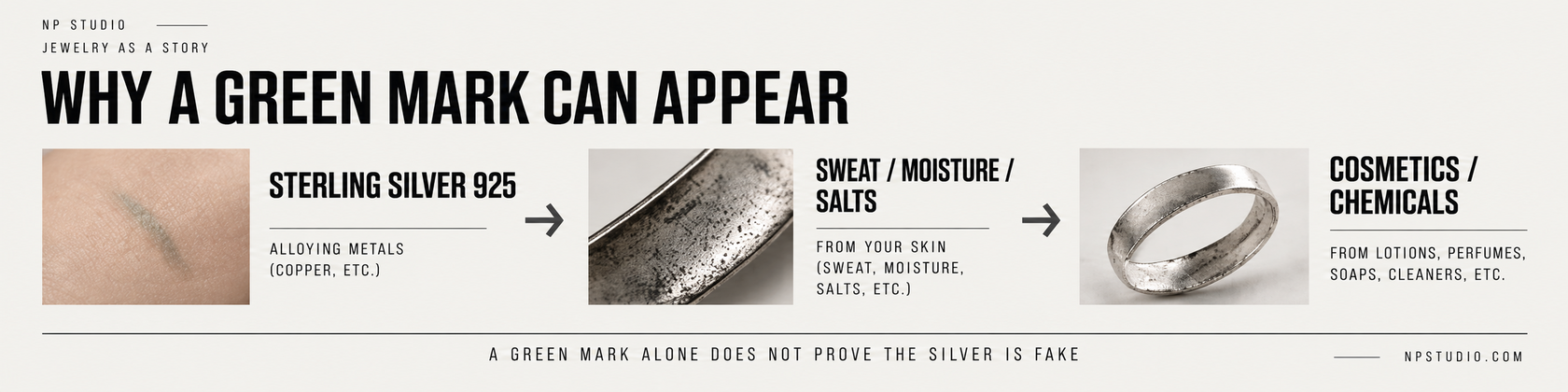
A green or greenish-dark mark usually does not mean the silver itself has literally “turned green.” More often, alloying metals interact with sweat, moisture, salts and products on the skin, and some reaction products can transfer to the skin.
A colored mark alone is not a reliable way to judge authenticity or quality.
Sterling silver 925 is an alloy, not pure silver
Sterling silver contains 92.5% silver and 7.5% other metals. Copper is commonly used as a major alloying metal, but the exact composition of that remaining 7.5% can vary.
For the material itself, see What Is Sterling Silver? →. For the hallmark, see What Does 925 Mean on Silver? →.
How copper in the alloy is connected to green marks
Copper can react with the surrounding environment more readily than silver. Under certain conditions, copper-containing reaction products can have a greenish color and transfer to the skin. That does not mean all 7.5% of the alloy in every piece is necessarily copper.
Copper beneath a silver-plated surface can also contribute to green marks when it becomes exposed. Skin color alone therefore cannot distinguish sterling silver from silver-plated jewelry.
For the role of copper, moisture and skin products, see the explanation by dermatologist Jennifer Adams at Nebraska Medicine.
Why sweat and moisture can make the reaction more likely
Sweat contains water and salts. On damp skin, the metal stays in a more reactive environment for longer, which can make visible marks more likely. Heat, exercise, heavy sweating and long uninterrupted wear can all change the conditions under a ring.
Water by itself is not the whole story. For that topic, see Can Sterling Silver Get Wet? →.
How creams, cosmetics and household products affect the result
Hand cream, sunscreen, soap, sanitizer, fragrance and cleaning products can change the chemistry at the skin-metal interface. Some products may make a mark more likely, especially when they remain trapped under a ring.
That does not mean every cream or sanitizer will automatically cause green skin. The effect depends on the product, the alloy and the conditions of wear.
Why the same ring may leave a mark today but not tomorrow
The exact same sterling silver ring can behave differently when temperature, humidity, perspiration, cosmetics or contact time change. That is why a mark can be occasional rather than constant.
Does green skin mean the silver is fake?
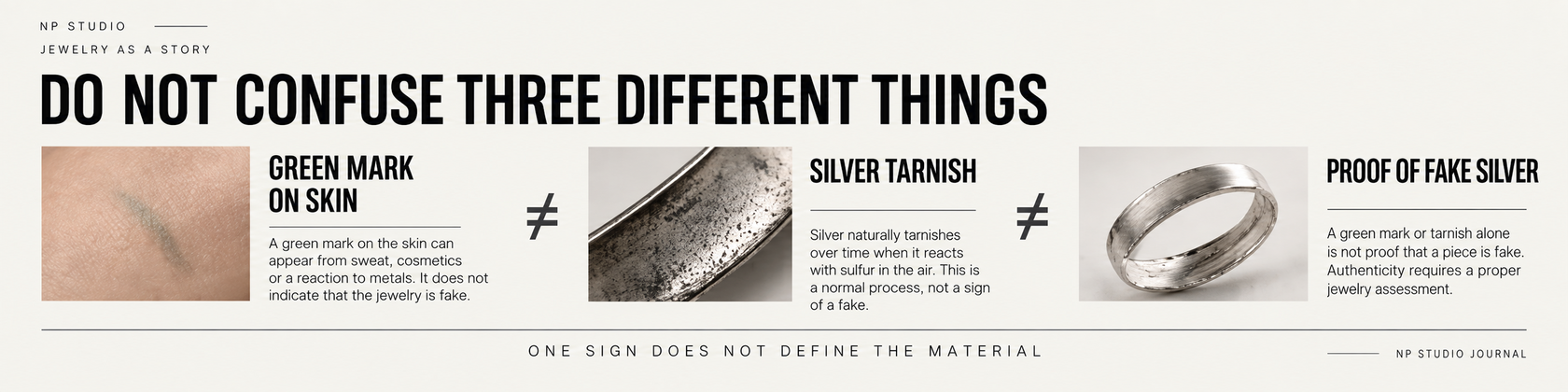
No, not necessarily. A green mark is not a stand-alone authenticity test. Real 925 sterling silver is still an alloy and may contain metals that interact with sweat, moisture and skin products.
If you have reasons to doubt the material, use proper checks instead: How to Tell If Silver Is Real →.
Silver tarnish and green skin are different processes
Darkening of the metal and coloring of the skin are not the same thing. Sterling silver can tarnish on its own surface, while a greenish skin mark is more often about colored compounds from alloying metals transferring to the skin.
For tarnish specifically, see Why Does Sterling Silver Turn Black? →.
Can real 925 sterling silver leave no marks at all?
Yes. Many sterling silver pieces leave no visible mark. Whether a mark appears depends on the alloying metals, surface condition, environment and individual wear conditions.
The absence of green skin does not prove “better” silver, just as a green mark does not prove a fake.
Is a green mark from a silver ring dangerous?
A colored mark by itself, without irritation, usually does not indicate a dangerous reaction. It may simply wash off after the jewelry is removed.
If you have itching, burning, pronounced redness, swelling, pain or persistent irritation, remove the jewelry. If symptoms are significant or continue, seek medical advice.
Is green skin the same as a metal allergy?
No. Skin discoloration and an allergic or irritant reaction are different things. You cannot diagnose an allergy from the color of a mark.
Simple discoloration without discomfort is one situation. Itching, burning, rash, swelling or pain is a different issue and should not be judged by color alone.
What to do if a sterling silver ring turns your finger green
The steps below apply to discoloration without irritation. If you have itching, a rash, burning or swelling, stop wearing the ring; seek medical advice if symptoms persist or are significant. The American Academy of Dermatology explains contact dermatitis and when to see a dermatologist.
- Remove the ring.
- Wash and completely dry the skin.
- Gently clean the jewelry using a method appropriate for the piece.
- Dry the ring thoroughly before wearing it again.
- Avoid putting it on damp skin and let lotion absorb fully first.
- Remove it around household cleaning products.
- Notice when and under what conditions the mark returns.
For cleaning, see How to Clean Sterling Silver Jewelry →. For general care, see How to Care for Sterling Silver →.
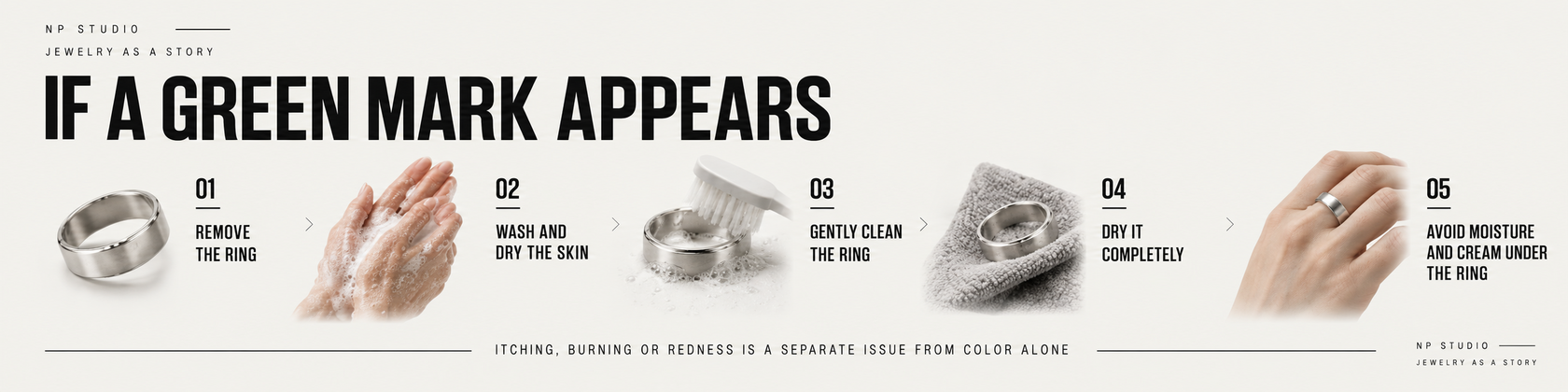
How to reduce green marks from sterling silver
You can reduce the likelihood, although no method guarantees that a mark will never appear. Keep both skin and ring dry, avoid prolonged contact with lotions and cleaning chemicals, and clean the jewelry gently when residue builds up.
If the jewelry spends a lot of time in a damp environment, reactions may become more likely. Tarnish prevention is a separate topic: How to Prevent Sterling Silver from Tarnishing →.
Would coating the inside of the ring help?
A professional coating can sometimes reduce direct contact between skin and the alloy, but it is not a permanent or universal fix. Coatings wear down and change the surface of the jewelry.
For an artist-made piece, discuss that option with the jeweler. Random clear nail polish or household coatings can alter the finish and make future maintenance or repair more difficult.
When it makes sense to check the jewelry itself
It is reasonable to verify the material if the origin is unknown, the hallmark is questionable, the seller's claim is unclear or you have other reasons to doubt that the piece is really sterling silver.
A strong or inconsistent skin reaction is still not a metal analysis. Home observations do not establish silver fineness. To verify composition, have the metal tested professionally. See How to Tell If Silver Is Real →.
How I look at this at NP Studio
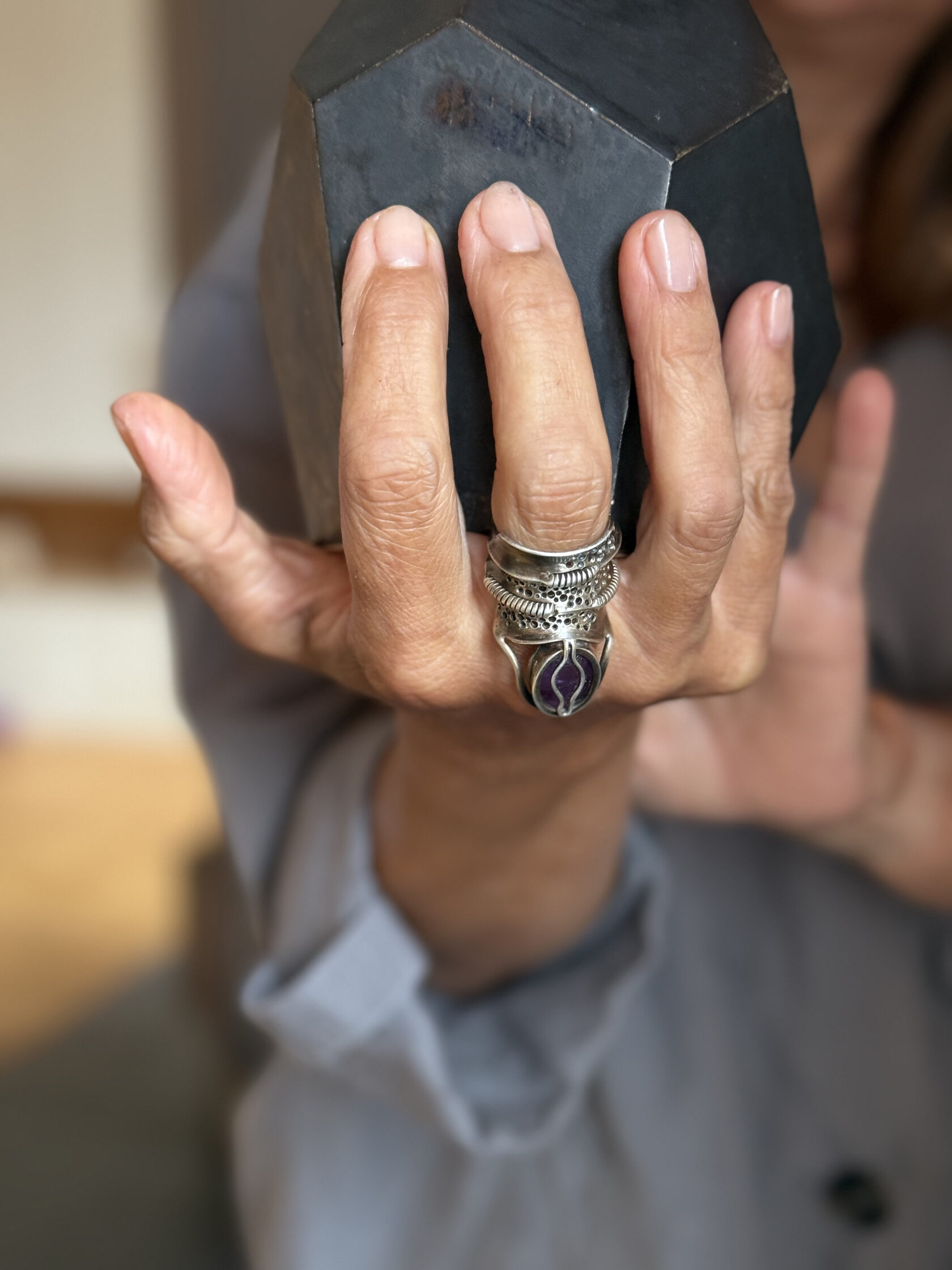
I would not use a green mark on the skin as a quality test for silver. A ring does not operate in a laboratory: it comes into contact with sweat, water, creams and household products. I first look at the material, the surface of the piece and the conditions of wear, and only then draw conclusions about what may be causing the mark.
View NP Studio worksFrequently asked questions
Related NP Studio material guides
To understand the material in more detail, read what sterling silver is, why sterling silver tarnishes, and how to tell if silver is real.
