
NP STUDIO / JOURNAL / CARE
How to Prevent Sterling Silver from Tarnishing
Tarnishing is a natural surface reaction. It cannot be eliminated completely, but it can often be slowed significantly by storing silver properly, reducing contact with moisture and chemicals, and wiping the surface gently after wear.

 View NP Studio works
Why does sterling silver tarnish?
Silver reacts with substances in the environment, especially sulfur compounds. Over time, reaction products form on the surface and can make the metal appear gray, brown or almost black.
Humidity, contamination and some chemicals can accelerate the process. For the chemistry itself, see Why Does Sterling Silver Turn Black?
Can tarnishing be prevented completely?
With ordinary uncoated sterling silver, it is unrealistic to guarantee that the surface will never change. What can be controlled is the speed of the process, and storage conditions can make a significant difference.
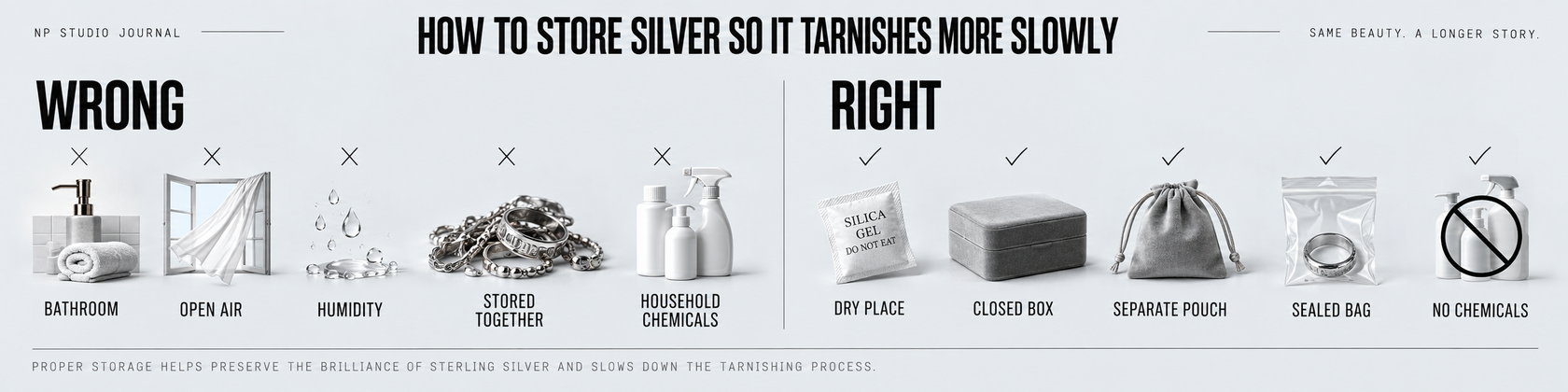
Store silver in a dry place
A bathroom, open shelf near water or other persistently damp location is a poor place for sterling silver. A dry cabinet, closed jewelry box or case is better.
Keep jewelry separate
Separate storage reduces scratching, contamination and unnecessary contact with other pieces. Use a separate compartment, soft pouch or closed bag, and make sure the jewelry is dry first.
Closed storage and anti-tarnish inserts
Reducing constant exposure to the surrounding environment can slow surface change during long storage. Closed boxes or bags can help. Anti-tarnish strips and anti-tarnish paper are also designed for storage with silver.
None of these methods makes silver permanently tarnish-proof, but they can reduce the rate of change.
Shower, pool, sauna and exercise
Cosmetics, perfume and creams
Apply creams, perfume, cosmetics and hairspray first, then put on the jewelry. This simple order reduces the amount of residue deposited directly on the silver.
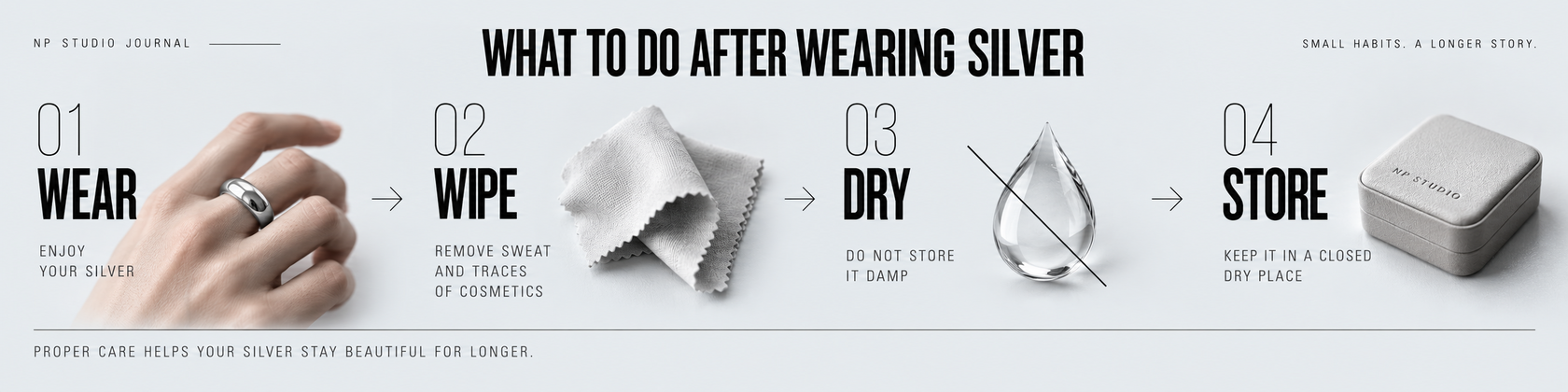
What to do after wearing silver
Remove perspiration, skin oils and cosmetic residue gently, make sure the piece is dry, and store it separately. This is preventive care rather than deep cleaning.
Why frequent polishing is not prevention
Polishing does not stop the chemical reaction that causes tarnish. Repeated aggressive polishing can alter texture, matte finishes and other intentional surface details.
If silver is already visibly tarnished, use an appropriate cleaning method instead. See How to Clean Sterling Silver Jewelry.
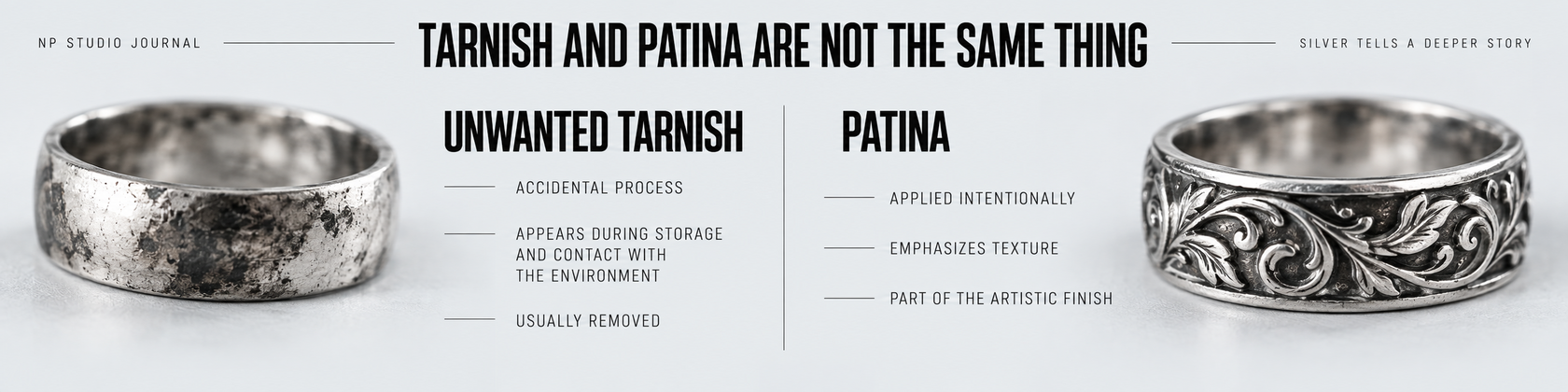
Tarnish and patina are not the same thing
Not every dark silver surface is unwanted tarnish. Patina may be applied deliberately to emphasize recesses, reveal texture and become part of the design.
A patinated piece should not automatically be cleaned back to bright white metal, because strong cleaning can remove the intended finish.
Rhodium plating and protective coatings
Some silver jewelry is rhodium plated or protected with another coating. A surface layer can reduce direct environmental contact and slow visible change, but coatings wear over time and are not suitable for every design.
What speeds up tarnishing?
| Factor | What to do |
|---|---|
| Humidity | Store in a dry place |
| Chlorine | Remove before swimming |
| Cosmetics | Put jewelry on after application |
| Perspiration | Wipe after wear |
| Household chemicals | Avoid contact |
| Open storage | Use a closed case or bag |

How silver behaves in NP Studio work
Many NP Studio pieces use strong texture, matte surfaces or intentional patina. For these pieces, generic advice such as “just polish the silver” is often inappropriate.
Dry storage, minimal chemical exposure and gentle wiping after wear usually preserve the character of the surface better.
Frequently asked questions
In short
Dry → clean → minimal chemical exposure → closed storage → minimal aggressive polishing.
READ NEXT / NP STUDIO JOURNAL
