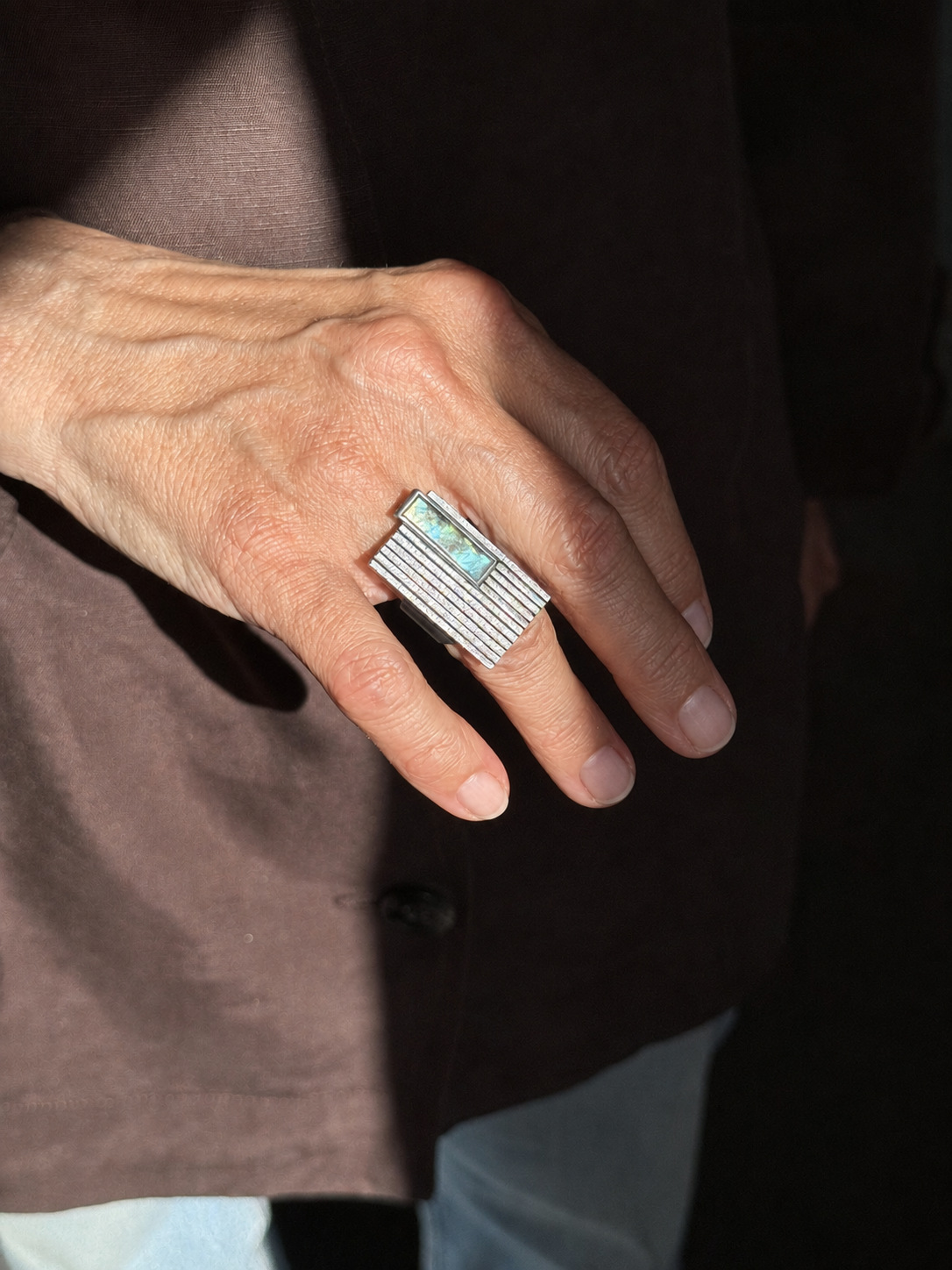
 Lines with LabradoriteA real NP Studio work shown to introduce the studio’s visual language, not closure mechanics.
NP STUDIO / JOURNAL / EARRINGS
Types of Earring Backs and Closures
An earring “back” and an earring “closure” are related but not identical ideas. A back is often a separate rear component used with a post, while closure is the broader term for the mechanism that keeps an earring in place.
Direct answer
There is no single universally best earring closure. Studs often use separate backs such as friction or push backs, screw backs or locking systems; hanging forms commonly use leverbacks or hooks, while hoops may use latch or hinged/click mechanisms. The useful choice depends on the earring construction, weight, desired security and ease of handling.
These are real NP Studio works. They are not examples of earring backs or closure mechanics; they introduce the studio’s visual language through form, surface and the treatment of sterling silver.
Lines with LabradoriteA real NP Studio work shown to introduce the studio’s visual language, not closure mechanics.  Plate with AmberA real NP Studio work with amber, kept separate from the technical closure examples.
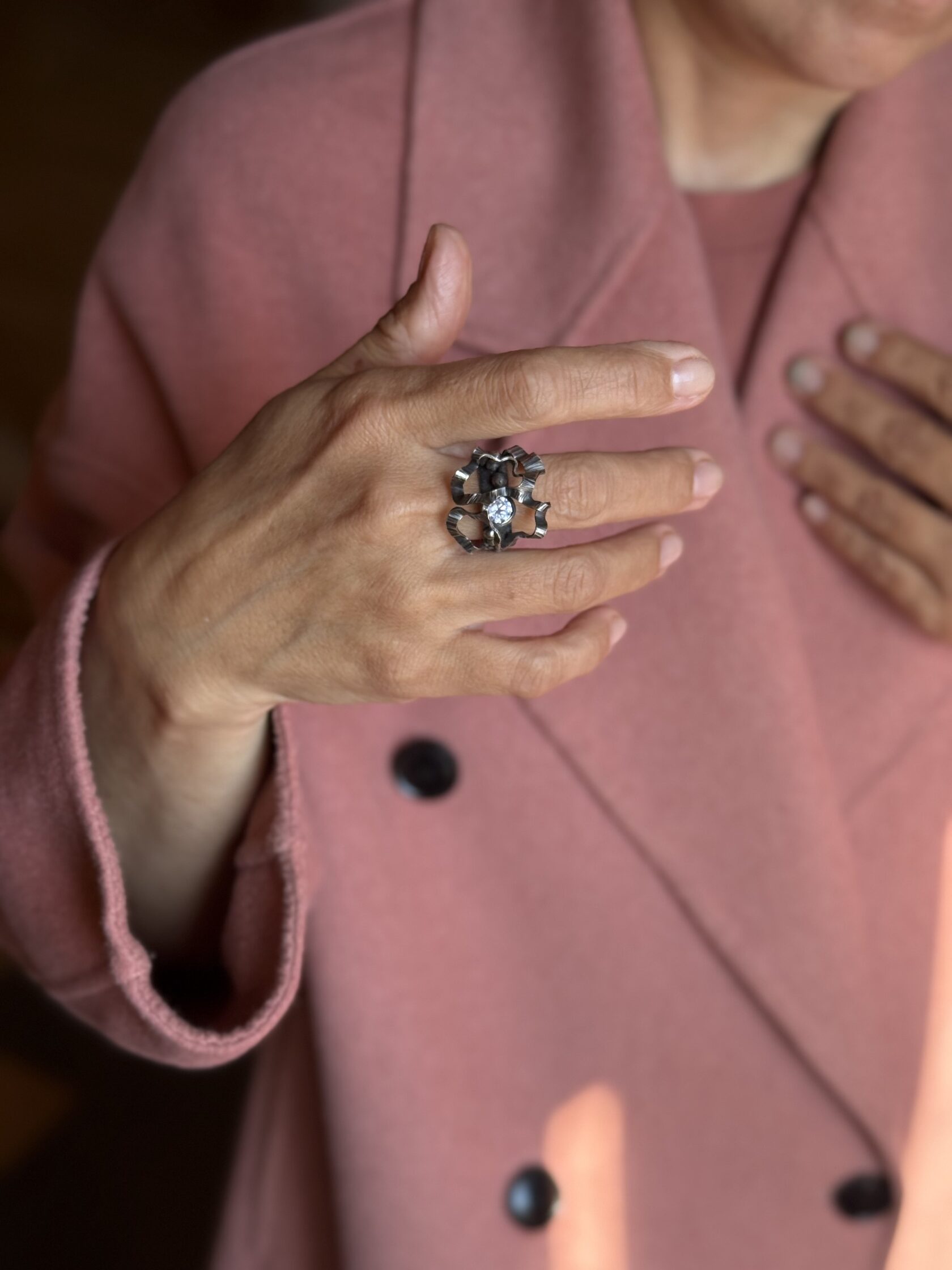 Chaotic LinesA real NP Studio work introducing the studio’s approach to form and surface.
 BridgeA real NP Studio work shown separately from the technical classification of closures.
Back vs closure
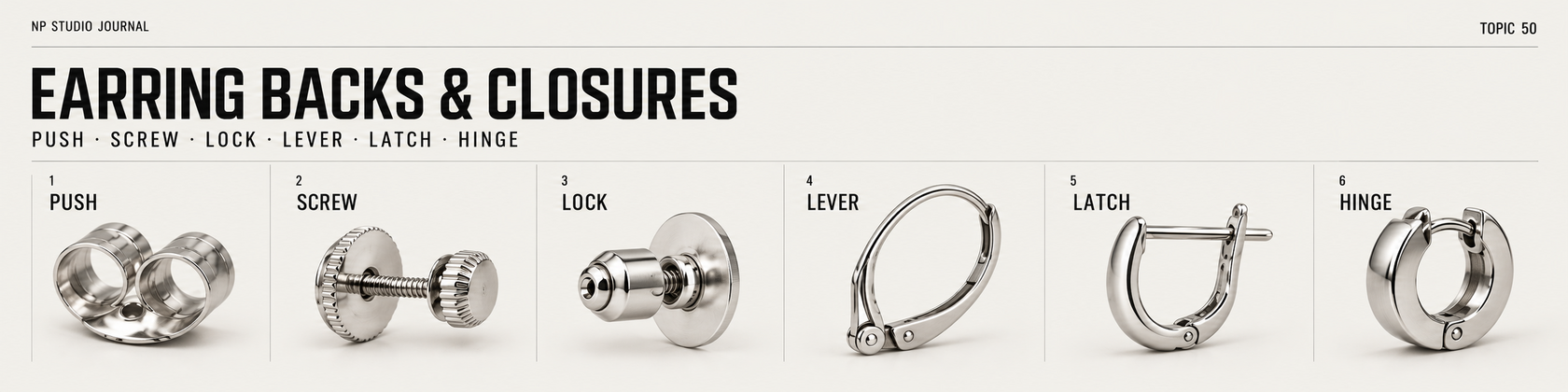
A back often means a separate rear component that slides or threads onto a post behind the lobe. Closure is broader: it can include a removable back, an integrated latch, a hinge/click system or a leverback.
That is why one comparison can include both “backs” and “closures.” They are all retention systems, but they do not all use the same mechanical logic.

Friction / push back
A friction back is a separate component that slides onto a smooth post and stays in place through friction. Retail descriptions often use “push back” for the same general idea.
The mechanism is simple: the post passes through the opening in the back, and contact between the parts provides retention. How easy it is to put on and remove depends on the specific geometry and condition of the components.
Screw back
A screw back works with a threaded post. Instead of relying only on friction, the rear component is threaded onto the post, so opening and closing generally require repeated rotation.
But SCREW ≠ UNIVERSALLY BEST. Threaded construction does not remove questions about weight, handling, cleanliness or compatibility with the particular earring.
Locking / guardian-style back
Locking backs use an additional mechanical retention or release principle. Retail terminology varies, including “guardian-style” descriptions, so it is better to inspect how the mechanism actually locks and releases than to assume one standardized design.
From a practical point of view, look at how the back engages the post, how it is released and whether the mechanism is comfortable to operate with your fingers.
Leverback
A leverback is an integrated closure system commonly used on hanging earrings. A wire or post passes through the piercing, and a movable rear lever closes the earring from behind.
The key point is that the retention mechanism is built into the earring rather than using a separate removable back. Exact lever and wire geometry can vary by maker.
Latchback / post-and-latch
In a latchback construction, a post engages with a receiving element or snaps into a latch. This principle is common in earrings with curved or hoop-like geometry.
The words “latchback” and “post-and-latch” are not used with perfect uniformity, so the label is best read together with a clear image of the mechanism.
Hinged / click hoop closure
With a hinged hoop, one part of the ring pivots at a hinge and closes into an integrated click mechanism. A separate back is usually unnecessary because retention is built into the hoop itself.
For the wearer, the click is only one part of the experience. Alignment, hinge condition and how the closure behaves after repeated use also matter.
Hook / wire forms
Not every hanging earring uses a separate back. Hooks, ear wires and related forms may pass through the piercing and stay in place through their geometry, sometimes with a small stopper and sometimes without one.
So the presence or absence of a removable back does not define the earring type. For the broader taxonomy, see Types of Earrings. For a different approach to attachment without a conventional earring back, see What Is an Ear Cuff and How Do You Wear One?.
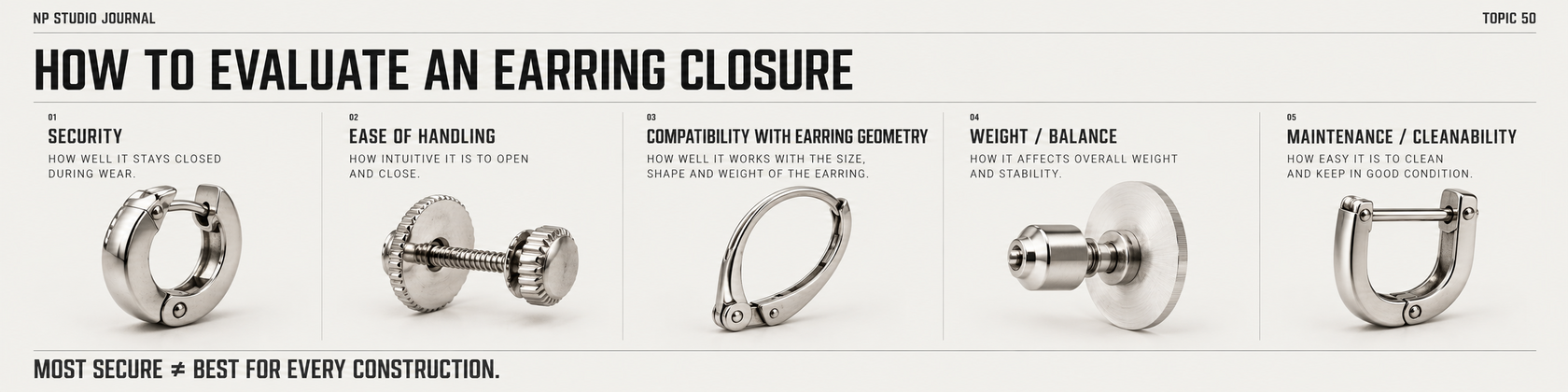
Security ≠ convenience
How confidently the mechanism stays closed during ordinary wear and resists accidental opening.
How easy it is to open, close, clean and operate the system in everyday use.
Those properties do not always move in the same direction. A more elaborate locking system can require more handling, while a simpler closure may be easier for a particular wearer to use.
Weight, balance and construction compatibility
A closure is part of the earring as a whole, not an isolated accessory. Its size, mass and placement can affect balance, particularly on very small earrings or on designs with a heavier front element.
Geometry matters as well. A mechanism has to work with post thickness, hoop shape, available space behind the lobe and the overall form. A closure that is “secure” in the abstract can still be a poor match for a specific construction.
What to check before buying
- Mechanism type. Separate back, lever, latch, hinge/click or hook.
- Compatibility with the earring geometry. The closure should be integrated into the construction rather than treated as an afterthought.
- Positive retention. The system should close predictably in normal use.
- Ease of opening and closing. Especially important if very small components are difficult to handle.
- Mechanism weight. It contributes to total earring mass and can affect balance.
- Cleaning and maintenance. More complex mechanics can create areas that are harder to clean.
- Condition of moving parts. Hinges, latches and threads should operate smoothly and without obvious deformation.
- Do not look for one universal winner. The useful system is the one that matches the construction and the person who will use it.
NP Studio: the mechanism should serve the form
In author-made jewelry, mechanics should not exist separately from the form. If a closure adds unnecessary bulk, breaks the silhouette or interferes with fit, a technically elaborate system can be less successful than a simpler one.
At NP Studio, construction is part of the visual language. A hinge, post, lock or hidden fixation should support the object rather than forcing the form to bend around the mechanism without a reason.
Related Journal
FAQ
1. What are the main types of earring backs and closures?
Common systems include friction or push backs, screw backs, locking systems, leverbacks, latchback or post-and-latch mechanisms, hinged/click hoops and different hook or wire forms.
2. What is the difference between a push back and a screw back?
A push or friction back grips a post through friction, while a screw back threads onto a threaded post. They use different mechanics, and neither is universally best for every earring.
3. What is a friction back?
A friction back is a separate back that slides onto a smooth post and stays in place through friction. In retail language it is often called a push back.
4. Is a screw back always more secure than a push back?
Not necessarily. A screw system may require more handling, while real-world retention depends on construction quality, compatibility, thread condition and the way the earring is used.
5. What is a locking earring back?
The term commonly refers to a back with an additional mechanical retention or release mechanism. Terminology varies by maker, so the actual construction matters more than the label alone.
6. How does a leverback differ from a latchback?
A leverback commonly uses a closing rear lever or curved element around the wire or post, while a latchback more often locks a post into a receiving latch. Exact forms vary across makers.
7. What closures are common on hoop earrings?
Hoops commonly use latch, post-and-latch and hinged/click mechanisms. The hoop category does not require one universal closure.
8. Do all dangle earrings use a separate back?
No. Some hanging earrings use hook or wire forms without a separate removable back. Others can use a post with a separate rear fixation.
9. Is there one most secure earring closure?
No universal winner applies to every construction. SECURITY ≠ CONVENIENCE: retention, handling, weight, geometry and maintenance can create different trade-offs.
10. What should you check about an earring closure before buying?
Check compatibility with the earring geometry, how positively it closes, ease of handling, mechanism weight, cleanability and whether the system requires very small or awkward movements.
NP STUDIO / SELECTED WORKS
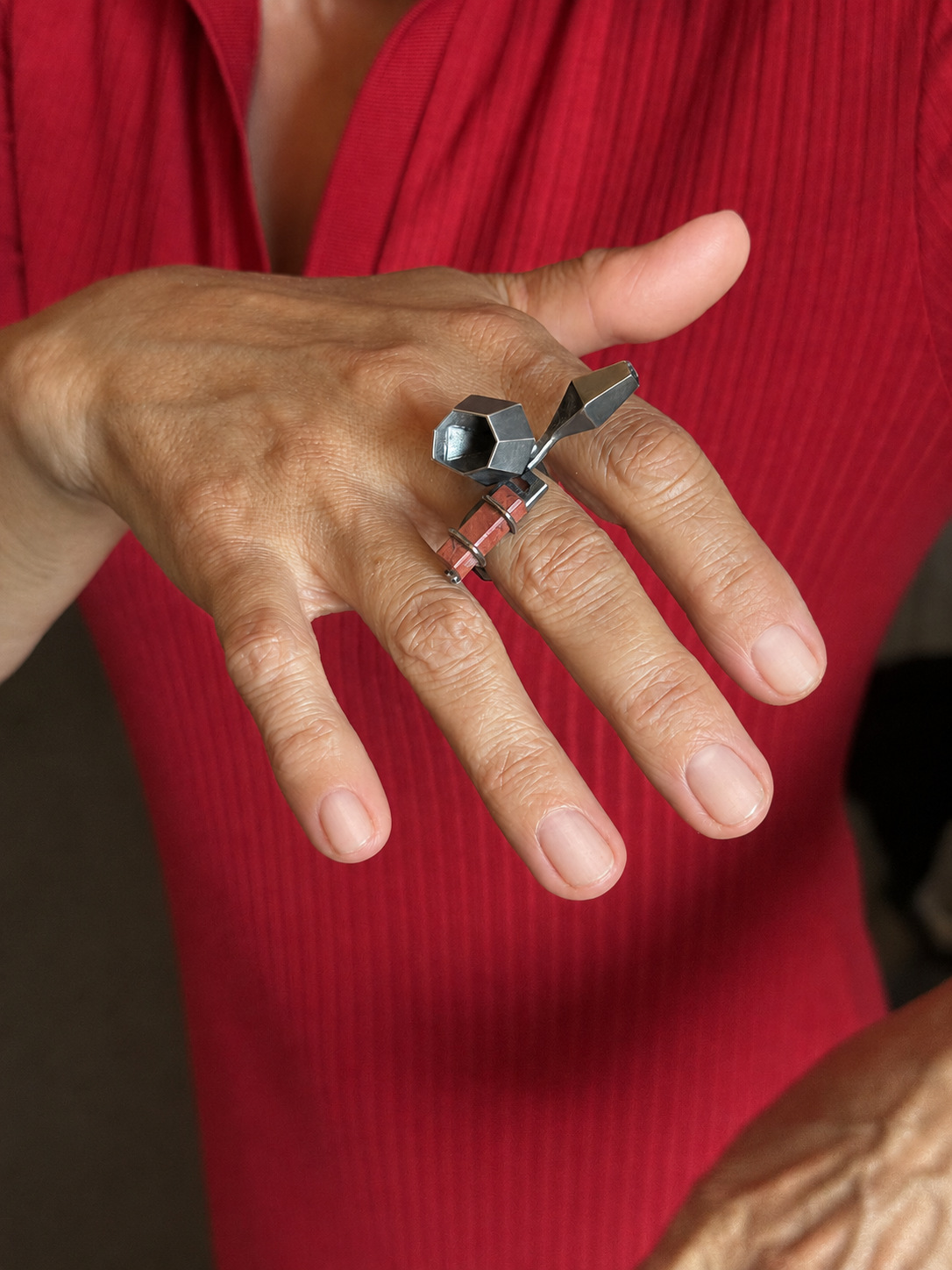
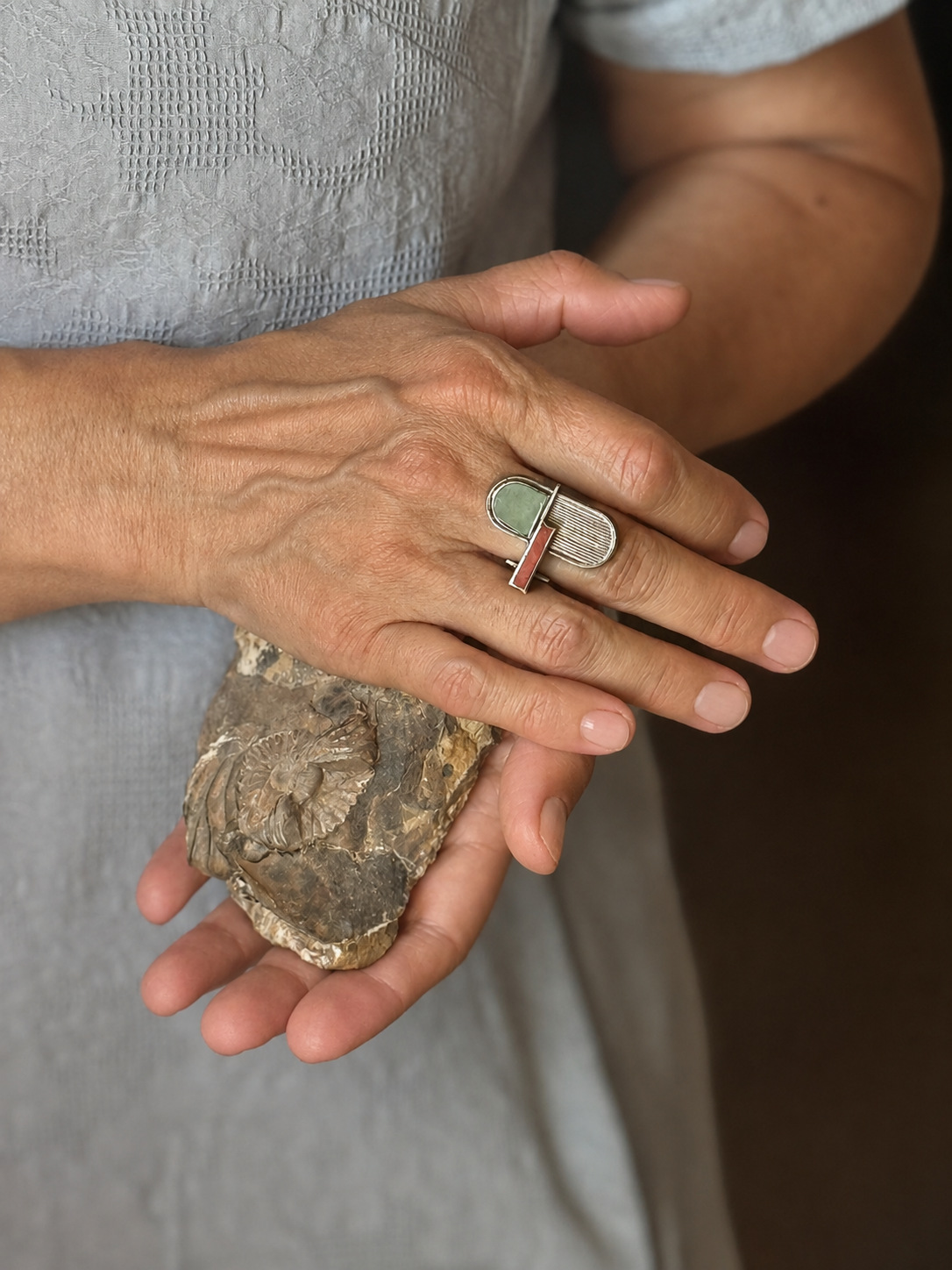
Two more real studio works
These are not examples of earring backs or closures. They are two more real NP Studio works shown after the technical section to return the page to the studio’s visual language.
NEXT / WORKS
Explore Works
The archive shows different surfaces, stones, scales and ways NP Studio works with sterling silver.
View WorksNEXT / CUSTOM
Discuss a custom piece
If you have a specific idea, reference or construction problem, a short description is enough to start the conversation.
Discuss Custom