Stud
Sits at the lobe and reads mainly as a frontal element.
NP STUDIO / JOURNAL / EARRINGS
Earrings differ not only by appearance but also by how they attach, how closely they sit, whether any part moves and whether a piercing is required. For recognition, construction, fit and movement usually tell you more than a single retail label does.
Major earring types differ not only in appearance but also in how they attach, how closely they sit, whether parts move and whether a piercing is required. Studs usually sit at the lobe, hoops form a ring-like shape, huggies are close-fitting compact hoops, drops and dangles extend below the lobe with different degrees of movement, and most ear cuffs grip the outer ear without an additional piercing.
NP STUDIO / SELECTED WORKS
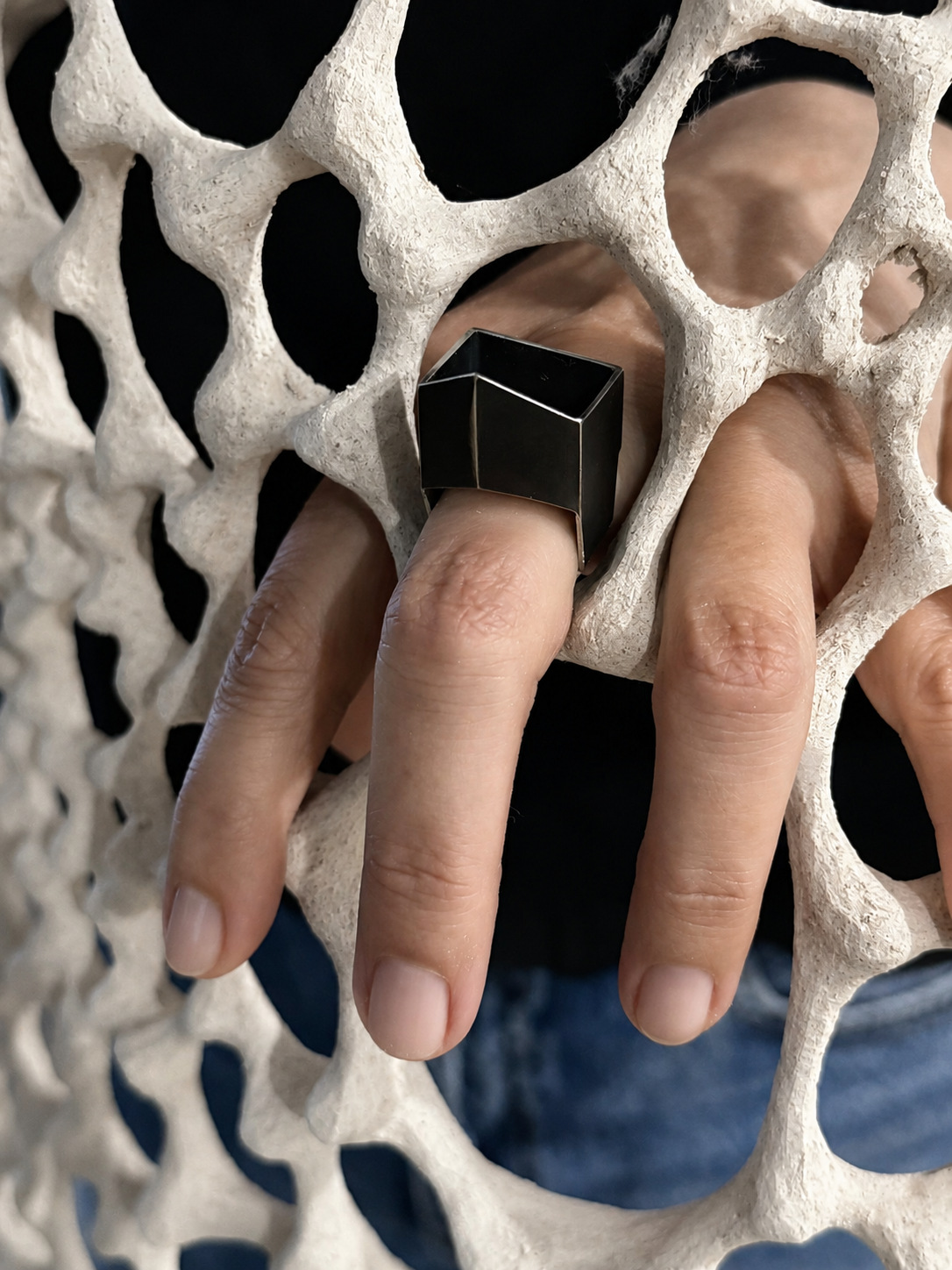
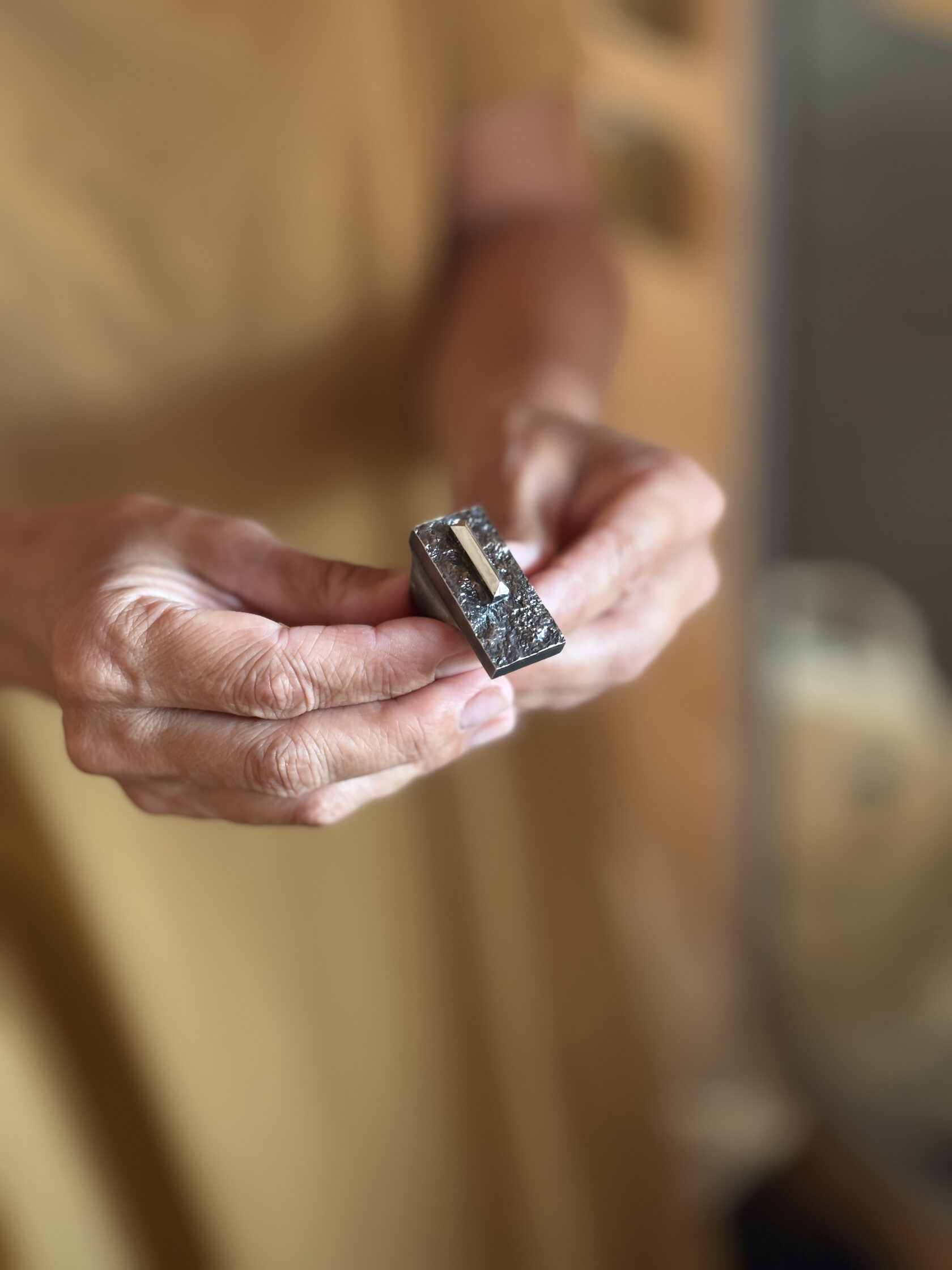
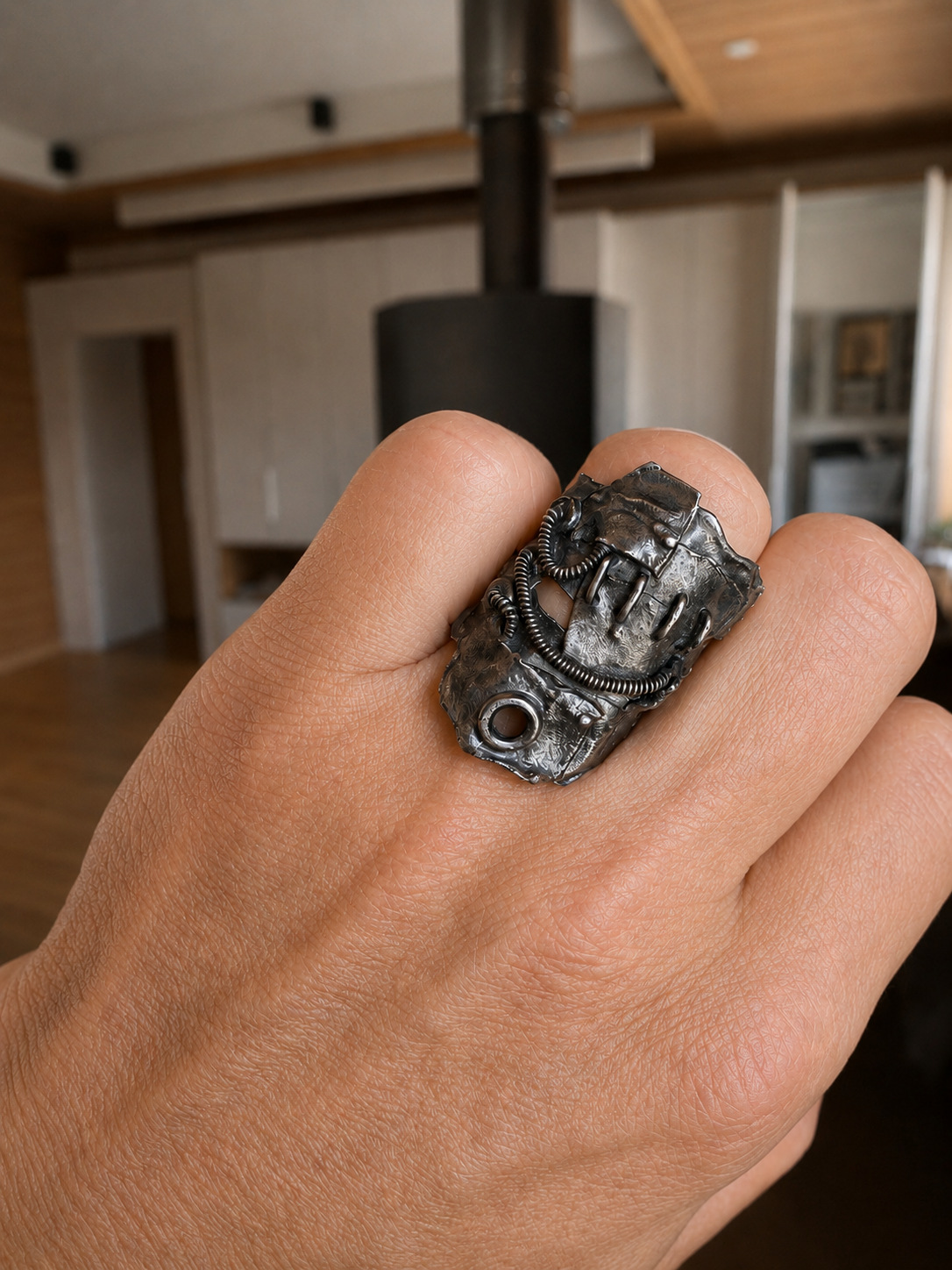
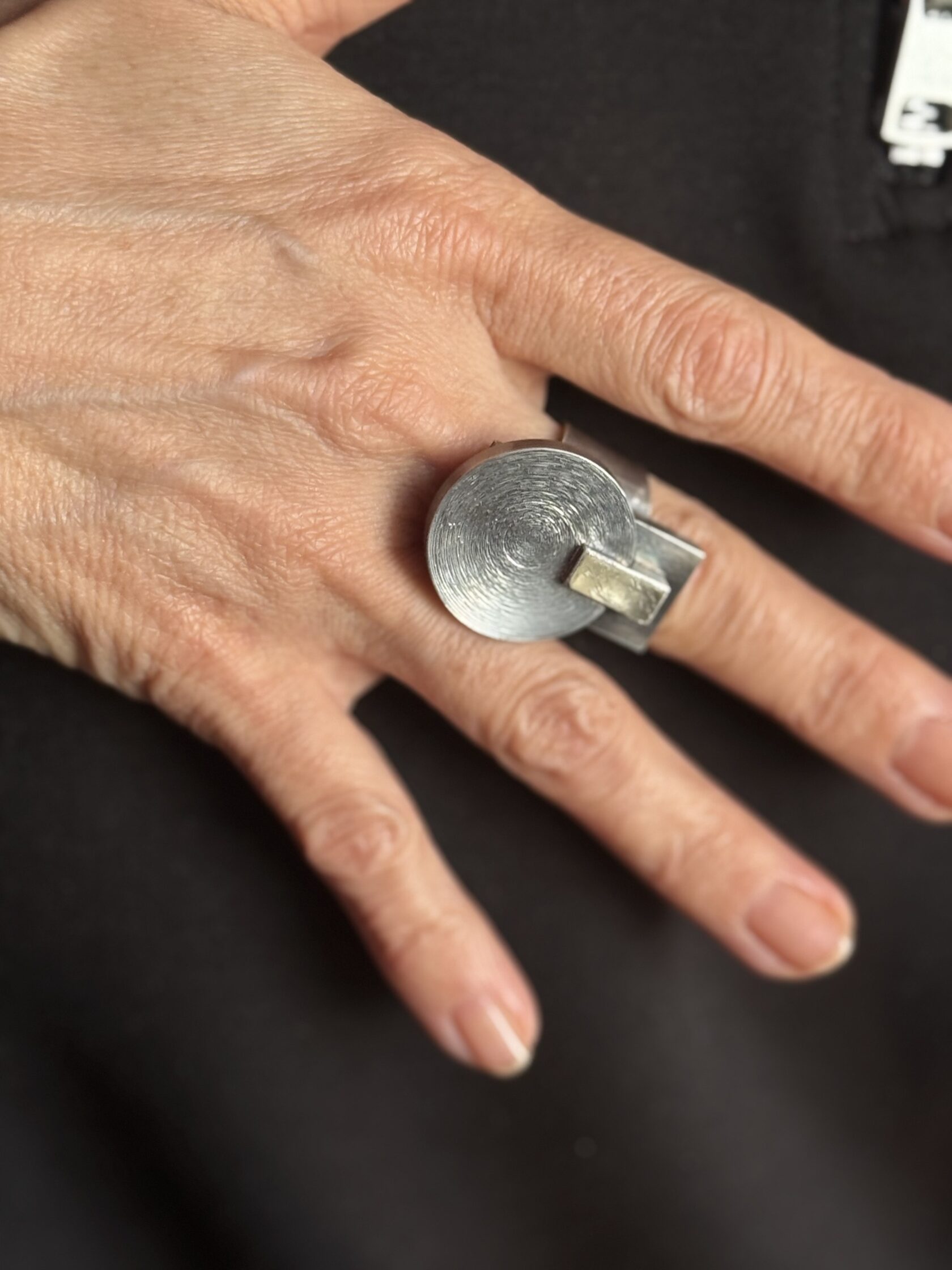
Journal is part of the NP Studio workshop site. The pieces below are real NP Studio works in sterling silver. They are not examples of earring types; they introduce the studio’s visual language through form, surface, scale and construction.
Sits at the lobe and reads mainly as a frontal element.
A ring-like or near-ring geometry.
A compact hoop that sits close to the ear.
Extends below the lobe without necessarily moving much.
A hanging form with more articulation and movement.
Usually grips the outer ear without an additional piercing.
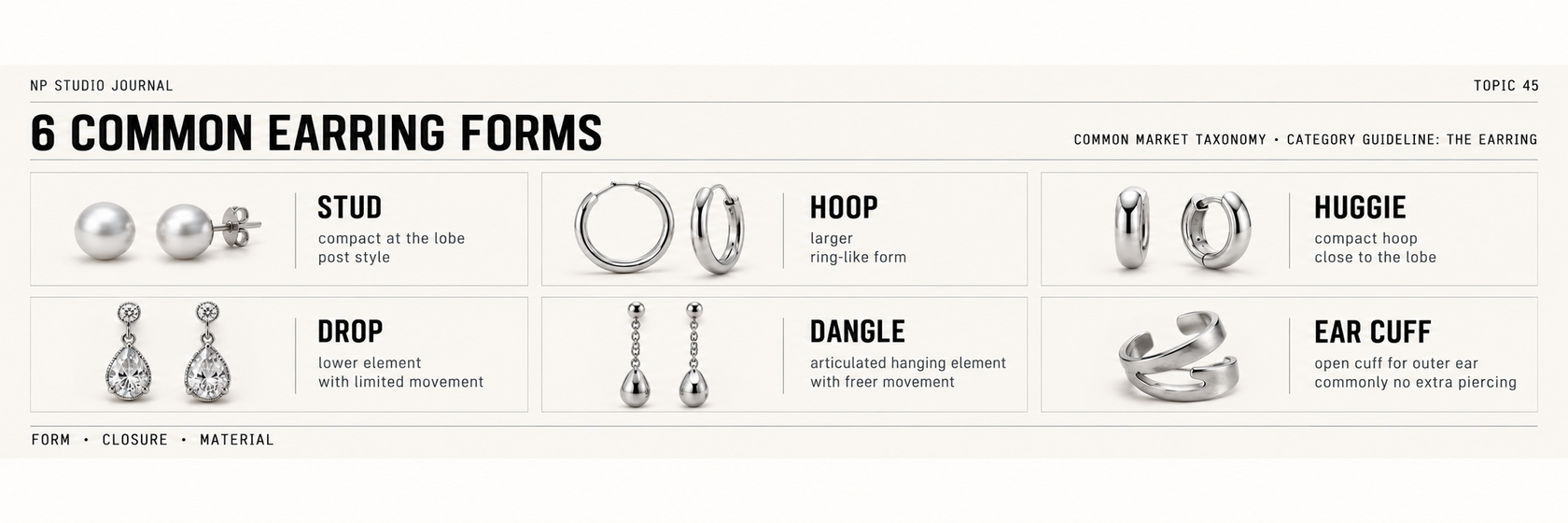
The market uses several descriptive axes at once. Some words describe geometry, others describe how closely the earring sits, and others describe movement or visual role. That is why category boundaries often overlap.
TYPE ≠ MATERIAL. Silver, gold or steel earrings can still belong to the same form family. If the separate question is about material rather than shape, see Is Sterling Silver Hypoallergenic?.
TYPE ≠ STYLE ROLE. Words such as statement often describe impact, scale or styling function more than one precise construction.
Stud earrings usually sit at the lobe and read mainly as a frontal element. They are recognized by close placement near the ear rather than by a ring form or a long suspended section.
A stud can be minimal or prominent, set with a gemstone or plain, but the category is defined primarily by its lobe-based fit logic rather than surface decoration.
Hoop earrings belong to a ring-like or near-ring family. The circle may be large, small, thick, thin, almost closed or only visually ring-derived, but the hoop geometry remains the main recognition clue.
Not every hoop is large or highly mobile. Some are calmer and closer to the ear, while others read as more open and more dramatic in scale.
Huggie is commonly used for a compact close-fitting hoop. It sits nearer to the lobe and produces a more contained outline than many larger hoops do.
HUGGIE ≠ A COMPLETELY SEPARATE CATEGORY. In common market usage, a huggie is usually treated as a close-fitting hoop subtype rather than a completely separate earring family.
Drop earrings extend below the lobe but often keep a more controlled vertical logic: an upper point anchors the earring and a lower element creates the hanging accent.
In practical recognition, a drop usually has a suspended element without necessarily showing strong free movement.
Dangle earrings also hang below the lobe, but they usually imply more articulation and freer movement. That motion is often the clearest distinction from a calmer drop construction.
DROP / DANGLE TERMINOLOGY ≠ PERFECTLY STANDARDIZED. Retailers do not use those words with perfect uniformity, so it is wise to read the geometry and movement, not only the label.
An ear cuff usually grips the outer ear or cartilage and, in most common versions, does not require an additional piercing. That makes it a recognizably different branch from more familiar lobe-based earrings.
EAR CUFF ≠ ONE UNIVERSAL CONSTRUCTION. Products sold as ear cuffs can use different geometries and fitting methods, so the term describes a broad market category rather than one mandatory construction.
For placement, fit and basic wear, see the dedicated guide What Is an Ear Cuff and How Do You Wear One?.
These forms visually travel upward along the ear. They are a recognizable market term rather than one single tightly closed mechanism.
Long, pull-through forms where the line passing through the ear becomes part of the visual identity and movement.
These terms often describe visual role, complexity or scale more than one foundational earring construction.
A huggie by fit and hoop logic, but also a gemstone earring by decorative role.
A hoop by geometry, but statement by scale or visual impact.
A stud at the lobe anchoring point, but a drop by the suspended lower element.
Market categories do not need to be perfectly airtight. Using several descriptors together often produces the clearest identification.
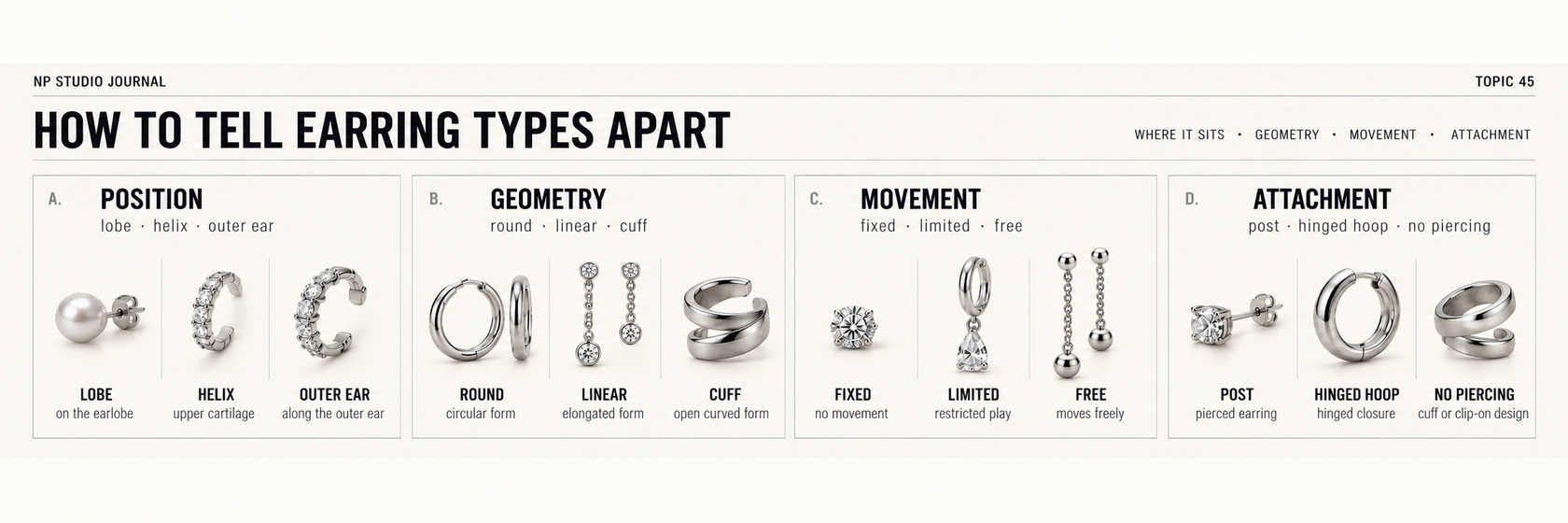
If you want another person to understand the earring type quickly, a short checklist is usually more useful than one isolated label:

For NP Studio, jewelry type is only the starting point. The same basic construction can become minimal, architectural, sculptural or deliberately oversized depending on proportion, thickness, surface, movement and the relationship between the object and the body.
With author-made jewelry, it is useful to separate type from artistic language. A ring, cuff or other object is defined by its basic construction, but surface, scale, material and making process are what turn it into an individual work. For broader context, see What Is Contemporary Jewelry? and How to Choose Jewelry from an Independent Artist.
The main families usually include studs, hoops, huggies, drop earrings, dangle earrings and ear cuffs. Climbers, crawlers and threaders are related forms often discussed nearby.
Stud earrings usually sit at the lobe and read as a frontal element. The key distinction is their close lobe placement rather than a hanging or ring-like structure.
A hoop earring is defined by a ring-like or near-ring geometry. Hoops can be larger or smaller, thinner or heavier, but that circular family resemblance is central.
A huggie is commonly treated as a close-fitting compact hoop subtype. That is a widespread market usage rather than a strict legal definition.
Drop earrings extend below the lobe but often remain more stable and contained. Dangle earrings usually have more articulation and movement, although terminology overlaps across sellers.
Often they do not. Most ear cuffs grip the outer ear or cartilage without an additional piercing, although not every product sold as a cuff follows one universal construction.
These are forms that visually travel upward along the ear rather than simply hanging downward. They are usually treated as market terms inside the broader earring taxonomy.
Yes. A single earring can be described as a gemstone huggie, a statement hoop or a drop stud. Category boundaries frequently overlap.
Not by itself. Backings and closures are important parts of a description, but overall geometry, fit and movement usually define the main earring type more strongly.
Look step by step: where it sits, whether the geometry is ring-like, whether it drops below the lobe, how much articulation it has, whether a piercing is required and what closure is visible.
NP STUDIO / SELECTED WORKS
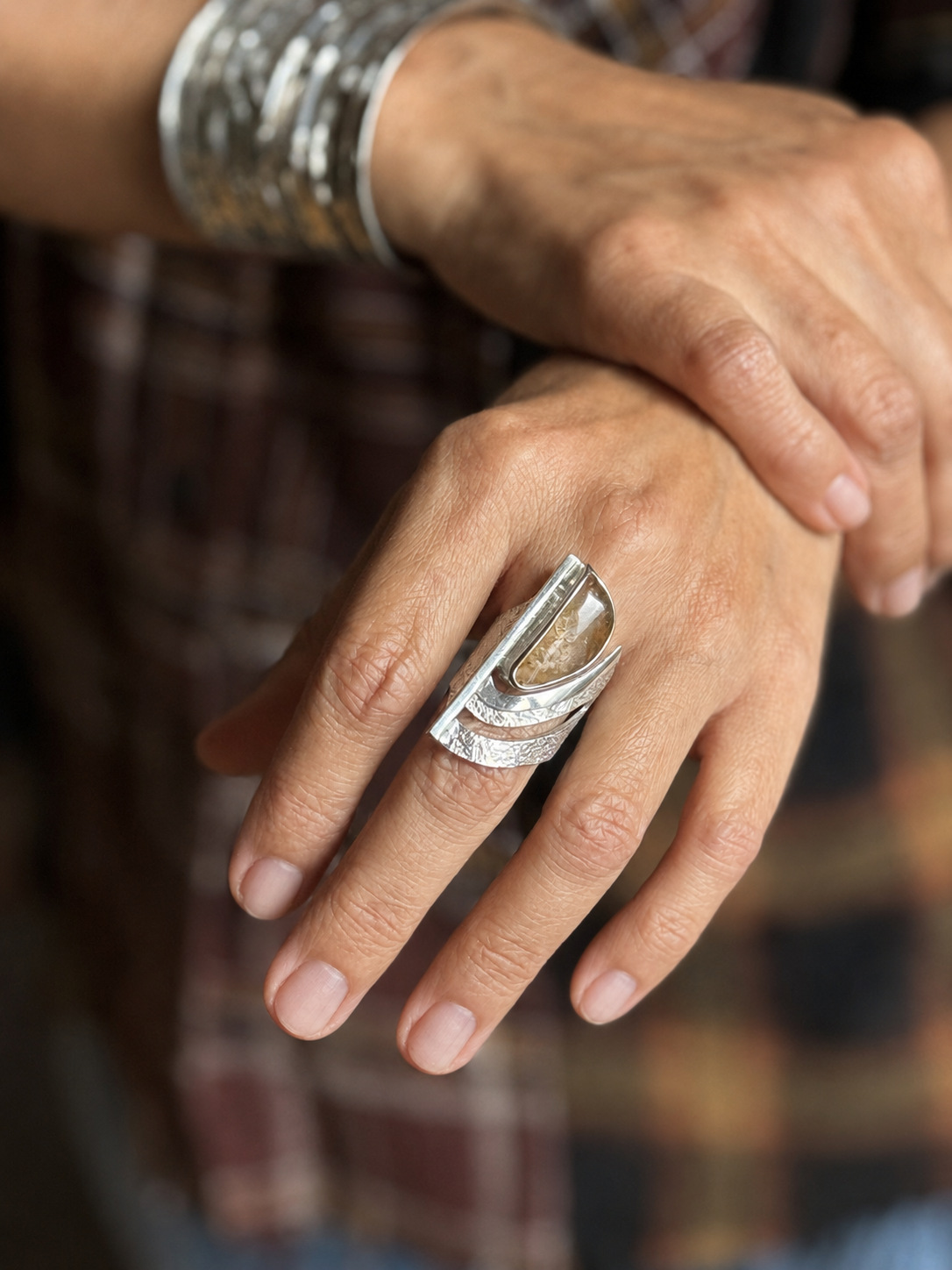
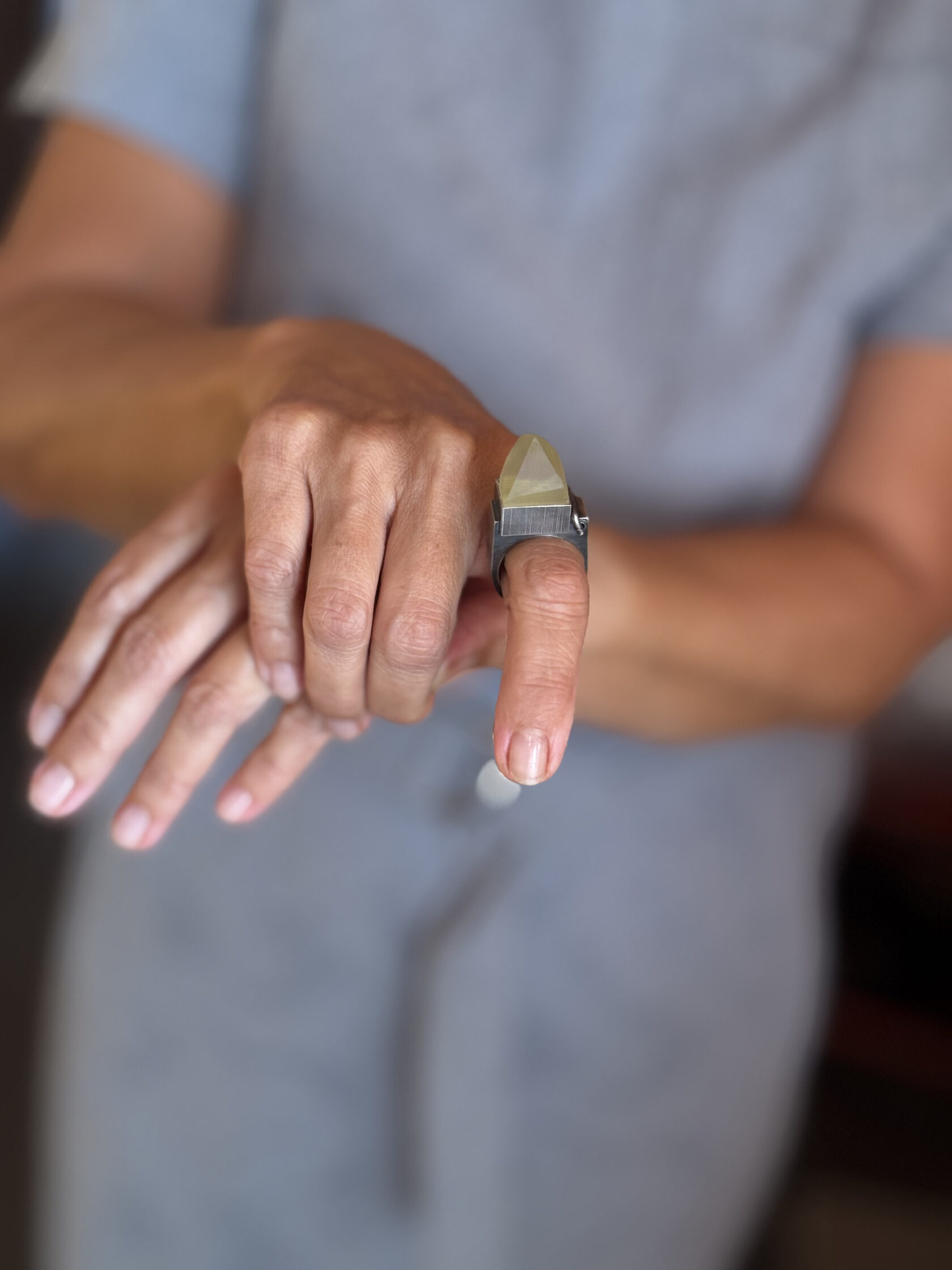
Jewelry type is only a starting point. In NP Studio works, form, surface, construction and material become part of an independent wearable object. Here are two more real works from the studio.
NEXT STEP / WORKS
If the question is no longer only about earring type but also about artistic language, scale and material, continue to the broader NP Studio gallery.
Go to WorksNEXT STEP / CUSTOM
If you want to discuss an author-made object or a personal commission, the custom request page is the better next step.
Discuss Custom