EVERYDAY
Everyday wear
If a ring stays on your hand for many hours, comfort and predictable fit matter most. It should pass over the knuckle and remain stable without constant pressure.
How to measure your size using an existing ring or your finger, why thin and wide rings can fit differently, and what to consider when choosing a large sculptural ring.
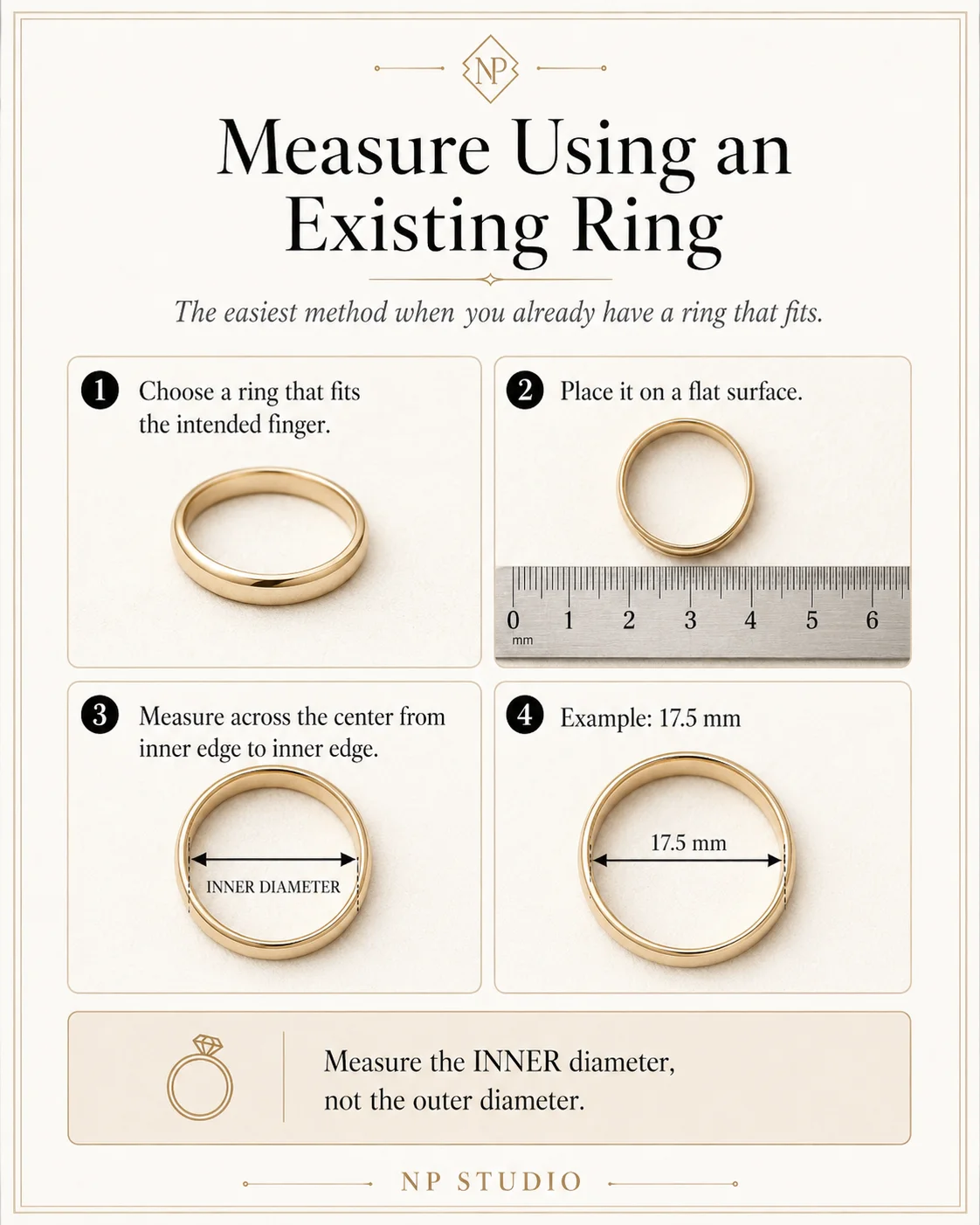
If you already own a ring that fits the intended finger comfortably, use it as your first reference.
Measure the inner diameter — the distance from one inner edge to the opposite inner edge through the center. The outside diameter does not determine ring size.
Take two or three measurements if possible. For an international order, the physical measurement in millimeters is usually more useful than a local size number alone.
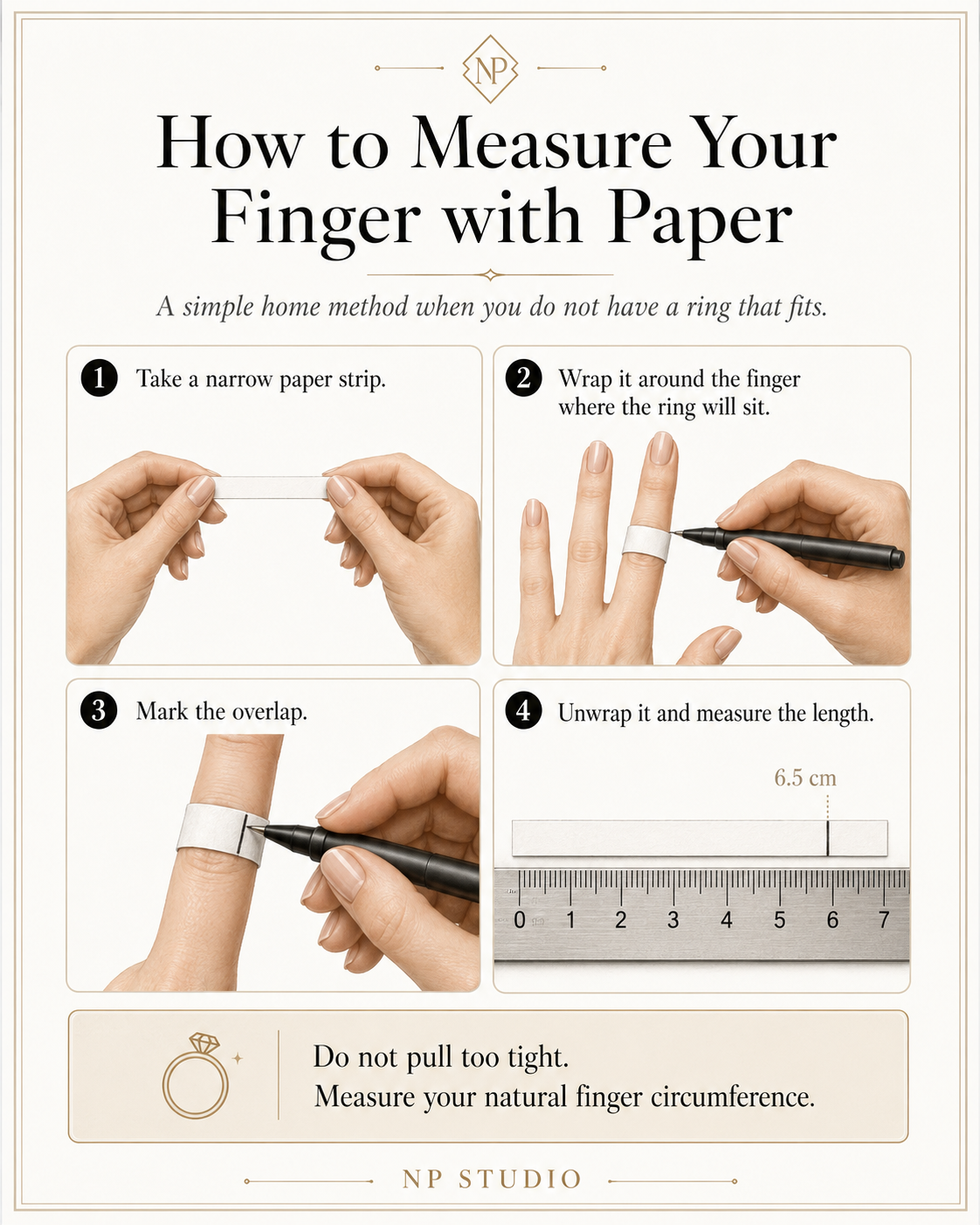
If you do not have a suitable ring, use a narrow strip of paper.
Wrap it around the part of your finger where the ring will sit, mark the overlap, then lay the strip flat and measure the length.
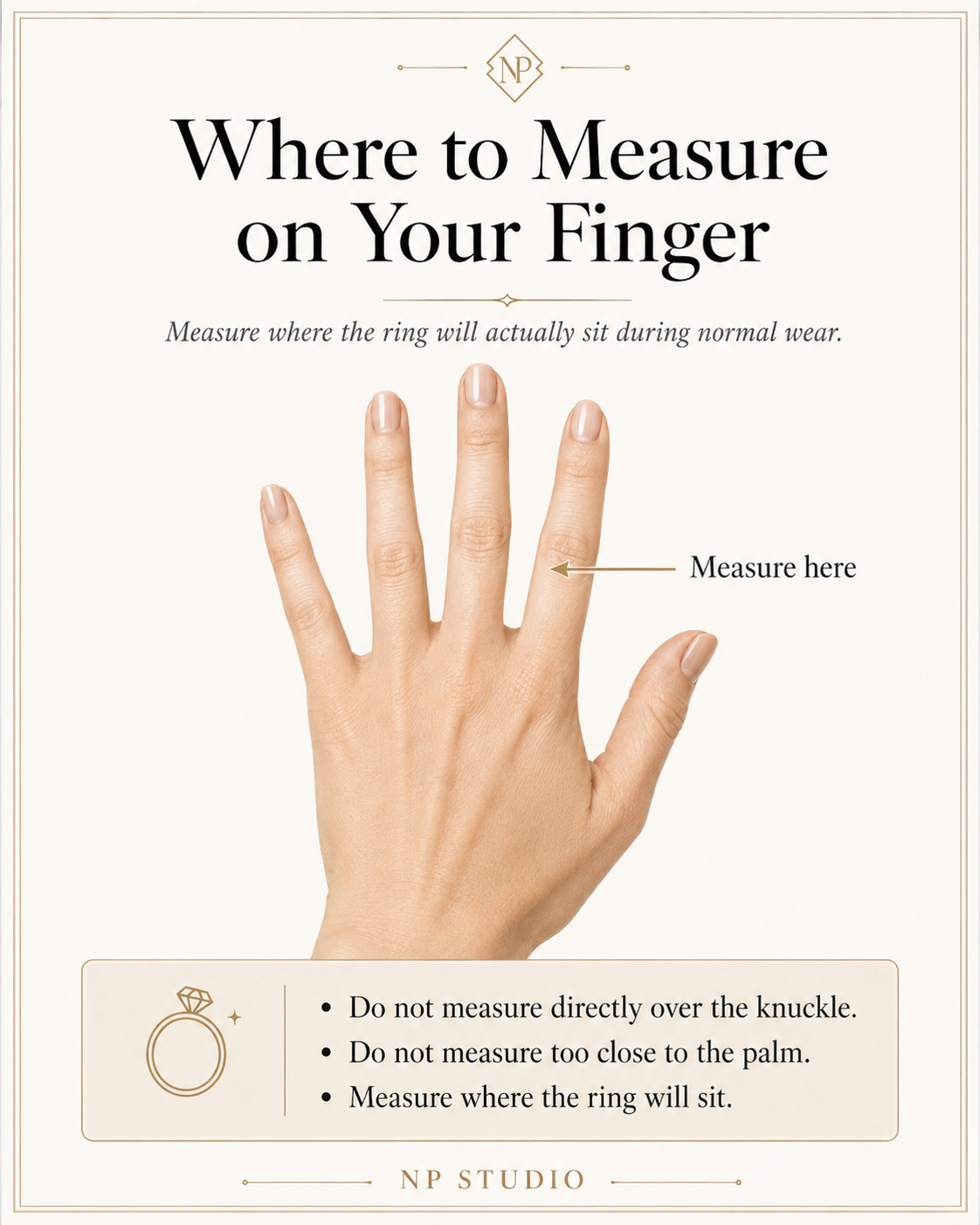
Measure approximately where the ring will sit during normal wear — around the middle of the first phalanx, between the knuckle and the base of the finger.
Finger volume is not absolutely constant. Temperature, physical activity, fluid retention and time of day can all change how a ring feels. For longer-term changes, see Does Ring Size Change With Age or Weight?.
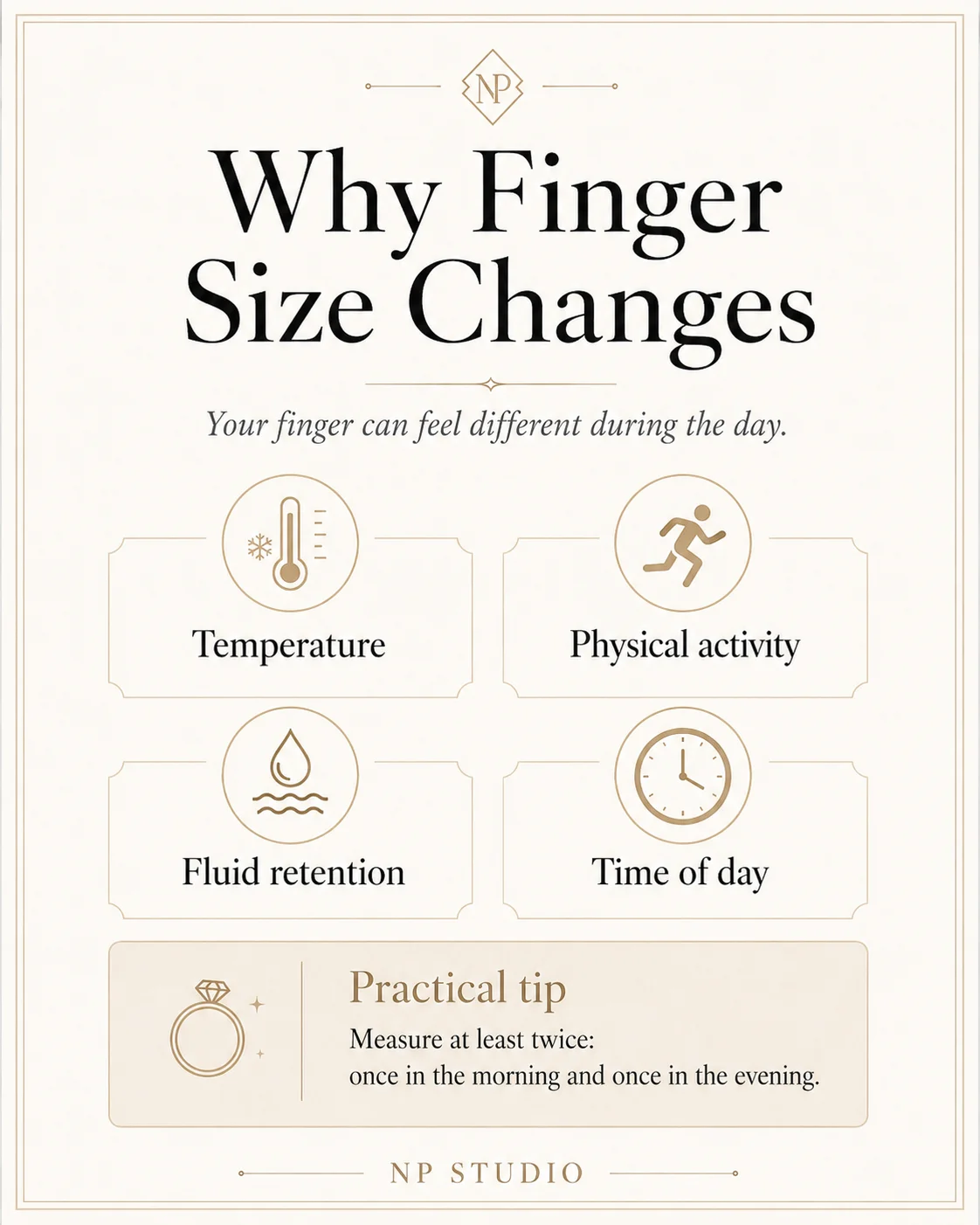
Measure at least once in the morning and once in the evening.
If the results differ slightly, look for a comfortable fit between your normal daily states.
A nominal size does not tell the whole story. Two rings with the same inner diameter can feel different if one band is thin and the other is wide.
A wide ring contacts more of the finger and therefore usually feels tighter. For a dedicated sizing guide, see Wide Band Ring Size Guide.
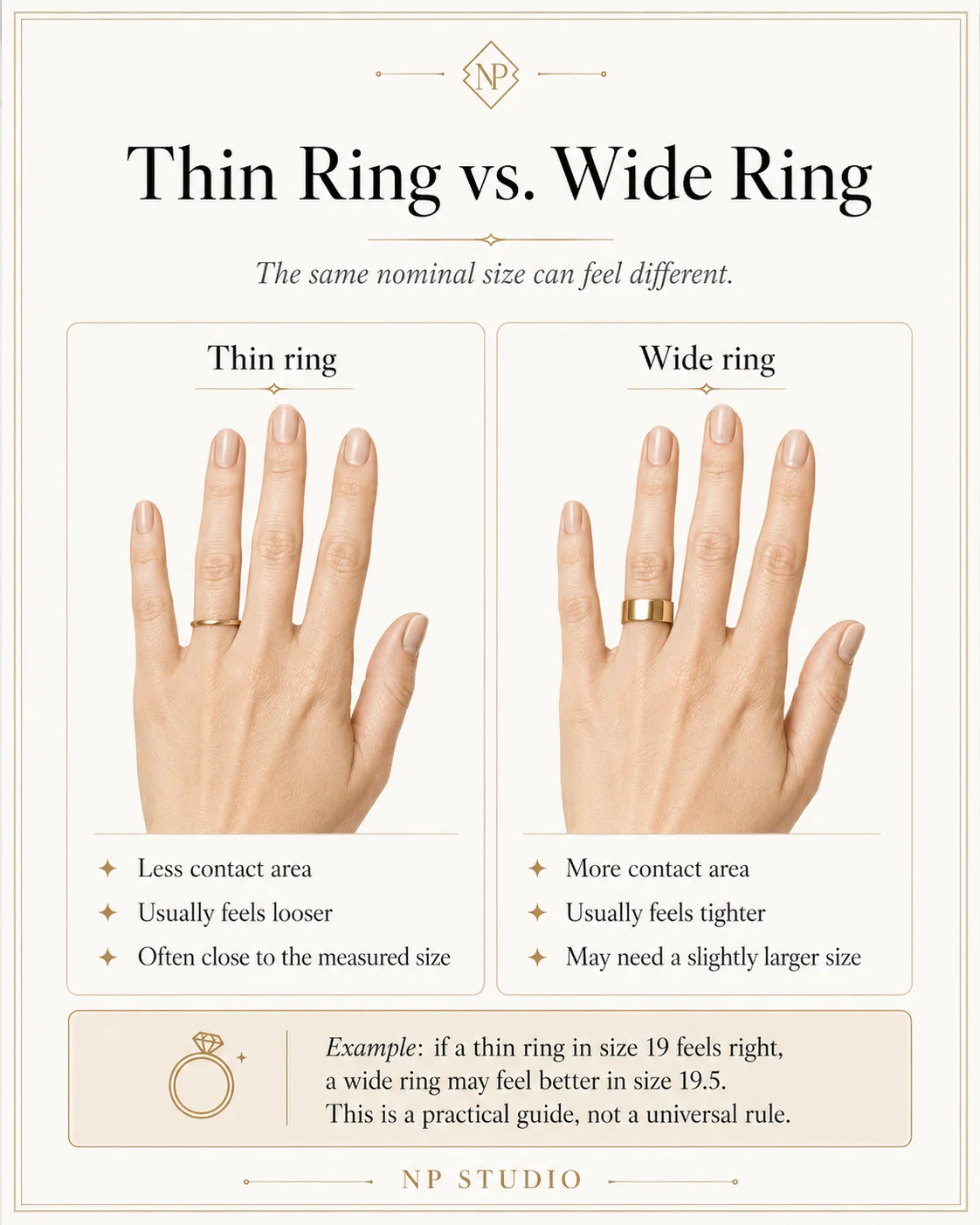
If a thin ring in size 19 feels comfortable, a wide ring may sometimes feel better around 19.5.
This is a practical starting point, not a universal rule. Exact fit depends on band width, inner profile, knuckle size and individual anatomy.
Ring size is not only about a number. It also depends on how the ring will be worn.
If a ring stays on your hand for many hours, comfort and predictable fit matter most. It should pass over the knuckle and remain stable without constant pressure.
A large artistic ring may be heavier and more noticeable. A fit that feels acceptable for a few hours can differ from what you would choose for an everyday ring.
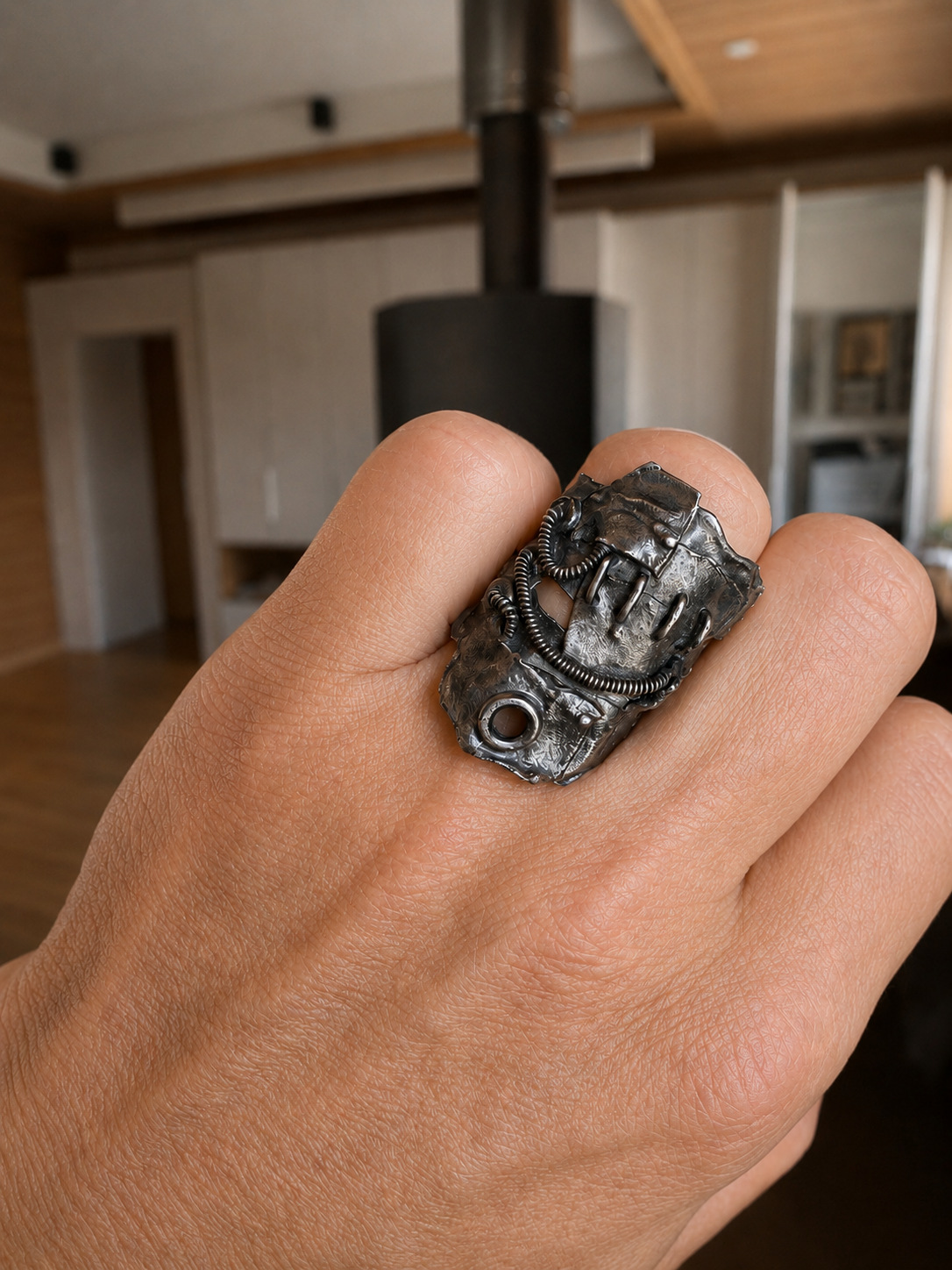
Square, elongated or sculptural rings can look as though they must interfere with the hand, but visual appearance and actual fit are not the same thing.
Comfort depends on:
This matters at NP Studio because many pieces are designed as small sculptural objects rather than conventional thin bands.
Different countries use different sizing systems. The safest reference is the physical inner diameter or inner circumference in millimeters.
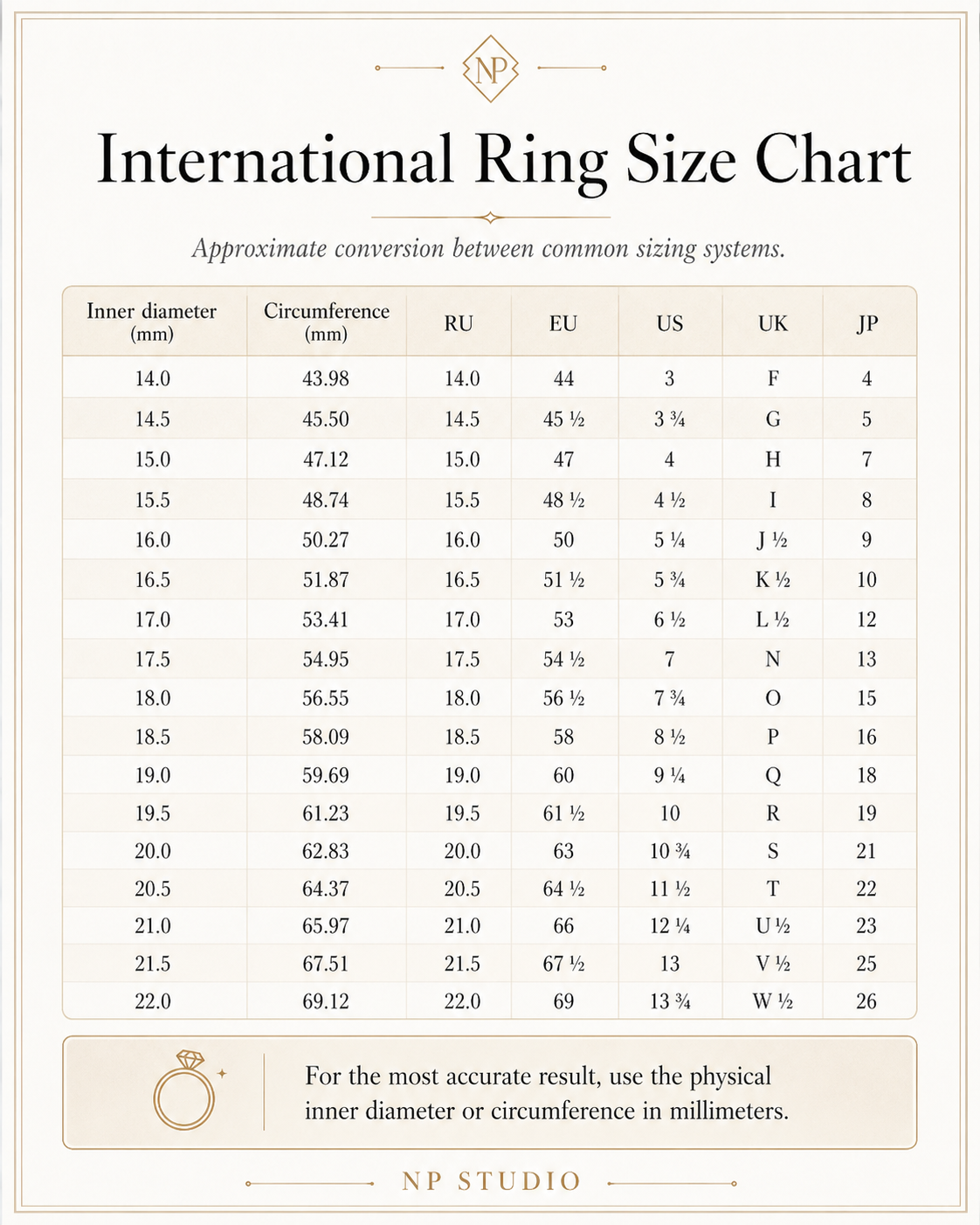
A small difference can occur. Compare several measurements and choose a fit that works across your normal daily range.
Sometimes. A wide band often feels tighter, so a slightly larger size can be more comfortable. It is not a universal rule.
Yes, if it fits the intended finger comfortably. Measure its inner diameter.
Your main measurement is taken where the ring will sit, but the ring still has to pass over the knuckle. A large knuckle can affect the final size choice.
Not necessarily. Comfort depends on internal geometry, width, thickness, weight and how the ring interacts with the hand.
The most useful information is the inner diameter of a ring that fits, or your finger circumference in millimeters, plus your familiar national size.
NP Studio makes sculptural sterling silver rings by hand. If you are choosing a wide, heavy or unusual shape and are unsure about sizing, it is better to discuss the fit before the piece is made.
NP Studio Journal / Ring Size
