
Ring Size Chart
Convert ring sizes between Russian, European, US, UK and traditional Japanese systems. Start with a known size, the inside diameter, or the inside circumference. The calculator first converts your input into the physical geometry of the ring and then shows the nearest standard equivalent in each sizing system.
Convert your ring size
Choose the sizing system you already know and enter the value. In Russian practice, the size is usually tied to the ring's inside diameter in millimeters, while EU / ISO uses the inside circumference in millimeters.
Inside diameter and circumference
Russia and Europe use different scales
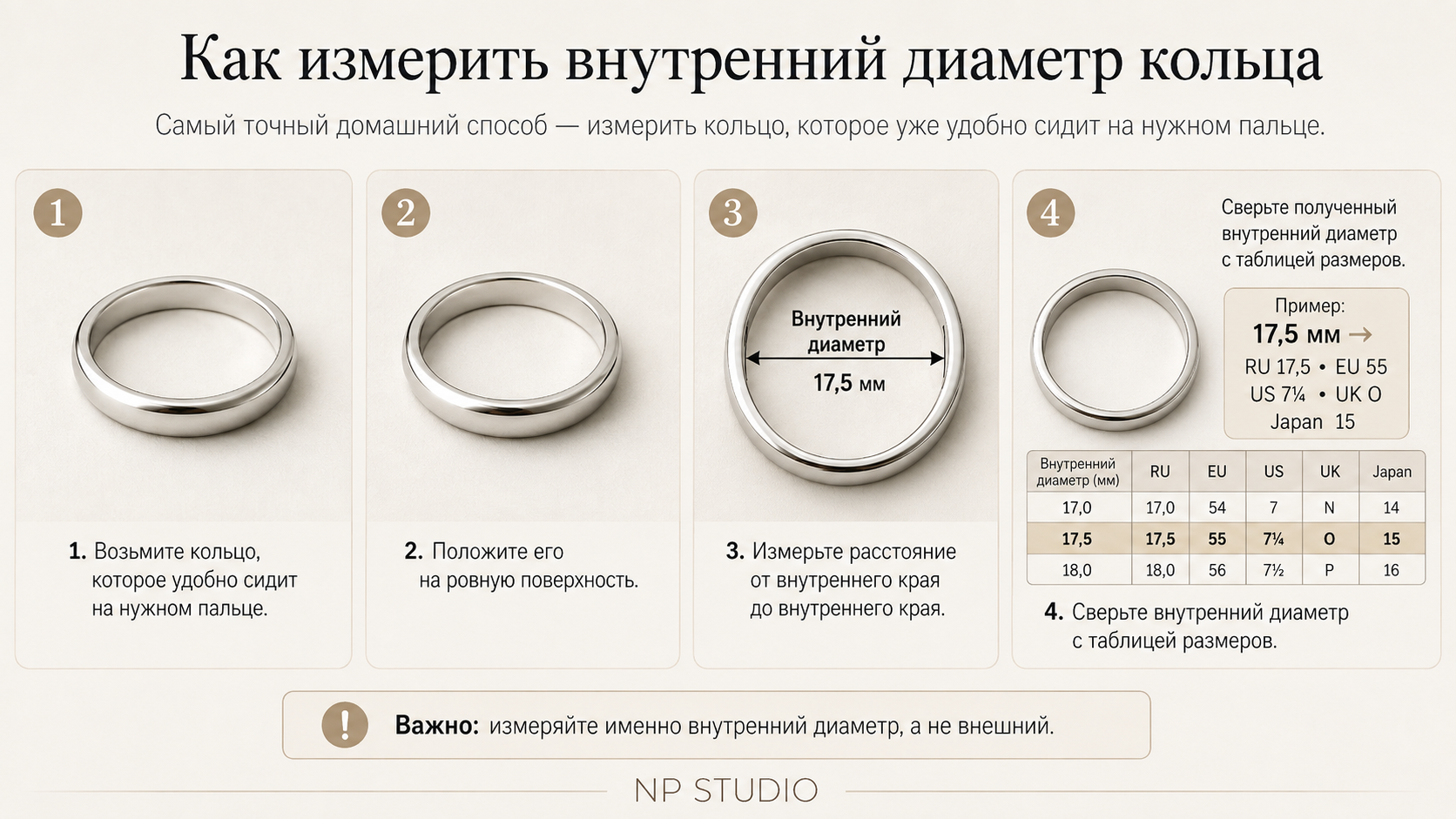
Russian ring size is usually based on the inside diameter in millimeters. For example, a Russian size 17.5 means an inside diameter of approximately 17.5 mm.
EU / ISO uses a number corresponding to the inside circumference in millimeters. Under ISO 8653:2016, the standard series uses whole-number sizes, so an inside circumference of 55 mm corresponds to ISO 55.
If you already have a ring that fits well, measuring its inside diameter is usually the most reliable starting point. We explain the method in a separate guide.
How to measure your ring size →International ring size chart
This chart is built from EU / ISO sizes 41–76, where the EU / ISO number equals the inside circumference in millimeters. Diameter is calculated geometrically, while Russian, US, UK and traditional Japanese sizes are shown as the nearest values in their respective systems. The “≈” symbol means “nearest equivalent.”
| Diameter, mm | Circumference, mm | Russia | EU / ISO | US / Canada | UK / Australia | Japan / 号 |
|---|---|---|---|---|---|---|
| 13.05 | 41 | ≈ 13 | 41 | ≈ 1¾ | ≈ D | ≈ 1 |
| 13.37 | 42 | ≈ 13.5 | 42 | ≈ 2¼ | ≈ D½ | ≈ 2 |
| 13.69 | 43 | ≈ 13.5 | 43 | ≈ 2½ | ≈ E½ | ≈ 3 |
| 14.01 | 44 | ≈ 14 | 44 | ≈ 3 | ≈ F | ≈ 4 |
| 14.32 | 45 | ≈ 14.5 | 45 | ≈ 3¼ | ≈ G | ≈ 5 |
| 14.64 | 46 | ≈ 14.5 | 46 | ≈ 3¾ | ≈ H | ≈ 6 |
| 14.96 | 47 | ≈ 15 | 47 | ≈ 4 | ≈ H½ | ≈ 7 |
| 15.28 | 48 | ≈ 15.5 | 48 | ≈ 4½ | ≈ I½ | ≈ 8 |
| 15.60 | 49 | ≈ 15.5 | 49 | ≈ 5 | ≈ J | ≈ 9 |
| 15.92 | 50 | ≈ 16 | 50 | ≈ 5¼ | ≈ K | ≈ 10 |
| 16.23 | 51 | ≈ 16 | 51 | ≈ 5¾ | ≈ L | ≈ 11 |
| 16.55 | 52 | ≈ 16.5 | 52 | ≈ 6 | ≈ L½ | ≈ 12 |
| 16.87 | 53 | ≈ 17 | 53 | ≈ 6½ | ≈ M½ | ≈ 13 |
| 17.19 | 54 | ≈ 17 | 54 | ≈ 6¾ | ≈ N | ≈ 14 |
| 17.51 | 55 | ≈ 17.5 | 55 | ≈ 7¼ | ≈ O | ≈ 15 |
| 17.83 | 56 | ≈ 18 | 56 | ≈ 7½ | ≈ P | ≈ 15 |
| 18.14 | 57 | ≈ 18 | 57 | ≈ 8 | ≈ P½ | ≈ 16 |
| 18.46 | 58 | ≈ 18.5 | 58 | ≈ 8½ | ≈ Q½ | ≈ 17 |
| 18.78 | 59 | ≈ 19 | 59 | ≈ 8¾ | ≈ R | ≈ 18 |
| 19.10 | 60 | ≈ 19 | 60 | ≈ 9¼ | ≈ S | ≈ 19 |
| 19.42 | 61 | ≈ 19.5 | 61 | ≈ 9½ | ≈ T | ≈ 20 |
| 19.74 | 62 | ≈ 19.5 | 62 | ≈ 10 | ≈ T½ | ≈ 21 |
| 20.05 | 63 | ≈ 20 | 63 | ≈ 10¼ | ≈ U½ | ≈ 22 |
| 20.37 | 64 | ≈ 20.5 | 64 | ≈ 10¾ | ≈ V | ≈ 23 |
| 20.69 | 65 | ≈ 20.5 | 65 | ≈ 11¼ | ≈ W | ≈ 24 |
| 21.01 | 66 | ≈ 21 | 66 | ≈ 11½ | ≈ X | ≈ 25 |
| 21.33 | 67 | ≈ 21.5 | 67 | ≈ 12 | ≈ X½ | ≈ 26 |
| 21.65 | 68 | ≈ 21.5 | 68 | ≈ 12¼ | ≈ Y½ | ≈ 27 |
| 21.96 | 69 | ≈ 22 | 69 | ≈ 12¾ | ≈ Z | ≈ 28 |
| 22.28 | 70 | ≈ 22.5 | 70 | ≈ 13 | ≈ Z+1 | ≈ 29 |
| 22.60 | 71 | ≈ 22.5 | 71 | ≈ 13½ | ≈ Z+2 | ≈ 30 |
| 22.92 | 72 | ≈ 23 | 72 | ≈ 14 | ≈ Z+3 | ≈ 31 |
| 23.24 | 73 | ≈ 23 | 73 | ≈ 14¼ | ≈ Z+3 | ≈ 32 |
| 23.55 | 74 | ≈ 23.5 | 74 | ≈ 14¾ | ≈ Z+4 | ≈ 33 |
| 23.87 | 75 | ≈ 24 | 75 | ≈ 15 | ≈ Z+5 | ≈ 34 |
| 24.19 | 76 | ≈ 24 | 76 | ≈ 15½ | ≈ Z+6 | ≈ 35 |
Conversion method: EU / ISO — inside circumference in millimeters under ISO 8653:2016; US / Canada — traditional North American scale using the inside-diameter formula D = 11.63 + 0.8128 × US, rounded to the nearest quarter size; UK / Australia — traditional BS 6820 letter scale (A = 37.5 mm circumference, 1.25 mm per full letter size and 0.625 mm per half size; after Z, sizes are shown as Z+1, Z+2, and so on); Japan / 号 — traditional Japanese retail scale: 1号 ≈ 13.0 mm inside diameter, followed by approximately +1/3 mm for each number. Modern JIS S 4700:2022 is linked to ISO 8653:2016, so the Japanese column here is explicitly identified as the traditional 号 scale rather than a modern ISO/JIS size. Sources: ISO 8653:2016, GIA international chart, UK / BS 6820 reference, JIS S 4700:2022, traditional Japan 号 reference.
Wide and sculptural rings
The same inside diameter can feel different
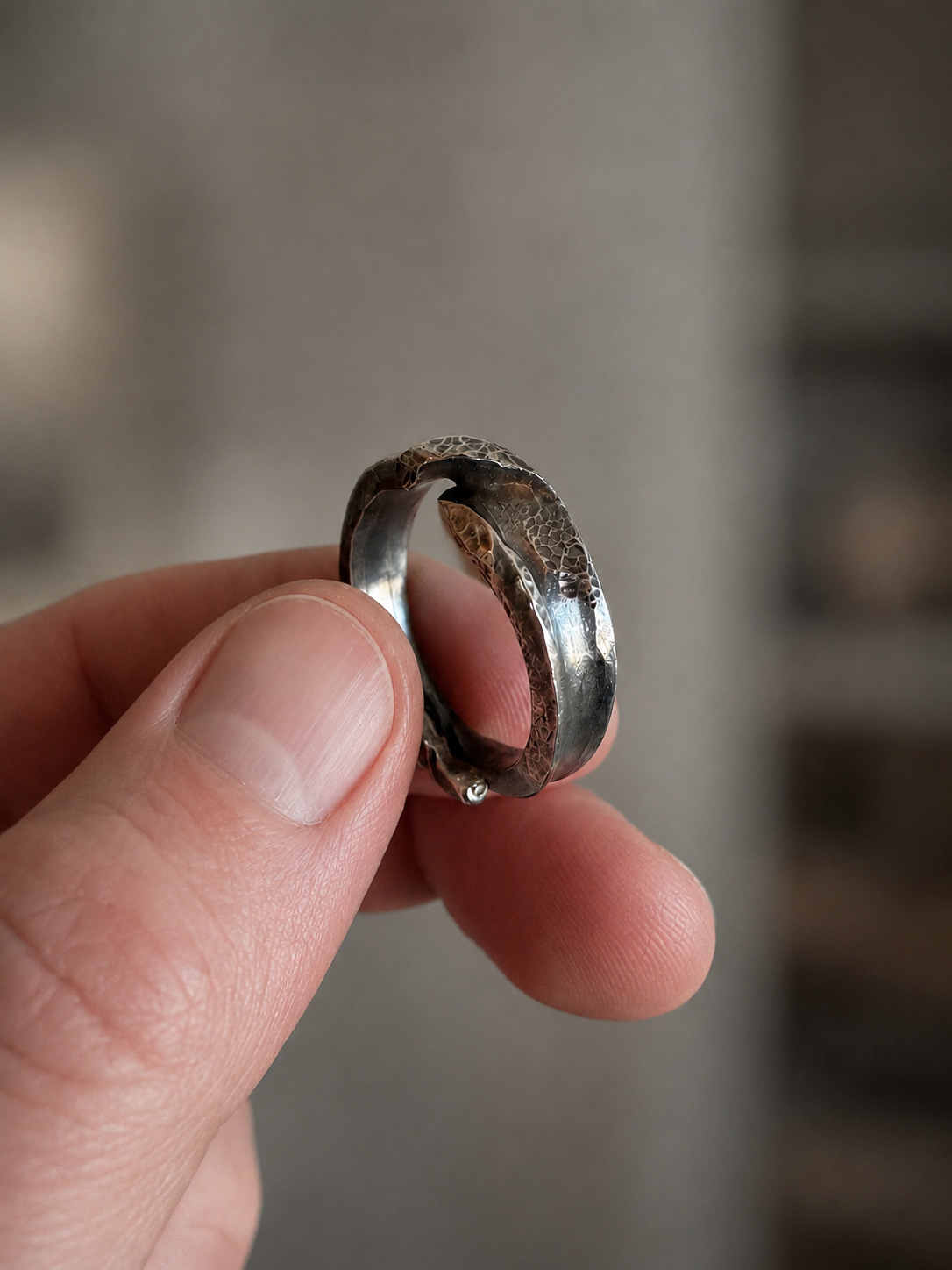
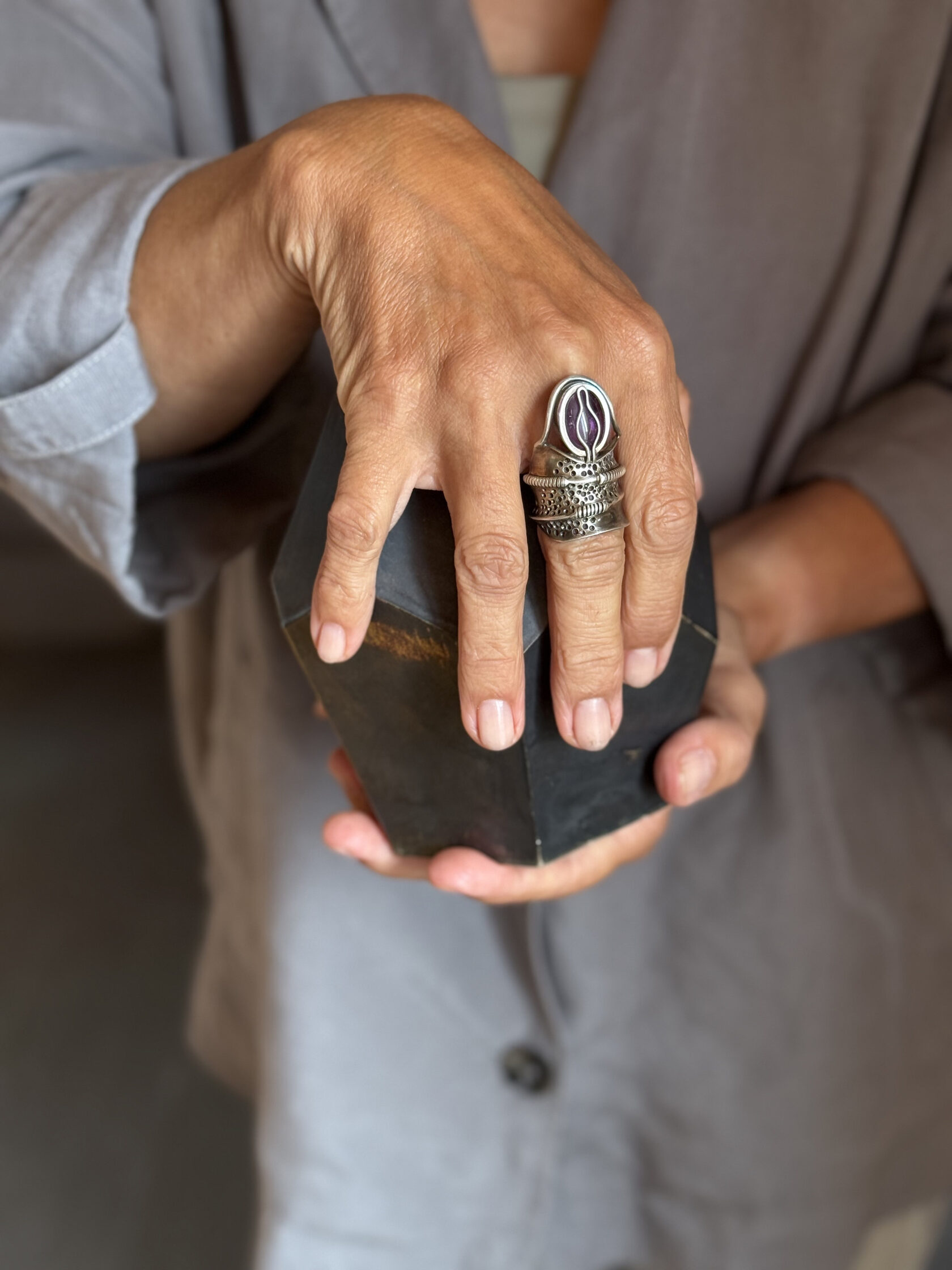
A wide band contacts more of the finger and usually feels tighter than a thin ring with the same inside diameter. For wide or sculptural rings, it is better to check the fit with a sizing ring or sample of similar width.
We do not recommend automatically adding a fixed “half size” for everyone. Band width, inside profile, knuckle size and normal changes in finger volume all affect the final fit.
Frequently asked questions about ring sizes
How is a Russian ring size different from a European size?
In Russian practice, the size is usually tied to the ring's inside diameter in millimeters. In the EU / ISO system, the number corresponds to the inside circumference in millimeters. So Russian size 17.5 and EU 55 describe approximately the same physical ring using different measurements.
How do I convert ring diameter to an EU size?
Multiply the inside diameter by π. For example, a diameter of 17.5 mm gives a circumference of about 55 mm, which is approximately EU / ISO 55. The calculator above does this automatically.
Can I convert a US ring size exactly to a Russian size?
You can get a close equivalent, but international sizing systems use different increments and do not align perfectly at every point. For an order, use the inside diameter or circumference in millimeters as the primary reference and the national size as a secondary reference.
Why do UK ring sizes use letters?
The traditional UK system uses letters with intermediate half-size steps. A ring size may therefore be written as N or N½ rather than as a decimal number.
Should I choose a larger size for a wide ring?
Wide rings often feel tighter, but there is no universal size increase that works for everyone. Band width, inside profile and knuckle size should be considered, and a similar-width sizing ring is the best way to confirm the fit before making a substantial ring.
Why is the Japanese size marked “traditional 号”?
Traditional Japanese retail sizing still uses the 号 scale, where 1号 corresponds to an inside diameter of about 13.0 mm and each following number adds approximately one third of a millimeter. Modern JIS S 4700:2022 is linked to ISO 8653:2016, so this page keeps the traditional retail scale clearly separate from modern ISO/JIS sizing.
