1. Can ring size change with age?
Yes. Ring fit can change over time, but age alone does not predict the direction or magnitude of the change.
NP STUDIO / JOURNAL / RING SIZE / CHANGE OVER TIME
Yes. Finger size and the way a ring fits can change over time, but age or weight change cannot be converted into a predictable number of ring sizes. Weight is only one factor: joint shape, the base of the finger, temporary swelling, temperature, activity and ring geometry can all affect fit.
If an older ring becomes tight or loose, do not treat one measurement as a permanent size change. First look for a pattern across ordinary days, then compare knuckle passage, fit at the finger base and the width or internal geometry of the ring.

Yes. Fit is not one number that stays permanently attached to a person. It is a dynamic combination of anatomy, temporary conditions and the geometry of the ring.
Soft tissue, joint contour, the base of the finger and the way a ring passes the knuckle can all change over time.
A change in fit cannot identify the medical cause of a change in the finger.
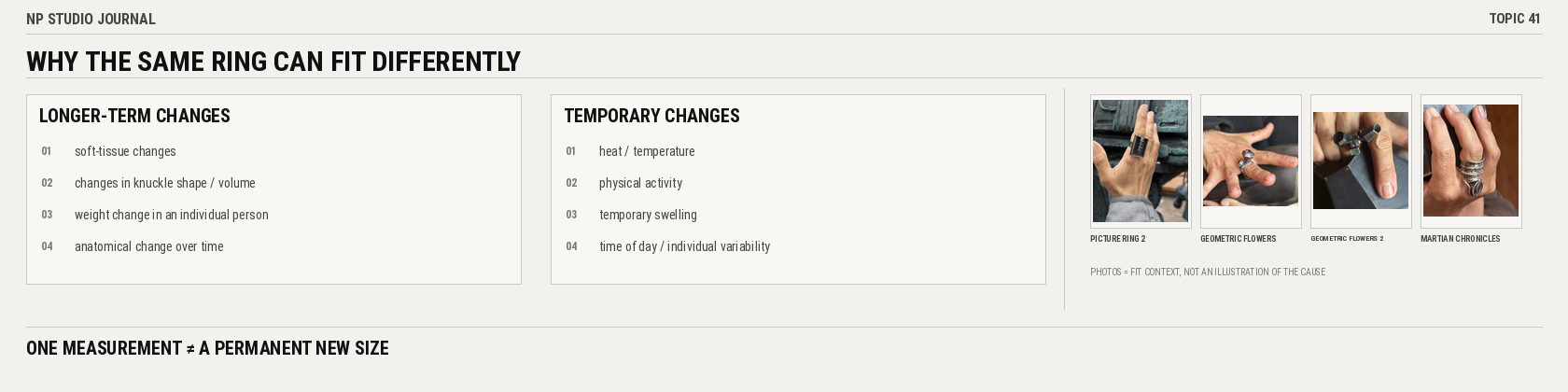
Primary fit reference: GIA — Accurate Determination of Finger and Ring Sizes.
Fingers contain soft tissue, so changes in body weight can affect ring fit for some people. But body composition and tissue distribution vary: one person may notice a clear change while another notices very little.
WEIGHT CHANGE ≠ PREDICTABLE RING-SIZE CHANGE. There is no responsible conversion such as “lose 10 kg and lose one ring size.”
SAME WEIGHT ≠ SAME RING SIZE. People at the same body weight can have very different knuckle shape, finger length and base-of-finger volume.
Soft tissue and joint contour can change over time, but AGE ≠ AUTOMATIC SIZE INCREASE. Age by itself does not tell you whether a ring should become larger, smaller or remain unchanged.
Some joint changes may be related to health conditions rather than simply “normal aging.” A ring-sizing article should therefore stay focused on fit rather than diagnose the cause.
If swelling or joint change is persistent, unexplained, painful or clearly one-sided, jewelry sizing advice is not a substitute for medical assessment.
Context on hand-joint changes: Arthritis Foundation — Osteoarthritis of the Hands. This does not mean aging automatically causes arthritis.
KNUCKLE SIZE ≠ BASE-OF-FINGER SIZE. A ring has to pass the knuckle and then settle securely enough at the base of the finger.
If the knuckle is noticeably larger than the finger base, the ring may feel resistant while going on or off but comparatively loose once it is in position.
For the broader fit logic, see How Should a Ring Fit?.
Ring fit can vary during the day. Heat, physical activity and temporary swelling can make a ring feel tighter for some people, then return closer to normal when conditions change.
TEMPORARY SWELLING ≠ PERMANENT SIZE CHANGE.
MORNING SIZE ≠ ALWAYS EVENING SIZE.
ONE TIGHT DAY ≠ RESIZE IMMEDIATELY. One hot day, workout or unusual activity is weak evidence for a permanent alteration to an existing ring.
Mayo Clinic notes that exercise-related hand swelling is common and can be temporary: Hand swelling during exercise.
WIDE BAND ≠ SAME FEEL AS THIN BAND. A wide band contacts more of the finger and can feel tighter than a narrow one at the same nominal size.
There is no automatic universal “add half a size” rule. The actual feel depends on width, internal profile, knuckle shape and the specific construction. For a dedicated sizing guide, see Wide Band Ring Size Guide.
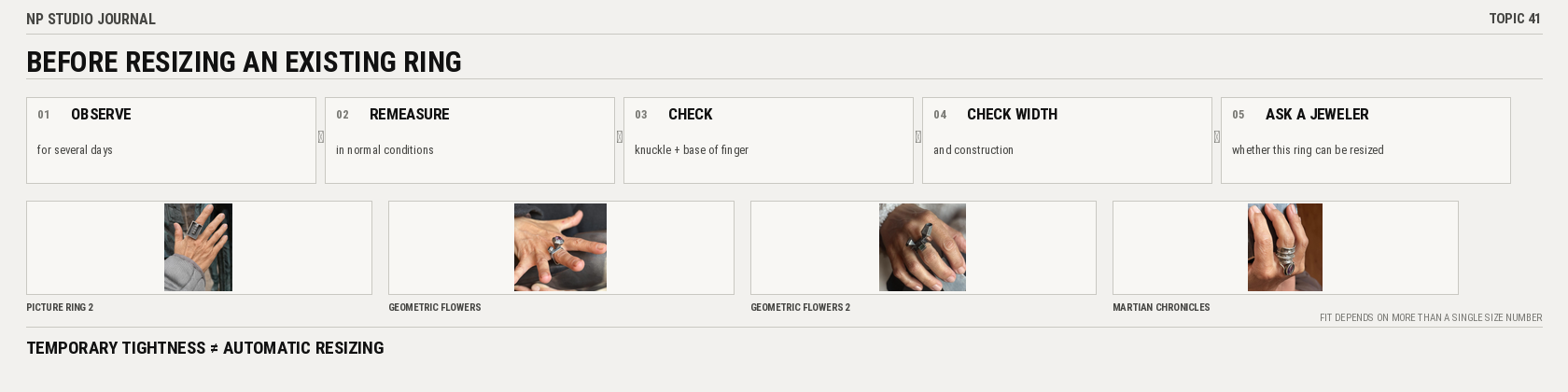
If the old size is now uncertain, remeasure under normal conditions. For the actual measuring tutorial, use How to Measure Ring Size.
Resizing becomes more reasonable after a stable mismatch has been observed: the ring is repeatedly too tight or too loose under ordinary conditions, not only on one unusual day.
The construction also matters. Stones, solder joints, patina, shank form and the architecture of the upper section can make one ring straightforward to alter and another difficult or unsuitable for safe resizing.
REMEASURE BEFORE RESIZE. A new measurement and a construction check are more useful than guessing a new size from age or body weight.
An adjustable construction can provide a limited fit margin, but it does not erase the starting size and it does not make the ring universal.
For open-band construction specifically, see Adjustable Rings: Sizing, Fit and Limits.
If you need the size-system reference, use the separate Ring Size Chart or the International Ring Size Calculator.
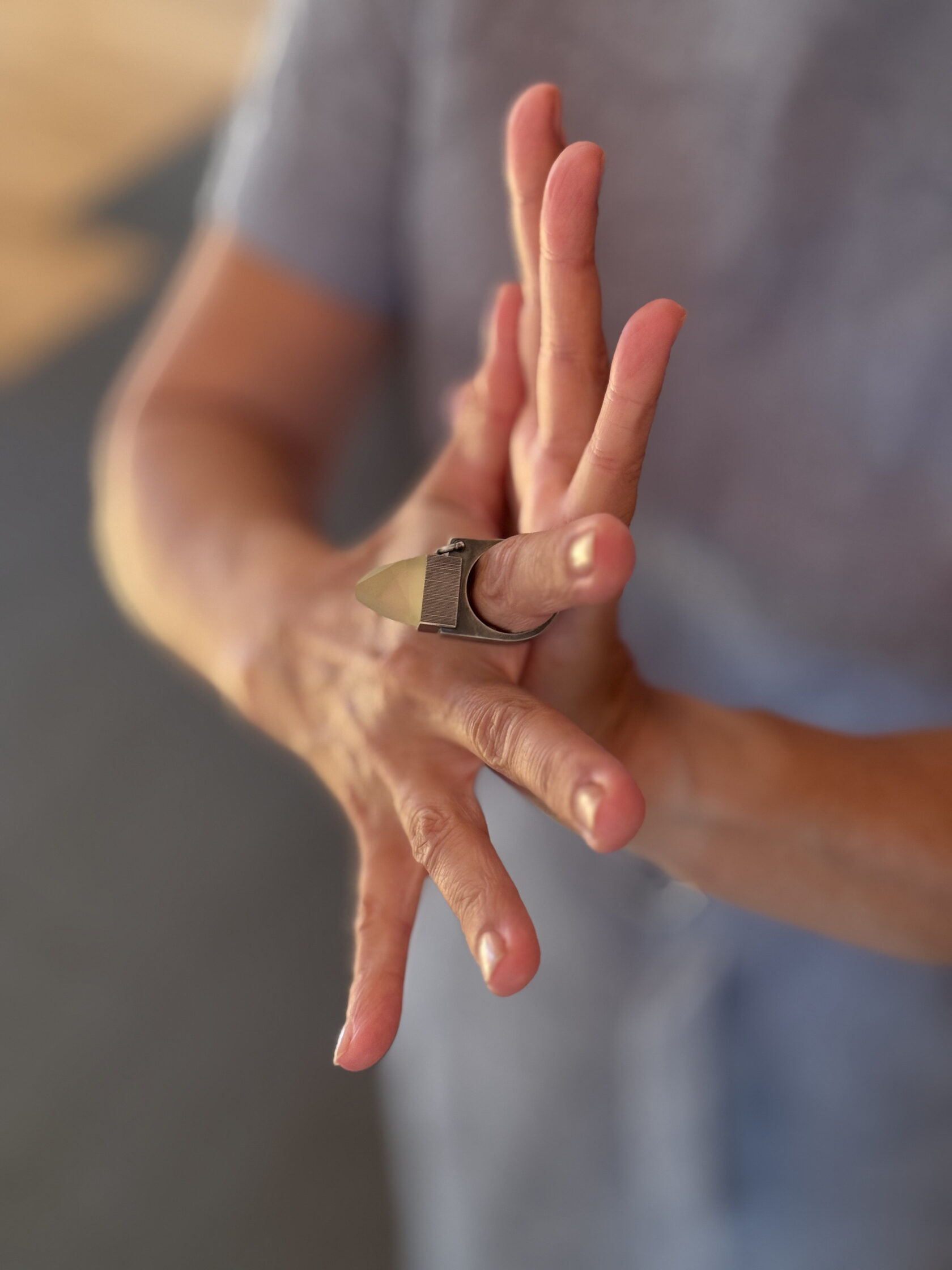
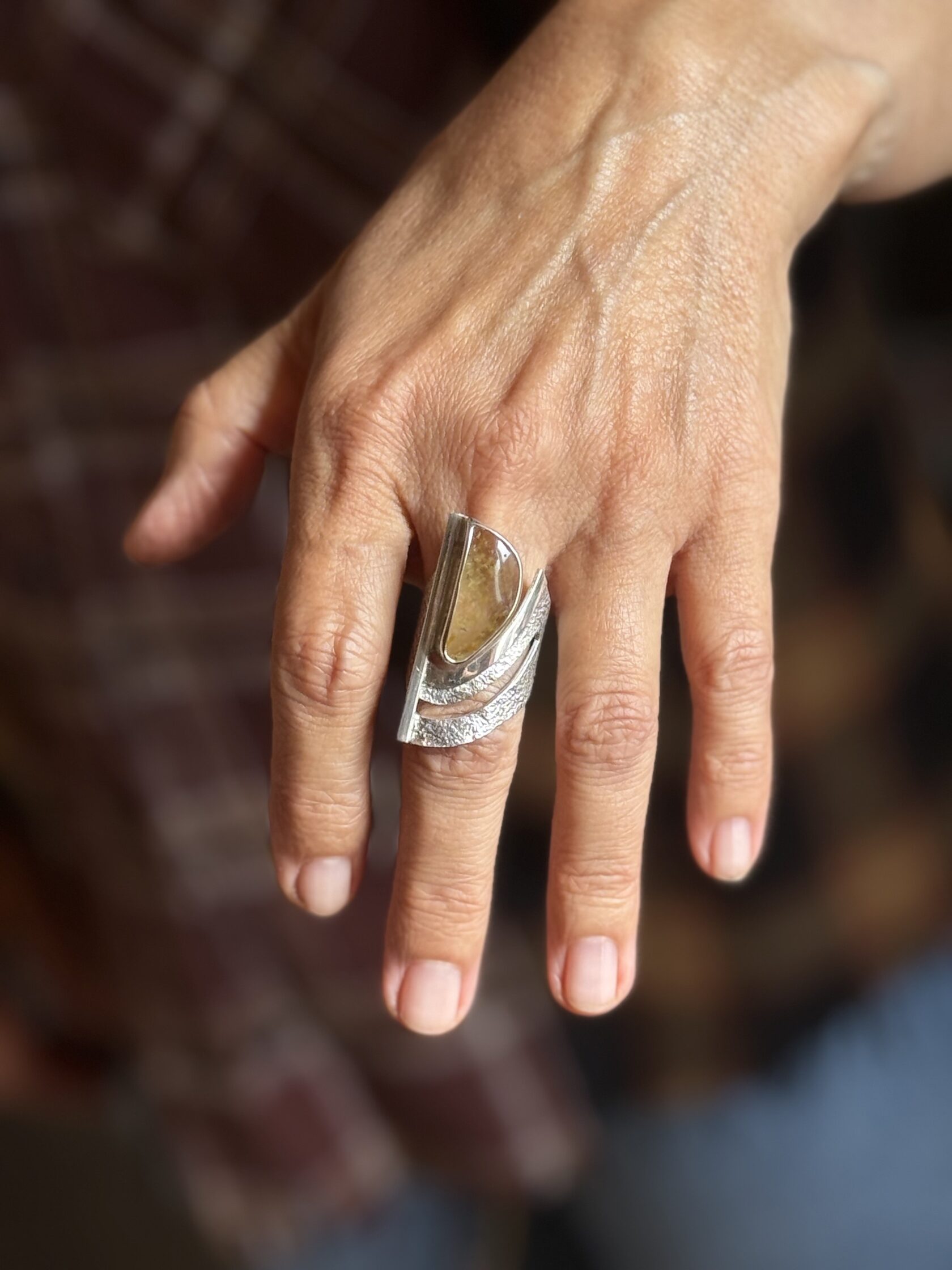
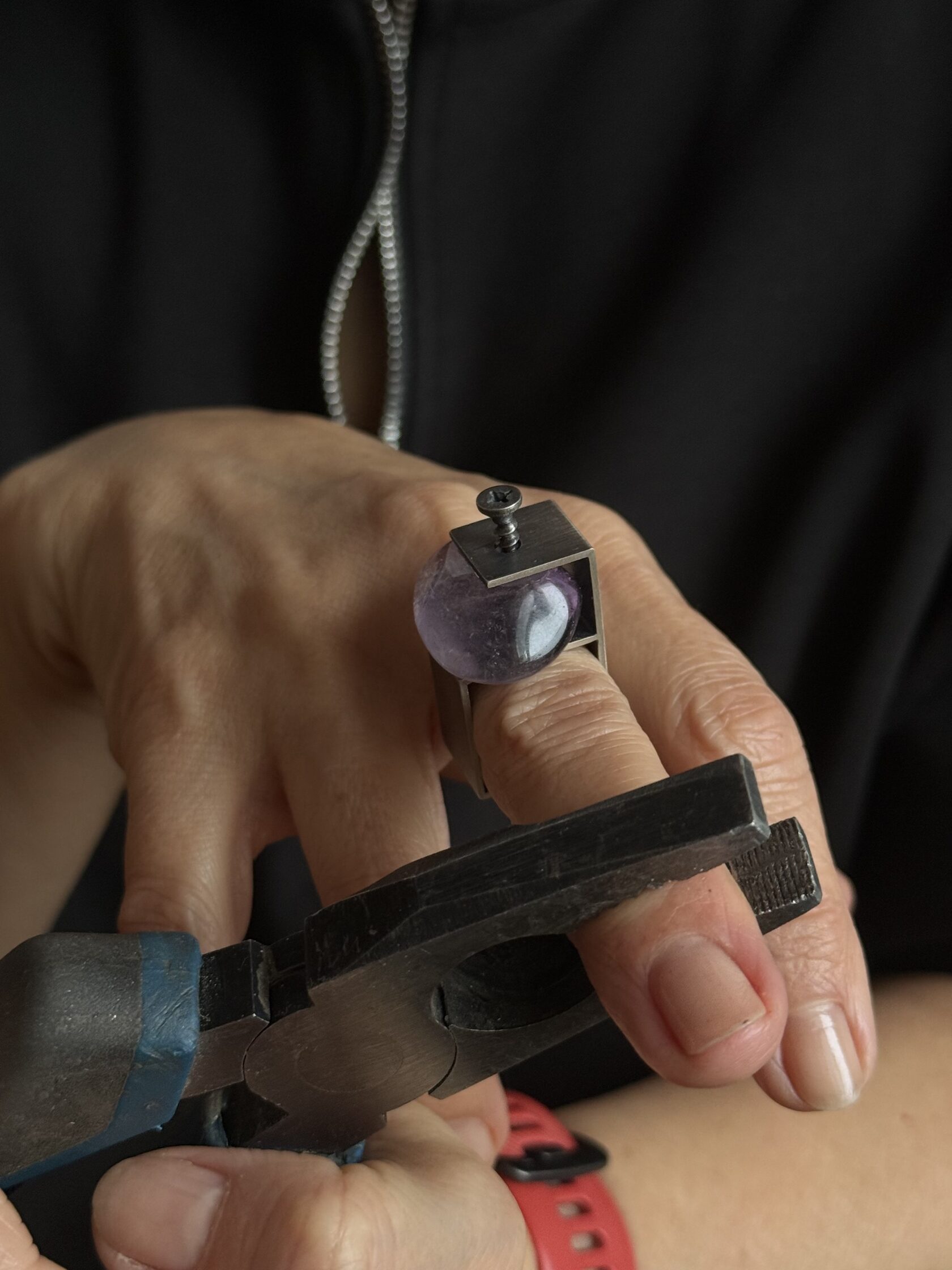
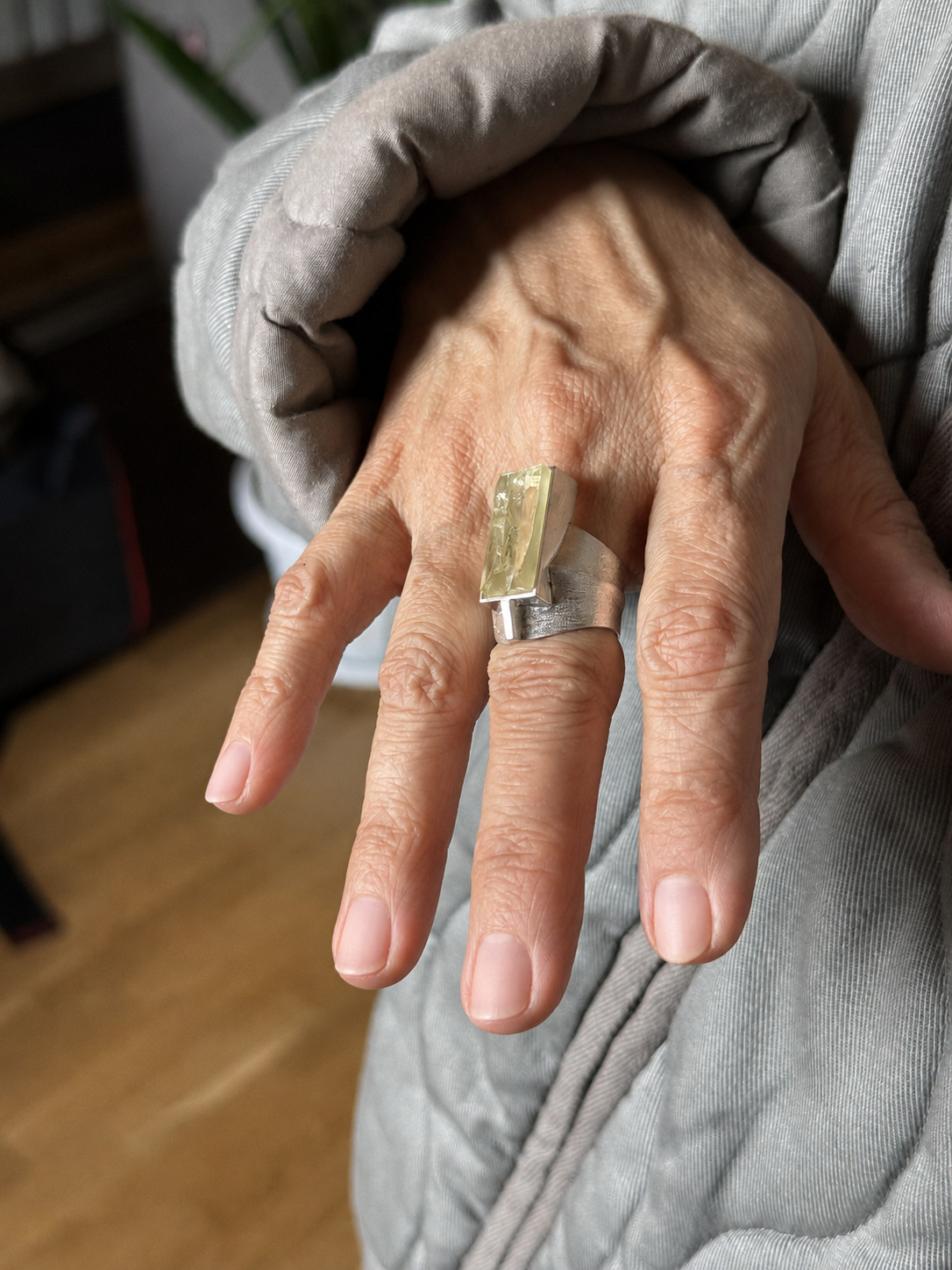
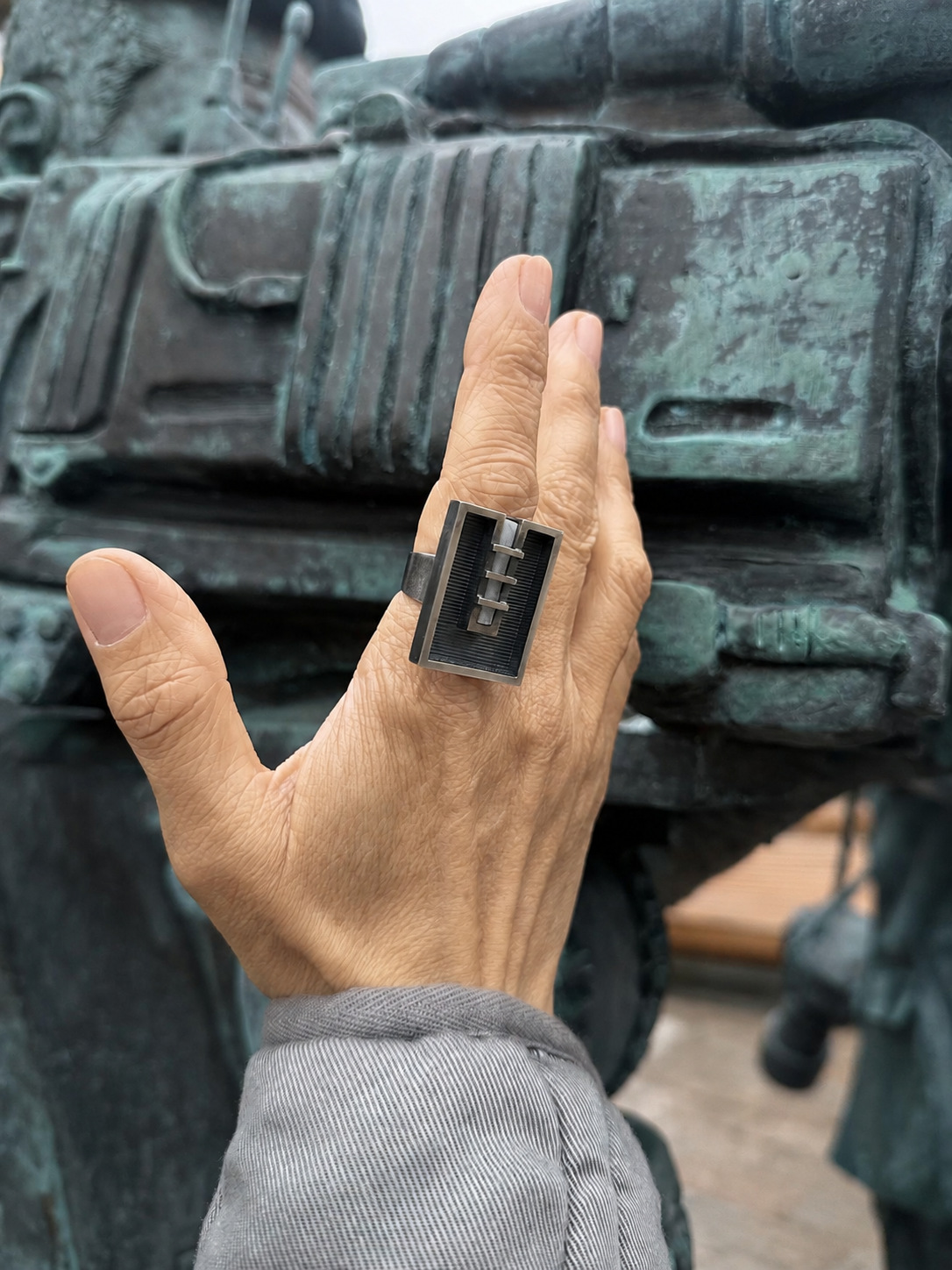
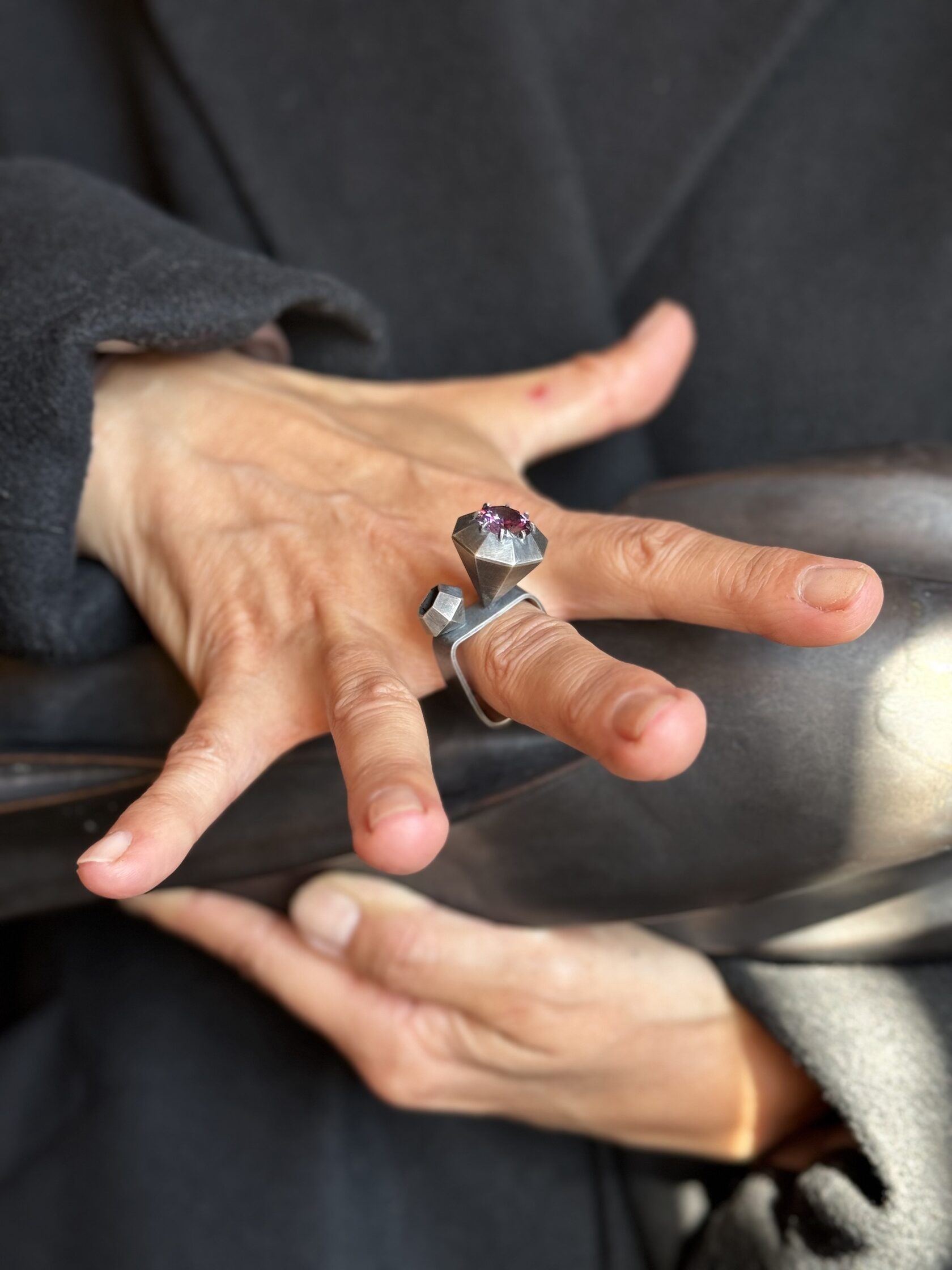
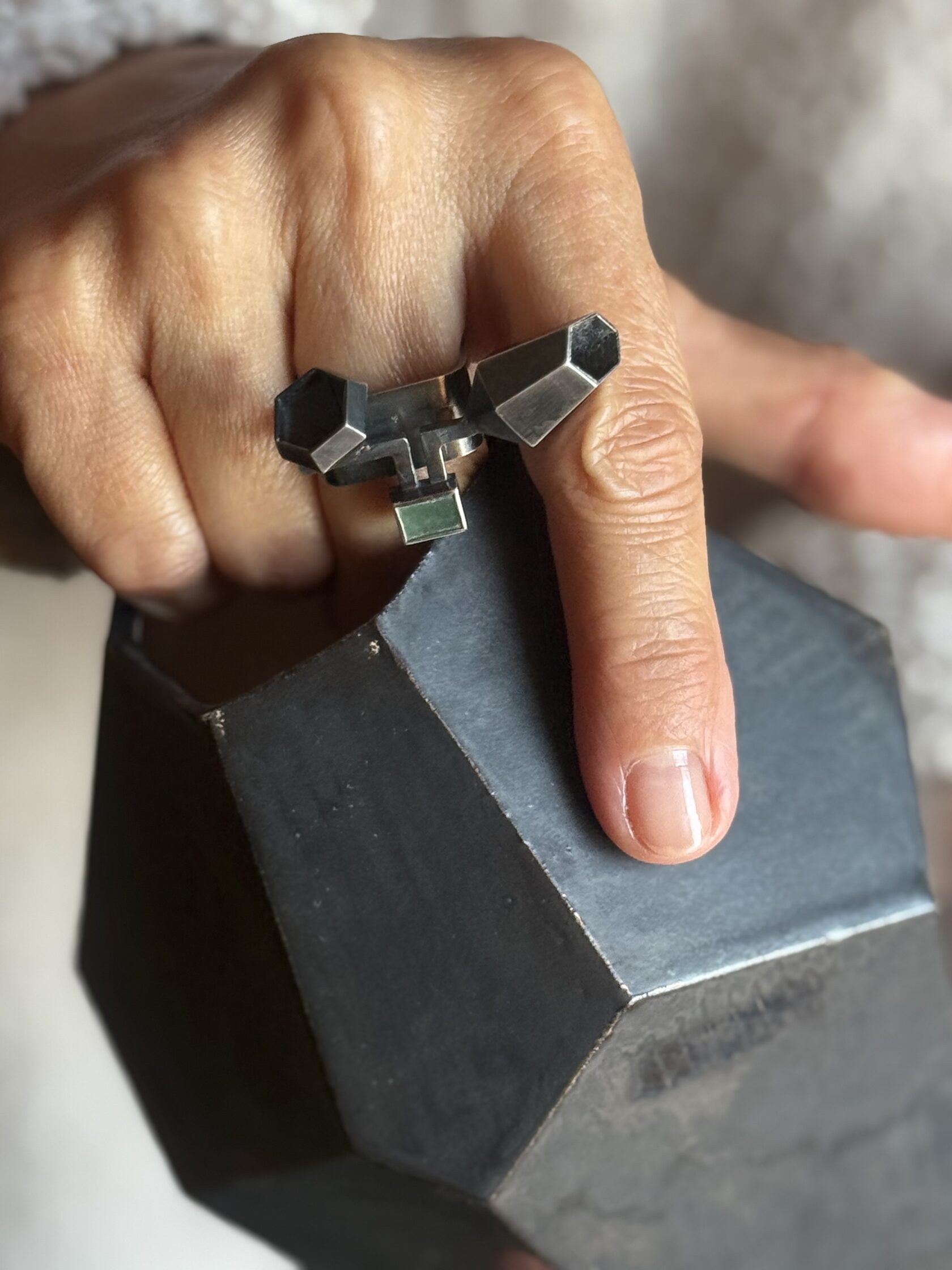
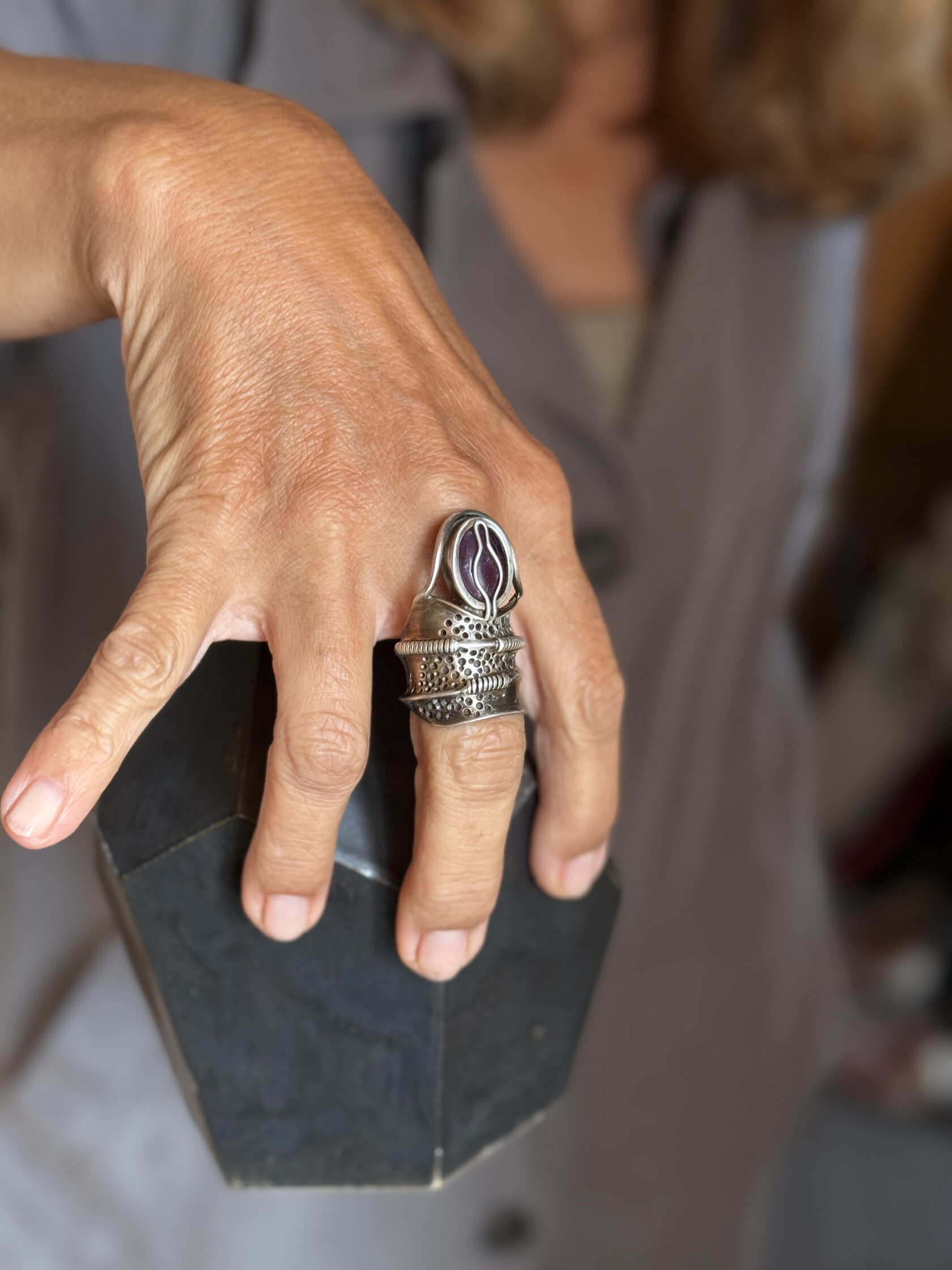
These photographs show real differences in width, profile, height and scale on the hand. They are not illustrations of age, weight loss or weight gain.
Yes. Ring fit can change over time, but age alone does not predict the direction or magnitude of the change.
It can, but the effect varies from person to person. There is no universal conversion from weight loss to ring sizes.
For some people, yes; for others the change is small. Weight is only one factor affecting fit.
No. WEIGHT CHANGE ≠ PREDICTABLE RING-SIZE CHANGE. There is no reliable “X kilograms equals Y ring sizes” formula.
Temporary swelling, temperature, activity and normal day-to-day variation can all change the way the ring feels.
Some people experience temporary finger swelling in heat. That does not automatically mean the permanent ring size has changed.
Yes, joint contour and volume can change, but age itself does not guarantee that the knuckle will become larger.
Both. The ring has to pass the knuckle and then sit securely enough at the base of the finger.
After a stable mismatch has been observed under normal conditions and a jeweler has confirmed that the construction can be resized safely.
Yes, if an older ring has become consistently tight or loose. Remeasure under normal conditions rather than relying on one unusual day.
NEXT STEP / WORKS
Works shows narrow, wide, substantial and unconventional rings — the construction variables that influence fit beyond one size number.
Go to WorksNEXT STEP / CUSTOM
If an older ring no longer fits, first establish whether the mismatch is stable and whether the construction can be resized safely.
Discuss the Ring