
NP STUDIO / JOURNAL / RING SIZE
How Should a Ring Fit?
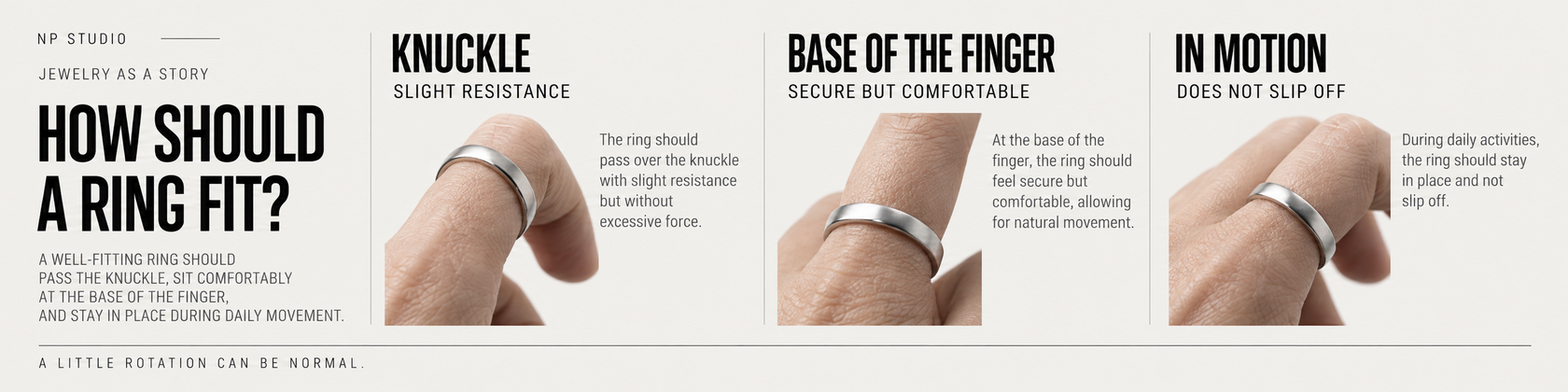
A well-fitting ring should feel secure, pass over the knuckle with slight resistance, and sit comfortably at the base of the finger. It should not slide off during normal movement, but it should not constantly squeeze the finger either. Some rotation can be normal, especially with a top-heavy ring. Fit is best judged across normal conditions rather than from a single moment.
Short answer: how should a ring fit?
A good fit is a balance between security and comfort. The ring should move over the knuckle without excessive force, but it should not simply fall past it. Once it reaches the base of the finger, it should feel stable without creating constant pressure.
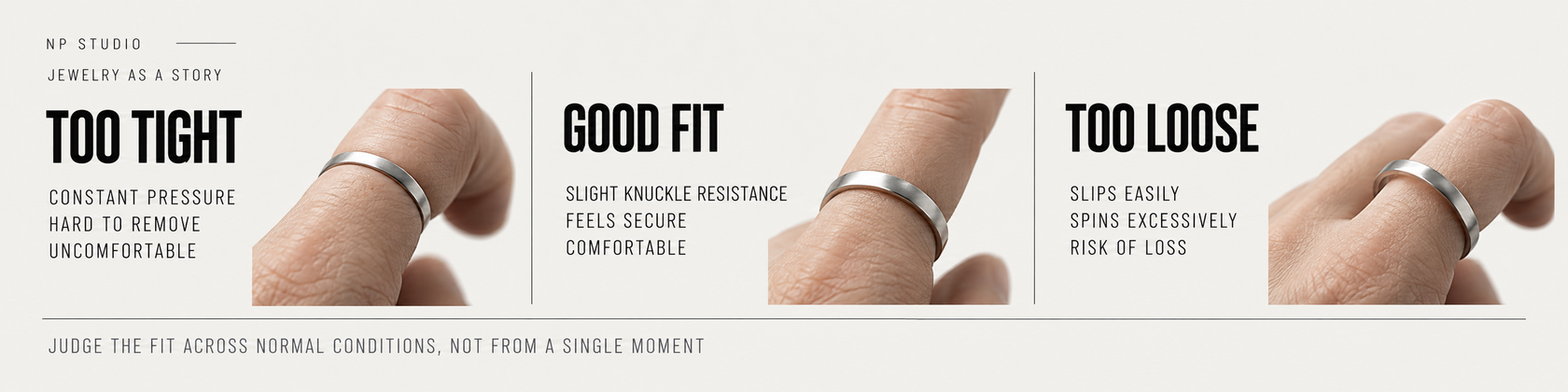
Judge the fit after normal wear rather than at one isolated moment. A finger that has just been exposed to cold weather or heavy exercise may not represent its usual size.
Three points of a good ring fit
Should a ring be tight over the knuckle?
Slight resistance at the knuckle is usually useful because it helps keep the ring on the finger. If a ring passes the knuckle with virtually no resistance and then feels loose at the base, it may be too large.
Resistance should not mean forcing the ring. If removing it is routinely painful, requires prolonged pulling, or causes the finger to swell around the band, the fit deserves another look.
How snug should a ring feel at the base of the finger?
At the base of the finger, the ring should feel secure but not like a clamp. It can make close contact with the skin, but constant heavy pressure is not the goal.
A temporary light indentation after long wear does not automatically mean the ring is too small. Comfort, normal removal, lack of pain, and overall stability matter more than a single mark.
How do you know if a ring is too tight?
Look at the pattern of symptoms rather than one sign. Persistent strong pressure, pain, numbness, pronounced digging into the finger, or repeated difficulty removing the ring under ordinary conditions all suggest that the fit may be too tight.
If there is rapidly increasing swelling, severe pain, marked color change, or the ring cannot be removed, do not keep testing the fit. Remove it if that can be done safely; if symptoms are significant or the ring cannot be removed, seek medical help.
How do you know if a ring is too loose?
A ring may be too loose if it passes the knuckle very easily, spins excessively, changes position constantly, or can slip off during normal movement. The risk of loss matters more than a small amount of motion.
Spinning by itself is not enough to diagnose a large size, because ring construction also changes how a ring behaves.
Should a ring spin on your finger?
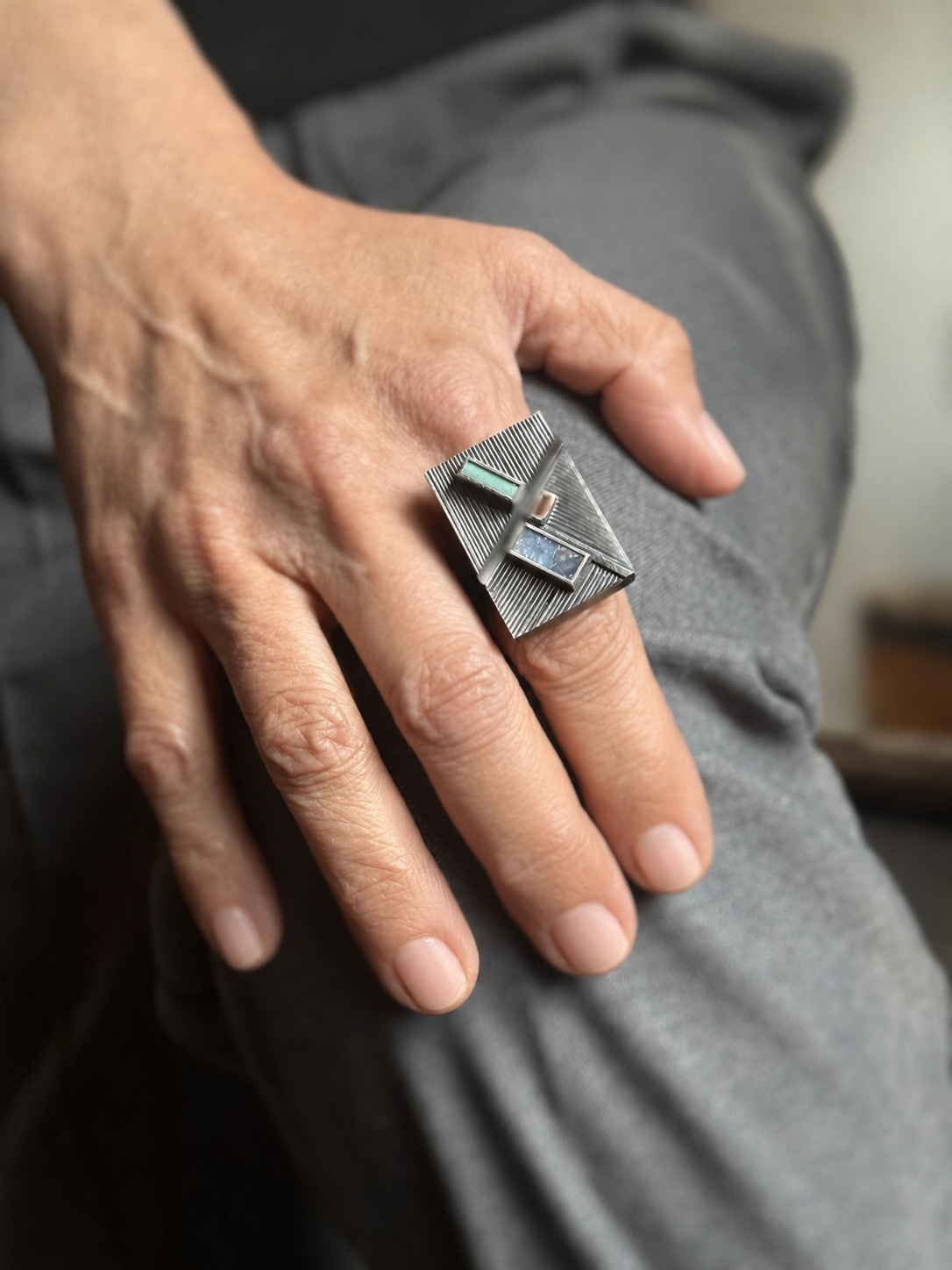
Some rotation can be completely normal. Fingers are not perfect cylinders, skin moves, and finger volume changes during the day. A ring with a large stone or a heavy top can also rotate because of gravity.
The more useful question is whether the ring still feels secure. Mild rotation with a stable fit is different from constant loose spinning combined with a real risk of slipping off.
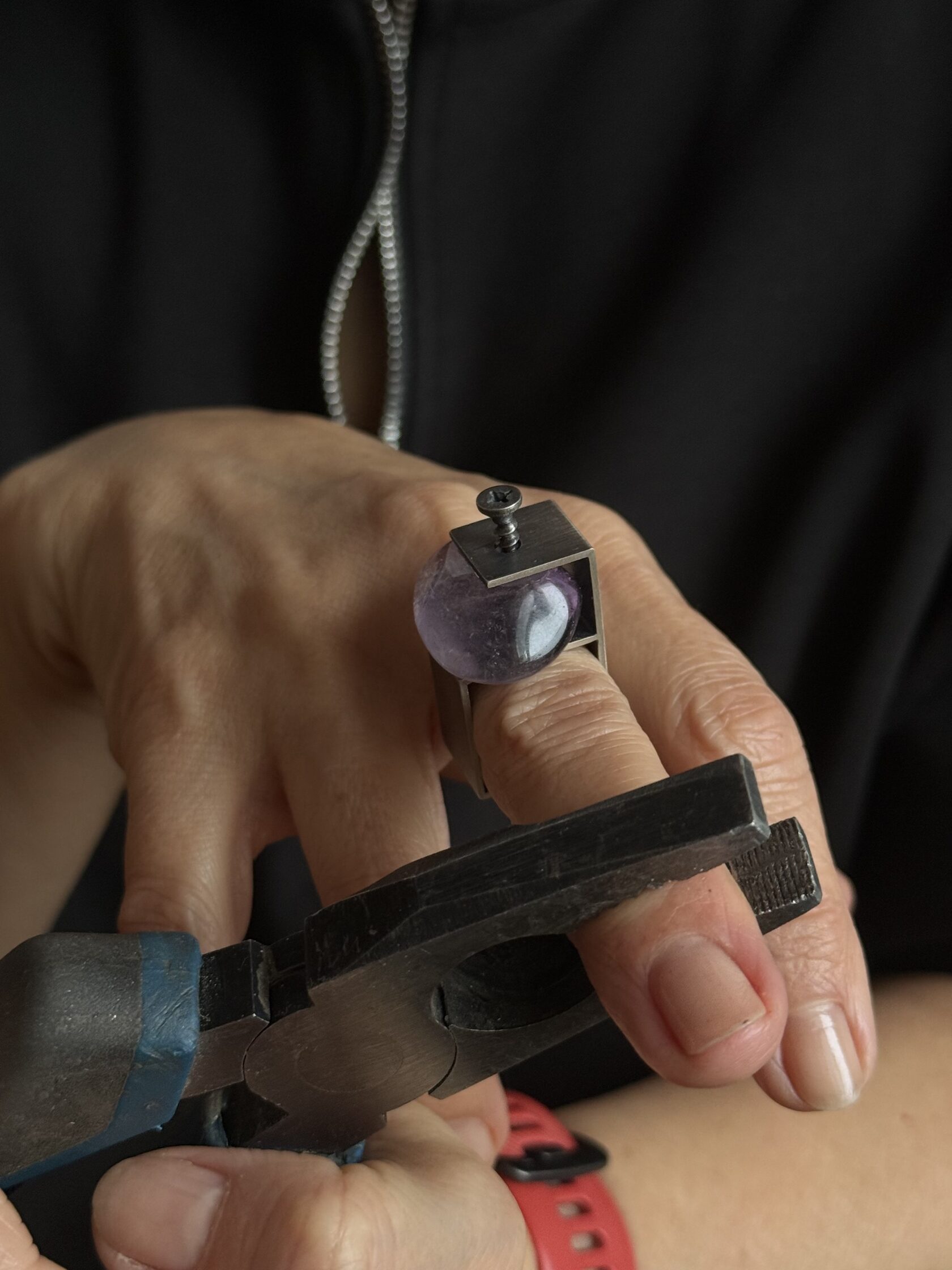
Why top-heavy rings can rotate even at the right size
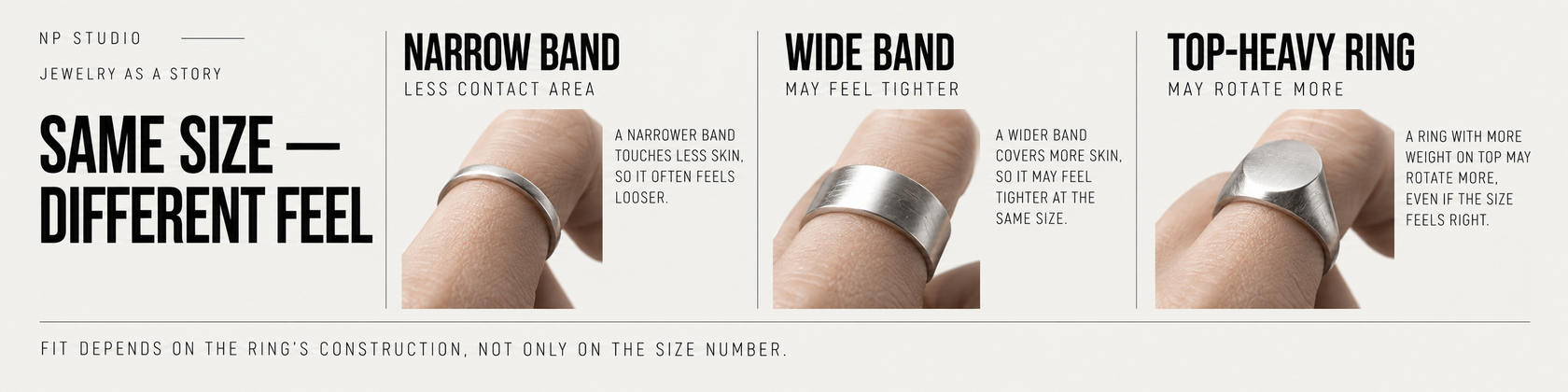
A top-heavy ring has more weight above and away from the finger. That shifts the center of gravity and encourages the ring to rotate downward even when the inside diameter is appropriate.
With sculptural rings, I look at the weight distribution, shank profile, and how the ring behaves in motion rather than judging fit only by the size number.
How should a wide band ring fit?
A wide band touches more of the finger, so it often feels tighter than a narrow band with the same inside size. That is a real fit difference, but there is no universal rule that every wide ring must be a half size larger.
The needed adjustment depends on band width, inside profile, finger shape, and the sizing system being used.
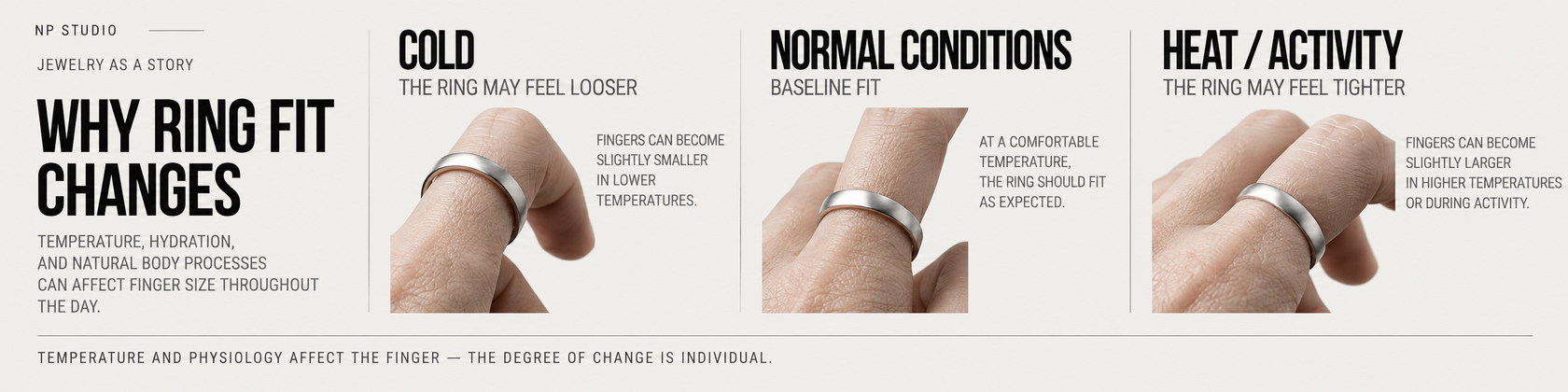
Why ring fit changes during the day
Finger volume is not constant. Temperature, activity, fluid balance, hand position, and individual physiology can all affect how a ring feels. A ring may therefore feel different in the morning and later in the day.
There is no rule that everyone's fingers are always larger or smaller at the same time. That is why it is better to evaluate fit across several normal conditions.
Does ring size change in hot weather?
In hot weather, many people notice that their fingers become slightly fuller, making a ring feel tighter. In colder conditions, the same ring may feel looser. The amount of change is individual.
If you evaluate a ring immediately after extreme heat, strenuous activity, or a long period in the cold, the fit may not represent your normal baseline.
Why the same ring can fit differently on your right and left hand
Matching fingers on the right and left hand can differ in circumference, knuckle shape, and soft tissue. A dominant hand may be slightly larger for some people, but that is not a universal rule.
A ring that fits one ring finger well should not automatically be assumed to fit the same finger on the other hand.
What matters more: the knuckle or the base of the finger?
Both matter. The knuckle determines whether the ring can stay on securely and still be removed without excessive force. The base of the finger determines everyday comfort and stability.
If your knuckle is much wider than the base of your finger, a good fit may require a compromise: enough room to pass the knuckle, but not so much room that the ring feels unstable once it is in place.
What if you are between two ring sizes?
Do not automatically choose the larger or smaller size. Consider band width, ring construction, the difference between the knuckle and the base of the finger, and how your finger changes under ordinary conditions.
A wide or top-heavy ring can feel very different from a thin band. Sometimes the correct solution is to adjust the specific ring rather than rely only on the size number you usually wear.
When should you measure your ring size again?
Re-measure if the ring is consistently too tight or too loose, your body or finger shape has changed, or the original measurement was taken a long time ago or under unusual conditions.
This page is about fit rather than measurement technique. For that, see How to Measure Ring Size →. To compare sizing systems, use the Ring Size Chart →.
Can you judge fit from an existing ring?
An existing ring can be useful if it fits the same finger well and has a similar width and construction. The same internal size can feel different in a thin band and a wide one.
If your goal is to measure the existing ring itself, use the separate guide: How to Measure Ring Size →.
If the ring is a gift
You cannot test the actual fit before giving the ring, so accurate size information matters more. Band width and construction should also be considered when the final design is substantially different from the reference ring.
For ways to estimate a size without asking directly, see How to Find Someone's Ring Size Without Asking →.
How I evaluate ring fit at NP Studio
I do not look only at the size number. A narrow band, a wide shank, and a sculptural ring with a heavy top can all feel different even when their internal measurements are similar.
For me, a good fit means slight but comfortable resistance over the knuckle, security at the base of the finger, and normal movement without an obvious risk of loss. With sculptural pieces, a small amount of rotation is not automatically a problem.
For the material itself, see What Is Sterling Silver? → and Can You Wear Sterling Silver Every Day? →.
View NP Studio worksQuick ring-fit checklist
- Knuckle: slight resistance, but not pain or excessive force.
- Base of finger: secure and comfortable without constant strong pressure.
- Movement: the ring should not slip off during normal activity.
- Rotation: a little movement can be normal, especially with a top-heavy ring.
- Conditions: the fit should remain reasonable across ordinary temperature and activity changes.
- Removal: the ring should come off without pain or a prolonged struggle.
Frequently asked questions
Related NP Studio ring-size guides
If the fit is uncertain, start by measuring your ring size, then compare the result with the ring size chart. If the ring is a gift, see how to find someone's ring size without asking.
