
NP STUDIO / JOURNAL / WEAR
Can You Wear Sterling Silver Every Day?
Yes. Sterling silver 925 is suitable for everyday wear. It is strong enough for daily jewelry, but regular use gradually changes the surface and increases the mechanical load on the piece.
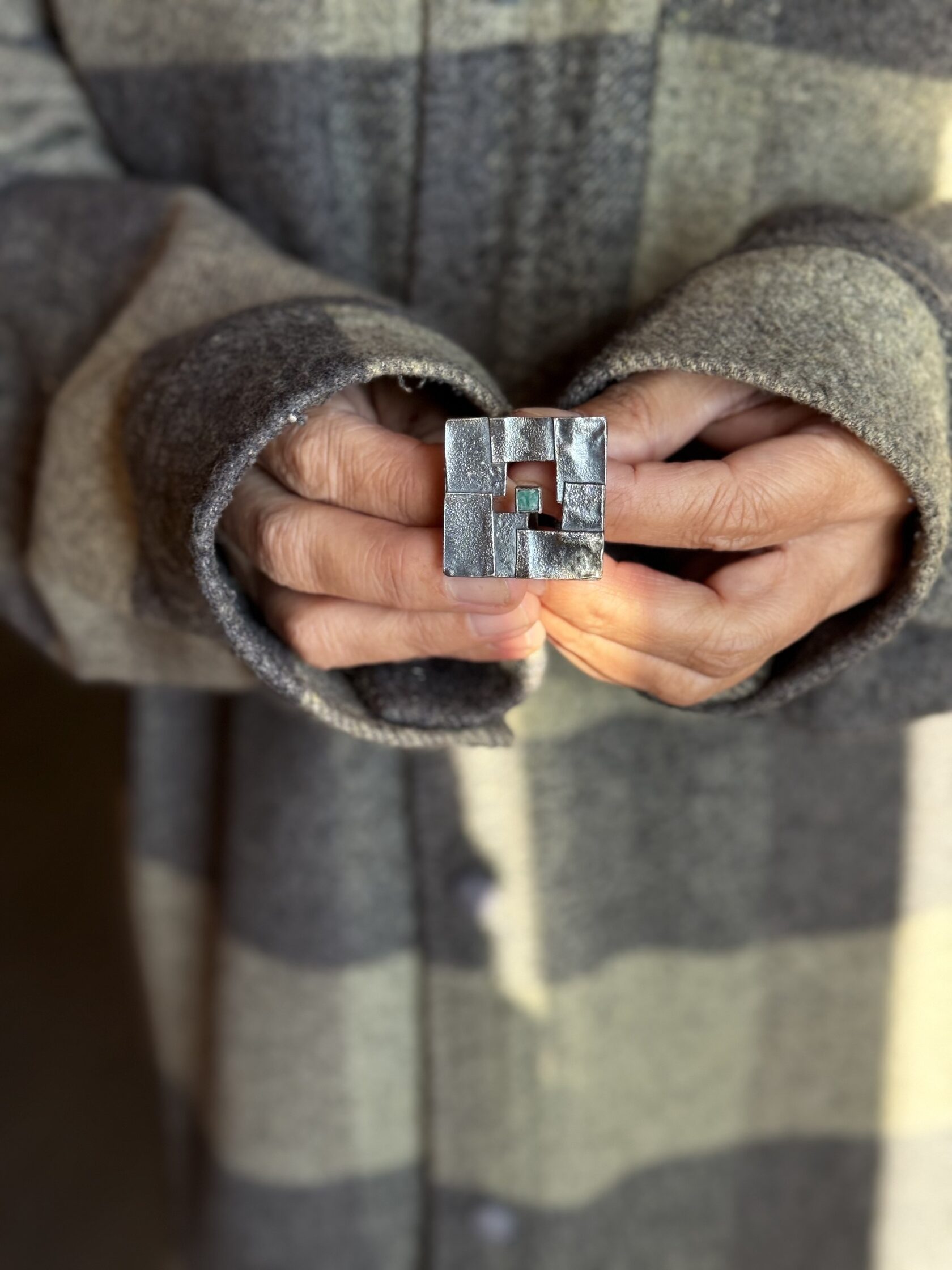
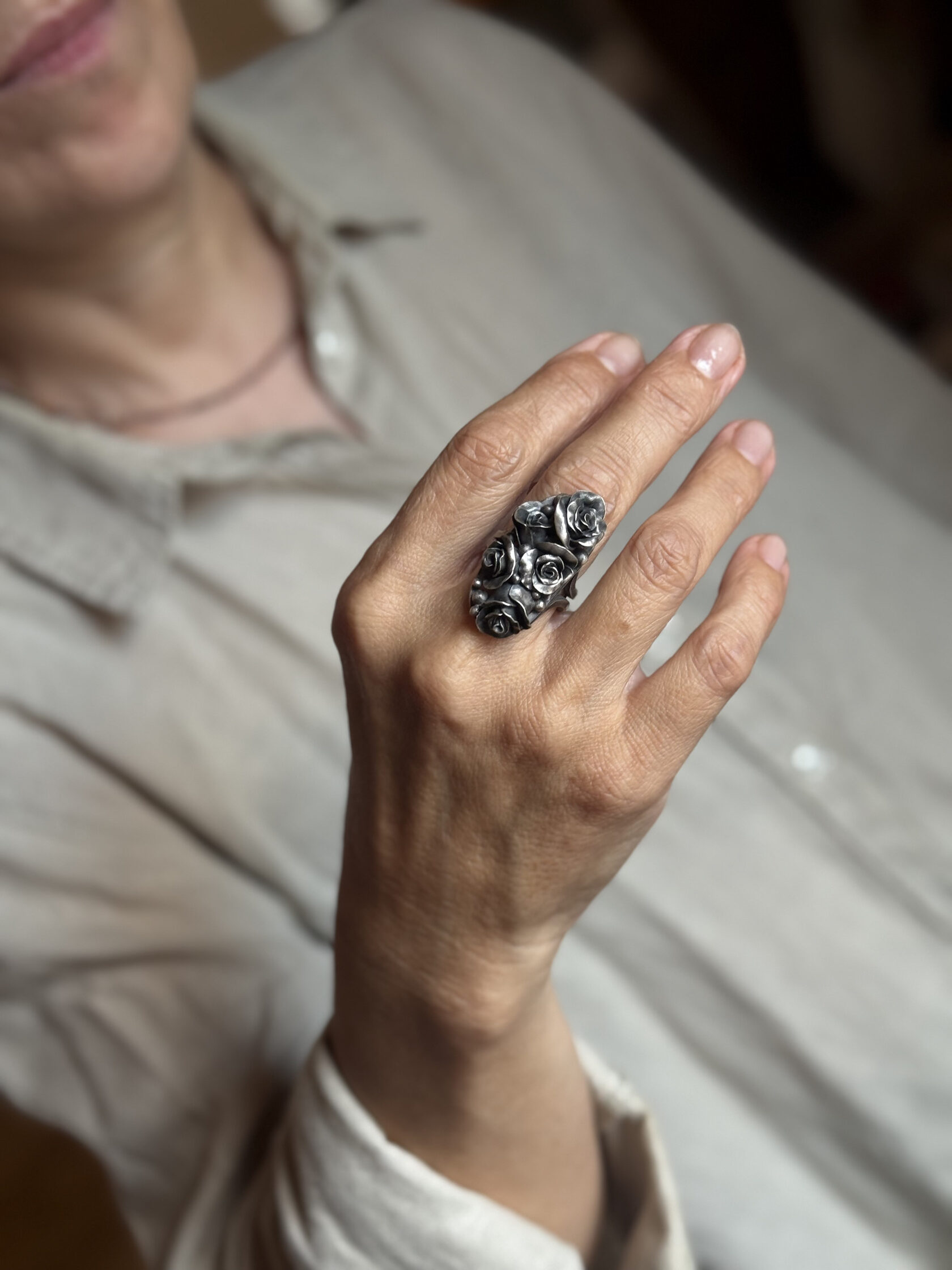

Can you wear sterling silver all the time?
Yes. Sterling silver 925 is widely used for rings, bracelets, earrings and pendants because it combines a high silver content with more practical mechanical properties than fine silver.
Daily wear does not destroy the metal by itself. What changes is the object through use: polish softens, fine contact marks appear, and the most heavily loaded parts experience more mechanical work.
For the alloy itself, see What Is Sterling Silver?
What happens to sterling silver with daily wear?

Which silver jewelry is better suited to daily wear?
This is not a division between good and bad jewelry. The thinner and more complex the construction, the more attention it usually needs when worn continuously.
Rings take the greatest mechanical load
A ring works with the hand almost constantly. It touches door handles, tables, phones, bags, tools and work surfaces, and it is compressed when the hand grips objects.
Daily wear on a ring and daily wear on a pendant are therefore mechanically very different. The same sterling silver alloy can age at very different rates in different objects.

Can you sleep in sterling silver jewelry?
Technically yes, but it is not always the best choice. Chains, earrings and thin projecting elements can catch on fabric, while jewelry with large stones receives unnecessary additional load.
A compact ring is usually less problematic, but complex, delicate or moving constructions are generally better removed at night.
Can you shower with sterling silver?
Occasional contact with clean water is usually not a problem. Regular showering while wearing jewelry, however, means repeated exposure to soap, shampoo, cosmetics, minerals in the water and residual moisture.
The issue is therefore not that water instantly damages silver, but that repeated exposure adds more variables. For prevention of surface change, see How to Prevent Sterling Silver from Tarnishing.
Can you swim in a pool with sterling silver?
It is better to remove it. Pool water is a more chemically active environment than ordinary clean water, and there is little benefit in repeatedly exposing sterling silver to it.
This is especially relevant to pieces with patina, complex finishes, delicate settings or stones.
Sweat and sterling silver
Perspiration contains water, salts and other substances, and its composition differs from person to person. This is one reason the same sterling silver piece can change faster on one wearer than on another.
That does not by itself indicate poor silver quality. During intense physical activity, chemical exposure is also combined with impact, friction and pressure.
Cosmetics and everyday wear
Creams, perfume, hairspray, sanitizer and household products regularly reach the hands and skin. With daily wear, some of these substances inevitably reach the jewelry surface.
A simple practical rule is to apply cosmetics first and put jewelry on afterwards. General care is covered separately in How to Care for Sterling Silver.
Can you exercise in sterling silver jewelry?
It is better to remove it. Training combines perspiration, pressure, impact risk, contact with equipment and the possibility of deforming delicate elements.
Rings in particular should be removed when using barbells, dumbbells or other equipment that applies direct mechanical pressure to the metal.
Daily wear and scratches
Fine scratches are practically unavoidable on polished sterling silver that is worn every day. They are normal signs of use, not proof that the material is defective.
| Normal signs of use | Damage that deserves attention |
|---|---|
| Fine surface scratches | Deep dent |
| Gradual change in shine | Visible deformation |
| Matte finish becoming smoother | Crack or failed joint |
| Patina wearing on raised areas | Loose stone or weakened setting |
What happens to matte and patinated surfaces?
A matte surface can gradually become smoother and shinier on raised areas that receive constant contact. Patina can partially wear away in the same locations.
Texture usually hides small signs of use more effectively than mirror polish. On some artist-made silver objects, surface change can therefore become part of the life of the piece rather than simply a loss of finish.
Does daily wear shorten the life of sterling silver?
The more frequently an object is used, the faster mechanical wear accumulates. But daily wear does not automatically mean a short lifespan.
Longevity depends on construction, thickness, jewelry type and load. See the separate article How Long Does Sterling Silver Last?.
When should you remove silver jewelry?
NP Studio silver in everyday wear
Many NP Studio pieces are intended for real use rather than only for storage as objects. Surface change is treated as a normal part of the life of jewelry as long as the construction remains sound and safe.
On textured and patinated sterling silver, traces of time can become part of the visual character of the piece.
View NP Studio worksSo can you wear sterling silver every day?
Yes. Sterling silver 925 is suitable for everyday wear. Its surface will gradually change, especially on rings and bracelets, but that is a normal part of use.
It is better to remove jewelry for heavy mechanical work, exercise, pool use and chemical exposure. For ordinary daily life, wearing sterling silver every day is not a problem by itself.
Frequently asked questions
READ NEXT / NP STUDIO JOURNAL
