1. What is an adjustable ring?
It is a ring whose construction intentionally allows a limited fit change, usually through an open shank.
NP STUDIO / JOURNAL / RING SIZE / OPEN CONSTRUCTION
An adjustable or open-band ring can provide limited fit flexibility, but it is not a universal size. The range depends on band thickness and width, metal, top geometry, stones and settings.
An adjustable ring usually uses an open construction that allows a limited change in fit. It does not mean one size fits everyone. The safe adjustment range depends on band thickness and width, metal, ring geometry, stones and settings. It is better to start close to the wearer’s actual size and avoid repeated large bending as a normal way of putting the ring on and taking it off.
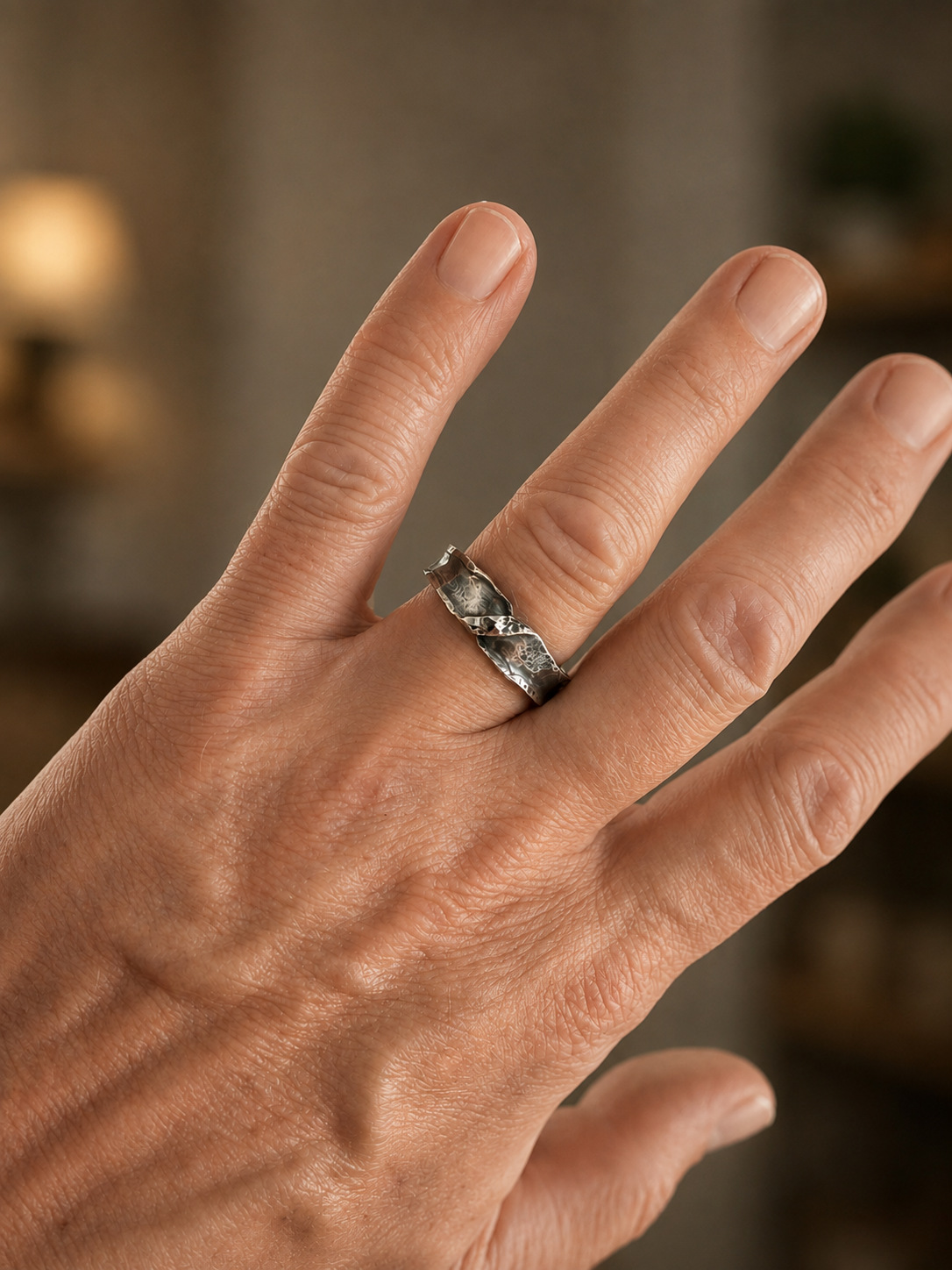
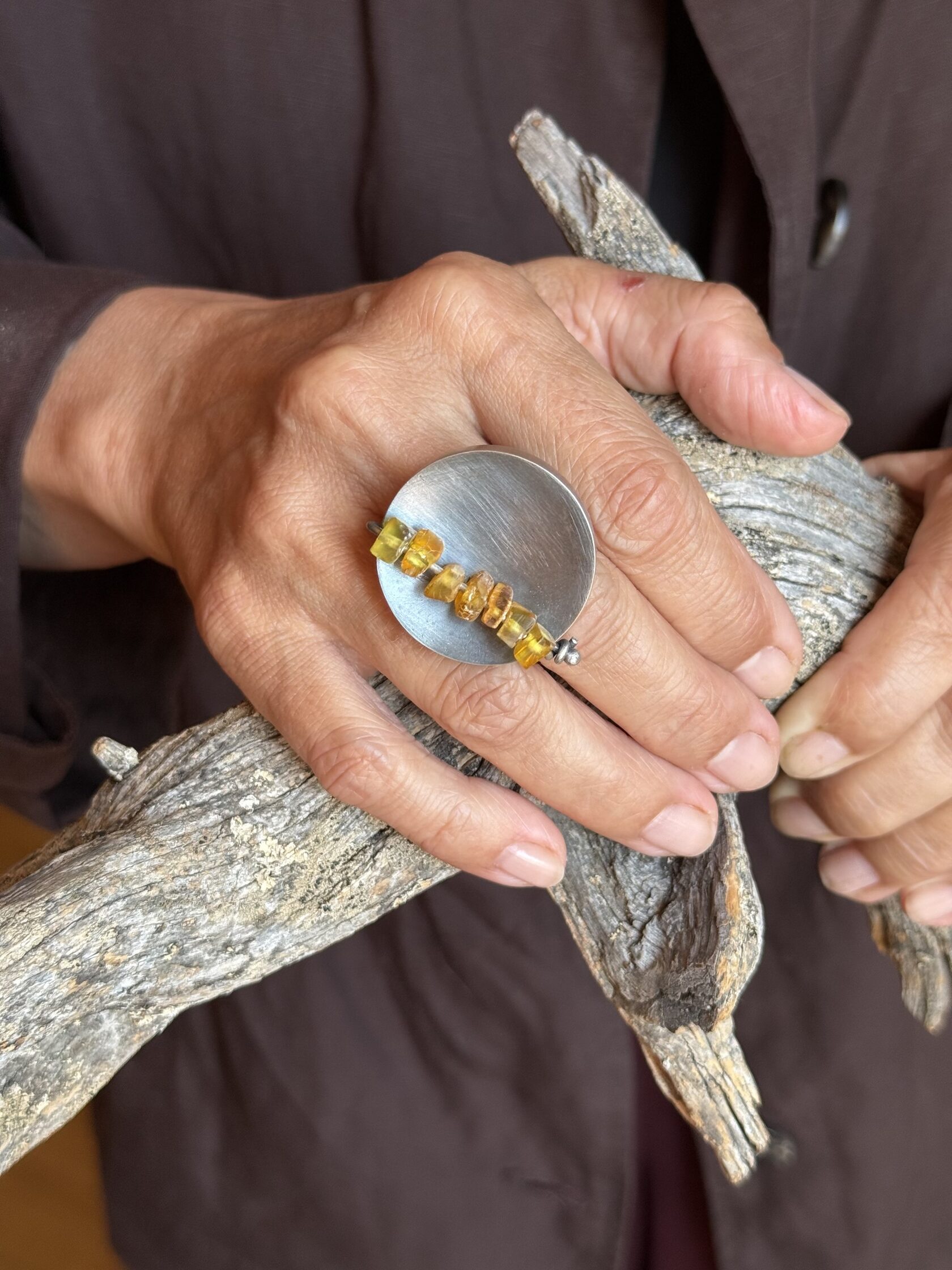
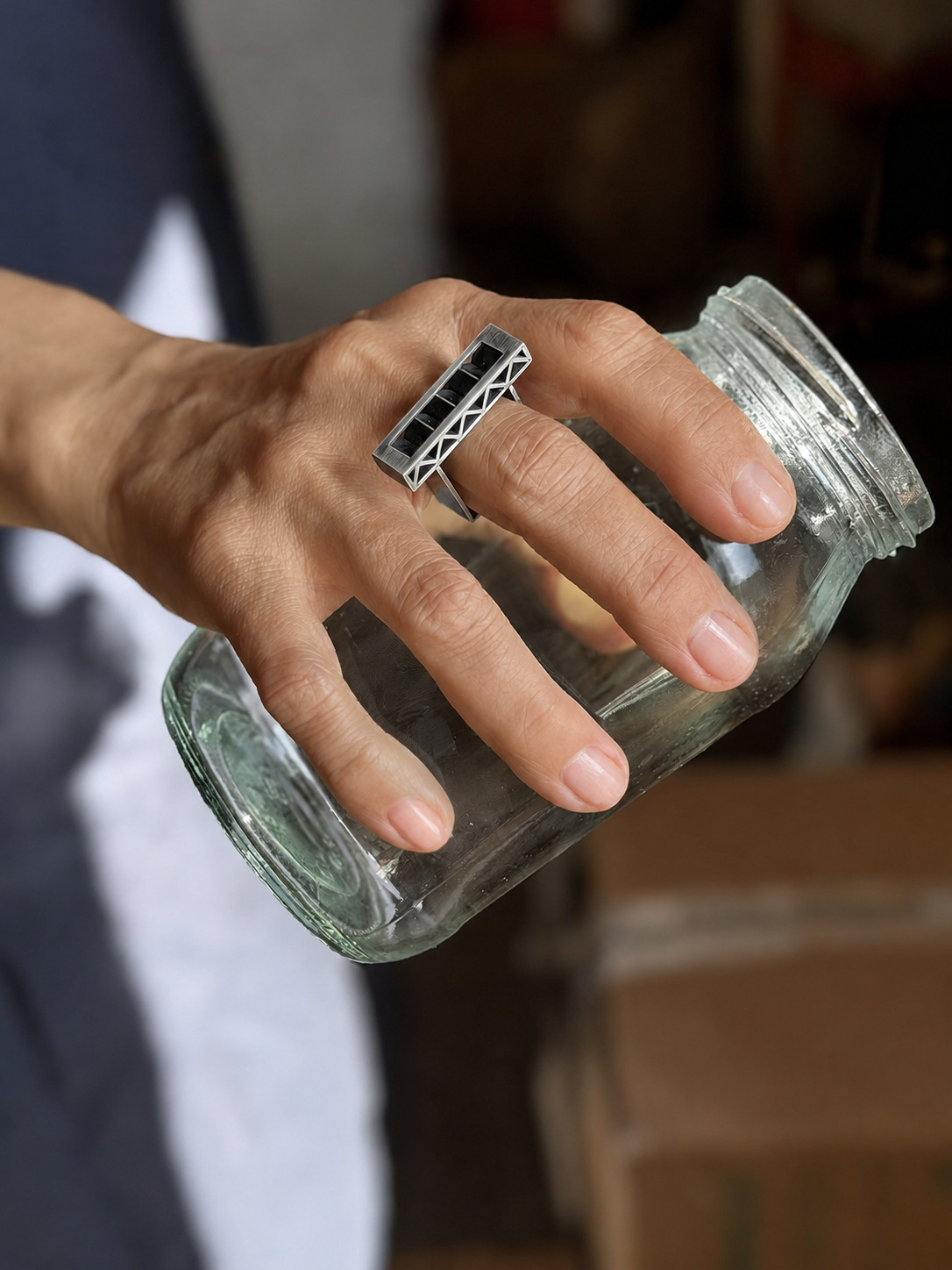
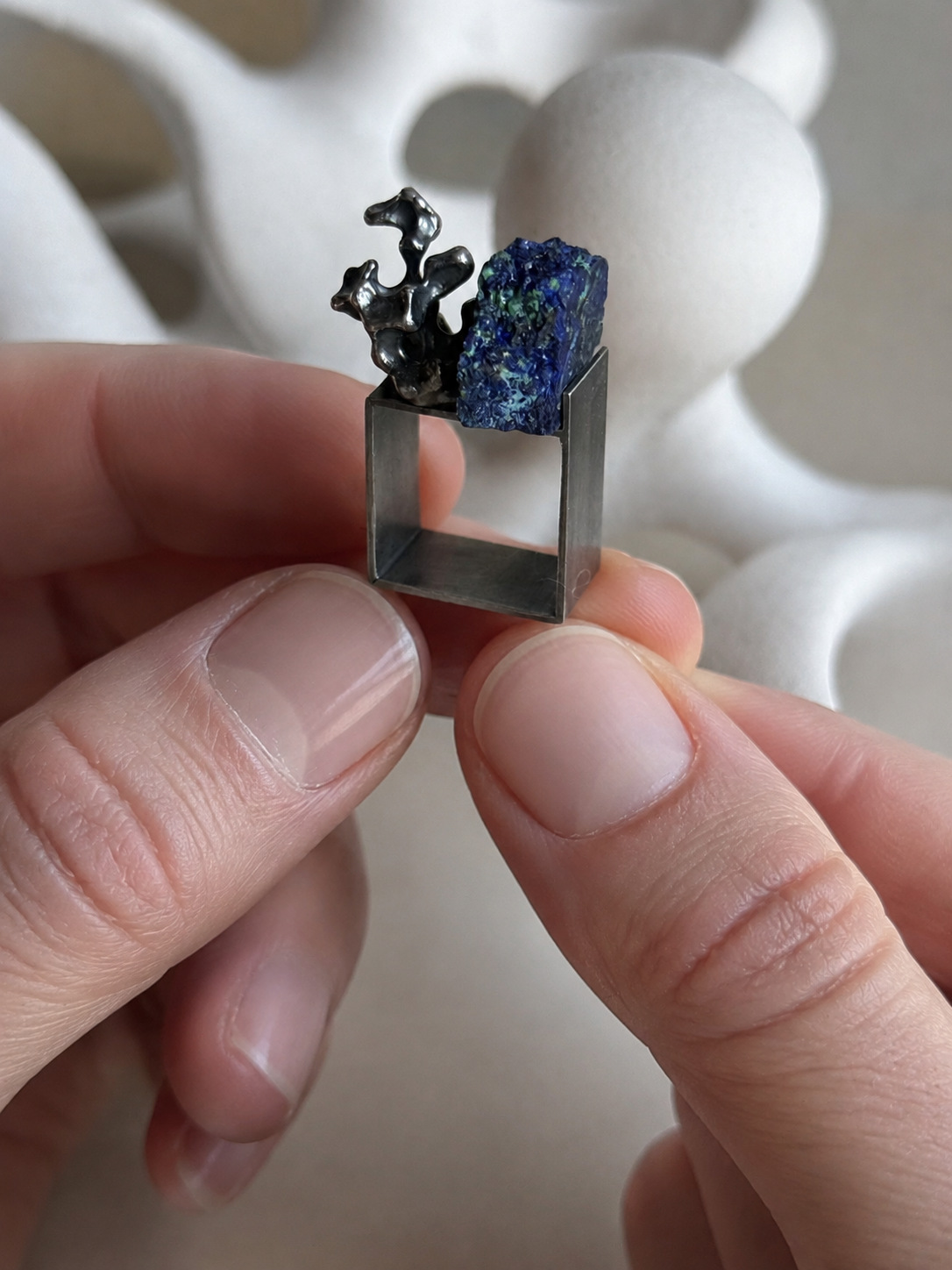
It is a ring with an intentional opening in the shank. When the design is meant for limited adjustment, the opening can allow a small change in fit without rebuilding the ring.
OPEN RING ≠ COSTUME JEWELRY. An open form is a construction feature, not a quality tier.
A starting size still matters. Finger shape, knuckle geometry, band width and opening position all affect fit.
ADJUSTABLE ≠ ONE SIZE FITS ALL.
OPEN BAND ≠ UNLIMITED RANGE.
ADJUSTABLE DOES NOT REMOVE THE NEED FOR A STARTING SIZE.
There is no responsible universal numeric range without design-specific documentation.
For general fit guidance, see How Should a Ring Fit?.
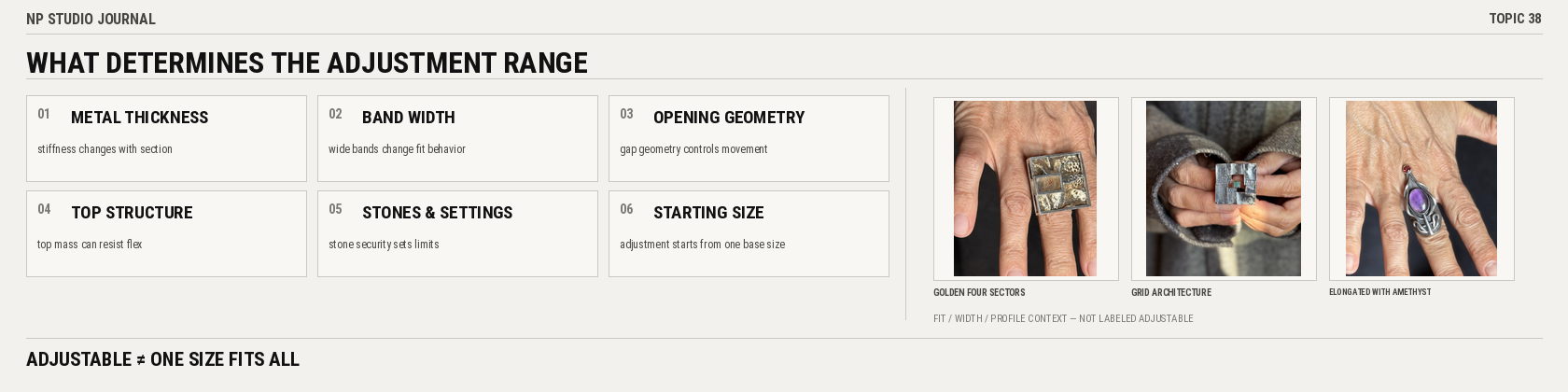
| Factor | Why it matters |
|---|---|
| Metal thickness | A substantial section should not be treated like a spring that is constantly bent. |
| Band width | A wide band changes pressure distribution and perceived fit. |
| Band profile | Round, flat and rectangular sections respond differently to geometry changes. |
| Opening geometry | The gap determines where movement happens. |
| Top structure | A large or asymmetrical top can affect rotation and balance. |
| Joints | Repeated deformation near structural joints may be undesirable. |
| Stones and settings | Geometry changes can affect pressure around a bezel or prongs. |
| Starting size | Adjustment should begin close to the correct size. |
An opening does not make the ring infinitely flexible.
A wide ring contacts more of the finger, so the same nominal size may feel tighter than a thin band. But there is no fixed universal correction.
WIDE BAND ≠ AUTOMATIC +0.5 SIZE.
Use real measurements: How to Measure Ring Size and the Ring Size Chart.
Repeated substantial bending should not become the normal way to put the ring on and take it off. Large repeated changes can deform sterling silver, alter geometry and affect stone settings.
SMALL FIT ADJUSTMENT ≠ REPEATED LARGE BENDING.
STERLING SILVER ≠ INFINITELY FLEXIBLE.
Built-in adjustment is a small design-specific change in open geometry. Professional resizing is a structural alteration that depends on material, design and stones.
ADJUSTABLE FIT ≠ PROFESSIONAL RESIZING. For the dedicated resizing guide, see Can Sterling Silver Rings Be Resized? Cost, Limits and What to Expect.

If movement transfers into a bezel, prongs or a rigid upper structure, it can alter pressure on the stone or distort the setting. The adjustment zone should be part of the original design.
STONE SETTING MAY LIMIT ADJUSTMENT.
For gift sizing, see How to Find Ring Size Secretly.
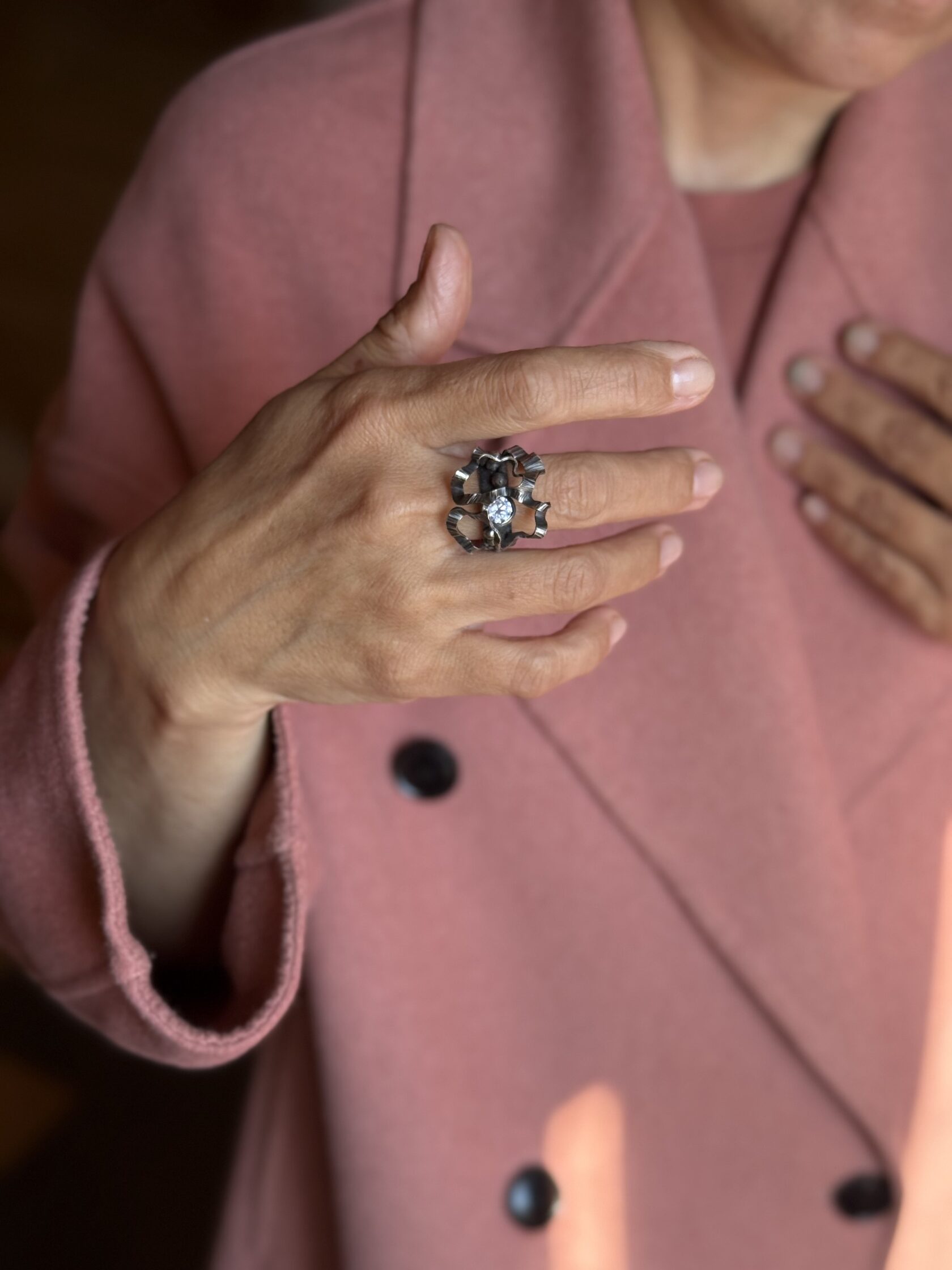
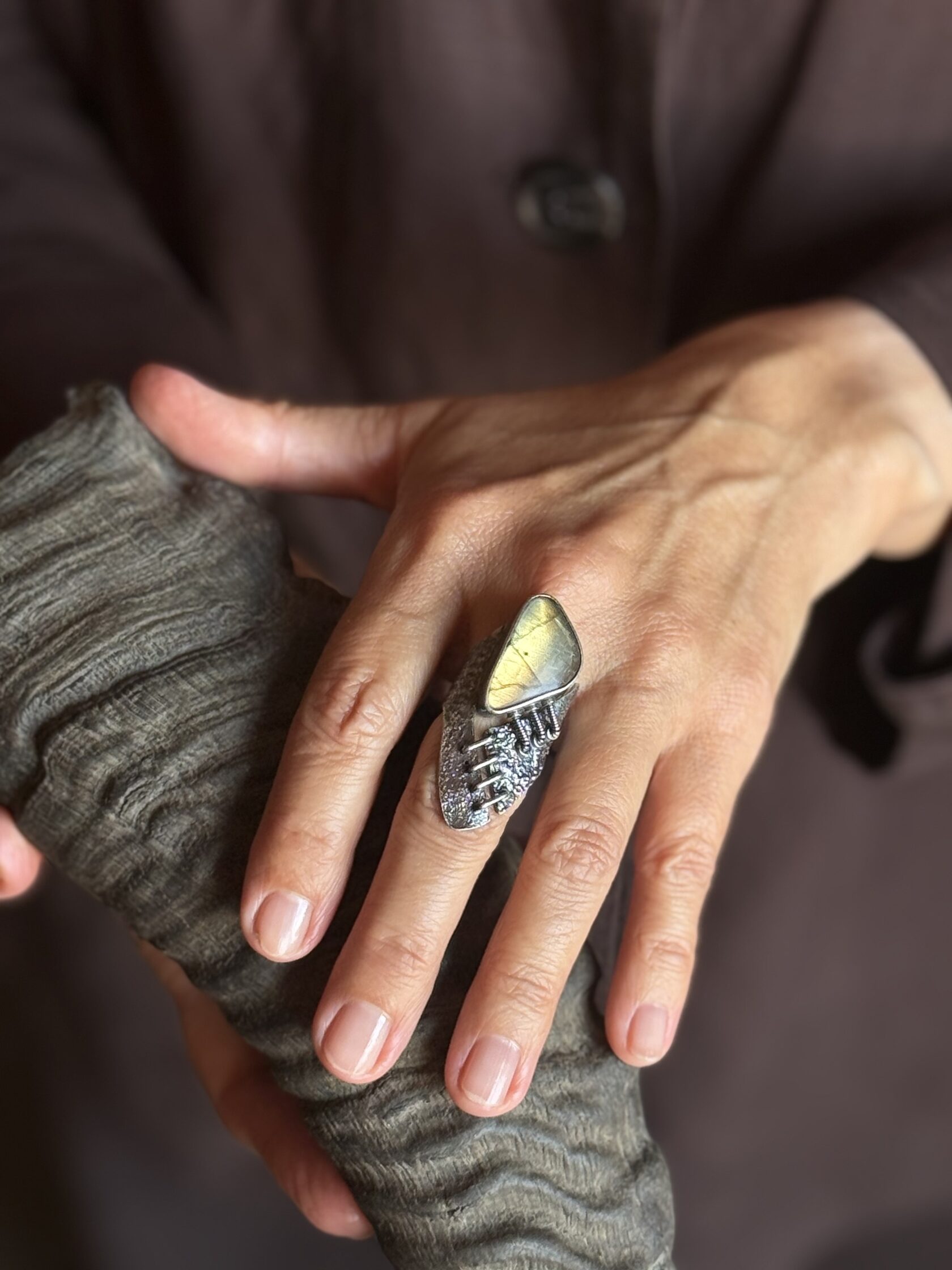
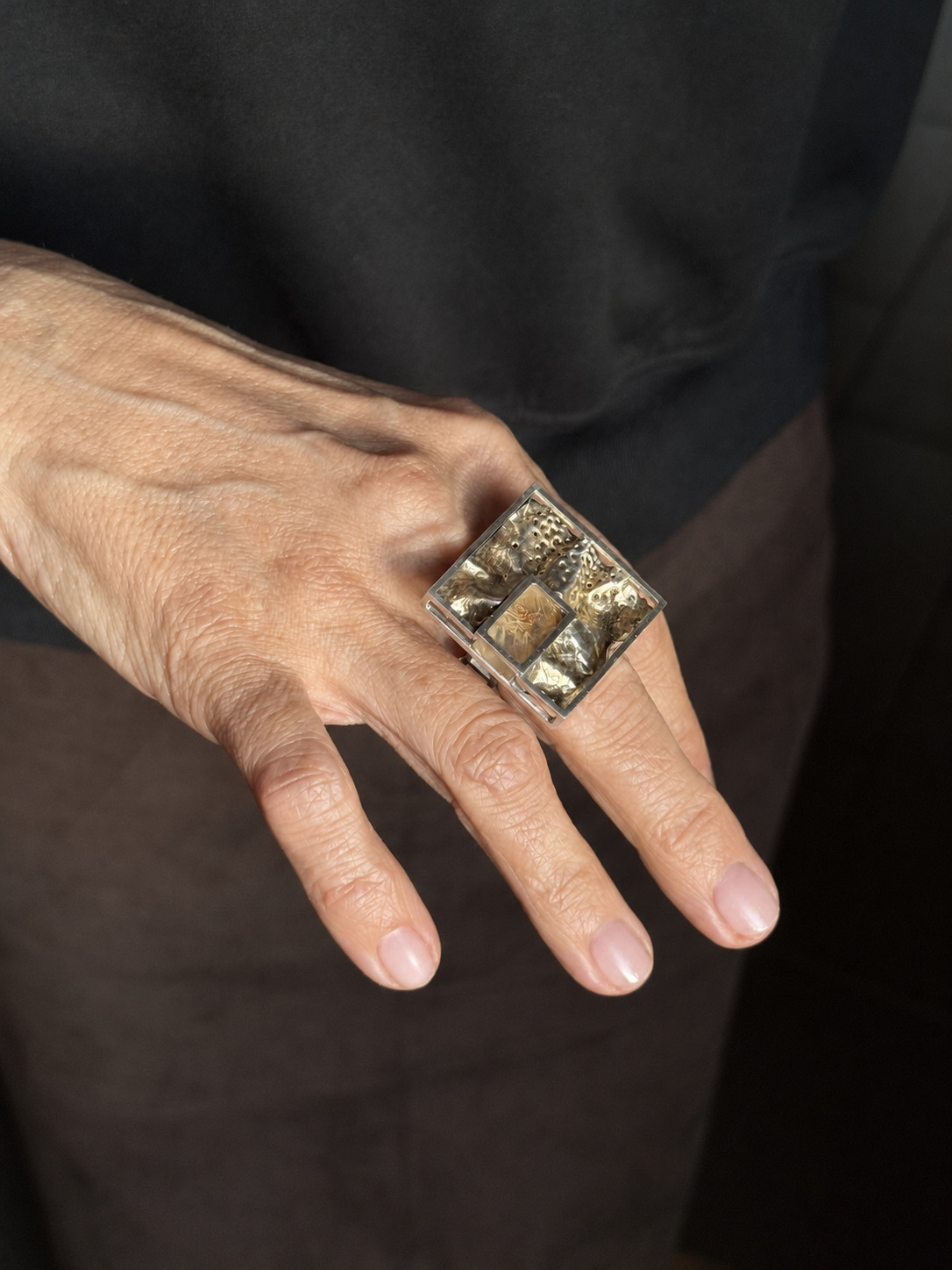
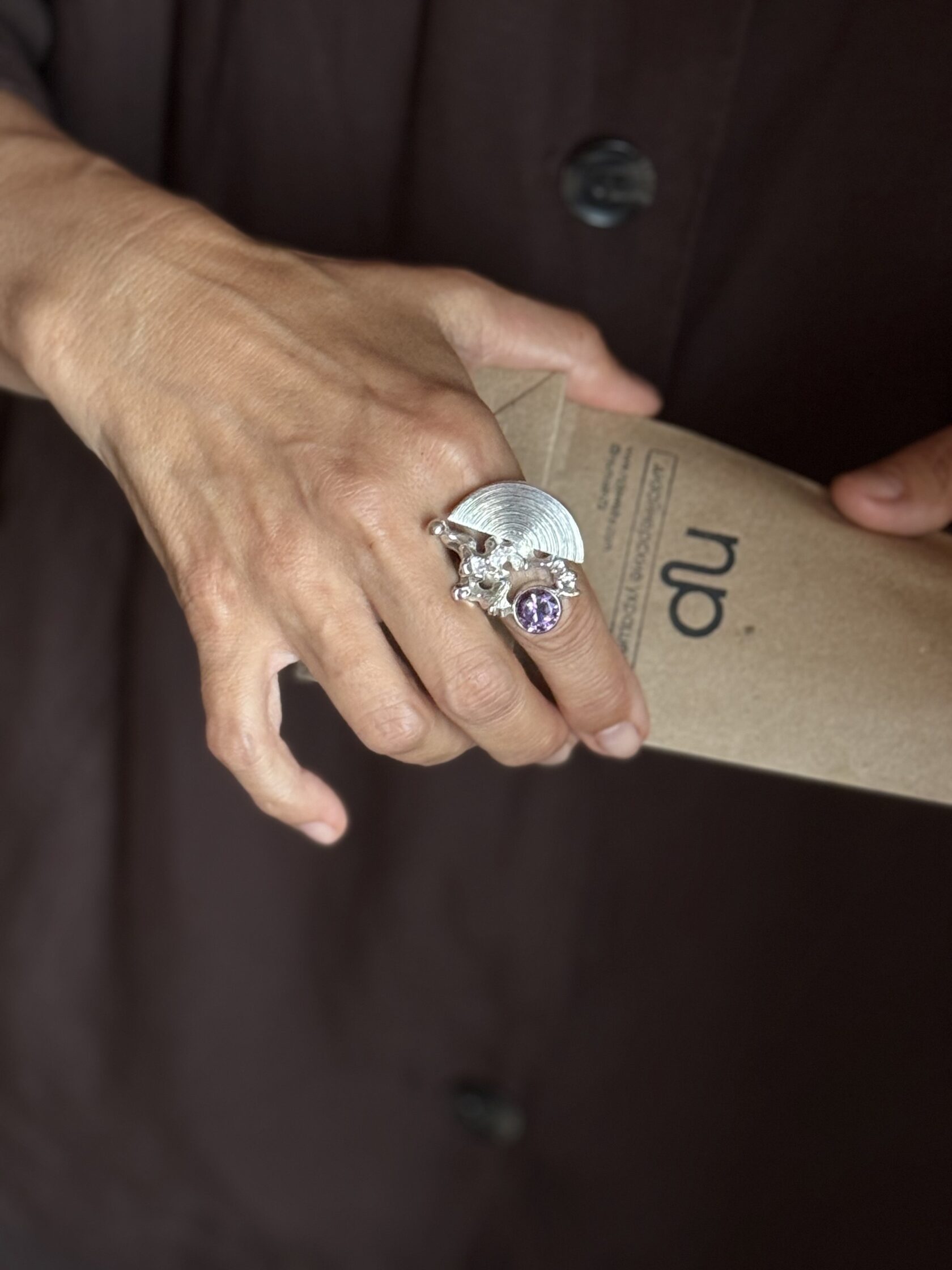
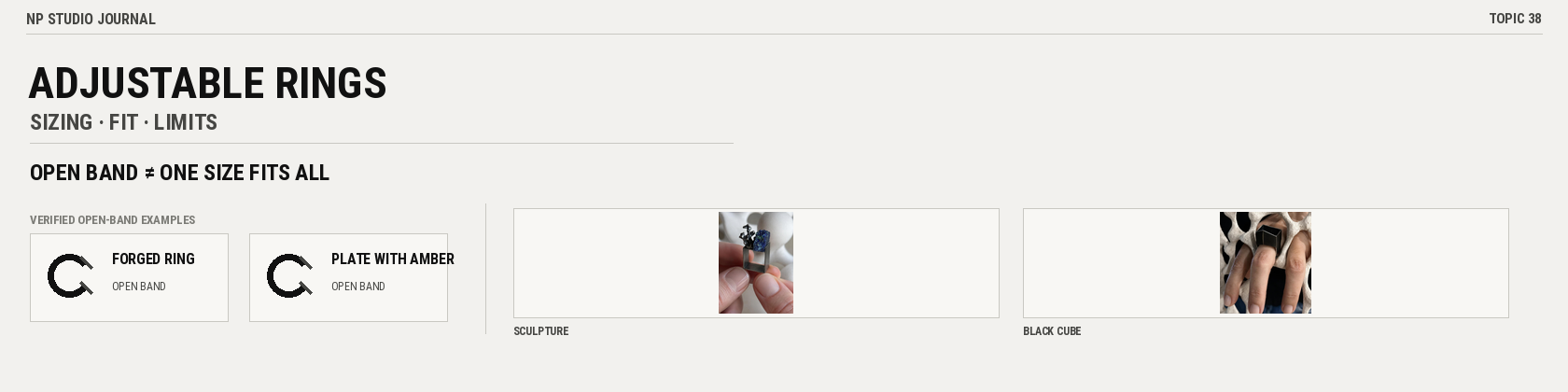
Only the first two works below are documented as open constructions. The others illustrate width, top mass, balance and architecture; they are not labelled adjustable.
The work page explicitly documents an open band and lists this version as size 20. It does not state a universal numeric adjustment range, so one is not invented here.
The work page explicitly states that the open shank allows slight fit adjustment. This is a design-specific margin, not a one-size claim.
It is a ring whose construction intentionally allows a limited fit change, usually through an open shank.
No. ADJUSTABLE ≠ ONE SIZE FITS ALL. The range depends on the exact construction, metal, width, stones and settings.
Yes, at least approximately. It is better to begin close to the correct size and use adjustment only as a limited fit margin.
There is no universal number. The safe range should be specified or confirmed for the exact design.
It is better not to make substantial repeated bending a habit. It can deform the metal and affect geometry or stone settings.
Yes, when the design accounts for the stone and its setting. Adjustment should not unpredictably change pressure on a bezel or prongs.
Yes. A wide band can feel tighter, but there is no universal fixed rule such as automatically adding half a size.
Built-in adjustment uses the ring’s existing open geometry. Professional resizing structurally changes the ring size.
It can reduce sizing risk when an approximate size is known, but it does not remove the need for a starting-size estimate.
It should pass the knuckle without excessive force, sit securely and comfortably at the base of the finger, and not slip off during normal movement.
NEXT STEP / CUSTOM
If the size is approximate or you want an open-band design, discuss starting fit, band width, stones and intended movement from the beginning.
Discuss ring size and constructionNEXT STEP / WORKS
The Works archive shows how width, top mass, geometry and construction affect fit.
Explore works