
NP STUDIO / JOURNAL / RING SIZE
Wide Band Ring Size Guide
A wide band often feels tighter than a narrow ring at the same nominal size. The reason is not just the number: a wider band contacts more of the finger, moves over the knuckle differently and reacts more strongly to finger shape. The best size therefore depends on band width, construction and the fit you prefer.
Short answer
A wider ring often feels more snug because more metal is in contact with the finger. A small adjustment can improve comfort for some people, while too much extra room can make the ring unstable at the base. The most useful test is a ring with a similar width.
Why a wide band feels different
A narrow band contacts a relatively small area of the finger. A wider band distributes that contact across a longer section, so the skin and soft tissue compress differently. The same nominal size can therefore feel tighter.
The knuckle matters as well. A narrow ring usually moves over the widest part of the finger more easily. A broad band has to pass that area with much more surface contact, so it can feel resistant even when it sits comfortably once it reaches the base.

Should you size up for a wide band ring?
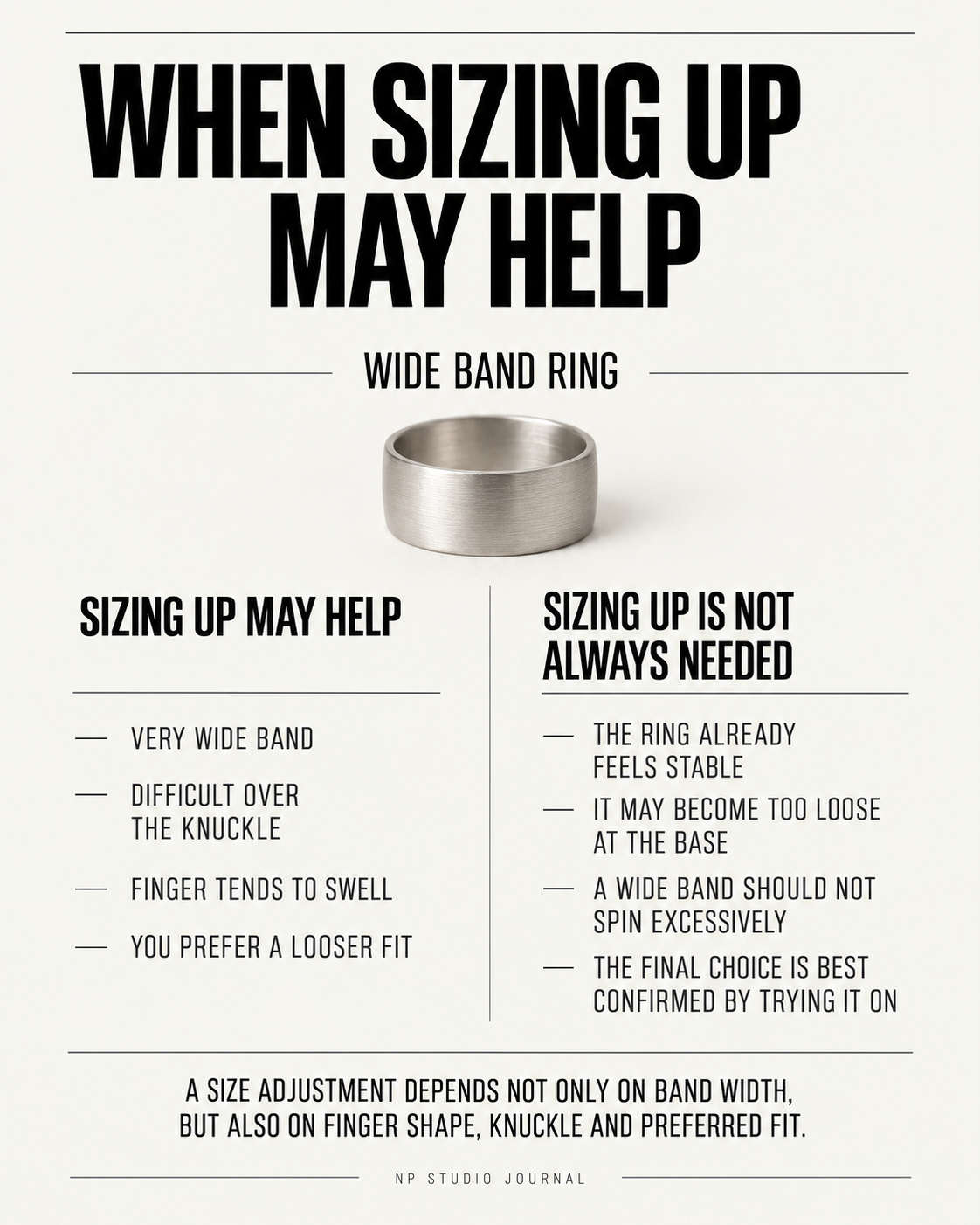
Sometimes, yes — especially with a very wide band, when the ring is difficult over the knuckle, when your fingers change noticeably in volume during the day, or when you simply prefer a looser fit.
But the common advice to “always go up half a size” is too blunt. On a finger that narrows toward the base, that extra room can make a substantial ring rotate or feel unstable.
If you are between two choices, the most reliable comparison is to try a ring of similar width in both neighboring sizes.
What affects wide band ring sizing
How to check the size before ordering
This does not need to become another full measuring guide. For a wide ring, the useful question is how your starting size behaves at a comparable width.
- Check more than once. Compare the fit or measurement at different times rather than relying on a single moment.
- Try a ring of similar width. This tells you more than comparing a wide ring only with a thin band.
- Compare the knuckle and the base. The ring has to work at both points.
- Use charts and calculators as references. They are useful for the number, but not for predicting the feel of a particular wide construction.
If you do not know your starting size, use How to Measure Ring Size →. For system conversion, use the International Ring Size Calculator →.
Wide band vs narrow band: how the fit differs
| Factor | Narrow band | Wide band |
|---|---|---|
| Finger contact | Smaller contact area. | More contact with the finger, so the fit often feels tighter. |
| Moving over the knuckle | Usually easier. | May require slightly more room. |
| Stability | Can shift more easily if the fit is loose. | Often feels more stable, but an oversized ring can still rotate. |
| Sensitivity to size | Small changes may be less noticeable. | A small change can affect the feel more strongly. |
When you should not size up
Do not increase the size just because the ring is described as wide. If it passes the knuckle comfortably, feels secure at the base and does not create excessive pressure, extra room may make the fit worse.
- your finger narrows noticeably toward the base;
- the ring already passes the knuckle without difficulty;
- you prefer a secure, stable fit;
- the larger size becomes loose at the base;
- the wide ring begins to rotate excessively.
For the broader question of fit, see How Should a Ring Fit? →.
Wide sculptural rings at NP Studio
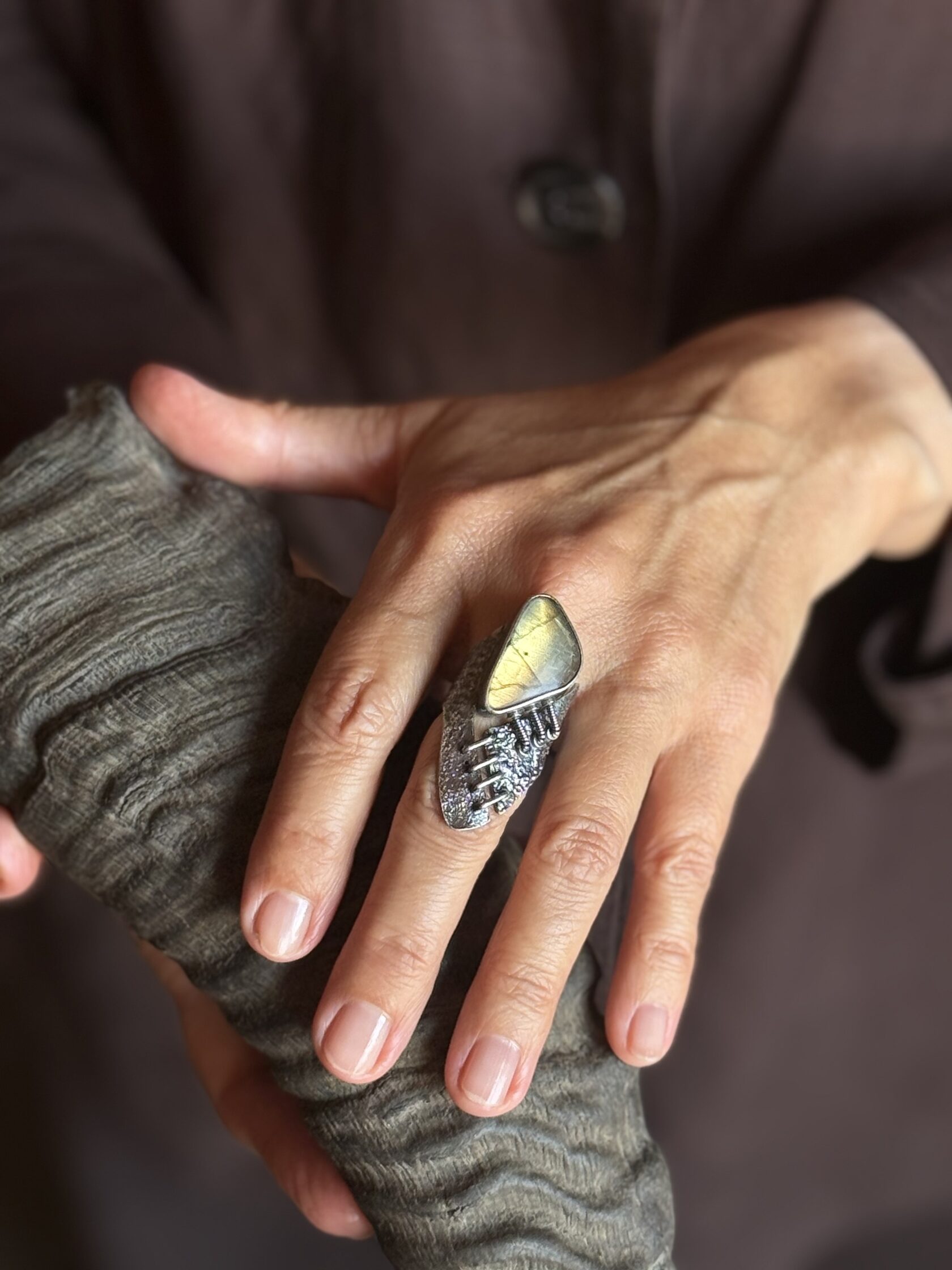
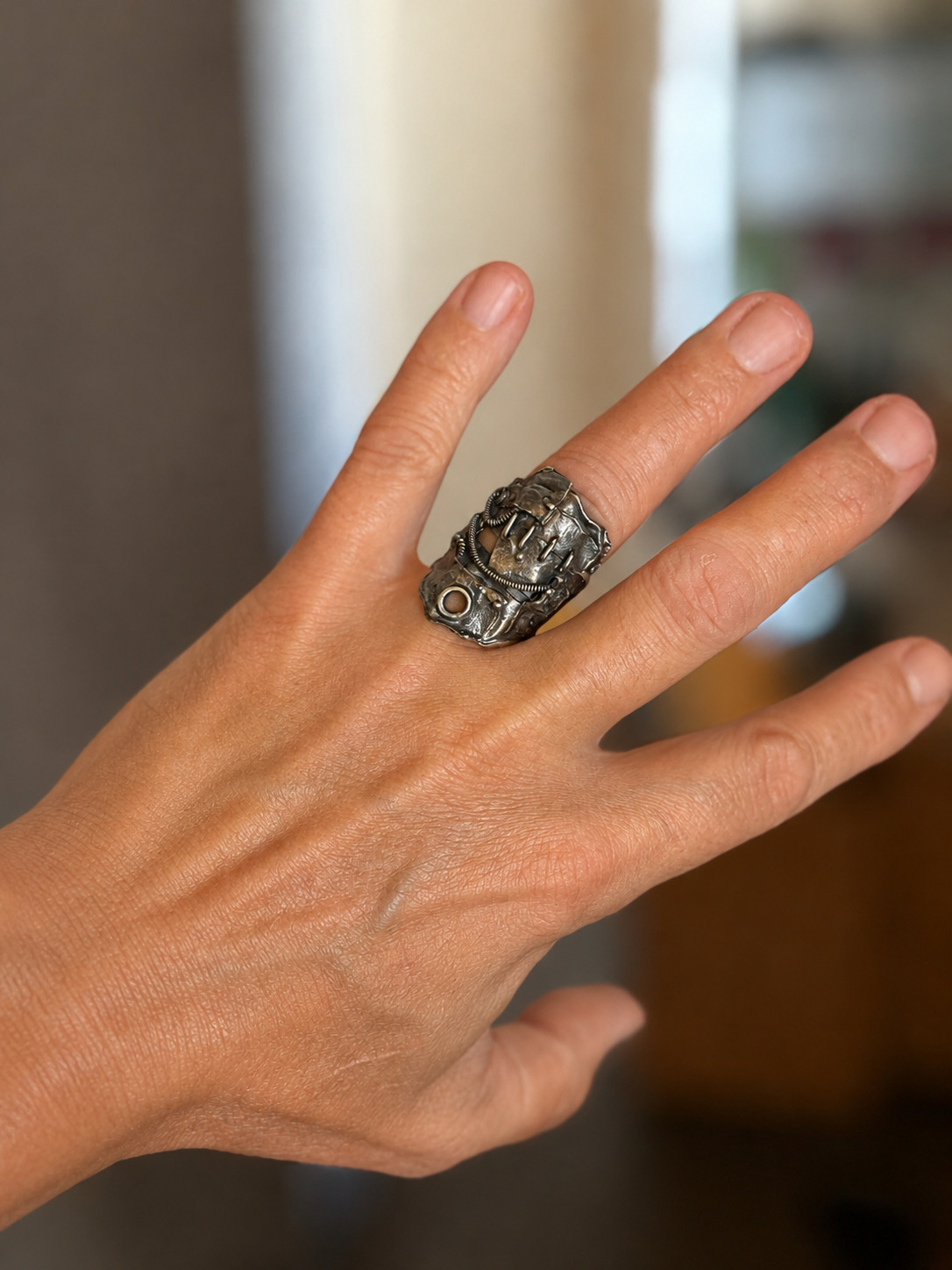
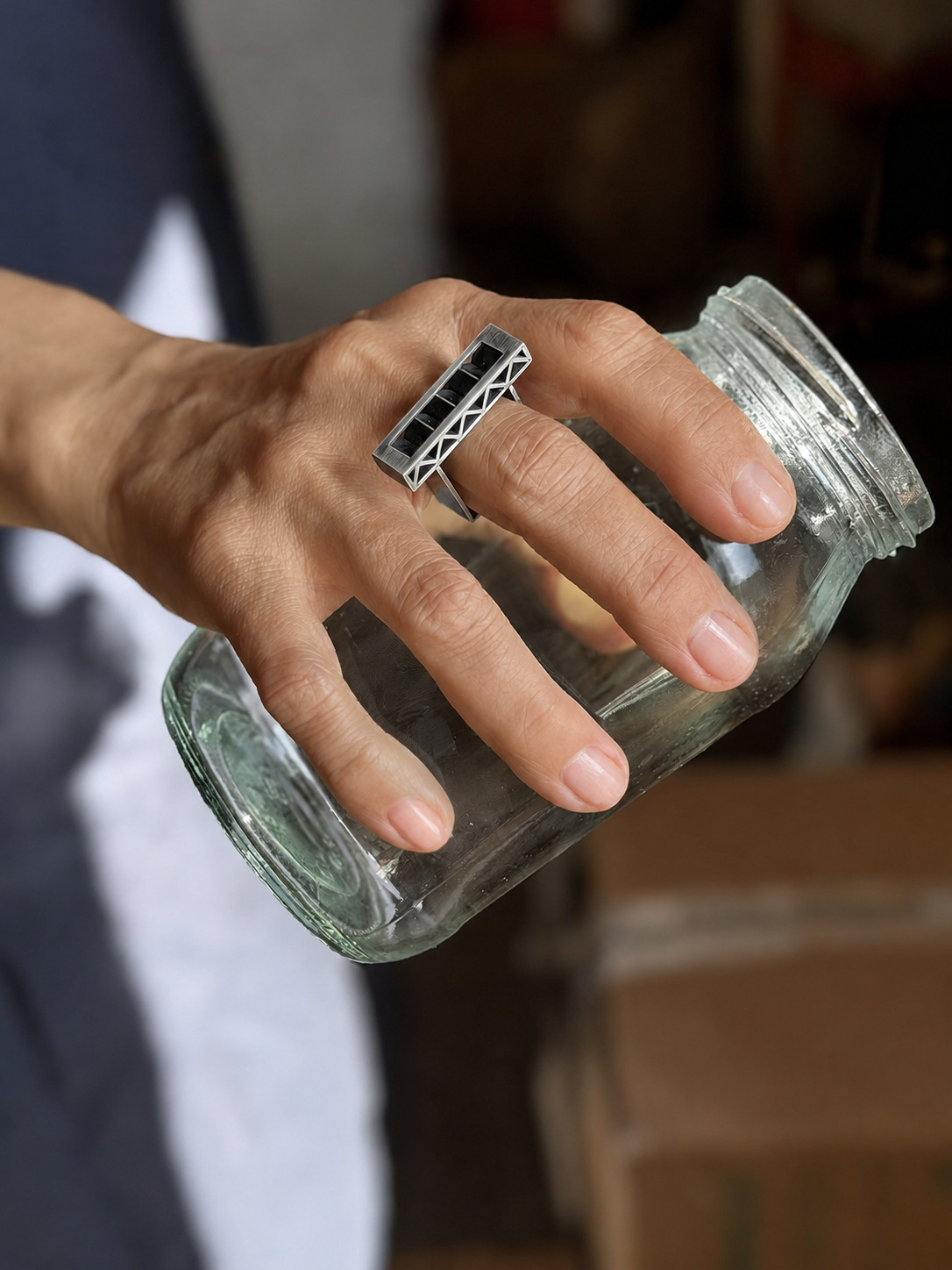
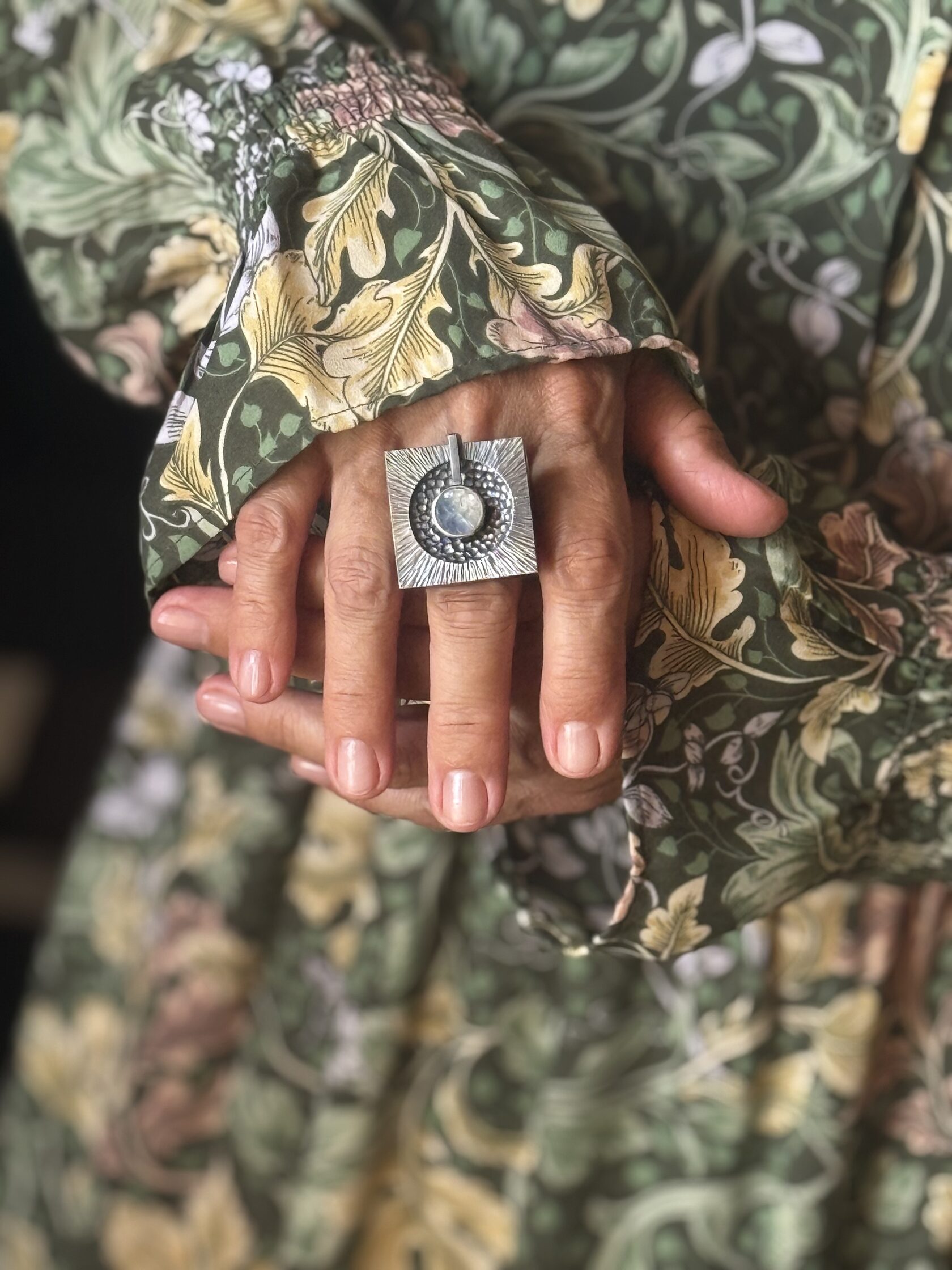
With substantial or sculptural rings, size is only one part of the problem. Band width, mass distribution, open areas, the top of the ring and the way you personally like to wear a substantial object all affect the result.
When discussing size for NP Studio, it is therefore useful to know not only the nominal number, but also how similar wide rings pass your knuckle and whether you prefer a more secure or slightly looser feel.
If you are between two sizes
For a substantial ring, an unusual construction or a custom piece, it is worth discussing the uncertainty before the ring is made. A short description of how your existing rings fit can be more useful than one number on its own.
Frequently asked questions
Author
Related ring-size guides
For the broader question of fit, see How Should a Ring Fit?. If you do not know your starting size yet, use How to Measure Ring Size. For manual lookup there is the Ring Size Chart, and for conversion between systems use the International Ring Size Calculator.
