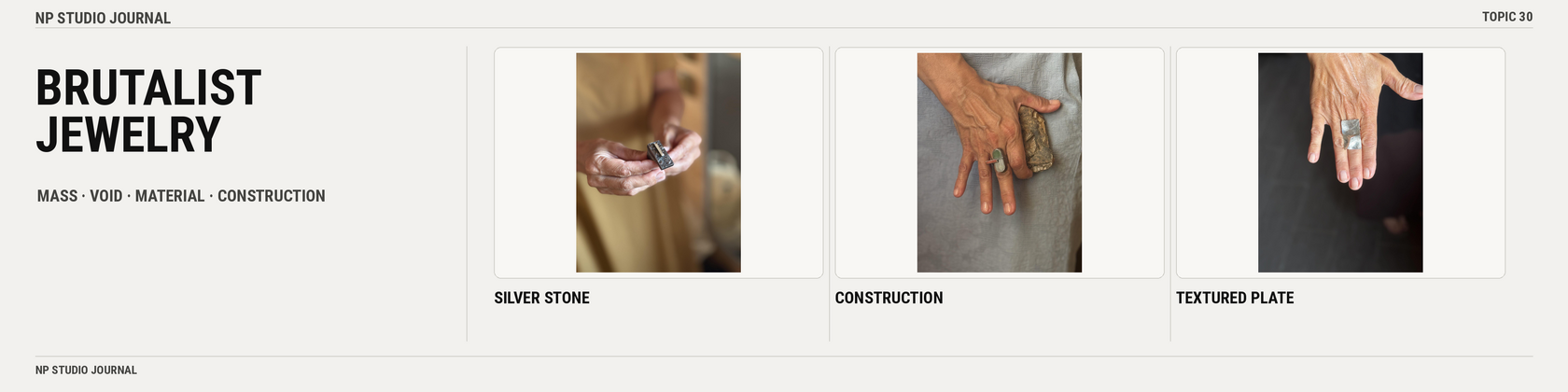
Silver Stone
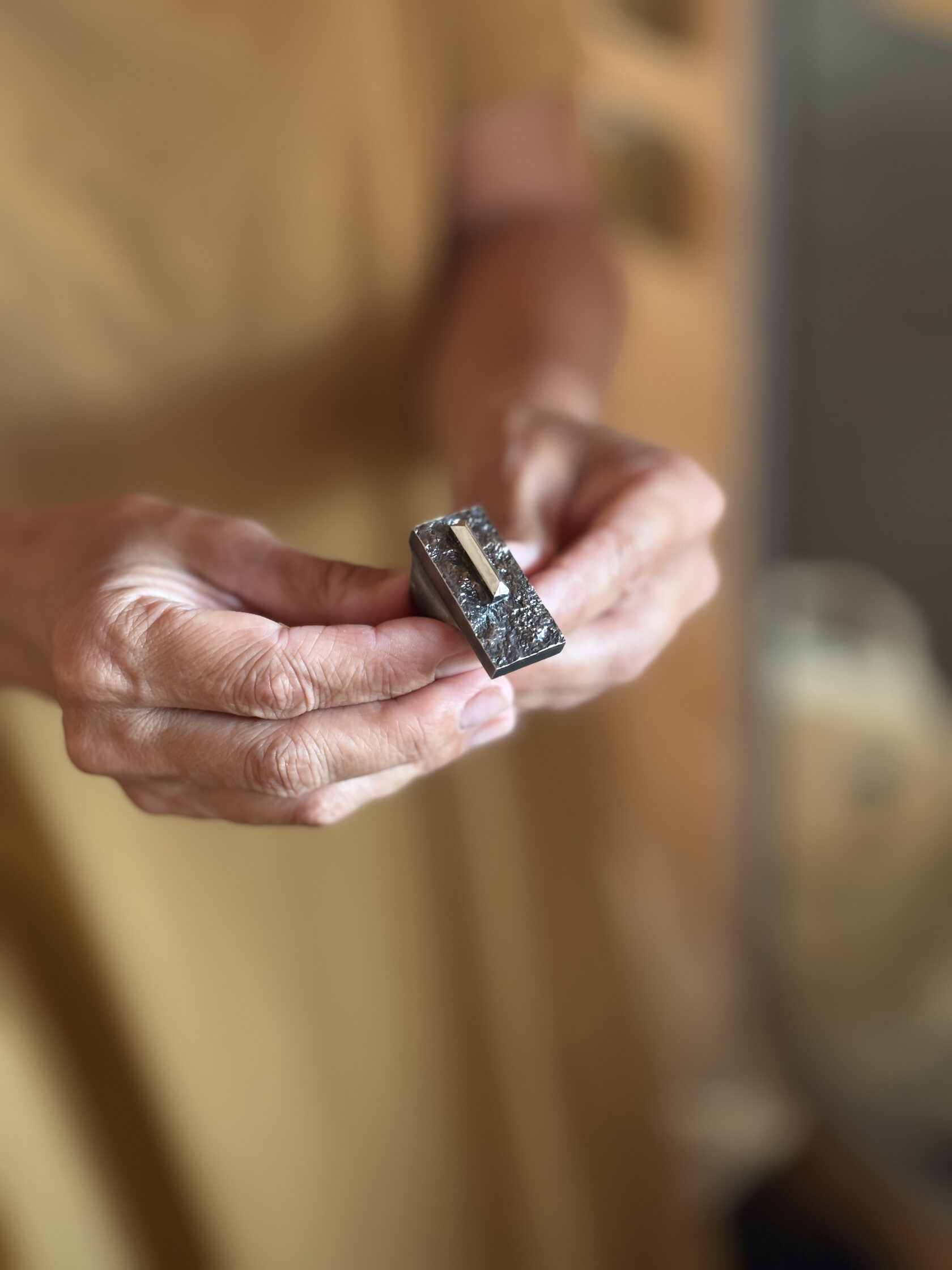
Mass, hollow built volume, direct material presence and contrast between rough and polished silver.
NP STUDIO / JOURNAL / BRUTALIST JEWELRY
Brutalist jewelry is better understood as a family of formal approaches and visual principles rather than a single official historical school. Its force can come from mass, void, direct material presence, worked surface and readable construction.
Roughness alone is not enough. Black metal alone is not enough. Large scale alone is not enough. The important question is how volume, space, material, surface and construction work together.
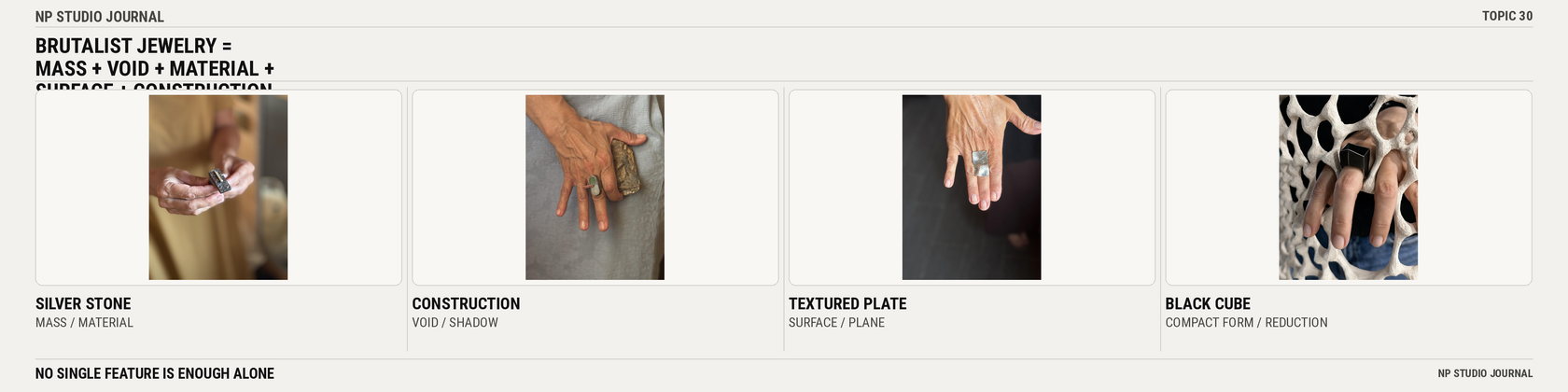
Brutalist jewelry is not simply rough, black or chunky jewelry. Brutalist character becomes more convincing when MASS + VOID + MATERIAL + SURFACE + CONSTRUCTION work together.
Historical Brutalism belongs first to mid-twentieth-century architecture. In that architectural context, direct material presence, texture, construction, large-scale mass and visible structural organization became especially important.
When the word is used in jewelry, it is safer not to pretend that there is one official “Brutalist jewelry” school with a universal checklist. Brutalist jewelry is better understood as a family of formal approaches and visual principles rather than a single official historical school.
This keeps the architectural history in view without requiring a ring to imitate a concrete building literally. Within the broader field of contemporary jewelry, these principles can be reinterpreted at the scale of metal, object and body.
Mass is not simply high weight. It is the visual concentration of volume and material presence. An object can look substantial even when its construction is hollow.
Silver Stone is useful for exactly this reason. Its upper section is a hollow built volume rather than a solid block of silver, while the granite-impressed surface gives the form direct physical density.
MASS therefore describes how volume is organized, not a requirement to make every ring as heavy or large as possible.
Void can be as active as metal. Openings, intervals, holes and spaces between supports help make construction and the distribution of mass legible.
Construction reads not only as a dense silver object but as a system of parts with active space between them.
This is where Brutalist language naturally overlaps with architectural jewelry. The overlap is real, but the categories are not synonyms.
Material matters in Brutalist language not as a neutral background but as an active part of the object. Silver can remain visually dense, matte, forged, polished, patinated or visibly shaped by a particular process.
Silver Stone demonstrates this through a real granite imprint in heated silver. Forged Ring does it through hammer impact, metal deformation, patina and highlighted edges.
Silver itself is not “Brutalist.” The same material can belong to minimal, sculptural, architectural, biomechanical or other visual languages.
Brutalist language can preserve visible material evidence: abrasion, imprint, forging, recesses, roughness, patina or process traces. But surface is not a universal test.
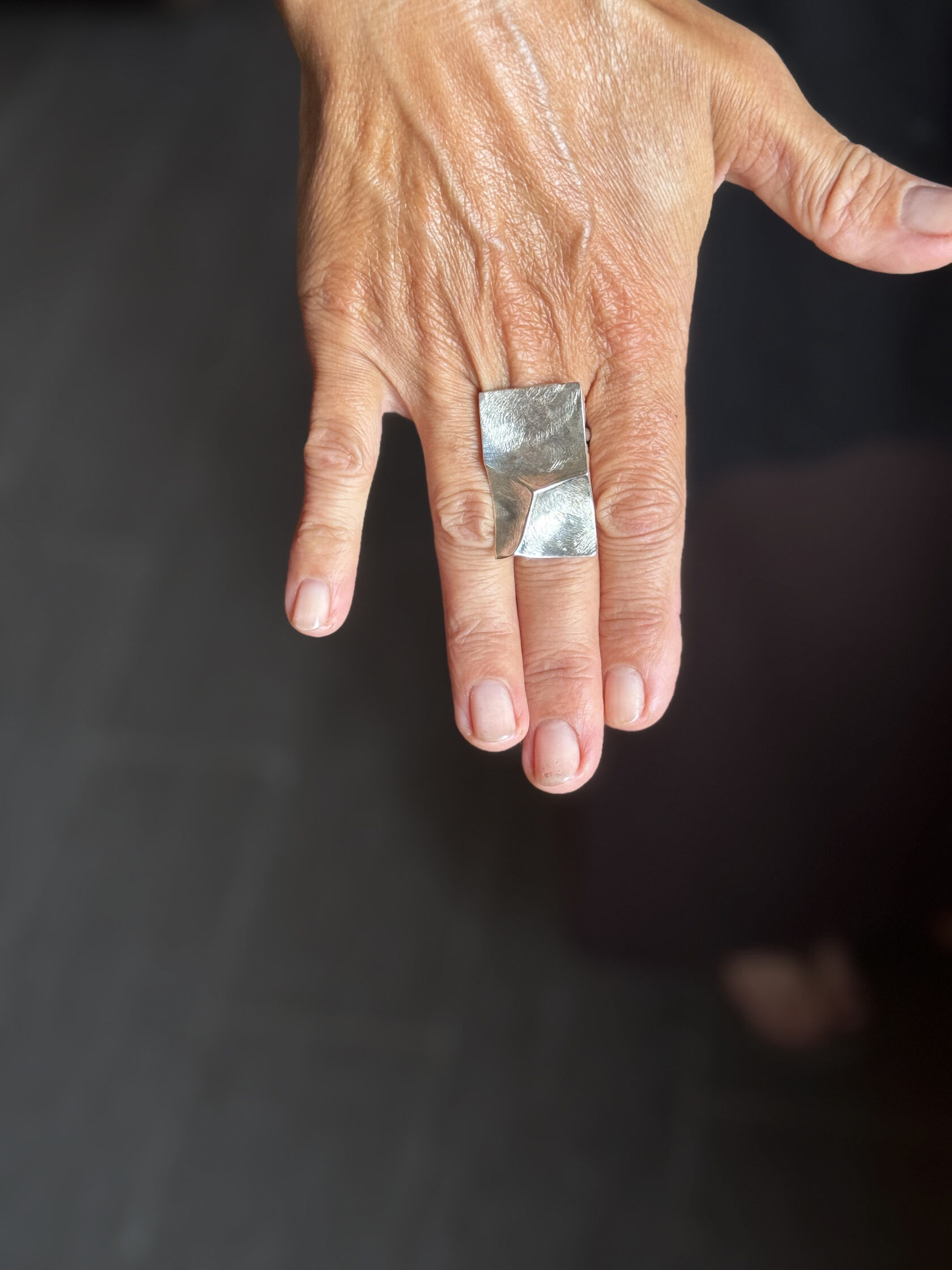
Textured Plate shows a quiet version: three concave planes, an open band and a restrained matte surface.
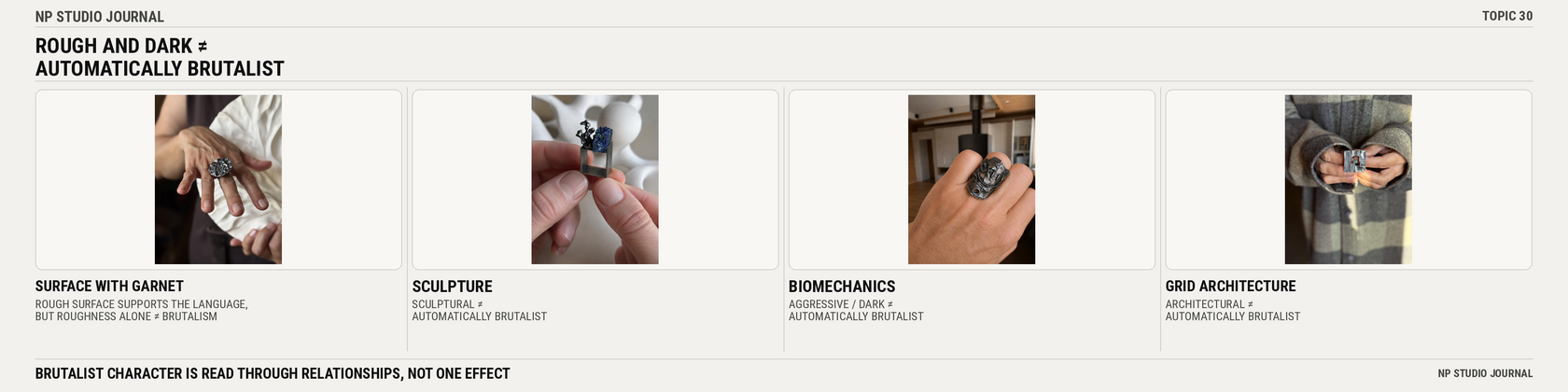
Surface with Garnet works differently through relief, recesses, shadow, dark patina and a stone integrated into the surface.
BRUTALIST ≠ JUST ROUGH. Irregularity and roughness can come from many different processes. The distinction between intentional surface language and workmanship issues is discussed in Topic 25. Silver reticulation is also a specific technique, not a synonym for Brutalist.
In a Brutalist reading, construction can remain visible. Parts do not have to dissolve into one seamless decorative skin; the object can read as an assembled system.
Construction makes supports, projections and relationships between elements legible.
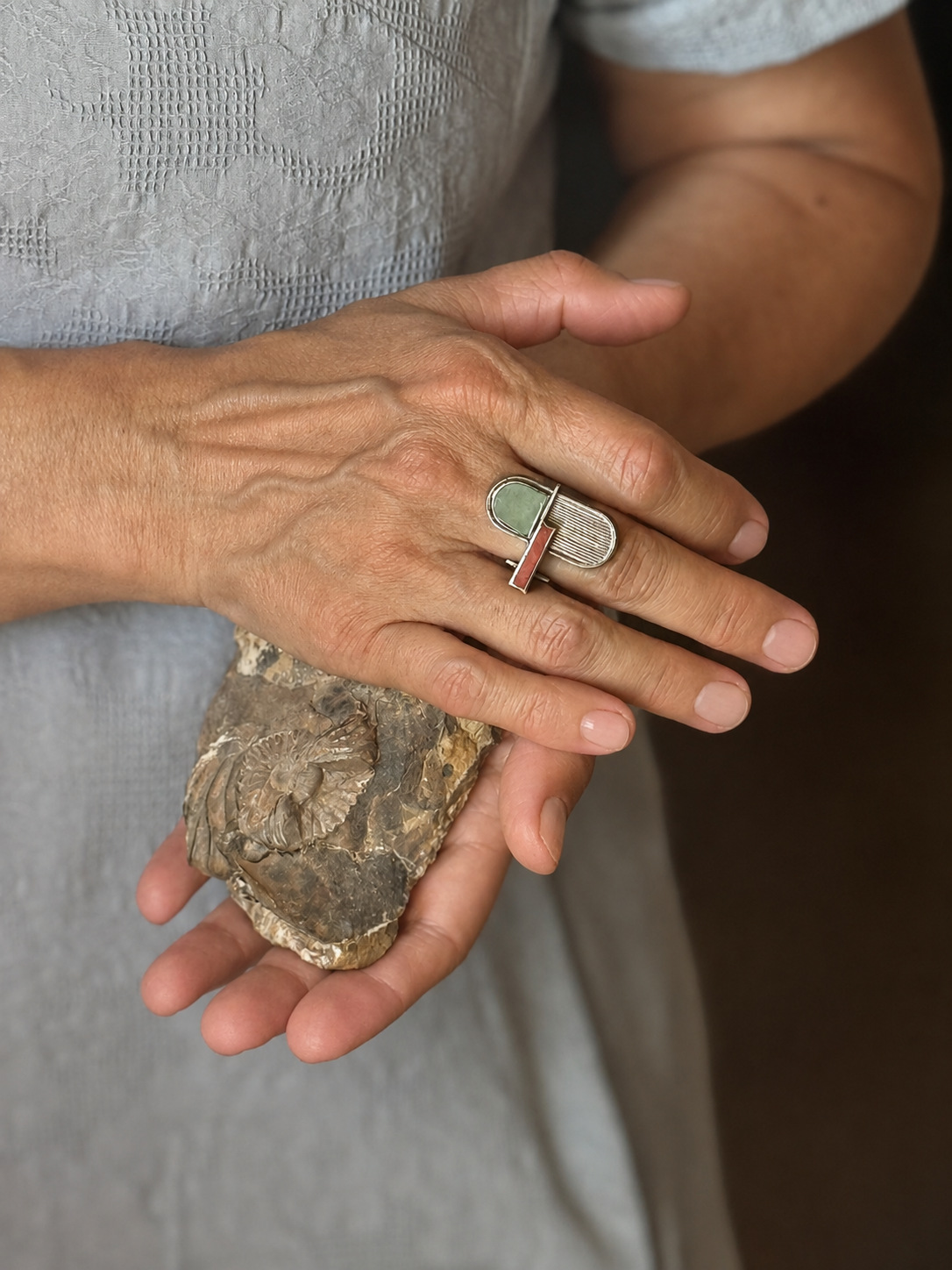
Construction with a Disc is even more explicit: rectangular platform, disc, cylindrical element and stone setting remain visually distinct while forming one object.
Readable assembly supports Brutalist character when it works together with mass, void and material. Engineering appearance alone proves nothing.
Black colour and a large silhouette can become a visual shortcut, but neither is a reliable definition. Dark surface also appears in minimalism, Gothic-inspired objects, biomechanical language and ordinary patination.
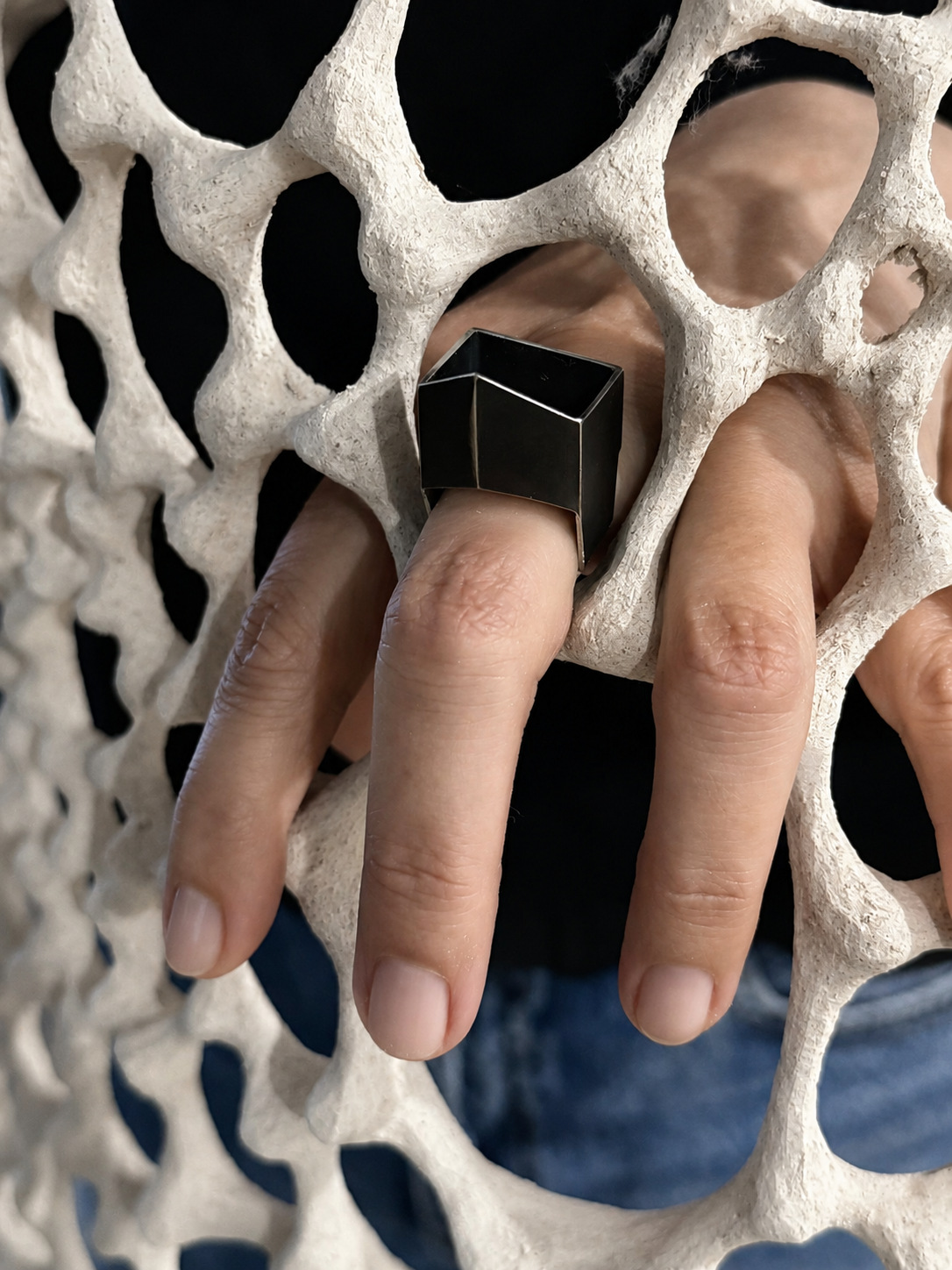
Black Cube is useful as a test. Its dark geometry can contribute to a Brutalist reading, but stronger evidence lies in compact mass, geometric reduction and material directness—not black colour alone.
If removing black patina, roughness or visual bulk destroys the entire attribution, the reading was relying on one stereotype rather than a coherent formal system.
Sculptural jewelry primarily describes three-dimensional presence: volume, mass, projection, silhouette, negative space and the relationship between object and body.
Sculpture is a deliberate boundary example. It is clearly a three-dimensional ring-object, but sculptural quality alone does not prove Brutalist character.
SCULPTURAL ≠ AUTOMATICALLY BRUTALIST. A Brutalist reading more specifically foregrounds material, mass, void, surface and readable construction. See What Is Sculptural Jewelry?.
Architectural jewelry can use structure, proportion, rhythm, geometry, mass and negative space. The overlap with Brutalist language is therefore natural.
Grid Architecture marks the boundary. Masonry, module and wall-like structure create a strong architectural reading, but architectural form does not automatically make the object Brutalist.
ARCHITECTURAL ≠ AUTOMATICALLY BRUTALIST. Architectural jewelry is broader and can be light, linear, graphic or visually transparent. See What Is Architectural Jewelry?.
Aggressive, dark or mechanical does not equal Brutalist either.
Biomechanics is included as a deliberate counter-boundary. Dark silver, complex details, springs, bindings and mechanical tension belong to a biomechanical visual language of their own.
BIOMECHANICAL ≠ AUTOMATICALLY BRUTALIST. Biomechanical language is organized around the tension between organic and mechanical structure. Brutalist character here depends on MASS + VOID + MATERIAL + SURFACE + CONSTRUCTION.
For the separate visual logic, see What Is Biomechanical Jewelry?.
Handmade construction and irregularity do not make a piece Brutalist by themselves. “Handmade” describes how an object is produced, while irregularity may result from process, material or deliberate surface treatment. Hammer marks, asymmetry, matte zones, uneven relief and visible handwork can appear in many different visual languages.
A dark, complex or aggressive biomechanical object may also look visually close to Brutalist jewelry, but its logic is different. Brutalist character depends on the relationship between mass, void, material presence, surface and construction — not simply on visible handwork, uneven texture or mechanical aggression.
HANDMADE ≠ AUTOMATICALLY BRUTALIST.
IRREGULAR ≠ AUTOMATICALLY BRUTALIST.
For the separate process question, see Why Handmade Jewelry Has Tool Marks and Irregularities.
Mass, hollow built volume, direct material presence and contrast between rough and polished silver.
Plane, restrained surface and material directness without requiring maximum roughness.
Void, projection, support and a legible system of elements.
Compact mass and geometric reduction. Darkness supports the object but does not define it.
This is not a catalogue of “ten Brutalist rings.” It combines primary examples, overlaps and counterexamples. Each object demonstrates one useful signal—and what that signal does not prove by itself.
What it shows: mass, material, hollow construction and surface.
What it does not prove: that every heavy or rough ring is Brutalist.
What it shows: surface, plane and direct material presence.
What it does not prove: that roughness is required.
What it shows: void, support, projection and readable assembly.
What it does not prove: that every architectural form is Brutalist.
What it shows: compact mass and geometric reduction.
What it does not prove: that black = Brutalist.
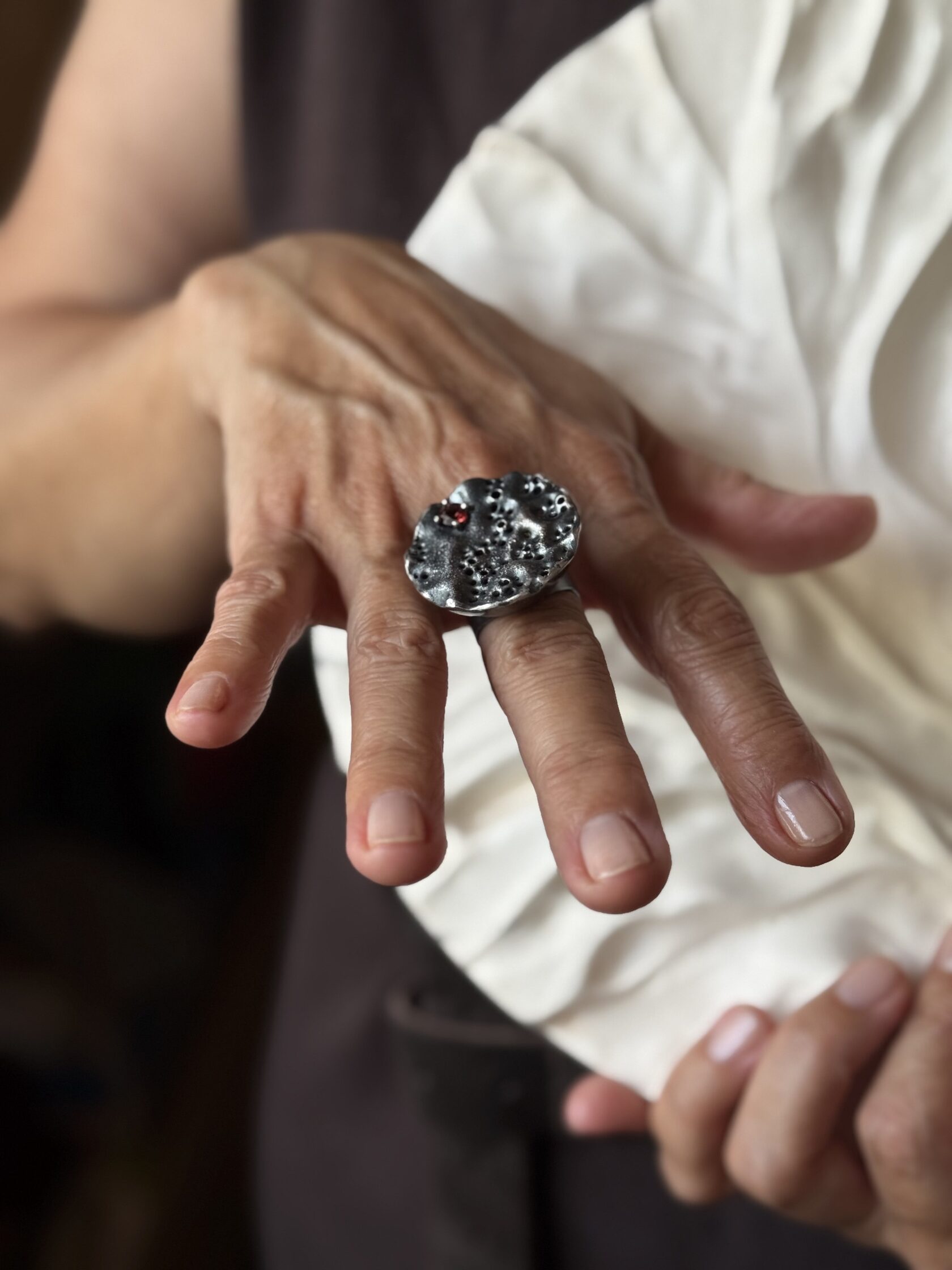
What it shows: relief, recess, shadow and patina.
What it does not prove: that irregular = Brutalist.
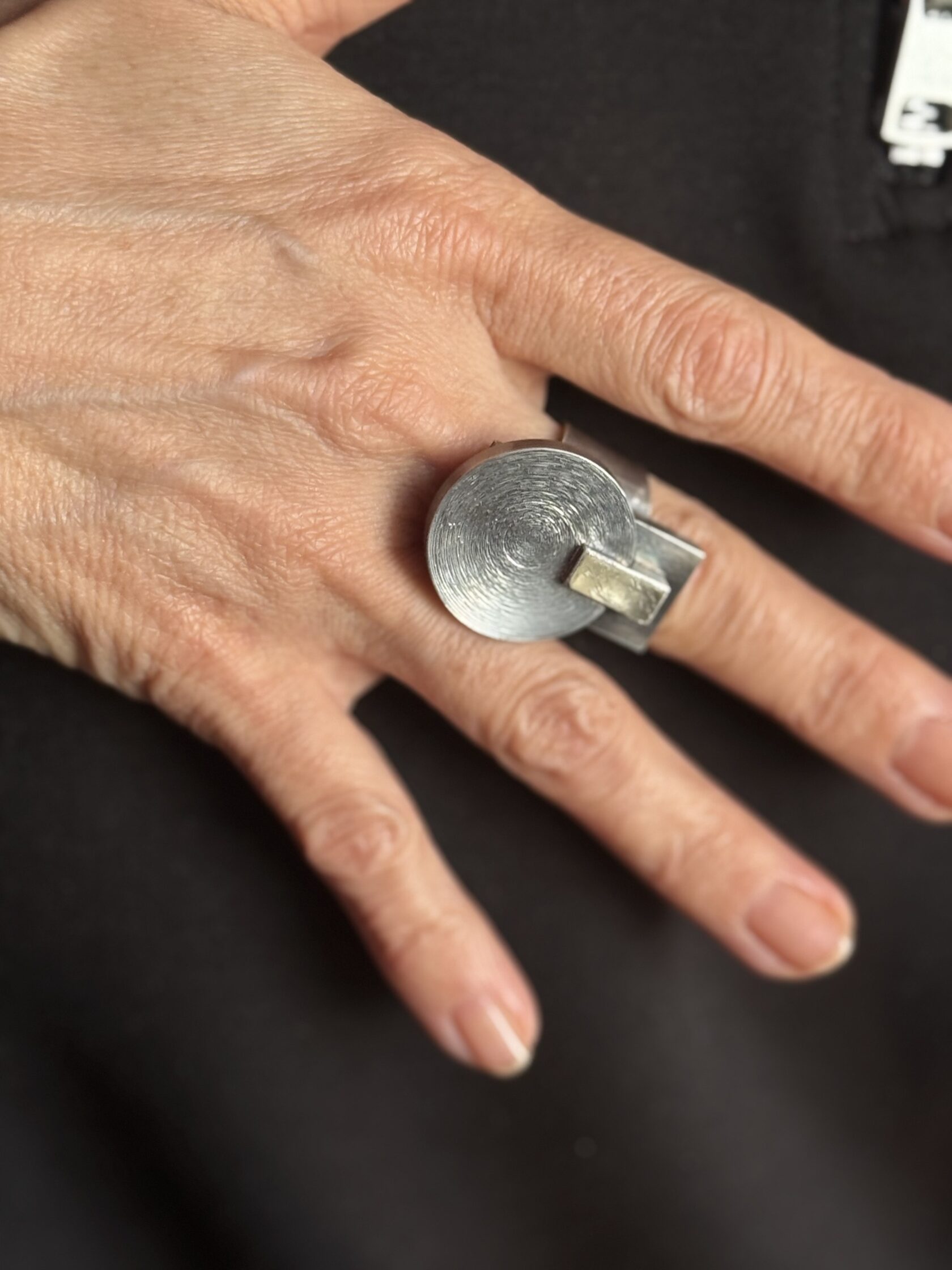
What it shows: platform, disc, cylinder, stone and readable assembly.
What it does not prove: that engineering = Brutalist.
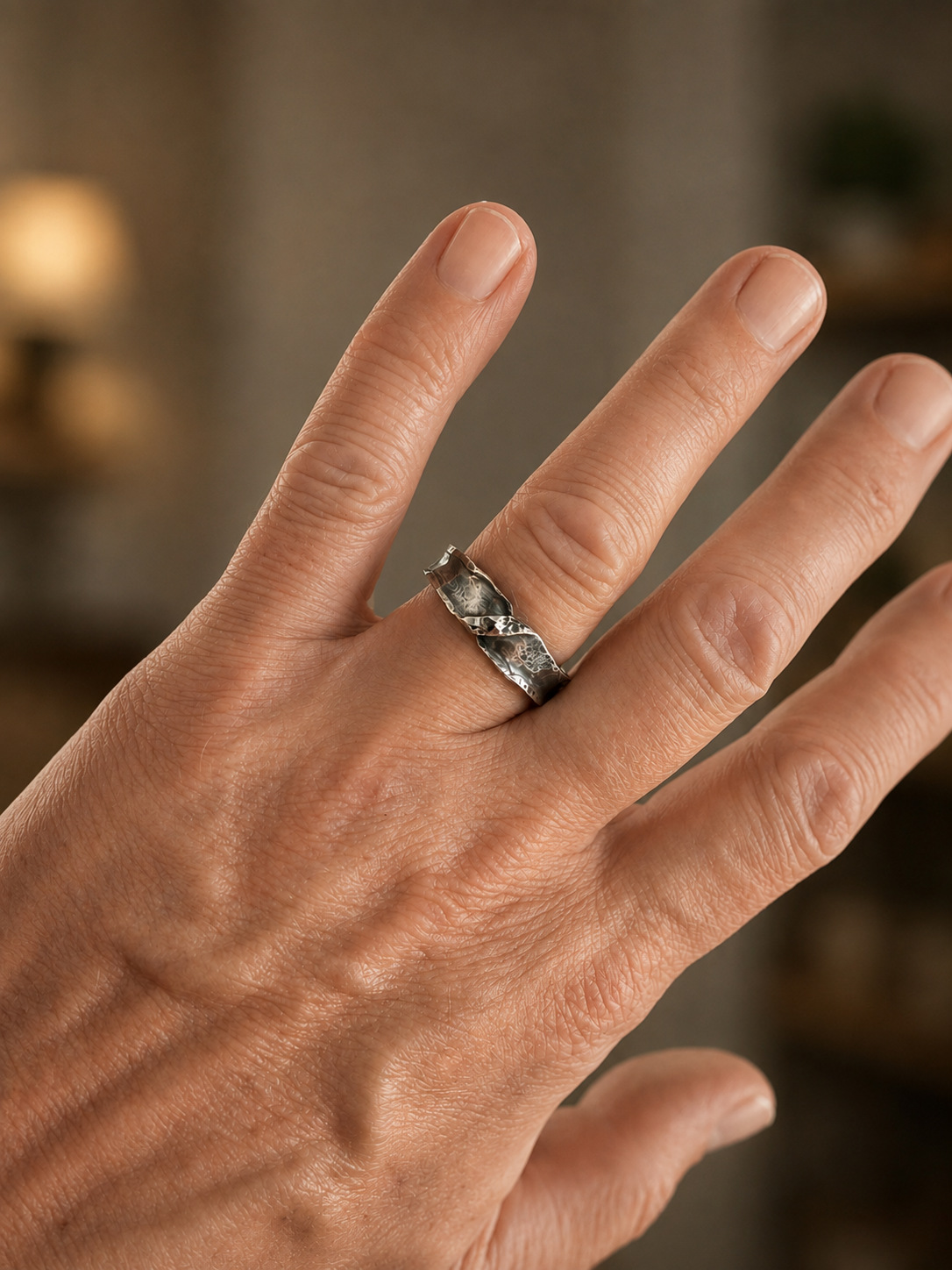
What it shows: forging, tool impact and direct metal action.
What it does not prove: that handmade = Brutalist.
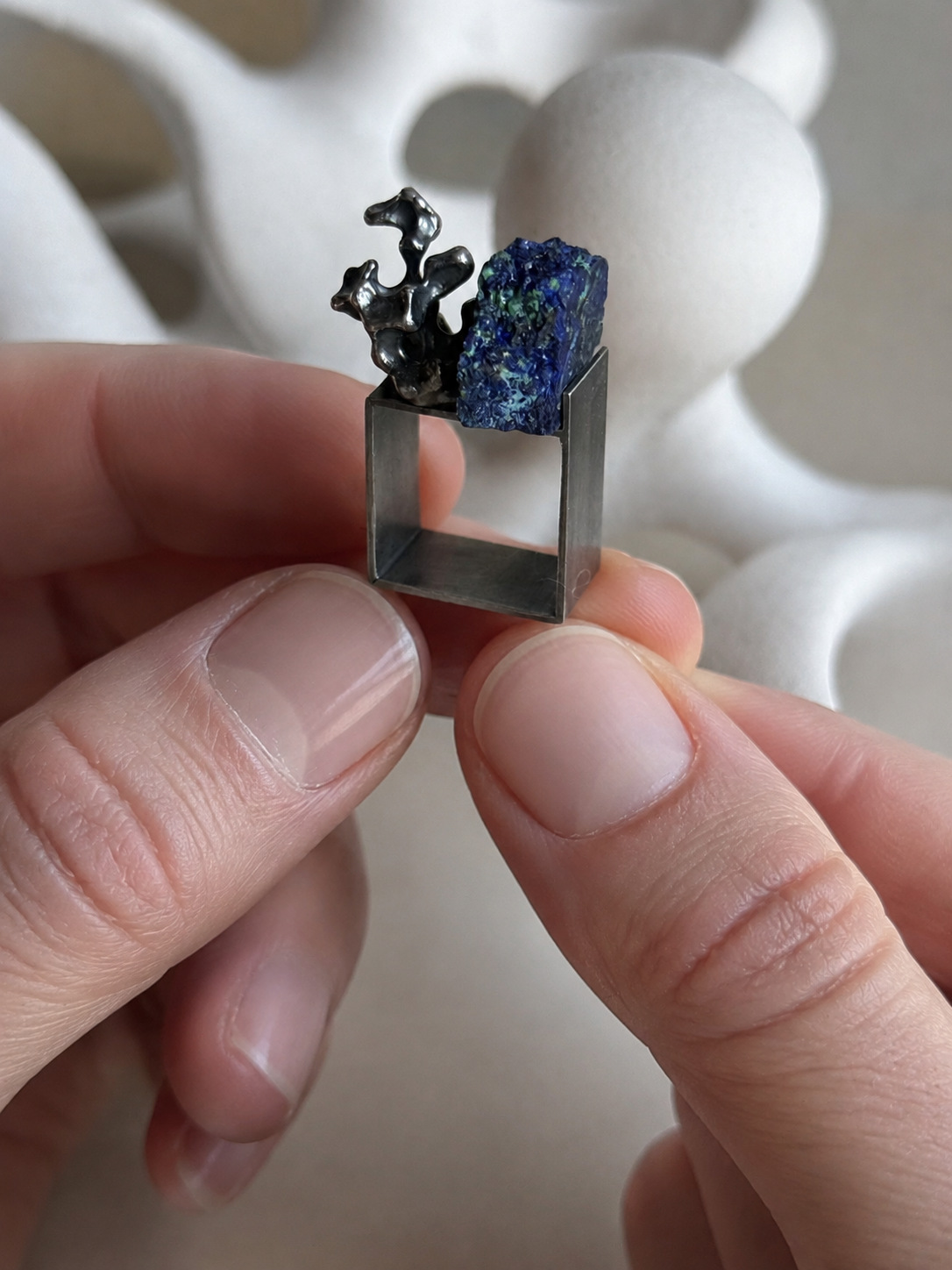
What it shows: three-dimensional mass and autonomous object quality.
What it does not prove: that sculptural = Brutalist.
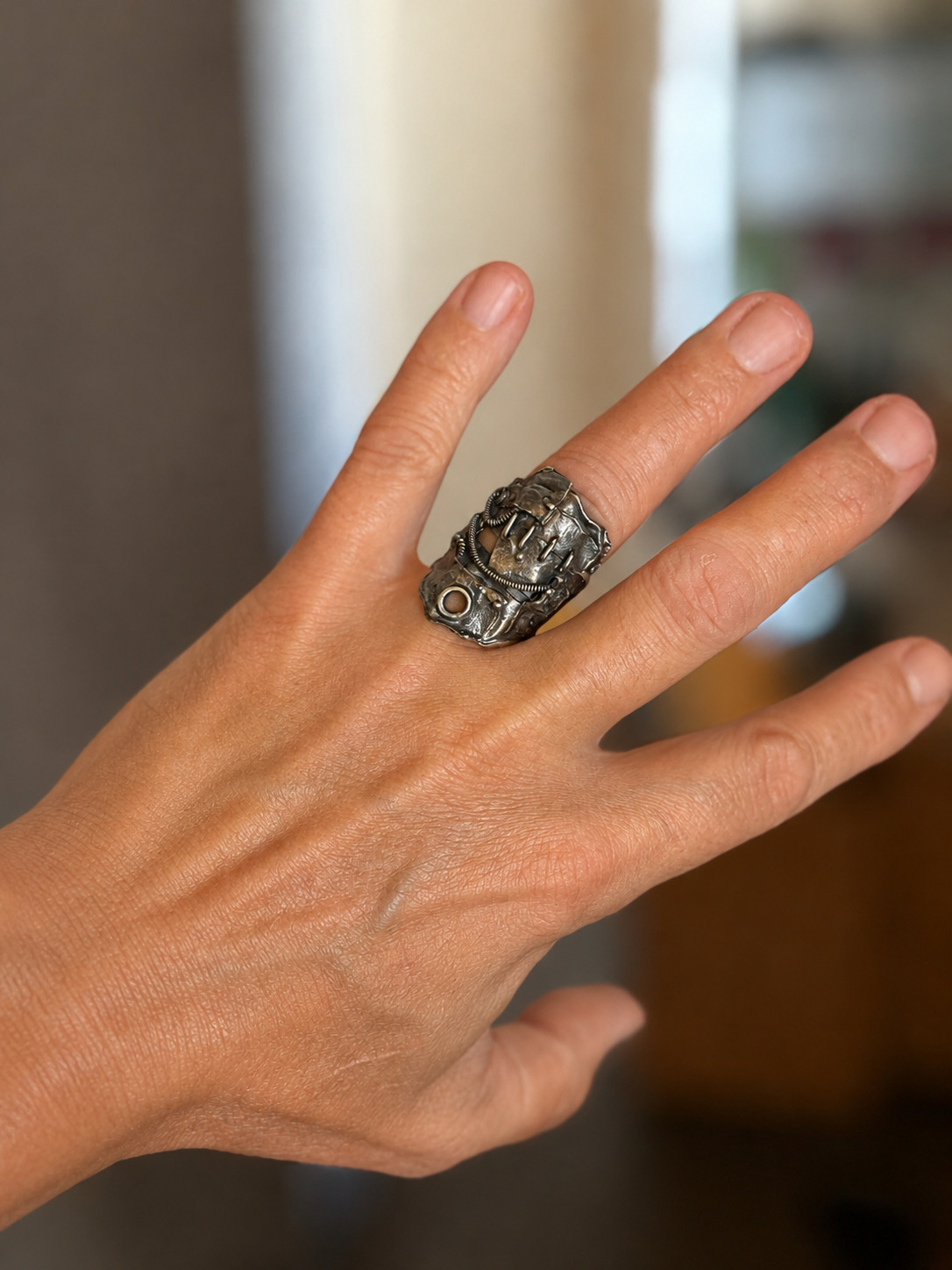
What it shows: dark complexity and mechanical tension.
What it does not prove: that biomechanical = Brutalist.
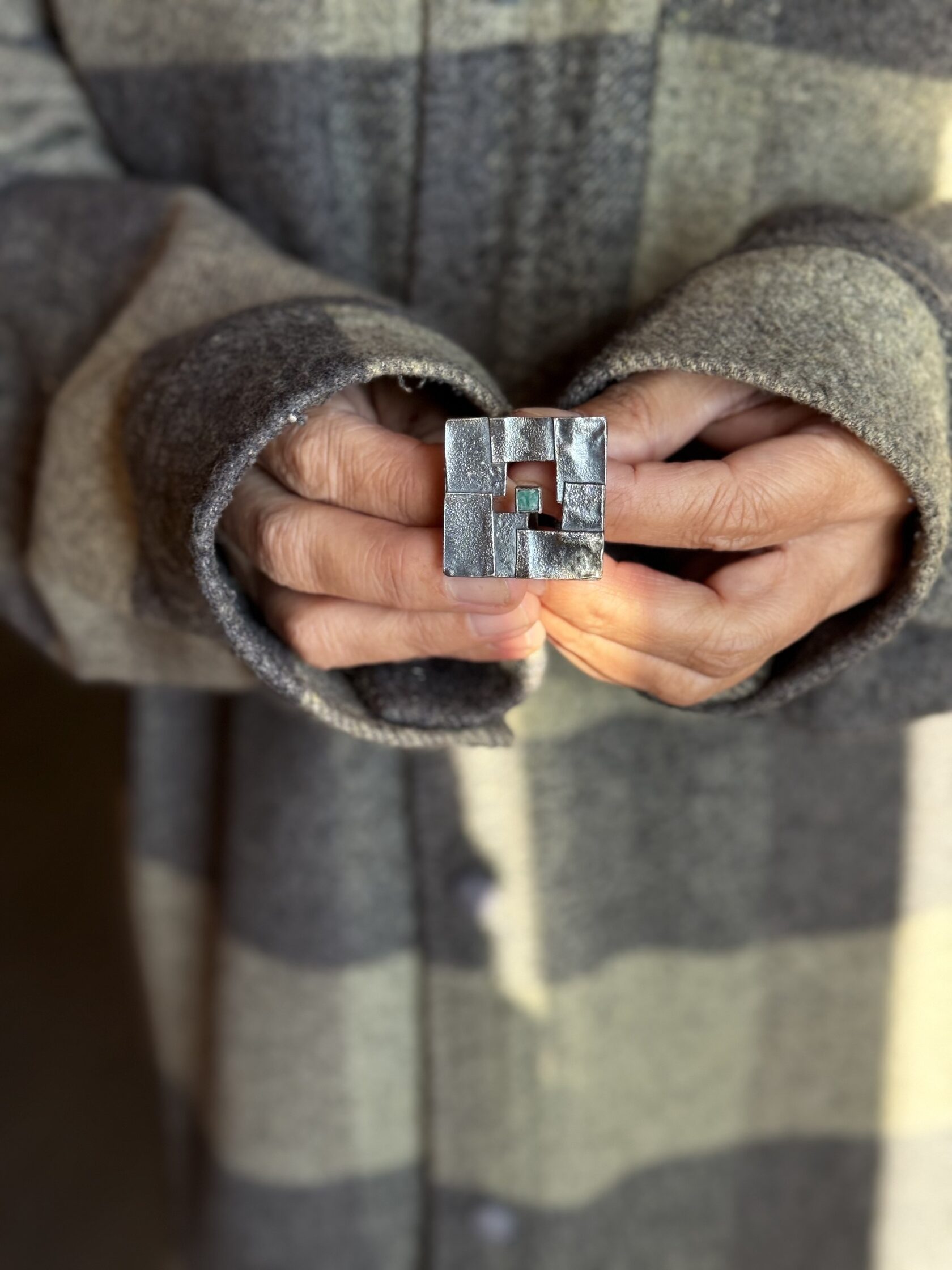
What it shows: architectural memory, module and rhythm.
What it does not prove: that architectural = Brutalist.
This is not a scoring system. No single feature defines the language; the relationships matter.
Brutalist jewelry is best read through MASS + VOID + MATERIAL + SURFACE + CONSTRUCTION.
Sometimes the result will be rough, dark and substantial. Sometimes it can be much quieter. The point is not the stereotype but the relationship between material, volume, space, surface and construction.
Roughness alone is not enough. Black metal alone is not enough. Visual bulk alone is not enough.
It is jewelry that can be described through a formal language of mass, void, direct material presence, worked surface and readable construction.
Not in the same sense as architectural Brutalism. In jewelry, it is more useful to understand it as a family of formal approaches rather than one official school.
No. A surface can be restrained or partly smooth if mass, material, void and construction remain central.
No. Dark patina can emphasize relief, but black colour does not define Brutalist jewelry.
Sculptural jewelry emphasizes three-dimensional form and volume. Brutalist reading more specifically foregrounds material, mass, void, surface and readable construction.
Architectural jewelry more broadly uses structure, rhythm, proportion and space. Brutalist character places stronger emphasis on material presence, mass and direct construction.
No. Mass is only one signal. A large ring can be sculptural, biomechanical, Gothic-inspired or belong to another visual language.
Yes. Smooth or polished zones do not exclude a Brutalist reading when mass, void, material presence and construction remain central.
Silver Stone, Textured Plate, Construction and Black Cube demonstrate four useful directions: mass and material, surface, void and construction, and reduced volume.
Because darkness, complexity and aggression appear in many visual languages. Brutalist reading depends on the relationship between mass, void, material, surface and construction.
