NP STUDIO / JOURNAL / SILVER RETICULATION
What Is Silver Reticulation in Jewelry?
Reticulation is a specific thermal surface technique used on silver alloys. It can be confused with direct melting, fire-textured metal or other irregular surfaces, so the important question is not only what the surface looks like, but how that relief was created.
Silver reticulation is a heat-texturing technique used to create a rippled, ridged surface on a silver alloy. In a conventional process, preparation changes the behavior of the surface relative to the material beneath it; during carefully controlled heating near the alloy’s melting range, the metal deforms into folds, ridges and valleys. The result can be guided, but an exact pattern is difficult to repeat.
What is reticulation?
Silver reticulation is a heat-texturing technique that creates ripples, ridges and valleys in a silver-alloy surface. The relief comes from controlled thermal behavior of a prepared alloy rather than hammer blows or chemical coloration.
The resulting surface may resemble wrinkles, waves or geological terrain, but visual similarity alone is not enough to identify the process.
Why does the surface wrinkle?
In conventional silver reticulation, repeated oxidation and pickling can create a silver-enriched surface while the alloy below retains different composition and thermal behavior. During localized heating near the melting range, differential behavior between the surface and interior helps produce ridges, folds and valleys.
This is a high-level explanation and is more accurate than saying that “the inside simply melts while the surface never melts.” Alloy composition, preparation, thickness and heat movement all matter.

What does reticulated silver look like?
Typical visual features include ridges, waves, valleys, wrinkles and changing surface height. The pattern can look water-like, geological or folded, but appearance varies with alloy, thickness, preparation, torch movement and later finishing.
A rough or flame-treated surface is not automatically reticulated.
Can sterling silver be reticulated?
Yes. Sterling silver can be reticulated, although silver-copper alloys designed specifically for reticulation may produce a stronger effect. Sterling silver is 92.5% silver and 7.5% copper, and with suitable preparation it can show a reticulated surface.
Sterling silver can be reticulated, although dedicated reticulation alloys may produce a stronger effect.
For broader alloy context, see What Is Sterling Silver? and Sterling Silver vs Pure Silver .
Why is the pattern hard to repeat?
The result depends on local heat, alloy condition, sheet thickness, surface preparation and the direction of deformation that has already started. A maker can guide the process, but the final micro-relief is not fully programmable.
It is better described as partly controllable and partly emergent, rather than purely random.
Reticulation is not simply melted silver
Reticulation is not simply melted silver. Both processes use heat, but they create texture through different routes. Reticulation depends on the behavior of a prepared alloy near its melting range.
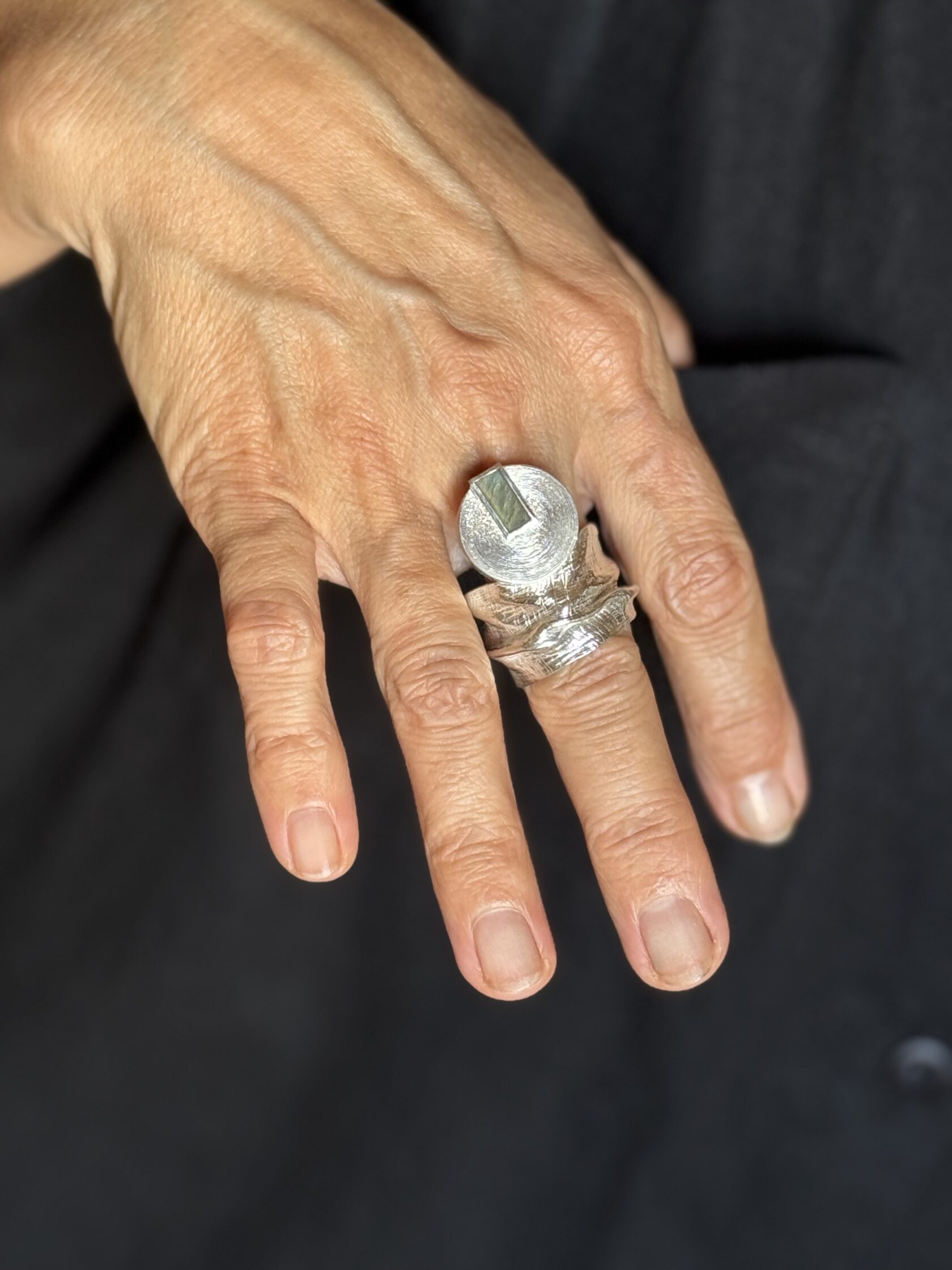
Picture Ring 3 is a useful comparison: its Work page documents silver melted over a titanium guide and then flame-treated. The crater-like surface may look related, but appearance alone does not make it reticulation.
Reticulation is not the same as firescale or firestain
Firescale and firestain are associated with copper oxidation in silver-copper alloys and are primarily seen as discoloration or subsurface oxidation. Reticulation is an intentional physical deformation of the surface.
Reticulation is not the same as patina
Patina changes color; reticulation changes physical relief. A reticulated surface can later be patinated, but patina is not what creates ridges and valleys.
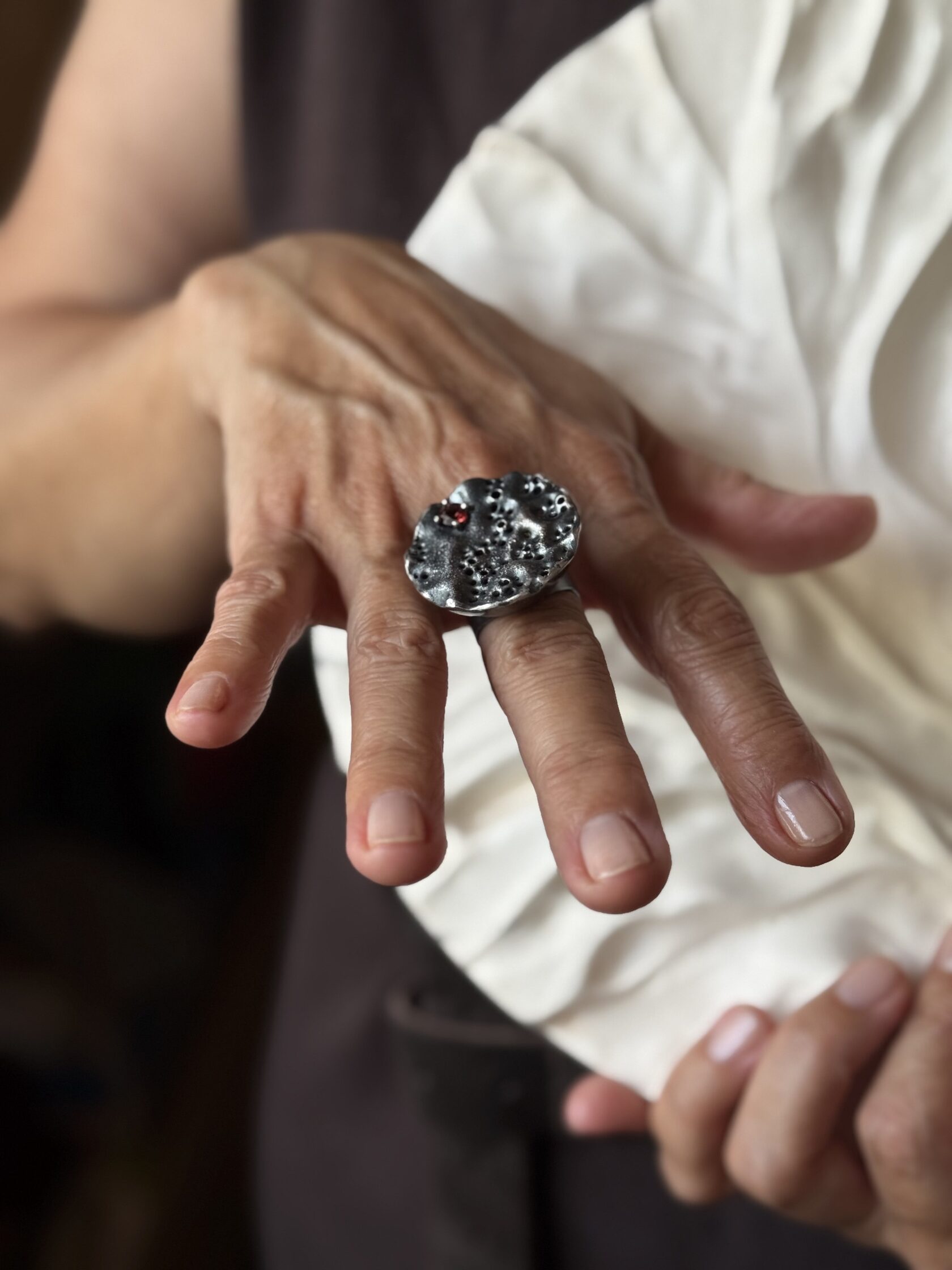
Surface with Garnet has a flame-treated landscape-like texture and ArgenBlack patina, but its Work page does not identify it as reticulation.
Reticulation is not embossing or mechanical compression
Hammering, embossing and compression alter the surface through force. Reticulation is heat-driven deformation of the prepared alloy.
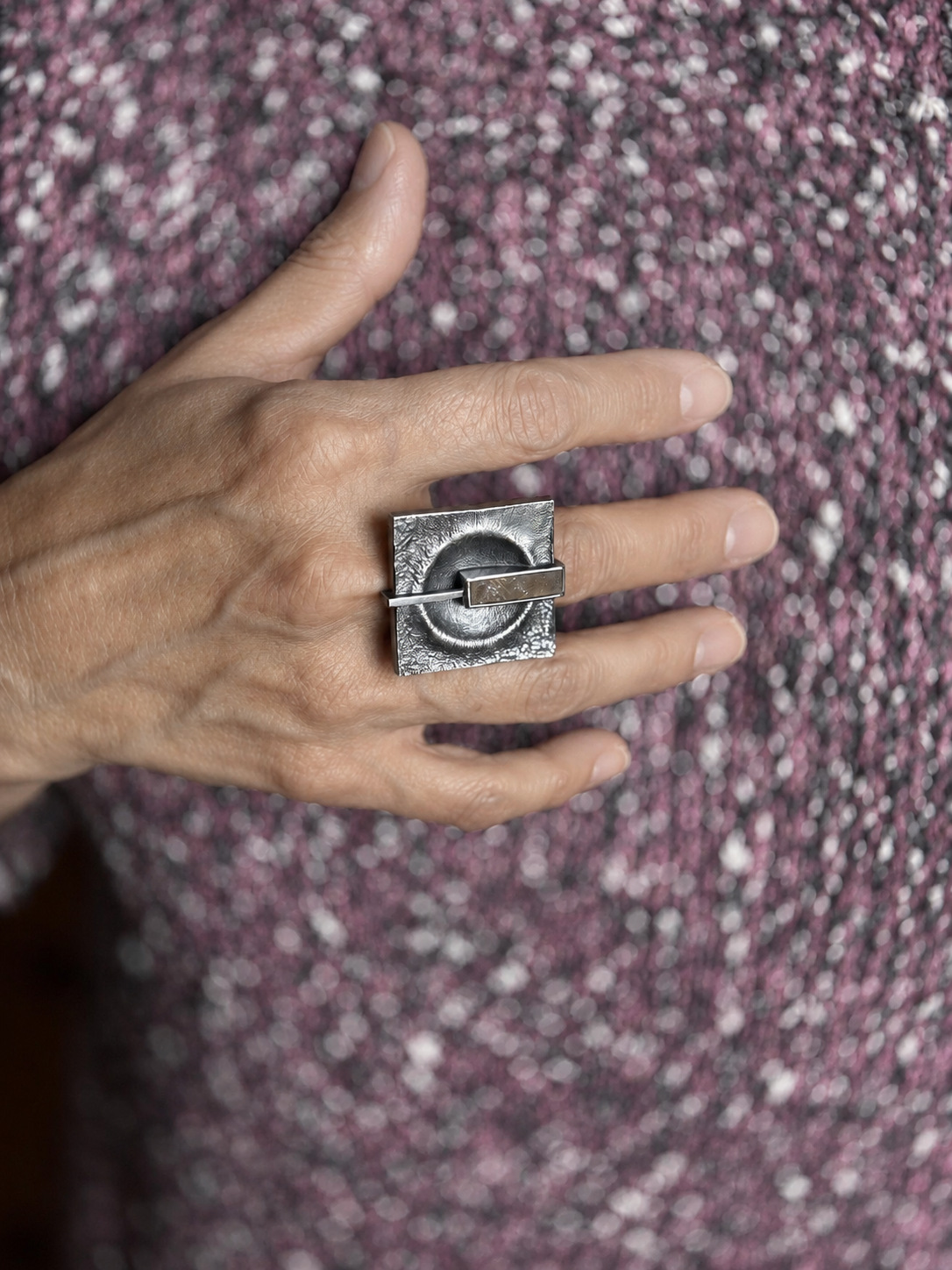
Transparent Geometry is a clear non-reticulation example: its crumpled matte surface is documented as embossing plus mechanical compression.
Comparing silver texture methods
| Method | What creates the texture | Typical result |
|---|---|---|
| Reticulation | Controlled localized heating of a prepared alloy | Ripples, ridges, folds and valleys |
| Direct melting / fusing | Localized melting and movement of metal | Craters, flows and accumulated forms |
| Hammering | Tool impact | Repeated or free-form depressions |
| Embossing / compression | Mechanical deformation | Folds, pressed or crumpled relief |
| Patina | Chemical surface change | Color and darkening, not the primary physical relief |
| Firescale / firestain | Copper oxidation during heating | Color change, not a relief-making technique |

Does reticulation weaken silver?
Successful reticulation does not mean a piece is automatically structurally weak. However, the process works close to the alloy’s melting range, so excessive heating can thin, collapse or damage the metal.
Does reticulation have to cover the whole piece?
No. Reticulation can be selective or localized, appearing on one plate, one part of a ring or one structural element.
Can reticulation be polished or patinated?
Yes. After the relief is created, the surface can be selectively polished, matted or patinated. Heavy finishing, however, can reduce or visually soften the relief.
NP Studio: one confirmed example and three comparisons
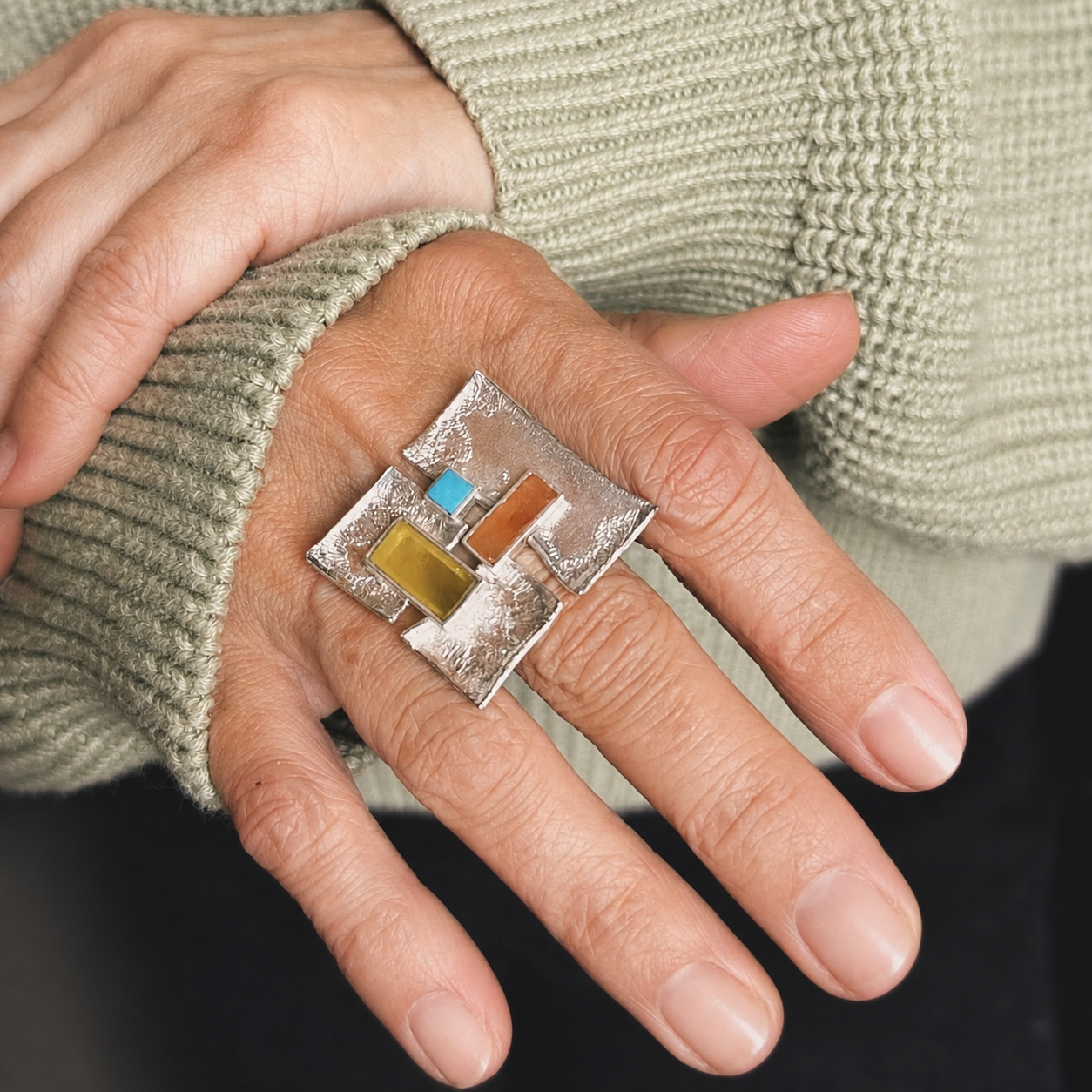
Picture with Three Stones
The Work page explicitly documents a subtle reticulation effect after flame treatment. This is the article’s true-positive example.
Picture Ring 3
The surface is made by melting silver over a titanium guide and flame treatment. It should not automatically be labelled reticulation.
Surface with Garnet
A flame-treated landscape-like surface plus ArgenBlack patina. Patina increases contrast but does not confirm reticulation.
Transparent Geometry
A crumpled matte surface made by embossing and mechanical compression — irregular texture without reticulation.
Conclusion
Silver reticulation is a specific way of producing physical relief through controlled heating of a prepared silver alloy. The maker can influence the result without fully programming it. A rough, flame-treated or melted-looking surface is not automatically reticulated.
FAQ
What is silver reticulation?
It is a heat-texturing technique in which a prepared silver alloy is locally heated near its melting range to create a rippled relief.
What does reticulated silver look like?
It commonly shows ridges, waves, folds and valleys with changing height and direction.
Why does silver wrinkle during reticulation?
Preparation can make the surface and interior of the alloy behave differently during heating, helping the metal deform locally.
Can sterling silver be reticulated?
Yes. Sterling silver can be reticulated, although purpose-designed silver-copper alloys may create a stronger effect.
Is reticulation the same as melting silver?
No. Direct melting creates texture through local liquefaction and movement of metal, while reticulation relies on prepared-alloy behavior.
Is reticulation the same as firescale or firestain?
No. Firescale/firestain is primarily related to copper oxidation and discoloration; reticulation is intentional physical relief.
Is reticulation the same as patina?
No. Patina changes surface color and tone; reticulation changes physical topography.
Can a reticulation pattern be repeated exactly?
Usually not. The process can be guided, but local deformation makes exact duplication difficult.
Does reticulation weaken silver?
Not automatically, but excessive heating can thin or damage metal.
Is every irregular silver surface reticulated?
No. Irregular texture may come from melting, hammering, embossing, mechanical compression or other processes.
