
NP STUDIO / JOURNAL / MATERIAL
Sterling Silver vs Pure Silver
At first glance, the logic seems simple: silver that contains more silver should be better. By that reasoning, 999 fine silver should always be superior to 925 sterling silver. In jewelry, however, purity and usefulness are not the same thing.

What is pure silver?
Pure silver usually means fine silver marked 999: a material containing about 99.9% silver. It is bright, highly malleable and easy to roll, draw, hammer and form.
That same softness becomes a disadvantage in jewelry intended for everyday wear. Fine silver scratches and dents more easily and resists repeated mechanical stress less effectively than sterling silver.
What is sterling silver?
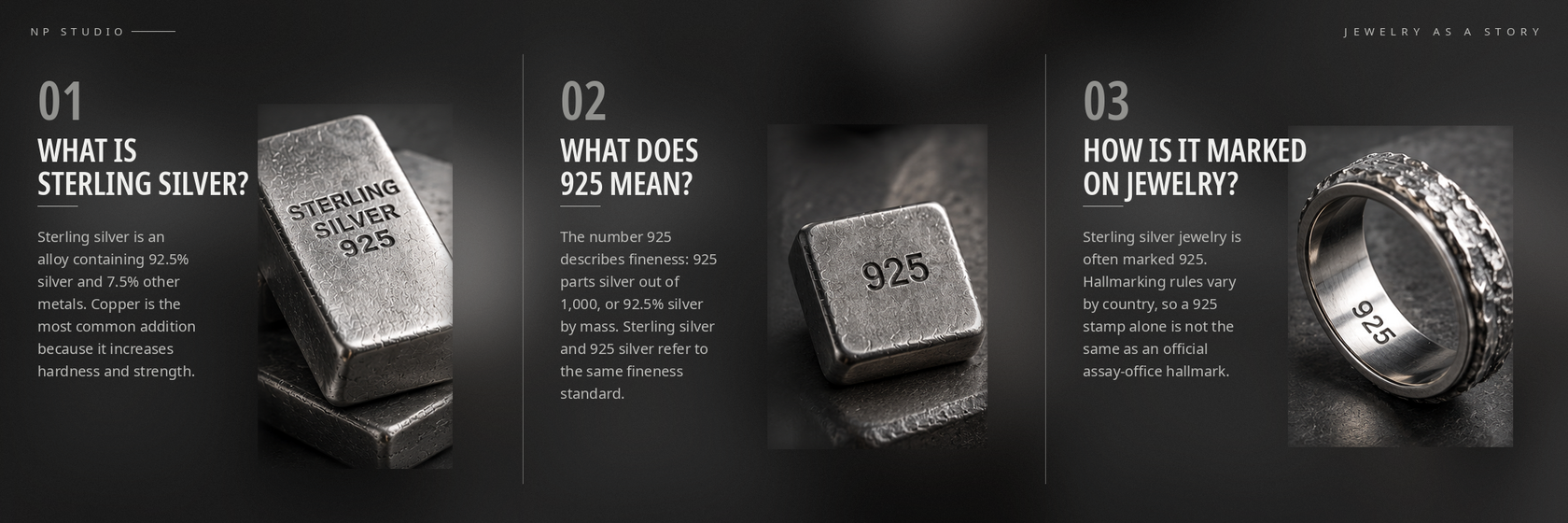
Sterling silver is an alloy containing 92.5% silver and 7.5% other metals. Traditionally, copper makes up most of that remaining percentage.
This is where the familiar term Sterling Silver 925 comes from. A relatively small amount of alloying metal makes a significant difference: the material becomes harder and holds its shape better.
Why add another metal to silver?
The reason is not simply to use less silver. A jeweler needs more than purity: a ring, stone setting, clasp or moving element also has to survive real mechanical stress.
In the same construction, sterling silver generally resists deformation better than fine silver. Those few percent of alloying metal give the material properties that are particularly useful in jewelry.

Color and tarnish
Fine silver can look slightly brighter, while sterling silver may appear a little cooler or grayer. In practice, once both are polished, the difference is usually much smaller than the visual effect created by surface treatment.
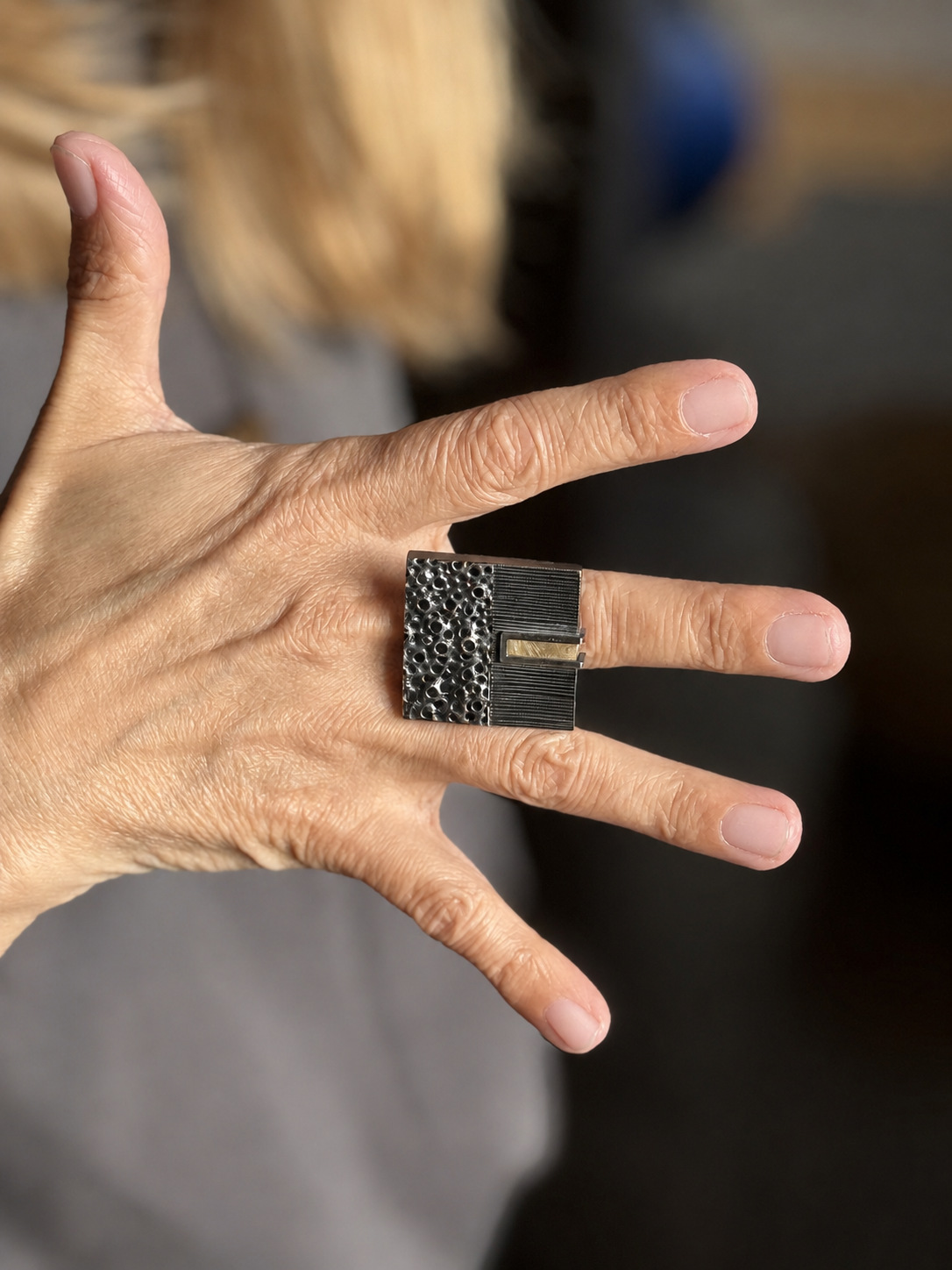
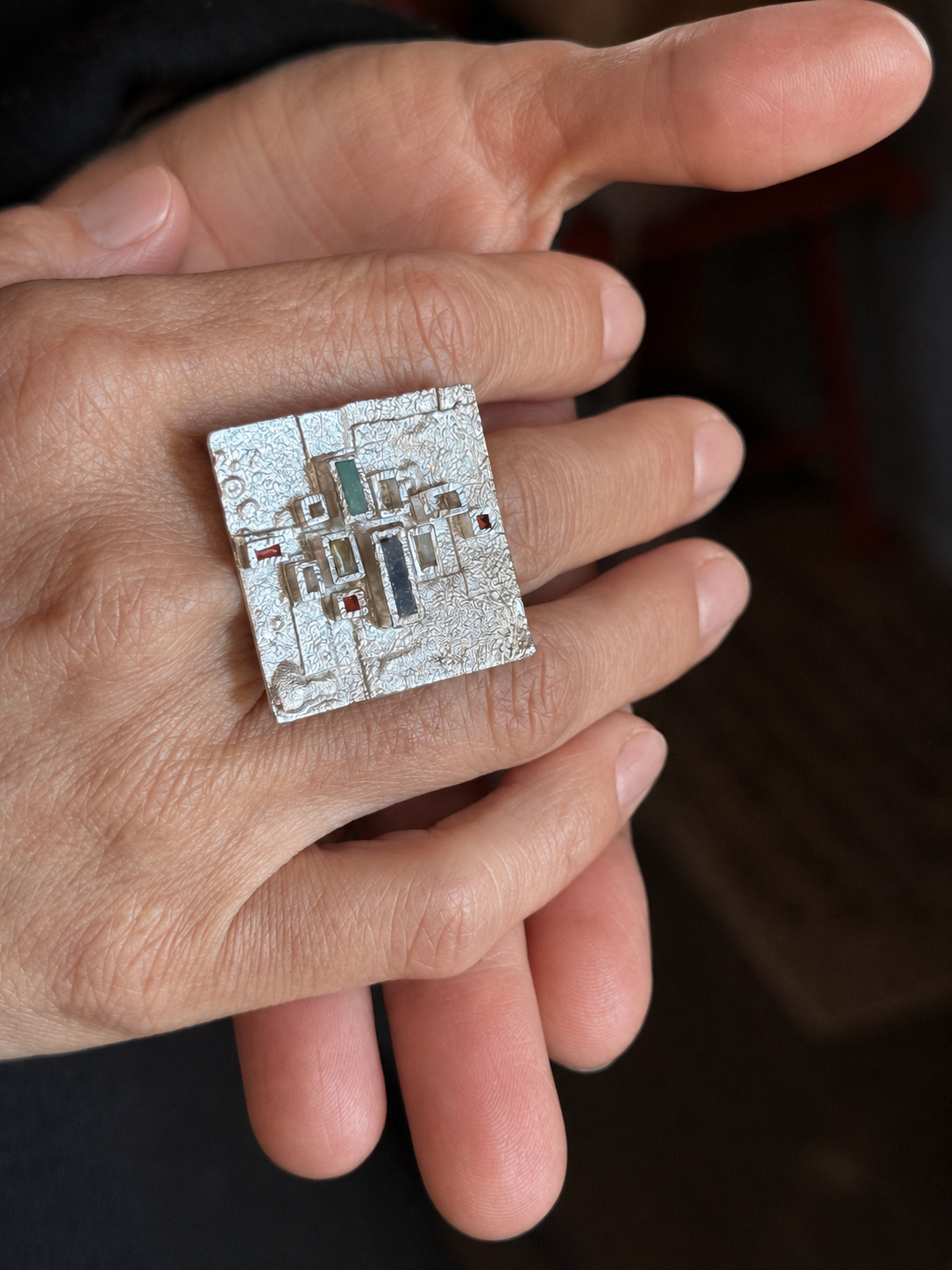
Polishing, matte finishing, reticulation, tool marks, patina and natural oxidation can change the appearance of silver far more dramatically than the difference between 925 and 999.
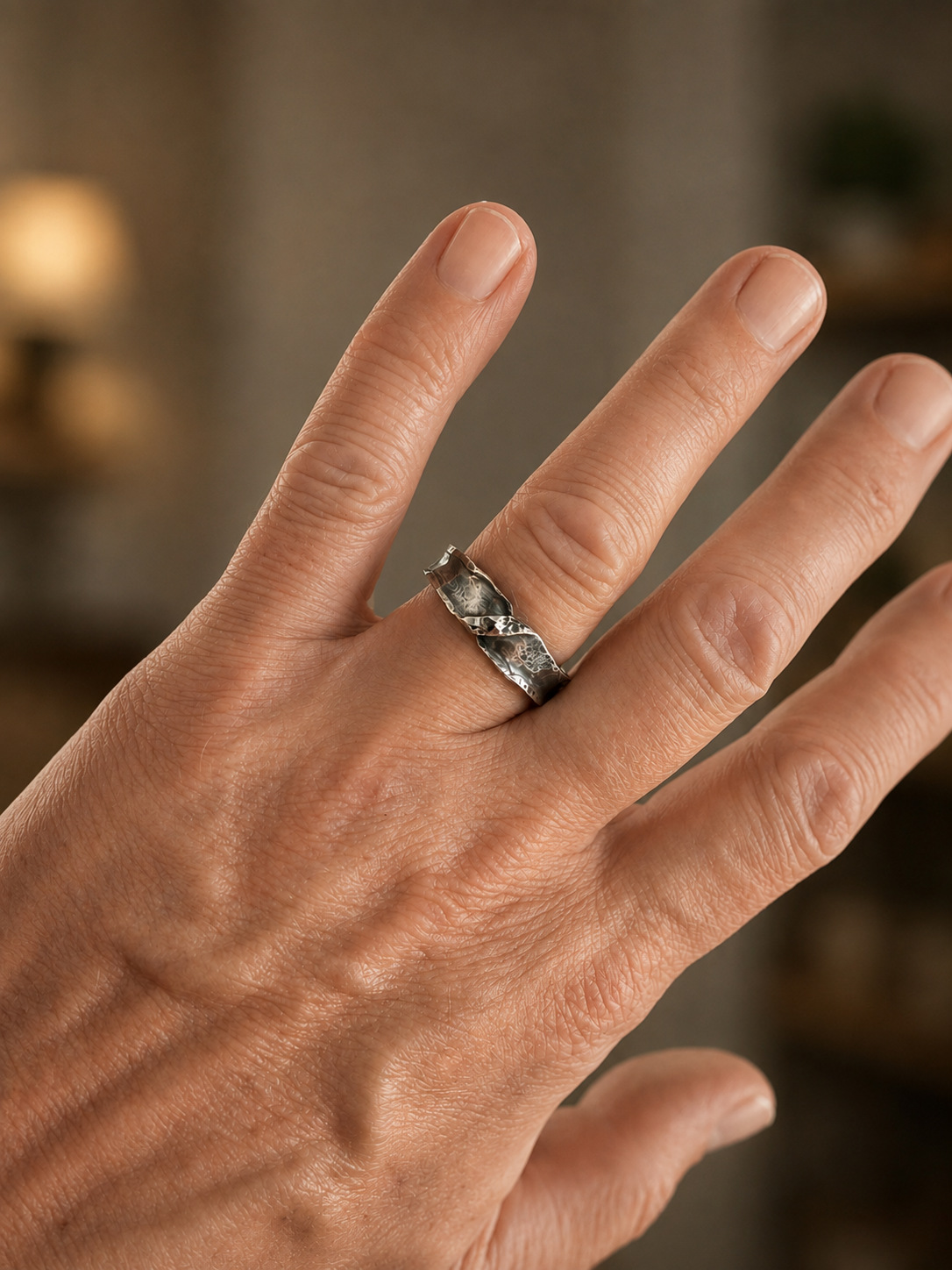
Sterling silver may tarnish more noticeably because copper is present in the alloy. This is a normal material property. In artist-made jewelry, darkening is sometimes used deliberately to emphasize texture, depth and relief.
Why are rings rarely made from 999 silver?
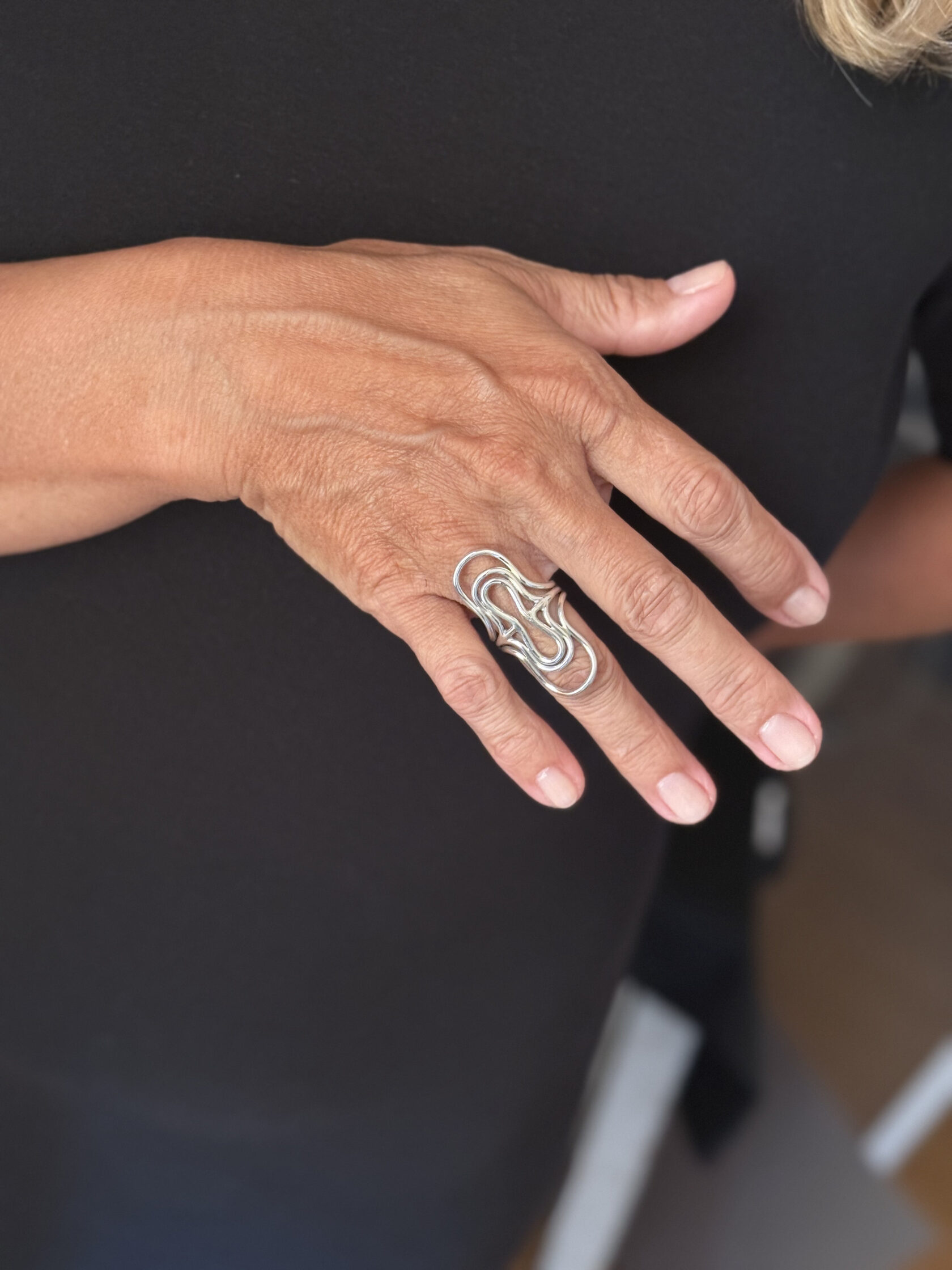
A ring is subjected to constant stress: door handles, tools, bags, a steering wheel and hard surfaces all place small loads on the metal throughout the day. In a massive object this may matter less, but a thin structure made from very soft silver will deform more easily.
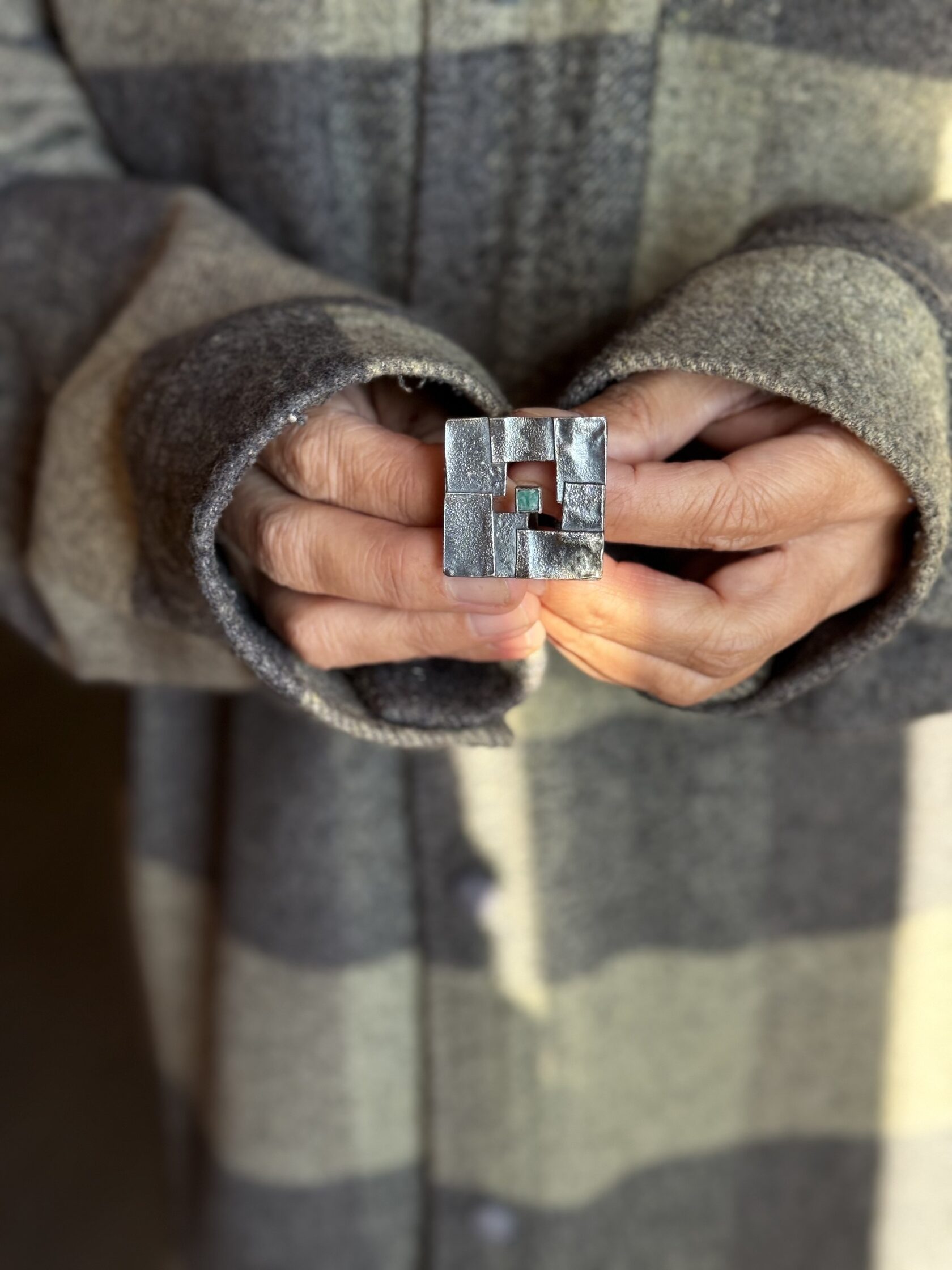
This becomes particularly important in stone settings. If the metal is too soft, the parts that secure the stone can lose their shape more readily. For most everyday rings, sterling silver is therefore the more practical choice.
Why use fine silver at all?
Fine silver has advantages of its own. Its high malleability is useful in techniques where the metal needs to form easily. High-purity silver is also suitable for applications where structural strength is not the main concern.
So the question is not really which material is universally better. The more useful question is which material is better for a particular job.
Is 925 real silver?
Yes. Sterling silver contains 92.5% silver and is a high-silver alloy. The alloying metal is added primarily to change the physical properties of the material, not to imitate silver.
A 925 mark therefore does not mean that the object is somehow “less real.” It identifies a composition designed to make silver more suitable for practical jewelry construction.
925 vs 999: the short version

Why NP Studio works with 925 silver
In artist-made jewelry, metal has to do more than accept a shape. It has to survive the making process: heating, bending, rolling, soldering, grinding, texturing and patination.
Sterling silver offers a useful balance between malleability during making and the ability to preserve the finished construction afterwards. That is why 925 silver remains the main silver alloy used for most NP Studio jewelry.
READ NEXT / NP STUDIO JOURNAL
More about silver
NP Studio Journal / Silver
