Intentional mark
A hammer or texturing mark is deliberately retained as part of the surface language and is consistent with the overall design.
NP STUDIO / JOURNAL / TOOL MARKS & IRREGULARITIES
Handmade jewelry does not have to look like an industrial surface repeated with microscopic uniformity. Hammer marks, slight asymmetry, microtexture variation or visible deformation can come from the process itself or from deliberate surface choices. But “handmade” does not excuse problems with construction, setting or wearability.
Tool marks, slight asymmetry and surface variation can appear because metal is forged, compressed, embossed, textured or finished by hand, and the maker may intentionally leave some evidence of the process visible. These characteristics are not defects by themselves. But “handmade” does not cancel quality requirements: the construction should be sound, stones securely set, and edges or surfaces should not create avoidable problems in wear.
When metal is formed by hand, tools physically alter the surface: a hammer leaves an impact, embossing creates relief, compression changes the direction of folds, and texturing tools build repeated or radial patterns. The maker then decides which traces to remove, soften or preserve.
Visible handwork can therefore be part of the process or part of the visual language. But a tool mark by itself does not prove quality, authenticity or value.
A hammer or texturing mark is deliberately retained as part of the surface language and is consistent with the overall design.
Embossing, mechanical compression, material imprinting and related processes can create micro-relief that varies slightly from one repeat to another.
A maker may preserve matte areas, patina, bright edges or process traces instead of polishing every surface to a mirror finish.
If an issue affects stone security, strength, fit, comfort or safe wear, the handmade label does not make it acceptable.
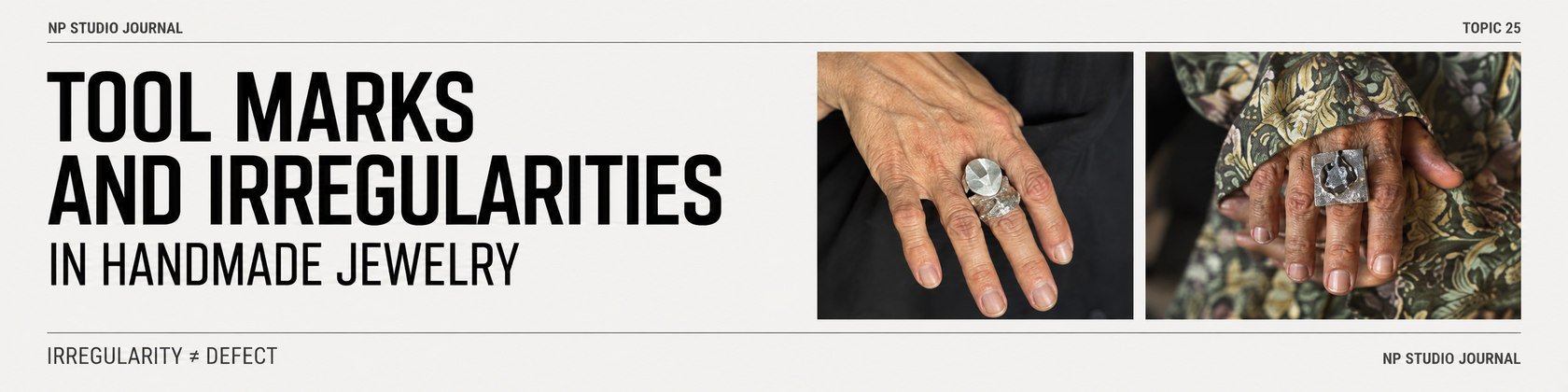
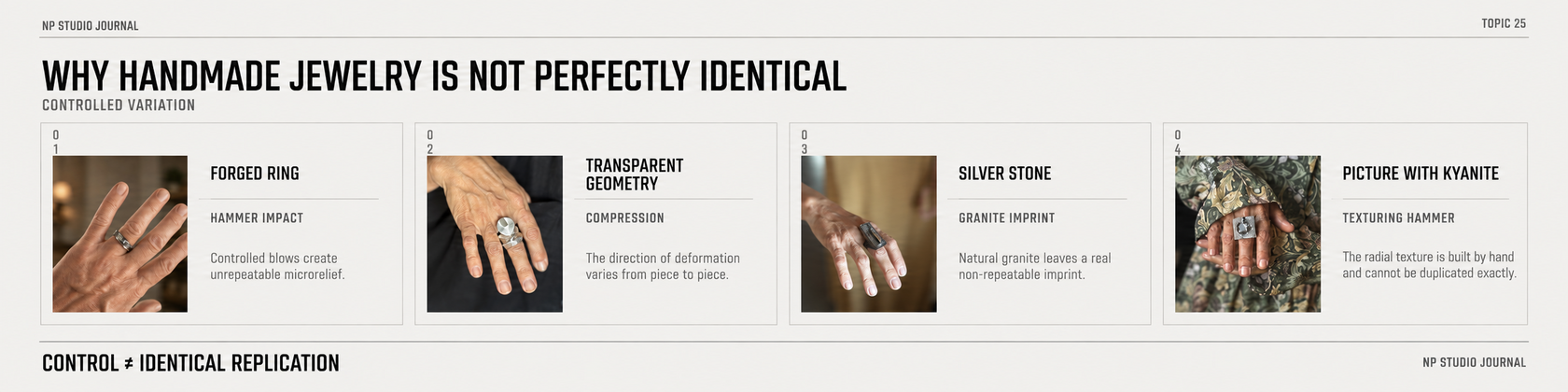
In some work, the impact of the tool is not an unwanted side effect but the main way the surface is built. Forged Ring is formed almost entirely with different hammers. The blows create its uneven living surface and pronounced edges, so the exact micro-relief cannot be repeated identically.
That does not mean every hammer mark is intentional. Technique and the overall design still matter.
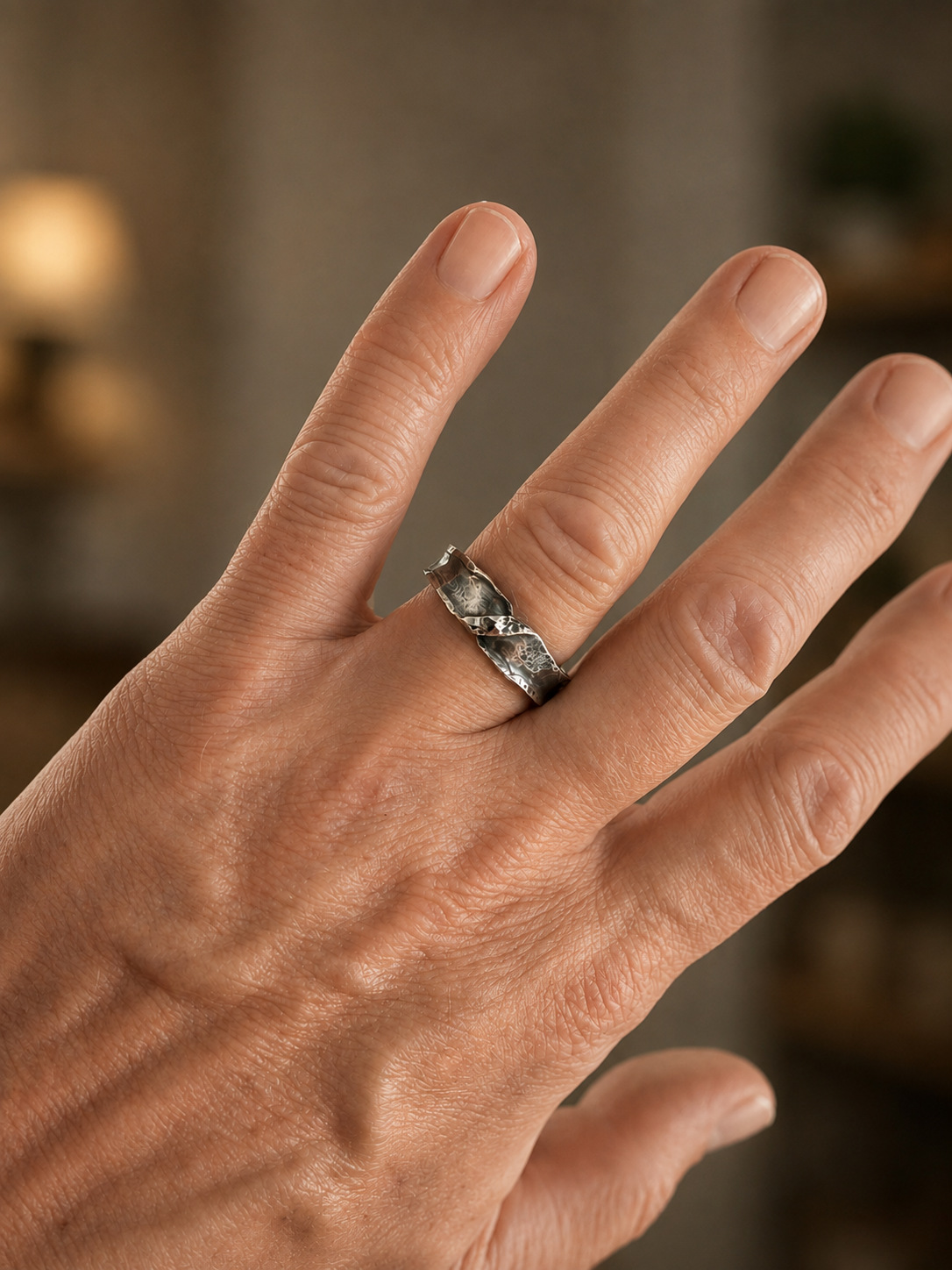
Mechanical compression and embossing do not produce microscopically identical deformation every time. In Transparent Geometry, the direction of compression cannot be predicted exactly, so the general character can be preserved while the specific surface pattern changes.
This is controlled variation, not a claim that every handmade object is automatically unique.
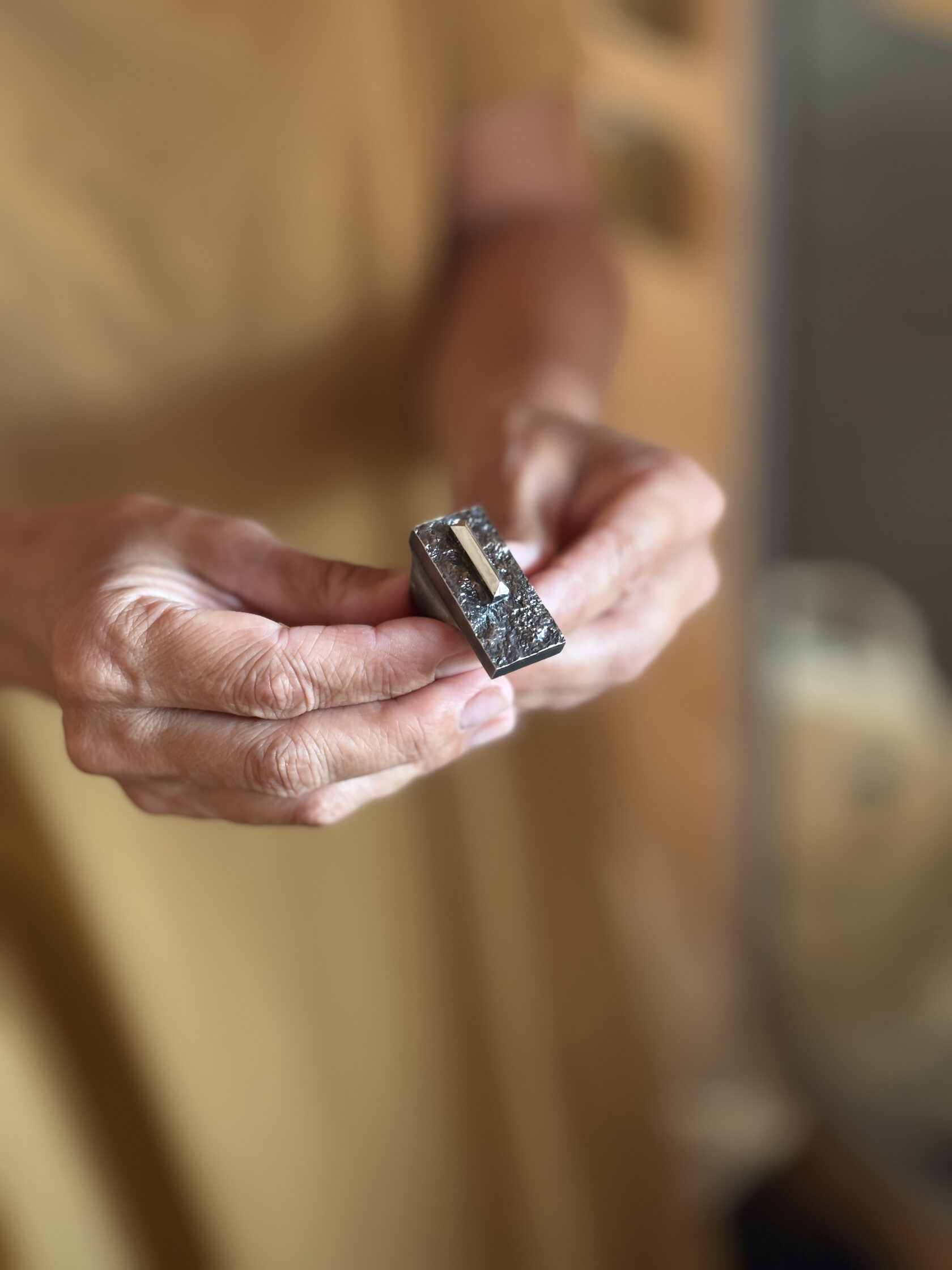
In Silver Stone, heated silver receives a real imprint from natural granite. Because the contact and natural relief vary, the exact surface cannot be reproduced point for point.
Quality ≠ perfect symmetry. Slight asymmetry can be designed into a composition or emerge from a controlled process. The important question is whether the form remains coherent, structurally sound and wearable.
Asymmetry that interferes with fit, construction or stone security requires a different evaluation.
The word “imperfection” can be misleading because it assumes that smoothness and mirror symmetry are the only correct standards. It is often more precise to describe a tool mark, process variation, texture or finishing choice.
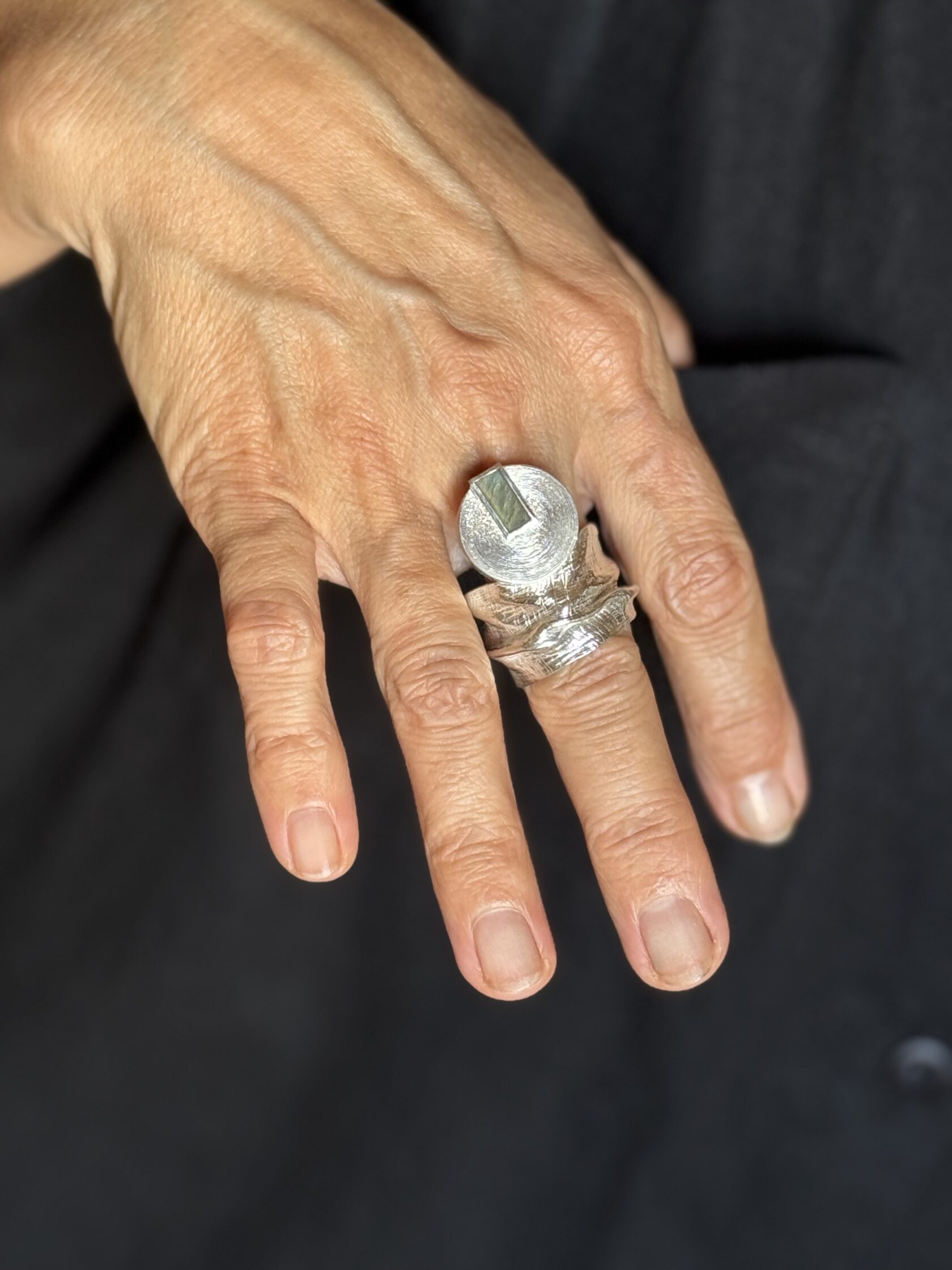
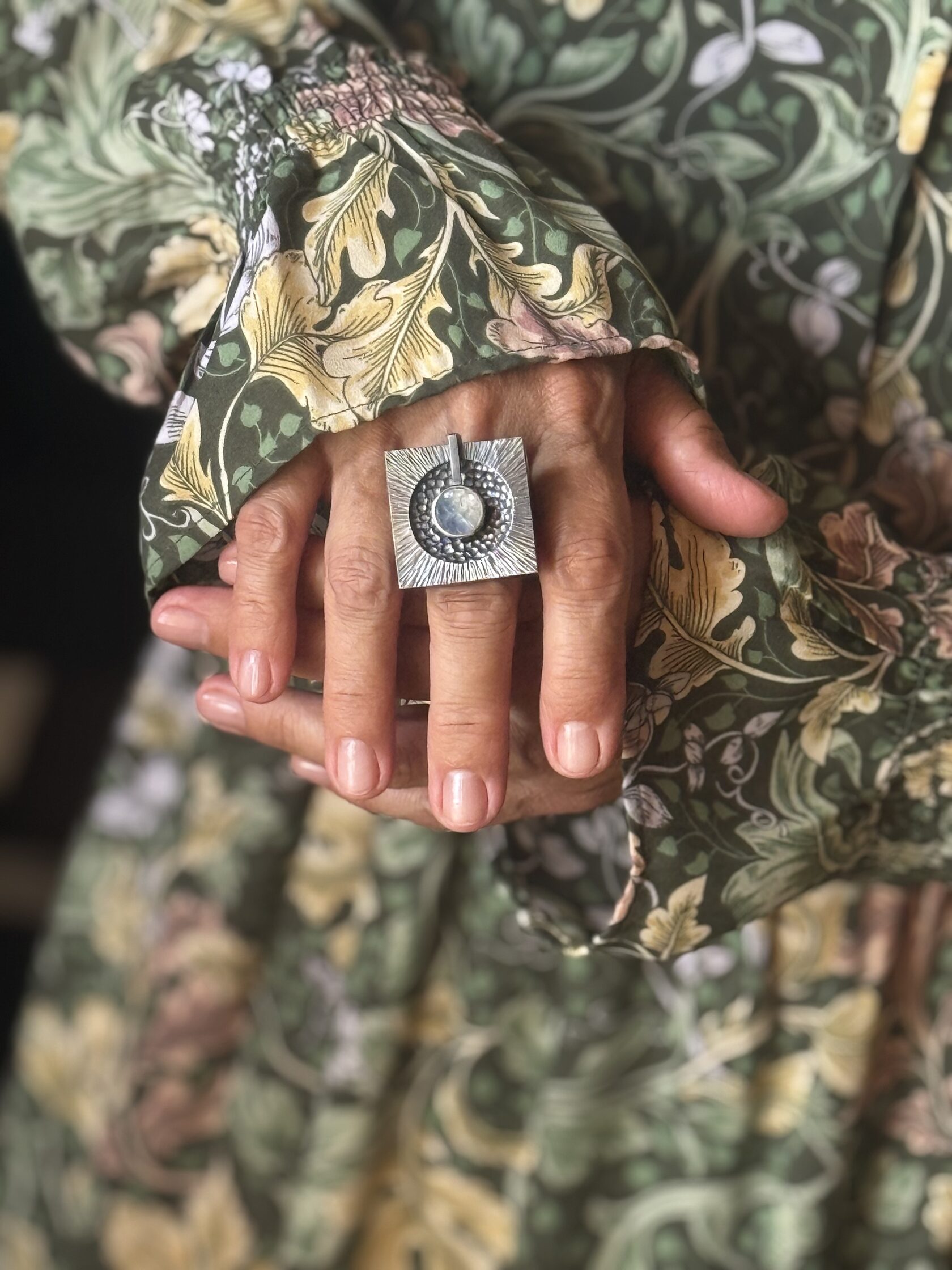
In Picture with Kyanite, the outer radial texture is created with a texturing hammer and patina emphasizes the relief. This is a controlled surface, not simply an error left unfinished.
Handmade does not mean unfinished. A maker can preserve forging marks or a matte surface while fully controlling construction, fit, edges and stone setting.
The reverse is also true: a mirror-polished surface does not prove mass production. Handmade vs Mass-Produced Jewelry covers the separate production-model question.
If a form is created through hammering, compression, natural material imprinting or hand texturing, the overall design can be repeated while the micro-relief changes slightly. This is controlled variation, not a promise that every handmade object is completely unique.
Surface irregularity can be part of process. A quality problem begins when construction, stone security, comfort or function may be compromised.
The sterling silver form is made almost entirely with hammers. The impacts build the surface and edges, so the exact micro-relief cannot be repeated identically.
Embossing and mechanical compression create a matte crumpled surface; the direction of deformation changes slightly each time.
Natural granite leaves a real imprint in heated silver, making exact replication of the surface impossible.
The radial outer texture is built with a texturing hammer, while patina emphasizes the relief.
Surface character and workmanship defect are not the same thing. Possible warning signs are more closely tied to function and durability: insecure stone setting, snagging sharp burrs, a weak joint, a crack in a load-bearing area, severe structural porosity or deformation that affects fit.
This is not a remote diagnosis. Such signs may indicate a problem and should be inspected on the specific piece.
A poorly secured stone should not be explained as “handmade character.” A sharp burr that snags clothing or scratches skin does not become a design virtue simply because the object was made by hand.

| Feature | May be part of handmade process | Requires quality check |
|---|---|---|
| Hammer marks | Yes, when consistent with technique and visual language | If accompanied by structural damage |
| Slight asymmetry | Yes, when designed or process-related | If it affects fit or function |
| Controlled uneven texture | Yes | If sharp burrs create avoidable wear problems |
| Microtexture variation | Yes, especially with forging, compression or imprinting | If associated with cracking or material failure |
| Embossing / compression traces | Yes | If deformation interferes with wear |
| Patina variation | Can be a finishing characteristic | If it accompanies a structural problem |
| Insecure stone setting | No | Yes — should be checked |
| Snagging sharp burrs | Not an excuse under “handmade” | Yes |
| Crack in a load-bearing area | No | Yes |
| Weak joint | No | Yes |
| Severe structural porosity | Should not be romanticized automatically | May require strength assessment |
| Deformation affecting fit | No | Yes |
They can be normal when they relate to the technique, design or finish and do not create problems with construction or wear.
Hand forming and deformation do not always produce microscopically identical results. The asymmetry should still make sense within the design and function.
Not automatically. It may be an intentional texture or a process result.
No. They can be intentional or process-derived. A visible impact alone does not establish intent without context.
Some processes create controlled microtexture variation. The overall form can repeat while the exact surface differs.
Yes. A rough or matte texture can be fully controlled when construction, edges, setting and function are properly resolved.
Ask whether the irregularity fits the technique and design, and whether it affects strength, fit, comfort or stone security.
No. Insecure stone setting requires inspection and should not be justified as handmade character.
No. Matte, forged or textured finishes can be deliberate. The surface should still avoid preventable wear problems.
No. Visible process traces do not determine value by themselves. What Makes Handmade Jewelry Valuable? covers value separately.
