Raw Citrine
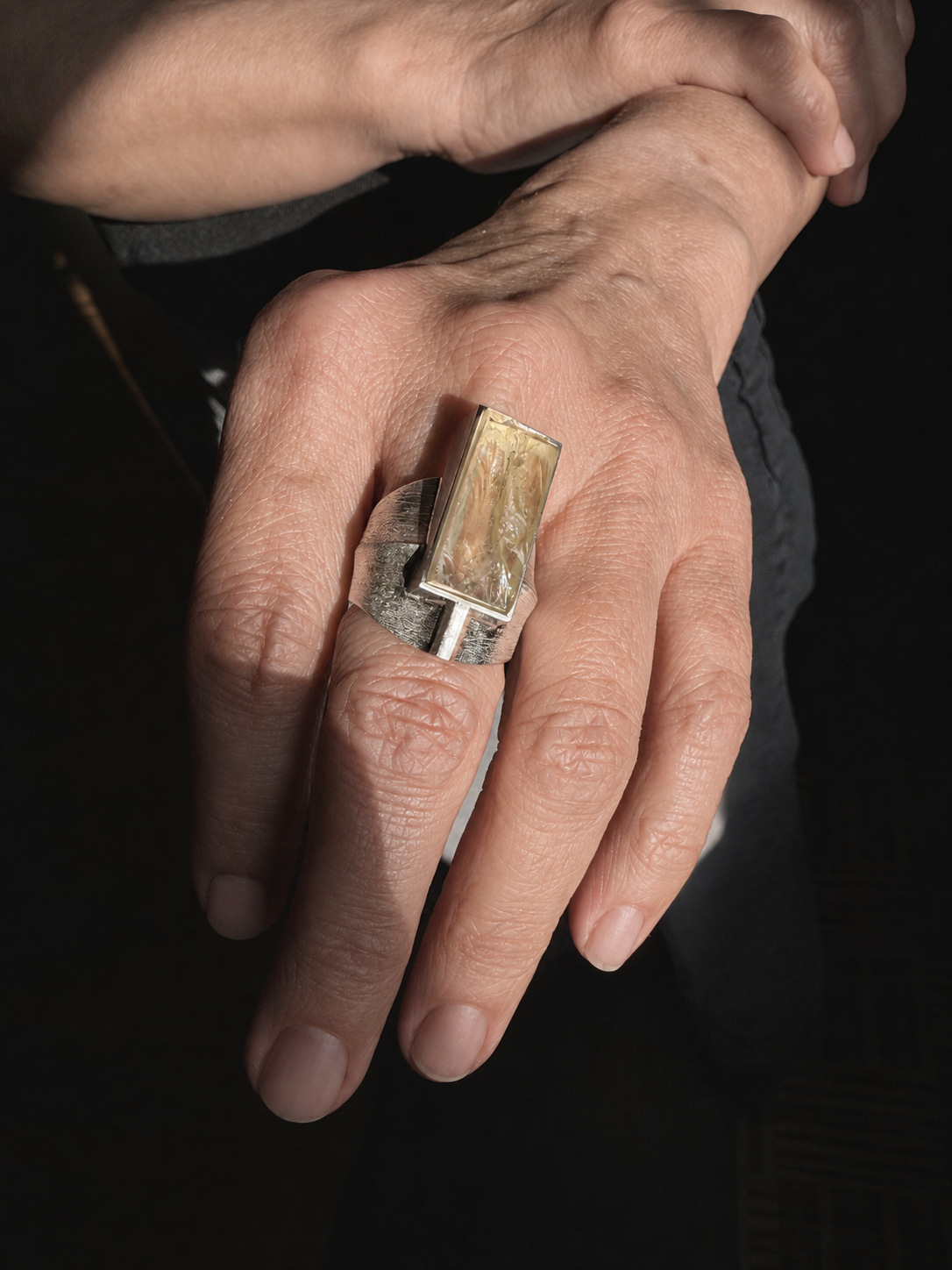
The preserved natural surface of citrine affects the character and design of the whole ring.
NP STUDIO / JOURNAL / HANDMADE VALUE
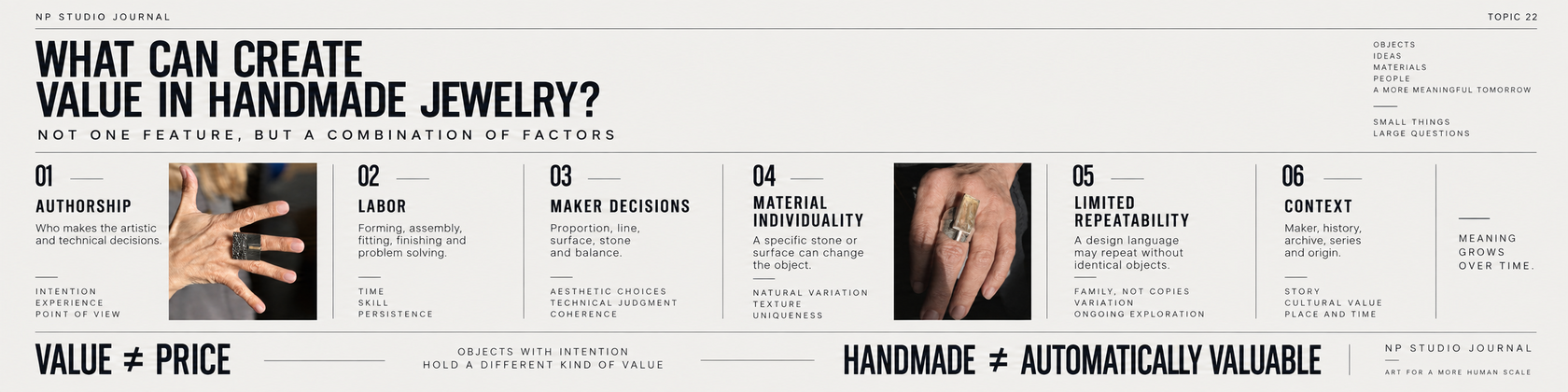
The value of handmade jewelry is not the same thing as price, hours of labor or the handmade label itself. It can come from authorship, labor, maker decisions, material individuality, limited repeatability, workmanship, context and a personal relationship to the specific object.
The value of handmade jewelry does not come from one feature or simply from the number of hours spent making it. It can come from a combination of authorship, labor, material individuality, maker decisions, limited repeatability, workmanship and the story of the specific object. But the handmade label alone does not guarantee quality, uniqueness or a high price.
Price is a monetary amount. Value is broader. It can be material, craft-based, artistic, personal and contextual. Two objects made from similar silver and similar stones may be meaningful in very different ways.
An expensive object is not automatically valuable, and an inexpensive one is not automatically insignificant. For handmade jewelry, that distinction matters especially clearly: price and value are not the same thing.
Silver, gold, stones and other components as the material basis of the object.
Technical execution, fitting, setting, structural soundness and finish appropriate to the piece.
A connection to a specific maker, visual language, composition and artistic idea.
Gift value, memory, series, archival status, origin and the story of a particular object.
Handmade jewelry is not valuable simply because it is handmade. The term does not automatically prove quality, artistic strength, ethics, uniqueness or a higher price.
If the question is specifically about production models, that belongs more directly to production model ≠ value judgement. Here the focus is different: what kinds of value a handmade object may carry.
In the United States, claims such as “handmade,” “hand-wrought” and “hand-forged” appear within the context of 16 CFR §23.2. This is useful as an example that handmade is not an empty marketing word. But it is US-specific advertising guidance, not a universal global legal definition and not legal advice.
Authorship can add context: who made the decisions, what studio practice the work belongs to and what visual language it comes from. Knowing the maker can deepen the way a piece is understood.
Authorship can add context, but it does not guarantee quality. A known maker’s name is not automatic proof of artistic or market value. It is one factor among several.
For a broader maker context, see artisan / maker context. For NP Studio’s own practice, see About.
Labor includes more than time alone. In handmade jewelry it may involve shaping, fitting, soldering, correcting, stone decisions, balancing, surface work and problem solving during the making process.
But ten hours do not automatically create twice the value of five hours. Labor matters, but hours are not a formula for value. Duration can matter without becoming a universal calculator of worth.
Craft is not only execution; it can include judgement. Proportion, line, stone orientation, balance, surface treatment, knowing when to stop and what not to add all affect the result.
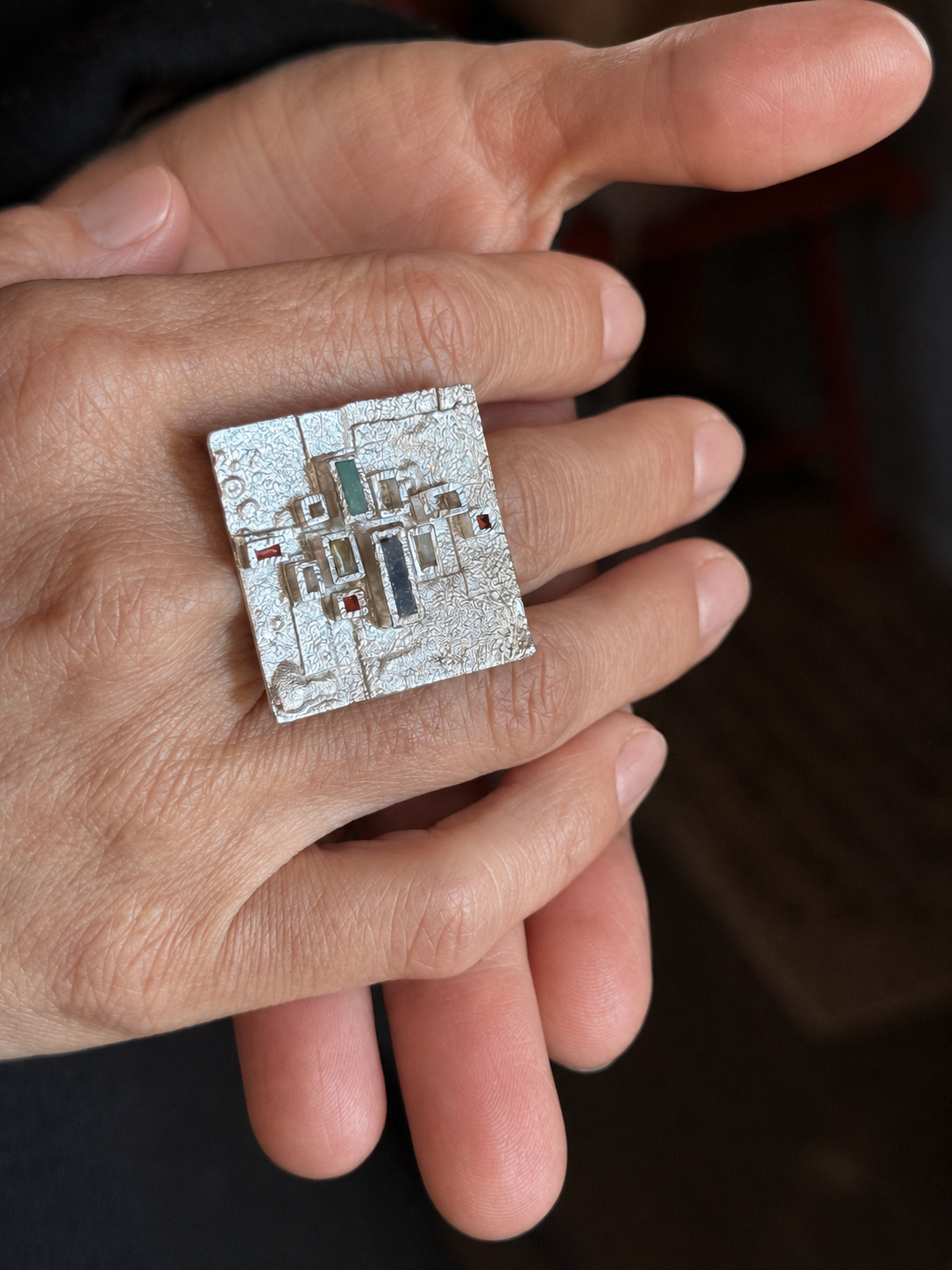
Picture Ring 1 is useful here: a rectangular composition, rutile quartz, lines and openings work together like a small metal picture. Part of its value can lie in decisions, not simply in the sum of its materials.
Material individuality can also be part of value. That does not mean a natural stone is automatically better than a cut stone. But a particular stone can influence proportion, orientation, silhouette and the whole character of a piece.
Raw Citrine shows this clearly: the preserved raw surface of the stone matters, and the silver construction responds to its irregular character. The material is shaping the composition rather than acting as a standard insert.
Natural ≠ automatically better. Material individuality may matter, but it is not a universal ranking system.
Limited repeatability can make a piece more individual, but handmade and one-of-a-kind are not synonyms. Handmade does not automatically mean literally unique.
What it can mean is that an exact repeat is impossible or not intended. A design language can remain, while the individual result changes. For a more direct discussion, see handmade ≠ one-of-a-kind.
Fire, fusing, patina, texture and handwork may remain visible in a finished piece. Sometimes this helps reveal how the object came into being.
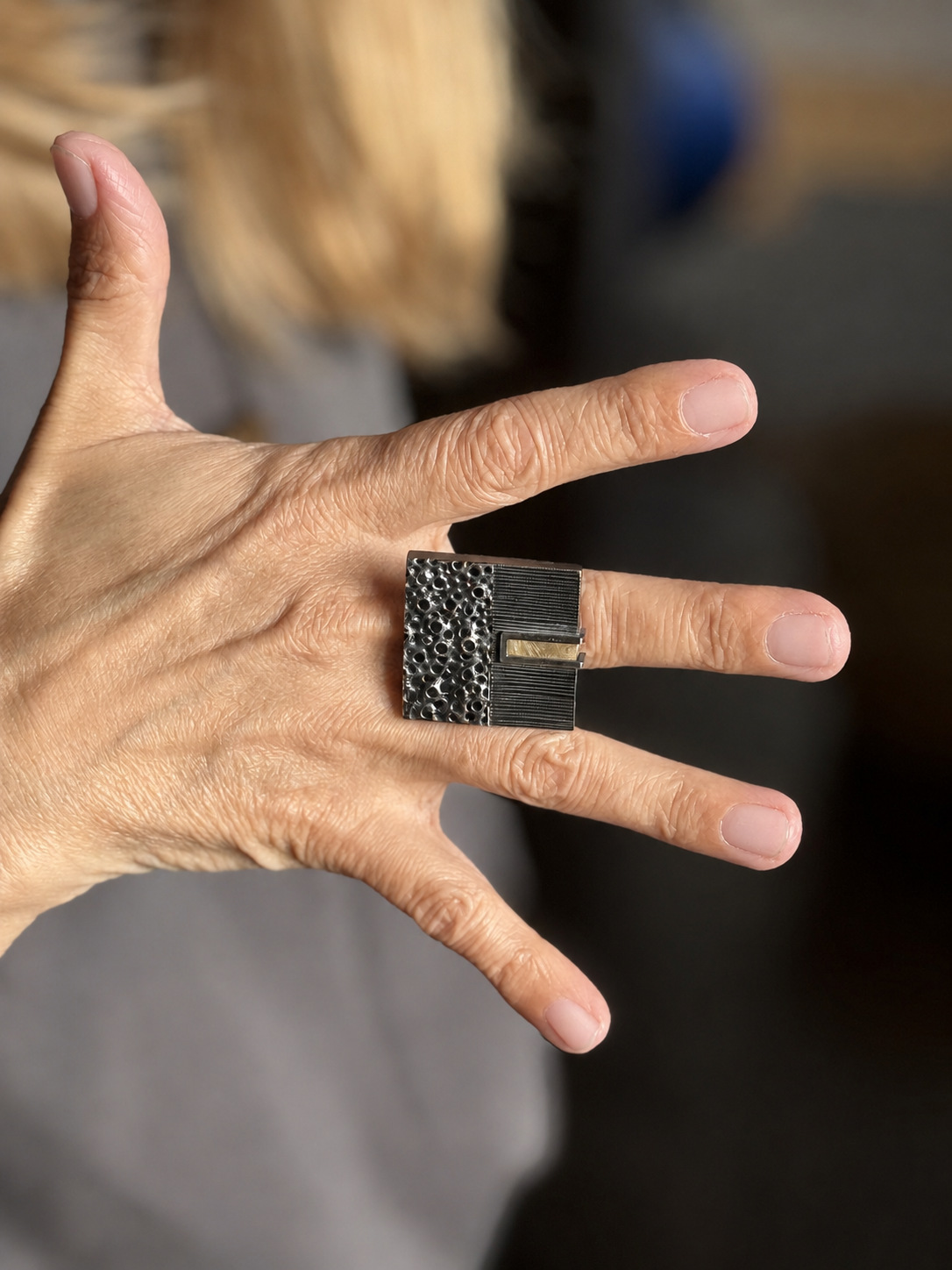
Picture Ring Variation is a strong example: its fused metal fragments, kyanite, amber, nephrite and red vitreous enamel make the process part of the visual language.
Visible traces of process can be meaningful when they are intentional and technically controlled; they are not automatically evidence of quality. Visible process is not the same thing as defect, but neither is it automatic value.
Craftsmanship includes control, material understanding, structure, joins, setting, durability and a finish appropriate to the intent of the work. A rough surface can still be technically controlled. A polished surface can also be fully handmade.
So craftsmanship is best understood not as generic neatness at any cost, but as the coherence between construction, material and artistic intention.
Context and provenance can deepen the meaning of an object. Who made it? What series does it belong to? Is it a prototype? Does it have a documented origin or a place within the history of a studio practice?
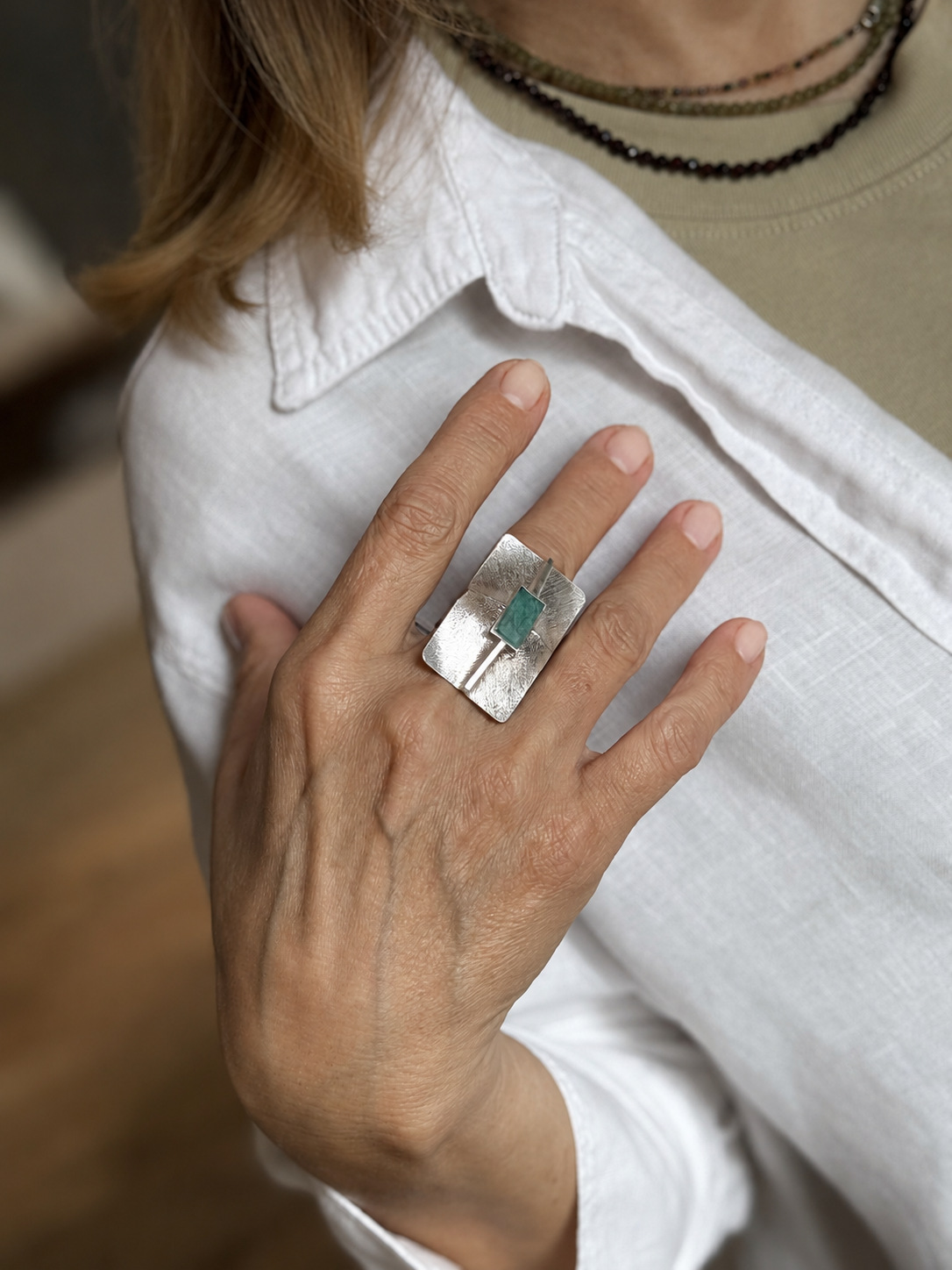
Picture 4 is useful here as an archival prototype and as a continuation of a studio direction. Part of its value may lie in that context, not only in silver and amazonite.
Context can add significance, but it does not guarantee investment value. History can enrich interpretation without promising market appreciation.
When a buyer knows the source of a piece, discusses size, stone or direction, the object gains an additional personal layer. That does not automatically make any work better, but it may make a specific object more significant for a specific person.
This is not a custom-order guide and not a buyer checklist. It is simply one way personal context can enter value.
A piece of jewelry can be meaningful as a gift, a memory, a milestone, a first artist-made object or a work with a clearly understood story. Sometimes personal value matters far more than market price.
For another person, consistency, brand identity, replaceability or practicality may matter more. There is no universal preference.
Handmade still has to earn its quality. Structure, setting, joins, fit, durability and finish still matter. If these things are weak, the handmade label does not transform a piece into a good one.
This matters because handmade is often romanticised. Value must be created, not claimed.
Being the only one does not guarantee artistic strength. A unique object can still be poorly designed, poorly made or personally irrelevant. Rarity alone is not enough. Value comes from a combination of factors, not from a single label.
One person values authorship, surface character and a sense that a piece is hard to replace. Another values consistency, brand recognition, practicality and predictability. One person may care most about artistic idea, another about comfort and function. Value also depends on the owner.
The preserved natural surface of citrine affects the character and design of the whole ring.
Part of the value may lie in compositional judgement, surface balance and the logic of the rectangular form.
Fused structure, enamel and layered composition create a specific object rather than a mere sum of materials.
An archival prototype and continuation of a studio direction add context and place the work within a practice.
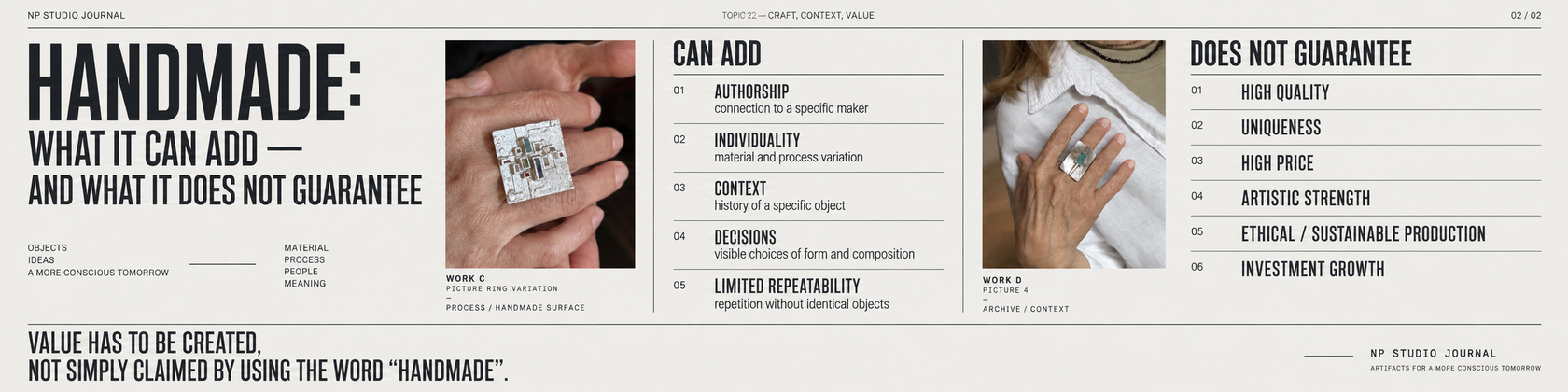
| Factor | What it can add | What it does not guarantee |
|---|---|---|
| Authorship | Context, identifiable creative voice, relation to a specific maker | It does not guarantee quality or market value |
| Labor | Technical effort, adaptation and hand involvement during making | It does not create a universal formula based on hours alone |
| Material individuality | A specific character that affects composition and makes the piece less replaceable | It does not prove the object is automatically better |
| Limited repeatability | A stronger sense that the particular object is hard to replace | It does not guarantee artistic strength |
| Visible process | Insight into how the piece was made; traces of fire, texture or fusing | It does not excuse poor workmanship |
| Technical mastery | Control of structure, setting, joins and finish | It does not automatically turn an object into art |
| Provenance / context | Series, archive, origin and relation to studio practice | It does not guarantee investment appreciation |
| Personal connection | Memory, gift value, commission context or attachment to a story | It does not have to match market price |
Handmade jewelry is not valuable simply because it is handmade. Its value may come from a combination of authorship, labor, maker decisions, material individuality, workmanship, limited repeatability, context and personal connection to the object.
HANDMADE ≠ AUTOMATICALLY VALUABLE. VALUE MUST BE CREATED, NOT CLAIMED.
Because its value may come from authorship, labor, maker decisions, material individuality, limited repeatability, workmanship, context and personal connection.
No. Price and value are not the same thing. Handmade does not automatically mean a higher price.
No. Quality still depends on structure, setting, joins, fit, durability and finish.
No. Handmade and one-of-a-kind are not synonyms. Handmade may imply limited repeatability without meaning literal uniqueness.
Because it can add context, an identifiable creative voice and a clearer understanding of how the object relates to a specific practice.
Yes, when its specific character shapes the composition and makes the object less replaceable. But it is not a universal rule.
Not automatically. They can be meaningful when intentional and technically controlled, but they do not prove quality on their own.
Personal value is tied to memory, story, gift value or attachment. Market price is a monetary figure.
Yes. Context and documented origin can deepen significance, though they do not guarantee higher resale value.
That depends on the object and the owner. Often value comes from the combination of material and maker decisions, not from one factor alone.
