
NP STUDIO / JOURNAL / ARTISAN JEWELRY
What Is Artisan Jewelry?
Artisan jewelry is generally understood as jewelry created within a small-scale, maker-led practice where the maker retains substantial control over design, materials and production. Handwork can be important, but authorship and direct maker involvement matter more than any single technique.
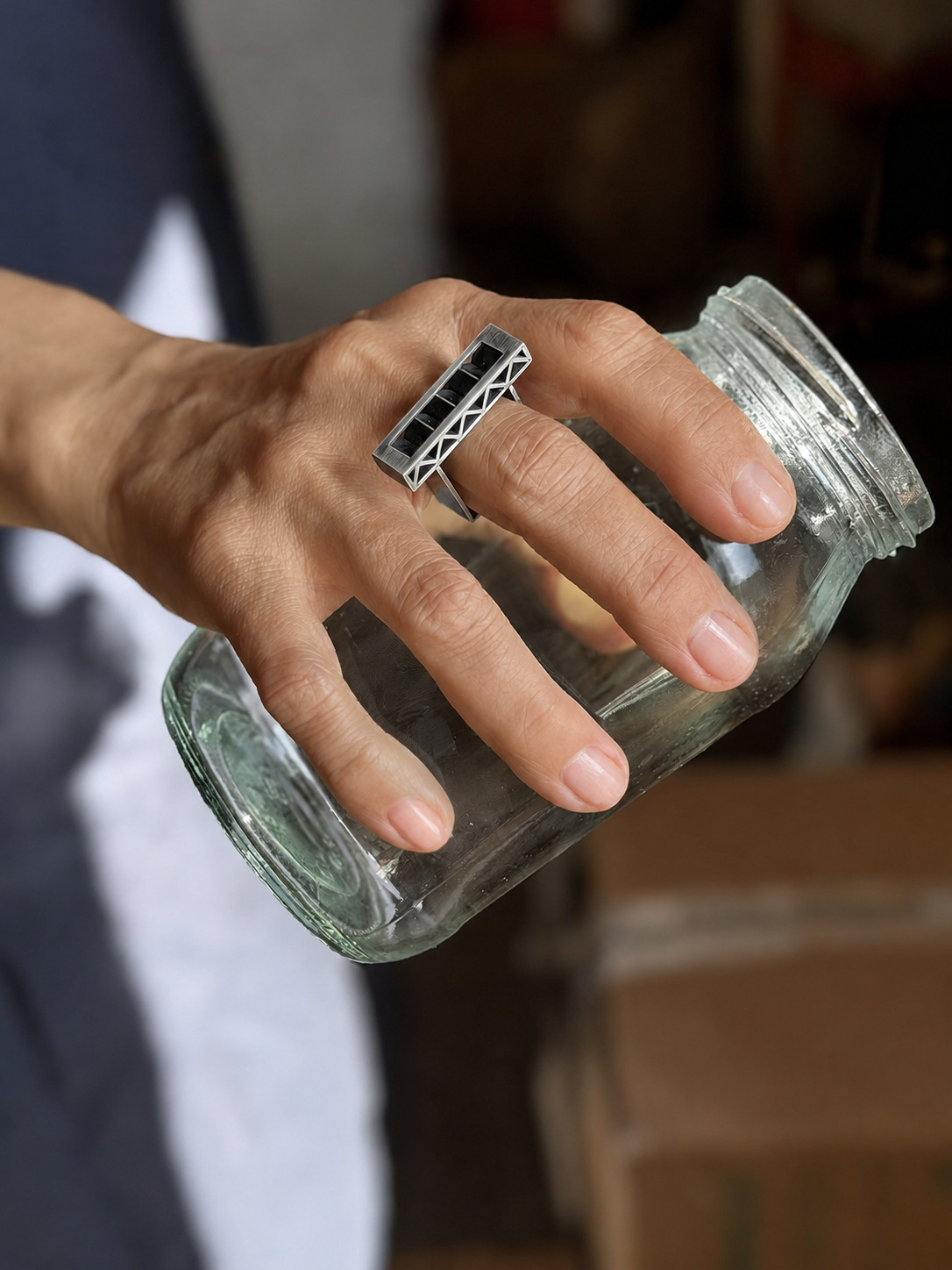
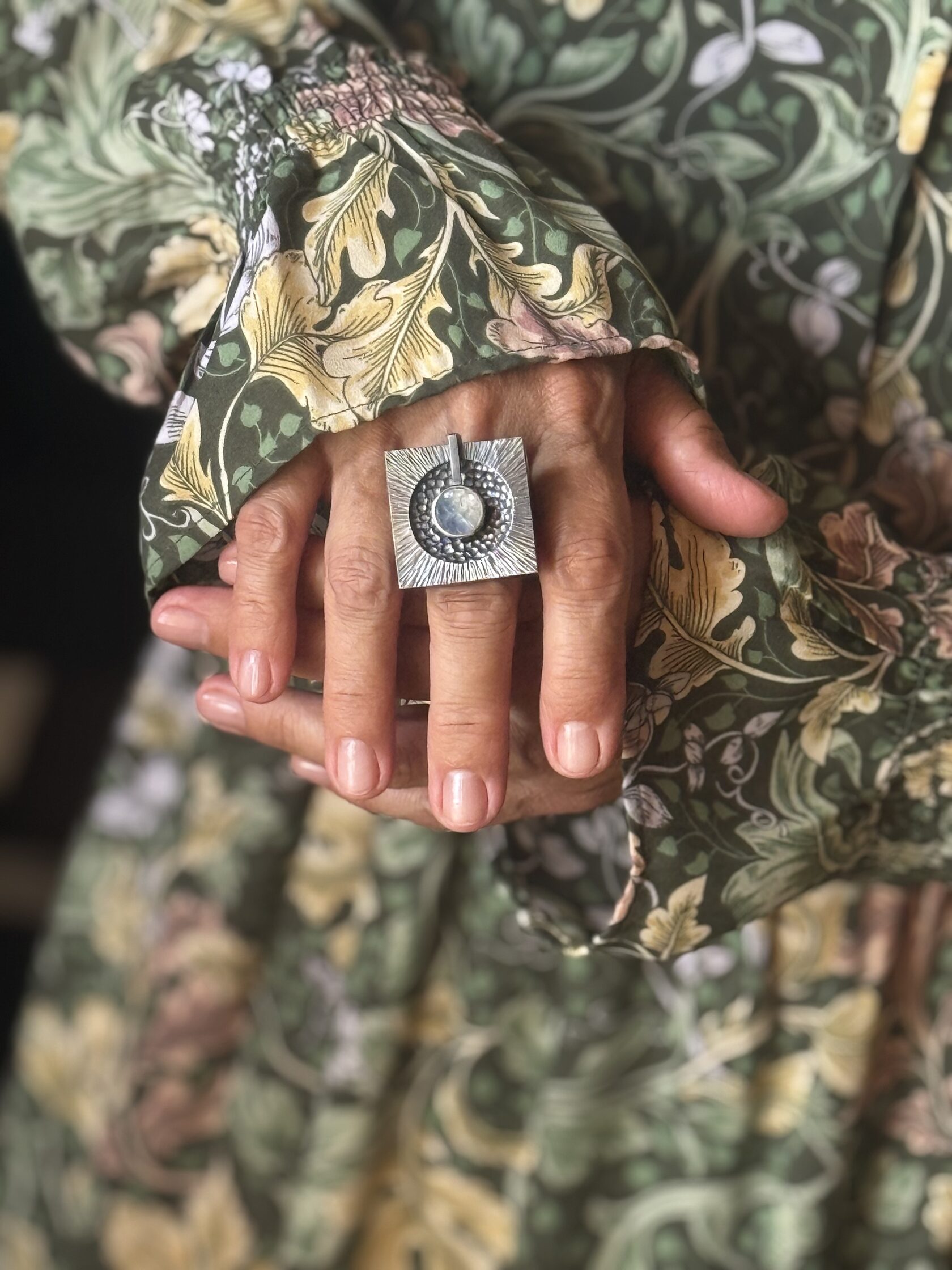
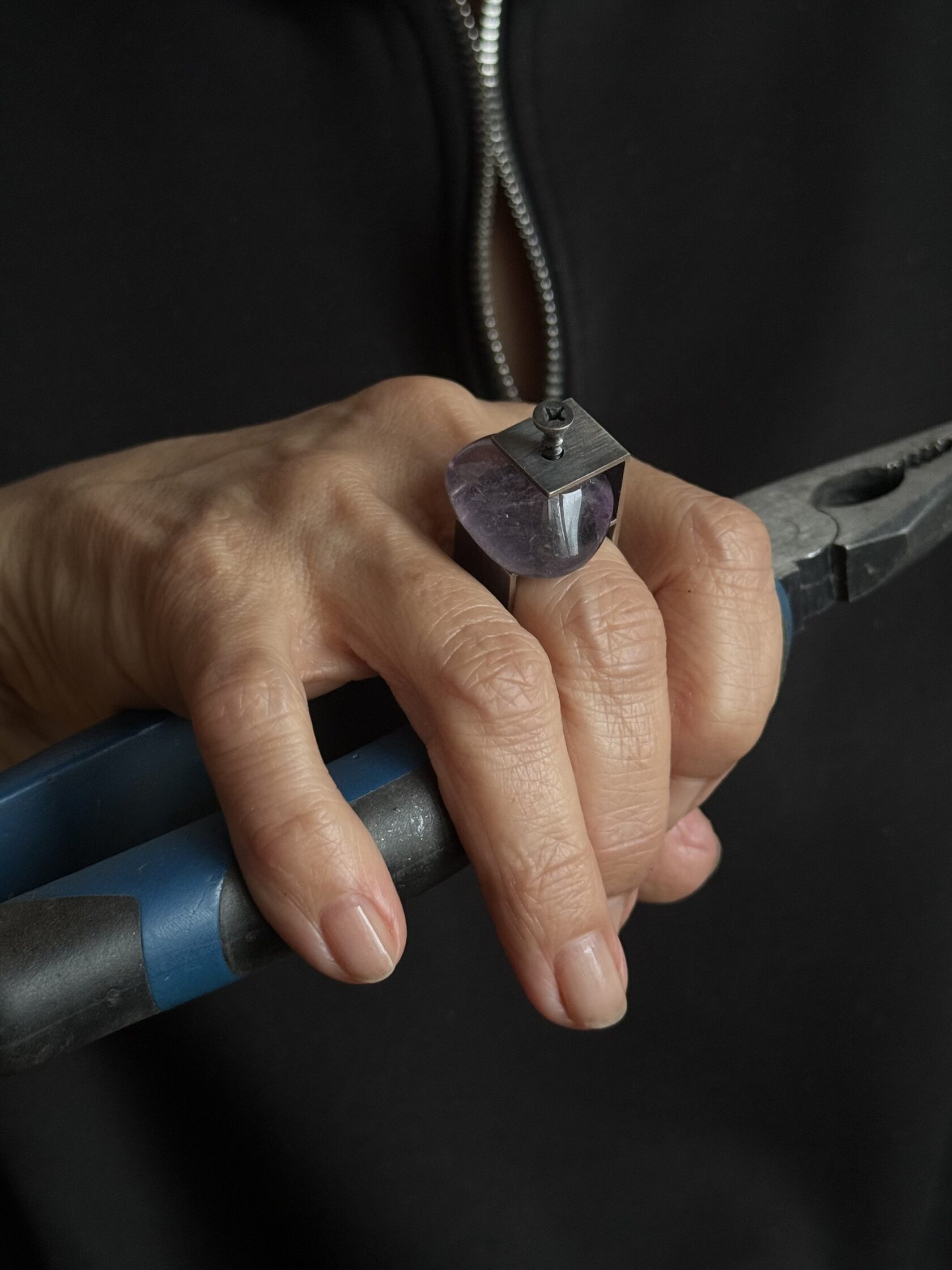
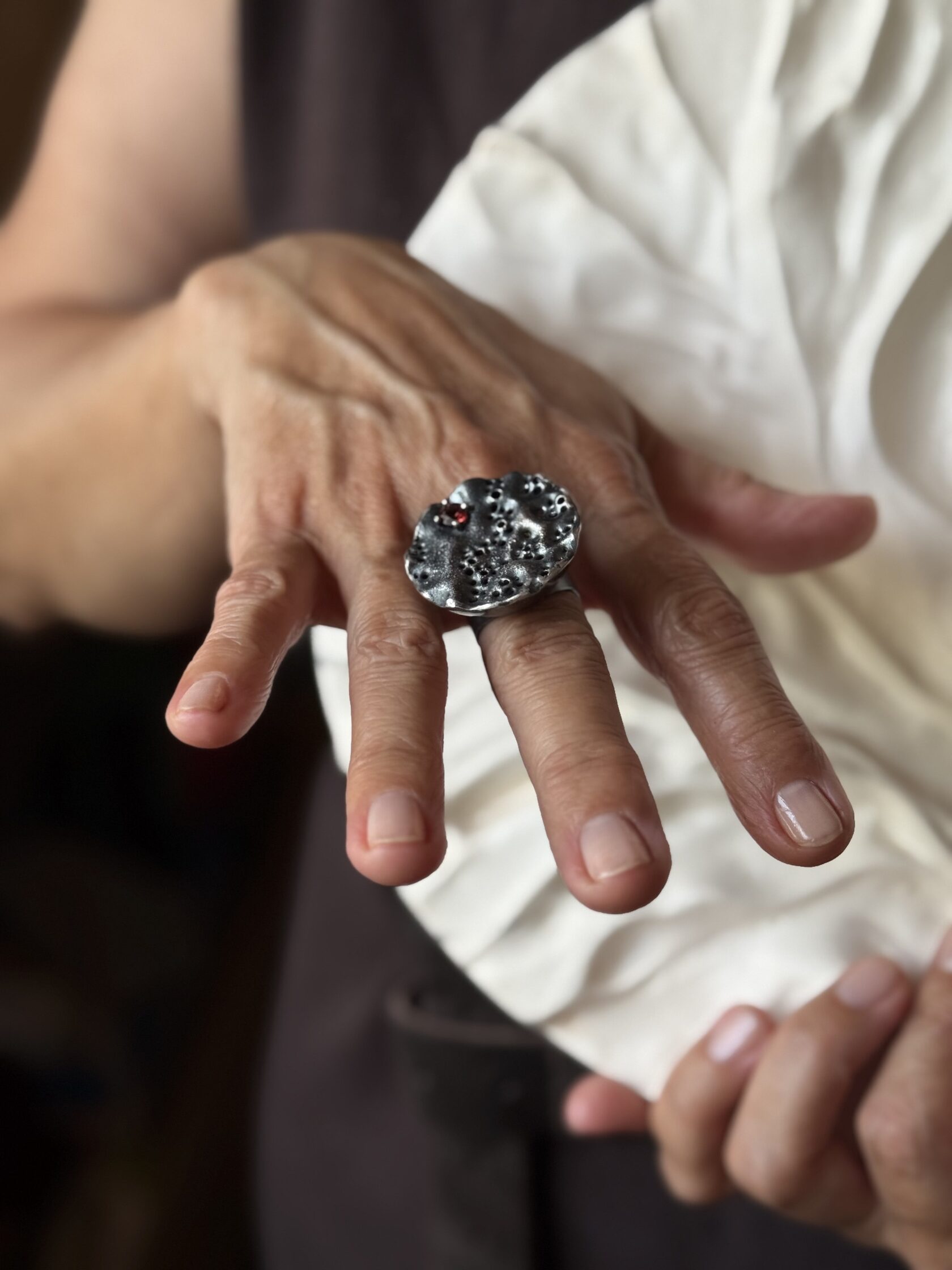
In one sentence
Artisan jewelry generally refers to jewelry created within a small-scale, maker-led practice where the maker controls a substantial part of the path from idea to finished object. The key is not handwork alone, but authorship — who makes the decisions about form, material, production and the final character of the piece.
Artisan jewelry is not one style
There is no single artisan look. Artisan jewelry can be minimal, geometric, organic, rough, classical or sculptural. A perfectly polished surface can still be artisan, while visible tool marks alone do not make a piece artisan.
The more useful distinction is the character of the practice: who develops the object, who makes the key decisions and how directly the maker remains involved in production.
What makes jewelry artisan
Artisan jewelry is not a legally or academically fixed category with one universal definition. In practical use, five factors are useful as orientation — not as a test of authenticity.
Tool marks, relief or an intentionally hand-worked surface can be part of some makers’ aesthetics, including some NP Studio works, but they are not required for a piece to be artisan.

Artisan vs handmade
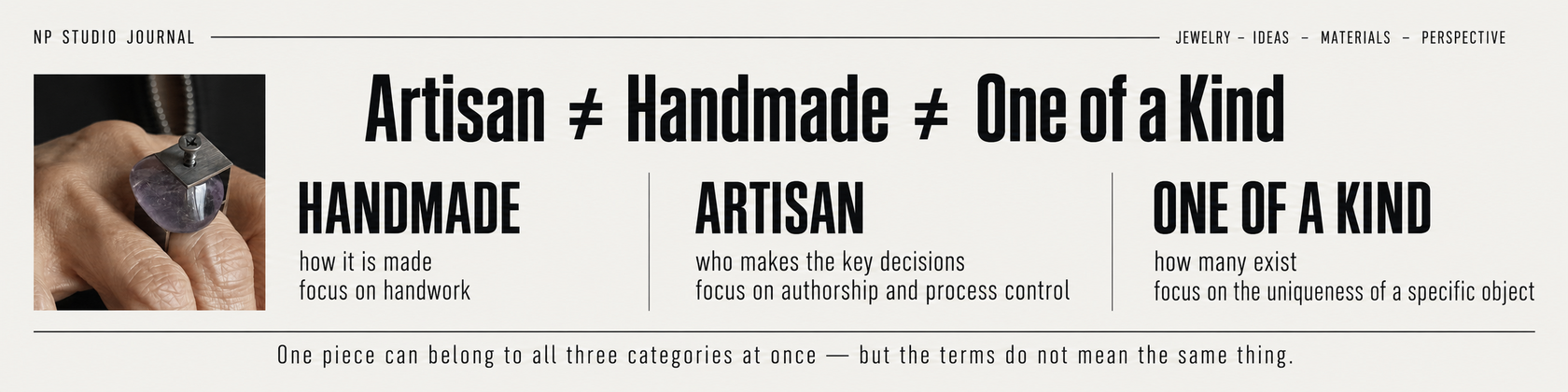
Handmade primarily describes how something is made: handwork plays an important role. Artisan says more about who shapes the practice: authorship, process control and direct maker involvement.
| Term | Main emphasis | What it does not automatically mean |
|---|---|---|
| Handmade | Handwork and method of making. | It does not guarantee one style, uniqueness or a maker-led practice. |
| Artisan | Maker-led authorship, process control, small scale and direct involvement. | It does not require visible tool marks and does not exclude casting, CAD or 3D modelling. |
One object can be both handmade and artisan. The technology question is covered separately in Handmade vs Cast Jewelry →.
Artisan vs mass-produced
Mass-produced jewelry is generally organized around standardization, repeatability and larger scale, with design, production and quality control potentially distributed across different roles. Artisan practice usually keeps a shorter line between the maker and the object being produced.
This does not mean mass-produced jewelry is inherently low quality. Well-managed serial production can deliver excellent consistency and execution. The distinction here is about production structure and the degree of direct maker control.
Artisan vs one of a kind
One of a kind means that the specific object is not repeated as an identical unit. Artisan describes the structure of a maker-led practice. Artisan jewelry can therefore exist as a small series.
The categories overlap without meaning the same thing. A piece can be both artisan and one of a kind; another can be artisan and part of a repeatable small collection.
Artisan vs art jewelry
Art jewelry is more closely associated with artistic practice, concept and jewelry used as a medium. Artisan jewelry more directly describes maker-led production, craftsmanship, authorship and the maker’s role in the process.
The categories can overlap, but neither is an automatic subset of the other. For the broader field, see What Is Contemporary Jewelry? →.
Why people choose artisan jewelry
- They want work by a particular maker. Authorship and responsibility for key decisions matter to them.
- They are looking for less standardized form. Small-scale practice can allow greater variation across pieces and series.
- They care about material and surface. Not only what the material is, but how it is treated and why it was selected.
- They may want a small edition or a singular object. Absolute uniqueness is not required, but it can be part of the appeal.
- They value direct contact with the maker. That becomes useful for sizing, modifications or custom work.
These are reasons people may choose artisan work, not evidence that it is automatically better than other production models.
How to look at artisan jewelry
Instead of searching for one visual sign, ask a few practical questions.
- Who is the maker? Is it clear who shapes the design and the direction of the practice?
- Who makes the key decisions? Does the maker control form, material and final character?
- What is the maker’s role in production? How directly are they involved in making or closely controlling the piece?
- How does the material work? Is material choice and treatment connected to the design?
- How standardized is the object? Is it fully industrial, a small series or a piece with substantial variation?
These are ways to understand a practice, not a formal certification of whether something is “truly artisan.”
NP Studio as a maker-led example
Ruslan Murtazin is the maker behind NP Studio, an independent contemporary jewelry practice focused on handmade sterling silver objects, sculptural rings and one-of-a-kind work.
At NP Studio, design and a substantial part of the work on form, surface and the final character of the jewelry remain in the hands of one maker. Those facts describe NP Studio specifically; they should not be turned into universal requirements for all artisan jewelry.
Sterling silver is central to the studio’s material practice, but silver alone does not make a piece artisan. For the material itself, see What Is Sterling Silver? →.
See how a maker-led approach appears in finished work
Can artisan jewelry be made in a series?
Yes. A maker can repeat a construction, develop one form in several sizes or work in small series. Maker-led practice does not require every object to exist only once.
What matters more is whether authorship and process control remain present: who defines the series, chooses the materials, decides what can vary and determines the final result.
Buying from an independent maker
If you are considering jewelry from a small independent practice, look at finished work first, read the material and process information and check whether the piece is repeatable or individually varied. For rings, sizing matters; for custom work, ask what can be changed in the form, stone or details. It is also useful to confirm production time and shipping before ordering.
These questions do not prove whether a piece is “authentic.” They simply help you understand how the practice works and what to expect. For a fuller buying-oriented article, use the separate ring selection guide →; this page stays focused on what artisan jewelry means.
Frequently asked questions
Related NP Studio materials
The difference between fabrication and casting is covered in Handmade vs Cast Jewelry. The broader field is discussed in What Is Contemporary Jewelry?. For jewelry as a three-dimensional object, continue with Jewelry as Wearable Sculpture. Real objects are available in NP Studio Works.
