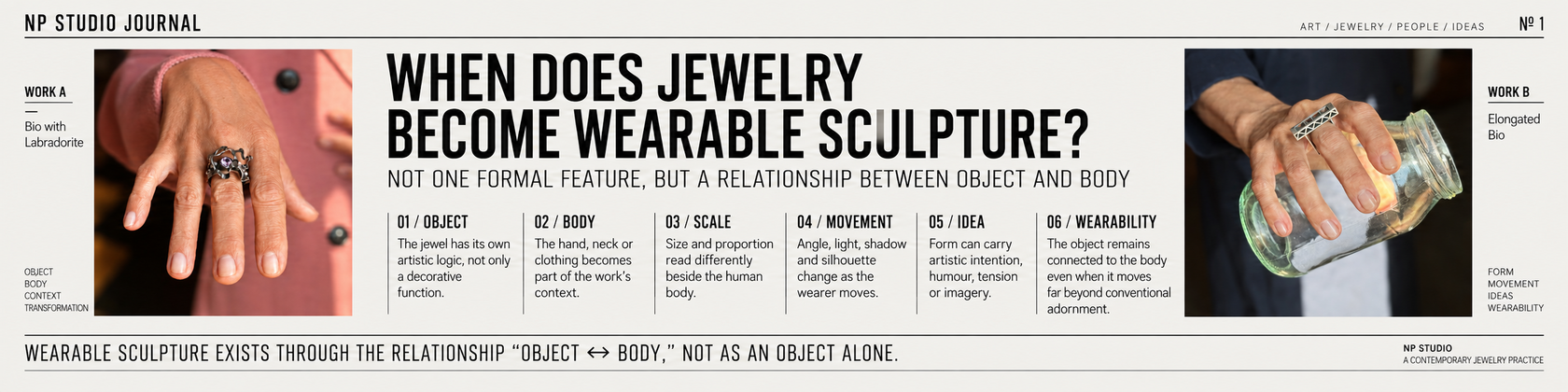
Bio with Labradorite
The form emerges through process and moves beyond the logic of “stone plus setting” toward an autonomous object.
NP STUDIO / JOURNAL / WEARABLE SCULPTURE
Wearable sculpture begins where jewelry functions not only as adornment but as an independent three-dimensional artistic object. The body does more than carry such a form: it completes perception through scale, viewpoint, movement and context.
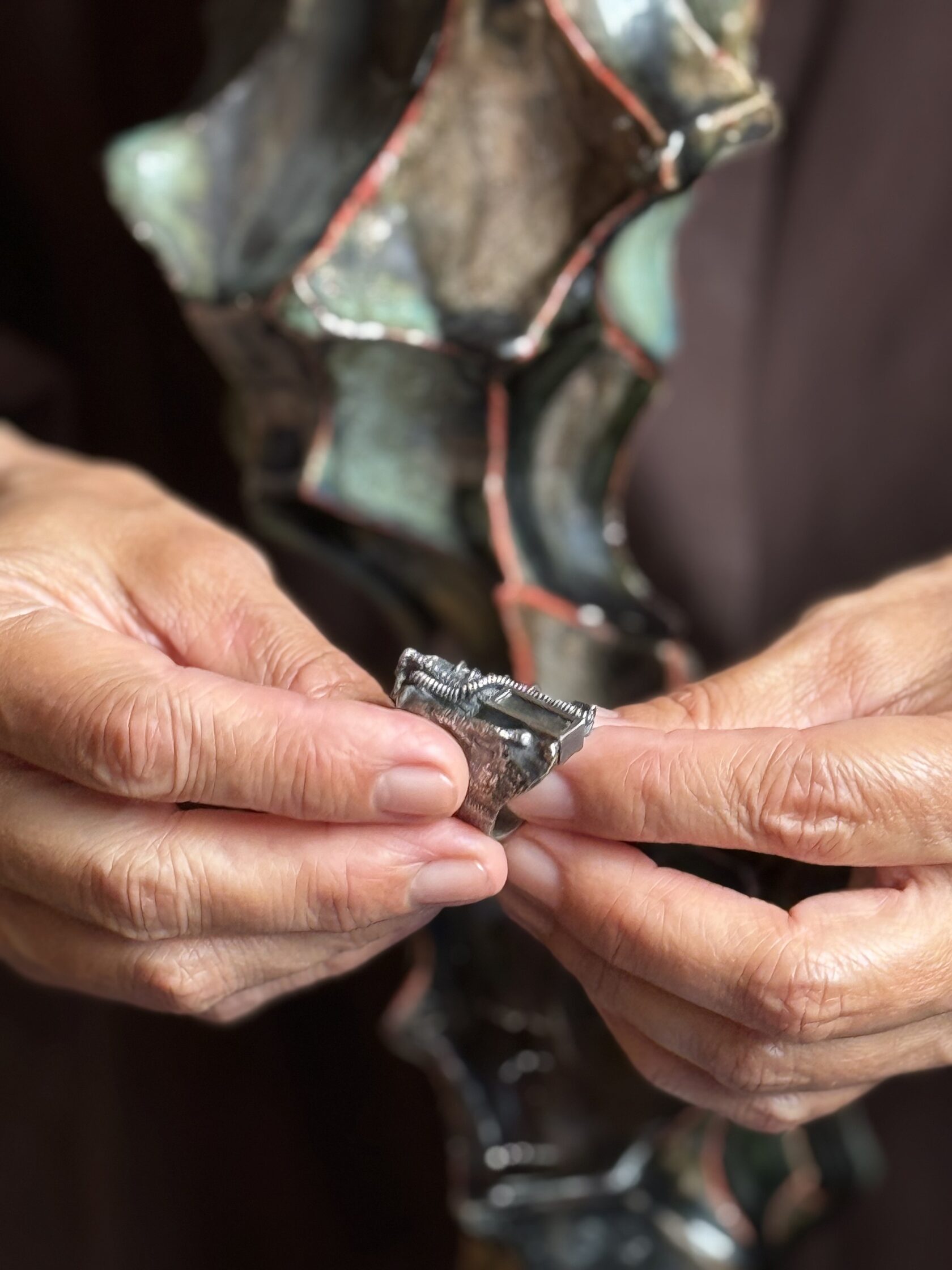
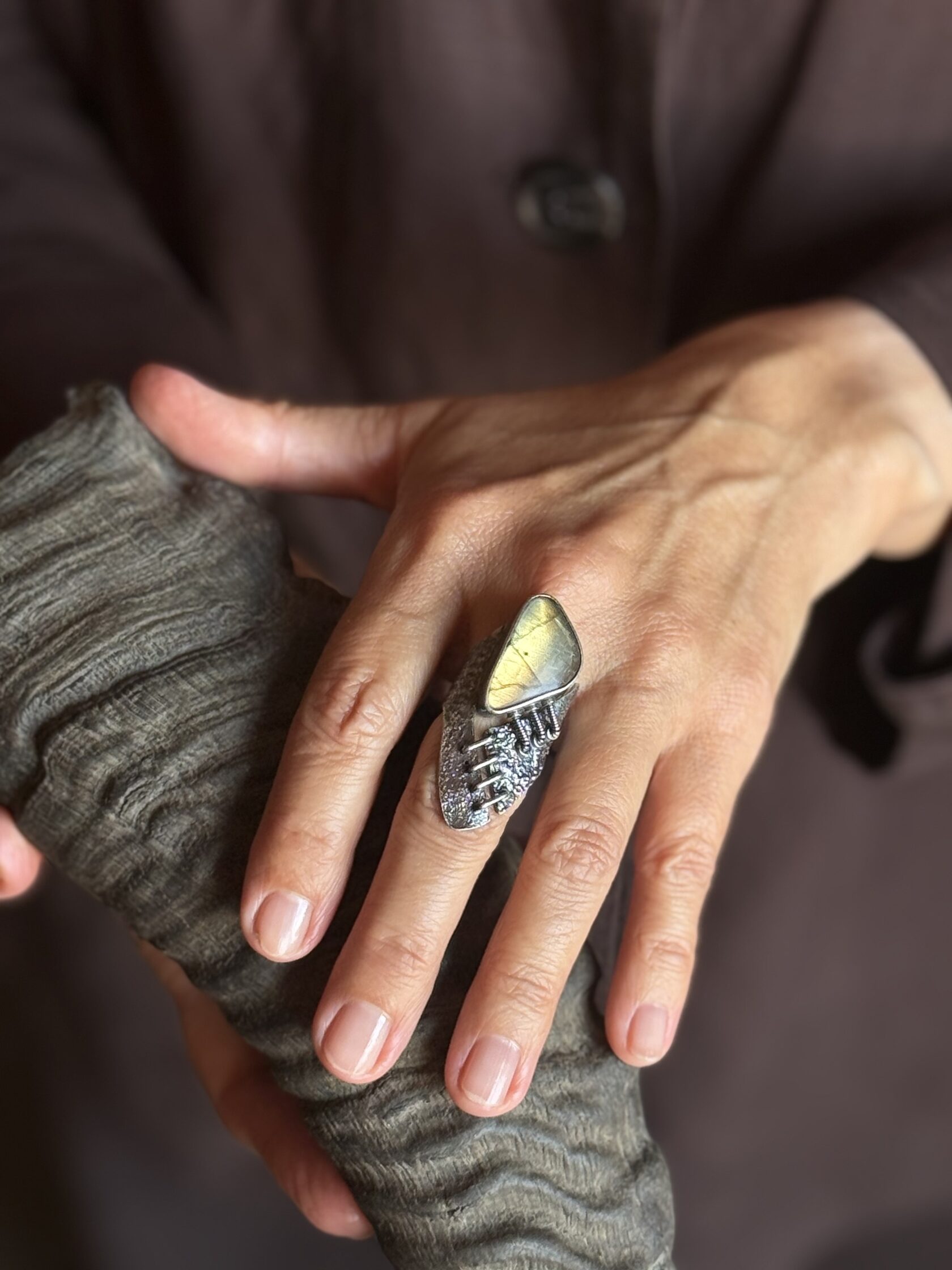
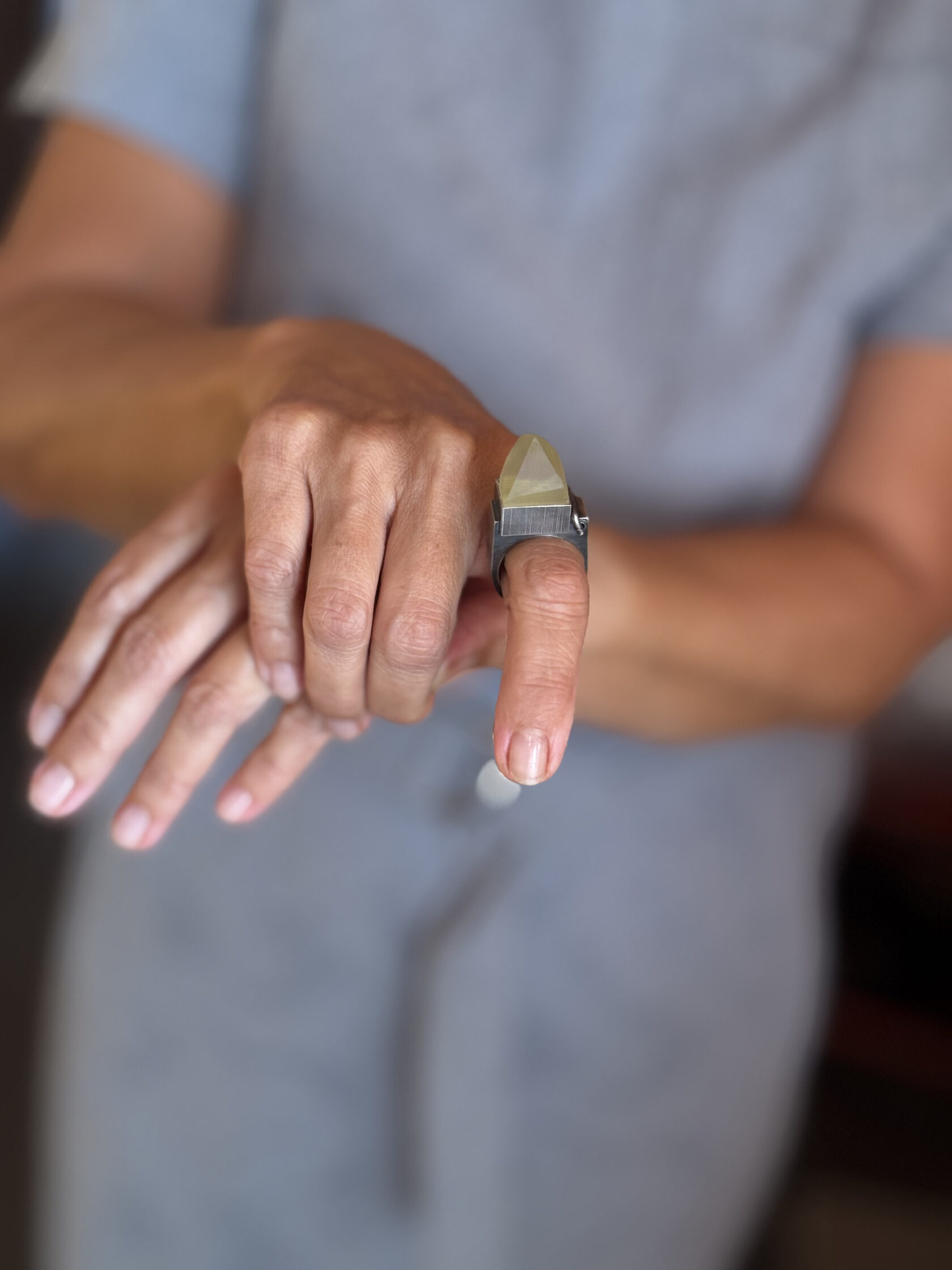
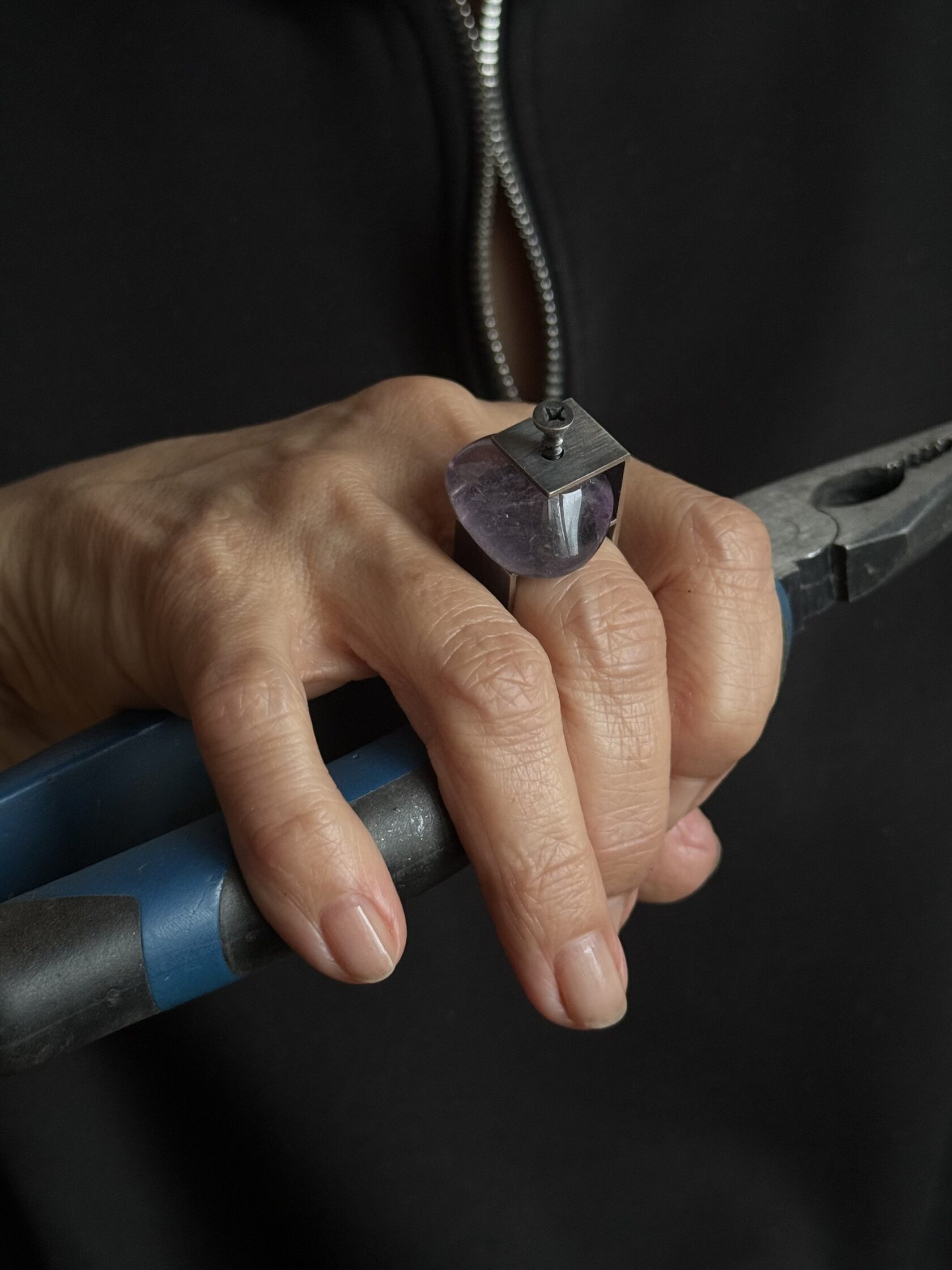
Wearable sculpture is jewelry or a body-worn object that functions not only as adornment but as an independent artistic form. The body does more than carry it: it provides scale, viewpoint, movement and context that change how the work is perceived.
Jewelry is connected to the body, ways of wearing and practical function. Sculpture is traditionally understood as an object in space. Artist-made jewelry can combine both logics: the work remains jewelry yet also begins to exist as an artistic object with its own form and meaning.
That is why wearable sculpture is most useful as a curatorial or descriptive term rather than a rigid official class. It helps describe work positioned between adornment, object and sculpture. For the wider artistic context, see What Is Contemporary Jewelry?.
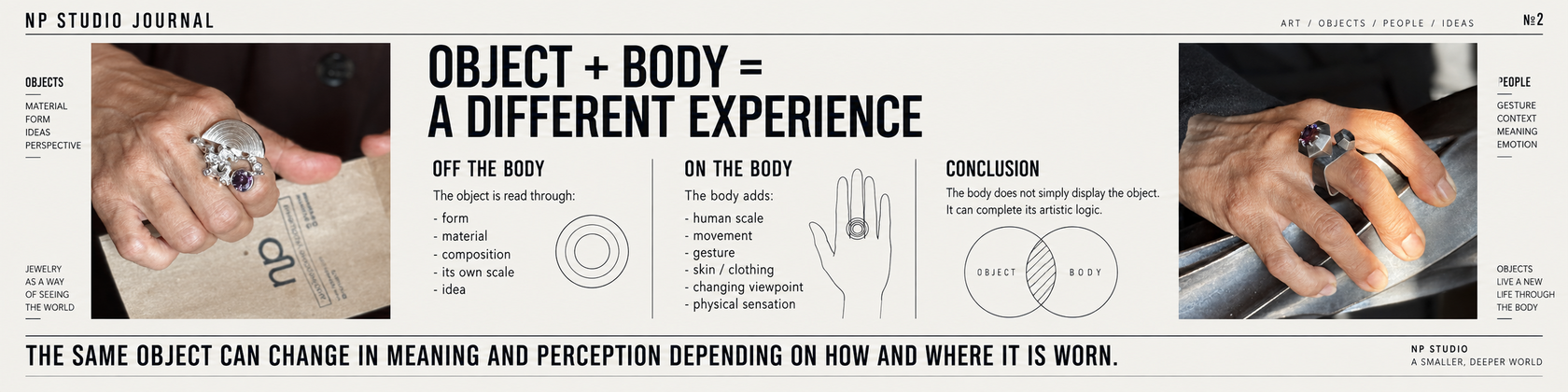
This is the centre of the topic. In writing about Art Smith, Cooper Hewitt notes that the fullest expression of his jewelry depends on interaction with the human body. The line of the hand, neck, face and shoulder does not merely support the object; it completes the form.
Scale, orientation, skin, clothing and bodily placement all change the way the work is perceived. Wearable sculpture is therefore not simply an object that can be worn; it is an object whose artistic logic is completed by the body.
As a body-worn object moves with the wearer, angle, shadow, reflection, rhythm and relation to gesture all change. Jewelry is not always a static display object.
MAD’s material on Body Ornament makes this clear: movement changes the appearance and perception of wearable art. The same object seen on a motionless photograph and on a moving body can become two different experiences.
One key question is whether the work retains an autonomous visual logic when removed from the body. Sometimes it does: the object remains convincing as a small sculpture or artistic form. But this is not an absolute test.
Some wearable works fully reveal themselves only on the body. It is therefore better to see a spectrum, from objects that need the body as context to objects that can work both on and off the body.
Wearable means physically possible to wear and connected to the body. It does not mean delicate, conventional, everyday or visually invisible.
Wearable sculpture can be elongated, ironic, unusual, complex and highly visible. But it does not have to become intentionally unsafe or unworkable in order to count as art. For practical styling of visually prominent rings, see How to Wear and Style Statement Rings.
Even artistic freedom operates within the physical body. Contact zones, weight, balance, sharp edges, snagging and behaviour in movement remain real constraints.
Wearable sculpture therefore does not cancel wearability. It simply cannot be reduced to comfort as the only criterion.
Off the hand or neck, an object may look relatively small. On the body, its proportions can radically shift perception. An elongated form may visually extend the finger, while a small object can become strong precisely because of its bodily context.
Elongated Bio shows this clearly: its elongated biomechanical form reads differently on the finger than on a neutral surface. The body becomes part of scale.
Wearable sculpture is not defined by preciousness. In its artist-jewelry context, MAD shows that makers use both precious and non-precious materials. Metal, glass, textile, plastic or found objects can all participate in wearable work.
What matters is not the material by itself but the artistic relationship between the object and the body.
In Picasso to Koons: Artist as Jeweler, MAD uses the phrase wearable sculpture for jewelry objects made by artists working in wider fields of art. For them, jewelry can become an extension of an existing artistic language at another scale.
This does not mean artist-made jewelry is automatically superior. The point is that jewelry can function as another mode of art-making, alongside drawing, painting, object-making or sculpture.
Sculptural jewelry primarily describes formal qualities: volume, spatial organisation and silhouette. Wearable sculpture places more emphasis on the relationship between object, body and artistic idea.
There is large overlap, but the terms are not synonyms. Not every sculptural jewel functions as wearable sculpture, and not every wearable sculpture is best described through the formal checklist of sculptural jewelry.
Art jewelry is a broader field. Wearable sculpture is one possible mode within or alongside that field, especially when jewelry begins to operate as a body-based object and a more autonomous artistic form.
Wearable sculpture may be art jewelry, but art jewelry does not have to be wearable sculpture.
A ring approaches wearable sculpture when the stone ceases to be the only centre of meaning and the metal, line, structure, process or idea becomes equally important or more so.
Bio with Labradorite is useful here because its fire-formed primary shape, springs, ties and structural details produce an object that goes beyond “stone plus setting”; the current work page explicitly describes it as close to a small sculpture. Amethyst with a Screw moves in a different direction, toward an ironic object on the boundary of jewelry, strange mechanics and idea.
Placement on the body changes meaning. The same object can be perceived differently on the finger and as a pendant: orientation, scale, gesture, relation to clothing and bodily movement all change.
Ring for a Friend is especially instructive because it can be worn either as a ring or as a pendant. That is not only a functional option; it is a change of context, and with it a change of artistic experience.
The form emerges through process and moves beyond the logic of “stone plus setting” toward an autonomous object.
An elongated biomechanical silhouette changes the reading of the hand and becomes different when placed on the body.
The same object changes its character depending on whether it is worn on the finger or suspended from the body.
Idea and irony become more important than conventional jewelry logic, bringing the ring to the boundary of objecthood.
Jewelry comes close to wearable sculpture when it functions not only as adornment but as an independent three-dimensional artistic object whose meaning and perception are completed through the body, scale and movement.
It is jewelry or a body-worn object that functions not only as adornment but as an artistic form whose perception is completed through the body, scale and movement.
Ordinary jewelry may focus primarily on adornment and function. Wearable sculpture more strongly emphasises objecthood, artistic intention and the body as part of the work.
Sculptural jewelry is more focused on formal spatial qualities of form. Wearable sculpture more strongly emphasises the relationship between object, body, movement and artistic meaning.
No. Scale can intensify impact, but wearable sculpture is not defined by size. What matters more is how the object is conceived in relation to the body.
Comfort cannot be ignored entirely: contact zones, weight and balance remain real constraints. But comfort is not the only criterion of artistic value.
Yes. A ring can approach wearable sculpture when it operates as an independent object and when body, scale and movement materially change the way it is perceived.
Art jewelry is a broader field. Wearable sculpture is one possible way artistic jewelry can operate on the boundary between object and body.
Sometimes yes. Some works retain autonomous visual logic off the body, though others reveal themselves fully only in wear. It is a matter of degree rather than an absolute test.
