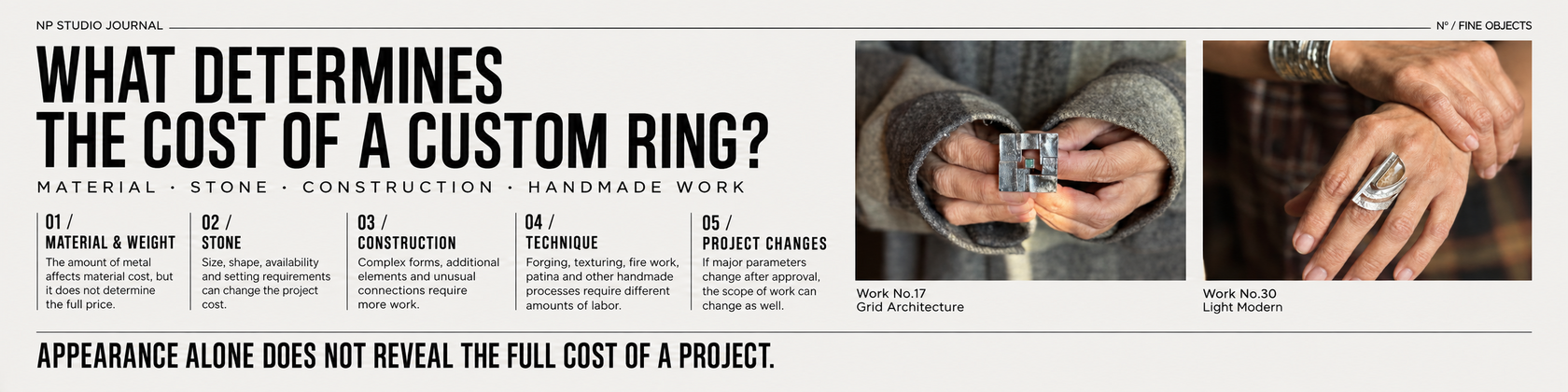
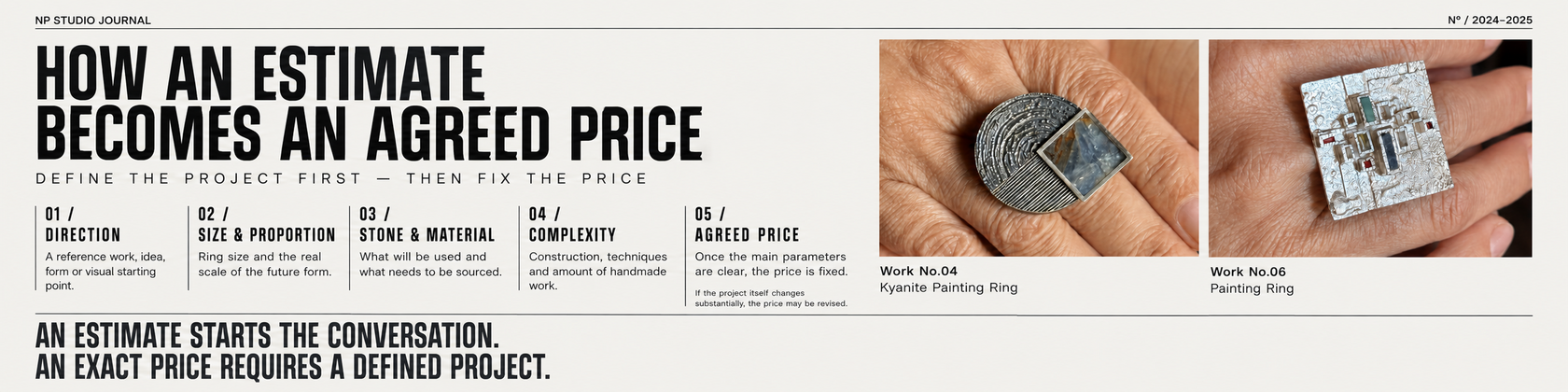
There is no single universal price for a custom ring. Cost depends on material, weight, stones, construction, techniques and the amount of handmade work. At NP Studio, the exact price is determined after the project is discussed and is fixed once the main parameters are agreed.
Why there is no single universal price for a custom ring
The question sounds simple until the actual parameters of the ring are defined. Two rings that look similar from a distance can use different amounts of silver, different stones, different joining methods and very different amounts of manual work. A single number without a defined project therefore says very little about the final piece.
For a custom commission, price belongs to a specific technical and artistic task. It combines material cost with work: developing the construction, preparing the metal and stone, forming or joining elements, creating the surface, assembling the ring and checking the finished piece. Even when an earlier NP Studio ring is the starting point, a new version can change in size, proportions, stone, surface and construction.
This is why the price guide attached to an archived or existing work should not automatically be transferred to a new commission. It describes that particular ring. A new ring needs a new assessment.
Short answer
The price of a custom ring is shaped by the combined parameters of the project — not by the photograph alone and not by a single technique.
What affects the cost of a custom ring
The clearest way to understand price is to separate the main drivers. None of them acts alone. A simple-looking ring may use a large amount of metal, while a lighter structure may require many precise handmade operations. A modest stone can still require a demanding setting. A minimal surface can be technically difficult because the proportions must be exact.
Material
NP Studio works primarily in sterling silver. Material cost depends not only on the metal itself but on how it is used: a broad shank, a substantial top, separate plates, fused fragments or several connected parts all require different amounts of silver and different handling.
Metal weight
More silver usually increases the material component of the price. Weight is not a complete pricing formula, however. A 20-gram ring is not automatically more expensive than every 15-gram ring because stones, construction, surface work and the number of operations can change the overall job.
Stone
Cost can be affected by whether a stone is used, its size, shape, availability and whether a particular insert must be sourced. The setting matters as well: an unusual stone may require a custom seat or force the proportions of the whole ring to change.
Construction complexity
Multiple elements, unusual joins, projections and technically dependent parts add work. The more elements depend on one another, the more carefully each stage has to be resolved because changing one detail can affect the geometry of the whole piece.
Surface and technique
Forging, fire-developed texture, fused silver fragments, patina, relief and other handmade processes involve different sequences of work. No single technique is always more expensive. What matters is how much work the technique requires in the specific ring.
Size and proportion
Changing ring size is not always just a matter of making the shank longer or shorter. In wide, elongated or multi-part rings, size can alter overall proportions, stone placement, spacing between elements and total weight.
Changes after approval
Once the main parameters are agreed, the jeweler is pricing a defined task. If the stone, material, size, form or number of elements changes afterwards, the scope of work changes too. The price may therefore need to be revised with the project.
Why a custom ring cannot be priced from a photograph alone
A photograph can show silhouette and surface, but it rarely reveals the full construction. From one image, it is difficult to know the real silver weight, thickness of parts, number of joints, hidden structural elements, stone-setting method or sequence of handmade operations. Two similar-looking rings may therefore be very different jobs.
Minimal appearance is especially easy to misread. A visually simple ring may contain a substantial amount of metal, require precise fit or demand extensive hand-forming. A quiet surface may take several stages to make clean. Conversely, a visually complex ring is not automatically the most expensive if the techniques are familiar, the stones are available and the structure is technically direct.
A realistic estimate starts by defining what matters in the new version: ring size, material, stone, approximate weight and the elements of the reference piece that should guide the new commission.
Practical rule
A photograph shows direction. A price requires the construction and parameters of the future ring.
An estimate and an agreed price are not the same thing
A price guide helps establish the approximate order of cost before every detail is defined. On individual NP Studio work pages, a price guide refers to that specific published piece — its size, weight, stone, surface and construction. It is not a universal tariff for future custom rings.
An agreed price belongs to a defined commission. NP Studio's current Terms of Order state that the exact price of custom work is determined after discussing size, weight, stone, material, complexity and timing. Once agreed, the price is fixed. It may change only if the buyer changes the request itself — for example the size, stone, material, form or scope of work.
Estimate
Helps establish a realistic price range and start the conversation before every parameter is fixed.
Agreed price
Applies to a specific, defined project after its main parameters are clear.
How a budget helps shape the project
Sharing a comfortable budget at the beginning is useful rather than awkward. NP Studio's current Custom Work page does not set a fixed minimum budget; instead, it asks for a comfortable range so that the scale, weight, stone, complexity and realistic scope of the work can be discussed from the start.
A budget helps priorities become visible. If a particular stone is essential, the rest of the ring can be developed around that decision. If the main priority is a substantial silver form, more of the available budget may go into metal weight and hand-forming. If the surface is the central idea, the project can focus on texture rather than adding unnecessary elements.
This does not mean that a smaller budget produces a “bad” ring. It means that budget is one of the design constraints. Clear constraints make it easier to propose a coherent project instead of developing an idea in an expensive direction and then having to reverse it later.
Why a simpler-looking ring is not always cheaper
Visual simplicity and technical simplicity are different things. A broad, quiet form may use a considerable amount of silver. A minimal ring may require very precise fit and careful hand-forming. A restrained finish may involve several stages because joins and tool marks need to be controlled rather than hidden by ornament.
The reverse is also true. A ring with several visible textures is not automatically the most expensive. If the maker knows the processes well, materials are available and the construction is technically straightforward, its cost may sit close to that of a visually simpler piece.
For pricing, it is more useful to compare weight, stone, number of parts, joining method, surface and amount of handmade work than to count visible decorative details.
NP Studio examples: how different parameters change the price guide
The examples below are not a price list. They are current published works that show why different combinations of metal, stones and techniques lead to different price guides. The figures belong to the specific work pages that were checked before this article was prepared.
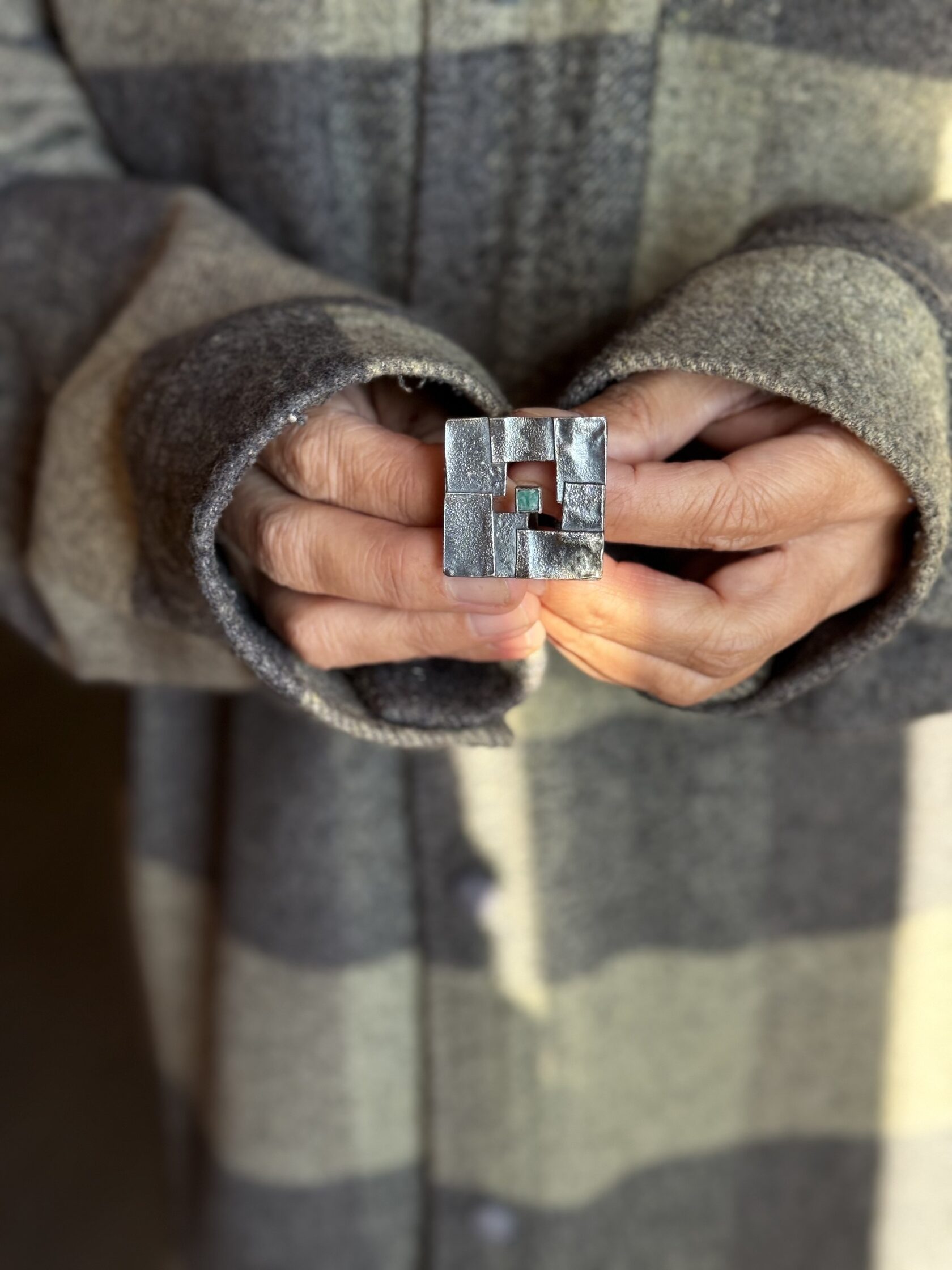
11.5 g of sterling silver, amazonite and a surface assembled from small silver fragments fused with fire. The metal weight is moderate, while the surface itself is produced through a distinctive process.
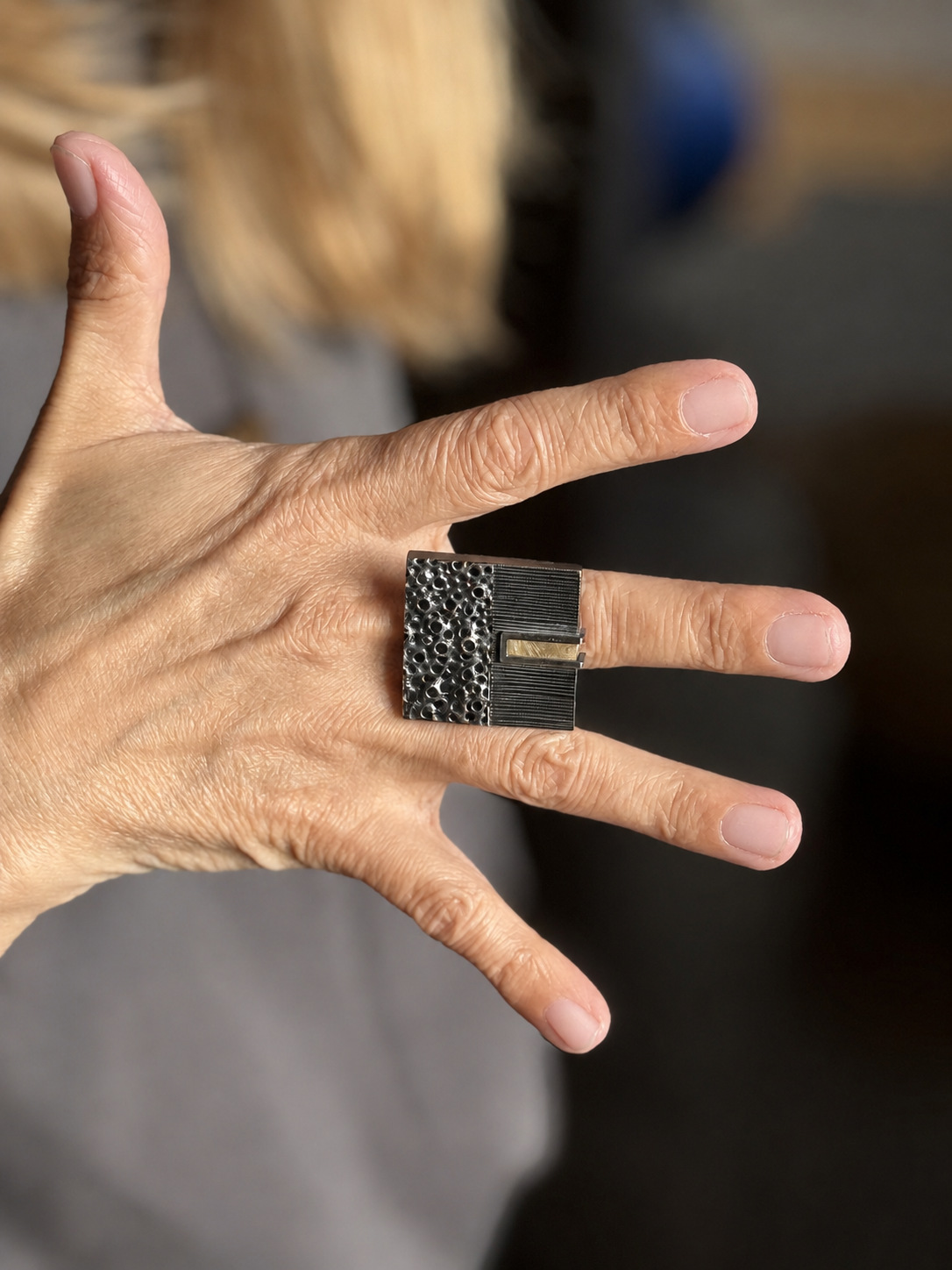
Approximately 20 g of silver, rutile quartz and two contrasting surface zones. Here higher metal weight is combined with a stone insert and a rectangular composition.
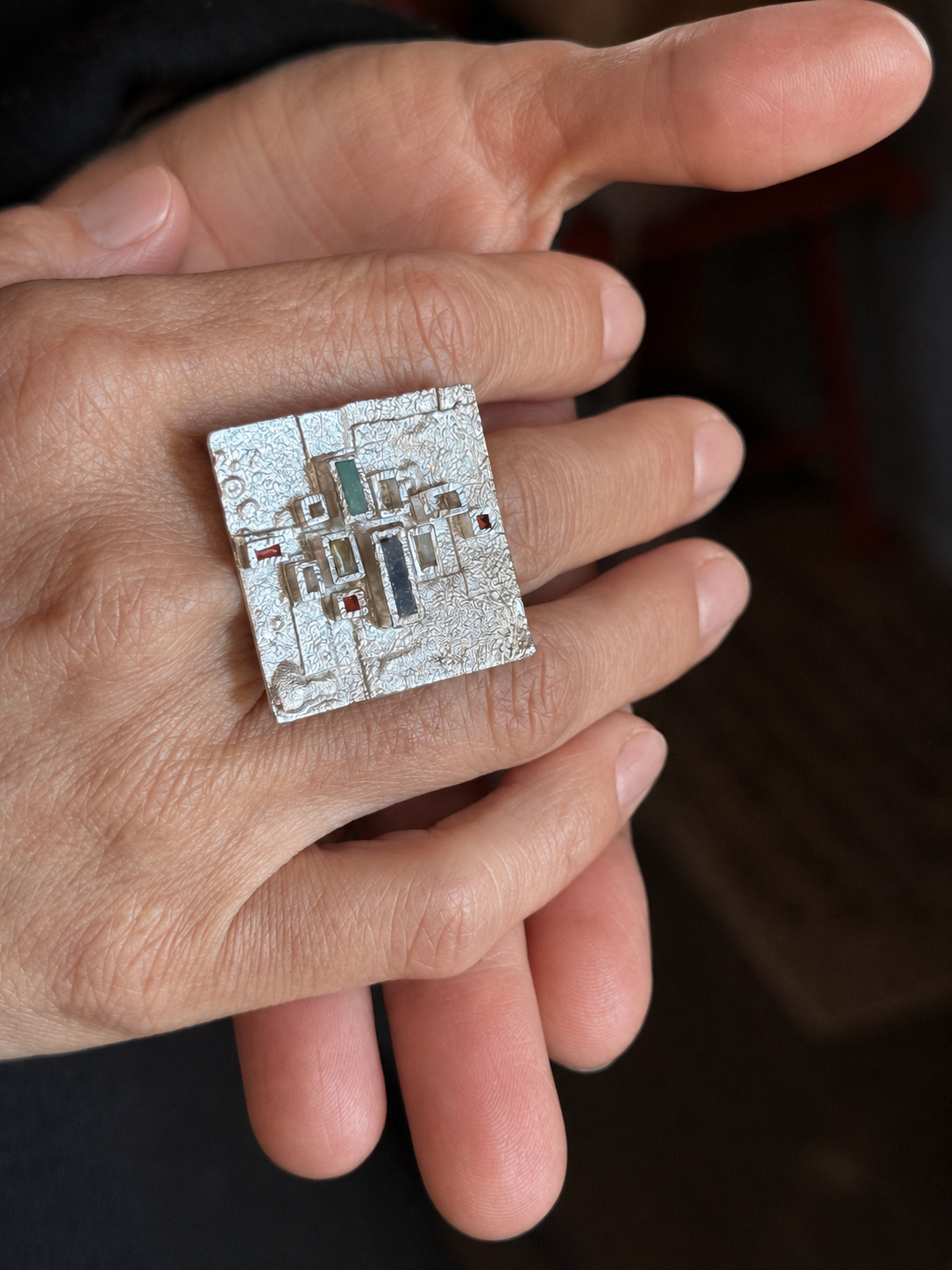
15 g, kyanite, amber, nephrite, vitreous enamel and a surface made from fused metal fragments. Cost is shaped by more than weight because several materials and processes are involved.
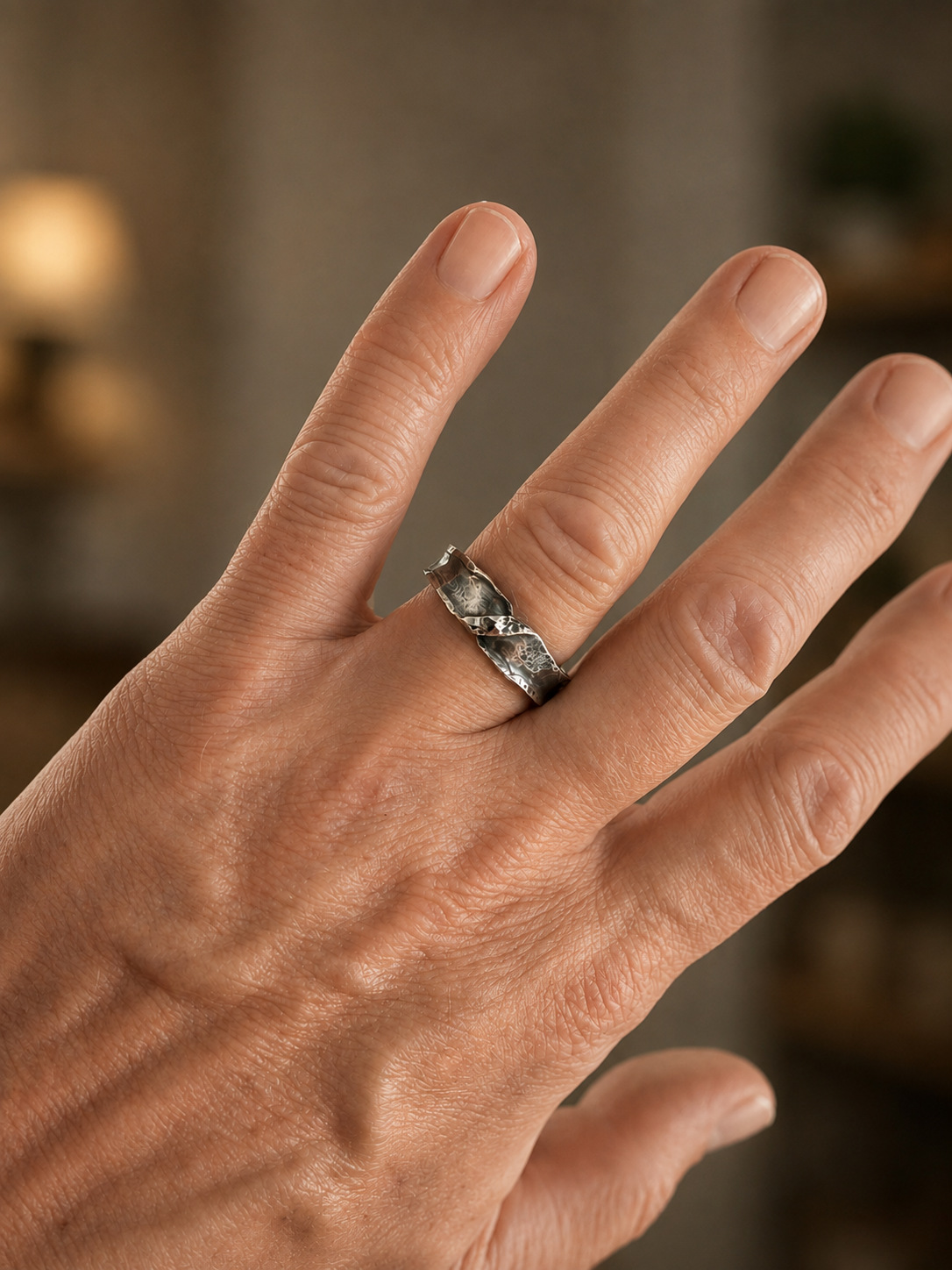
No stone and no complex upper construction, but the form is created almost entirely with hammers. Hand forging, patina and edge finishing are central to the work.
Current page guide: RUB 12,000
These figures should not be transferred automatically to a new commission. A different size, weight, stone, surface or construction creates a different project and therefore a different estimate.
How NP Studio determines the price of a custom commission
In NP Studio practice, price does not begin with a universal tariff. The conversation starts with a direction: an earlier work, a form, a stone or a new idea. The client can then provide the ring size, preferred stone, comfortable budget and the features that matter most in the future piece.
01DirectionA work, form, stone or idea establishes the starting point.
02ParametersSize, material, stone, budget and key preferences are clarified.
03AssessmentWeight, construction, surface and the amount of handmade work become clearer.
04PriceA preliminary or exact price can be attached to the defined task.
05AgreementOnce the main parameters are agreed, the price is fixed.
06ChangesIf the request materially changes, the price may need to be revised.
This describes NP Studio practice, not an industry-wide rule. Other independent jewelers may use different estimating, deposit and approval systems.
What to tell the jeweler to get a more realistic estimate
A long technical brief is not necessary for an initial price conversation. The most useful details are the ones that materially affect cost:
A link to a work you like. It establishes direction without implying an exact copy.
Ring size. Size affects scale, proportions and sometimes metal weight.
Stone preference. If a particular insert matters, say so early.
Approximate budget. A comfortable range helps define a realistic scope.
Key preferences. Explain what matters most: mass, texture, silhouette, colour or a specific feature.
A full guide to preparing a commission is a separate topic. This short list appears here only because these details directly affect the usefulness of a price estimate. For a detailed checklist, see What Information Does a Jeweler Need for a Custom Ring?.
Conclusion: price belongs to the specific project
A custom ring does not have a universal price independent of the design brief. Material and metal weight matter, but so do stone choice, size, construction, surface, techniques and the amount of handmade work. Project changes after approval can also change the scope.
A price guide is useful because it helps set expectations and decide whether to develop the idea further. An exact price requires the main parameters of the future ring to be defined. That is why discussing budget directly and early is practical rather than restrictive.
There is no single price. Cost depends on material, metal weight, stone, size, construction, techniques and the amount of handmade work. An exact figure requires a defined project.
Why is there no single price for every custom ring?
Because similar-looking rings can differ in weight, stones, internal construction and the number of manual operations required to make them.
What affects the cost of a custom ring the most?
There is no one dominant factor in every project. Price usually comes from a combination of metal weight, stone, construction, surface techniques and handmade work.
Does a gemstone increase the price?
It can. The stone itself, its size, shape, availability and the difficulty of setting it can all affect the final price.
Does the weight of silver affect the cost?
Yes. More metal increases the material component, but weight is not a complete pricing formula because a lighter ring may require more complex work.
Can the price change after it has been agreed?
At NP Studio, the agreed price is fixed. It may be revised if the buyer materially changes the size, stone, material, form or scope of the project.
Should I tell the jeweler my budget?
Yes. A comfortable budget range helps define realistic choices for size, weight, stone and complexity and can make the first estimate more useful.
Why can two similar-looking rings cost different amounts?
Appearance does not reveal actual weight, hidden construction, stone-setting method or the number of handmade operations. Visual similarity therefore does not guarantee the same price.