
NP STUDIO / JOURNAL / CUSTOM RING TIMELINE
How Long Does It Take to Make a Custom Ring?
The waiting time is not simply the period when a jeweler is physically working at the bench. A custom ring moves through a sequence of decisions: idea, design development, materials, making and final checks.
How long does a custom ring usually take?
There is no single production time that can honestly describe every custom ring. “Several weeks” is a useful general answer, but very different projects can sit behind that phrase. One ring may be a direct forged silver form with no stone. Another may require a large setting, multiple inlays, enamel, a highly worked surface or a structure assembled from several elements. Similar size does not mean similar workload.
The timeline is also broader than the hours spent physically making the ring. Before metalwork begins, the direction has to be clear enough to build: proportions, material, stone and the main structural choices need to be resolved. After the main making stage, finishing remains: surface work, patina or polishing, checking the size, checking settings and connections, and deciding whether the object is ready to leave the studio.
This is why a simpler project and a more complex project can have noticeably different timelines. A forged band and a multi-part ring with several stones and vitreous enamel involve different numbers of operations and checkpoints. That difference is not a quality ranking. It is simply a difference in technical density.
A realistic estimate becomes possible once the form, materials, stone and main technical constraints are understood.
What happens while a custom ring is being made?
When people ask how long a custom ring takes, they are not asking only about bench time. A meaningful part of the timeline can sit in design decisions, communication and preparation. Those stages may be brief when the direction is already clear, or longer when the form, stone and construction still need to be resolved.
Idea and discussion
The project identifies what matters most: overall form, size, stone, surface, proportions or a relationship to an existing piece. The aim is to remove contradictions before metalwork begins.
Design development
The idea becomes a workable construction. Proportions, height, mass, stone position and the relationship between the ring and the hand are clarified.
Materials and stone
Silver, stones and any additional elements are prepared. A specific stone may need sourcing or may change the geometry of the setting and the order of later operations.
Making the ring
The physical work begins: forming, joining or assembly, texture, surface work and setting. The exact operations depend on the construction rather than one universal workshop sequence.
Finishing and checks
Size, surface, connections, settings and the overall object are checked. Small areas may need additional work before the ring is ready for delivery.
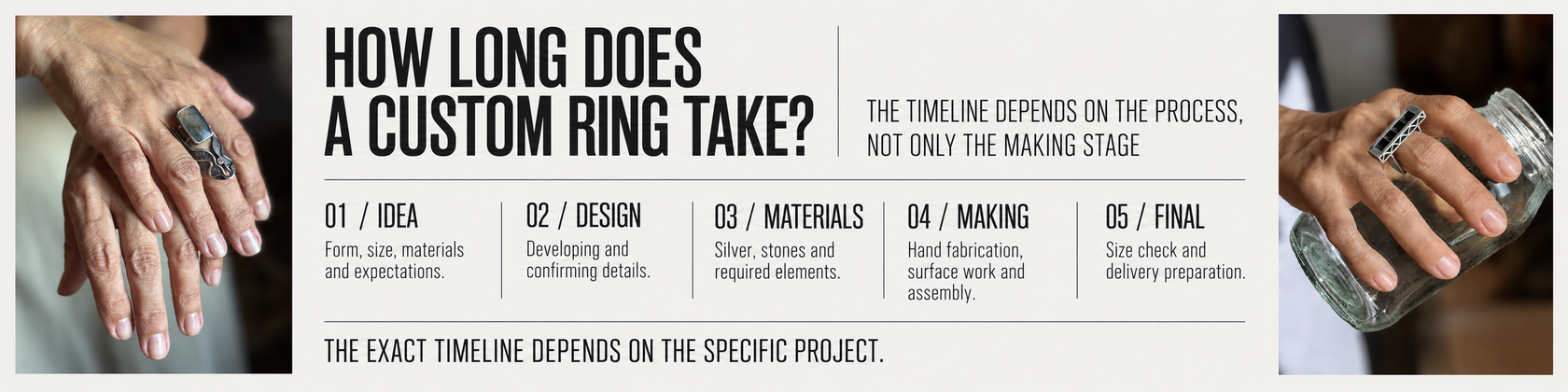
This sequence does not mean every commission follows exactly the same route. Some decisions happen in parallel, some materials are already available, and another project may require additional stone sourcing or construction changes. The point is that “making a ring” is not one isolated operation.
Why a custom ring cannot be treated like a standard product
A standard ready-made product already has a defined model. Its dimensions, components and sequence of operations are known in advance. A custom ring may not have that fixed template. Even when an existing piece is used as a starting point, the new version can change in size, stone, proportions, surface or construction.
That does not mean every commission must begin from a blank page. The difference is that the project is not simply repeating a fixed configuration. The jeweler still has to relate the brief to real metal, structural thickness, fit, durability and the way separate elements work together. In some forms, final proportions only become completely clear once the metal has been shaped and can be judged as a physical object.
Handmade work also creates intermediate checkpoints. After the main form is built, the maker may need to assess balance, setting position, band thickness or surface character. The freer and more complex the construction, the more useful these checks become. They are not empty pauses; they are part of deciding what the next operation should be.
For that reason, a custom object and a serial product should not be compared only by speed. Serial production is optimized around repeating a known model. A custom project includes decisions that belong to this particular version.
What can increase the timeline?
Design complexity
More connected parts, unusual joints, projecting elements or separate surfaces generally create more sequential operations and more points that need checking.
Stone and materials
A stone affects more than appearance. Its size, shape and availability influence the setting, proportions and the order in which certain operations can safely happen.
Changes after approval
Changing the stone, upper proportions or structural idea after the direction is agreed can require earlier decisions to be revisited.
Handmade techniques
Fire-worked surfaces, forging, multi-part construction, patina, enamel or sequential assembly may each require their own stage rather than one combined operation.
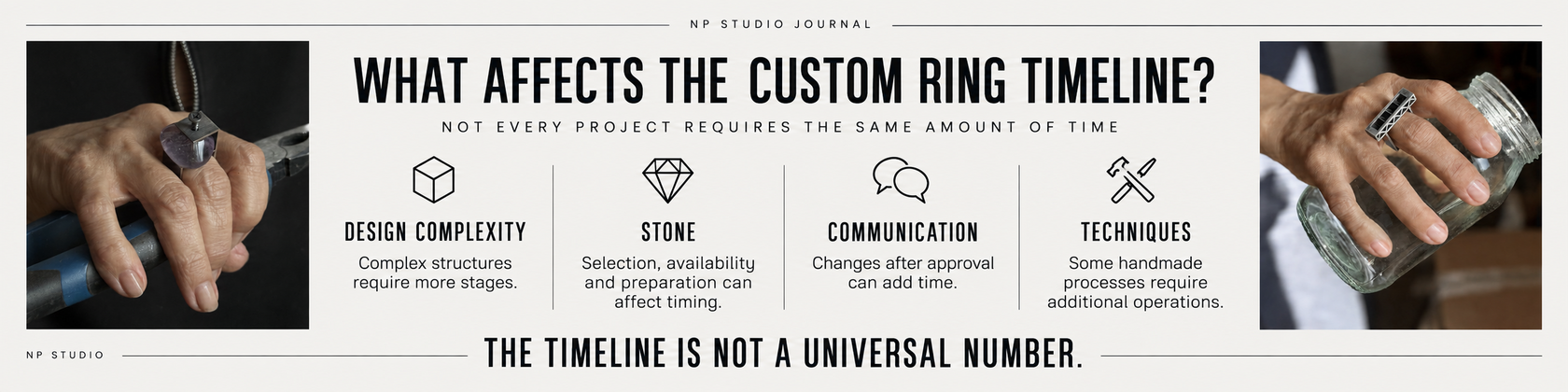
None of these factors automatically means a “long” commission. A simple stone-set ring may be quicker than a complex metal-only object, while an available stone and a clearly resolved form can remove uncertainty. The useful way to think about timing is the whole project rather than one isolated feature.
Why handmade work takes time
Handmaking often involves more project-specific decisions than repeating a fixed model. Metal is formed, joined and finished in sequence, and the result of one operation affects the next. If texture is created by forging or fire, it does not arrive as a predetermined digital pattern; its character develops in the metal and then has to be integrated into the rest of the object.
Time should not be presented as a disadvantage, and it is not proof of quality by itself. Slow work is not automatically good work. The point is that some operations solve different problems and cannot simply be compressed into one step. Forming, joining, surface work, stone setting and final checking each have different technical purposes.
Quality control also contributes to the timeline. After active work on silver, geometry, joints, edges, settings and fit need to be checked. A surface may need a small correction after the object is assembled. These checks do not make a timeline “correct” by themselves, but they explain why an individual object is more than one manufacturing action.
Compared with a repeatable production model, custom handwork often includes short decision points between operations. That is especially visible in pieces where the final form grows out of texture, a stone or an asymmetrical construction.
How rings are made at NP Studio
In NP Studio, Ruslan Murtazin works with sterling silver, stones, patina, fire-worked surfaces, forging and assembled structures. The timing of a commission therefore depends on the actual piece rather than a claimed universal studio standard.
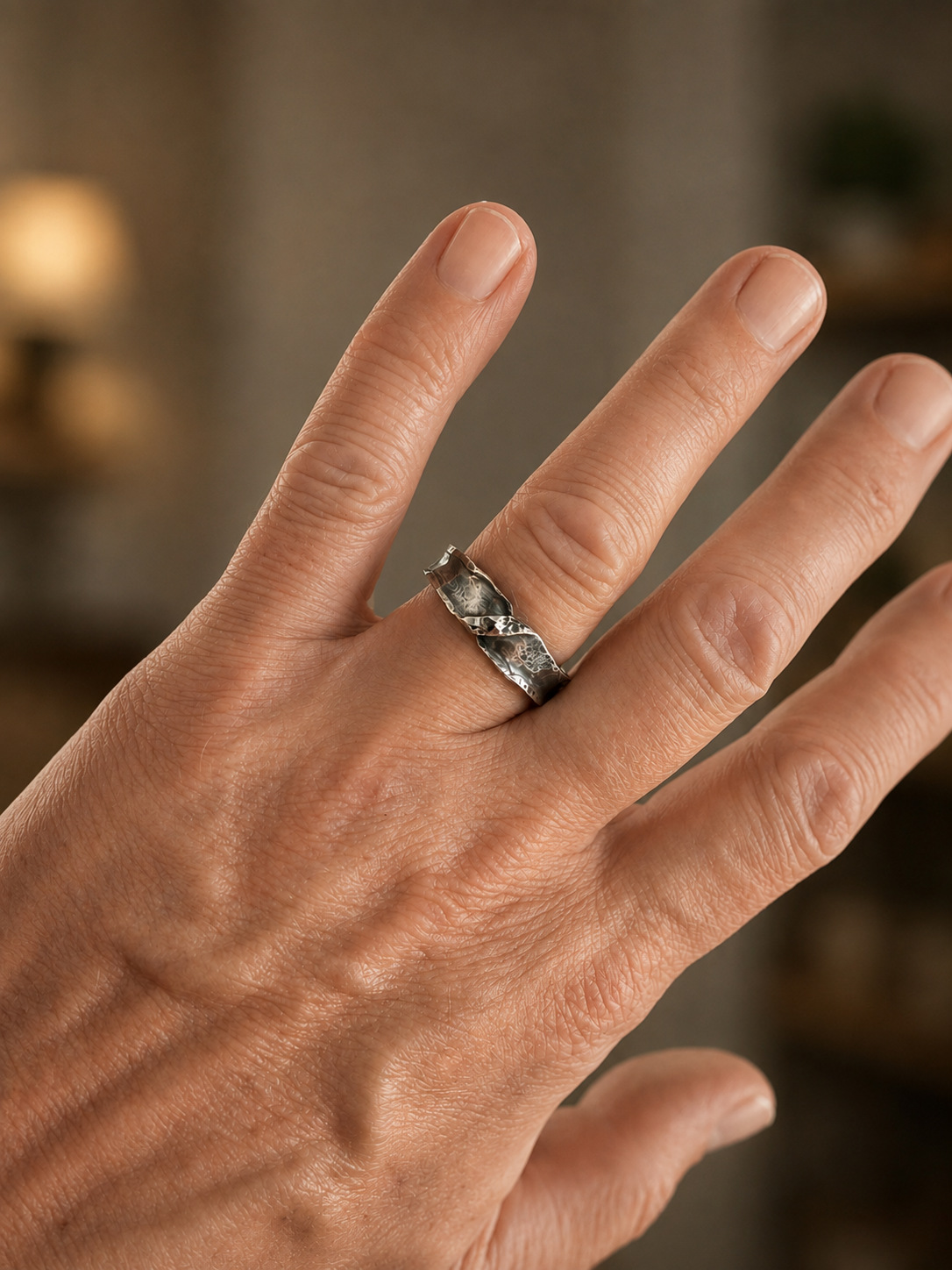
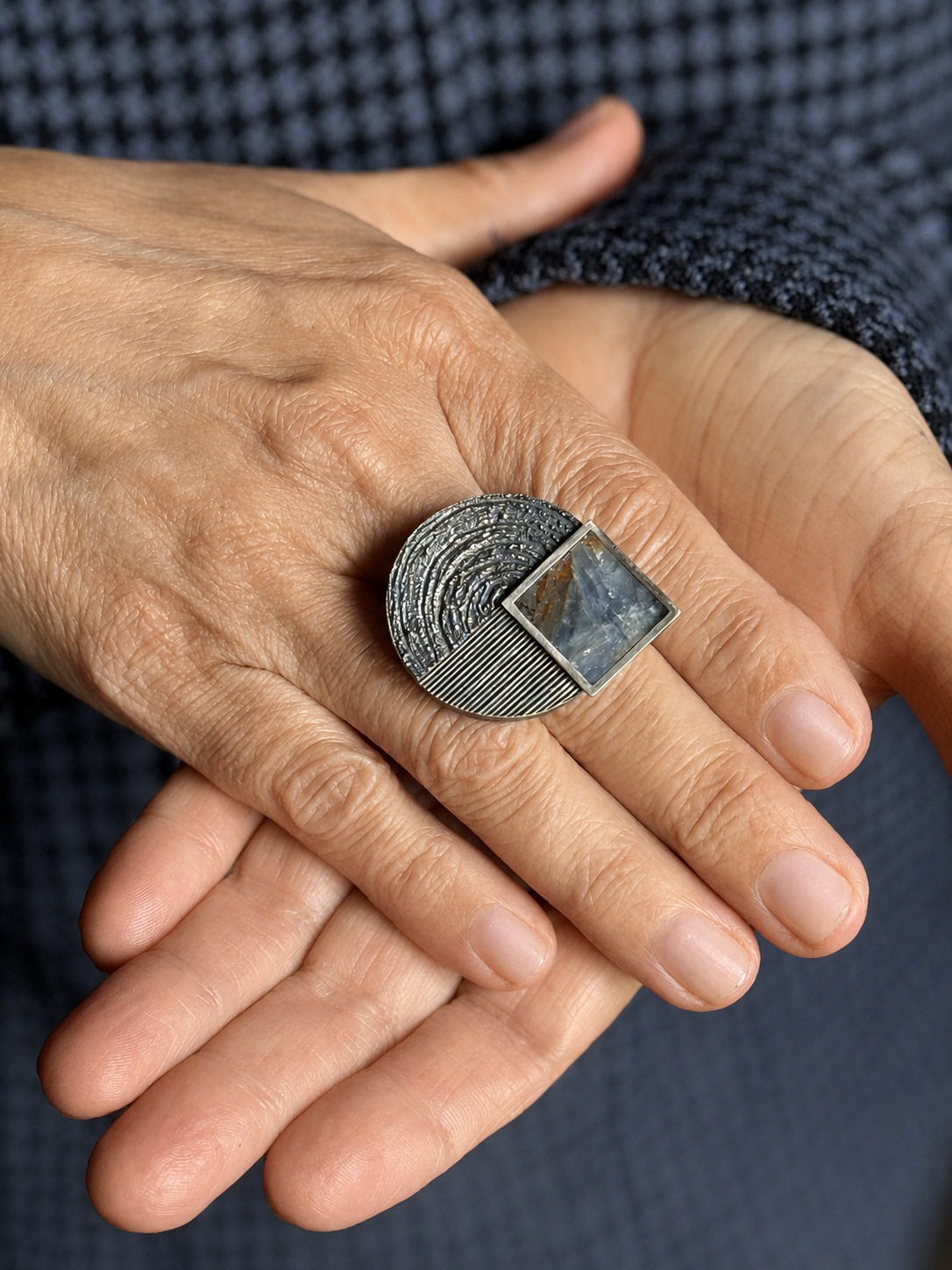
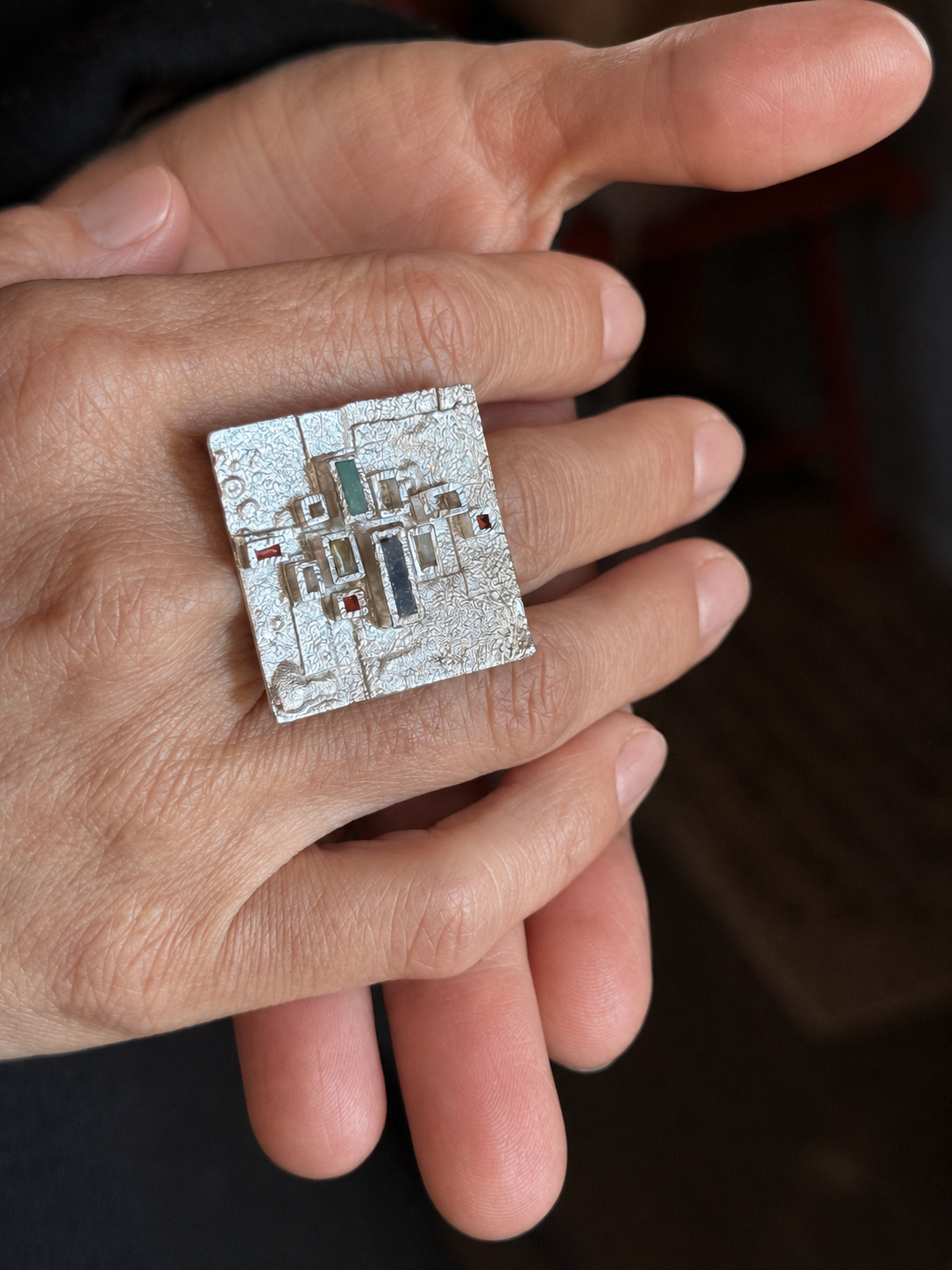
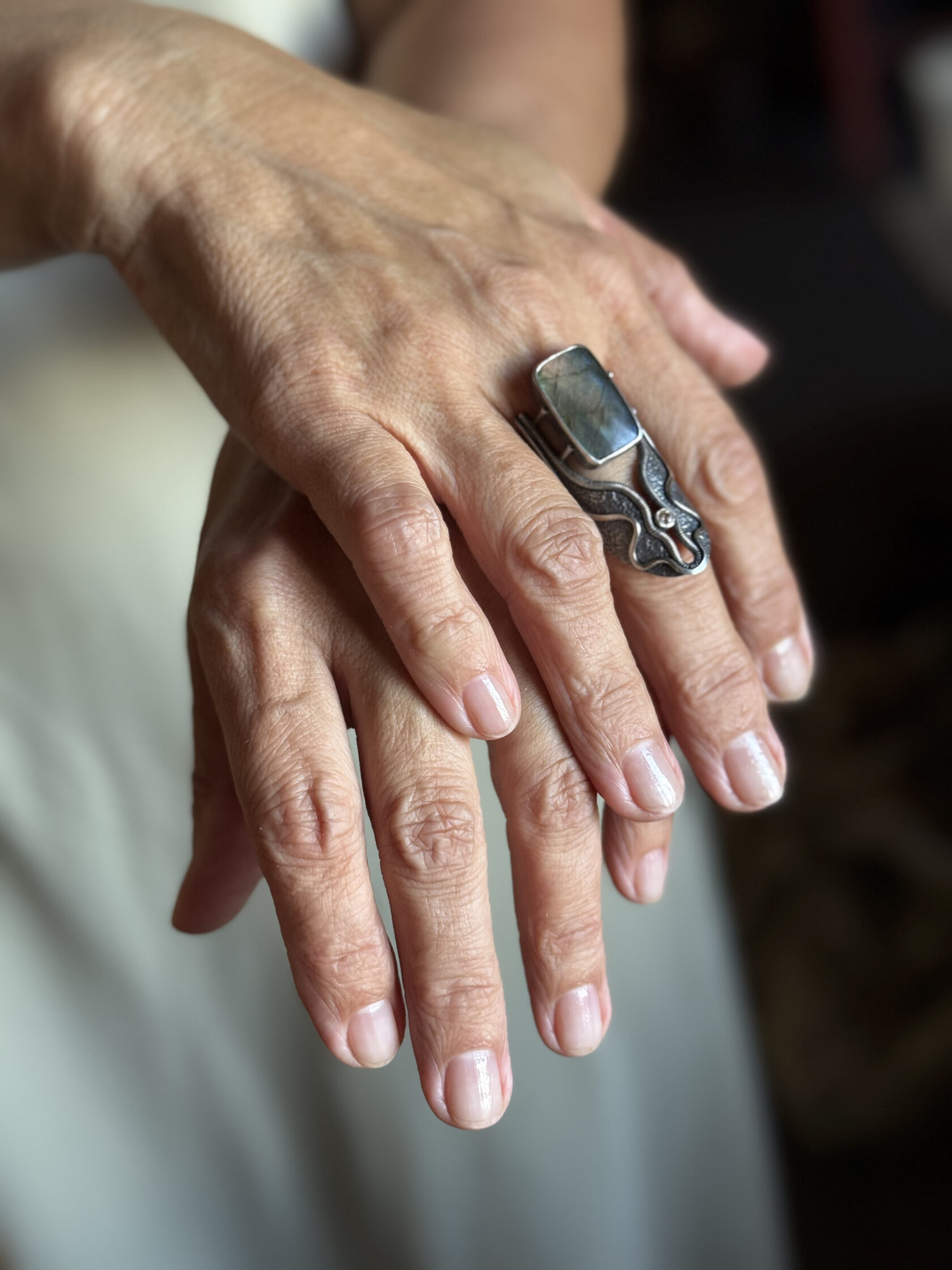
The Forged Ring is built mainly through hand forging and surface finishing, without a separate stone. Picture Ring with Kyanite adds a large natural stone and a fire-worked surface. Picture Ring Variation combines several stones, vitreous enamel and a fused metal composition. Elongated with Labradorite uses a long proportion, raised stone and additional lines and springs. These examples are not a scale from “fast” to “slow”; they show different sets of tasks inside custom work.
A commission at NP Studio can begin from an existing piece, a stone, a structural idea or a new direction. But this article is not a substitute for a project discussion. A real timeline can only be estimated once size, material, stone and the amount of change are clear. Current commissioning information is on the Custom work page.
For the broader question of what custom jewelry means and how it differs from made-to-order or personalization, NP Studio Journal has a separate guide: What Is Custom Jewelry and How Does It Work?. This page stays narrower: time and the reasons behind it.
In summary: why every custom-ring timeline depends on the project
“Several weeks” is a useful general expectation, but it is not a universal promise. Time comes from a chain of stages: defining the idea, developing a workable construction, preparing materials, making the object and checking the finished ring.
The clearer the brief and the simpler the construction, the fewer unresolved decisions may remain inside the project. The more parts, stones, surfaces or late changes are involved, the more checkpoints can add time. The accurate timeline is therefore a property of the specific commission rather than a fixed number for the whole category.
It is the period in which an idea becomes a physical ring through design, material decisions, making and final checks.
Frequently asked questions
How long does a custom ring usually take?
Several weeks is a reasonable general expectation, but the actual timing depends on construction, materials, stone availability, communication and handmade operations.
Can a custom ring be made faster?
Sometimes, especially when the direction is already clear and materials are available. A shorter timeline should not mean skipping technical or final-check stages that the piece actually needs.
What affects the timeline the most?
There is no single factor for every commission. The combination of construction complexity, stone, material availability, design decisions and handmade techniques usually matters more than any one item.
Why can’t a handmade ring be completed in just a few days?
Some simple projects may be faster, but a complex custom ring can include design development, material preparation, several metalworking operations and final checks. Promising a universal few-day timeline would be misleading.
Does gemstone selection affect the timeline?
It can. A stone may need to be sourced or prepared, and its shape and size influence the setting and proportions. If the right stone is already available, that part of the timeline may be shorter.
Can design changes increase production time?
Yes. Changing a stone, dimensions or structural idea after approval may require earlier decisions to be revised and can add new work.
Are some projects faster than others?
Yes. A direct ring with a clear construction and available materials can involve fewer decisions than a multi-part piece with several stones and a complex surface.
Why does a custom ring take longer than a ready-made ring?
A ready-made ring already exists or follows an established model. A custom ring includes decisions, preparation and making that belong to this particular version.
