
NP STUDIO / JOURNAL / CUSTOM JEWELRY
What Is Custom Jewelry and How Does It Work?
A custom project does not always begin with a blank sheet of paper. The starting point can be an existing piece, a stone, a surface, a proportion or a completely new idea; the process is about translating that direction into an agreed and technically workable object.
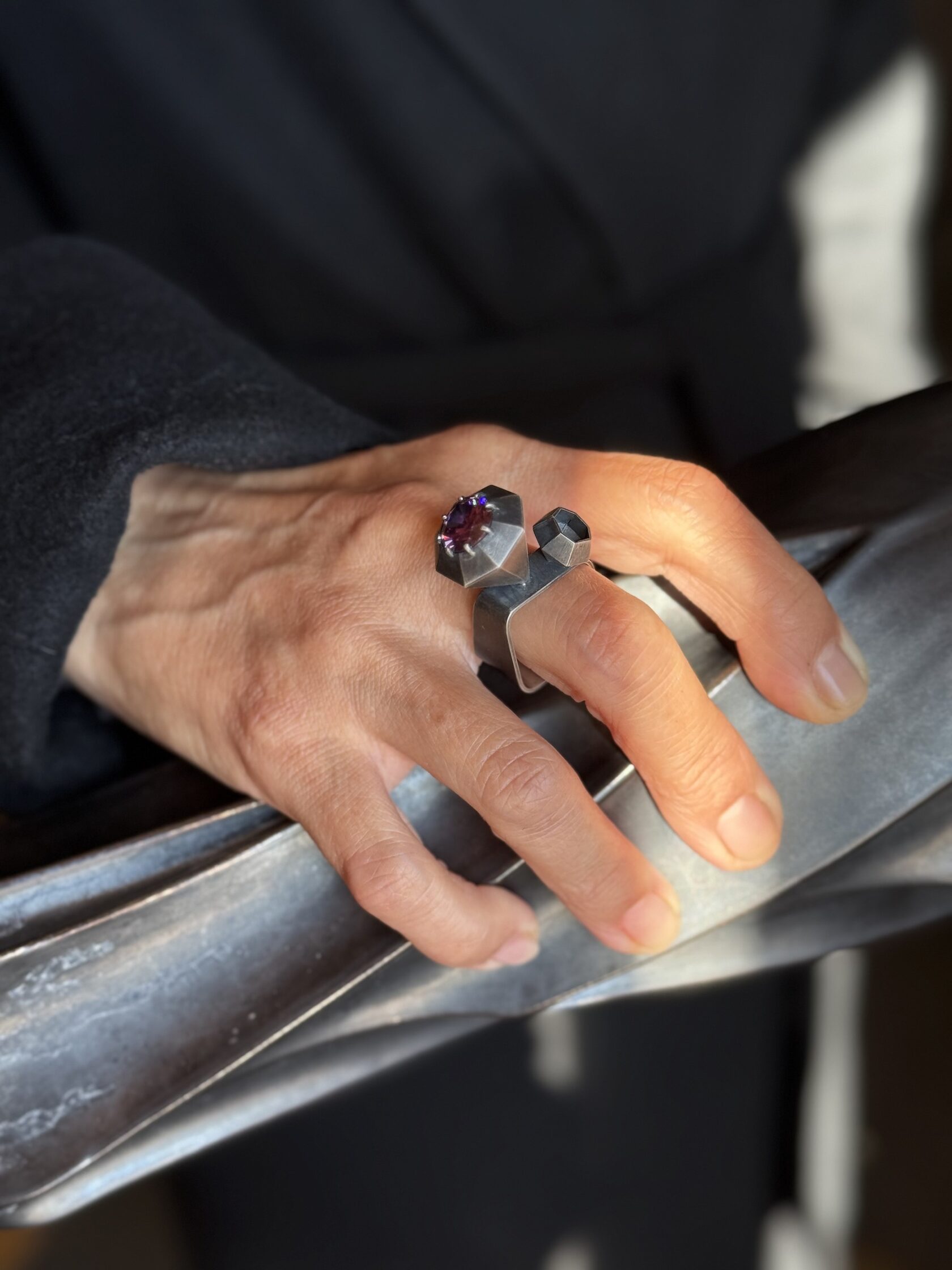
In one sentence
Custom jewelry generally refers to jewelry created or meaningfully adapted for a particular client according to agreed requirements such as form, size, materials, stone or other design choices. The exact scope of “custom” varies between jewelers and may range from modifying an existing design to developing a new piece.
Custom does not necessarily mean “from scratch”
A custom project can begin in several different ways. These are common starting points, not an official classification and not a required system for every jeweler.
The defining relationship is between the project and the agreed requirements of a particular client, not whether the idea started from an empty page.
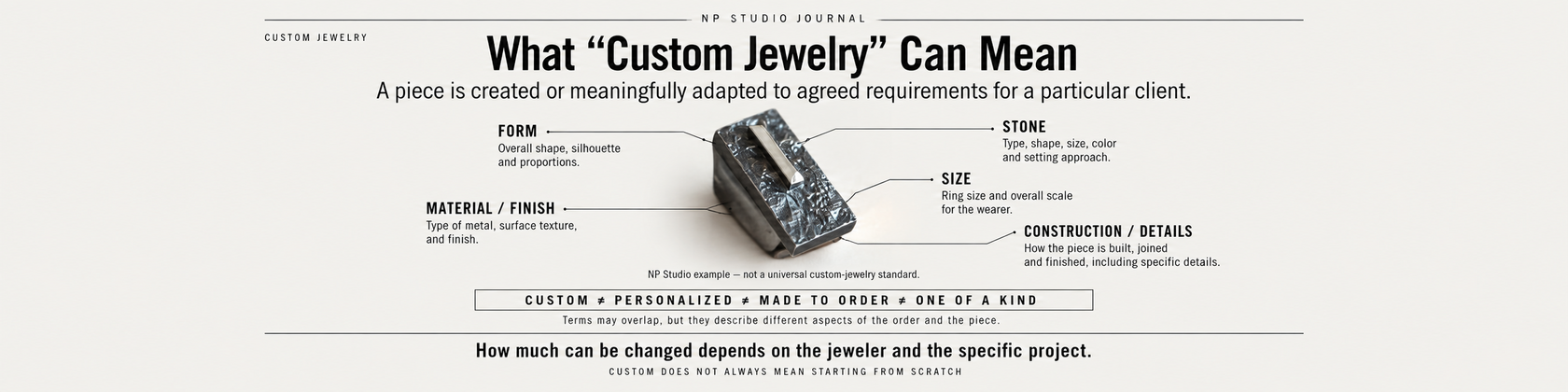
What can be changed in custom jewelry
The available choices depend on the jeweler, the construction and the material. Depending on the project, discussion may include:
What can be changed depends on the jeweler, the construction and the material. Custom does not mean every parameter is freely adjustable in every project.
Custom / bespoke / personalized / made-to-order
Terminology varies by jeweler, market and practice. The distinctions below are practical rather than universal dictionary rules.
| Term | Practical meaning | What not to assume |
|---|---|---|
| Custom jewelry | Created or meaningfully adapted around the requirements of a particular client. | It does not have to be entirely from scratch or automatically one of a kind. |
| Bespoke jewelry | In many practices, a more deeply individualized project, often developed from scratch. | There is no single worldwide rule that makes bespoke a strict universal synonym or opposite of custom. |
| Personalized jewelry | An existing piece receives a personal detail such as engraving, initials, a date or a selected option. | Personalization does not necessarily involve redesigning the object. |
| Made-to-order | The piece is produced after an order is placed. | The underlying design may still be standard. |
Custom vs one of a kind
Custom describes the relationship between a project and a client’s agreed requirements. One of a kind describes the uniqueness of the object itself.
They can coincide: a commission may result in a singular piece. But a custom project can also be an adaptation of a repeatable design, while a one-of-a-kind object may be created by a maker without a specific client commission. For the direct comparison, see One-of-a-Kind Jewelry vs Custom Jewelry: What’s the Difference?
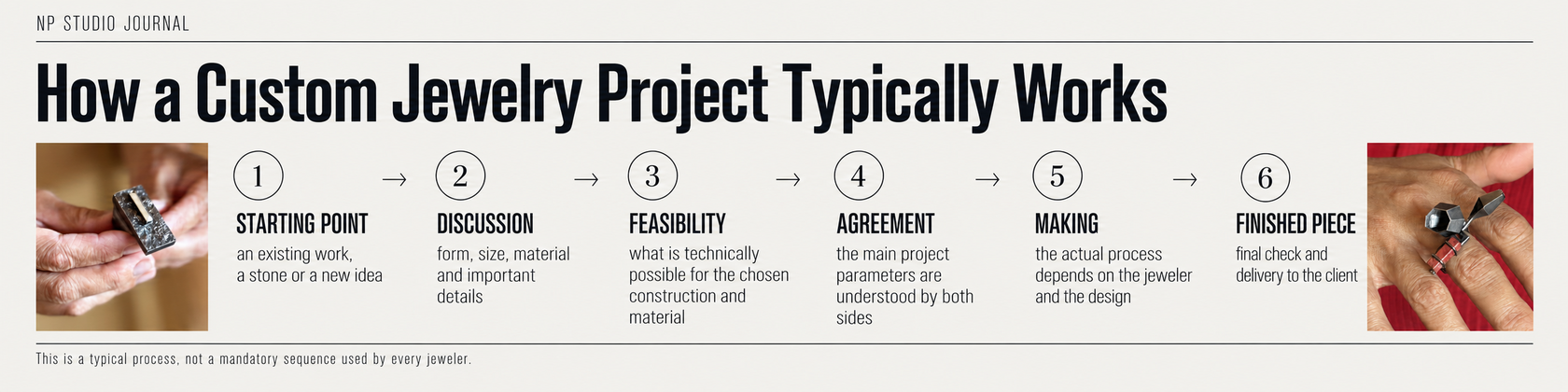
How a custom jewelry project typically works
Every studio organizes commissions differently. The sequence below is a typical project logic, not a mandatory procedure that every jeweler must follow.
Where the idea meets real constraints
Custom design is not the literal execution of any image without modification. The project has to reconcile the idea with the realities of material, construction and wear.
- Material. Silver, gold, titanium, stones and other materials behave differently and require different decisions.
- Strength. A delicate line in a sketch still needs to work as a physical structure.
- Fit. Rings, bracelets and other wearable objects need to account for the body and movement.
- Stone size. A stone affects setting scale, proportion and construction.
- Weight. Increasing volume changes both the visual result and the mass of the piece.
- Manufacturing method. Fabrication, casting, CAD/3D or mixed methods are ways to realize a design, not definitions of custom jewelry.
- Budget. It creates real limits around material, scale, complexity and development time.
GIA’s jewelry design and technology programs likewise frame design as work within constraints such as scale, proportion, cost, time, size and manufacturing method — a useful reminder that design and manufacturability have to meet.
Do you need to provide your own sketch?
Usually not. Depending on the practice, a reference, description, existing piece, stone or other starting material can be enough to begin a conversation.
The level of formal design development varies by jeweler: some use drawings, some CAD, and some can work from a clearly agreed direction and dimensions. None of those methods is a universal requirement for custom jewelry.
How much does custom jewelry cost, and how long does it take?
Cost and timing depend on material, stone, construction, development work and the studio’s current workload. There is no universal price or production-time range that accurately describes all custom jewelry.
Specific numbers should belong to a specific project. At NP Studio, current commercial details are kept on the Custom and Terms of Order pages so that this informational article does not replace the commercial landing page.
NP Studio: how custom work functions in one real practice
NP Studio is one example of an independent maker-led practice offering custom sterling silver jewelry and small objects. A starting point can be an existing NP Studio work, a stone, a form, a direction or a new idea.
The current Custom page states that an exact repeat is not the goal: a new work can develop from an earlier piece while stone, size, surface, line, patina, construction and overall character change according to the project.
For an initial conversation, the site asks for a related work or direction, size, preferred stone, a comfortable budget and a short description. Specific commercial terms are agreed separately; current details should be checked on /en/custom and /en/offer rather than treated as part of a universal definition of custom jewelry.
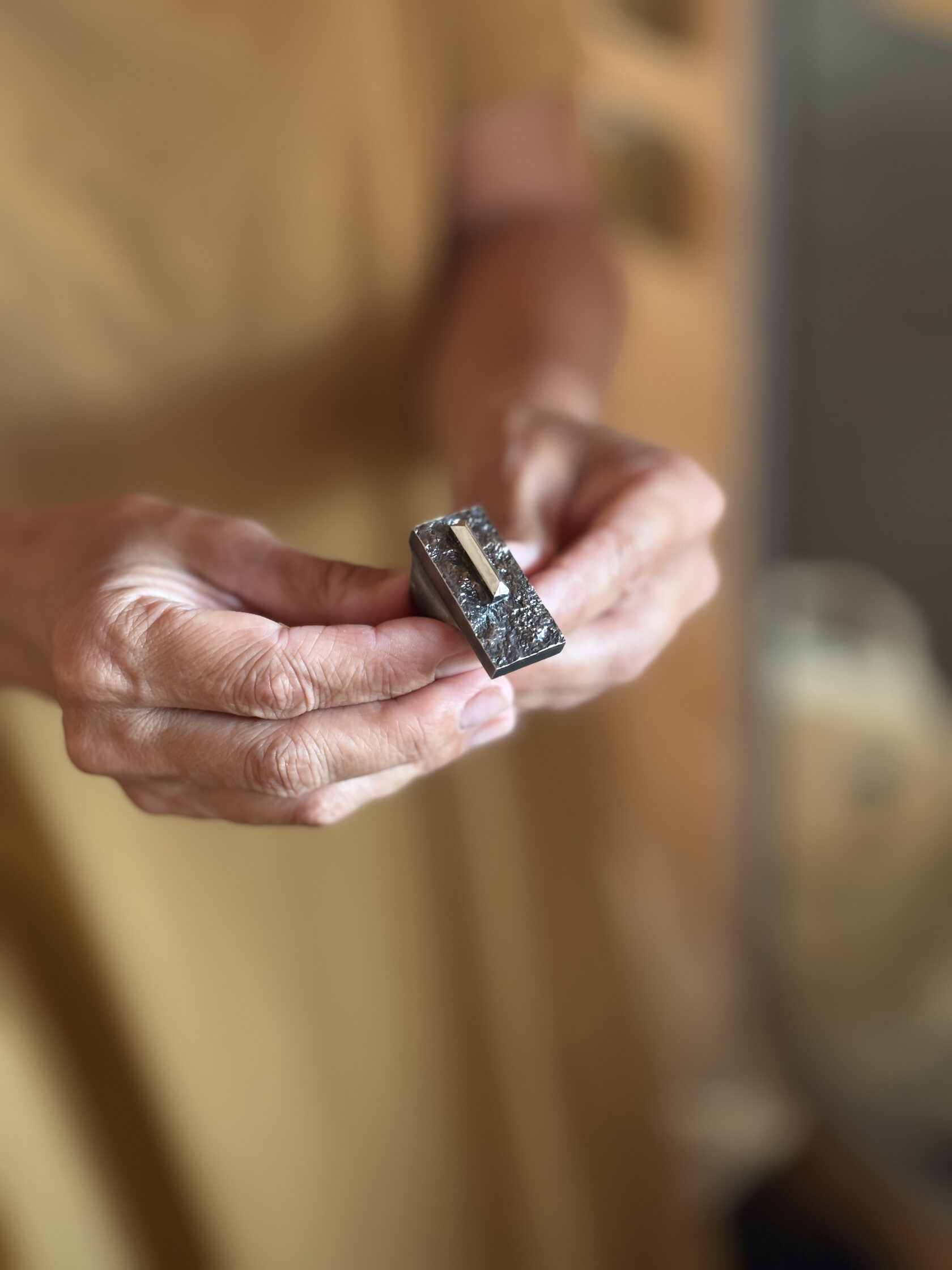
From an Existing Work to a New Piece
An existing work can function as a starting point rather than an object to copy. The three cards below link to exact work pages that describe what may be changed when discussing a new version.
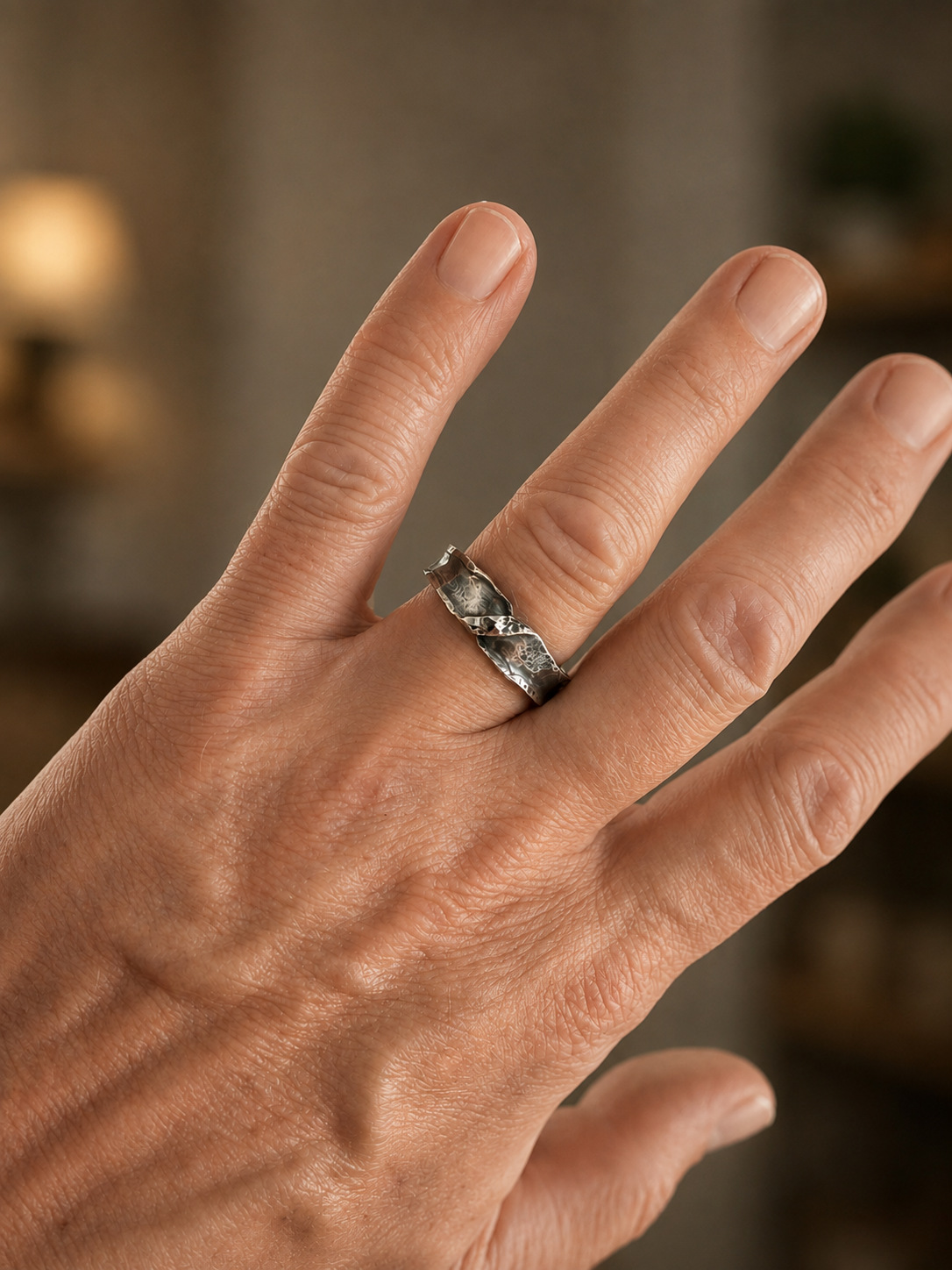 Forged Ring A concise starting point where size, width, surface roughness and finishing can be discussed. Silver Stone A structural prototype whose proportions, upper element and surface character can inform a new piece.
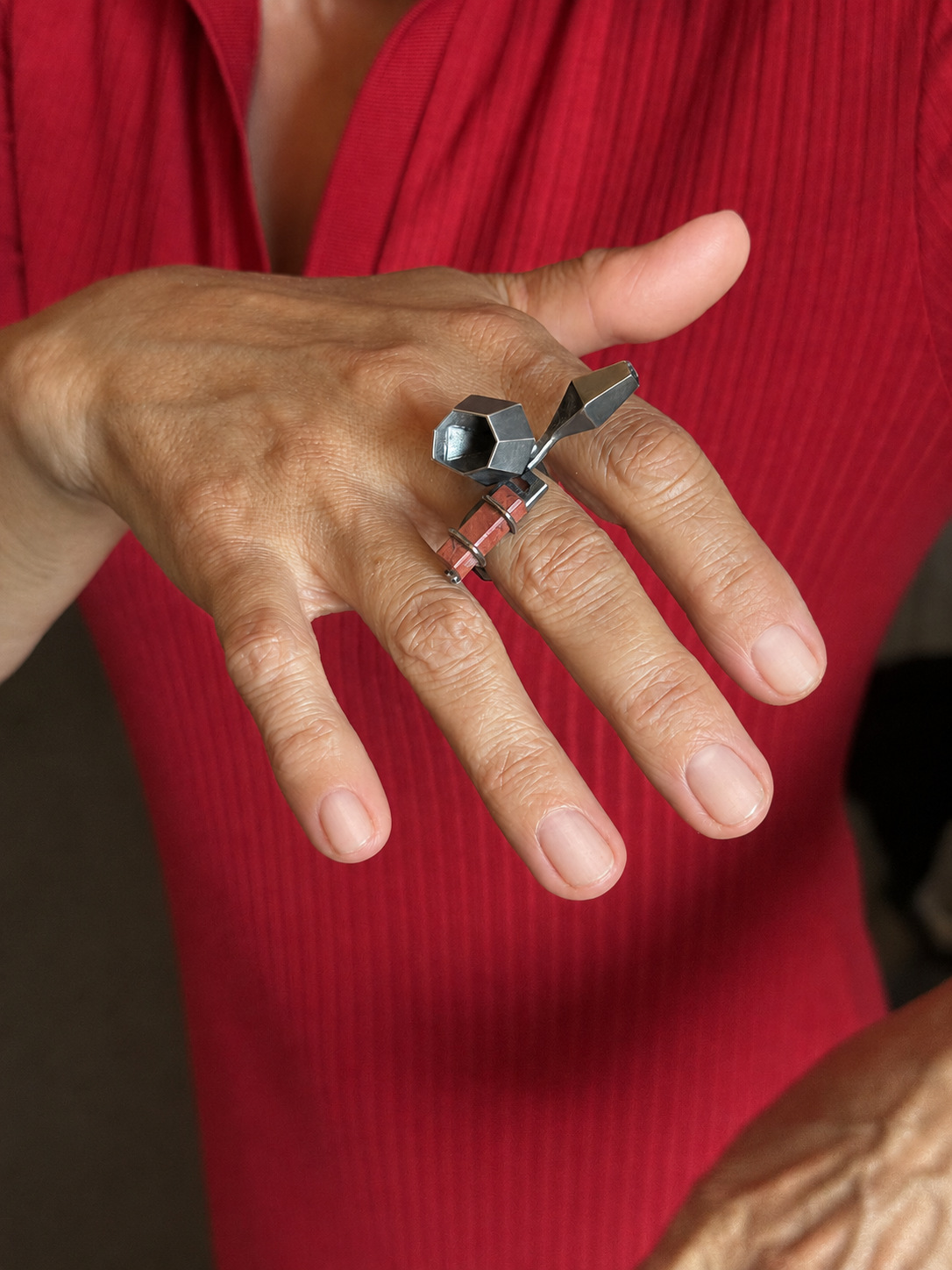 Blue Loops An example where form, stone and compositional intensity can be reworked rather than copied.
When a ready-made piece may be the better choice
Custom is not always the best answer. A ready-made work may make more sense if you already like a particular piece exactly as it is, if timing matters, or if you would rather not make a series of design decisions.
A commission is most useful when there is a real adaptation or design problem to solve, not as an automatically “higher” form of purchase.
Frequently asked questions
Related NP Studio materials
For the maker-led context, continue with What Is Artisan Jewelry?. The fabrication and casting distinction is covered in Handmade vs Cast Jewelry. For the material itself, see What Is Sterling Silver?. Current commercial details for commissioning are on the Custom page.
