What kind of object is this?
The term describes whether a specific piece exists as a singular object rather than as a standard design intended for exact repetition.
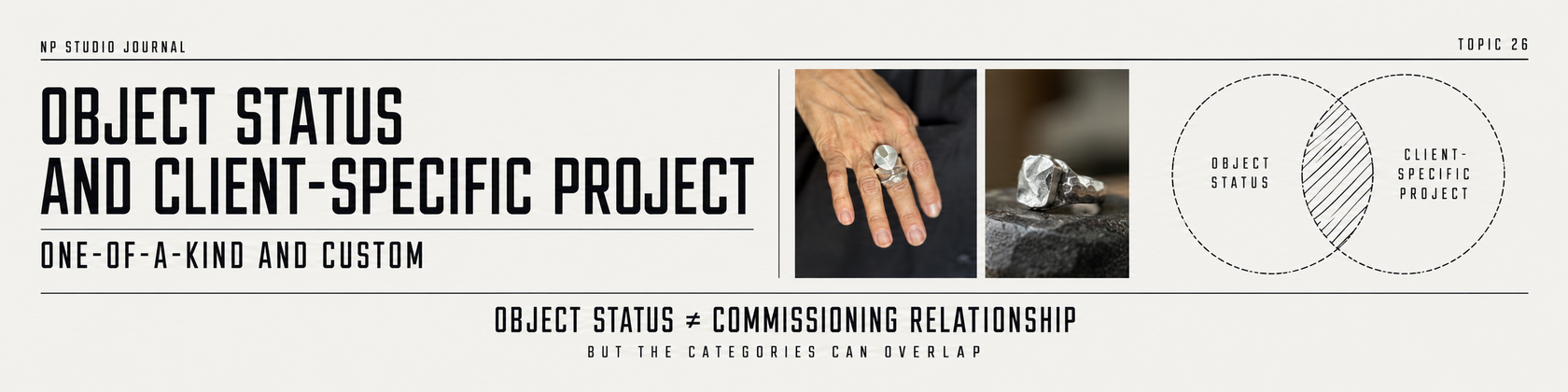
NP STUDIO / JOURNAL / ONE-OF-A-KIND × CUSTOM
One-of-a-kind and custom answer different questions. One describes the status of a particular object and its relationship to repetition. The other describes the relationship between a project and a particular client’s agreed requirements. The categories can overlap, but neither automatically implies the other.

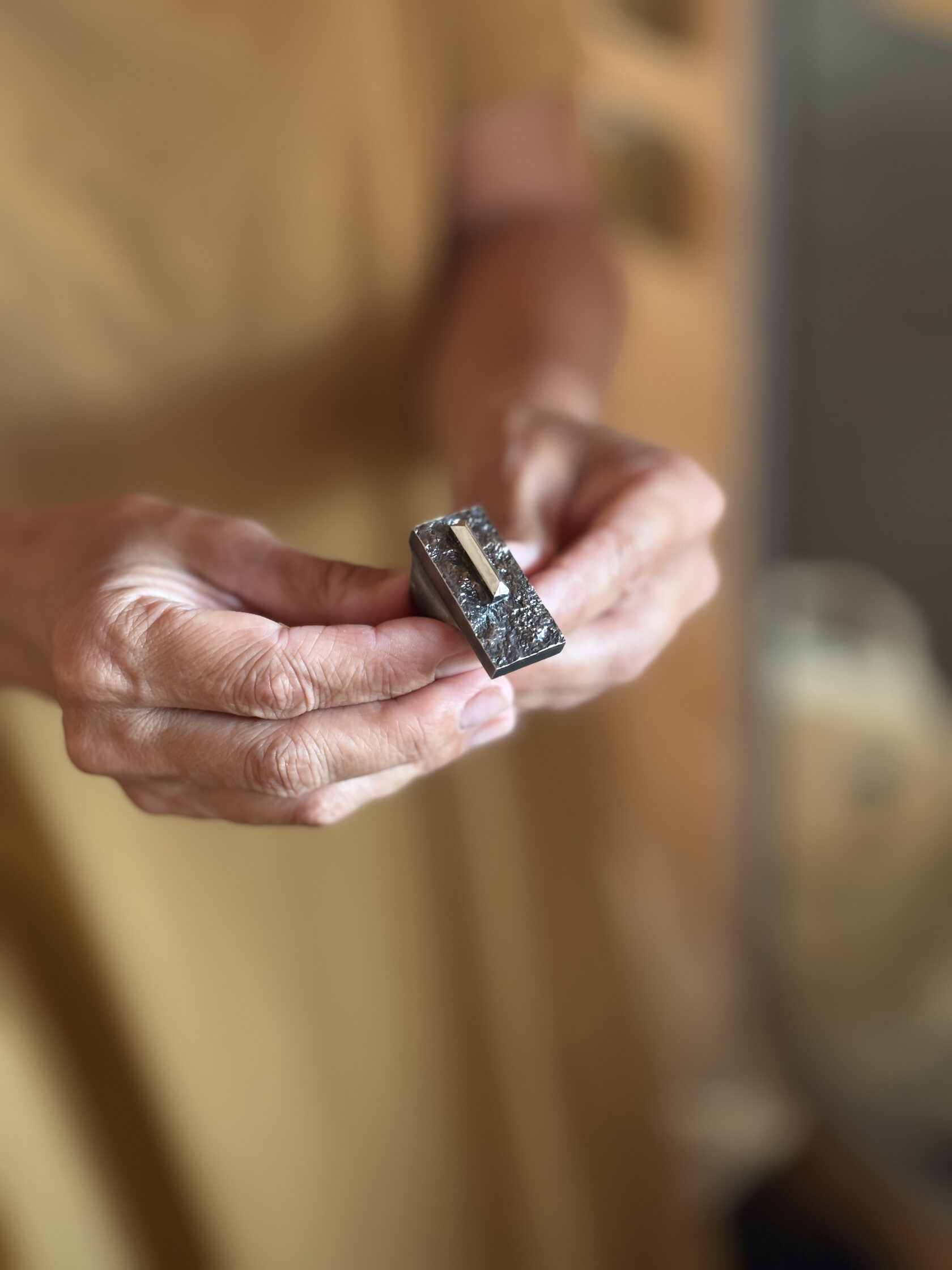
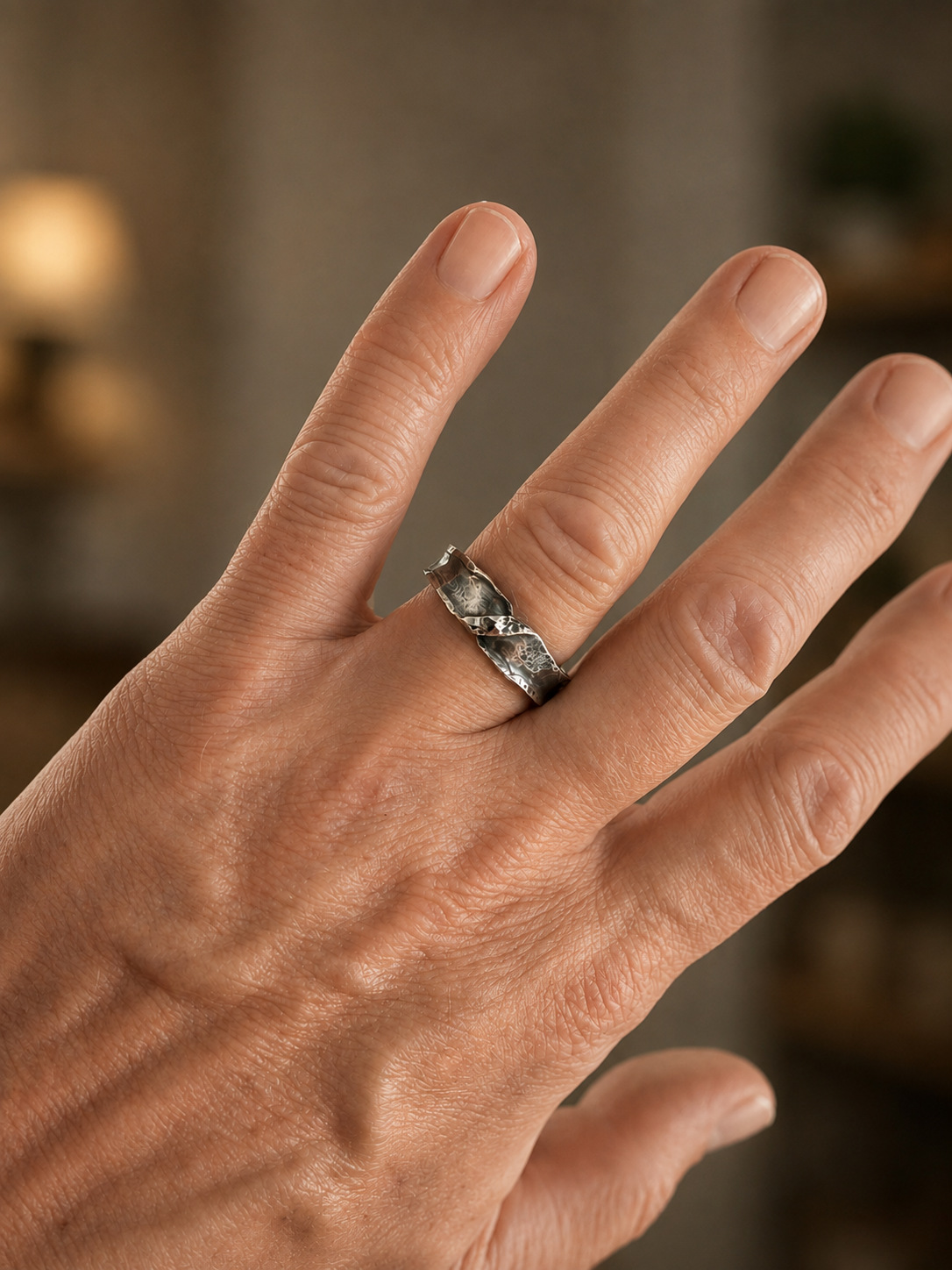
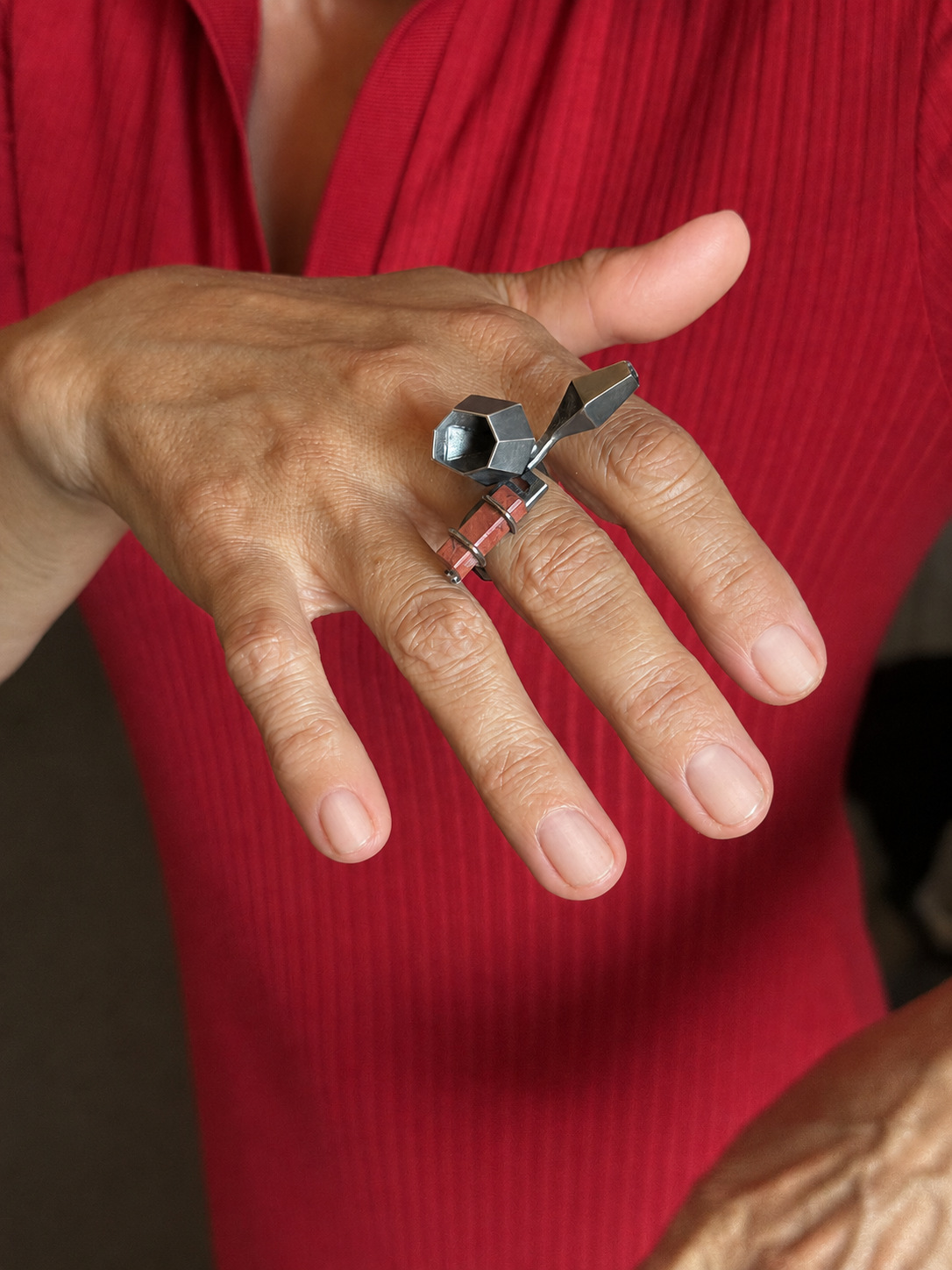
One-of-a-kind jewelry and custom jewelry describe different things. One-of-a-kind refers to the status of a specific object: the piece exists as a singular work rather than as a standard design intended for exact repetition. Custom jewelry refers to the relationship between a project and a particular client: the piece is created or meaningfully adapted around agreed requirements. The categories can overlap—a custom commission may result in a one-of-a-kind piece—but neither term automatically implies the other.
One-of-a-kind describes the status of a particular object. In this practical distinction, the piece exists as an individual work rather than as a standard model intended for exact repetition.
That does not automatically mean custom, handmade, or “no related work can ever exist.” Related versions and directions can exist. The full definition belongs to What Is One-of-a-Kind Jewelry? .
Custom describes the relationship between a project and a particular client’s agreed requirements. A piece can be created from scratch or meaningfully adapted from an existing direction through changes in size, proportion, stone, surface or construction.
Custom does not have to begin with a blank page, and it is not automatically one of a kind. The complete definition and process belong to What Is Custom Jewelry and How Does It Work? .
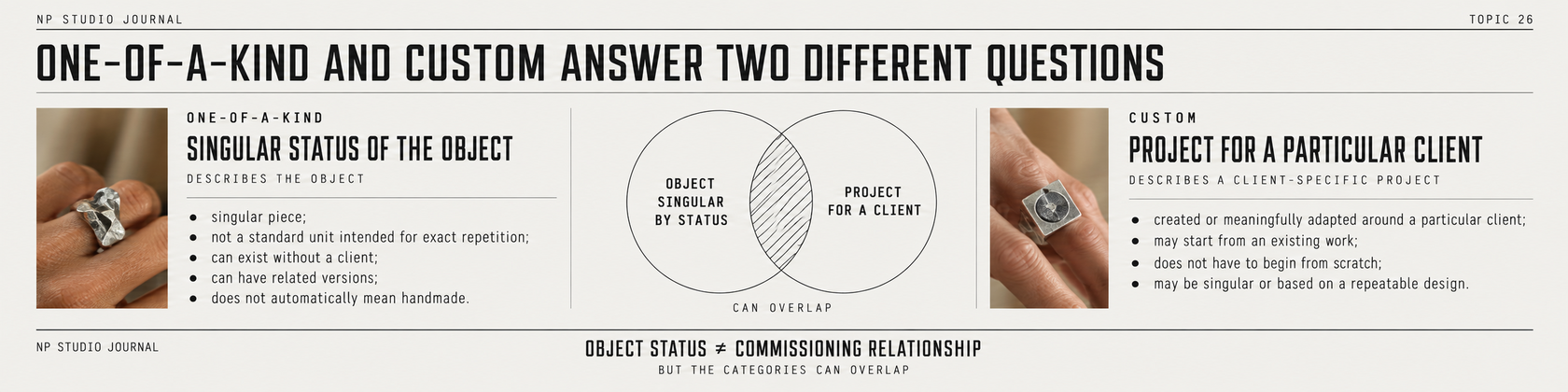
The term describes whether a specific piece exists as a singular object rather than as a standard design intended for exact repetition.
The term describes a project created or meaningfully adapted around the agreed requirements of a particular client.
A piece can be singular and custom at the same time. Or singular without a client. Or a custom adaptation of a repeatable design direction.
| Question | One-of-a-Kind Jewelry | Custom Jewelry |
|---|---|---|
| What does the term describe? | Singular status of the specific object | Relationship between the project and a particular client’s requirements |
| Does it require a client commission? | No | Yes, in the practical sense of a custom project relationship |
| Must it be designed from scratch? | No | No |
| Can it use an existing design direction? | Yes | Yes |
| Can it be repeatable? | The specific one-of-a-kind object is singular; related works may exist | Yes, a custom adaptation can be based on a repeatable model or family |
| Can it be both? | Yes | Yes |
| Does it automatically mean handmade? | No | No universal automatic implication |
| Does it automatically mean more valuable? | No | No |
| Does it automatically mean better quality? | No | No |
Yes. If a client-specific project results in a singular object rather than a standard repeatable unit, both descriptions can apply to the same piece.
But this is not automatic. A custom project can also be an adaptation of an existing repeatable model or design family.
Yes. A maker can create an independent work, prototype or experiment without a prior commission. Its singular status does not depend on having a client before the piece exists.
Bridge is useful here as an archival construction: a new work can continue its engineering direction without turning the original into a standard model.
No. A custom commission can start from an existing work, prototype, stone, form or design direction if the new piece is meaningfully adapted around the agreed requirements of a particular client.
The NP Studio Custom page explicitly describes earlier work as a possible starting point and states that an exact repeat is not the goal.
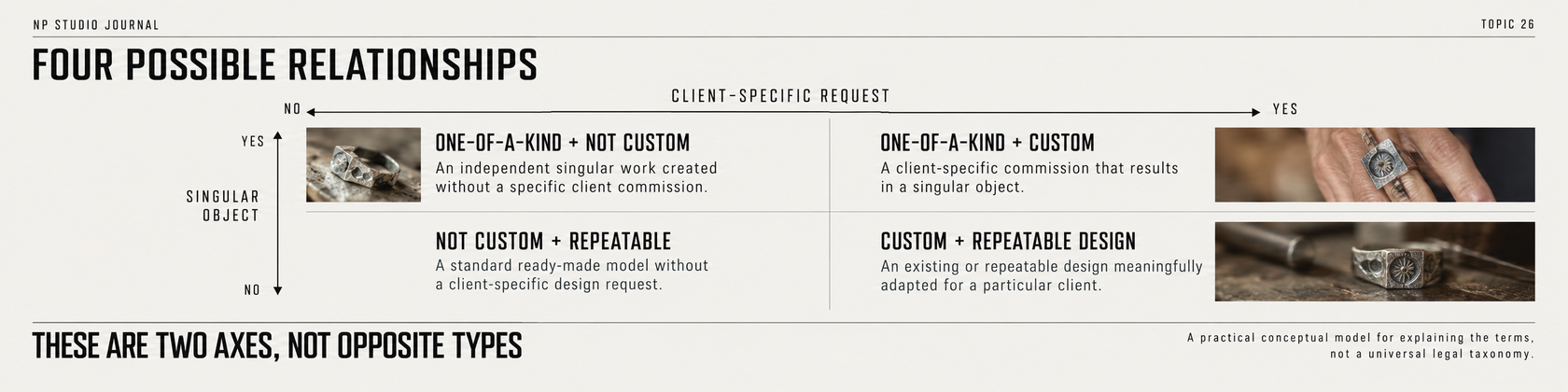
This is a practical conceptual matrix, not a legal definition or universal industry taxonomy. It simply shows that object singularity and client-specific commissioning are two separate axes.
An independent singular work created without a specific client commission.
A client-specific commission that results in a singular object.
An existing or repeatable direction meaningfully adapted around one particular client.
A standard ready-made design produced without a client-specific request.
An archival construction showing how a singular object can remain an independent work while still serving as a direction for later interpretations.
A prototype with a granite-impressed texture that cannot repeat precisely. A related piece can also be commissioned with different proportions, box height, band shape and upper element. It sits naturally between singular object and custom starting point.
A related version can change size, width, surface roughness and polishing. Custom here starts from an existing direction rather than a blank page.
A new commission can change the form and stone, add new elements, or make the composition calmer or more voluminous. The new piece can remain related without becoming an exact copy.
If the important point is that the specific object exists as a singular work, one-of-a-kind is the more relevant description. If the important point is that the project was created or meaningfully adapted around one client’s requirements, custom is the more relevant description.
If both statements are true, both descriptions can be useful. Terminology varies by jeweler, market and practice, so the practical meaning matters more than treating the words as rigid universal legal categories.
There is no hierarchy here: one-of-a-kind is not automatically better than custom, custom is not automatically better than one-of-a-kind, and neither term guarantees value or quality. If you are considering a commission, see How to Choose an Independent Jeweler for a Custom Ring for how to assess the jeweler behind the project.
One-of-a-kind describes the singular status of the object; custom describes the relationship between the project and a particular client’s agreed requirements.
No. A custom project can adapt a repeatable design and does not automatically become a singular object.
No. A maker can create an independent singular work without a prior commission.
No. It can begin from an existing work, prototype, stone, form or design direction.
Yes, when the jeweler works that way and the resulting piece is meaningfully adapted around the client’s agreed requirements.
Yes. A maker can continue a principle or direction without producing an identical copy of the original object.
Yes. Custom can be a client-specific adaptation of a design that also exists in other versions.
No. Handmade describes how a piece is made; one-of-a-kind describes the status of the specific object relative to repetition.
Neither is inherently better. They answer different questions and are not quality or value rankings.
Yes. A client-specific commission can result in a singular object.
A note on terminology. The terms one-of-a-kind and custom may be used somewhat differently by different artists, studios and markets. It is therefore more useful to look beyond the category label and understand what the description of a particular piece actually means.
NP Studio is used here as a practical example of how these categories can overlap. It is not intended as a universal classification for the jewelry field as a whole.
