
NP STUDIO / JOURNAL / CUSTOM RING
How to Choose an Independent Jeweler for a Custom Ring
A strong portfolio is only the beginning. For a custom ring, the important question is whether the jeweler's actual practice fits your project — aesthetically, technically and in the way the commission is discussed and managed.
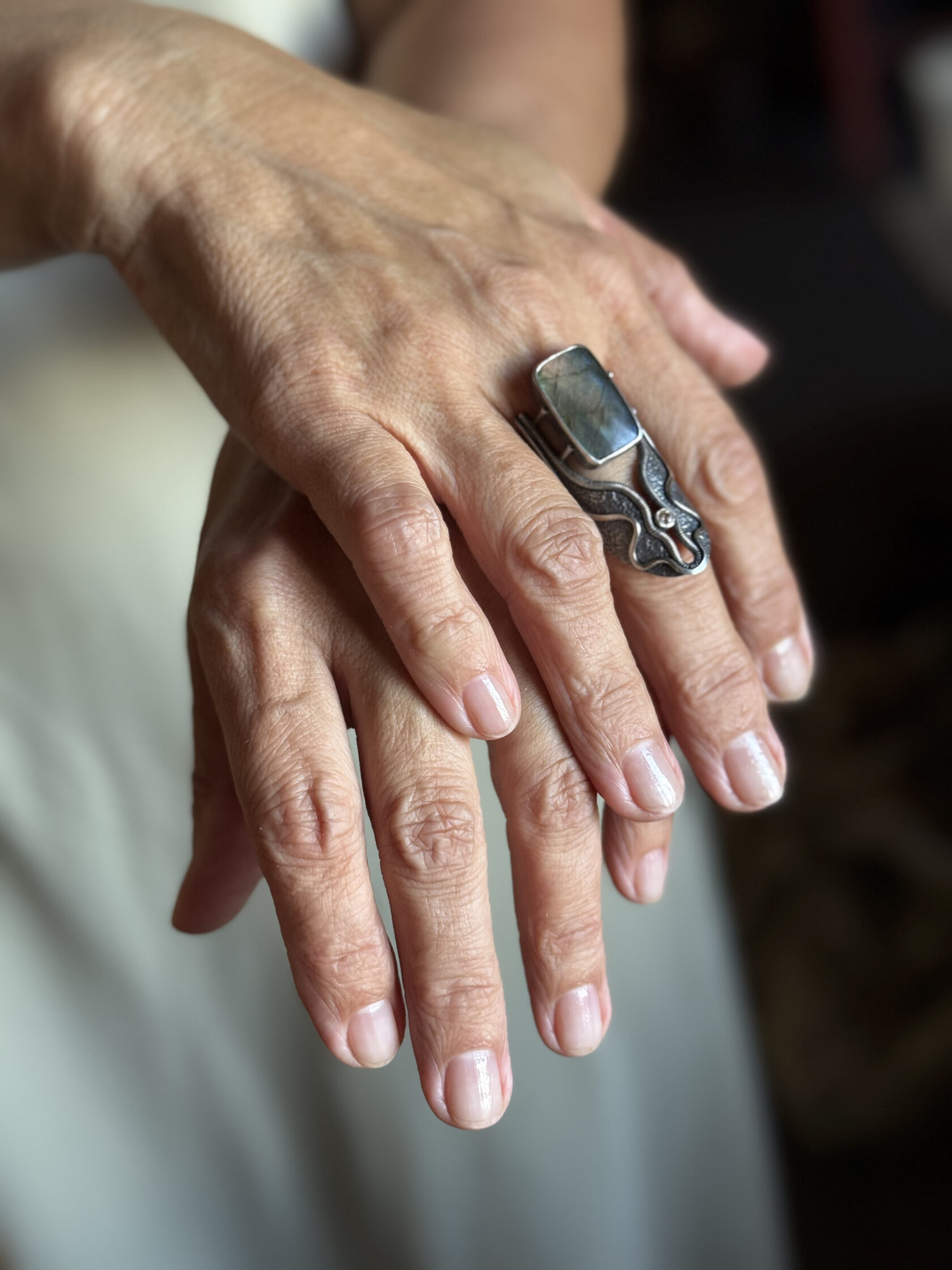
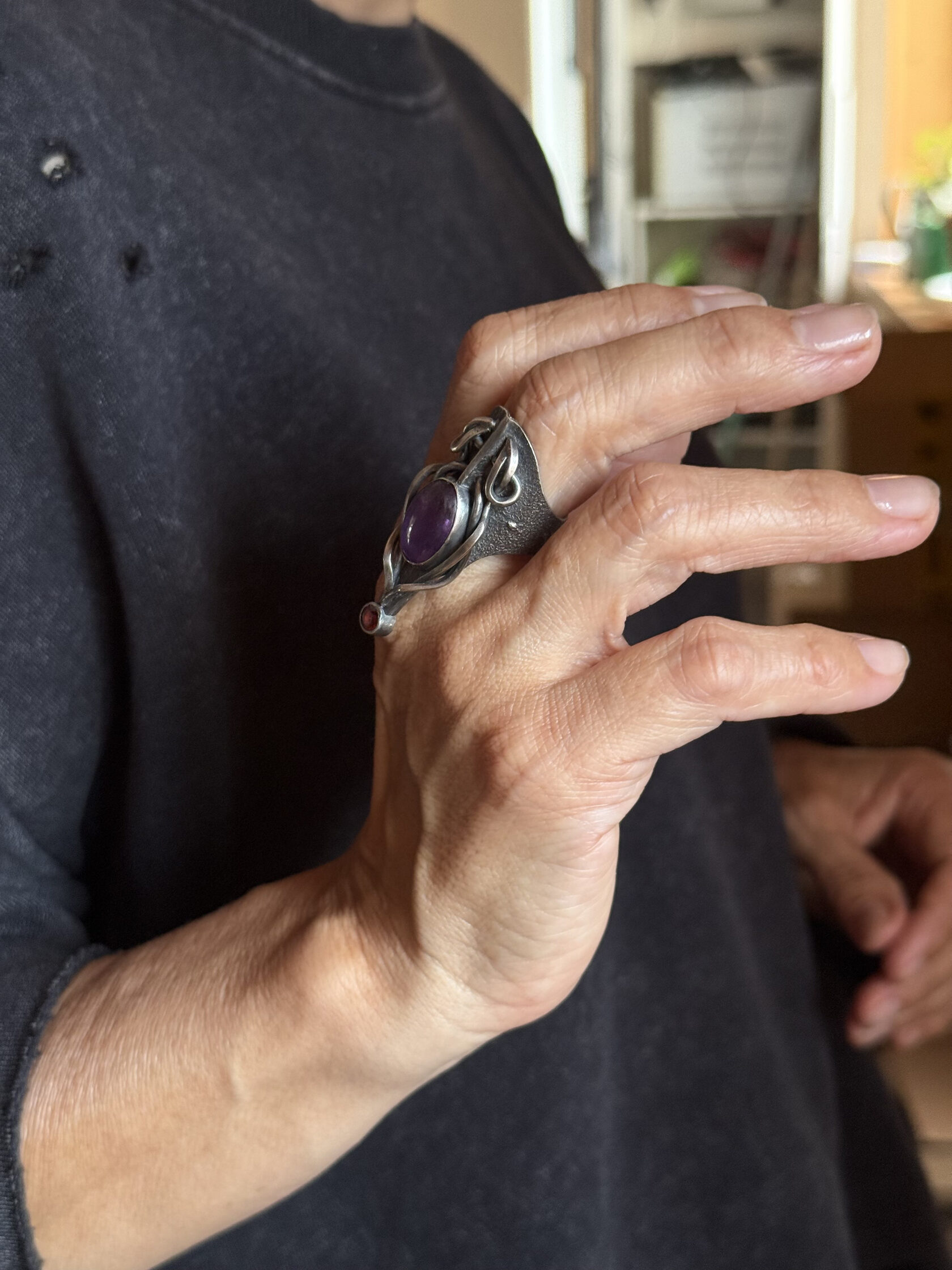

A good jeweler is not automatically the right jeweler for every project. A maker can be highly skilled while working in a different aesthetic, scale, material or construction language.
This page is specifically about choosing the maker. What custom jewelry is, exact costs and production timing are separate intents and are deliberately kept brief here.
Start with the portfolio, not the follower count
A large audience shows visibility, not project fit. Finished, attributable work is more useful evidence: form, scale, materials, stones, surface, detail and the range of problems the maker has actually solved.
There is no universal minimum number of portfolio pieces. You need enough real work to distinguish a consistent practice from one successful image.
Follower count cannot replace the portfolio and does not show whether the maker fits your project.
Look for a relevant portfolio, not just a beautiful one
A substantial sculptural ring, a minimal band, a complex stone-set piece and a traditional engagement ring are different tasks. A jeweler can be excellent in one area and not work in another aesthetic at all.
Good jeweler ≠ right jeweler for every project. Look for real work relevant to your intended form, scale, material or construction.
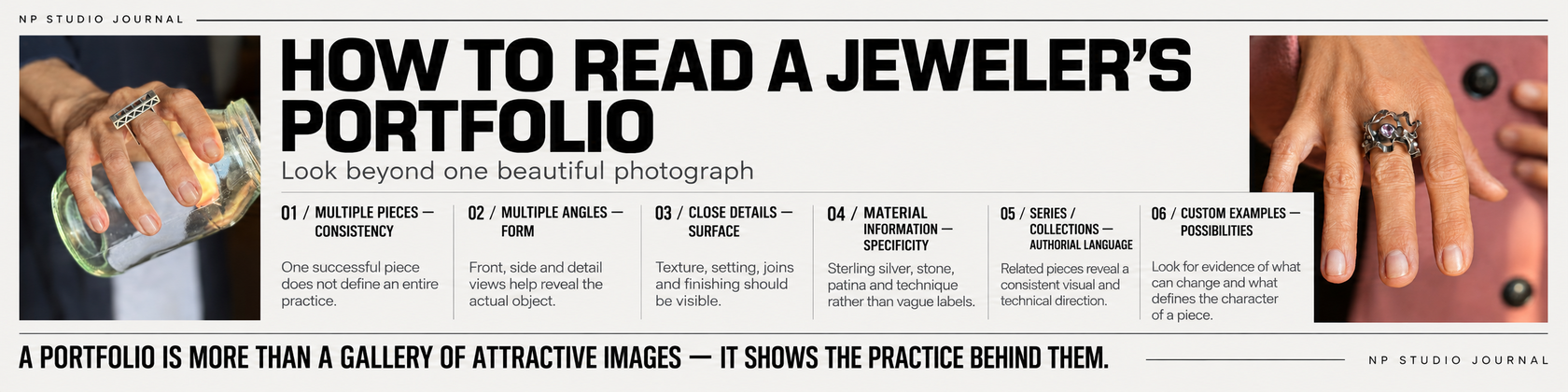
Look at several pieces, not one
One successful object does not reveal an entire practice. It is more useful to see a series, several pieces in the same category, multiple angles and work created over time.
This helps separate a consistent visual and technical language from a one-off experiment.
Understand who makes the work and how
An independent jeweler does not have to perform every operation personally. A small studio may work solo, use assistants, cast components, outsource specialist operations or combine handwork with CAD.
The useful signal is not a romantic rule that one pair of hands must do everything. It is process clarity: who is responsible for design and how production is organized.
A good custom-ring conversation begins with questions
It is normal for a jeweler to ask about ring type, style, size, metal, stone, budget, desired timing and examples you respond to. Those questions define the task before anyone promises a result.
GIA’s consumer guidance for engagement-ring shopping shows the same general pattern: a jeweler may ask about budget, style, metal, ring size and timing. This is an industry example, not a mandatory script for every independent studio.
Source: GIA — Questions a Jeweler Will Ask
Notice how the jeweler talks about limitations
A professional may explain why a form should change, why a particular stone does not suit the construction, why a ring may be uncomfortable or why the requested size affects proportions.
Refusing to copy another artist’s ring exactly is not a negative sign. An author-led jeweler may reasonably propose a new piece in a related direction instead. See Can a Jeweler Make a Custom Ring From a Reference Photo?
Materials should be named specifically
Before commissioning, you should be able to understand what the maker works with: sterling silver / 925, a specific gold alloy, natural stone, lab-grown stone, imitation, enamel or other materials.
“A silver ring with a blue stone” is less informative than a precise material description. This is not a gemstone guide; it is about communication clarity.
Read the individual work pages
A useful work page may state material, stone, size, weight, status, technique, surface treatment and whether a related commission is possible. That can tell you more about the practice than one social-media image.
Many NP Studio work pages separately list metal, stones, size, weight, status and surface characteristics.
Price should be discussable before making begins
Studios may use fixed prices, estimates, ranges, deposits, staged payments, full prepayment or other agreed structures. No single payment model is universally correct.
The key point is that the client should understand the agreed price or the logic used to calculate it before work begins. A full custom-ring pricing guide is a separate topic.
Timing should be realistic, not merely short
Timing depends on construction, stone, technique, workload, approvals and material availability. A fast promise before the task is understood is not necessarily more useful than a cautious estimate.
Clear communication means a realistic range and an explanation of the unknown factors that may affect it. This page does not set a universal number of weeks.
Important terms should exist outside a disappearing conversation
Before a serious commission starts, it helps to understand what is being made, how price is determined, the expected time frame, approval points, payment, delivery and what happens if the project changes.
Key terms are easier to manage when they can be recovered later from an email, message, order page or document. This is practical communication, not legal advice.
Reviews and social proof are useful, but not enough
Reviews can add information about other clients’ experiences, but reviews ≠ substitute for portfolio. Likewise, followers ≠ craftsmanship.
GIA’s consumer guidance recommends treating the jeweler as a trained professional and considering education, reputation and professional affiliations. For an independent artist-led studio, these are possible signals rather than a universal formula.
Source: GIA — How to Choose a Reputable JewelerSignals That Deserve a Closer Look
None of these automatically proves a problem, but each is a reasonable reason to ask more questions:
Do you need to choose a local jeweler?
Not necessarily. A remote commission can work when ring size, photographs, materials and approval stages can be communicated clearly.
Shipping, communication and possible resizing matter especially when you cannot meet the jeweler in person. If size is still uncertain, use How to Measure Ring Size and the Ring Size Chart.
What These Signals Can Look Like in Practice
NP Studio is a case study, not a universal standard. Works presents real objects, Collections shows recurring directions, About identifies the maker and approach, and Custom explains one route into a new piece.
The current Custom page states that an existing work, stone, form or new idea can be a starting point, and that an exact copy of an earlier piece is not the goal. Other studios may organize production and communication differently.
What a Real Portfolio Can Show
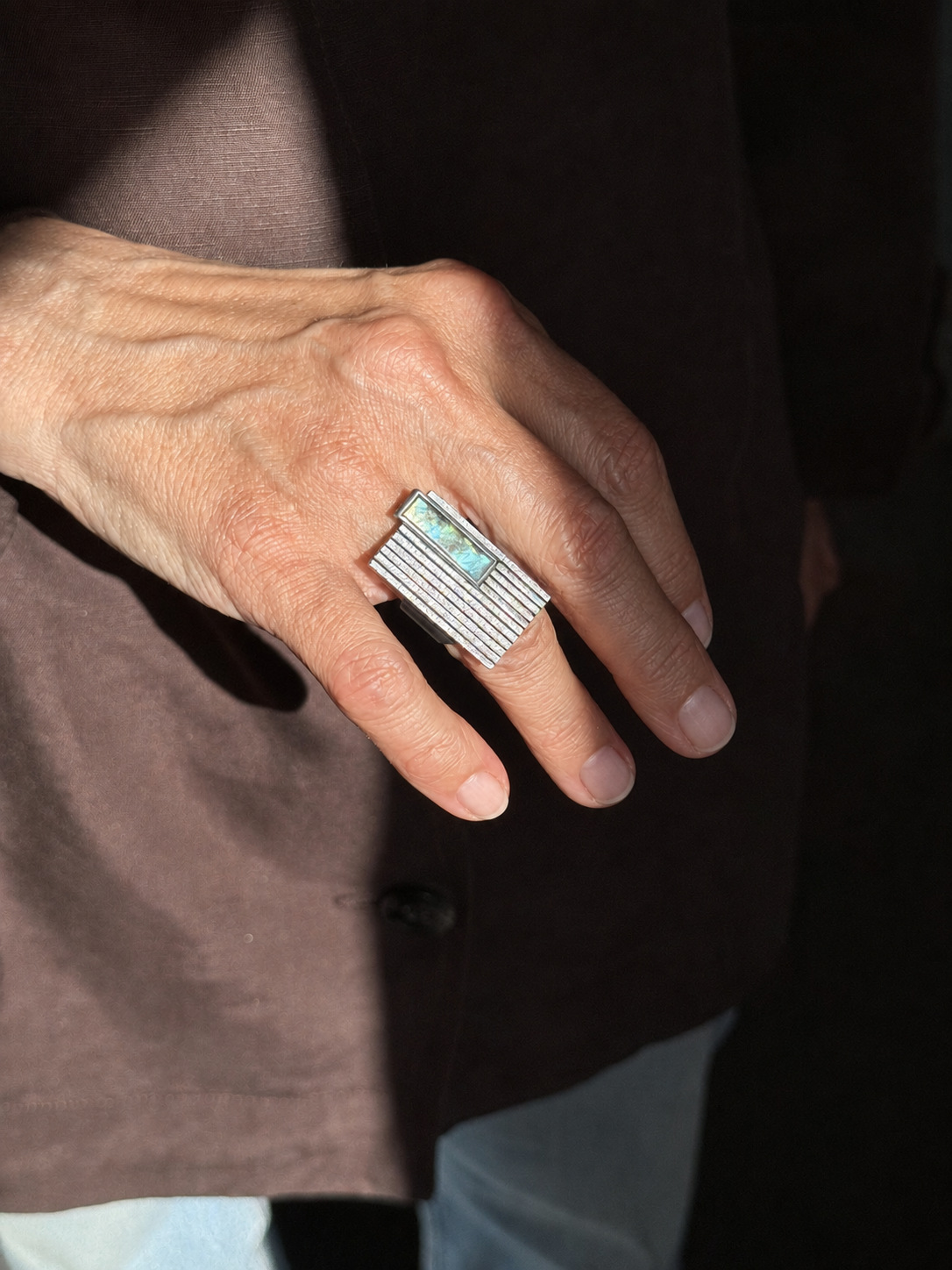 Lines with LabradoriteThe page states sterling silver, patina, labradorite, size, weight and work status.
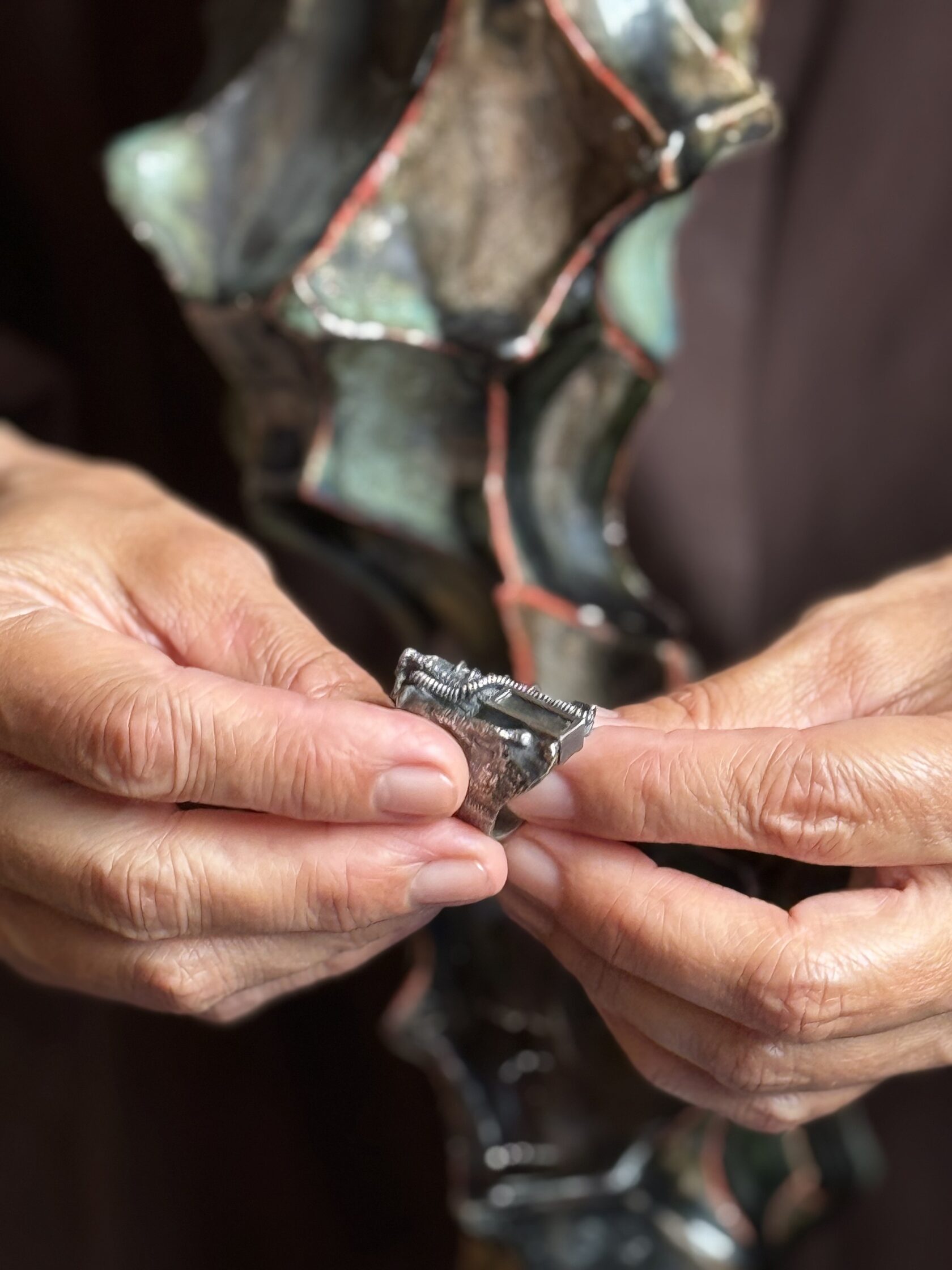 Bio with LabradoriteThe work shows a consistent visual language, specific material, stone and a clear making character.
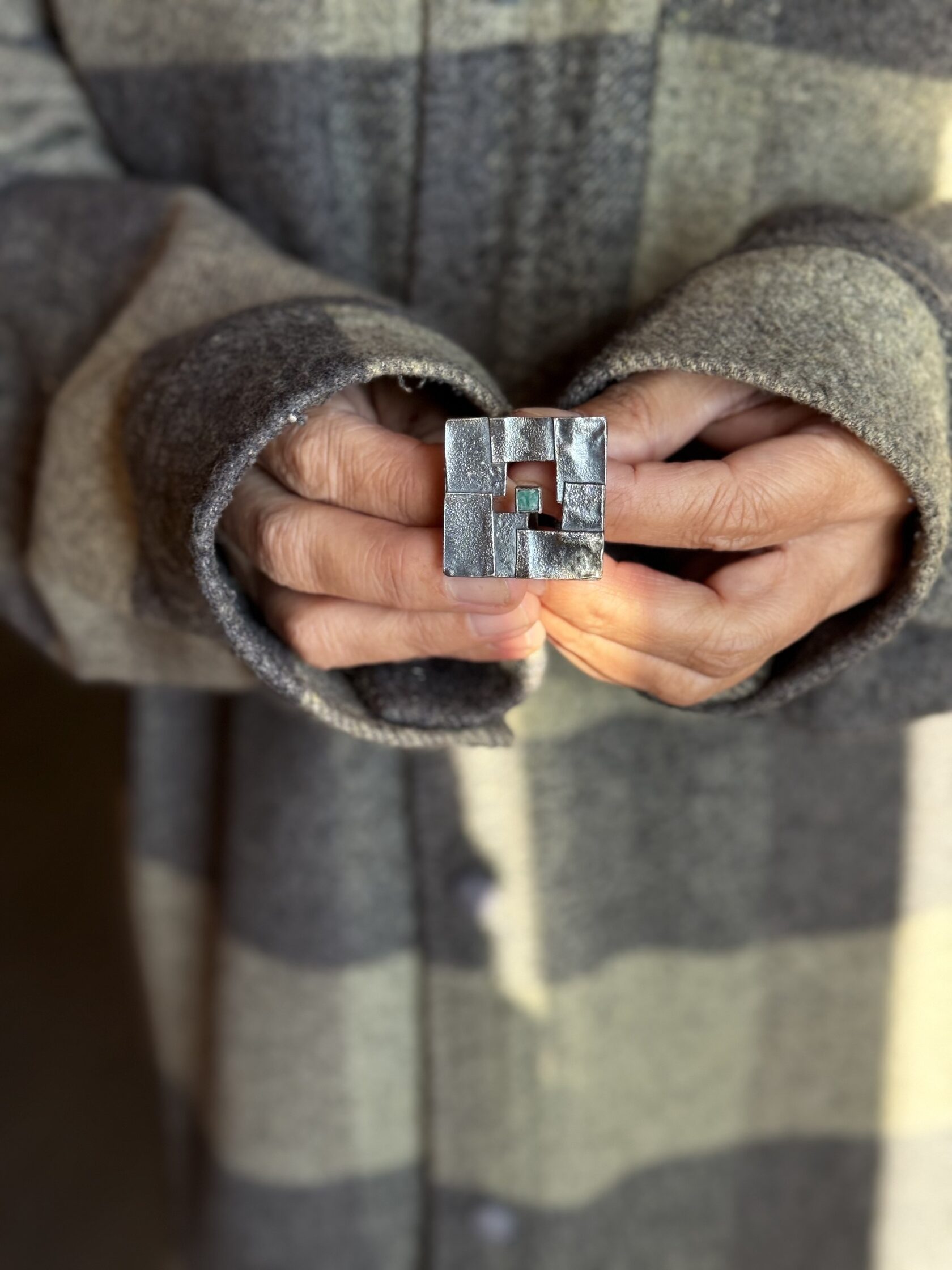 Grid ArchitectureThe page connects material, stone, size, weight and the method used to create the surface.
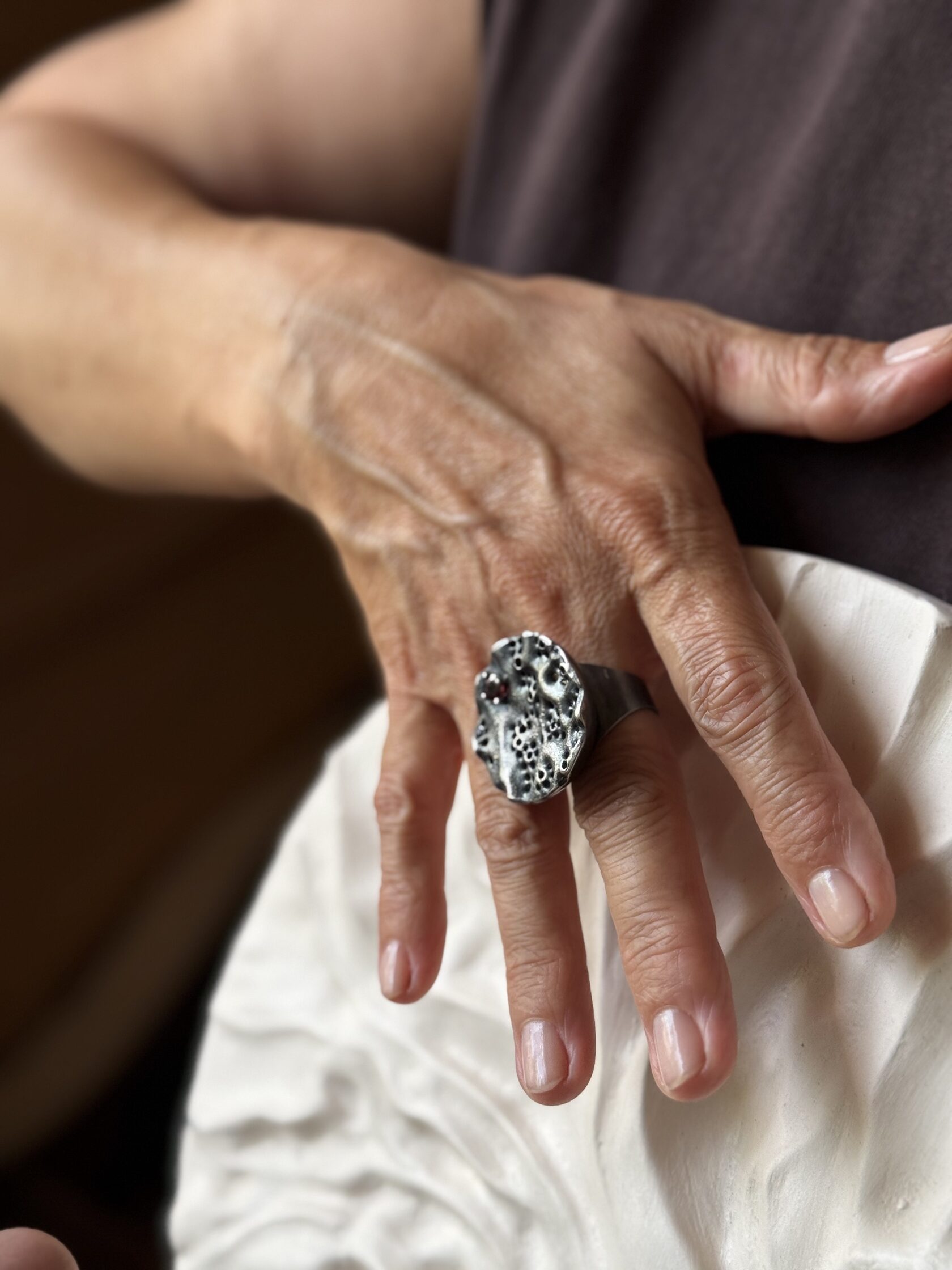 Surface with GarnetThe photograph and work page show form, material, stone and surface in the context of a specific finished object.
Frequently asked questions
Related NP Studio materials
If you first need the category and process, see What Is Custom Jewelry?. If you have not found a maker yet, use Where to Find Unique Jewelry from Independent Artists. For sizing, use the separate measuring guide and chart.
