1. Is one photograph enough to make a ring?
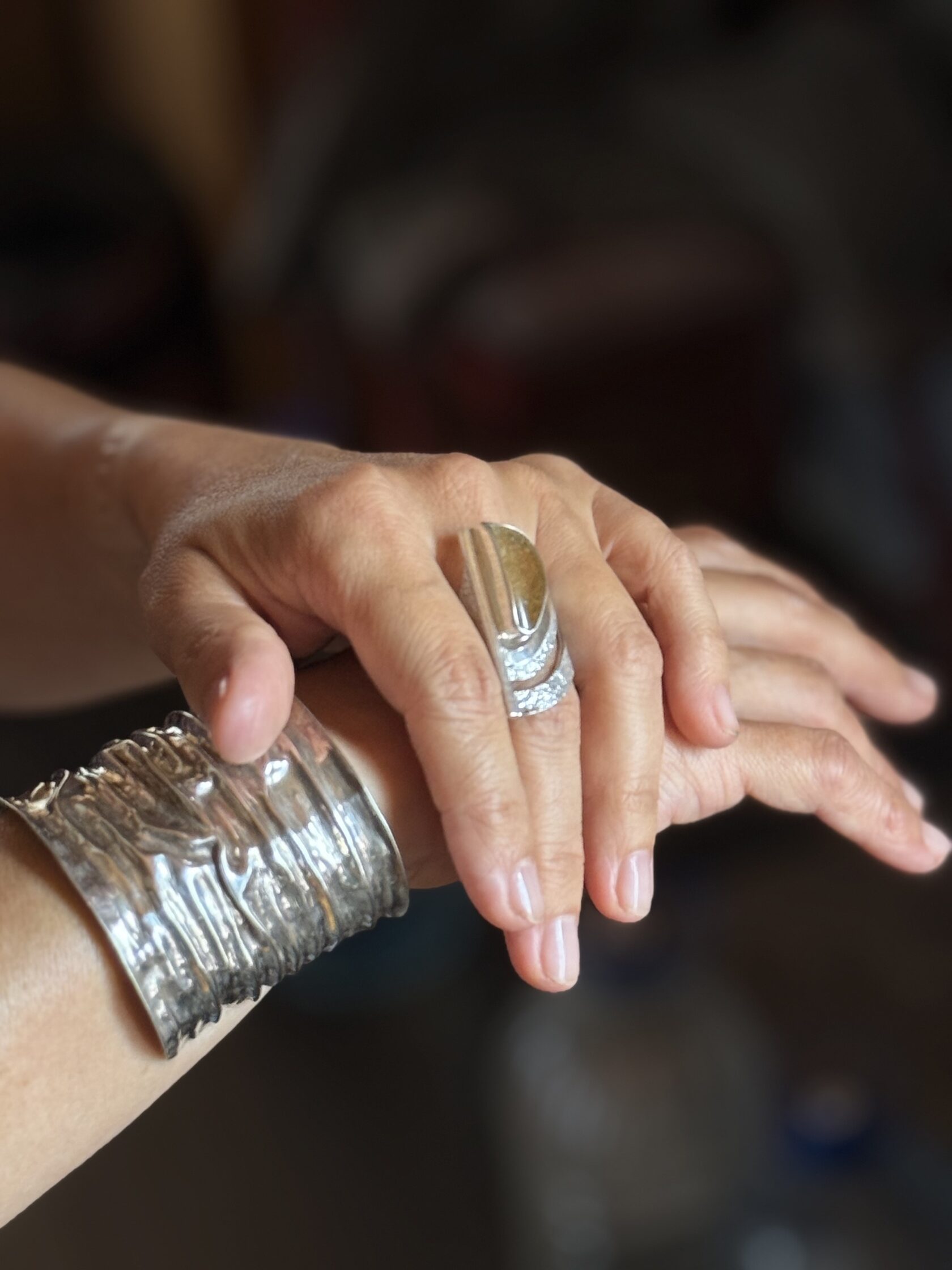
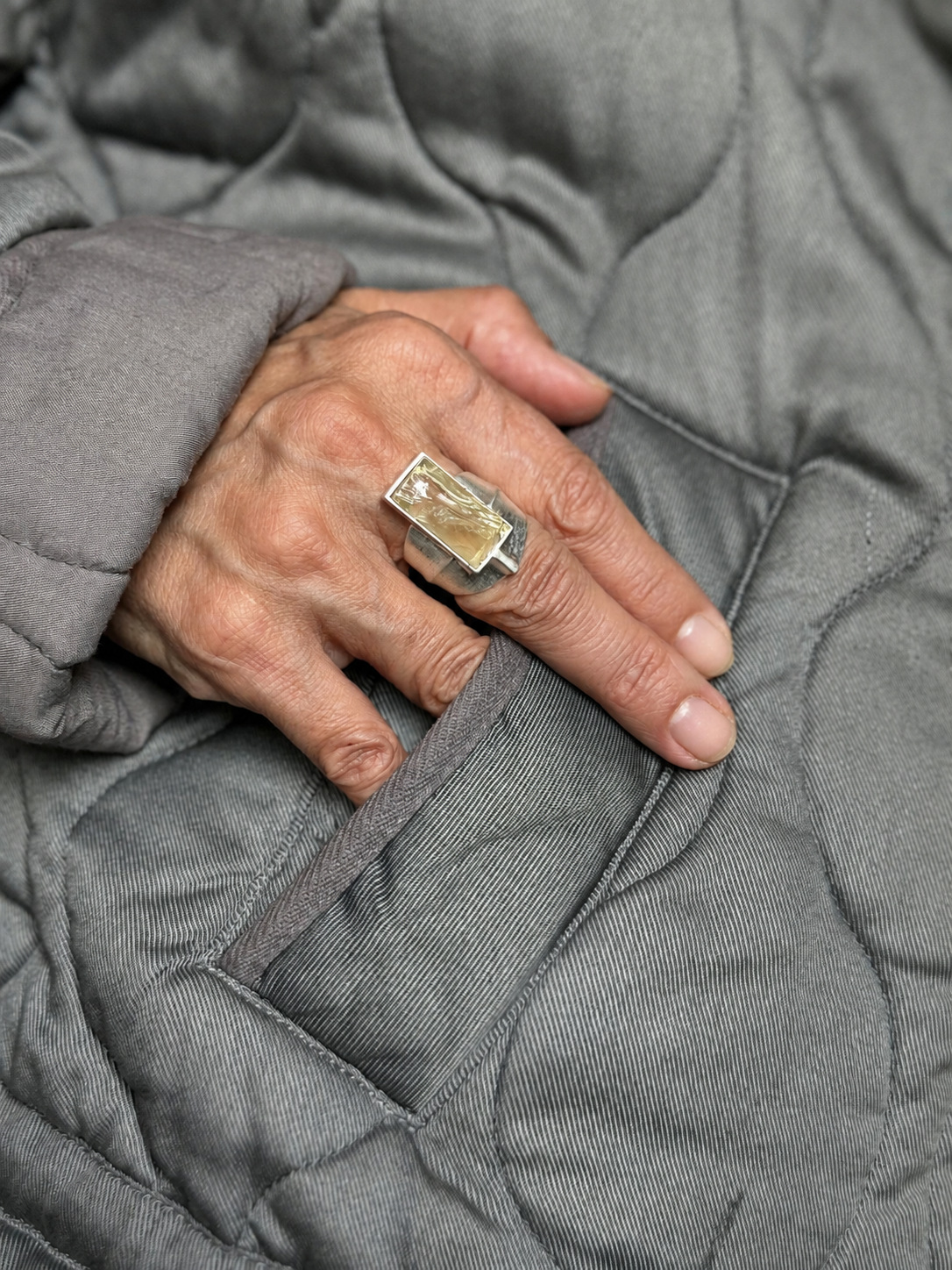
Usually not. One image can show silhouette, style and some proportions, but it cannot reveal exact height, internal geometry, metal thickness or the hidden side of the construction.
NP STUDIO / JOURNAL / CUSTOM RING / REFERENCE PHOTO
Yes. A photograph can be a useful starting point for a custom ring, but it is not a technical drawing. One image cannot reliably reveal every dimension, height, internal geometry, metal thickness, exact stone size or hidden construction.
A useful commission starts by identifying what matters in the reference, what measurements are known and what elements may change rather than assuming the photograph can be reproduced one-to-one.
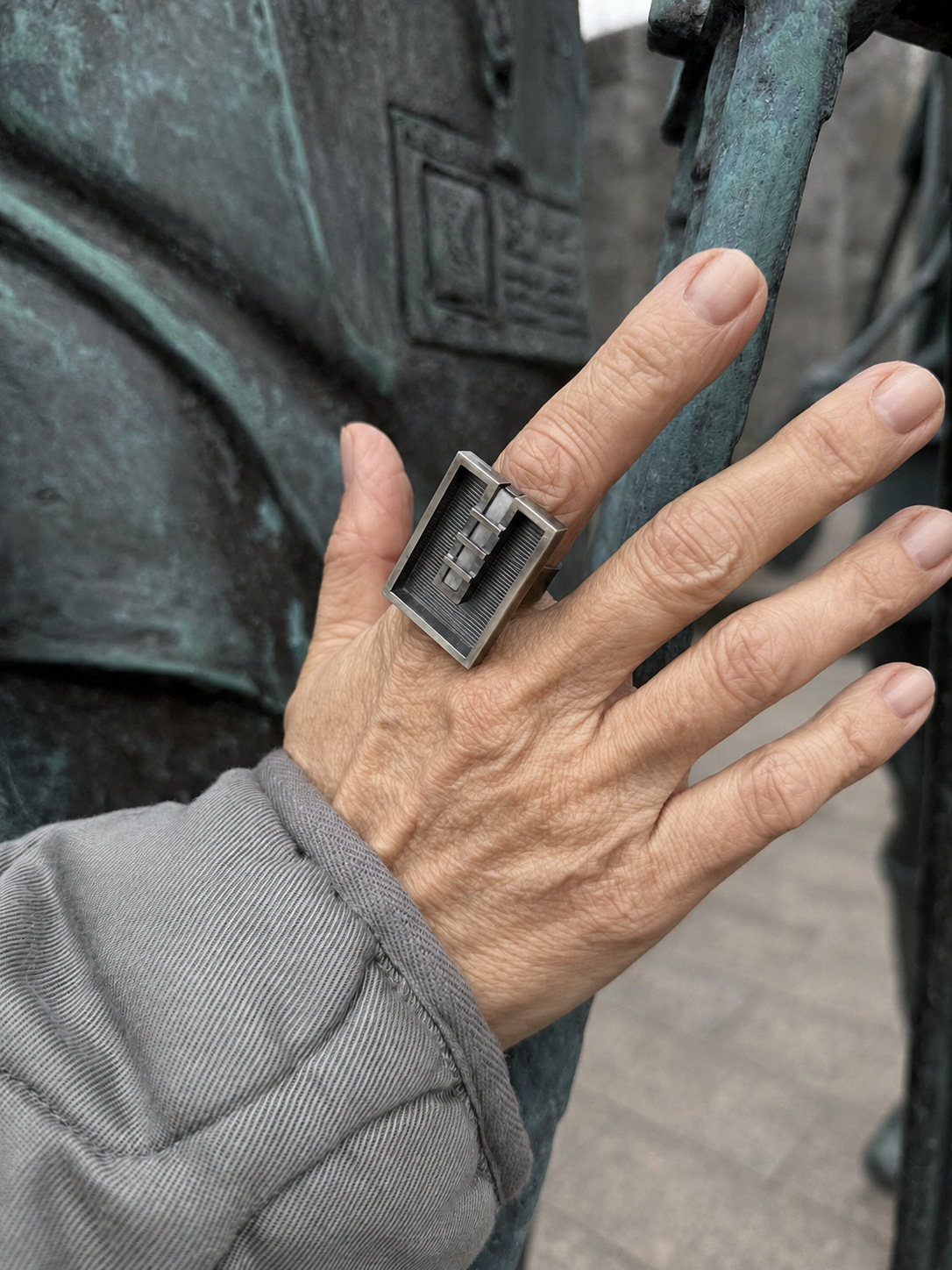
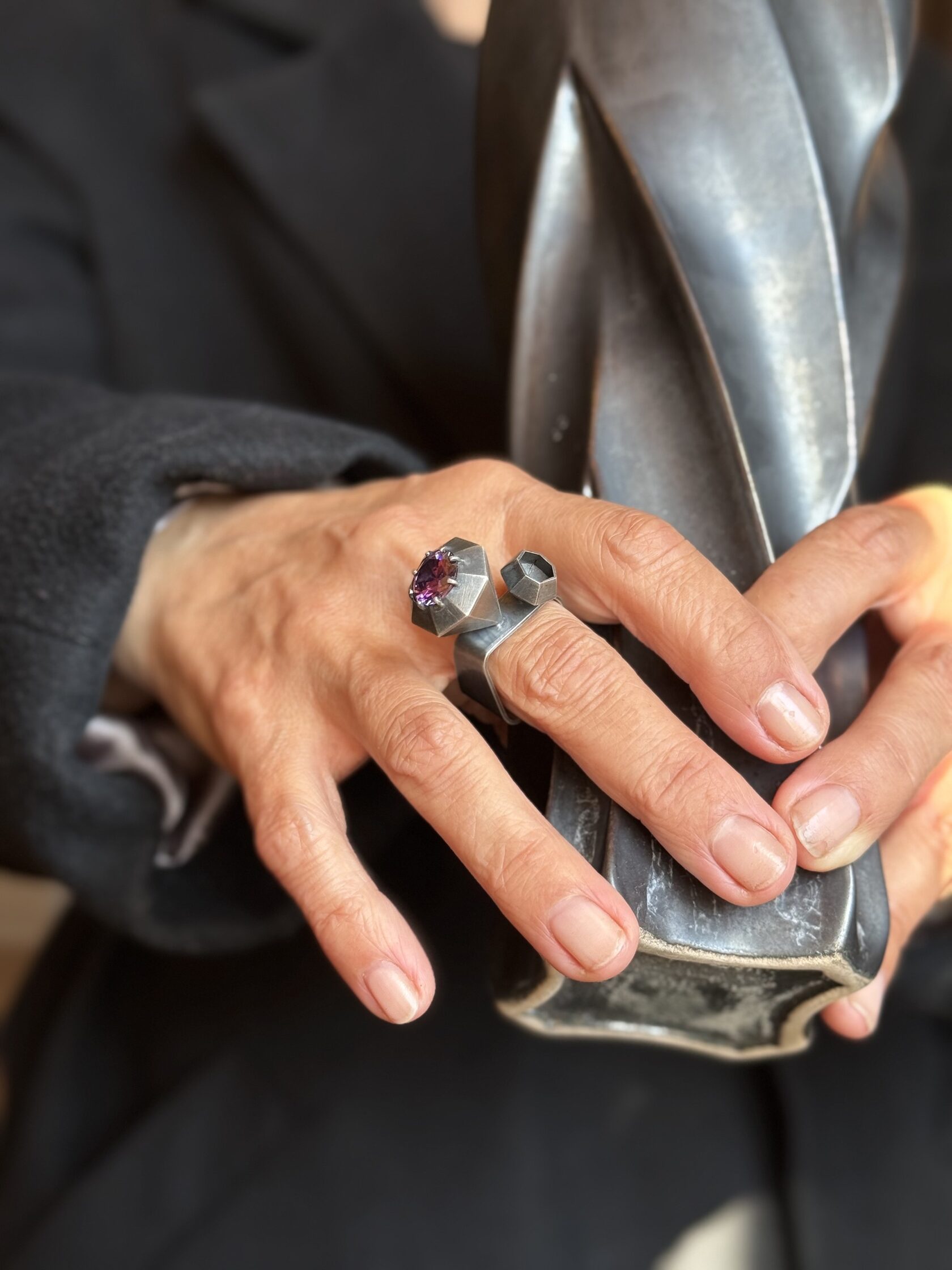
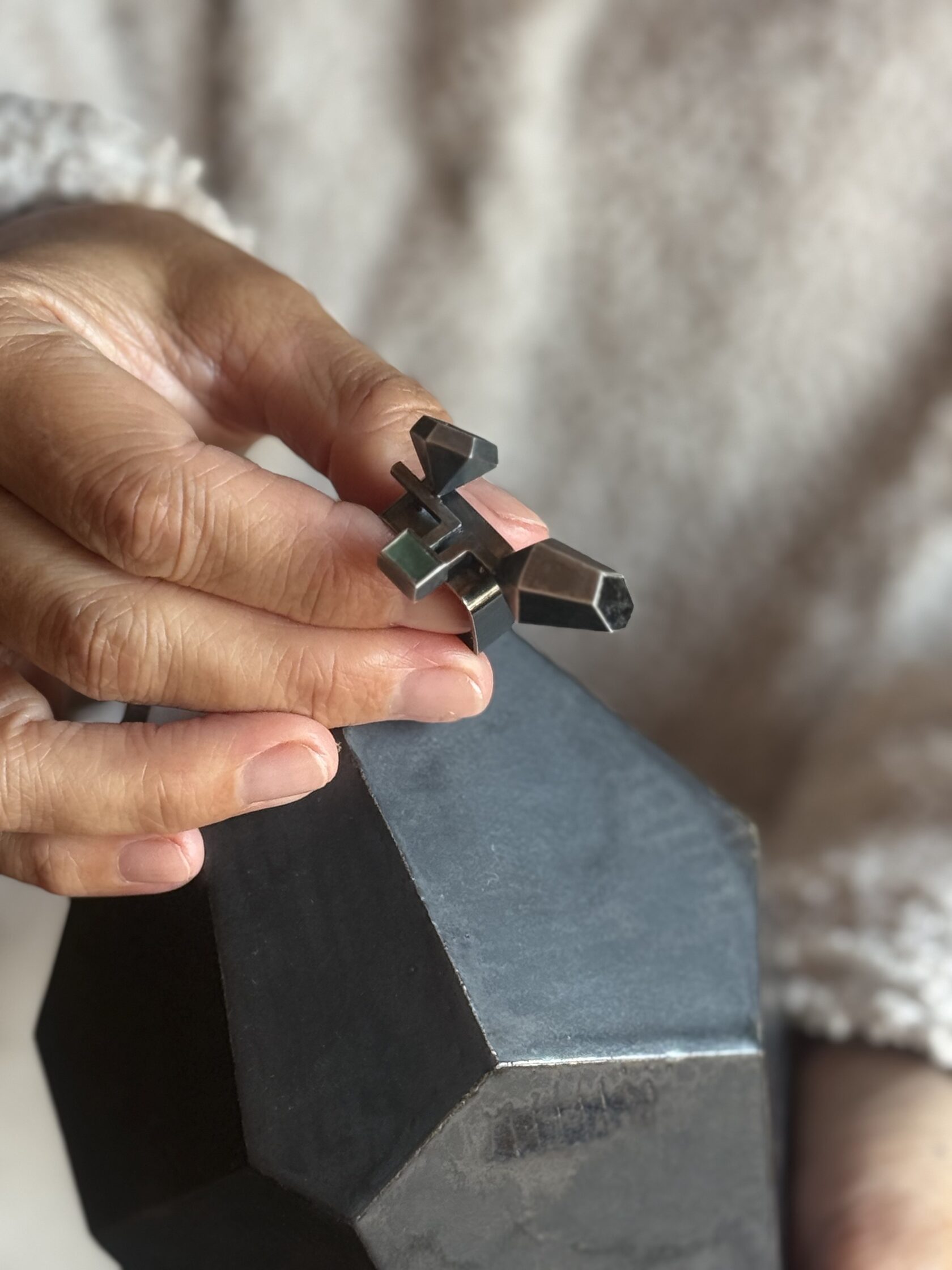
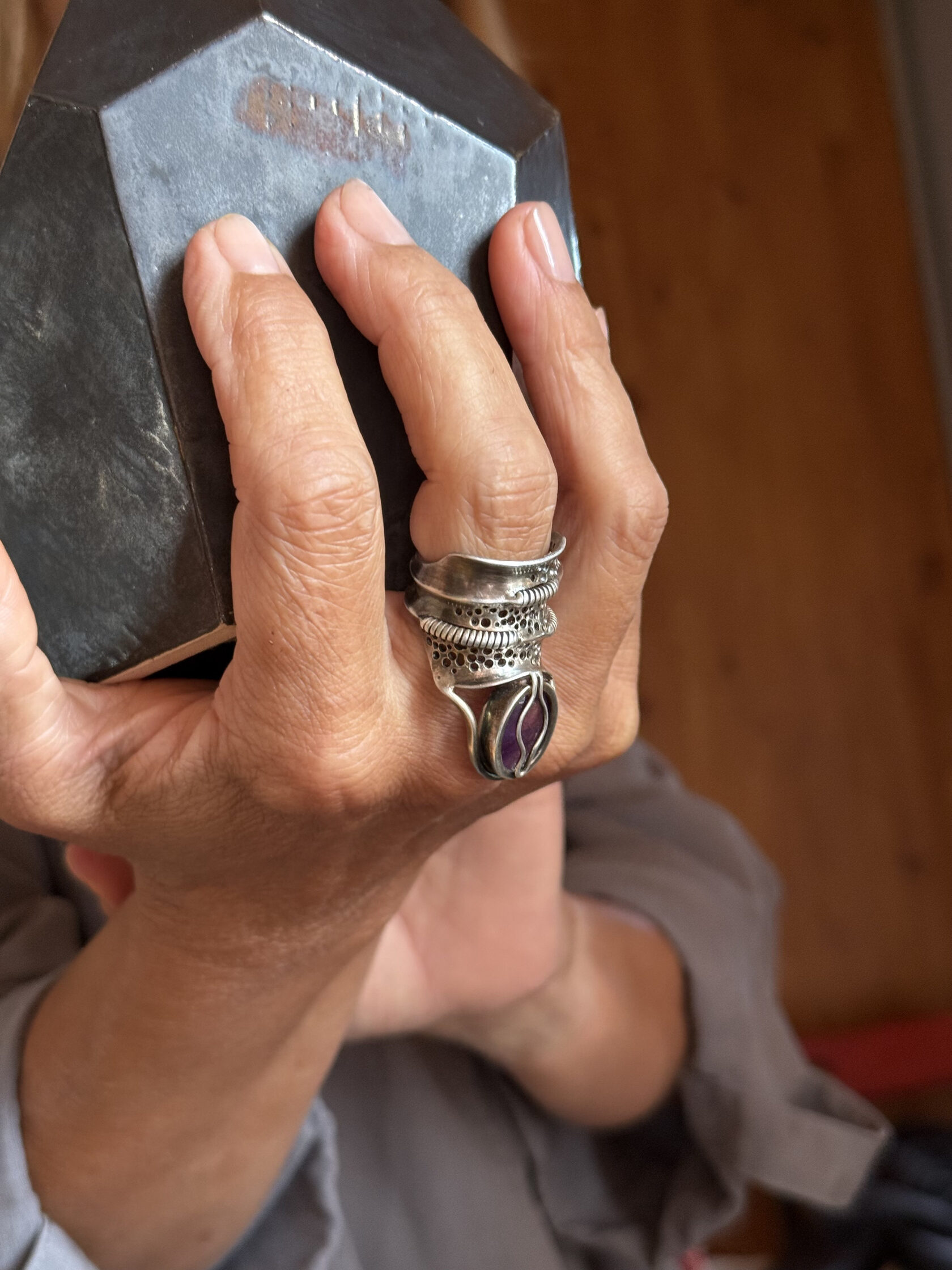
A good reference can communicate direction: silhouette, broad proportions, visual style, the relationship of the stone to the top structure, surface character, line direction and the overall mood of the piece.
That is already useful. A photograph creates a visual vocabulary for the conversation instead of leaving the request at “I want an unusual ring.”
A reference can communicate design direction, but it does not replace real measurements or a construction decision.
Something that looks “wide” or “thin” in a photo is still not a millimetre measurement.

ONE PHOTO ≠ COMPLETE 3D GEOMETRY. A frontal image cannot reliably provide the inner diameter, wall thickness, stone depth, underside construction, hidden joints, comfort clearances or exact material specification.
FRONT VIEW ≠ SIDE PROFILE. A ring may look relatively flat from the front while the side view reveals a high top. Or a substantial object may appear smaller because of perspective and crop.
A useful reference pack therefore works better with several real views. The infographic below uses actual NP Studio Work-page angles — front, side, three-quarter and underside — rather than inventing geometry that is not visible.
The apparent size of a ring depends on more than the ring itself. Perspective, camera distance, crop and hand size can all change the way scale is perceived.
RING SIZE ≠ SCALE OF EVERY ELEMENT. Knowing the finger size does not automatically tell the jeweler the width of the top, metal thickness or gemstone dimensions. Those values still need to be measured or agreed as part of a new construction.
STONE APPEARANCE ≠ KNOWN STONE SIZE. A photograph can suggest color, shape and the visual relationship between stone and metal, but it does not confirm exact length, width and depth.
If you already own the gemstone, send real L × W × D measurements in millimetres. Carat weight alone does not define setting geometry. For customer-supplied stones, see Can a Jeweler Use Your Own Gemstone in a Custom Ring?.
A side view can reveal top height, setting depth, clearance above the finger, stone angle, body thickness and structural relationships that a frontal image can hide.
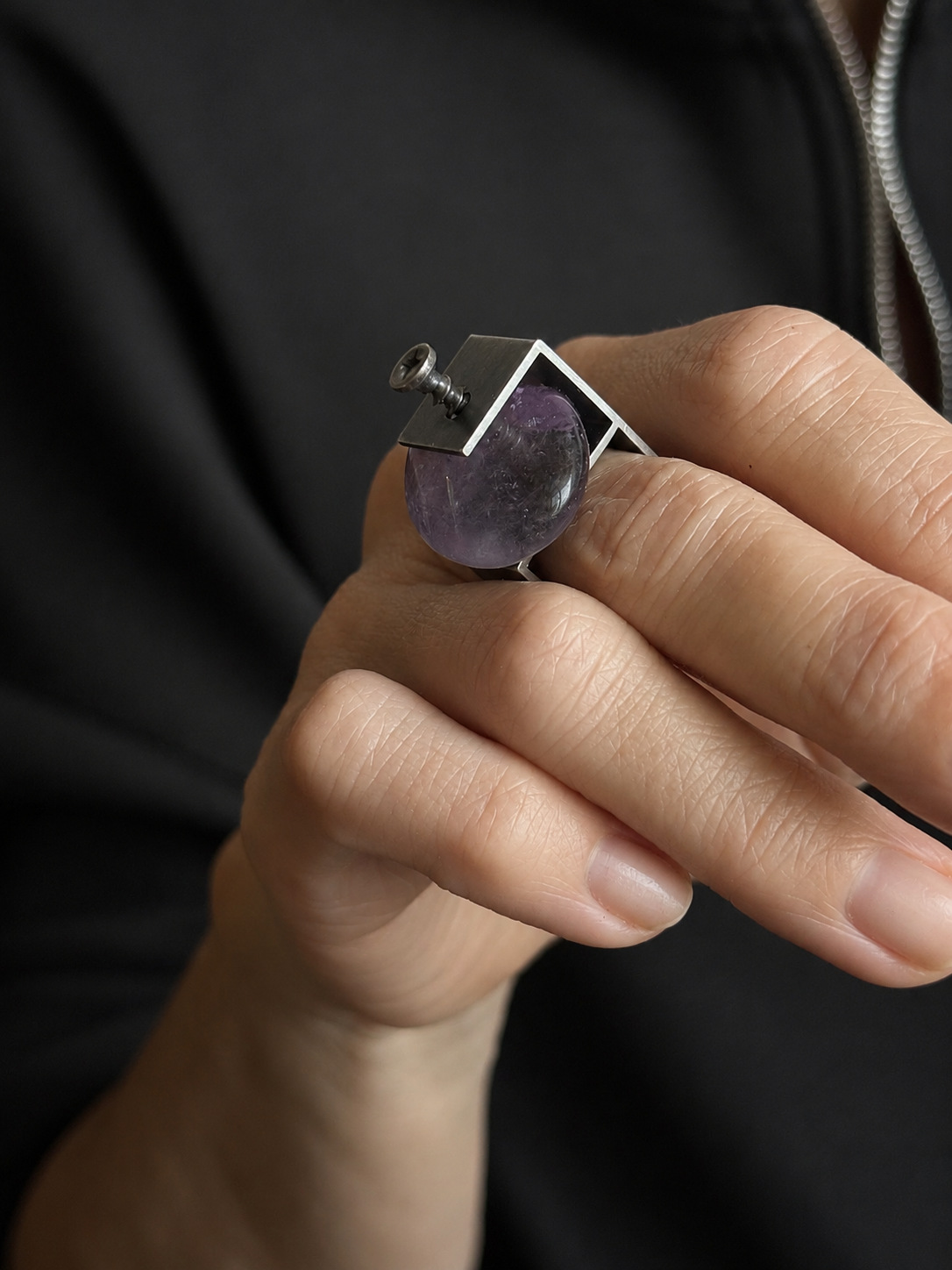
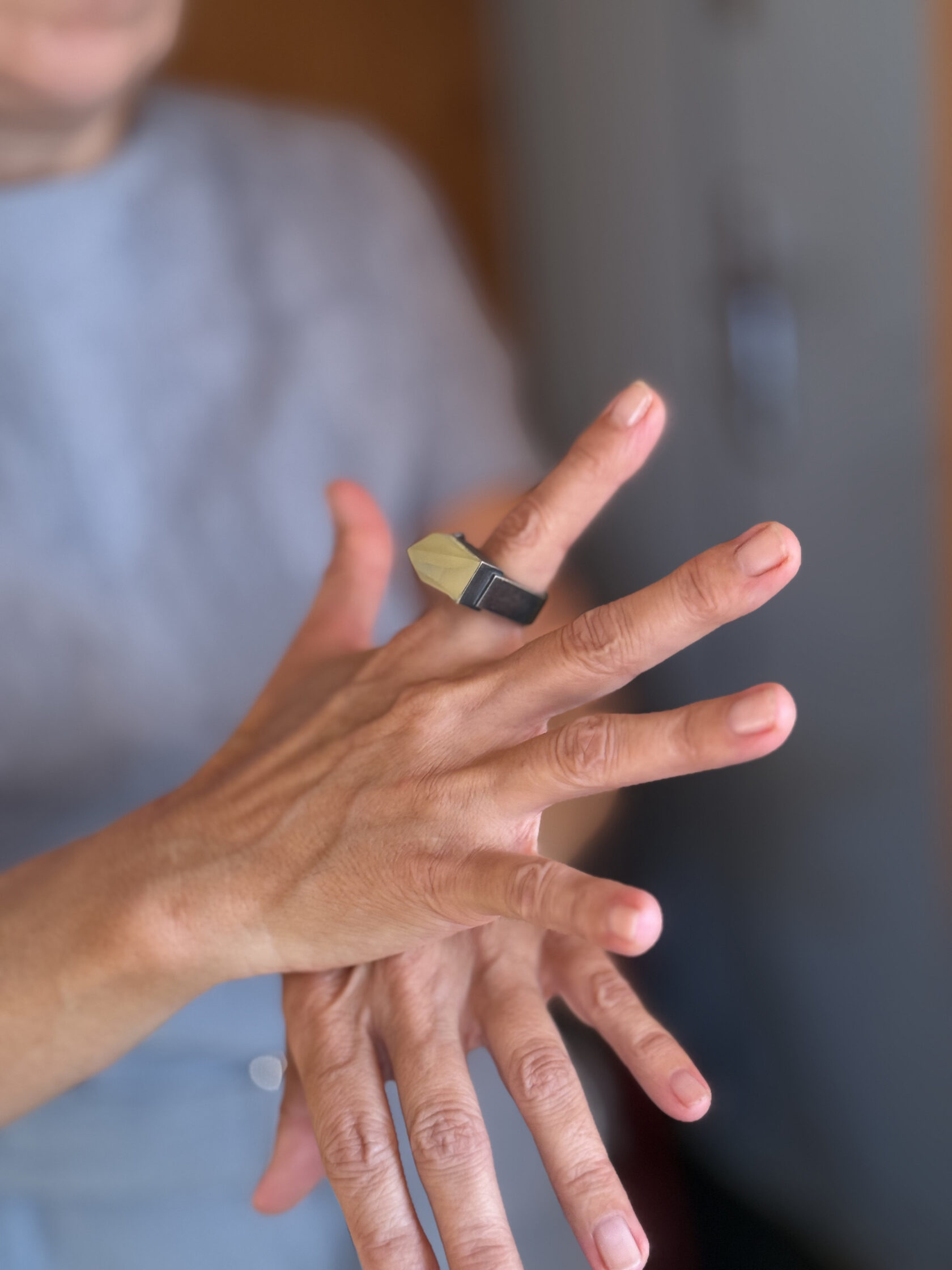
If the reference question is specifically about setting rather than overall form, see Bezel vs Prong Setting instead of trying to infer the setting from one frontal photograph.
SIMILAR IDEA ≠ EXACT COPY. NP Studio uses earlier works as a direction: the character, silhouette or compositional principle can remain recognisable while the stone, size, surface, line, patina, proportions and construction change.
CUSTOM DESIGN ≠ AUTOMATIC REPLICA. When the reference is another artist’s jewelry, NP Studio does not make an exact copy. The practical conversation is instead about qualities: mass, line, stone position, surface, asymmetry or another feature that can be reinterpreted in an independent work.
GOOD REFERENCE ≠ PERMISSION TO COPY ANOTHER ARTIST. This is a studio practice rule, not legal advice. Design-protection rules differ by jurisdiction.
Yes. One image may define the silhouette, another the surface and a third the stone relationship or mood. But the result should not become a mechanical collage of unrelated details.
It is more useful to treat references as a vocabulary: “I like the mass here,” “the line here,” “this calm surface here.” The jeweler can then build one coherent construction for the real size, material and stone.

When an earlier NP Studio work is the starting point, it provides direction rather than a promise of an identical duplicate. The Work pages state this directly: a new version can change stone, size, proportions, surface and individual elements.
When the starting point is another artist’s jewelry, the discussion focuses on what should be reinterpreted rather than on copying the object.
| Parameter | What should be clear |
|---|---|
| Ring size | The real size, not a visual estimate from a photograph of the hand. |
| Gemstone | Which stone is being used; if it already exists, exact L × W × D and condition. |
| Scale | Approximate width, height and intended degree of visual mass. |
| Key constraints | Daily wear, height, snagging, comfort and which elements may change. |
| Budget | A comfortable range if it affects metal mass, stone choice or construction complexity. |
| Deadline | A real date if timing is critical. |
| Communication | What must be agreed before work starts and which design decisions can remain with the maker. |
On the Custom Work page, NP Studio asks for a link or reference, ring size, hand photo, preferred stone, comfortable budget and a short description for the first conversation. If you are still choosing the maker, see How to Choose an Independent Jeweler for a Custom Ring.
Usually not. One image can show silhouette, style and some proportions, but it cannot reveal exact height, internal geometry, metal thickness or the hidden side of the construction.
A photograph still does not contain complete 3D information. NP Studio also does not make exact copies of another artist’s jewelry; a reference is used as a starting direction for a new piece.
At minimum, the ring size. If you own the gemstone, send its length, width and depth in millimetres. For a large design, target width and overall scale are also useful.
It reveals top height, setting depth, clearance over the finger, stone angle and structural relationships that a frontal image can hide.
Not reliably. STONE APPEARANCE ≠ KNOWN STONE SIZE. Without a scale reference and real measurements, apparent size remains approximate.
Sometimes. In that case the real L×W×D and condition of the stone become technical starting data, and the construction has to be adapted to the actual insert.
Yes. Several references can build a design vocabulary: one line, another surface and a third type of upper structure. The final construction still needs to be coherent.
That is enough for a first conversation, but not enough to reconstruct the reference. Scale, gemstone, material, preferred height and the specific qualities you like still need discussion.
Yes. In custom work those changes may be useful or necessary because of ring size, gemstone, comfort, wear pattern or the chosen construction.
That depends on what is agreed as essential: silhouette, mood, gemstone, proportions or a particular design gesture. The result can clearly relate to the reference without becoming a one-to-one copy.
NEXT STEP / CUSTOM
For the first conversation, one to three relevant images, the ring size and a short explanation of what matters in the reference are enough.
Discuss a Custom RingNEXT STEP / WORKS
The archive works best as a visual vocabulary for new work, not as a catalogue of designs to duplicate exactly.
Works Collections