What is a bezel setting?
A bezel holds a gemstone with a rim of metal around all or part of its perimeter. A full bezel surrounds the entire edge; a partial bezel leaves selected sections open.
NP STUDIO / JOURNAL / STONE SETTING
A setting is not a decorative afterthought. It affects edge protection, stone exposure, profile, snagging, maintenance and the way the gemstone belongs to the overall ring.
Choosing between bezel and prong from a photograph alone is therefore not enough. The same setting label can perform very differently depending on the stone, its shape, workmanship and how the ring will actually be worn.
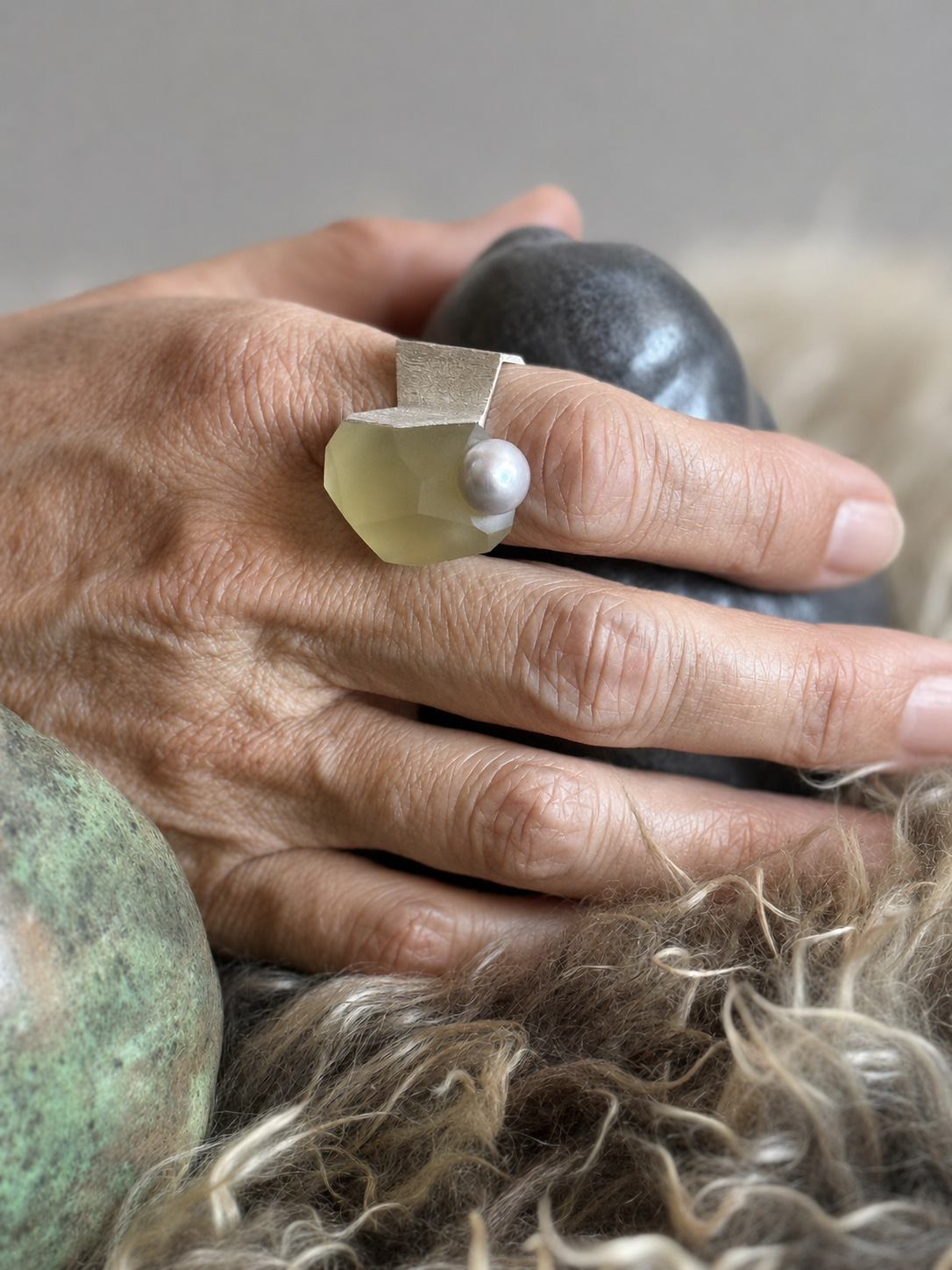
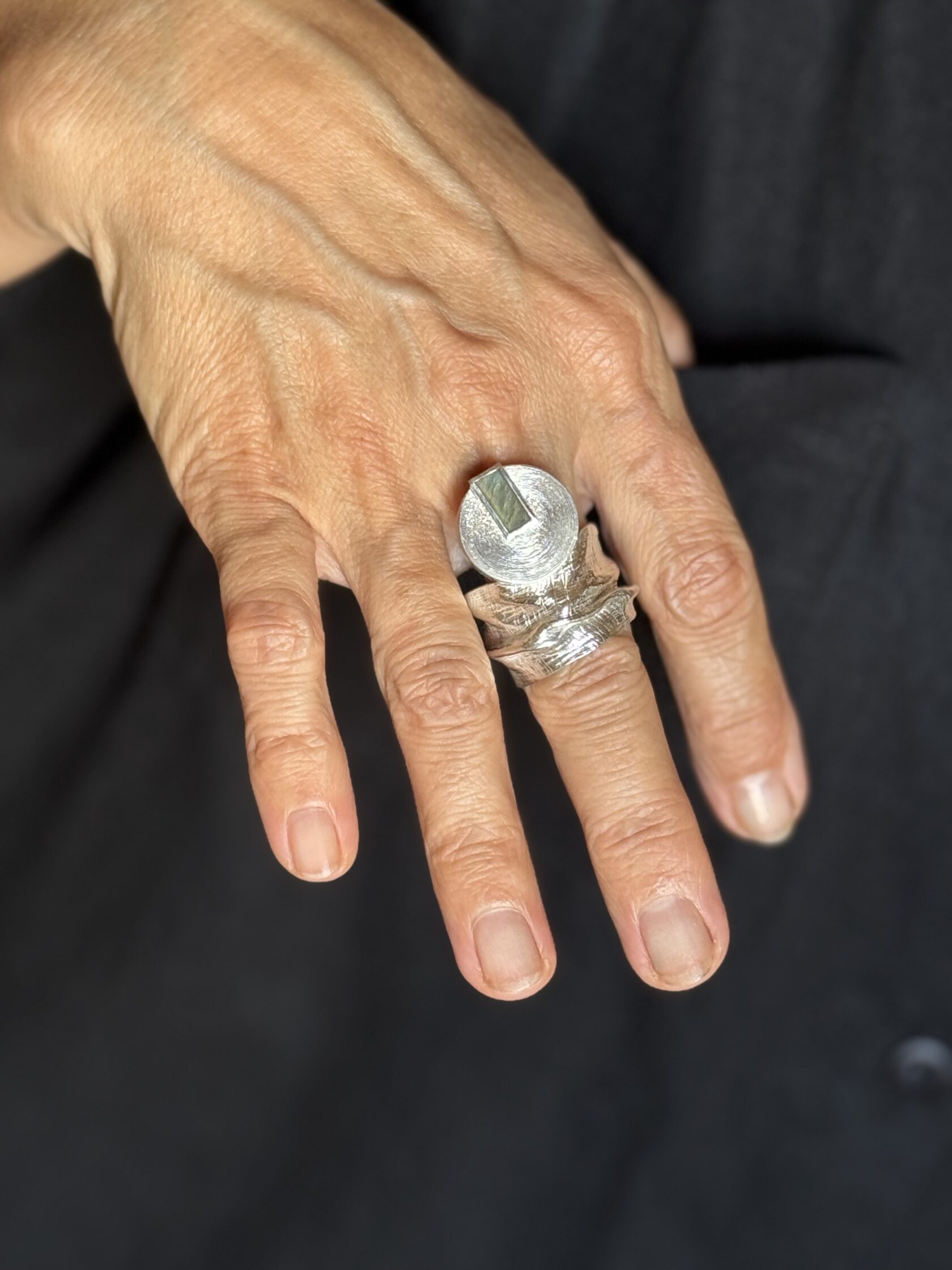
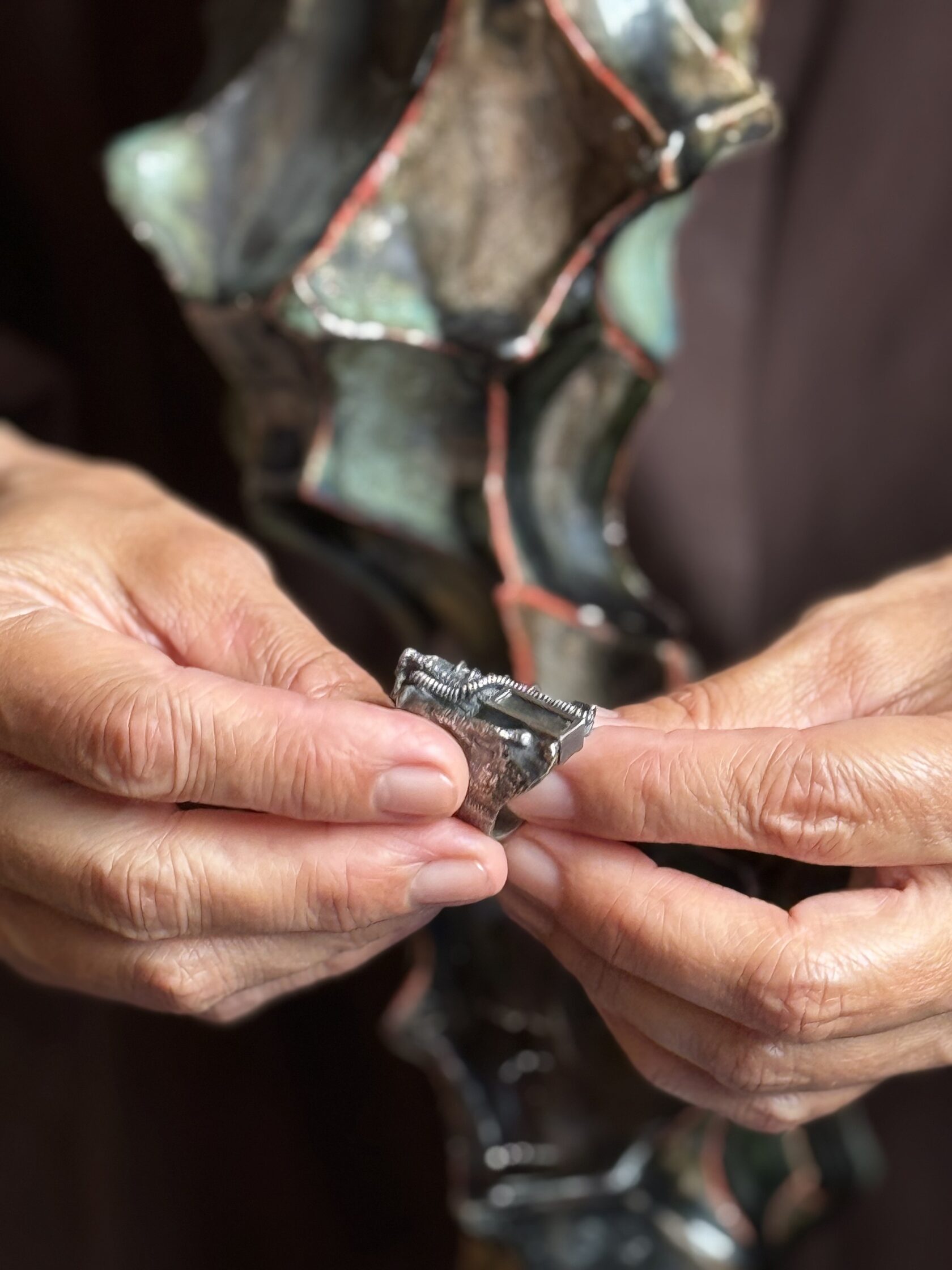
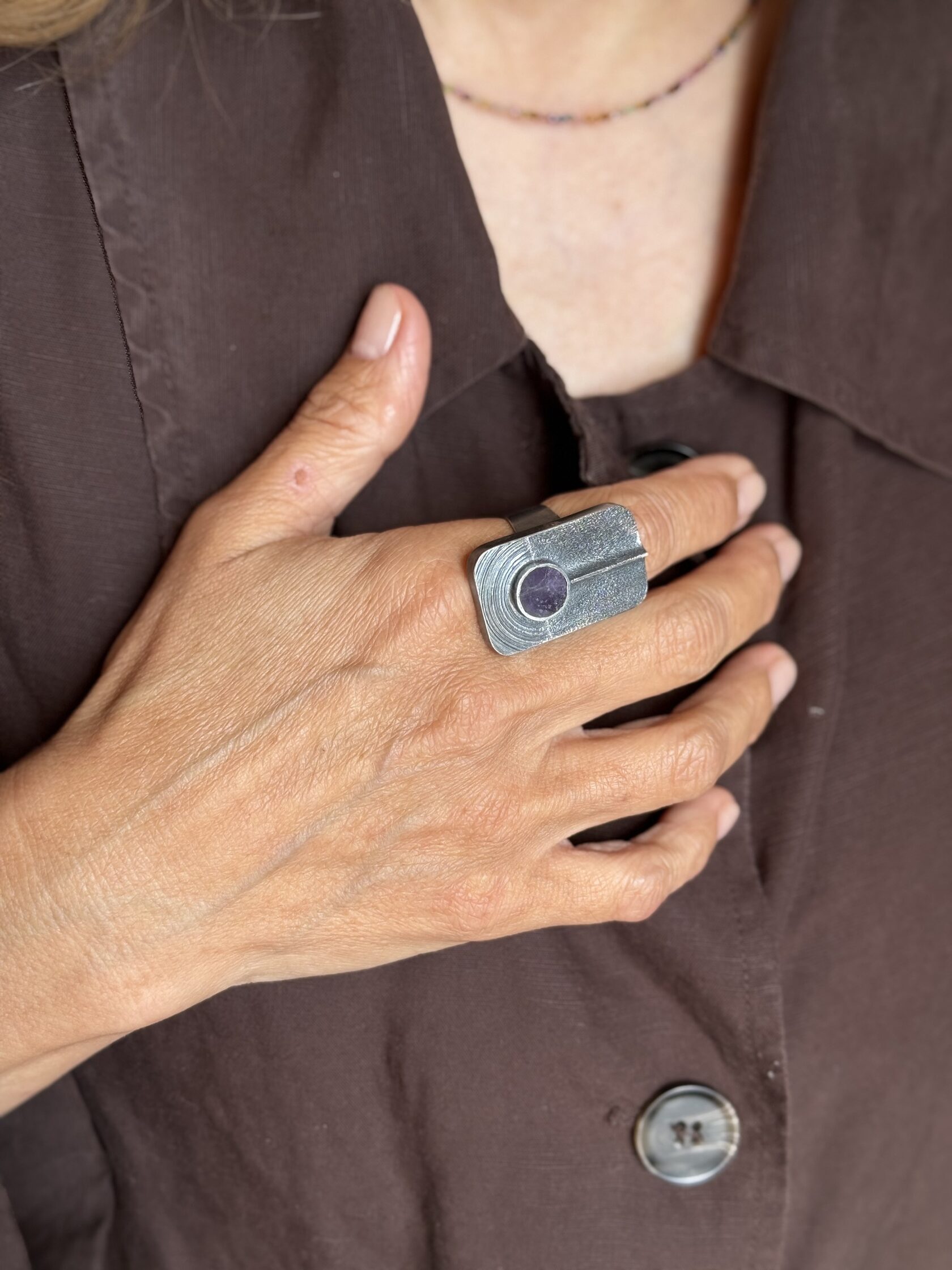
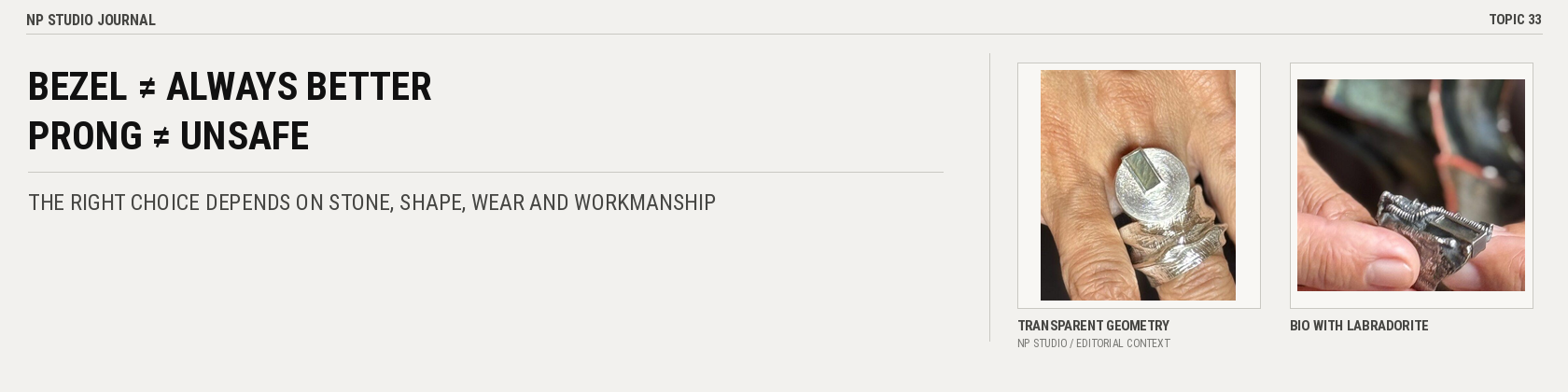
A bezel generally protects more of a gemstone’s edge and creates a smoother profile, while prongs leave more of the stone exposed and more open space around a faceted gem. Neither is universally better: the right choice depends on the stone, its shape and vulnerable points, the ring design, how it will be worn and the quality of workmanship.
In a prong setting, separate metal claws rise from the mounting and bend over the gemstone’s edge to hold it in its seat.
The main visual characteristic is openness. Less metal surrounds the gemstone, so more of the stone remains visible and there is more open space around a transparent faceted gem. That does not make prongs inherently unsafe.
Security depends on appropriate design, precise seating, adequate metal contact, correct prong shape and workmanship. The setting label alone does not guarantee—or remove—security.
A bezel secures the stone with a continuous or partial rim of metal around its edge. A full bezel surrounds the entire perimeter; a partial bezel leaves selected sections exposed.
Because more of the perimeter is covered, a bezel usually creates a smoother outer profile and can provide substantial edge protection. But “bezel” is not automatically the better solution.
A bezel also changes stone visibility, open space, light behavior and the visual weight of metal around the gem. The choice has to suit the specific stone and ring.
| Criterion | Bezel | Prong |
|---|---|---|
| Edge protection | Covers more or all of the perimeter. | More edge remains exposed between prongs. |
| Stone visibility | Some perimeter is covered by metal. | Usually more of the stone remains visible. |
| Open space around a faceted stone | Generally more enclosed. | Generally more open. |
| Snagging | Usually a smoother profile. | Projecting tips depend on correct form and condition. |
| Profile | Can be low and streamlined. | Can be more open and projecting. |
| Maintenance | Still requires inspection. | Prongs need periodic checking. |
| Vulnerable corners | Can cover substantial perimeter. | Pointed shapes may use dedicated protection such as V-prongs. |
| Design effect | Metal creates a stronger frame around the stone. | Stone reads more separately from the surrounding metal. |
| Everyday wear | Often useful when a smooth profile matters. | Also suitable for everyday wear when properly designed and maintained. |
| Universal winner | No. | No. |

“Which setting is safer?” is too broad until you identify what is vulnerable: the entire girdle, a pointed corner, a thin edge, a projecting tip, the surface of an irregular stone, or the quality of the seat itself.
A bezel usually covers more of the perimeter. Prongs leave more edge exposed, but they can protect specific vulnerable points through dedicated designs. GIA notes that V-shaped prongs are used for pointed corners on shapes such as pear, marquise, heart and princess.
MORE METAL ≠ AUTOMATICALLY MORE SECURITY. Extra metal cannot compensate for a poor seat, weak engineering or bad workmanship. A correctly designed open setting can hold a stone securely.
SETTING TYPE ≠ WORKMANSHIP QUALITY. Security = appropriate design + correct execution + maintenance, not merely the name of the setting.
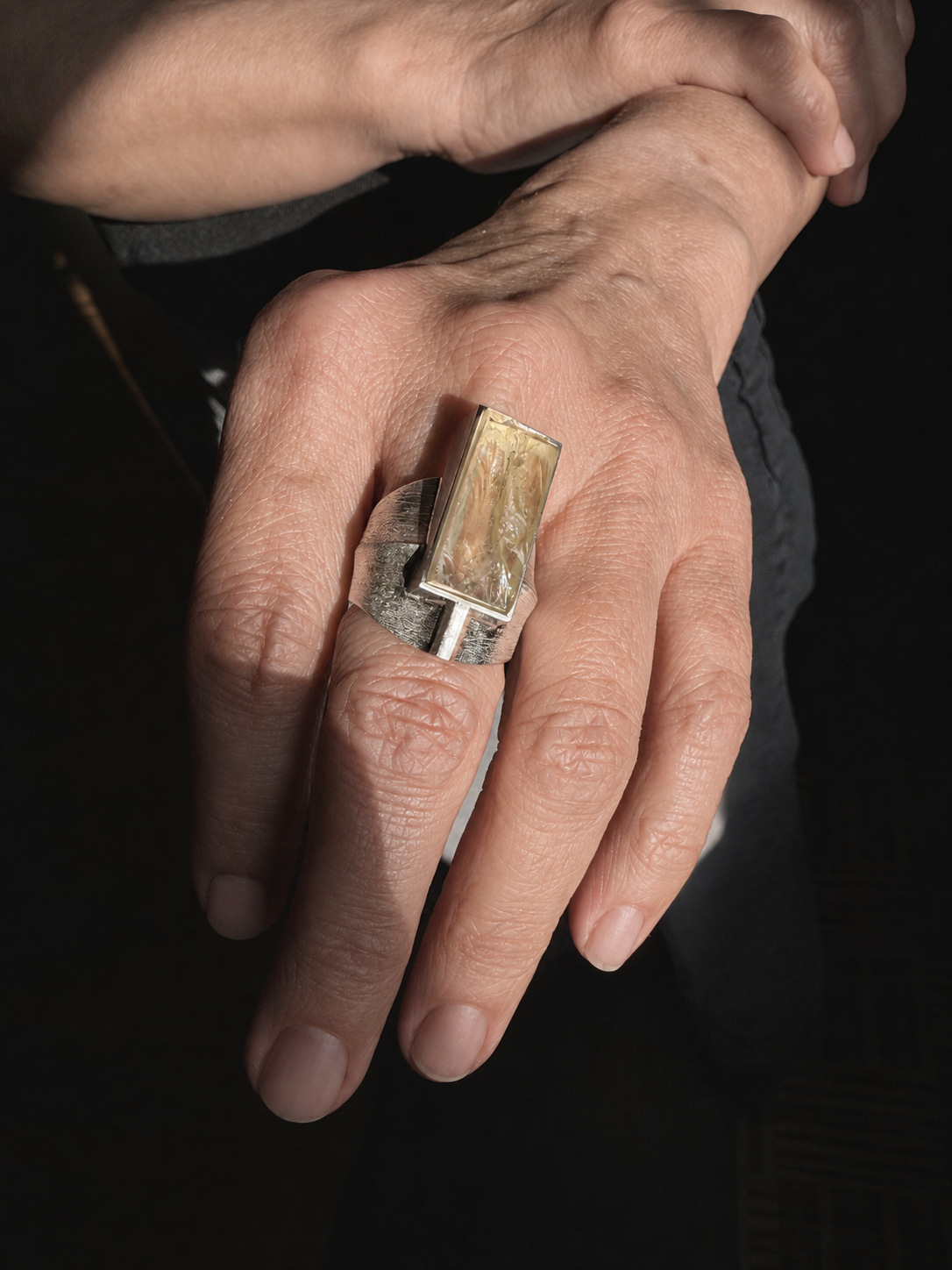
An irregular stone does not present a standard symmetrical outline for a generic “best setting.” The metal has to respond to the real object: projections, thickness, edge shape and the way the stone belongs to the overall ring.
A prong setting usually leaves more of the stone and more space around it open. With a transparent faceted gem, that can provide more open paths for light and keep more of the gemstone visible.
But MORE LIGHT ≠ ALWAYS BETTER. Beauty is not simply the maximum amount of light. Cut, transparency, color, inclusions, surface character, surrounding metal and the whole design all influence the result.
“A bezel always makes a gemstone dull” is therefore too broad. A full bezel does cover more perimeter and is generally more enclosed than prongs, but the final appearance depends on the actual stone and construction.
A bezel generally has a more continuous, smoother outer contour. Prongs project from the setting, but a properly finished prong should sit securely against the stone and be shaped and polished correctly.
SNAGGING PRONG ≠ NORMAL PRONG. If a tip regularly catches fabric, scratches skin or leaves a gap under the metal, the setting should be inspected rather than treated as normal prong behavior.
For everyday wear, consider the entire profile: stone height, projecting elements, setting thickness, shank shape and actual lifestyle. Bezel is often practical when a smoother outline matters, but well-designed prongs can also work very well for daily wear. For the profile question itself, see Low-Profile vs High-Profile Ring Settings.
A round stone without sharp points and a long stone with vulnerable corners are different engineering problems. Pear, marquise, heart, princess and other pointed shapes require particular attention at their corners or tips.
POINTED SHAPE ≠ ORDINARY ROUND STONE. A vulnerable point should not be judged by the same criteria as a smooth round perimeter.
Another important boundary is HARDNESS ≠ TOUGHNESS. Hardness is resistance to scratching and abrasion; toughness is resistance to breaking and chipping. Mohs hardness alone is therefore not enough to decide how a specific gem should be protected.
If the gemstone itself is not yet chosen, start with material, form and intended wear in How to Choose a Gemstone for a Custom Ring.
Prongs need inspection over time. Metal receives impact, friction and wear; a tip can thin or deform, and a stone can begin to move. Periodic checking is especially important with prong settings.
PRONGS REQUIRE INSPECTION. That does not mean prongs are bad or unsafe; it means their condition should be monitored.
BEZEL ≠ MAINTENANCE-FREE. A continuous rim can also wear, deform or receive impact. Any setting should be judged by its actual condition rather than by its label.
Cleaning also depends on gemstone material and construction. For the care side, see How to Clean Sterling Silver Jewelry with Gemstones.
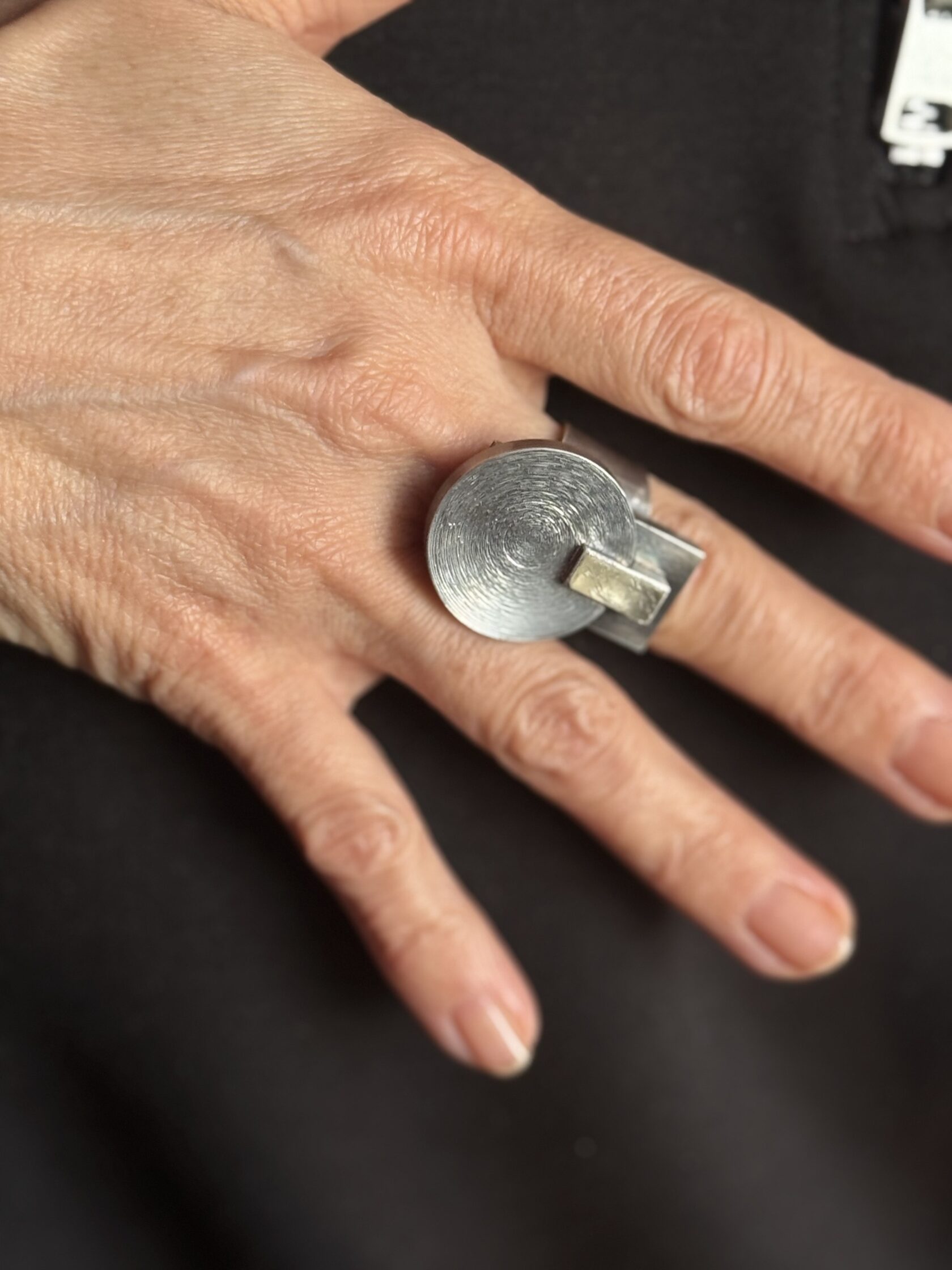
Here the gemstone cannot be separated from platform, disc, cylindrical element and overall profile. The setting belongs to the architecture of the object. That is why the choice has to be made inside the total ring design rather than as an isolated “bezel or prong” checkbox.
The same gemstone can be solved visually and technically in very different ways. A bezel can turn the surrounding metal into a strong graphic outline. Prongs can open the stone and separate it more clearly from the mounting.
The setting still has to work with ring height, metal thickness, upper-section mass, stone position relative to the finger and expected wear. In authorial jewelry, a technically correct setting should also belong to the form rather than look like an unrelated component added at the end.
For a custom project, the client does not need to solve all those engineering details in advance. A useful first message can focus on direction, stone, size and wear; see What Information Does a Jeweler Need for a Custom Ring?. For the material question in an engagement-ring context, see Is Sterling Silver Good for an Engagement Ring?.
Instead of asking “which is better in general?”, work through five questions. They do not produce an automatic winner, but they identify the real design problem quickly.
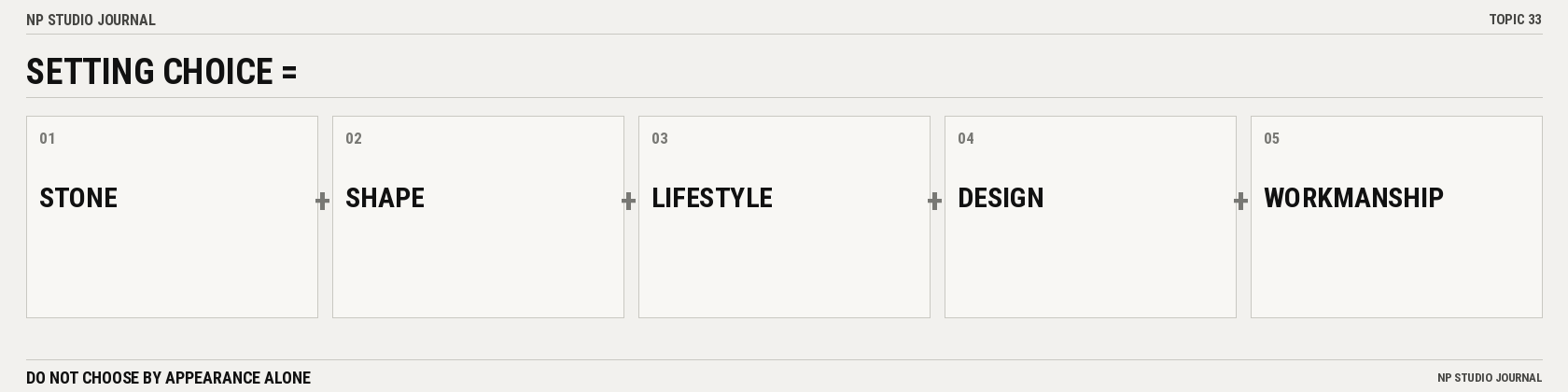
SECURITY = APPROPRIATE DESIGN + CORRECT EXECUTION + MAINTENANCE. The setting name alone is not a guarantee.
A bezel holds a gemstone with a rim of metal around all or part of its perimeter. A full bezel surrounds the entire edge; a partial bezel leaves selected sections open.
A prong setting uses separate metal claws that rise from the mounting and bend over the gemstone’s edge to secure it in its seat.
There is no universal answer. A bezel usually covers more edge, but security also depends on stone shape, engineering, seating, workmanship and maintenance.
Prongs generally leave more open space around a transparent faceted gemstone. But more light is not a universal beauty criterion.
A bezel covers more perimeter and is generally more enclosed, but final brightness depends on the stone, cut, lighting and ring design. A bezel does not automatically make every gemstone dull.
A bezel usually has a smoother profile. Properly finished prongs should not constantly snag; catching can be a sign that the setting needs inspection.
It depends on stone, profile, lifestyle and workmanship. Bezel is often chosen for a smooth outline, but well-made prongs can also be appropriate for everyday wear.
Pointed shapes need dedicated protection at vulnerable corners. Prong systems may use V-shaped prongs; other solutions depend on the specific stone and design.
Yes. They should be checked periodically for wear, deformation, gaps and stone movement.
No. Appearance matters, but stone material, shape, vulnerable points, lifestyle, ring construction and workmanship all affect the right choice.
NEXT STEP / CUSTOM
If you already have a gemstone in mind—or know the kind of stone you want—we can discuss the ring construction, setting solution, profile and how the piece should be worn.
Discuss a custom ring setting