1. What does low-profile ring mean?
It means the stone and upper construction sit relatively close to the finger. This describes vertical geometry, not a specific setting type.
NP STUDIO / JOURNAL / RING PROFILE / HEIGHT
A low-profile ring keeps the stone and upper structure closer to the finger; a high-profile ring raises them farther above it. Neither is universally better. A lower profile can reduce projection and snagging, but may constrain a deep or large stone and adjacent-band clearance. A higher profile creates more space beneath the stone and can sometimes improve band clearance, but increases projection and leverage. The right geometry depends on the stone, setting, balance, hand and wear pattern.
LOW vs HIGH PROFILE = where the stone and upper structure sit vertically relative to the finger. BEZEL vs PRONG = how the stone is held. They are different design questions.
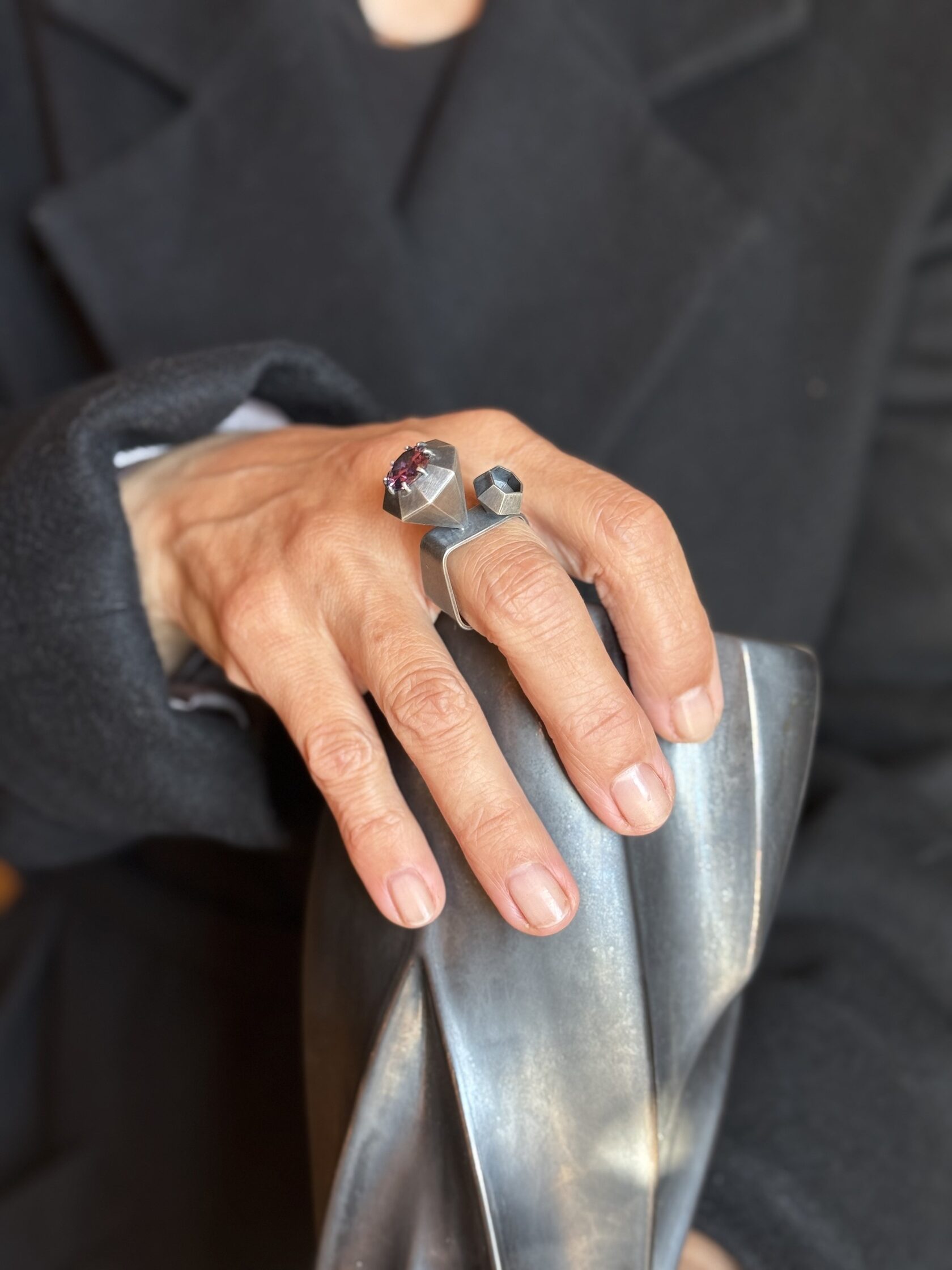
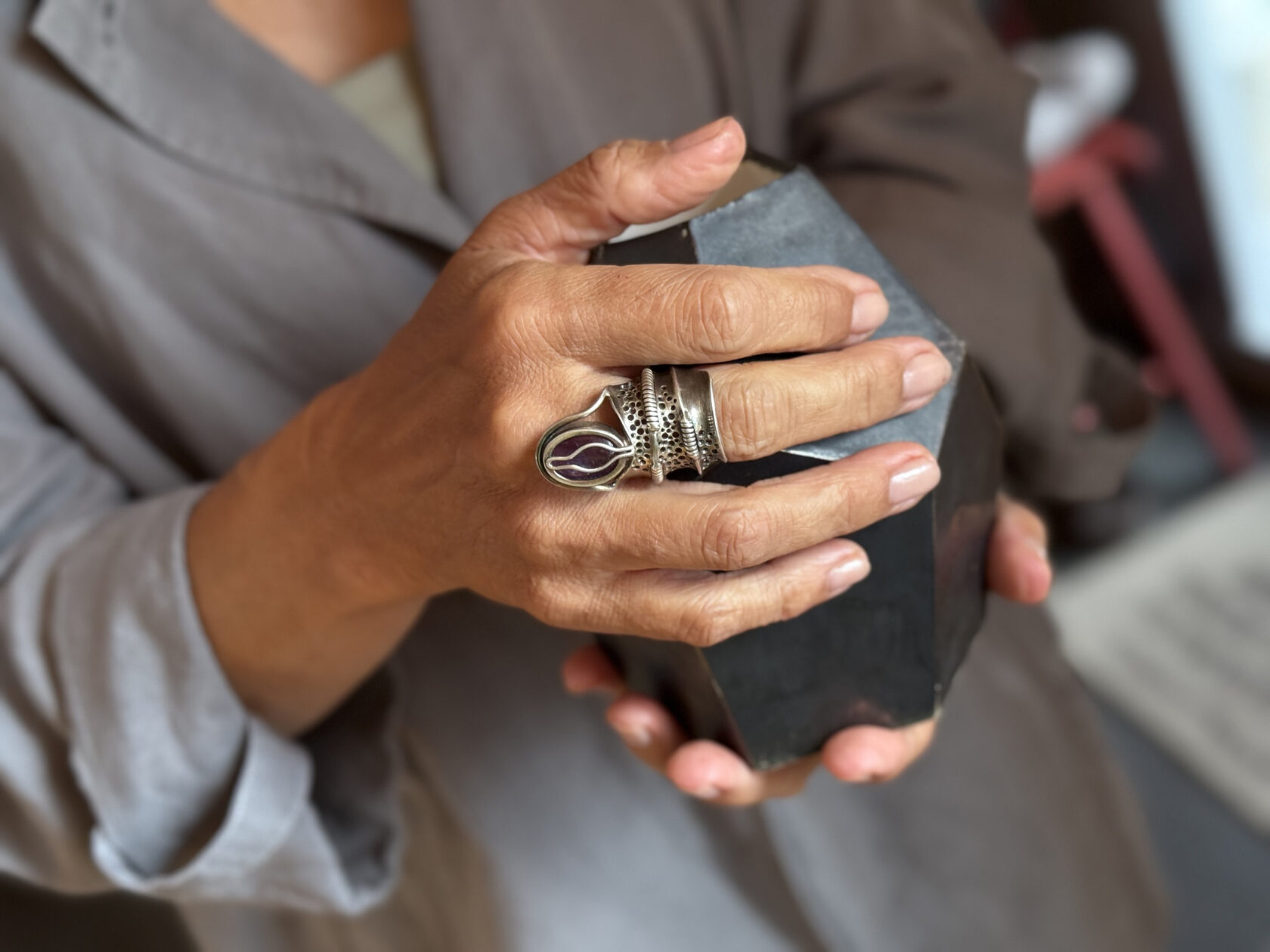
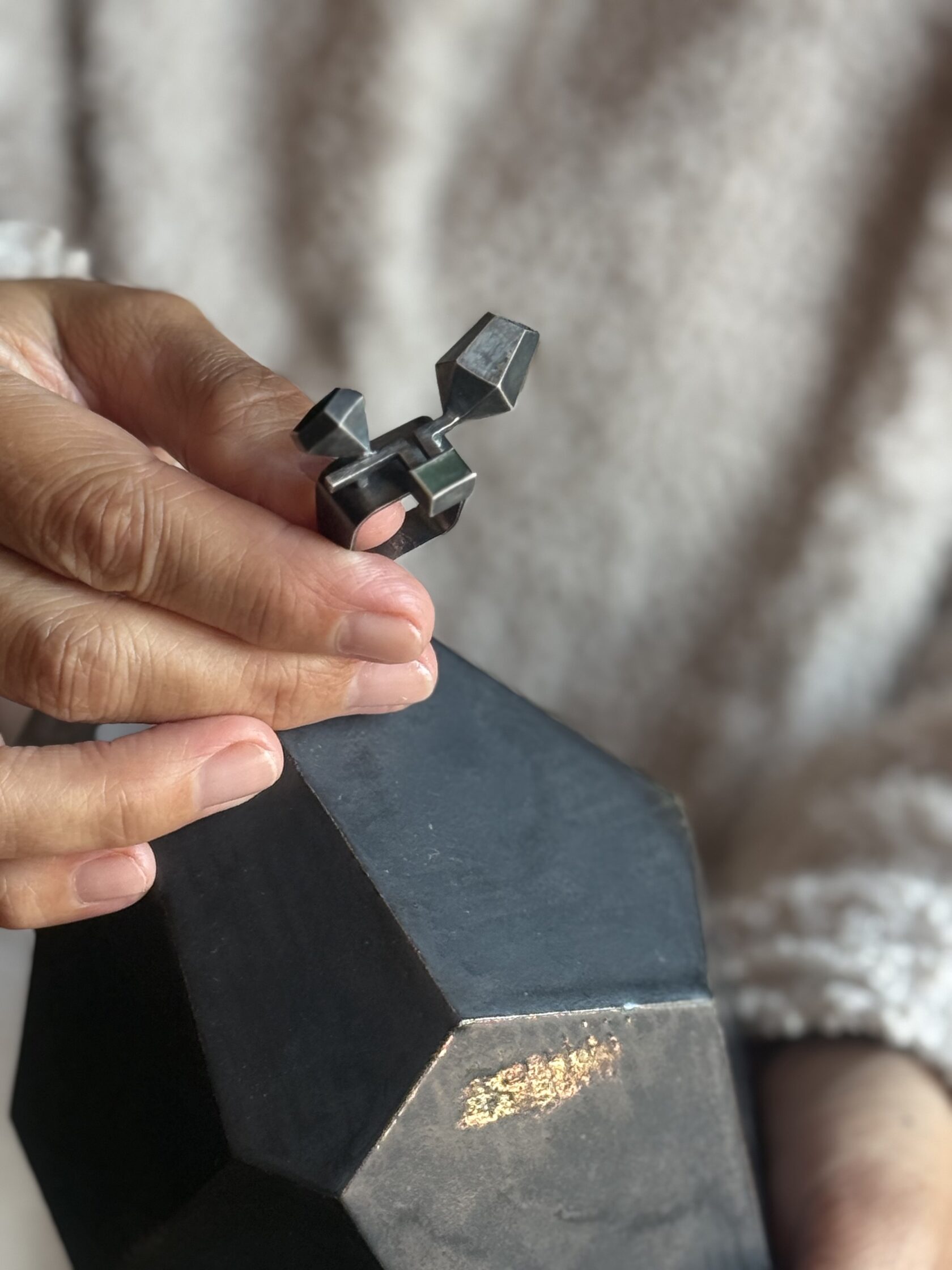
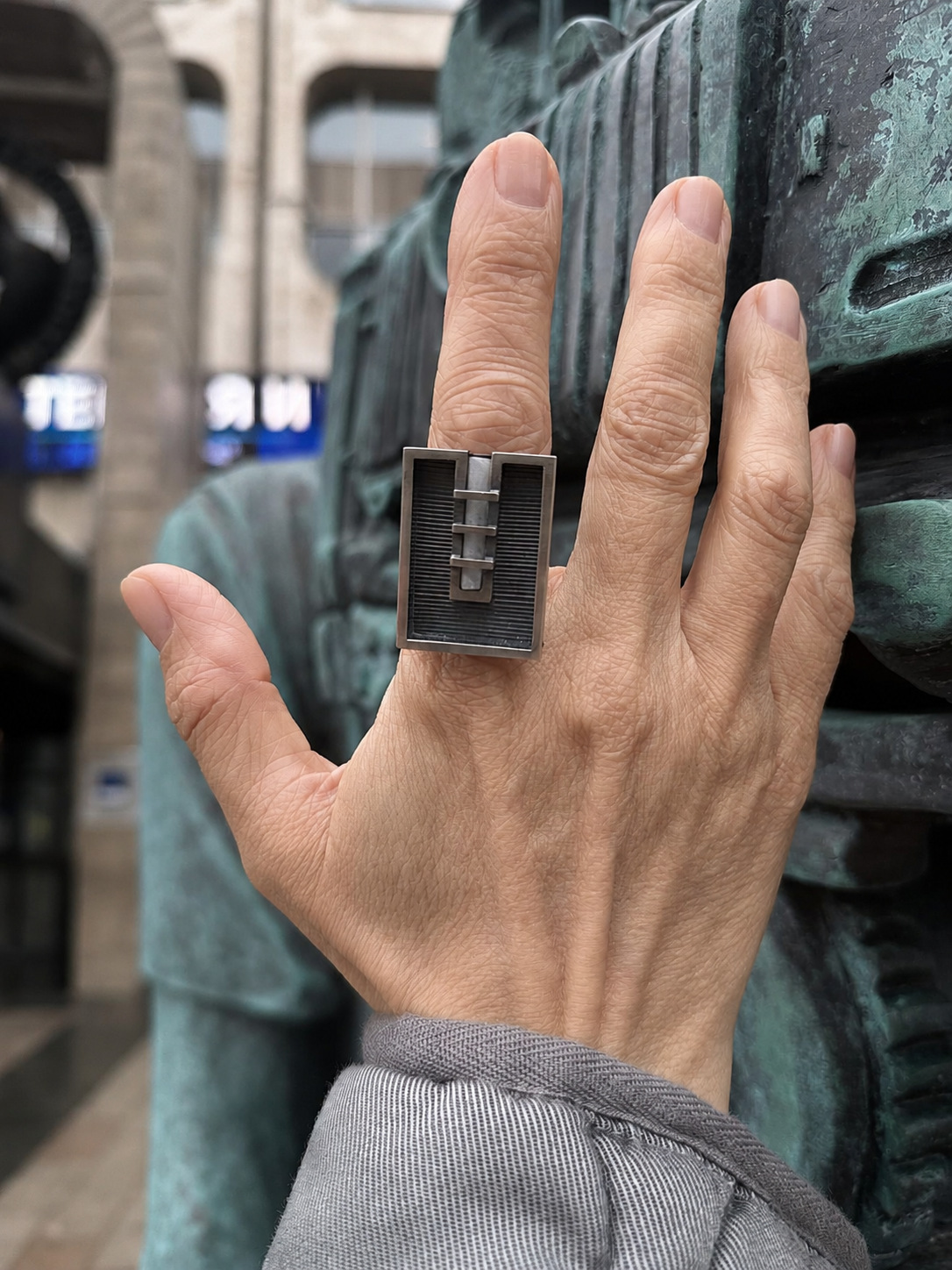
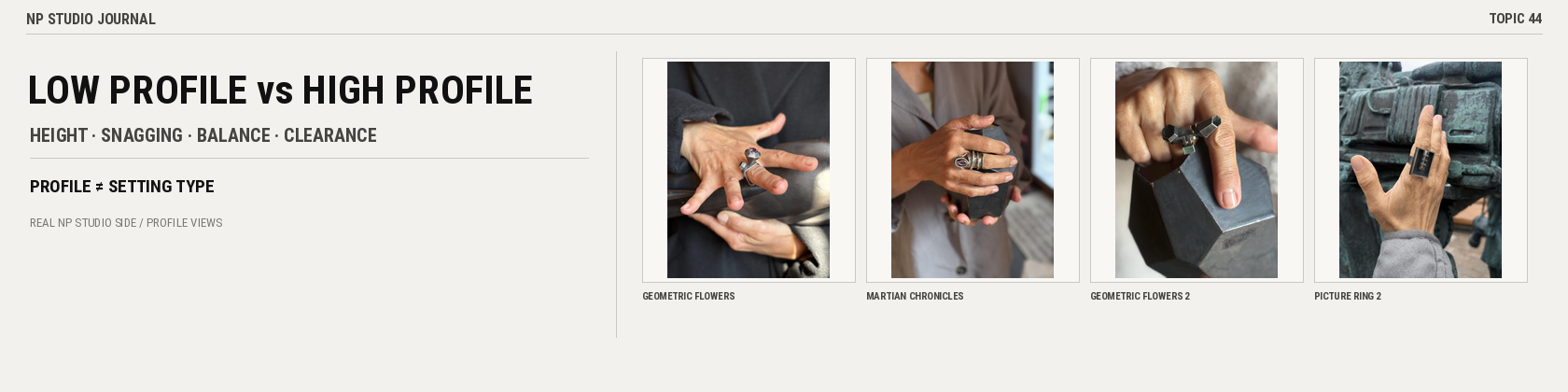
Here, profile means vertical geometry: how far the gemstone and upper structure project above the finger. It is a relative design concept, not a universal millimetre category.
PROFILE ≠ RING SIZE. Ring size describes the internal fit around the finger; profile describes height and projection above it.
PROFILE ≠ STONE SIZE. A larger gemstone can sometimes be integrated relatively close to the hand, while a smaller stone may sit in a deliberately raised structure.
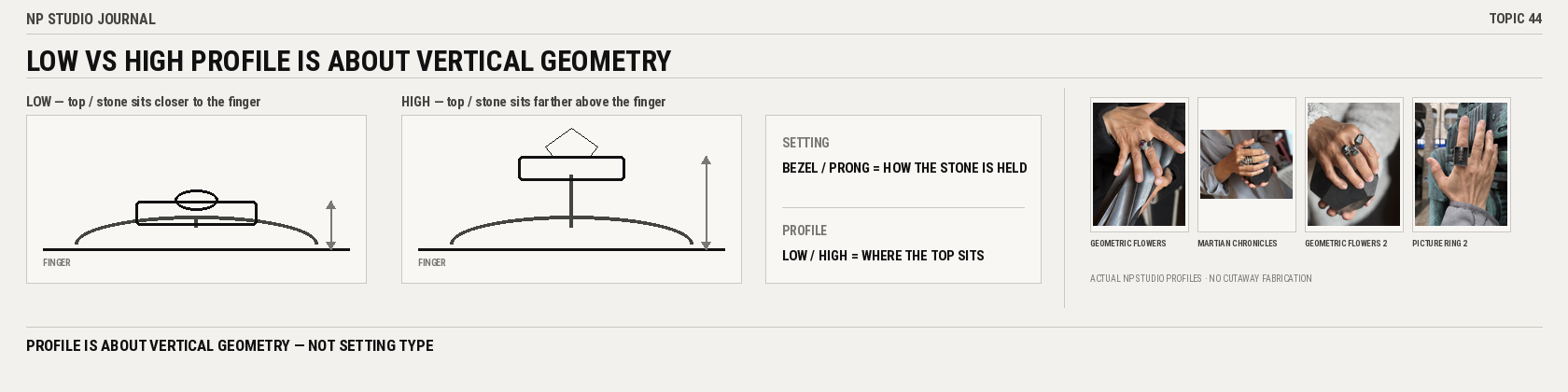
A low profile places the gemstone and top structure relatively close to the finger. This often reduces projection and creates a more compact silhouette.
But LOW PROFILE ≠ FLAT RING. A ring can still be sculptural and dimensional while keeping most of its mass close to the hand.
And LOWER ≠ AUTOMATICALLY SAFER. LOW PROFILE ≠ ZERO IMPACT RISK. Exposed corners, a vulnerable gemstone or sharp external geometry can still be at risk even when the overall height is modest.
A high profile raises the gemstone or upper structure farther from the finger. This may be necessary because of stone depth, spatial composition, clearance beneath the head or simply the intended silhouette.
HIGHER ≠ AUTOMATICALLY FRAGILE. Height alone does not tell you whether a ring is well engineered. However, greater projection changes the mechanics: the upper mass meets more external objects and can create more leverage under side impact.
HIGH PROFILE ≠ BETTER LIGHT PERFORMANCE BY DEFAULT. Raising a stone is not a universal way to make it perform better. Light behavior also depends on cut, material and the surrounding construction.
A bezel describes how metal holds the stone. It can appear in a low construction, but “bezel” does not define the height of the whole ring.
Prongs also describe how the gemstone is held. A prong head can be higher or lower depending on the stone, head and overall geometry.
The full bezel-versus-prong comparison belongs to a separate search intent. See Bezel vs Prong Setting. Topic 44 is specifically about vertical geometry.
A lower, smoother construction often projects less into space and may therefore catch less on fabric, gloves or other objects. But this is not absolute.
SNAGGING RISK ≠ ONLY SETTING TYPE. Height, sharp edges, prong shape, exposed corners, gemstone outline, clothing and activity all affect snagging.
A nominally low ring with sharp external details can sometimes catch more than a somewhat higher ring whose outline is smooth and controlled.
Stone depth is a real construction constraint. If the pavilion or total stone volume requires space, an extremely low placement may be impossible or may force the entire ring architecture to change.
This is geometry, not prestige. A larger stone can sometimes sit comparatively low when it is integrated into a broad structure, while a smaller but deep stone can require more vertical space.
If the main question is gemstone durability rather than profile, see Best Gemstones for Everyday Rings.
As more mass moves away from the finger, its influence on balance becomes more noticeable. But HIGH PROFILE ≠ AUTOMATICALLY SPINS.
Rotation is affected by top mass, weight distribution, shank width and shape, internal fit and finger shape. A top-heavy structure can encourage rotation, but height alone does not explain it.
For fit, knuckle passage and ring rotation, see How Should a Ring Fit?.
A raised head can sometimes create more space near the base of the upper structure, allowing another band to sit closer. But this is not a guaranteed feature of every high-profile ring.
Actual clearance depends on shank width and shape, where the upper structure begins, side projections and the profile of the adjacent ring.
For active wear, lower projection can often be more convenient because the ring stays closer to the hand. But COMFORT ≠ HEIGHT ALONE.
Edges, weight, shank width, mass distribution, surface, sizing, finger anatomy and daily activity all affect comfort. A low profile does not eliminate impact risk, and a high profile is not automatically uncomfortable.
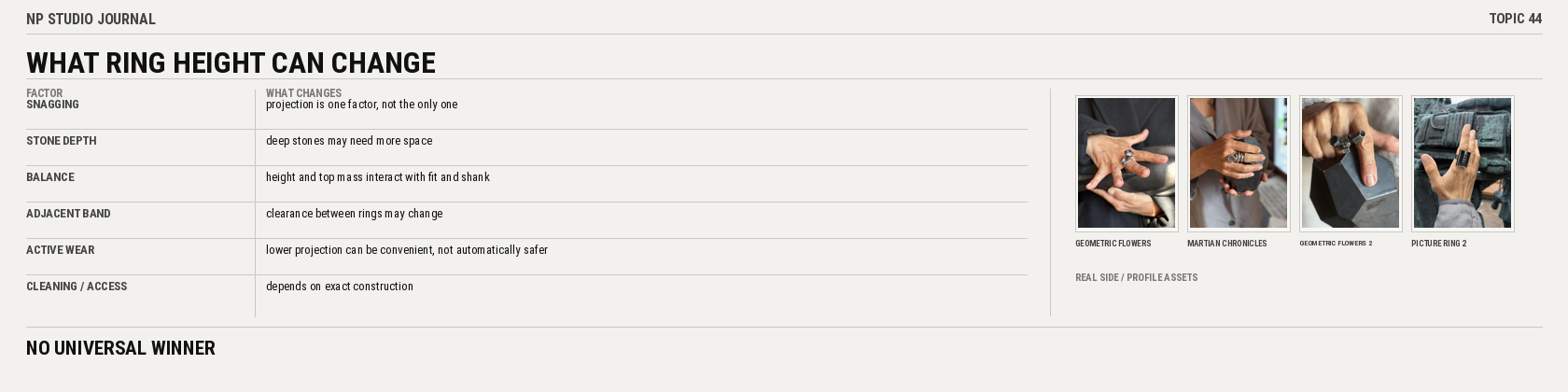
It is more useful to work through the actual constraints than to search for a universal winner.
NO UNIVERSAL WINNER. A low profile is not automatically “correct,” and a high profile is not automatically more dramatic or more beautiful.
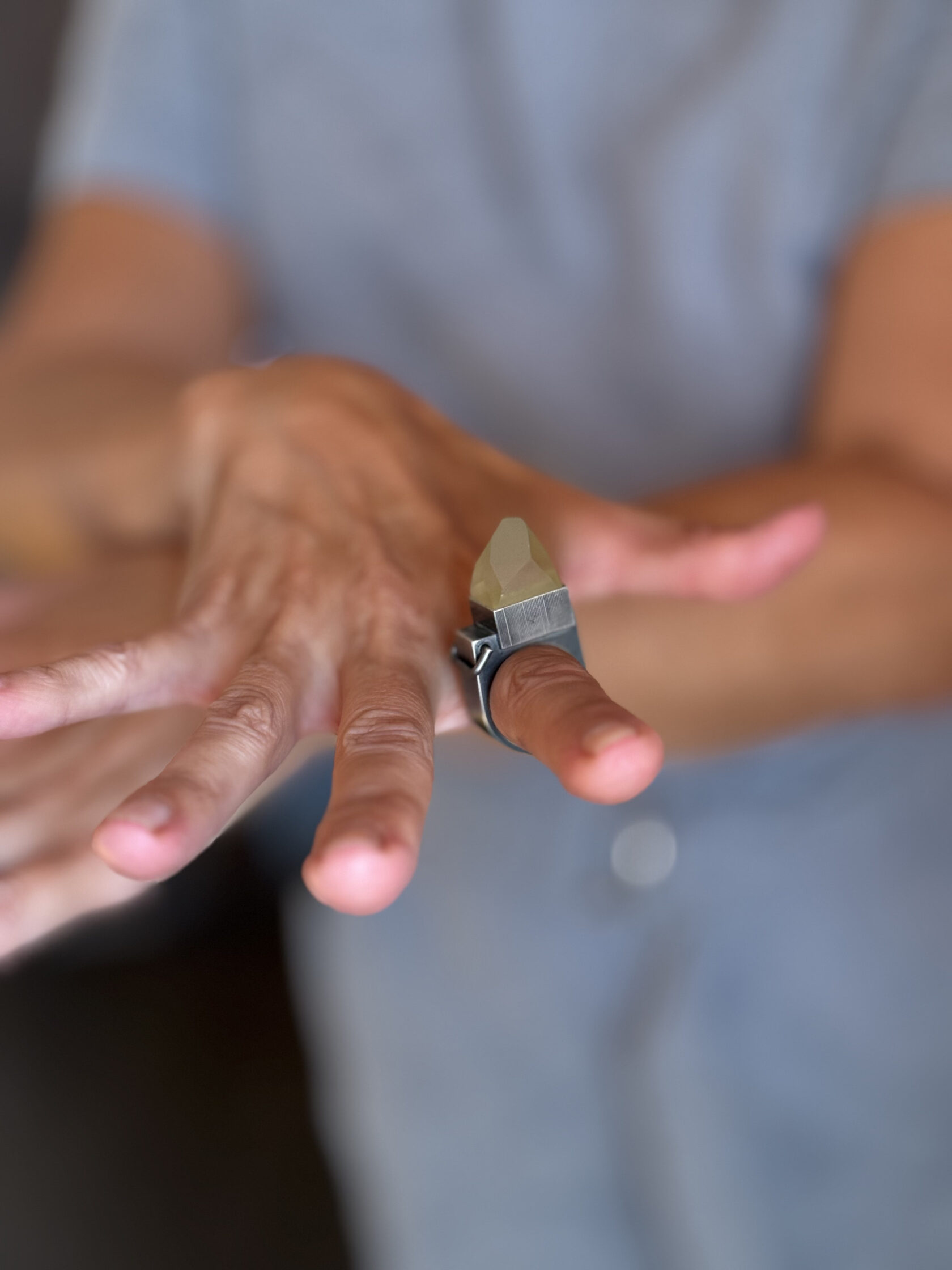
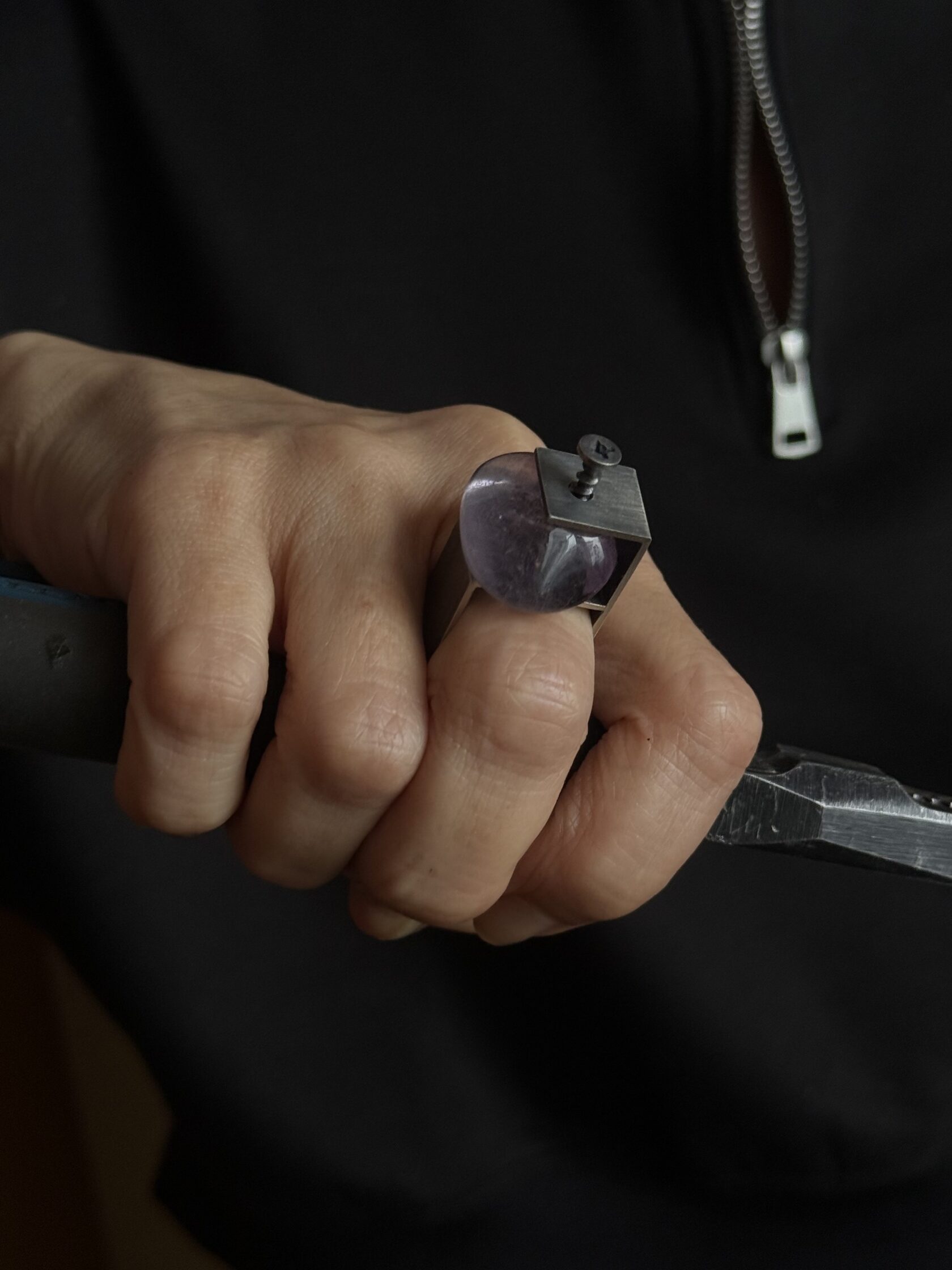
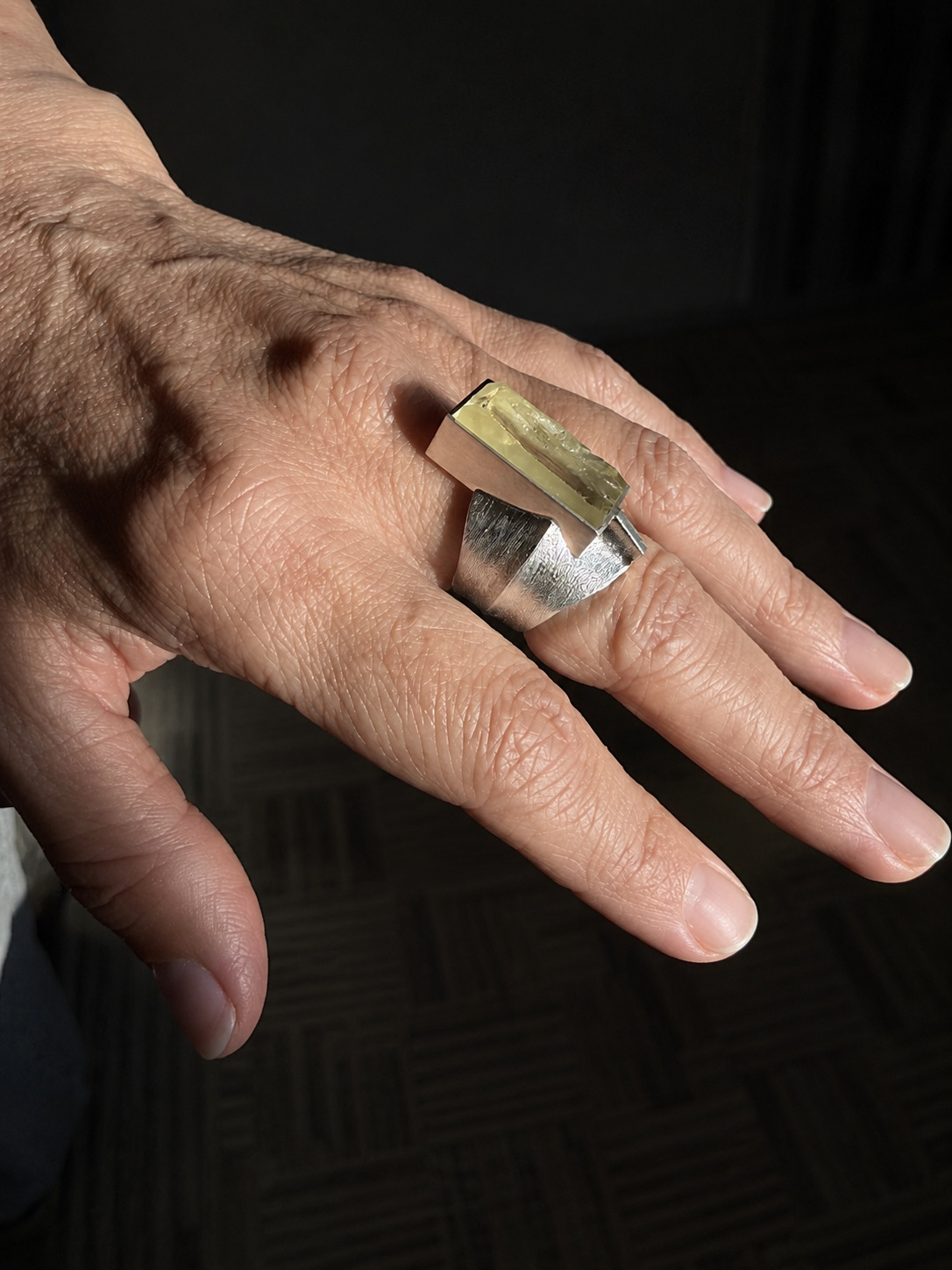
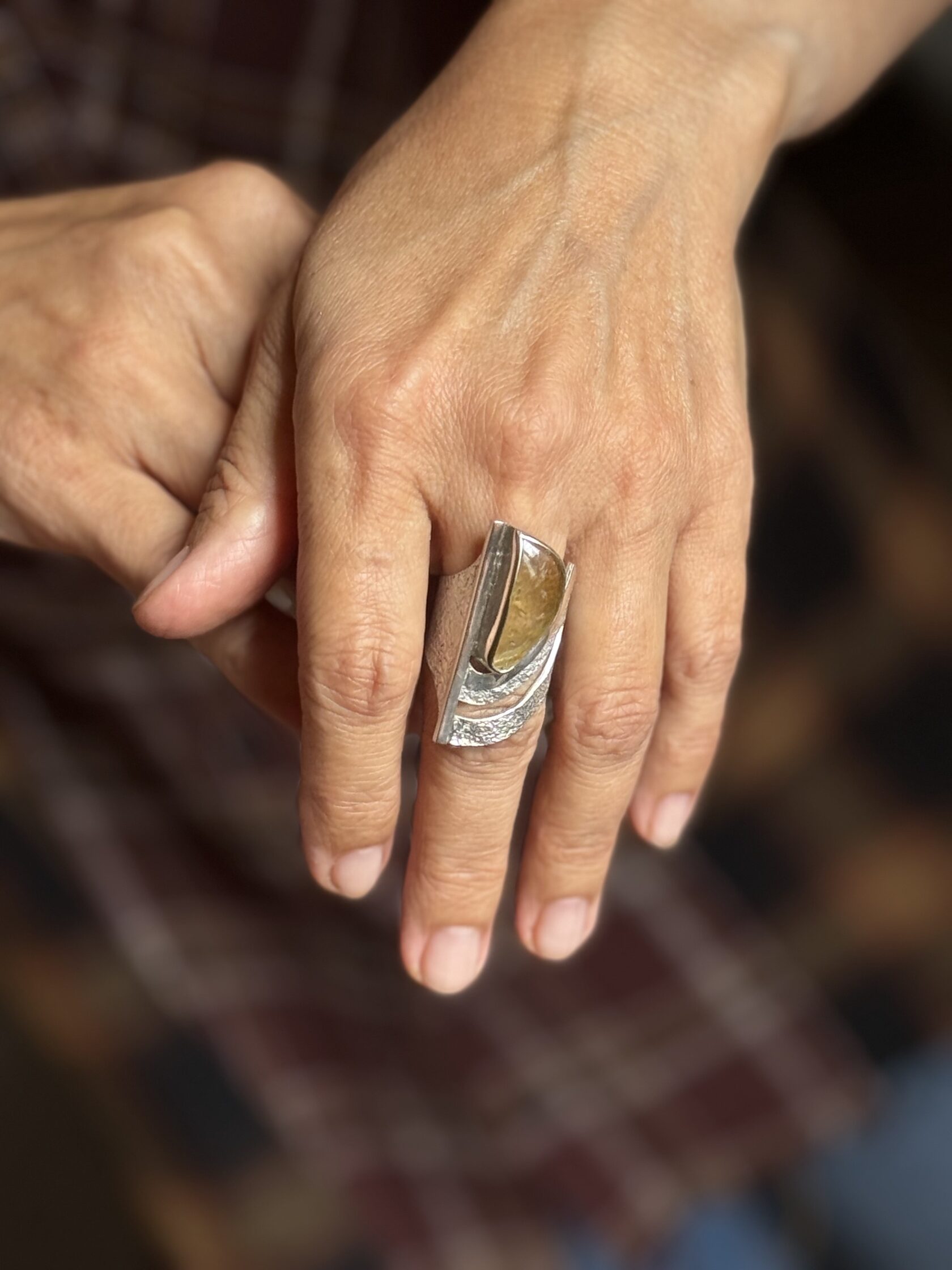
These works are shown as real examples of profile and projection. We do not assign every piece a hard low/high label from a photograph alone. The useful observation is how far the upper structure projects from the finger and how it connects to the shank.
It means the stone and upper construction sit relatively close to the finger. This describes vertical geometry, not a specific setting type.
It means the stone or upper structure is raised farther above the finger. A high profile does not automatically mean prongs or fragility.
No. LOW PROFILE ≠ BEZEL. Bezel describes how the stone is held; profile describes where the upper structure sits relative to the finger.
No. HIGH PROFILE ≠ PRONG. Prongs can be part of many geometries, including structures with different overall heights.
A lower, smoother construction can reduce projection and may snag less, but SNAGGING RISK ≠ ONLY SETTING TYPE. Edges, prongs, shape, clothing and activity matter too.
Sometimes, but a deep or bulky stone may require additional vertical space. PROFILE ≠ STONE SIZE: the real stone depth and surrounding construction matter.
No. HIGH PROFILE ≠ AUTOMATICALLY SPINS. Rotation depends on top mass, balance, shank width and shape, and the actual fit on the finger.
A raised head can sometimes create more clearance for a second ring, but this is not guaranteed. Head geometry, shank shape and the adjacent band all matter.
Lower projection and protected geometry can be convenient, but LOWER ≠ AUTOMATICALLY SAFER. Stone, setting, edges and the actual wear pattern still matter.
Consider stone depth and shape, desired silhouette, snagging tolerance, an adjacent band, hand scale, activity, maintenance and aesthetics. There is no universal winner.
NEXT STEP / WORKS
In Works, side views are often more useful than frontal shots for understanding height, projection, balance and the connection between the upper structure and shank.
Go to WorksNEXT STEP / CUSTOM
If you already have a gemstone or reference, profile should be discussed together with stone depth, dimensions, setting and actual wear pattern.
Discuss a Custom Ring