
NP STUDIO / JOURNAL / CARE
How to Clean Sterling Silver Jewelry with Gemstones
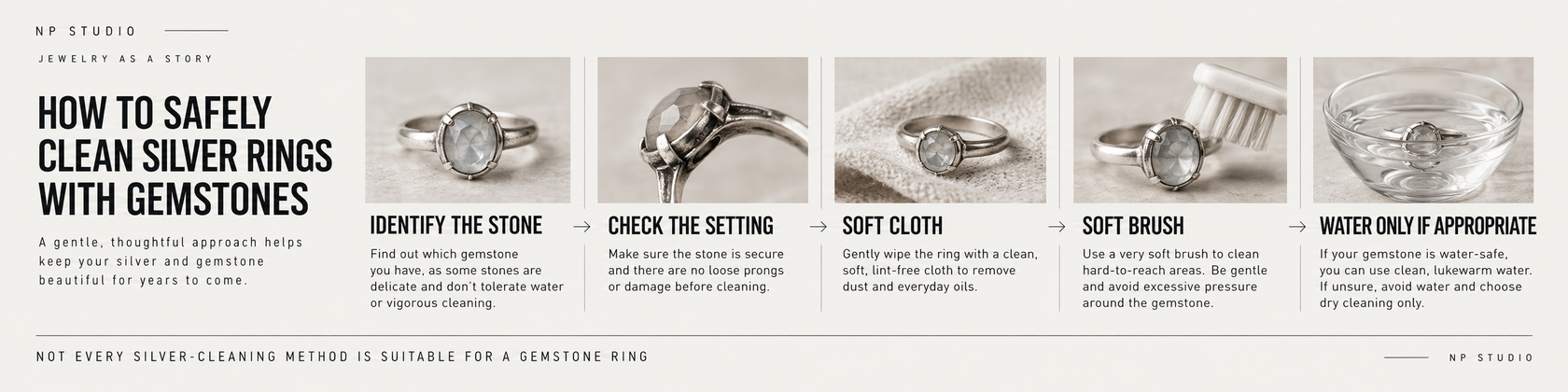
Stone-set sterling silver needs more caution than plain silver. Identify the gemstone first and check the setting. The safest starting point is a soft lint-free cloth; for persistent dirt, use a very soft brush. Use water only when you know it is appropriate for the stone, setting and any adhesive or surface treatment.
Why gemstone jewelry cannot be cleaned like plain silver
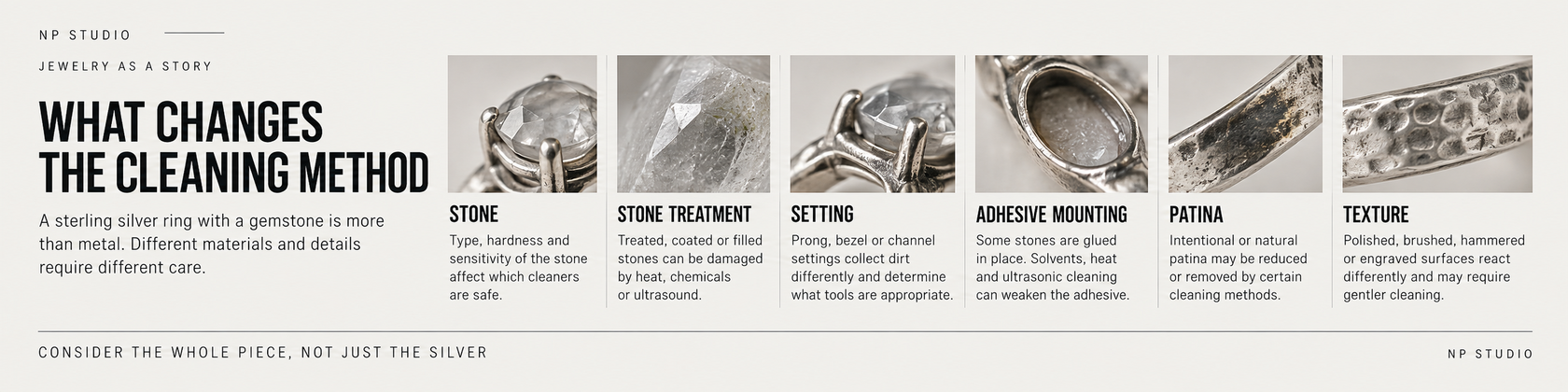
A method that is acceptable for the silver alloy may be too aggressive for the gemstone, its treatment, the setting or an adhesive-based mounting. You need to evaluate the whole piece, not only the metal.
Gemstones vary widely in hardness, porosity and sensitivity to water, heat and chemicals. For the distinction between hardness, toughness and cleavage, see Gemstone Hardness for Rings: Hardness vs Toughness vs Cleavage. The condition of the setting can also matter more than the cleaning product itself.
What to check before cleaning
A safer basic cleaning sequence
Start with a soft cloth
For many situations, a clean soft lint-free cloth is the best first step. It removes dust, fingerprints and light residue without abrasive action.
Do not assume every surface should be polished back to a mirror shine. Matte, textured and intentionally patinated silver can be altered by overly aggressive polishing.
When a soft brush can help
A very soft brush can help with dirt trapped around a setting or in recessed texture when a cloth is not enough. Use minimal pressure, especially around prongs, thin details and the edge of the stone.
If the stone moves or the setting looks damaged, do not brush actively until the piece has been checked.
Can you use water?
Sometimes, but the answer depends on more than the silver. Certain stones, treatments and adhesive-based mountings may be more sensitive to water than the metal itself.
If the gemstone is unknown, prolonged soaking is a poor way to test what it can tolerate. For water exposure generally, see Can Sterling Silver Get Wet? →
Common methods are not universally safe
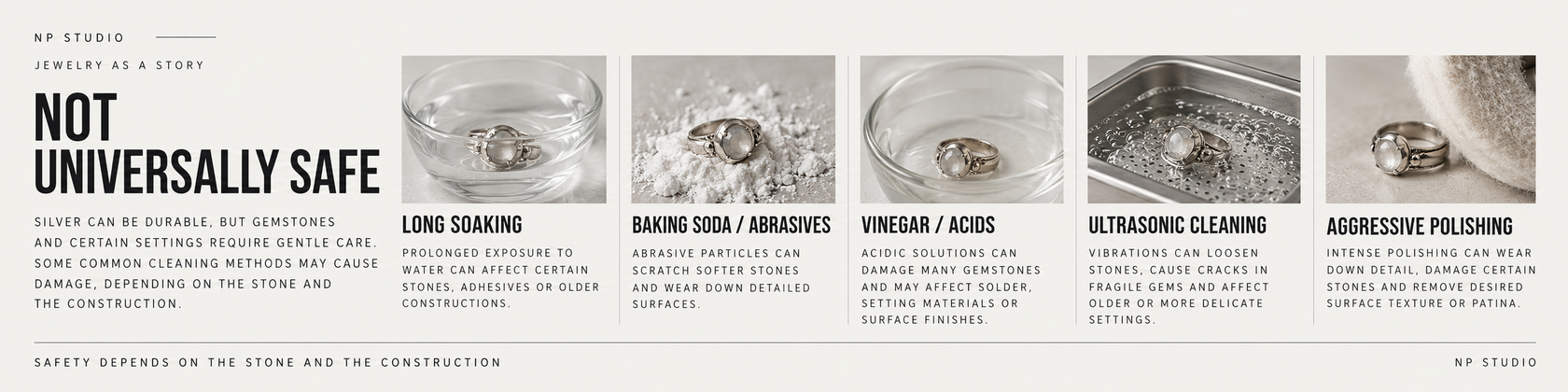
Online cleaning advice often includes long soaking, baking soda, acids, ultrasonic cleaners or aggressive polishing. Some methods can have a place in specific circumstances, but none of them should be treated as universally safe for gemstone jewelry.
| Method | Why caution is needed |
|---|---|
| Long soaking | May be unsuitable for porous stones, older construction or adhesive-based mounting. |
| Baking soda / abrasives | Can scratch softer gemstones, wear down polish and alter detailed surfaces. |
| Vinegar / acids | Acidic solutions can be incompatible with certain minerals, solder, settings or finishes. |
| Ultrasonic cleaning | Vibration can be risky for cracked, fragile or treated stones and for loose settings. |
| Aggressive polishing | Can remove patina, change texture and affect the stone or setting. |
Pearls, turquoise, opal and other sensitive stones
Pearls, turquoise, opal and a number of porous or treated materials can require stricter care than the sterling silver around them. There is no universal gemstone-cleaning recipe.
If you do not know the properties of the stone, choose the gentlest surface cleaning and ask the maker or a specialist before using chemicals, heat or prolonged water exposure.
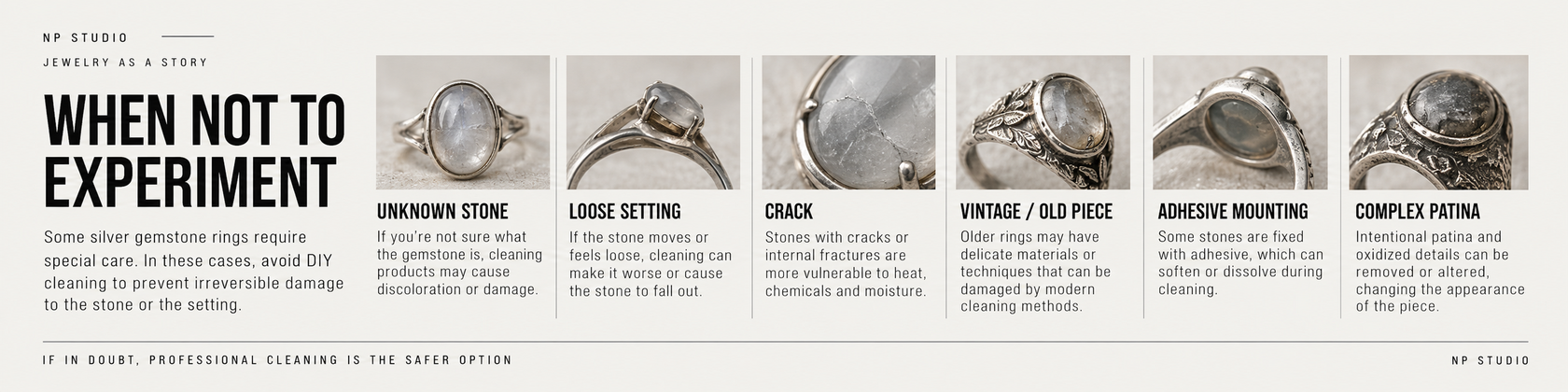
When not to experiment
Home cleaning becomes a poor choice when the stone is unknown, the setting is loose, the stone has cracks, the piece is vintage or old, adhesive may be present, or the jewelry has a complex patina or unusual surface treatment.
Patina and textured sterling silver
A dark patina can be an intentional part of the design rather than dirt. Aggressive polishing can remove it from raised areas and change the intended contrast.
On textured silver, abrasive compounds and stiff brushes can soften the relief. Start with the least aggressive method rather than trying to make every surface bright and mirror-polished.
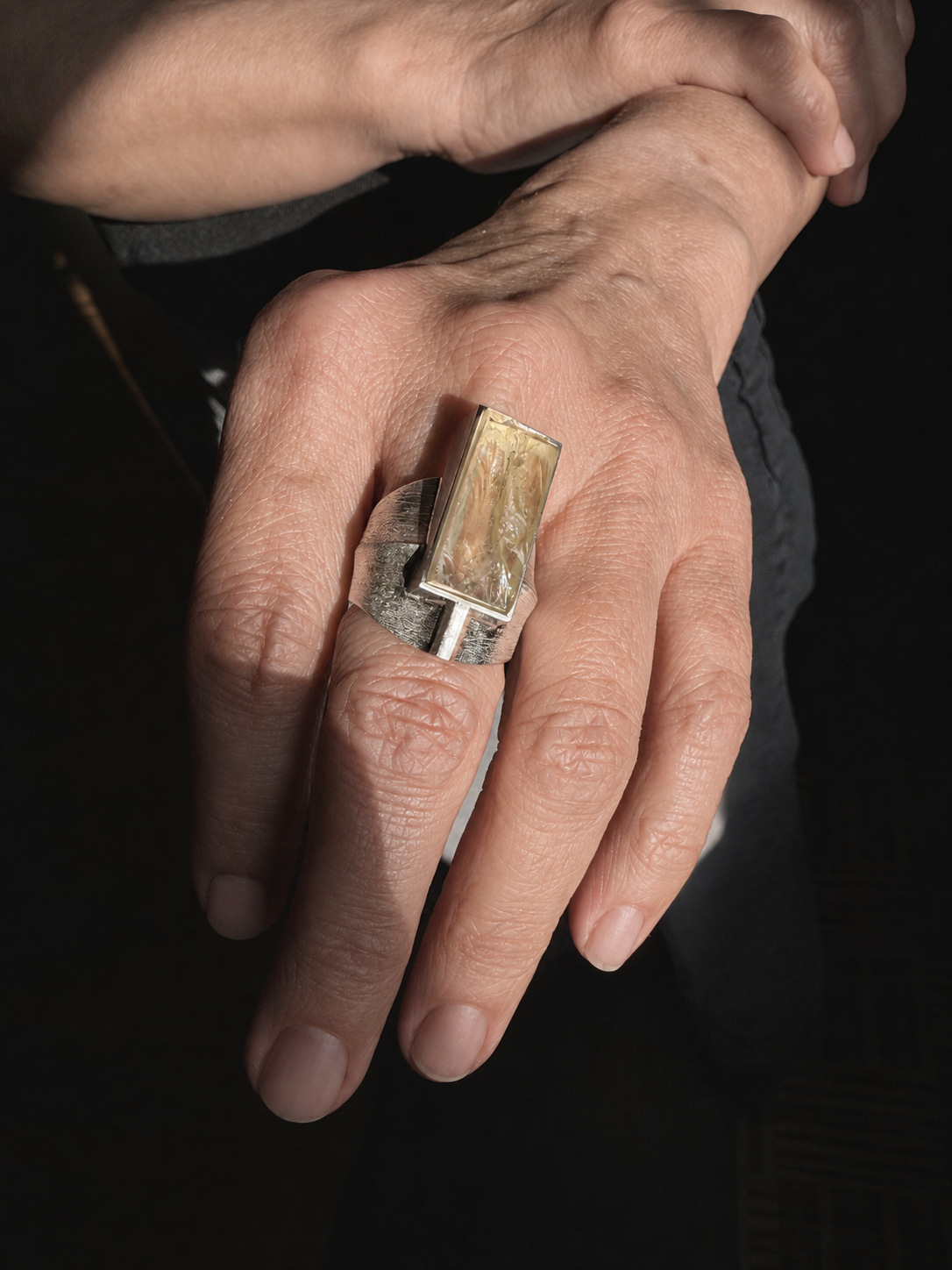
How I approach this at NP Studio
I do not start with the question “what should I use to clean the silver?” I first look at what the object actually contains: which stone, how it is set, whether there is patina, how complex the texture is and whether there are signs of damage.
If the construction is sound, I begin with the gentlest intervention. The less I know about an unfamiliar stone or an older piece, the less reason there is to experiment aggressively.
View NP Studio worksShort answer
For cleaning plain silver jewelry, see How to Clean Sterling Silver Jewelry →. For a stone-set ring intended for long-term everyday wear, see Is Sterling Silver Good for an Engagement Ring?.
Frequently asked questions
To understand sterling silver in more detail, read why sterling silver tarnishes, how to store sterling silver jewelry, and what sterling silver is.
READ NEXT / NP STUDIO JOURNAL
