1. What does the Mohs scale measure?
The Mohs scale measures resistance to scratching. It does not measure total gemstone “strength,” and it does not tell you how easily a stone may chip under impact.
NP STUDIO / JOURNAL / GEMSTONES / DURABILITY
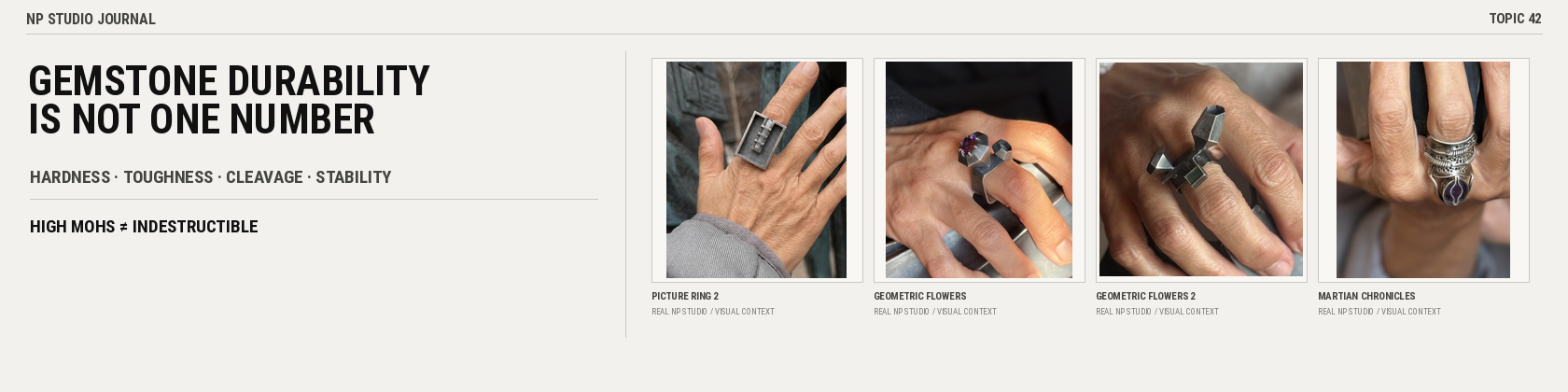
The Mohs scale measures resistance to scratching, not resistance to chipping or breaking under impact. For a ring, durability requires looking at hardness, toughness, stability and the stone’s cleavage characteristics. A high Mohs number therefore does not mean “indestructible,” and a lower Mohs number does not automatically make a gemstone unsuitable.
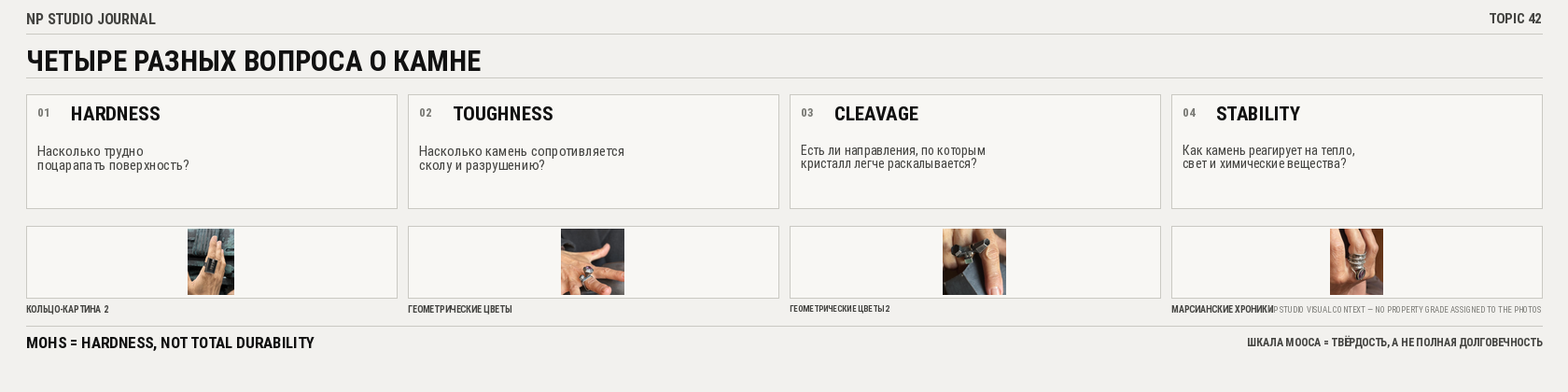
STONE DURABILITY ≠ MOHS NUMBER ALONE. For ring use, it is more accurate to think this way: hardness helps against scratches, toughness relates to chipping and breaking, stability concerns the environment, and cleavage explains why some directions or shapes are more vulnerable than others.
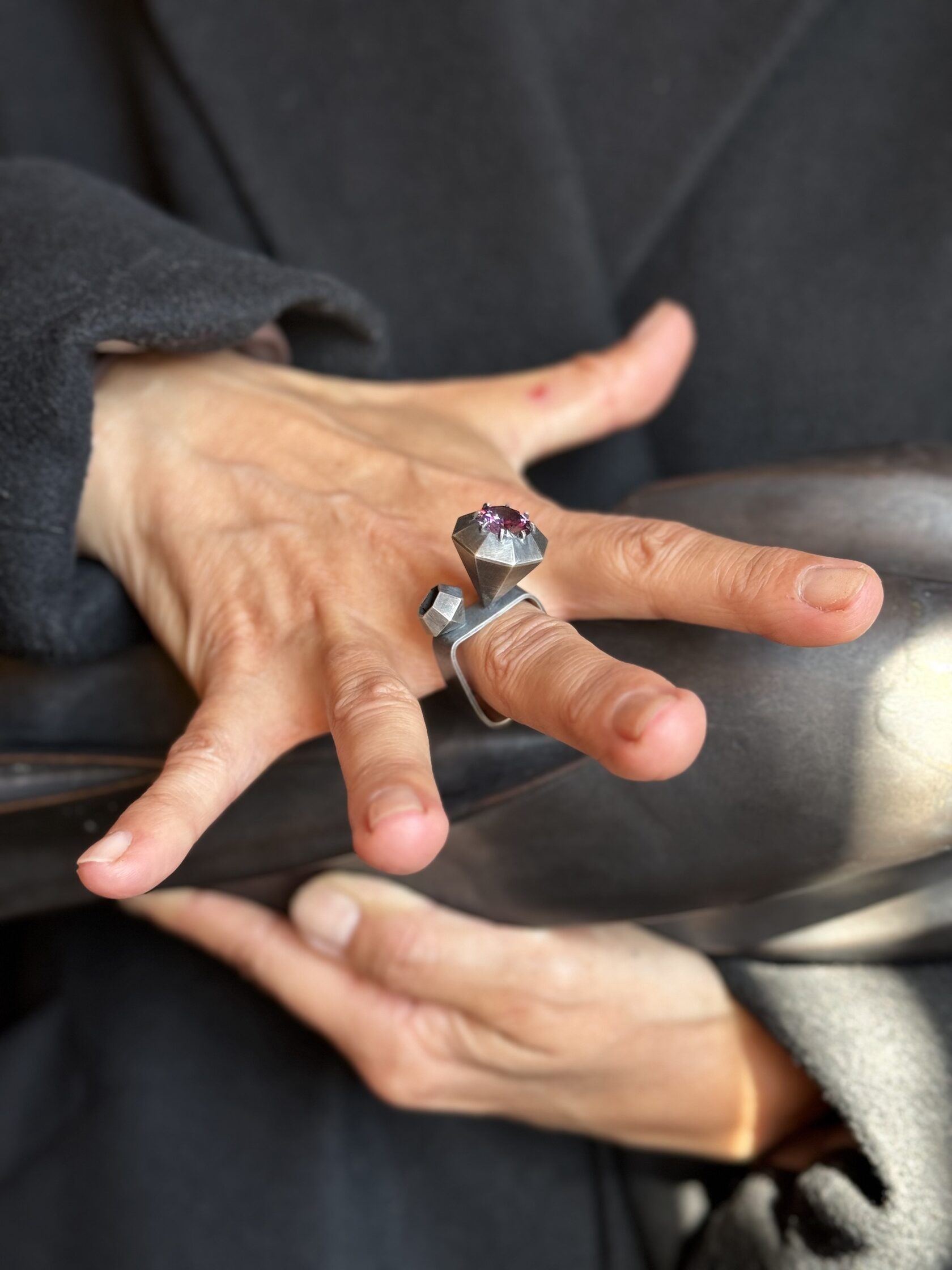
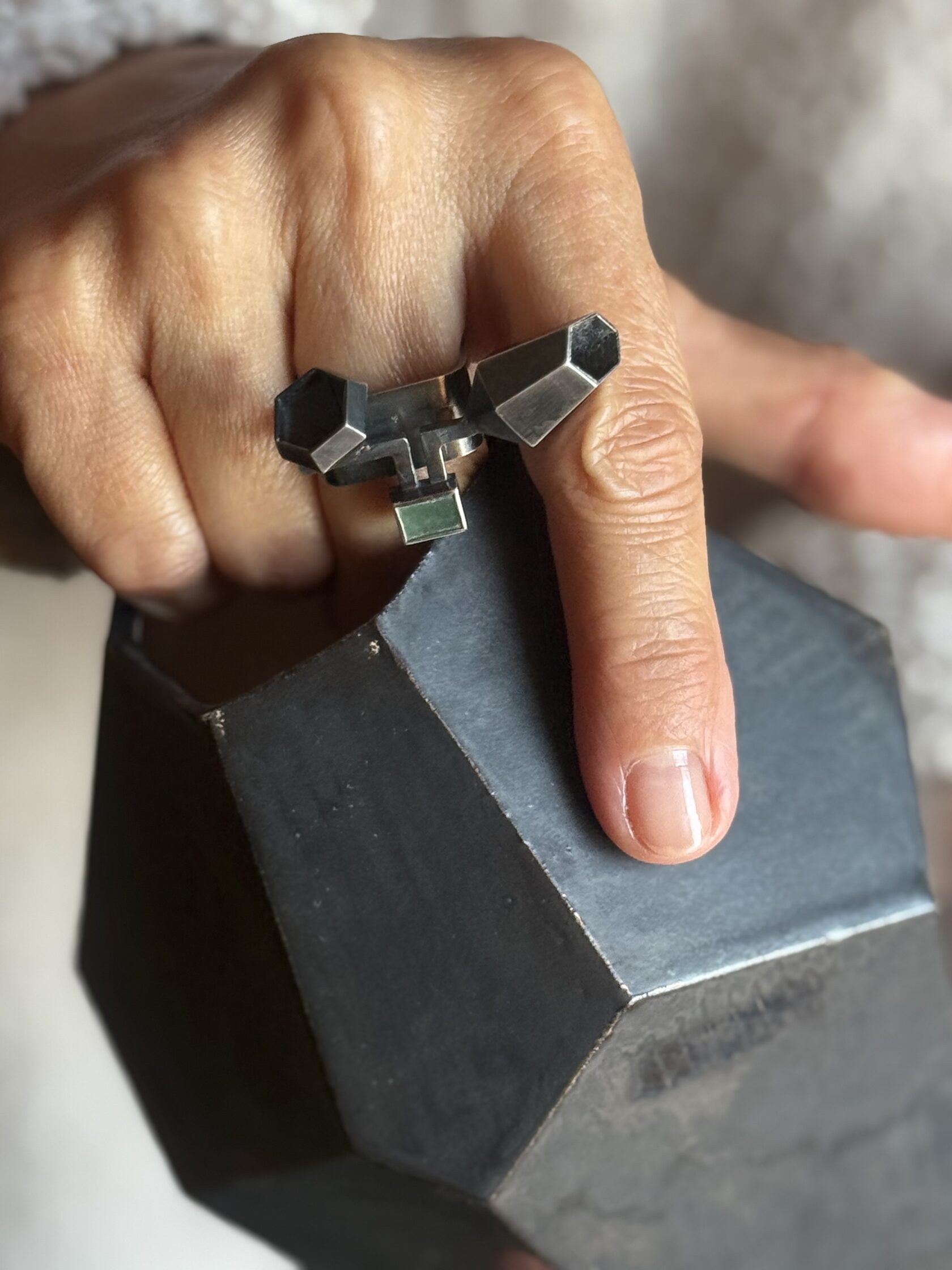
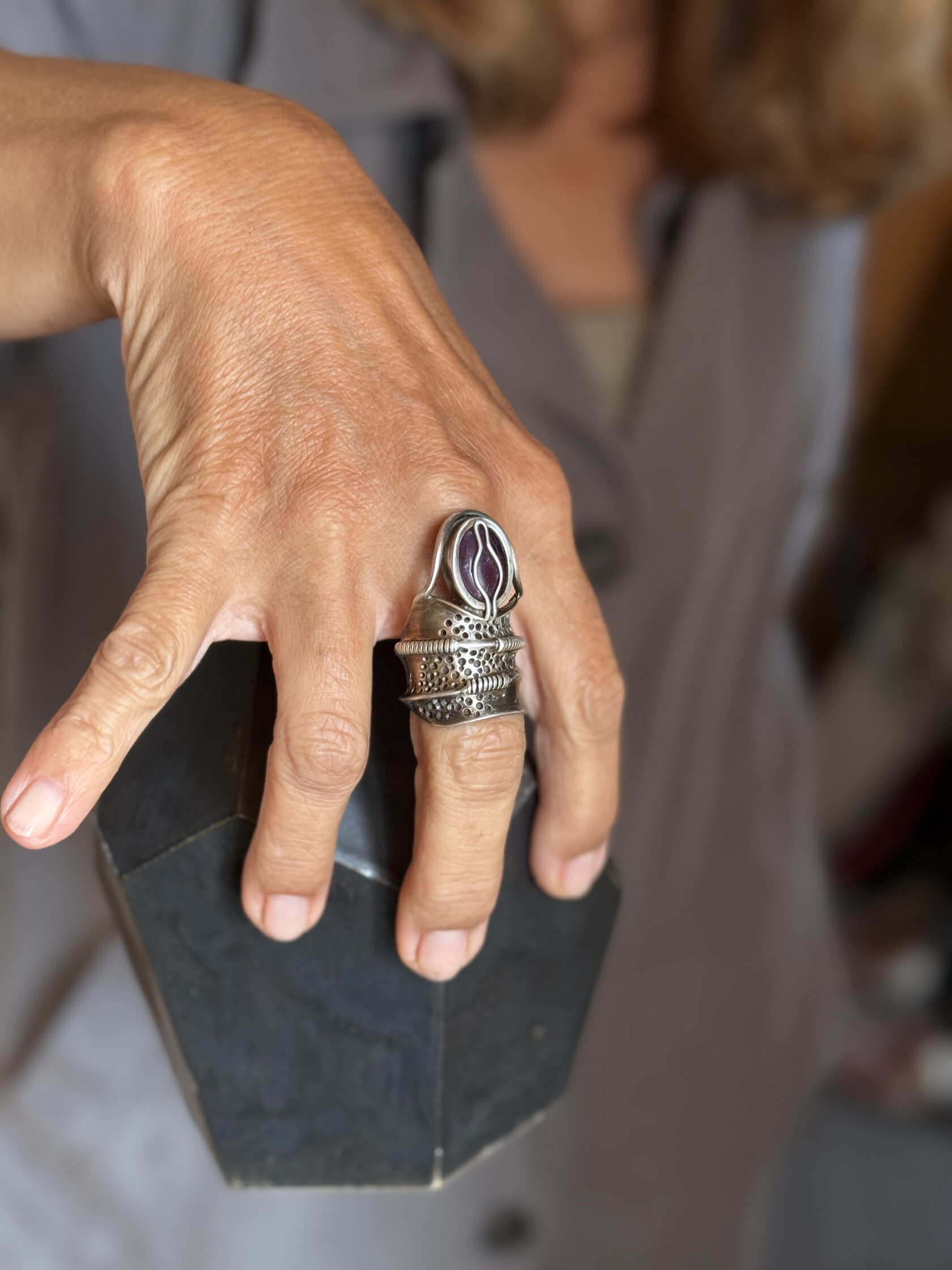
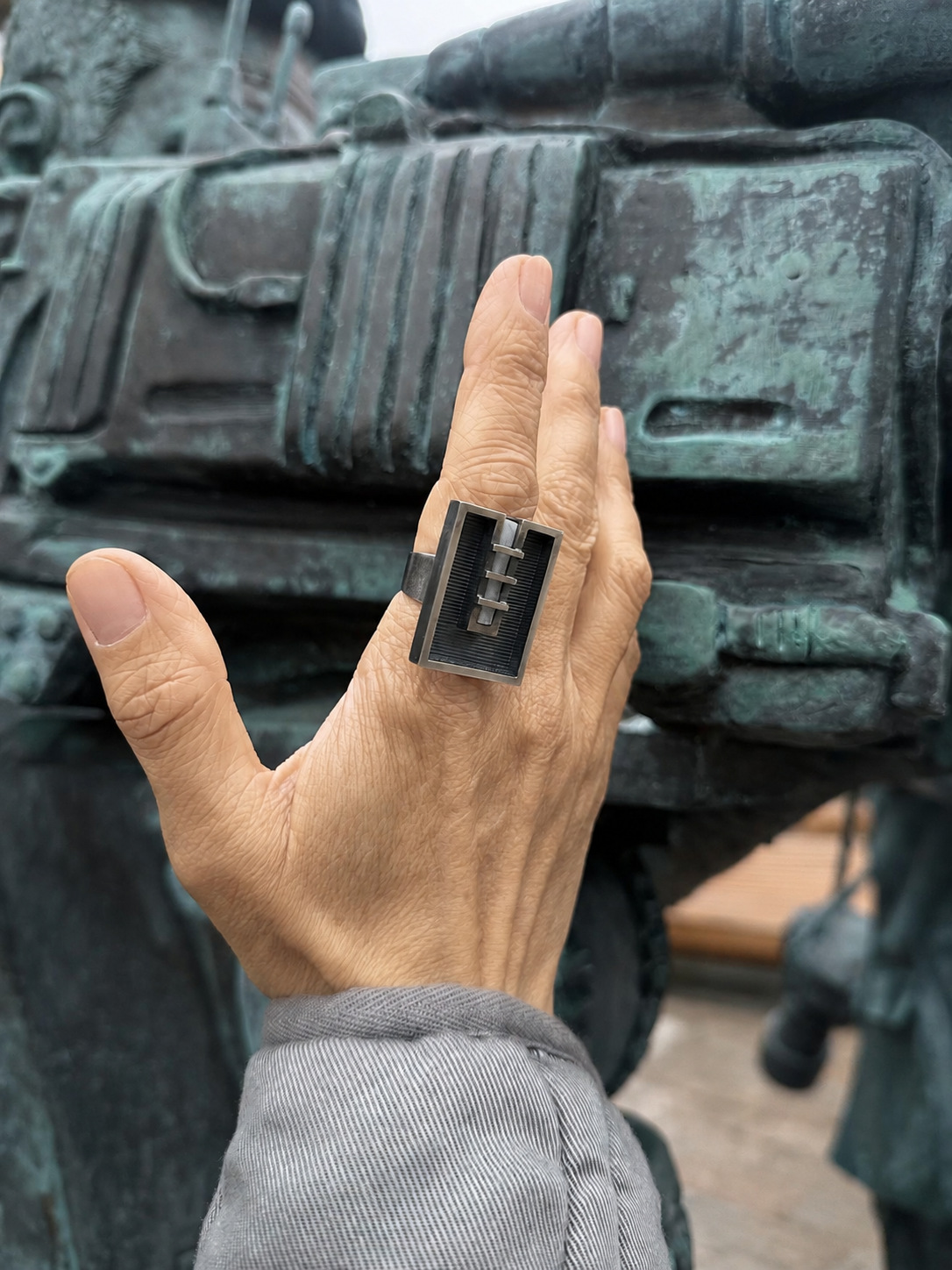
The Mohs scale matters, but it is easy to overread it. It describes resistance to scratching and abrasion rather than the whole practical durability of a gemstone in a ring.
A stone may resist scratching very well yet still become more vulnerable to chipping if cleavage, geometry or construction create a weak point.
A high Mohs number does not promise that the stone cannot chip. SCRATCH RESISTANCE ≠ IMPACT RESISTANCE.
Core framework: GIA describes durability as a combination of hardness, toughness and stability — More than the Mohs Scale.
Hardness is resistance to scratching and abrasion. That is what the Mohs scale is actually measuring. It helps when the question is how easily the surface can pick up marks from contact with other materials.
But Mohs is an ordinal, relative scale rather than a linear interval scale. You cannot treat the numerical distance between values as if all gaps were equal, and you cannot reduce real ring performance to one number.
Toughness is resistance to breaking, chipping and fracturing under mechanical stress or impact. TOUGH STONE ≠ SCRATCH-PROOF, and the hardest stone is not automatically the toughest.
This is why diamond and jade make a useful conceptual pair. Diamond illustrates extreme hardness, while nephrite or jadeite are often cited for exceptional toughness. That does not produce an overall winner — it shows that different properties answer different questions.
Cleavage is the tendency of a crystal to split along specific crystallographic planes. CLEAVAGE ≠ CRACK: cleavage is not the same as a visible fracture already present inside a stone.
Cleavage also does not mean low hardness. CLEAVAGE ≠ LOW HARDNESS. A gemstone can rank high on Mohs and still have directions along which impact produces a chip more readily than a scratch would suggest.
GIA explicitly notes that even diamond can chip, especially when cut geometry leaves exposed points or vulnerable edges: How to Protect Your Diamond from Chipping.
Stability means resistance to heat, light, chemicals and environmental conditions. This is not about scratches and not about impact — it is about how a gemstone behaves in real wear, maintenance and repair conditions.
That is why practical durability is contextual. A stone may resist scratches well while being more sensitive to the environment, and good stability does not automatically make a gem resistant to impact. When choosing a stone for an individual design, see How to Choose a Gemstone for a Custom Ring.
This is not a winner table. It is a reading model. SAME MOHS ≠ SAME REAL-WORLD BEHAVIOR.
| Gemstone | What the example shows | Practical takeaway for a ring |
|---|---|---|
| Diamond | Very high hardness, but HIGH MOHS ≠ IMPOSSIBLE TO CHIP. Under the right geometry and impact, chipping is still possible. | Excellent scratch resistance does not remove the need to think about points, corners and wear pattern. |
| Sapphire / corundum | High hardness, generally excellent toughness and no cleavage make it a very useful contrast. | A strong everyday candidate, but not an indestructible one. |
| Nephrite / jadeite | A good example of high toughness, but not of diamond-like scratch resistance. | TOUGH STONE ≠ SCRATCH-PROOF. Impact resistance and abrasion resistance are different questions. |
| Quartz | A helpful middle example showing that Mohs alone still does not predict full ring behavior. | Shape, setting and wear pattern still matter. |
| Labradorite / feldspar | Useful for showing why cleavage and more moderate hardness make design choices more important. | A single Mohs value is not enough; edge protection and realistic wear expectations matter. |
Contrast source for sapphire: GIA Sapphire Care and Cleaning. Broader gemological context: Gemstone Durability: Design to Display.

A setting can reduce the exposure of corners, edges or vulnerable points, but it cannot rewrite the properties of the mineral itself. SETTING ≠ CHANGE OF MINERAL PROPERTIES.
BEZEL ≠ INDESTRUCTIBLE STONE. A bezel can shield an edge better than a more open construction, but it does not change Mohs hardness, it does not remove cleavage and it does not turn a vulnerable geometry into a risk-free one.
If you need the actual setting comparison, the better place is Bezel vs Prong. Topic 42 only needs the principle of exposure and protection.
Not only the mineral but also the geometry affects risk. A thin projection, a sharp point or a highly raised top tends to take the first contact when the ring hits a hard surface.
This matters especially when the stone has vulnerable cleavage directions or when the design leaves angles exposed. A ring is not a lab sample: it is a wearable object in repeated contact with real surfaces. For the connection between stone exposure and the height of a ring, see Low-Profile vs High-Profile Ring Settings.
If the next question is not theory but which gemstones work better for a daily-wear ring, that belongs to a different page. See Best Gemstones for Everyday Rings.
Topic 42 exists to help the reader interpret the properties correctly: not to choose by Mohs alone and not to confuse scratches, chips, cleavage and environmental stability.
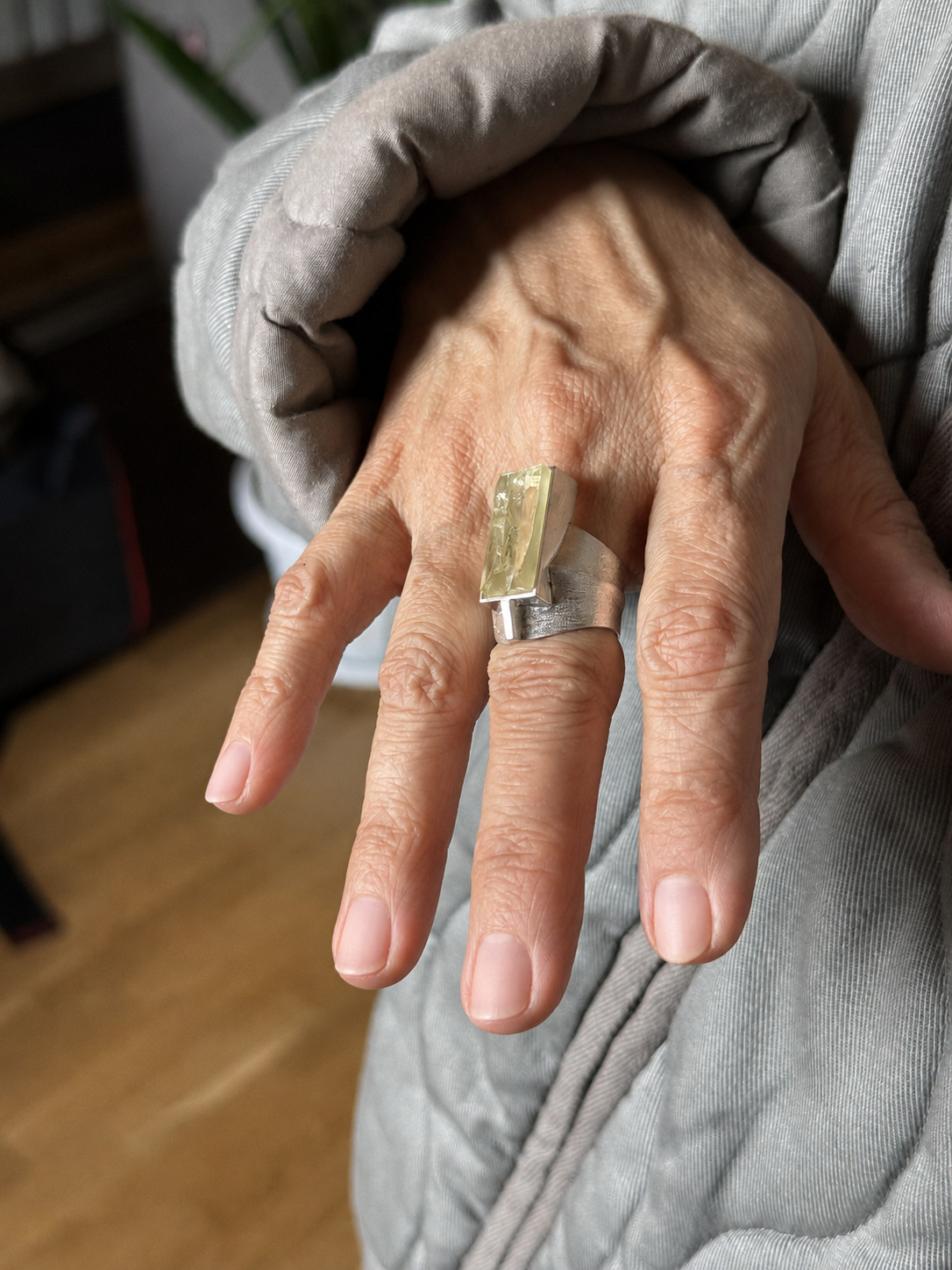
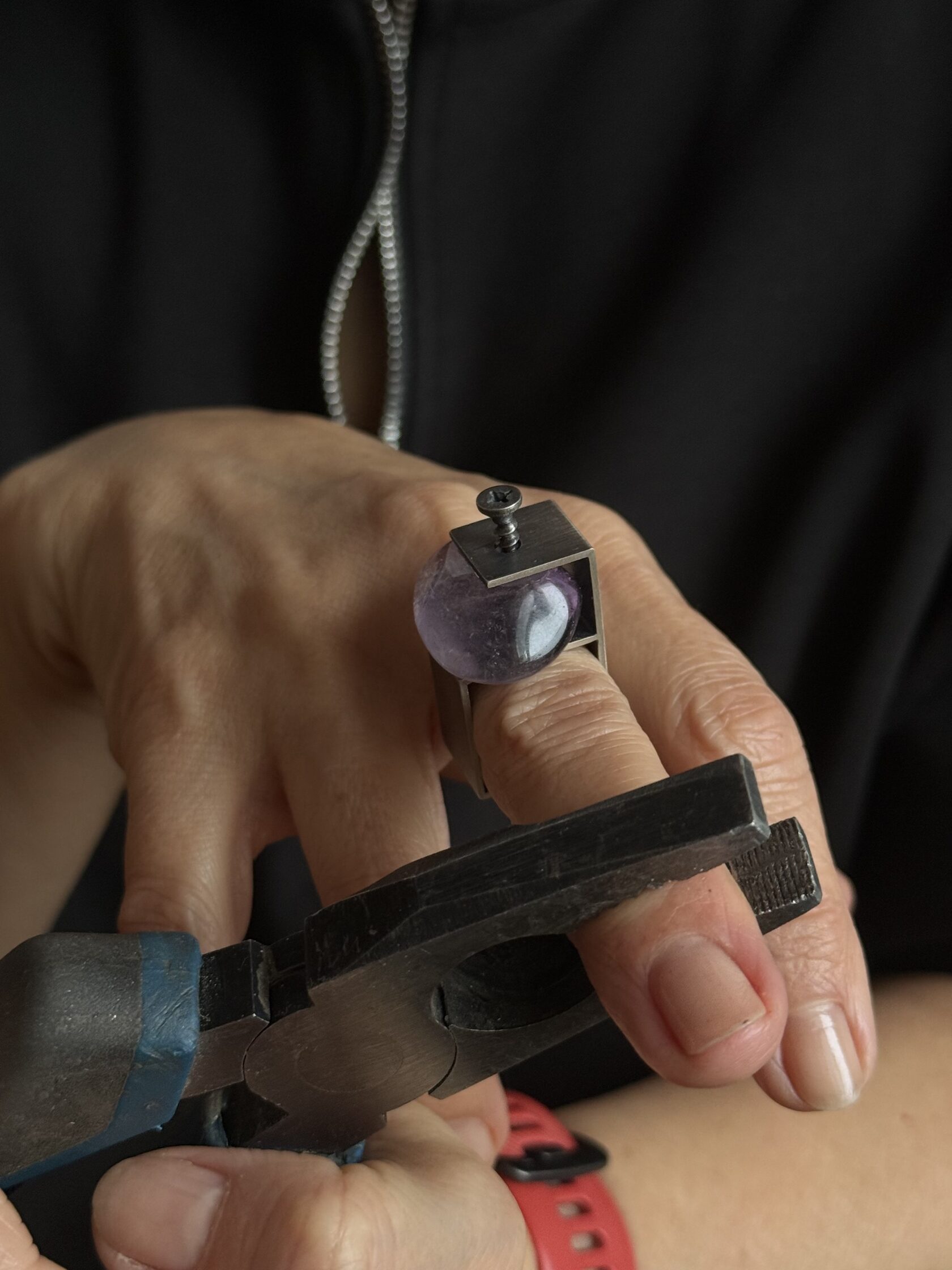
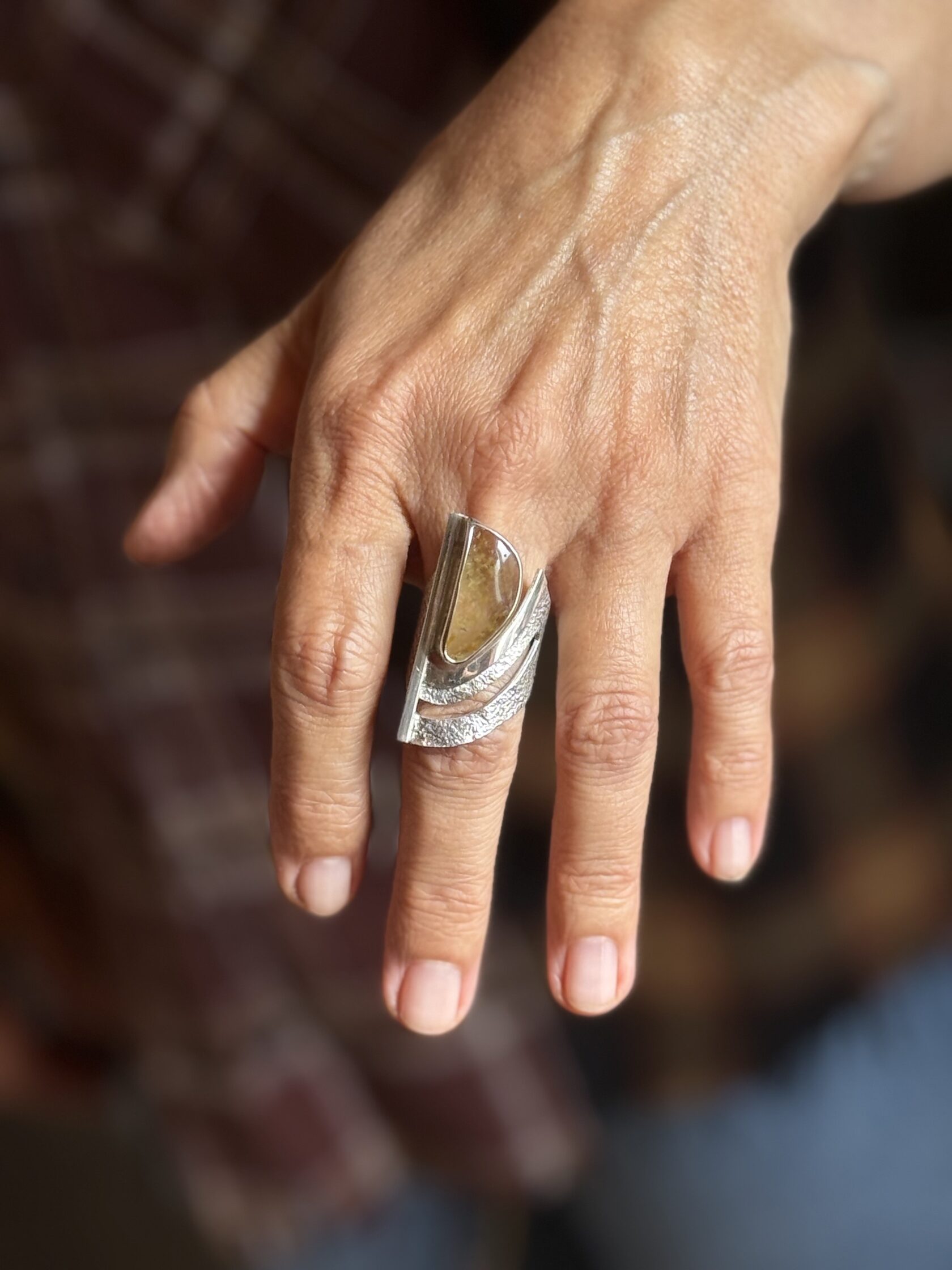
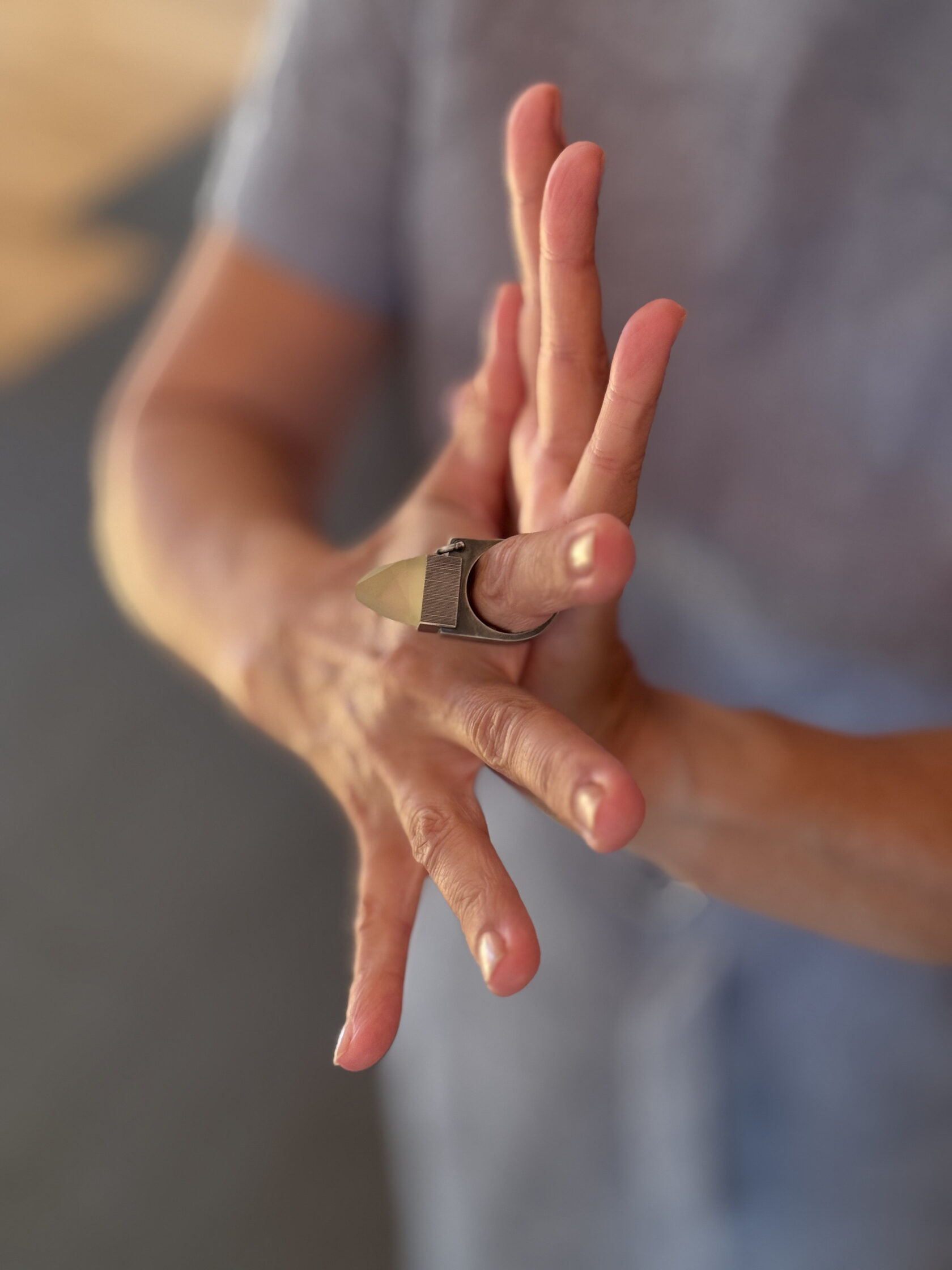
These photographs do not prove laboratory properties of the minerals by themselves. They show how exposed areas, raised tops, protected planes and different metal-to-stone relationships appear in real ring construction.
The Mohs scale measures resistance to scratching. It does not measure total gemstone “strength,” and it does not tell you how easily a stone may chip under impact.
Hardness is resistance to scratching and abrasion. Toughness is resistance to breaking, chipping or fracturing under mechanical stress.
Cleavage is the tendency of a crystal to split along specific crystallographic planes. CLEAVAGE ≠ CRACK: it is not the same thing as a visible fracture already present in the stone.
Yes. HIGH MOHS ≠ IMPOSSIBLE TO CHIP. A high hardness helps against scratches, but it does not eliminate chipping risk under impact or vulnerable geometry.
Diamond is extremely hard, but it has cleavage directions. With the wrong kind of impact or exposed points, chipping can still occur.
No. A lower Mohs number does not automatically make a gemstone bad. Toughness, stability, cut shape, setting and wear pattern all matter.
Neither can replace the other. Practical ring durability requires hardness + toughness + stability plus an understanding of cleavage.
No. BEZEL ≠ INDESTRUCTIBLE STONE. A setting can reduce exposure of corners and edges, but it cannot rewrite mineral properties.
Stability is resistance to heat, light, chemicals and environmental conditions. Some gems resist scratching well while being more sensitive to the environment.
Because STONE DURABILITY ≠ MOHS NUMBER ALONE. A ring stone has to be understood through several properties and the actual wear scenario.
NEXT STEP / WORKS
The Works section makes it easier to compare raised tops, exposed angles, edge protection and stone-to-metal relationships in real NP Studio objects.
Go to WorksNEXT STEP / CUSTOM
If a ring is meant for a specific wear pattern, it is safer to discuss Mohs, toughness, cleavage, shape and setting together rather than in isolation.
Discuss the Ring