Stone identity / stated identity
What is actually known about the gemstone and where that information comes from.
NP STUDIO / JOURNAL / CUSTOM RING / CUSTOMER-SUPPLIED STONE
Sometimes, yes. A customer-supplied, heirloom or previously set gemstone can become the starting point for a new ring, but acceptance should follow inspection rather than precede it. The stone’s real dimensions, condition, known treatments and setting risk all matter.
Yes, a customer-supplied gemstone can sometimes be used in a new ring, but acceptance should never be automatic. The stone first needs to be assessed for dimensions, shape, condition, chips or fractures, possible treatments and whether it is suitable for removal, setting and the intended wear. In some cases the ring must be designed around the stone; in others, using it may not be appropriate.
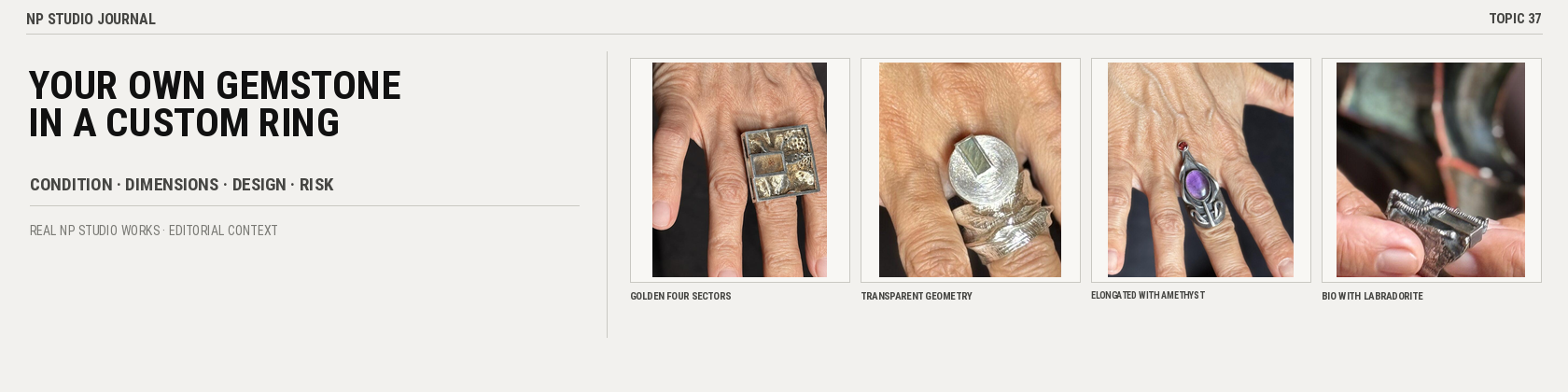
Some jewelers accept customer-supplied stones. Others work only with stones they source themselves, or accept outside stones only after inspection. The policy depends on the studio, the stone and the job.
JEWELER ACCEPTANCE POLICIES VARY. The sensible sequence is inspection first, acceptance second.
Owning the stone does not mean a particular jeweler must, or technically can, use it in a new ring.
The useful information goes beyond the customer’s stated gem name. A jeweler needs the physical and historical details that affect construction and handling risk.
What is actually known about the gemstone and where that information comes from.
Length × width × depth, not only carat weight.
Cabochon, faceted stone, crystal or irregular geometry.
Sharp corners, thin edges and other areas that may need protection.
Chips, fractures, abrasion, scratches and visible marks from an old setting.
Anything that may be relevant during setting or later wear.
Certificates or information about filling, coating, heating or other treatments should be disclosed when known.
Whether the stone is loose or first needs to be removed from older jewelry.
Metal marks, edge deformation or areas previously hidden by the mounting.
A frequently worn ring and an occasional statement ring create different requirements.
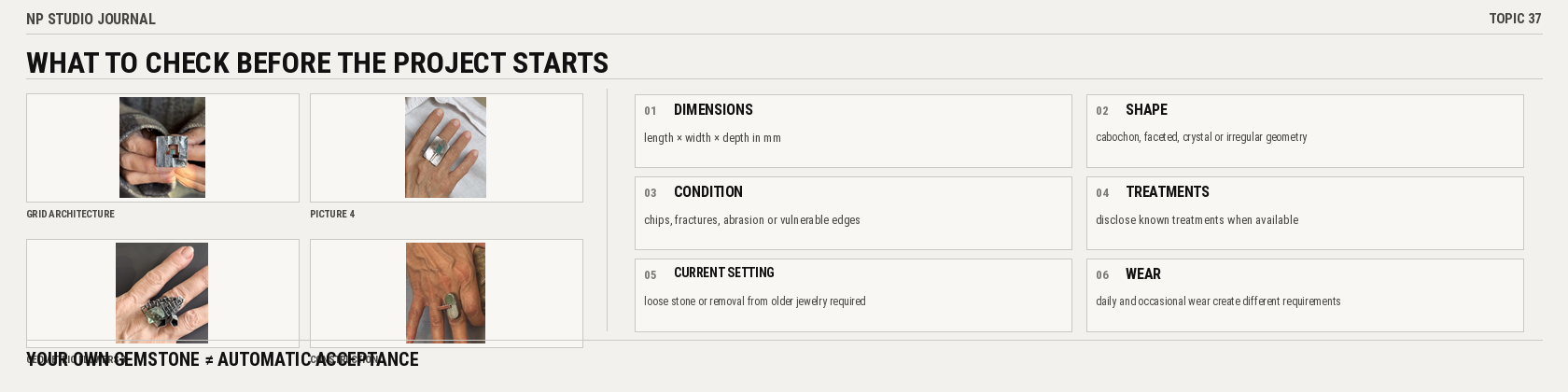
Photos are useful for an initial conversation, but they do not reliably establish identity, origin, treatment history or internal condition. If those points materially affect the project, professional gemological assessment is appropriate.
A stone that looks clean in a photograph does not prove that its treatment history or internal condition is known.
A setting is built around physical geometry: length, width, depth, edge thickness, corners and profile. A gem name does not supply those measurements.
SAME CARAT WEIGHT ≠ SAME DIMENSIONS. Two stones of the same weight can have very different proportions and need different settings. CARAT WEIGHT ≠ SETTING DIMENSIONS. Millimetres often matter more than carat weight at the bench.
This becomes especially obvious with irregular, natural or elongated stones: they can dictate the size of the setting, direction of the composition, metal thickness and even shank proportions.
Resetting begins with removal, and removal itself can carry risk. An old setting may conceal edge damage that becomes visible only after the gemstone has been taken out.
OLD STONE ≠ DAMAGED STONE BY DEFAULT. Age alone does not prove poor condition. But RESETTING ≠ ZERO RISK. Every old piece should be assessed individually.
The original piece may also have family, historical or artistic value of its own. In some cases preserving the object can make more sense than dismantling it. There is no universal recommendation.
SENTIMENTAL ≠ TECHNICALLY SUITABLE. Emotional importance raises the stakes but does not remove physical limitations or handling risk.
This is not a second everyday-gemstone guide. The short version is that brittleness, cleavage, existing fractures, fillers and other treatments can change which setting methods or workshop processes are appropriate.
NATURAL ≠ AUTOMATICALLY SAFE TO RESET. Natural origin alone does not establish condition, treatment history or a safe resetting path.
HARD STONE ≠ IMPOSSIBLE TO CHIP. High hardness does not mean zero chipping risk. Conversely, a softer or more vulnerable gem is not automatically impossible; sometimes protective geometry helps, and sometimes declining the project is the safer decision.
For the broader durability question, see Best Gemstones for Everyday Rings.
Once the gemstone already exists, the custom process changes. It may not be possible to simply “drop” it into a favourite ring design. Size, direction, colour and vulnerable edges can become the starting constraints for the entire object.
| What the stone dictates | What may change in the ring |
|---|---|
| Length × width × depth | Setting size, height and upper volume. |
| Shape / orientation | Composition direction and visual centre. |
| Edges and corners | Metal thickness, protective borders and setting style. |
| Scale | Shank width and overall proportions. |
| Colour and transparency | Metal surface, patina and neighbouring elements. |
| Condition | Permitted process, need for protection or decision to decline. |

SAME GEM TYPE ≠ SAME SETTING REQUIREMENTS. Two stones of the same gem species can still need different constructions because geometry, condition and treatments differ.
A refusal does not necessarily mean the gemstone is “bad.” The issue may be the combination of risk and the studio’s actual working processes.
Skilled work can reduce risk, but removal and resetting never become a literally zero-risk process.
If you are still choosing a gemstone rather than working with an existing one, see How to Choose a Gemstone for a Custom Ring. If the main question is how open or protected the stone should be, compare bezel and prong settings.
In a custom project, an existing gemstone can become the first constraint and the first visual decision at the same time. Scale, direction, colour and physical geometry may require changes to proportions, height, shank and the composition as a whole.
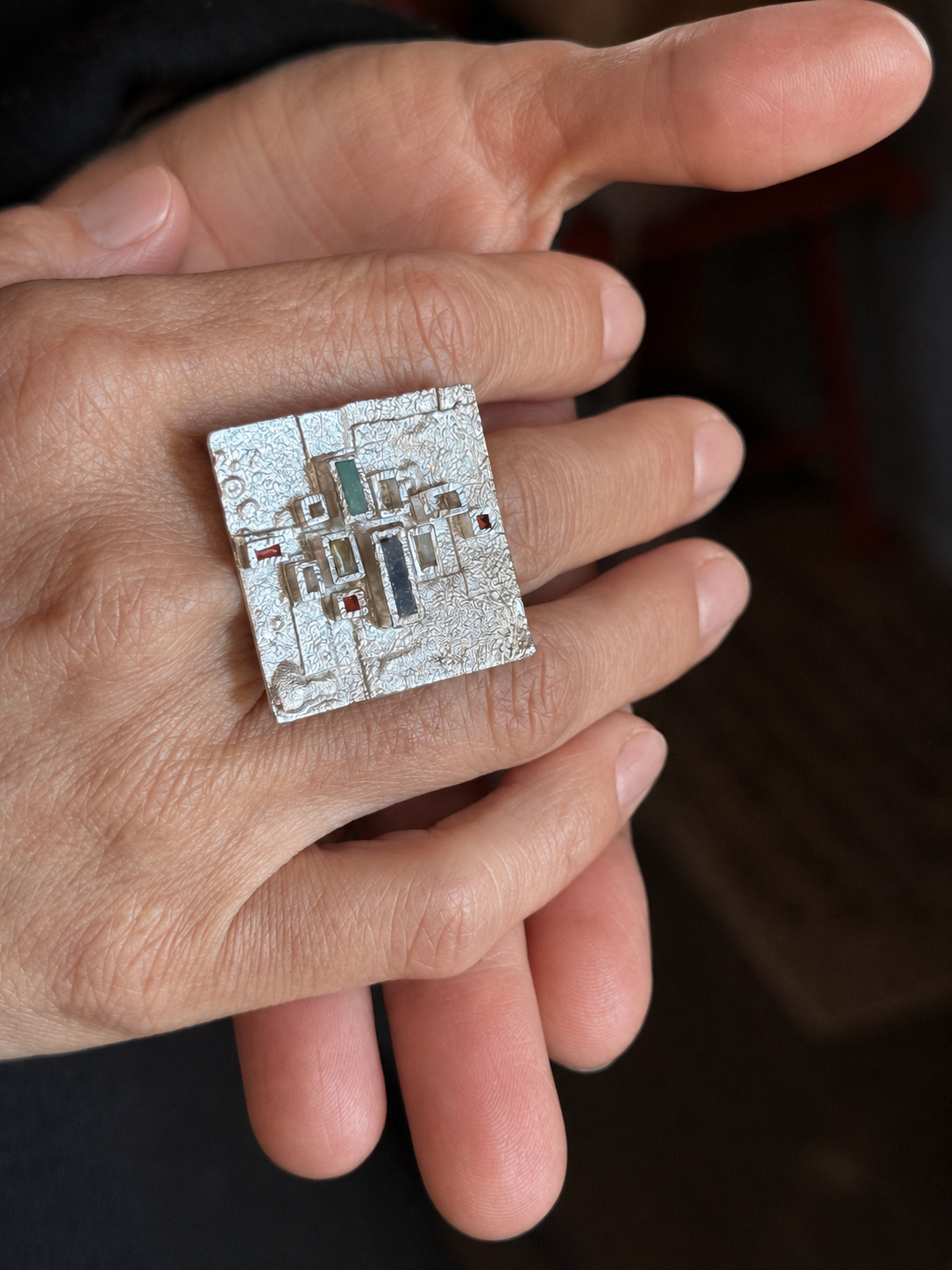
DETAILED EXAMPLE / ADAPTABLE COMPOSITION
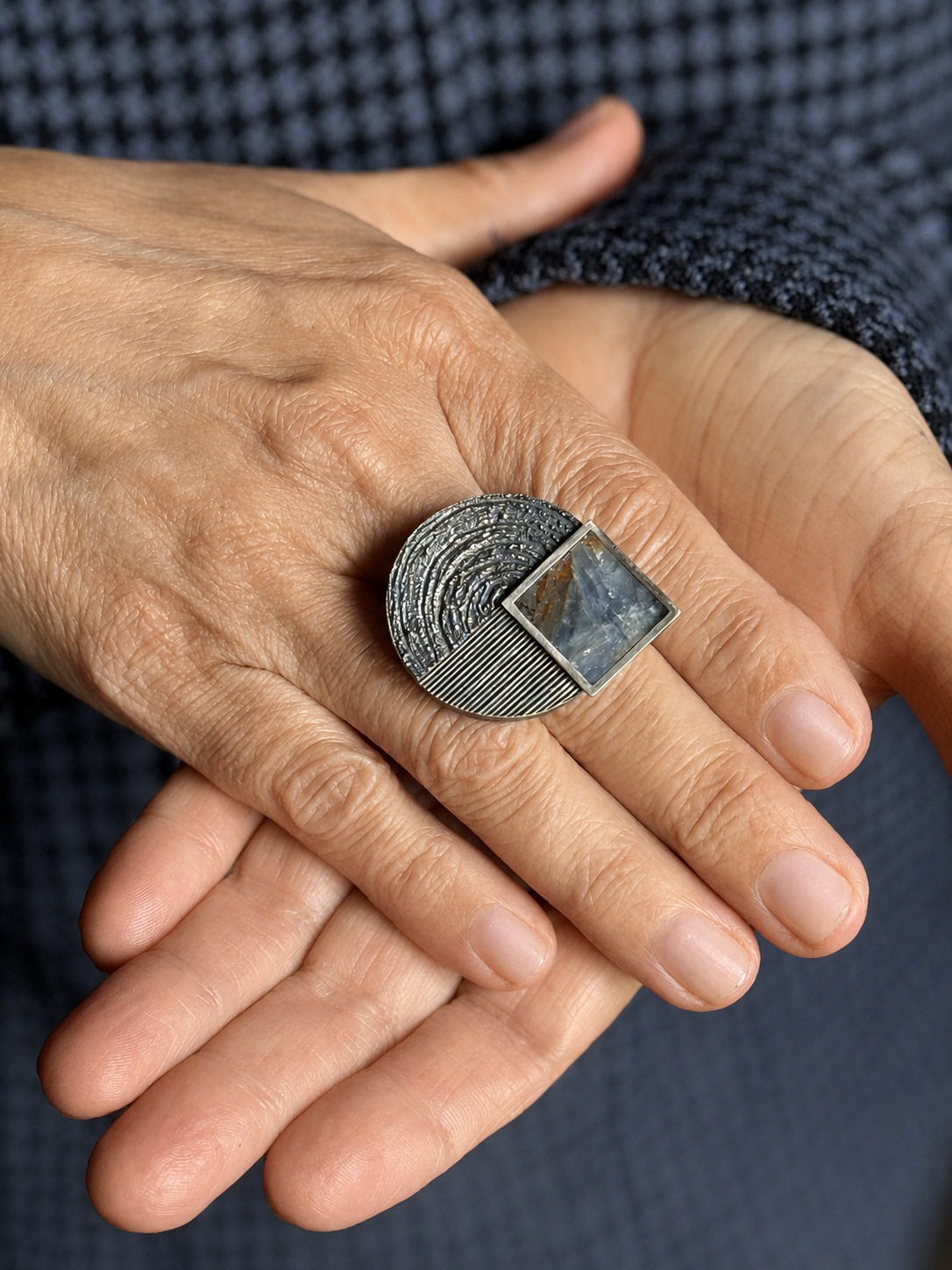
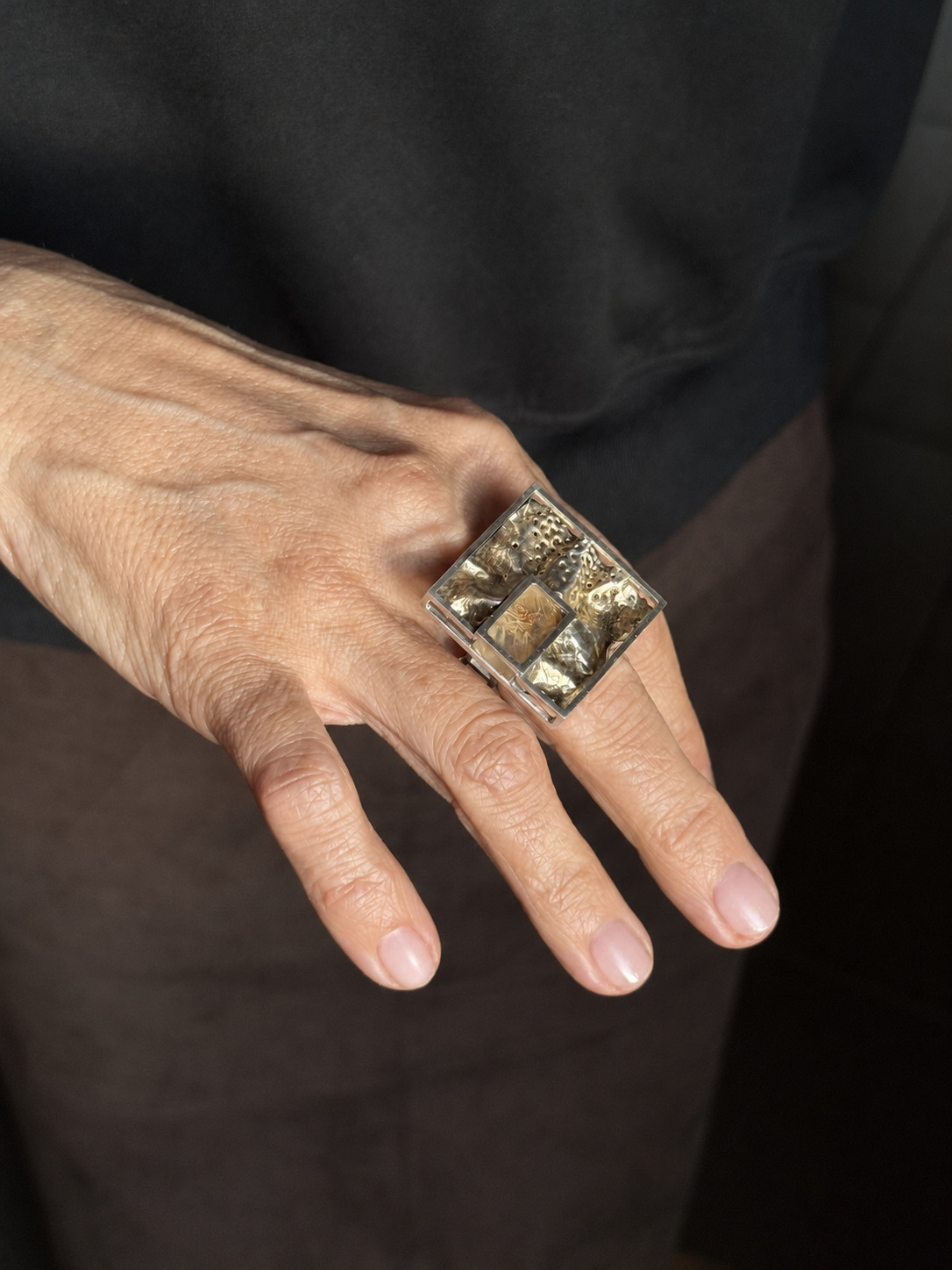
Kyanite, amber, nephrite and enamel are integrated into one complex composition. The live work page explicitly says that a related commission may change the stones, proportions, placement and number of elements. It is a useful example of why a new gemstone can require rebuilding the composition rather than merely swapping an insert.
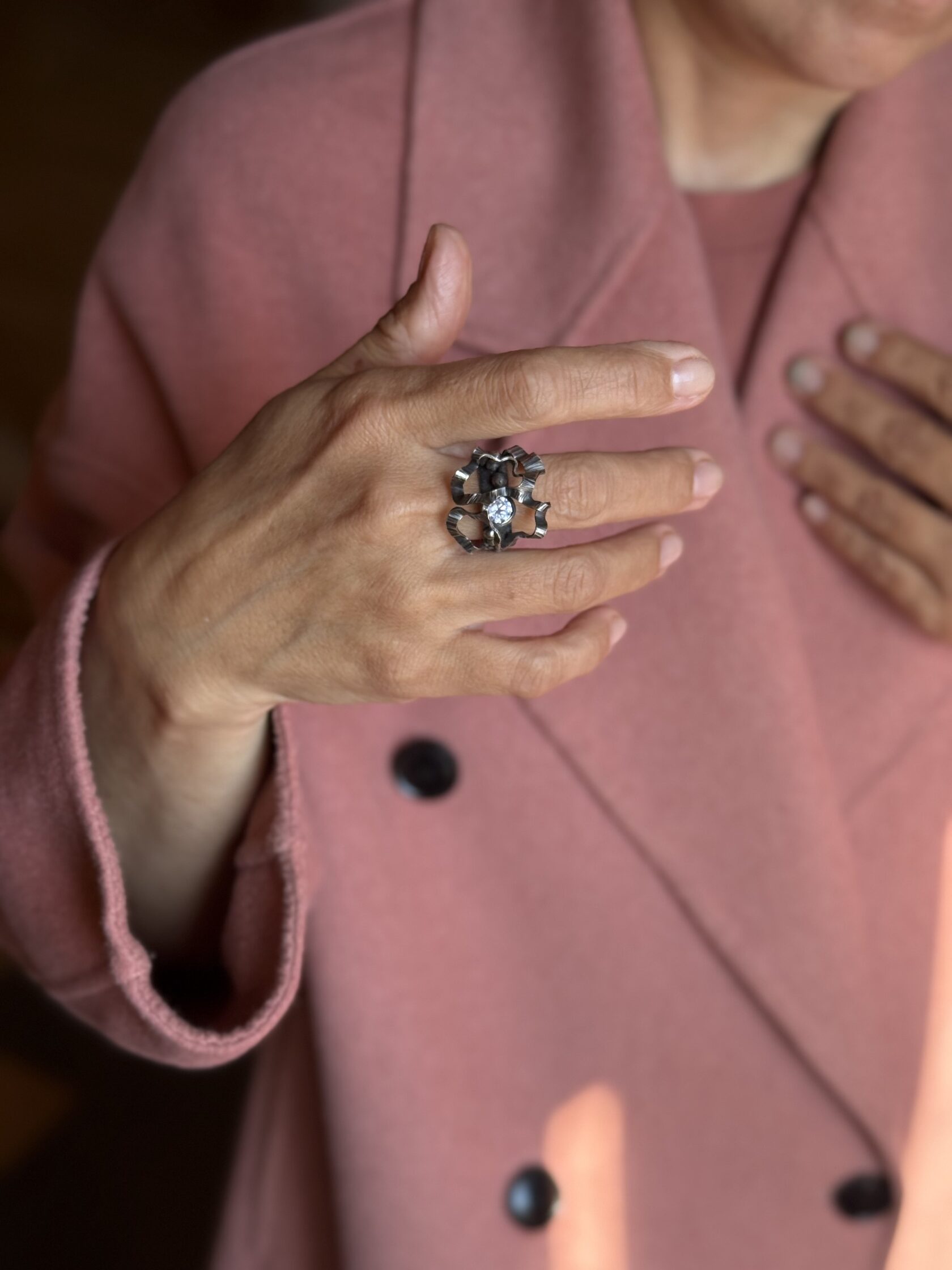
DETAILED EXAMPLE / STONE AS SILHOUETTE
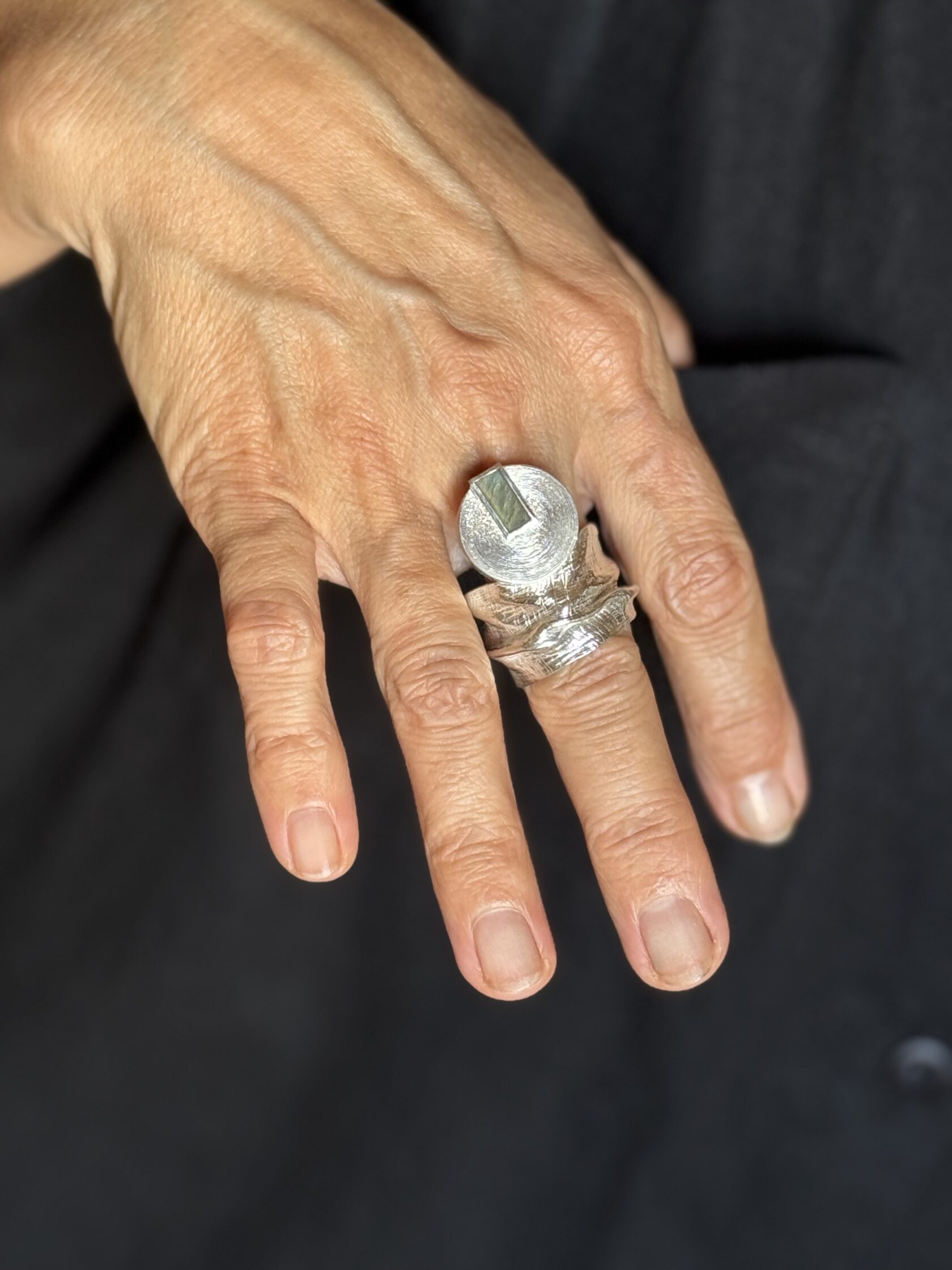
The amethyst crystal acts as a vertical part of the sculptural silhouette. Changing the stone and its dimensions can therefore change the character of the whole ring. The work page allows a different stone and size, while noting that strong proportion changes affect the piece.
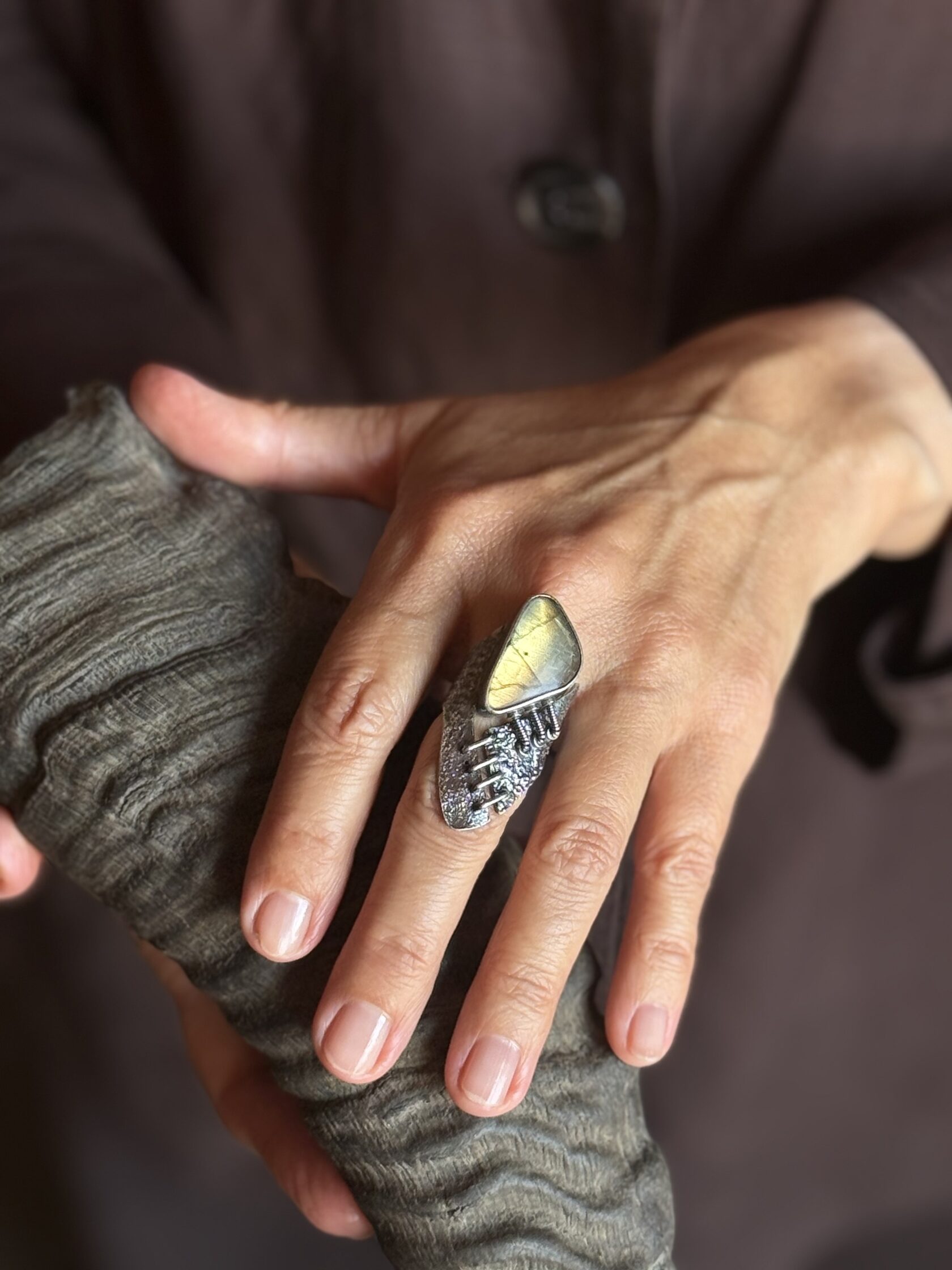
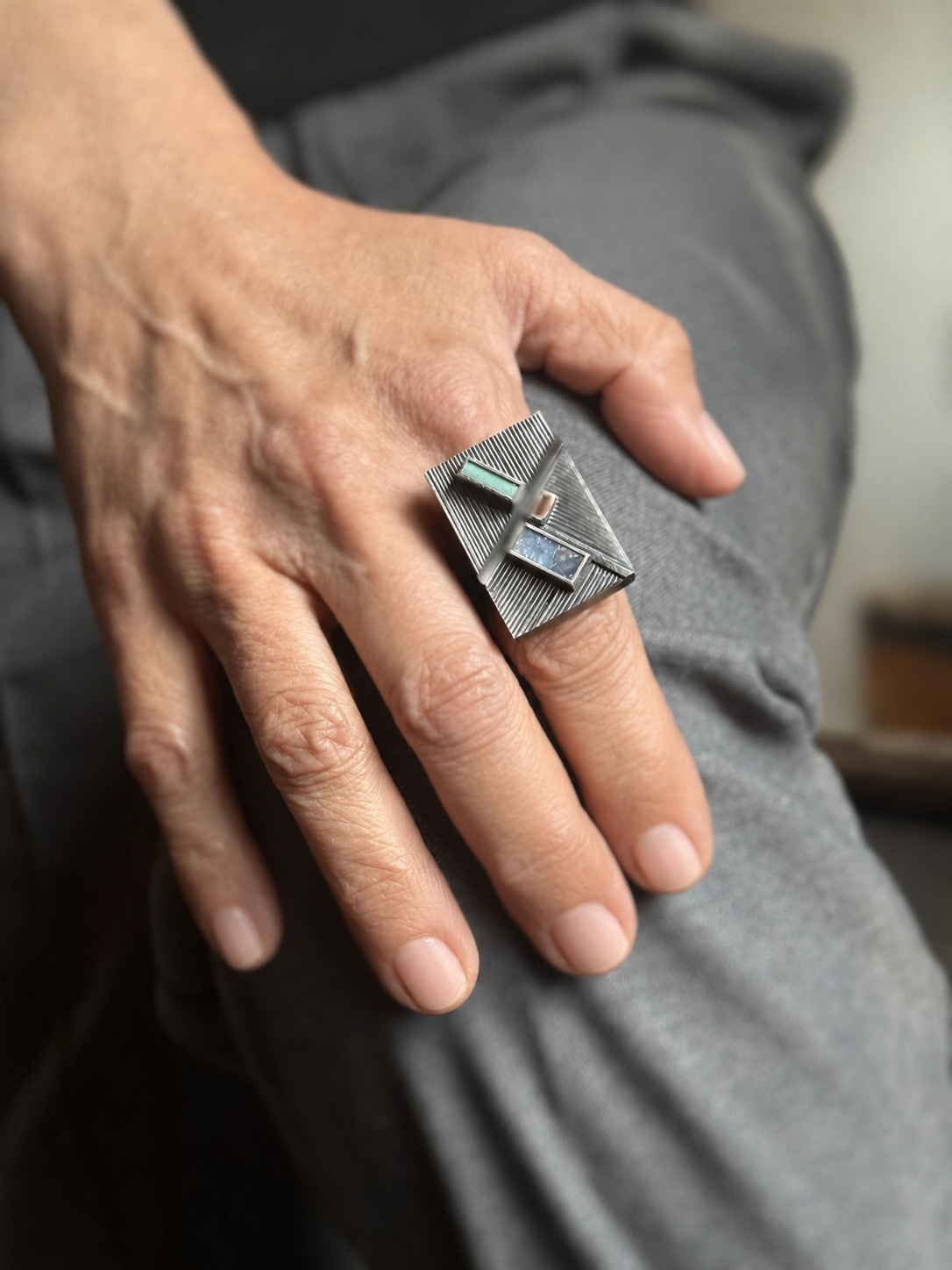
NP Studio does not imply automatic acceptance of every outside gemstone. The stone must first be assessed, and only then can a realistic construction be discussed.
Sometimes. The jeweler should first assess dimensions, shape, condition, known treatments and setting risk. Acceptance should not be automatic.
No. Studio policies vary. Some accept outside stones after inspection; others work only with stones they source themselves.
Sometimes, but the stone’s condition and the risk of removal need to be considered first. An old setting can hide edge damage.
It helps, but identification should not be guessed from a photo. If identity or treatment materially affects the project, professional gemological assessment is appropriate.
Length, width and depth in millimetres. Carat weight alone does not define the physical dimensions of a setting.
Sometimes, depending on where the damage is and how the new setting would load or protect that area. In other cases the risk may be too high.
Yes. Fillers, coatings and other treatments can change what heat, chemicals, cleaning or setting processes are appropriate.
Yes. In many projects the unusual geometry becomes the starting point for setting size, orientation and overall ring proportions.
Yes. Removal and resetting are not zero-risk operations, especially when condition or treatment history is uncertain.
Several clear photos, dimensions in mm, known gem and treatment information, photos of the old piece, ring size, a design reference and your intended wear pattern.
PRIMARY / CUSTOM
If you already own the stone, send photos, dimensions and everything known about its history. The next step is to decide whether a new ring can be built safely and meaningfully around that exact gemstone.
Discuss your gemstone and ring projectSECONDARY / WORKS
The works archive shows how gemstone scale and geometry can change the entire construction.
Explore works