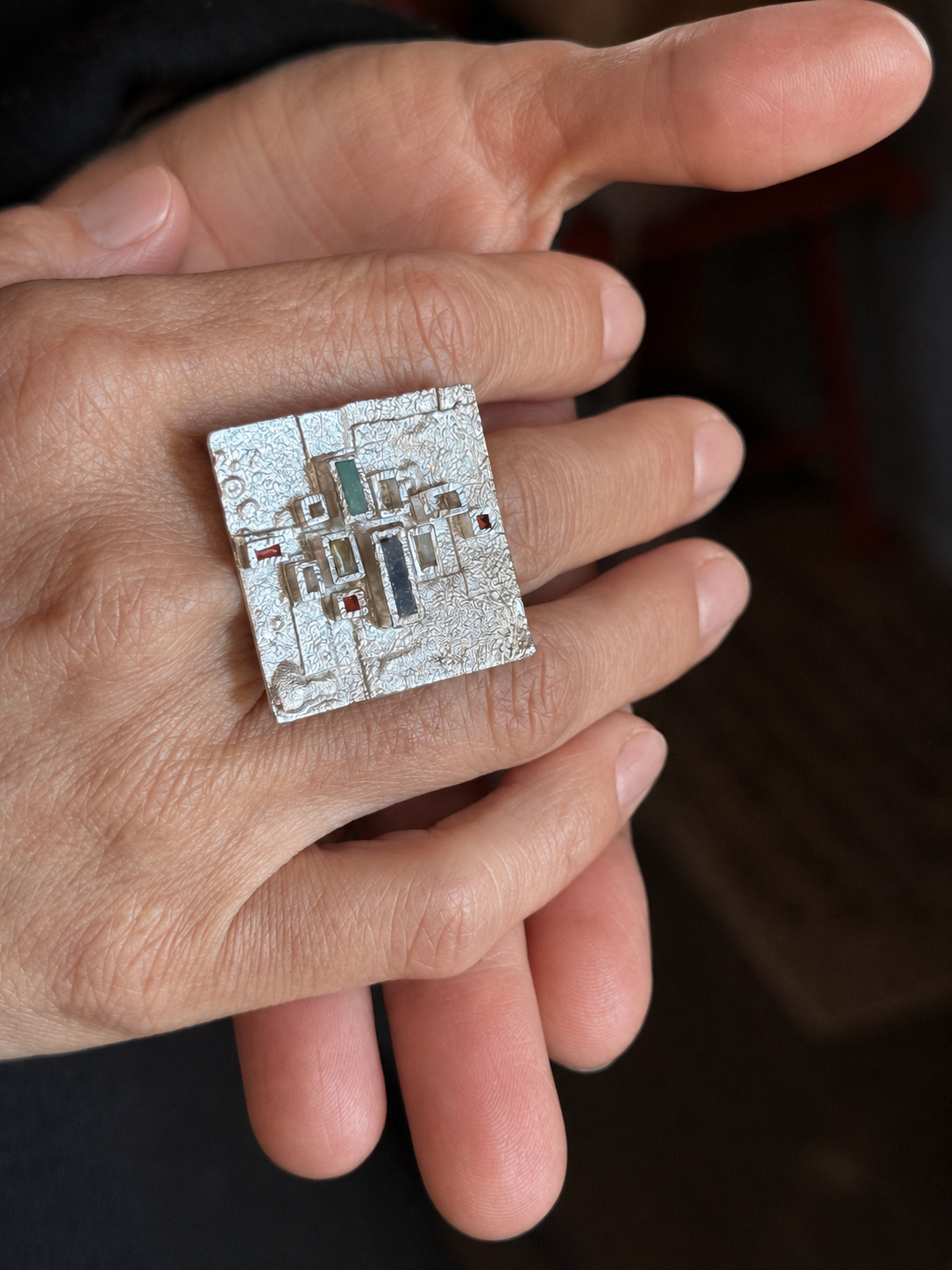
 Picture Ring VariationSterling silver · kyanite, amber, nephrite · red vitreous enamel
NP STUDIO / JOURNAL / EARRINGS
Stud Earrings: Design, Fit and Construction
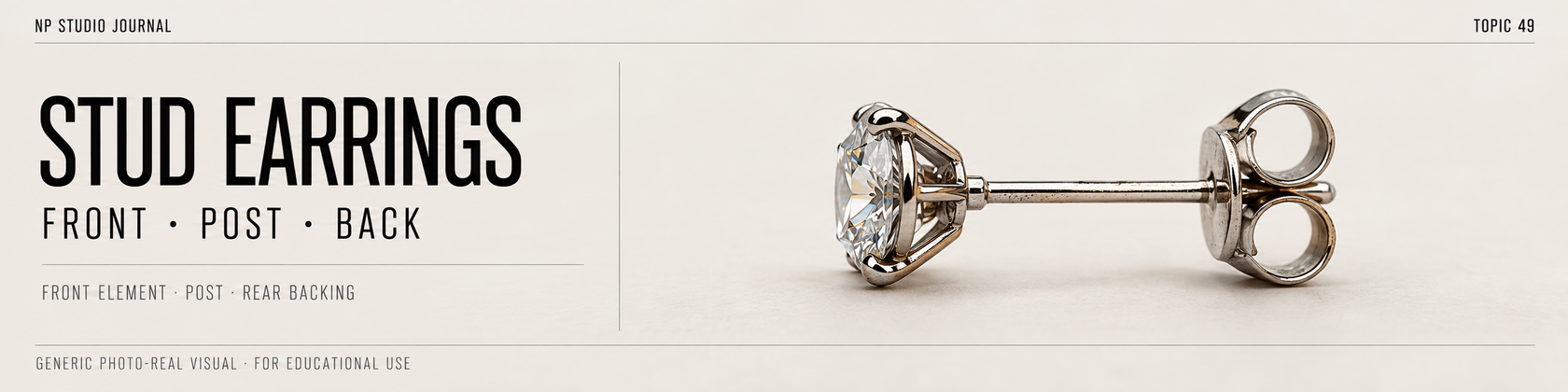
Stud earrings are better understood by construction than by size or by one specific backing: the main visual element sits at the lobe, a post passes through the piercing, and a separate rear system keeps the earring in place.
Direct answer
Stud earrings place the main decorative element at the earlobe rather than forming a large hoop or a long hanging structure. A typical stud construction includes a front element, a post through the piercing and a separate backing or locking system behind the lobe. Size, gemstone, material and the exact backing can vary widely without changing the basic stud logic.
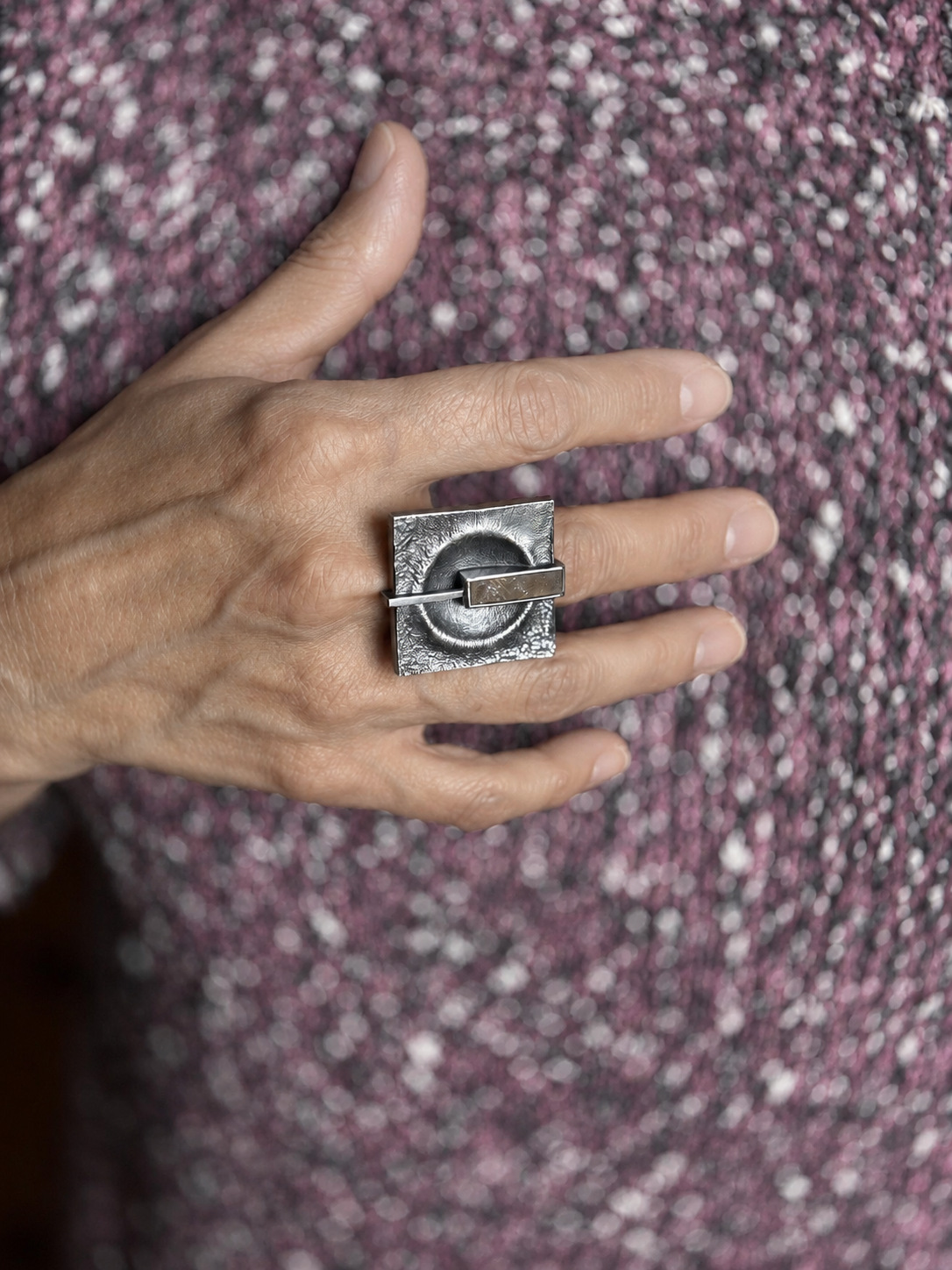
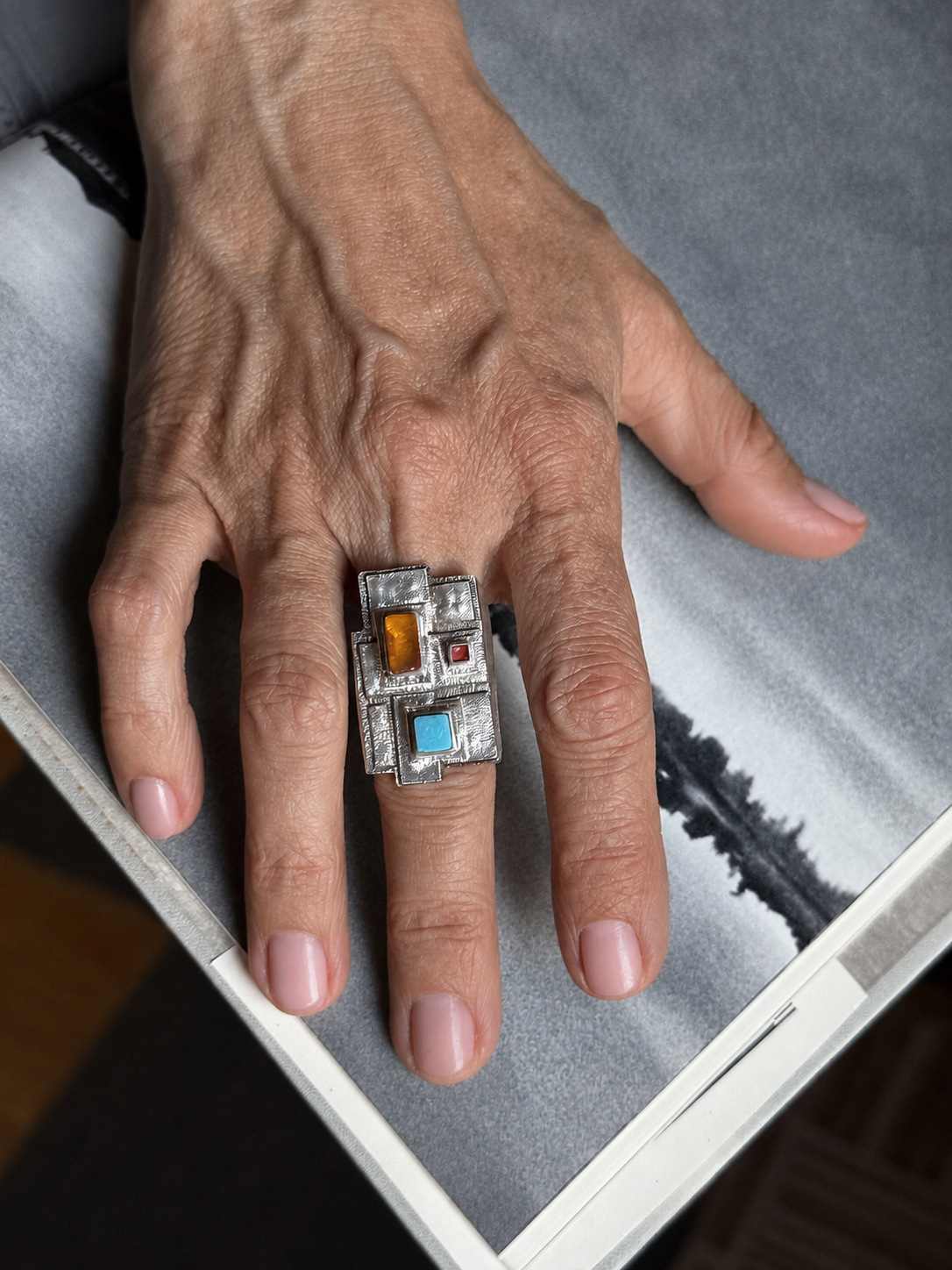
These are real NP Studio works. They are not examples of stud earrings or earring mechanics; they introduce the studio’s visual language through form, surface, scale and the treatment of sterling silver.
Picture Ring VariationSterling silver · kyanite, amber, nephrite · red vitreous enamel 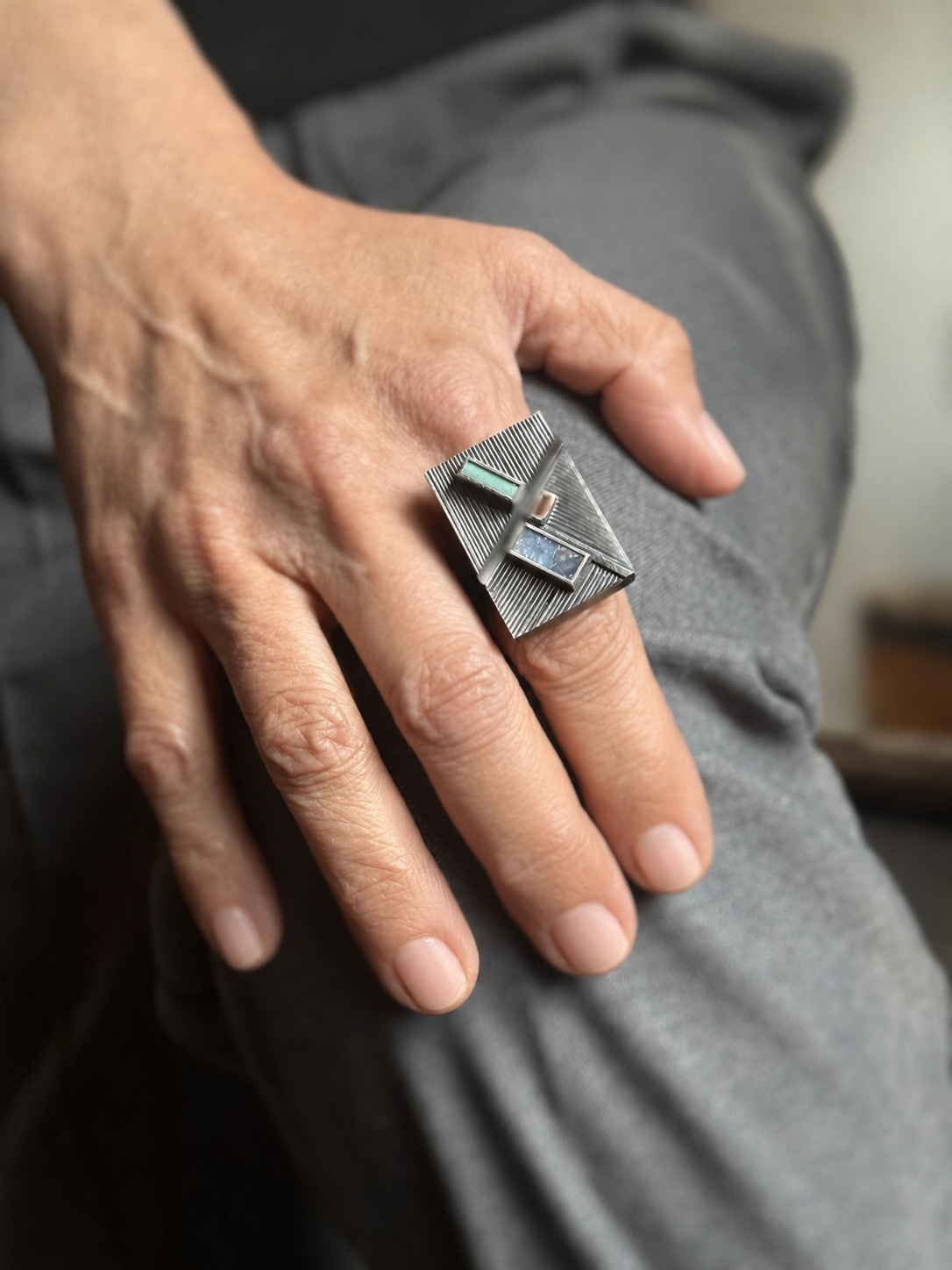 Picture with LinesSterling silver · chrysoprase, kyanite, agate · geometric linework
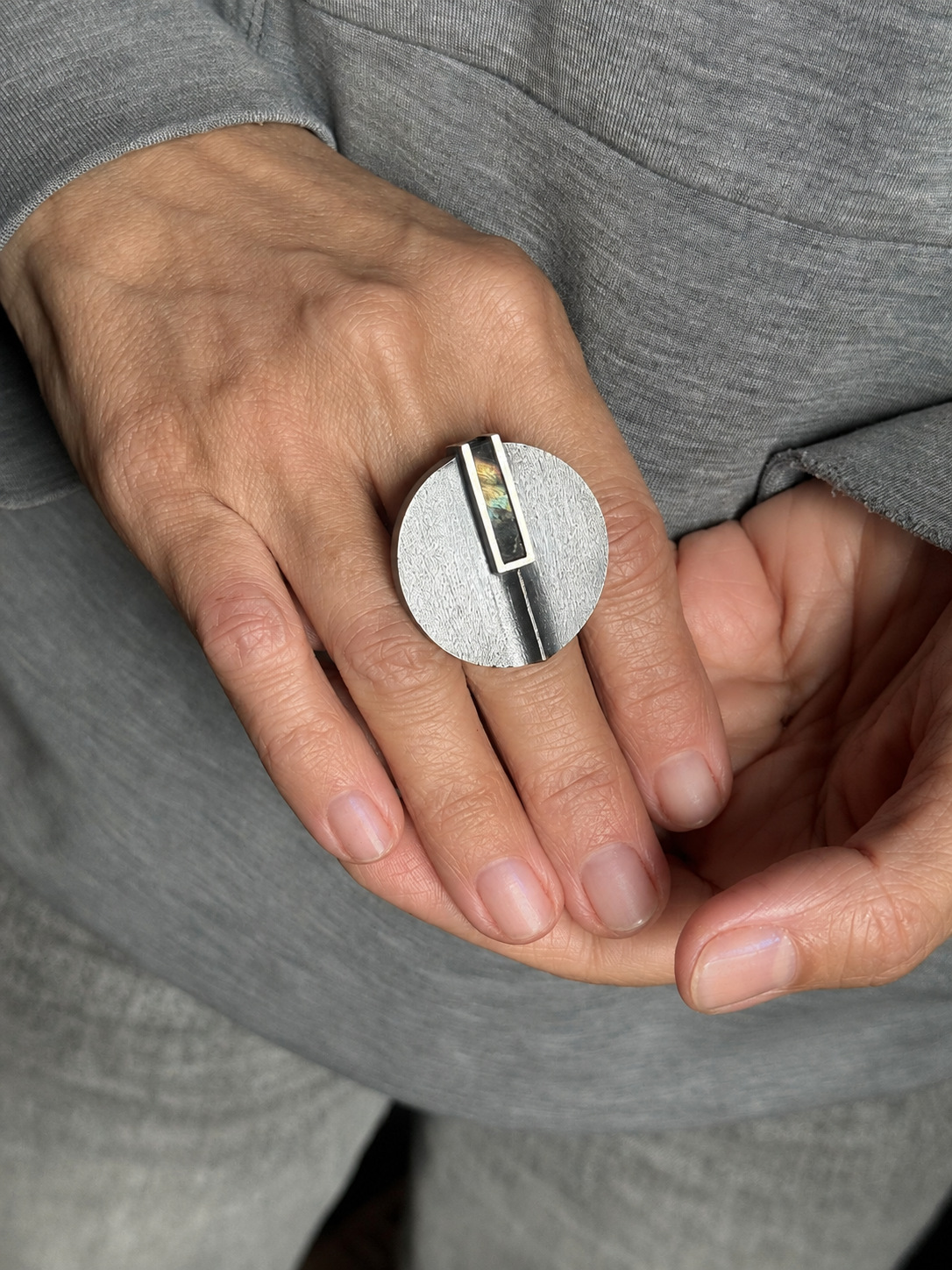 Picture with LabradoriteSterling silver · labradorite · textured author-made composition
 Picture with Three StonesSterling silver · three stone inserts · architectural composition
What defines a stud earring
In a stud, the main decorative element sits at the earlobe. A typical construction uses a post through the piercing and a separate rear fixation. That logic matters more than size, the presence of a gemstone or the exact backing type.
STUD ≠ AUTOMATICALLY A TINY EARRING. Small scale is common, but it is not the only possible expression of the category.
BACKING ≠ CATEGORY. Different studs can use different rear systems. Back and closure taxonomy is a separate subject rather than the definition of what makes an earring a stud.
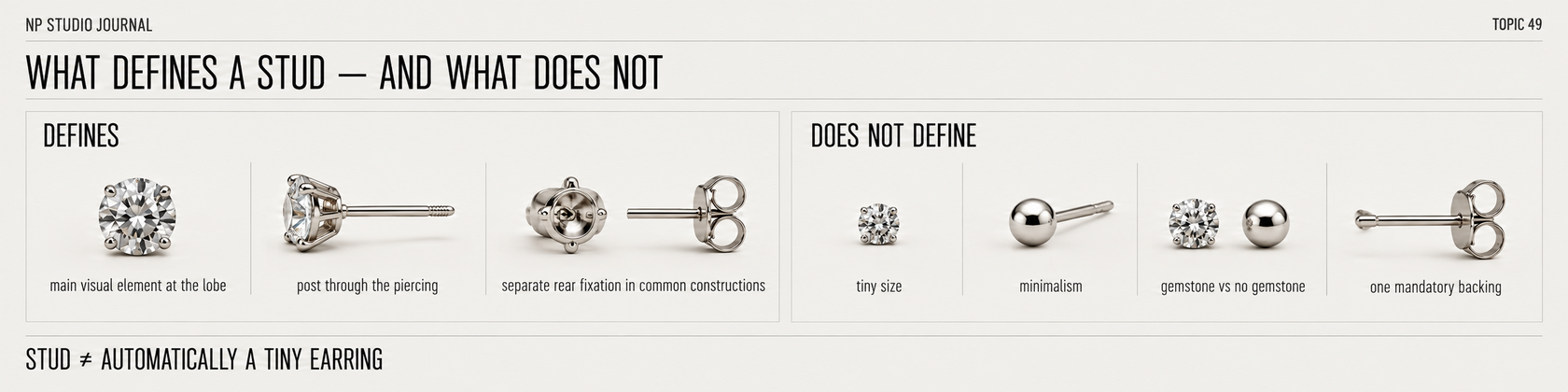
Anatomy of a stud earring
A stud can be understood as a sequence of components. The front element creates the main visual identity. A setting or frame may hold a gemstone or separate decorative element. The post passes through the piercing, and a backing or locking system secures the earring behind the lobe.
Some posts include a notch or thread, depending on the rear system. Threading is a feature of how the post and backing interact; it does not define the stud category by itself.

Front scale and geometry
A small earring can be a stud, but size alone does not create the category. Conversely, a stud does not have to be minimalist: the front can be noticeable, elongated, geometric or sculptural.
A more useful question is where the main visual mass sits and how it connects to the lobe. If the design is organized around a front element at the lobe and a post through the piercing, that tells you more than an arbitrary diameter.
Post length, gauge and surface
The post is the part that passes through the piercing. Its length, diameter, tip shape and surface should be treated as characteristics of the specific product rather than one universal standard.
There is no single post length that is automatically correct for every ear. Actual fit depends on lobe thickness, the overall construction and the rear system used with the post.
For a buyer, the practical point is simple: if post dimensions are available, read them as product-specific measurements rather than a number that can be transferred to every stud.
Setting and front construction
The front of a stud can be all-metal or include a gemstone, pearl, enamel or another element. When a stone is used, the setting integrates it into the front construction.
GEMSTONE ≠ CATEGORY. A gemstone does not make an earring a stud and does not stop it from being one. The setting type is also a separate construction property rather than the category definition.
Backing is a separate system
The rear fixation holds the post behind the lobe, but it does not define the earring category by itself. Studs can use friction or push backs, screw systems, locking systems and other approaches.
The useful distinction is simple: stud describes the overall lobe-based earring logic, while the backing describes how the rear fixation works. A full taxonomy of backs and closures is a separate subject. Here, the important distinction is between the earring type and the specific rear fixation system.. For other earring constructions, compare Drop vs Dangle Earrings: What’s the Difference? and Huggie vs Hoop Earrings: What’s the Difference?.
How a stud sits on the lobe
The front element stays at the lobe and creates the main visible mass.
The post passes through the piercing and the backing secures the construction behind the lobe.
Fit depends on the whole system: front scale, post length, backing type, weight and lobe anatomy. One component cannot describe the complete fit on its own.
Weight and balance
As the front element becomes larger or heavier, it changes the load on the construction and the way the earring visually sits on the lobe. This does not mean a large stud is automatically uncomfortable, but balance becomes more important.
Useful details include weight per earring, contact area at the front, the position of mass, and how the backing stabilizes the post. No single specification replaces the others.
A stud does not have to be minimal
Studs are often associated with a small stone or metal dot because that format is extremely common in retail. But that is not the full boundary of the category.
A broad plane, unusual geometry, sculptural volume or textured surface can still use stud construction if the main element stays at the lobe and is organized around a post system.
What to check before buying
- Front-element dimensions. Not only diameter, but width, height and projection.
- Weight per earring. Especially when the front is larger.
- Post. Length, gauge and surface if the information is available.
- Setting or frame. How a stone or front element is held.
- Backing. Treat it as a separate fixation system rather than the category definition.
- Material. It affects weight, stiffness, finish and maintenance.
- Actual lobe fit. On-ear photos can be more informative than isolated product shots.
- Balance. A large front element should be considered together with its post and backing.
NP Studio: from basic construction to an author-made object
Basic construction is only the beginning. The character of jewelry emerges through proportion, metal, surface, stone, geometry and the way the object meets the body.
At NP Studio, the category matters less than what happens after the category is established: how far the form becomes a small object in its own right, how it handles light, how scale works and what the silver surface contributes.
Related Journal
FAQ
1. What are stud earrings?
Stud earrings place the main decorative element at the earlobe and typically use a post through the piercing with a separate backing or locking system behind the lobe.
2. Are stud earrings the same as post earrings?
The terms often overlap in retail usage because studs commonly use posts, but “post” can also describe a construction feature. The actual shape and placement of the front element are still useful to check.
3. What parts make up a stud earring?
A typical stud includes a front element, a setting or frame when needed, a post through the piercing and a separate backing or locking system.
4. Does the backing define an earring as a stud?
No. BACKING ≠ CATEGORY. The backing is a separate property; stud logic is defined more by the lobe-based front element and post construction.
5. Are stud earrings always small?
No. Many retail guides present studs as compact earrings, but the category does not require a tiny front element. A stud can be visually prominent.
6. Can a stud earring be large or sculptural?
Yes. If the main element remains at the lobe and the construction is organized around a post, larger scale or sculptural form does not automatically stop it from being a stud.
7. Is there one correct post length for every ear?
No. There is no universal post length for every ear and every design. Post length has to work with lobe thickness, the backing and the specific construction.
8. Can a stud earring have a gemstone?
Yes. Studs can use gemstones, pearls, metal, enamel or no stone at all. GEMSTONE ≠ CATEGORY.
9. Why does the weight of the front element matter?
More front mass can affect balance and how the earring sits on the lobe. Weight should be considered together with contact area, post, backing and the wearer’s anatomy.
10. What should you check before buying stud earrings?
Check front-element dimensions, post length and surface, setting construction, weight per earring, material, backing as a separate system and how the earring actually sits on the lobe.
NP STUDIO / SELECTED WORKS
Two more real studio works
These are not examples of stud earrings. They are two more real NP Studio works shown after the technical explanation to return the page to the studio’s visual language.
NEXT / WORKS
Explore Works
The archive shows different surfaces, stones, scales and ways NP Studio works with sterling silver.
View WorksNEXT / CUSTOM
Discuss a custom piece
If you have a specific idea, scale or reference, a short description is enough to start the conversation.
Discuss Custom