Blue Loops
Looping living line and fantastic plant association without literal botanical accuracy.
NP STUDIO / JOURNAL / BIOMORPHIC JEWELRY
Biomorphic jewelry uses forms that evoke life: growth, bodies, shells, folds, branching, membranes or natural structures, without necessarily depicting a literal leaf, flower or organism.
The key is morphology rather than motif. A biomorphic piece can be abstract, partly geometric and even overlap with botanical or biomechanical language, but these categories are not synonyms.
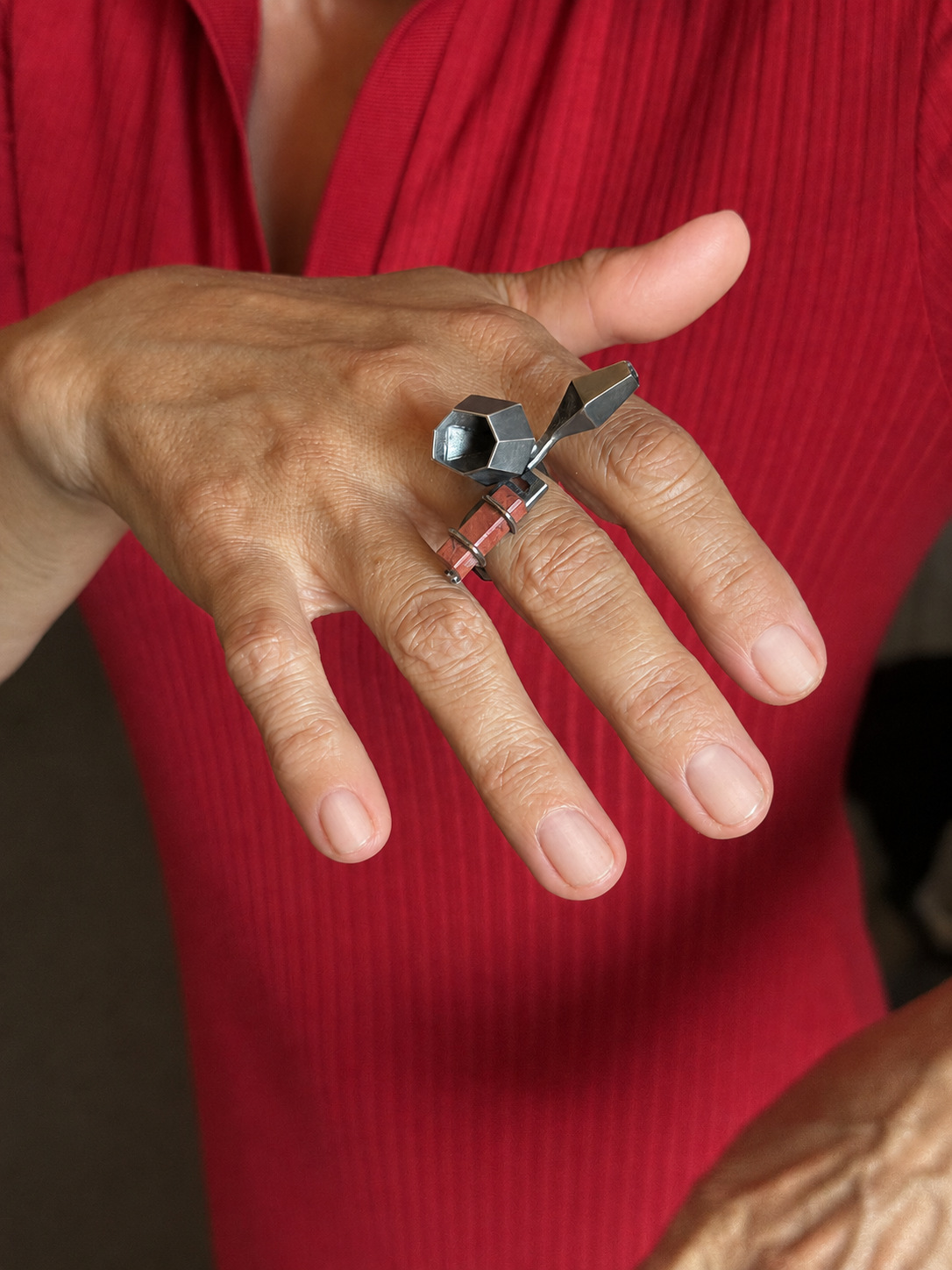
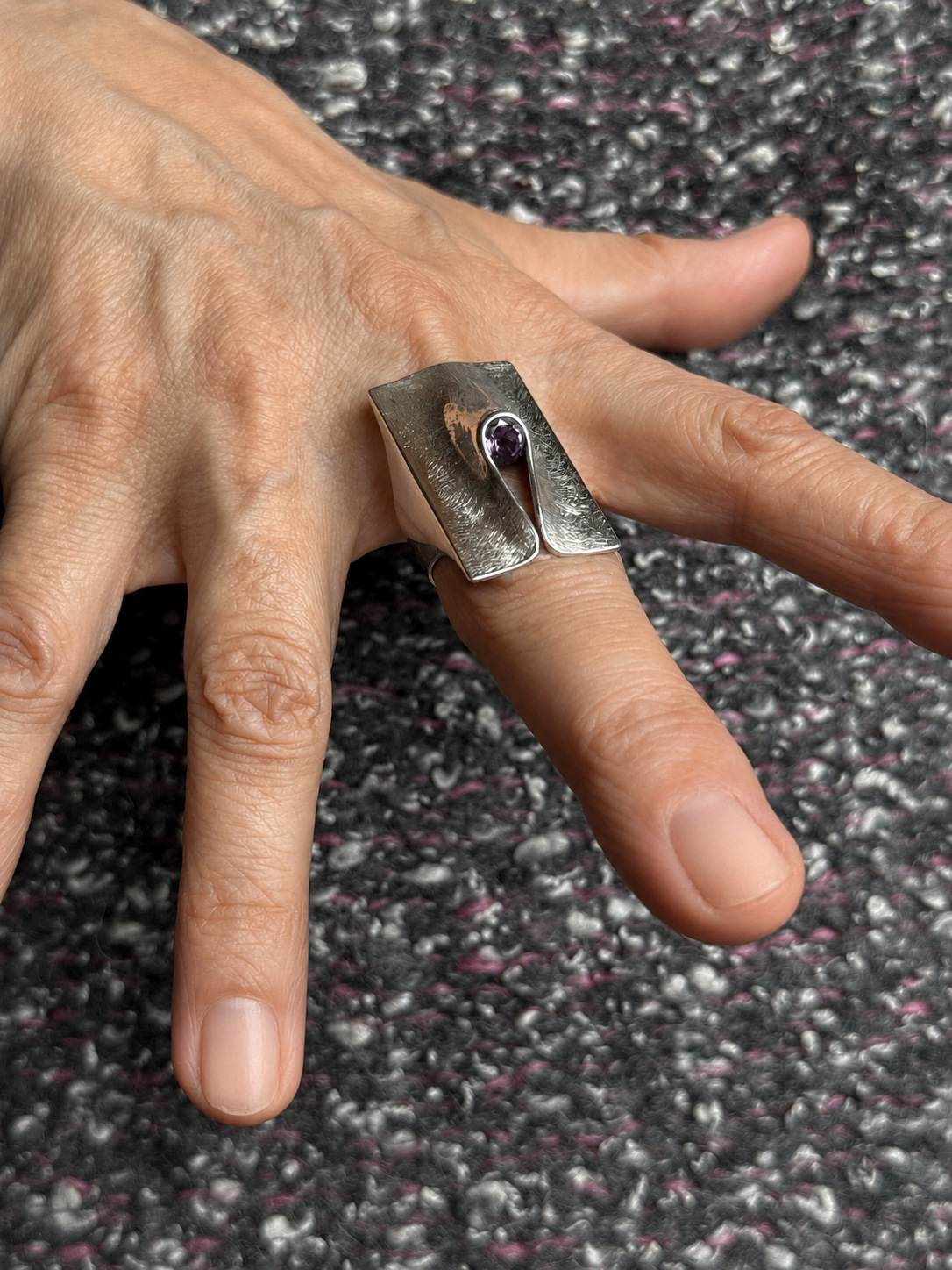
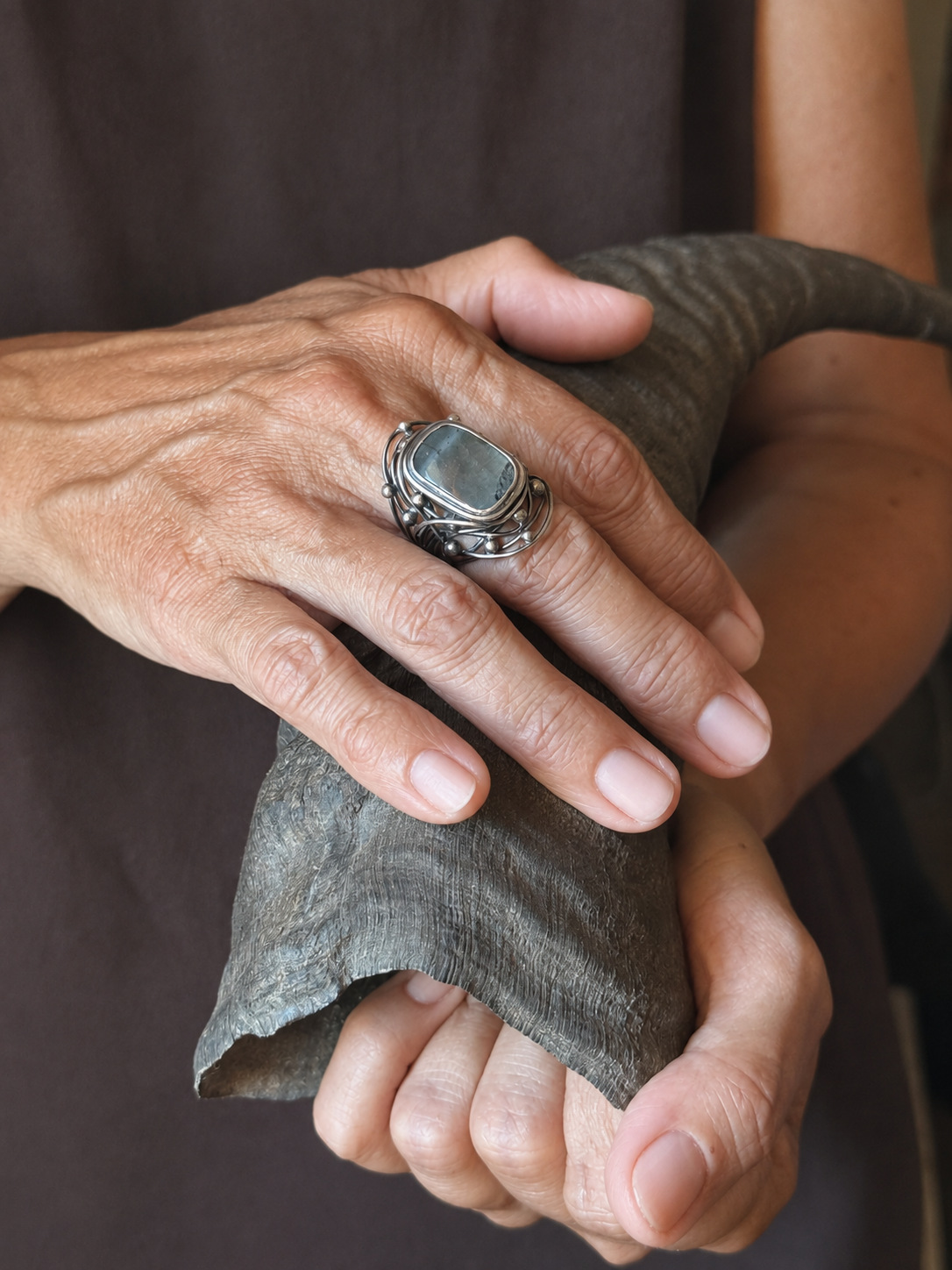
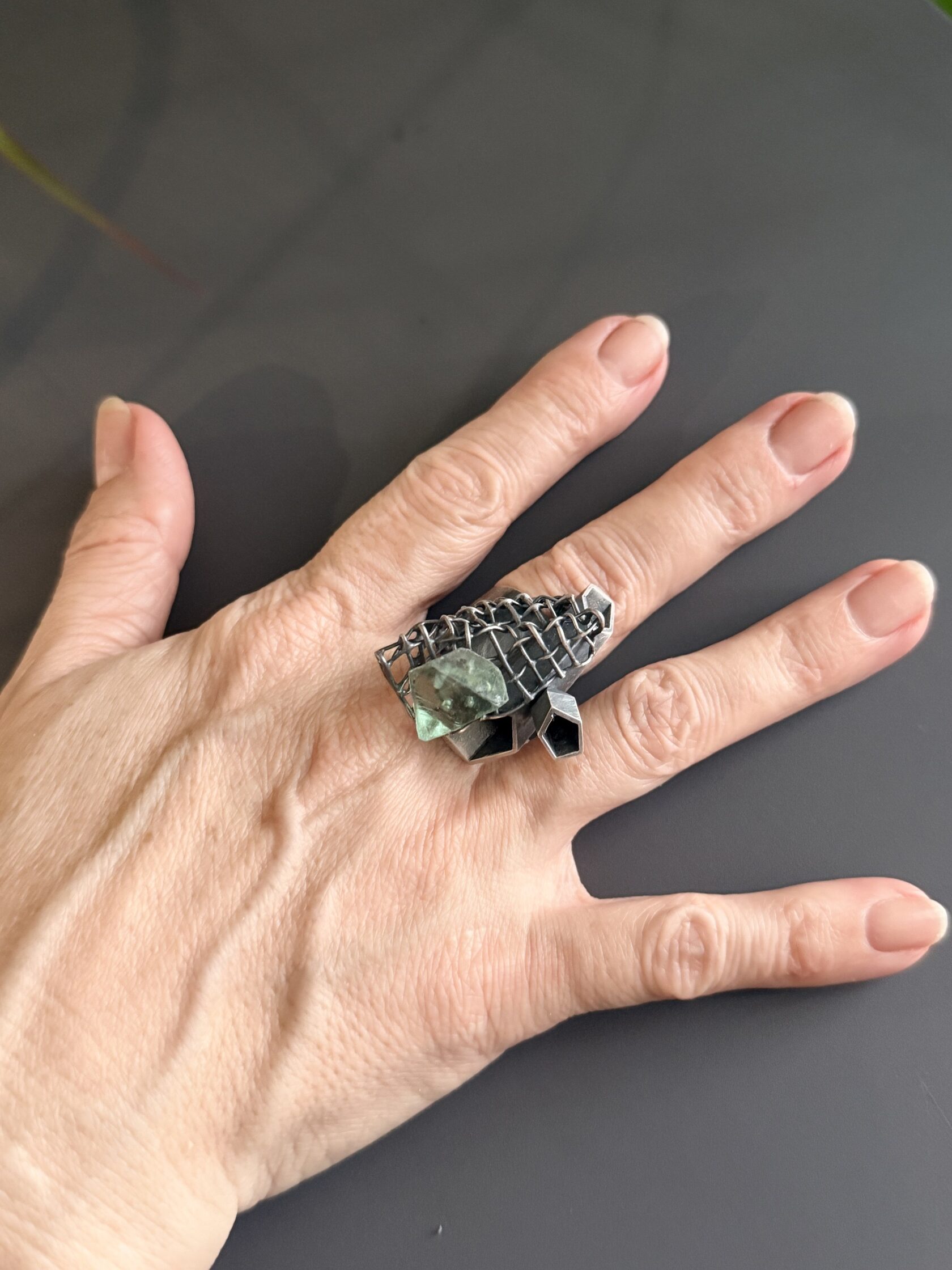
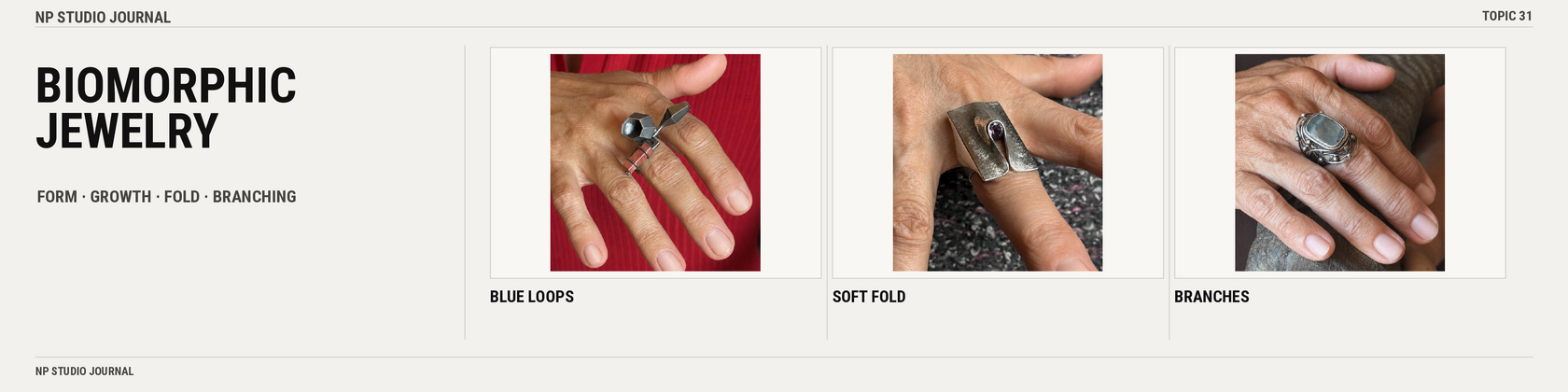
Biomorphic jewelry uses forms that evoke life, growth, bodies, shells, folds or natural structures without necessarily depicting a literal leaf, flower or organism. The key is morphology, not motif.
MoMA derives biomorphic from the Greek words bios, life, and morphe, form, and uses the term for abstract forms or images that evoke naturally occurring forms such as plants, organisms and body parts.
For jewelry, that framework is useful because a ring does not have to look like a specific animal or plant. It can evoke growth, skin, shell, membrane, cell-like structure, branching or a soft body through silhouette and volume alone.
BIOMORPHIC ≠ LITERAL NATURE ILLUSTRATION.
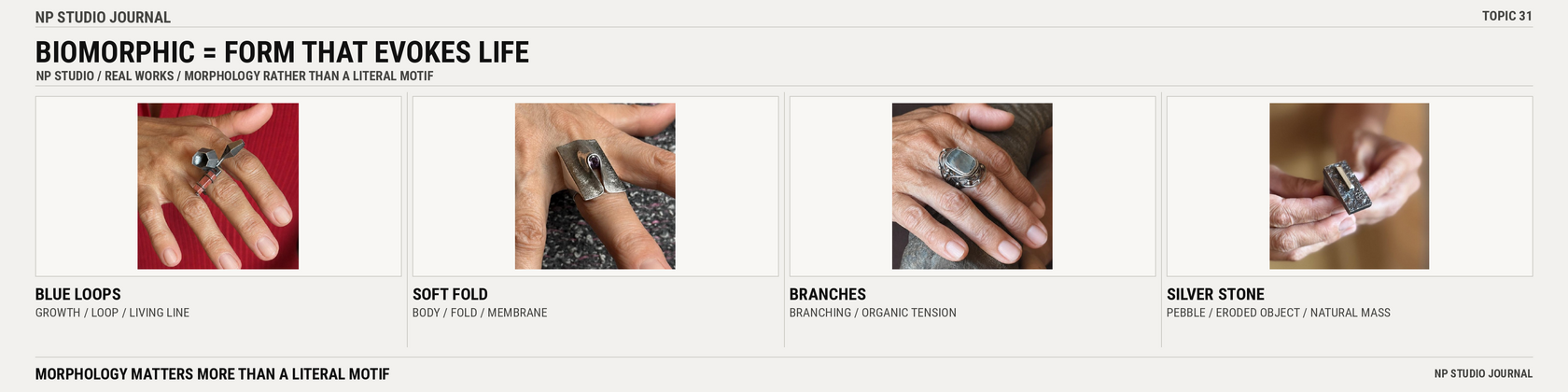
A leaf, flower or branch can participate in biomorphic language, but none of them defines it. A biomorphic object may contain no recognizable botanical motif at all and still evoke living tissue, growth or an organism.
Soft Fold is useful precisely for this reason: its main association comes from a soft folded body, skin or membrane rather than from a plant image.
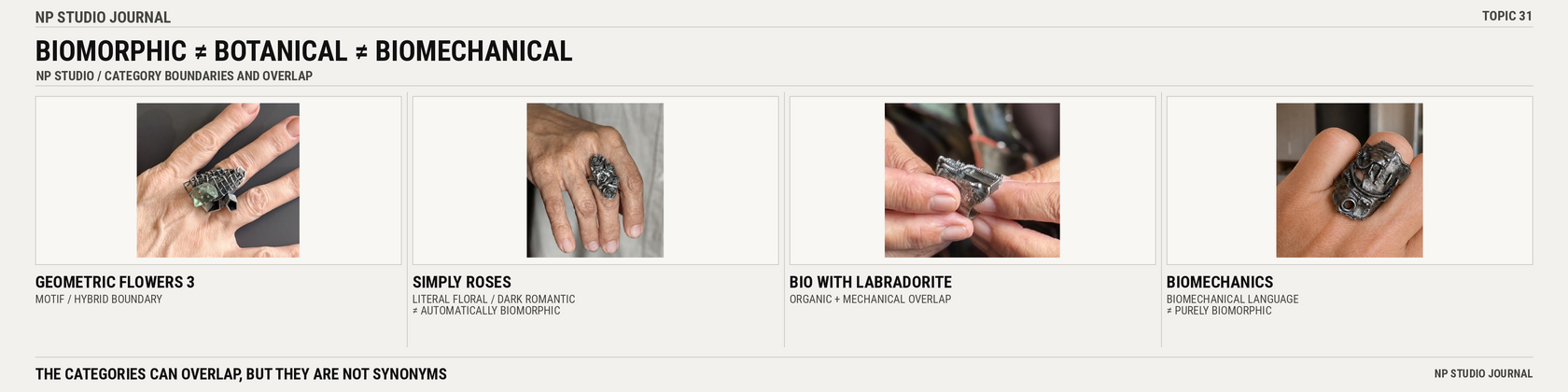
At the other boundary, Simply Roses uses literal floral imagery. It can be botanical and dark-romantic without automatically becoming biomorphic.
Botanical primarily describes the plant motif being depicted or referenced. Biomorphic describes how the form itself is organized and whether its morphology evokes living structure.
One of the clearest biomorphic principles is a form that seems to grow, divide, branch or continue rather than simply being assembled according to a rigid scheme.
Branches develops around labradorite through wire lines and silver spheres, producing branching and accretive growth around the central stone.
Blue Loops provides a different version: geometric elements form a fantastic plant-like object where the important quality is living growth rather than botanical accuracy.
Biomorphism can appear without growth or branching through bodily associations. Fold, shell, soft plane, bulge, tension, skin or membrane can make a metal form feel alive even when its geometry remains controlled.
Soft Fold reads like metal gathered into a soft fold. Fold with Black Garnet uses a stricter geometric construction, yet fold / shell / skin remains a useful boundary for understanding morphology.
FOLD ≠ AUTOMATICALLY BIOMORPHIC. Biomorphism depends on the overall living or bodily association, not on one technical gesture.
This boundary needs care. Stones, minerals and erosion are natural but not necessarily living forms. A mineral association alone does not make an object biomorphic.
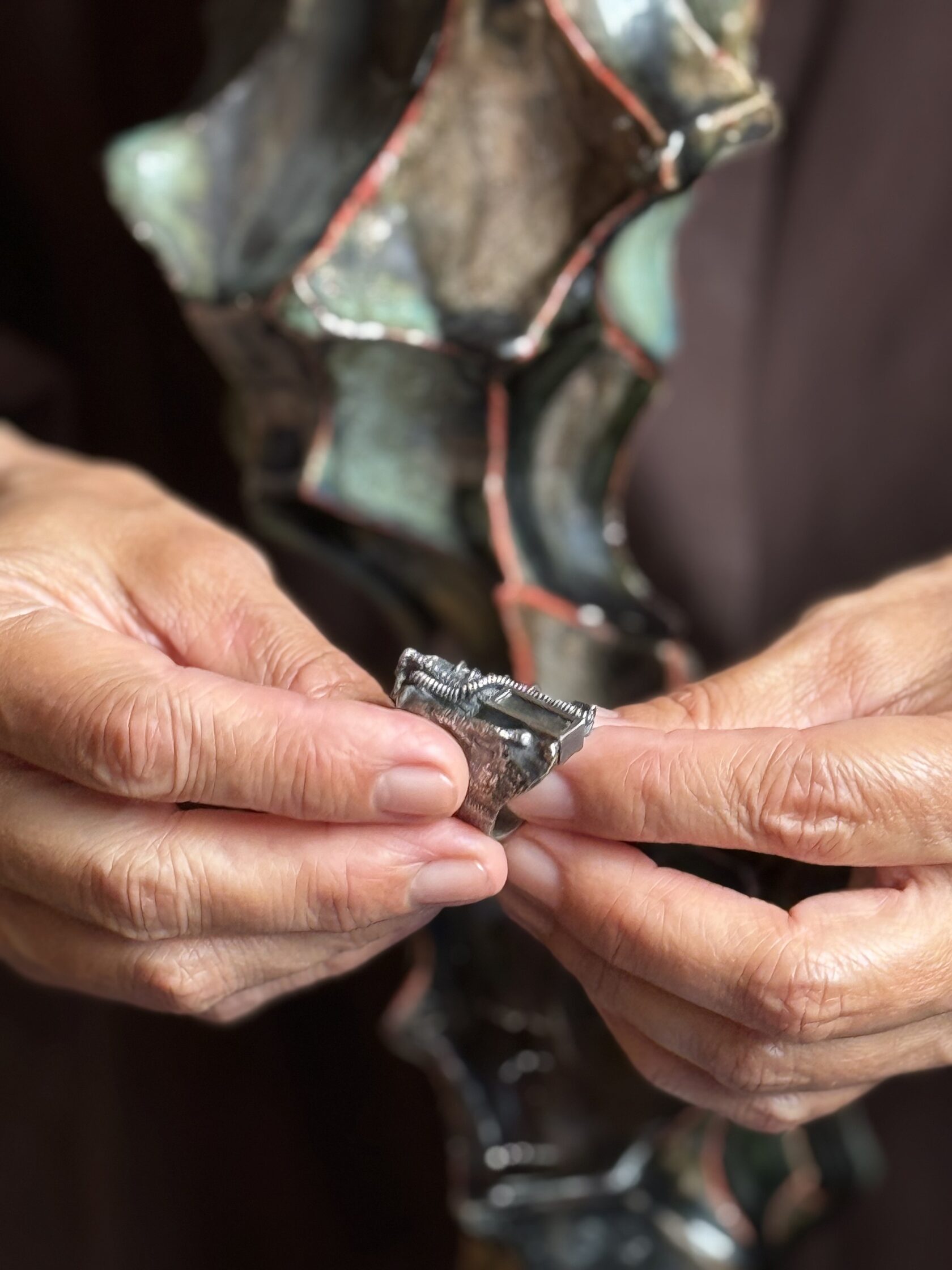
Silver Stone is useful as a boundary example: its surface carries a real granite imprint, while the object can evoke a pebble, eroded fragment or compact natural mass. This supports an organic / natural reading.
But NATURAL ≠ AUTOMATICALLY BIOMORPHIC. A stronger biomorphic reading requires an additional association with life, body, organism, growth or living morphology. A rough, massive or material-forward object can belong to a different formal language; see What Is Brutalist Jewelry?.
In design, “organic” is often used more broadly for flowing, irregular, nature-like, soft, grown or non-rigid geometry. Organic and biomorphic can overlap, but they do not have to mean the same thing.
Here, biomorphic is used more specifically for forms that evoke living or bodily morphology. Organic remains a broader descriptive word for nature-like organization.
ORGANIC ≠ RANDOM. Irregularity does not become organic simply because it is asymmetrical. Convincing organic form usually has an internal principle such as direction, growth, repetition, tension, folding or branching.
Botanical jewelry can literally use roses, leaves, flowers, branches and other plant motifs. Biomorphic jewelry can be completely abstract.
Simply Roses is a deliberate botanical boundary: the rose is literal. Geometric Flowers 3 is more complex: floral naming and motif overlap with silver mesh, marine-like associations and fantastic volume, creating a hybrid zone between motif and morphology.
Natural motifs are also central to historical Art Nouveau, but that is a distinct historical style. BIOMORPHIC ≠ ART NOUVEAU.
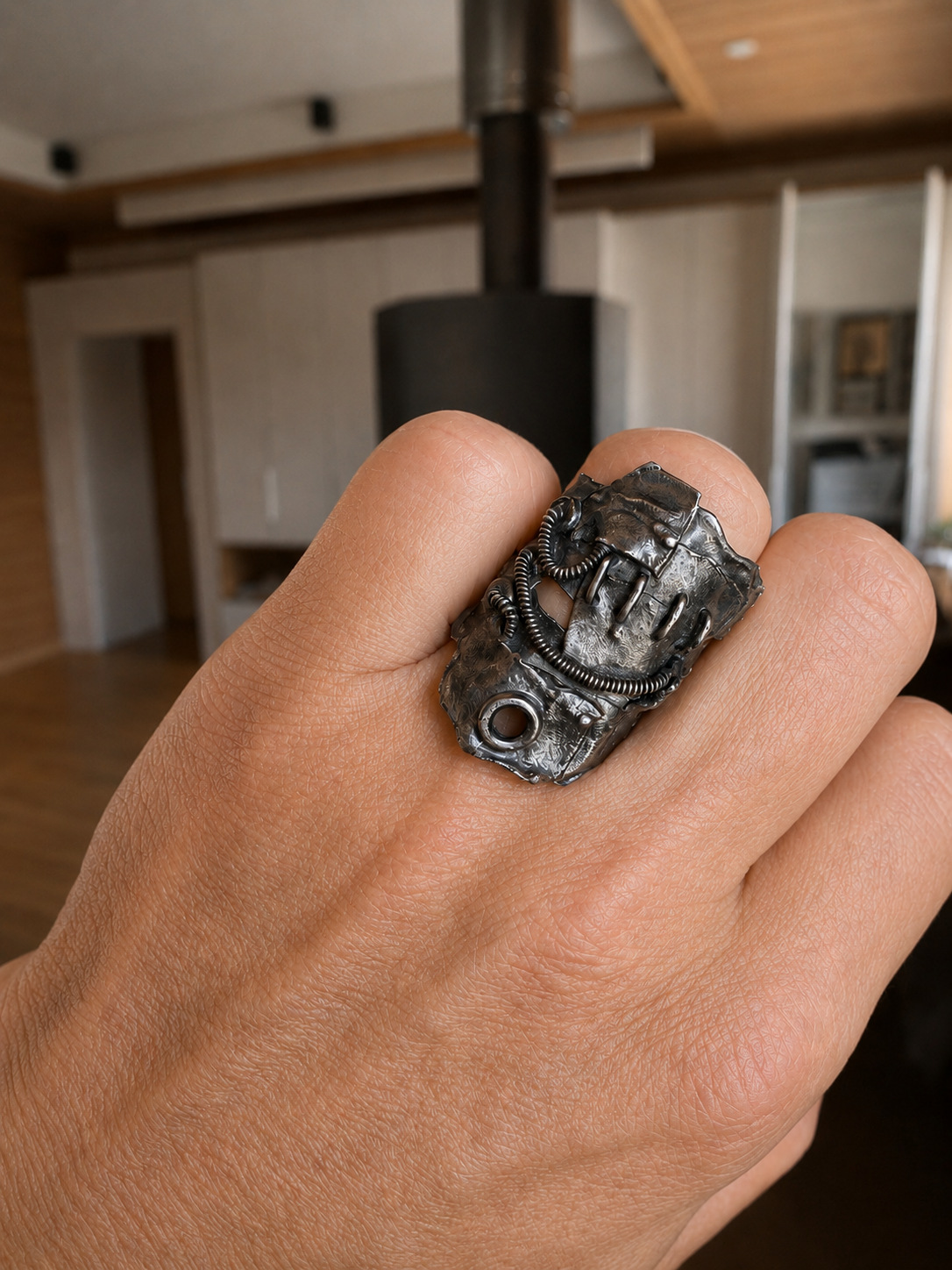
Biomorphic and biomechanical languages can overlap because both may involve bodily, organic or living-form associations. But biomechanical adds a second pole: mechanics, artificial construction, bindings, springs, segmentation or the impression of a living machine.
Bio with Labradorite shows genuine overlap: the starting form is organic, then bindings, springs and constructed details enter the object. Biomechanics works as a fuller biomechanical counterexample.
BIOMORPHIC ≠ BIOMECHANICAL. The categories can overlap, but they are not synonyms. See What Is Biomechanical Jewelry?.
Looping living line and fantastic plant association without literal botanical accuracy.
Bodily association through a soft fold, surface and the memory of skin or membrane.
Growth and branching of silver lines around a central stone.
A boundary between literal motif, geometry and freer fantastic morphology.
This is not a list of ten “pure biomorphic rings.” The matrix deliberately mixes core examples, overlaps and counterexamples to separate morphology from literal motif, random irregularity and biomechanical language.
What it shows: looping growth, fantastic living line and non-literal plant association
What it does not prove: that every curved line is automatically biomorphic
What it shows: fold, soft body, skin or membrane memory
What it does not prove: that every uneven or soft surface is biomorphic
What it shows: branching growth and organic tension around a stone
What it does not prove: that every branch motif automatically makes an object biomorphic
What it shows: a hybrid boundary between geometry, floral motif and marine-like form
What it does not prove: that the word “flowers” defines the category
What it shows: overlap between organic form and mechanical bindings / springs
What it does not prove: that biomorphic and biomechanical are synonyms
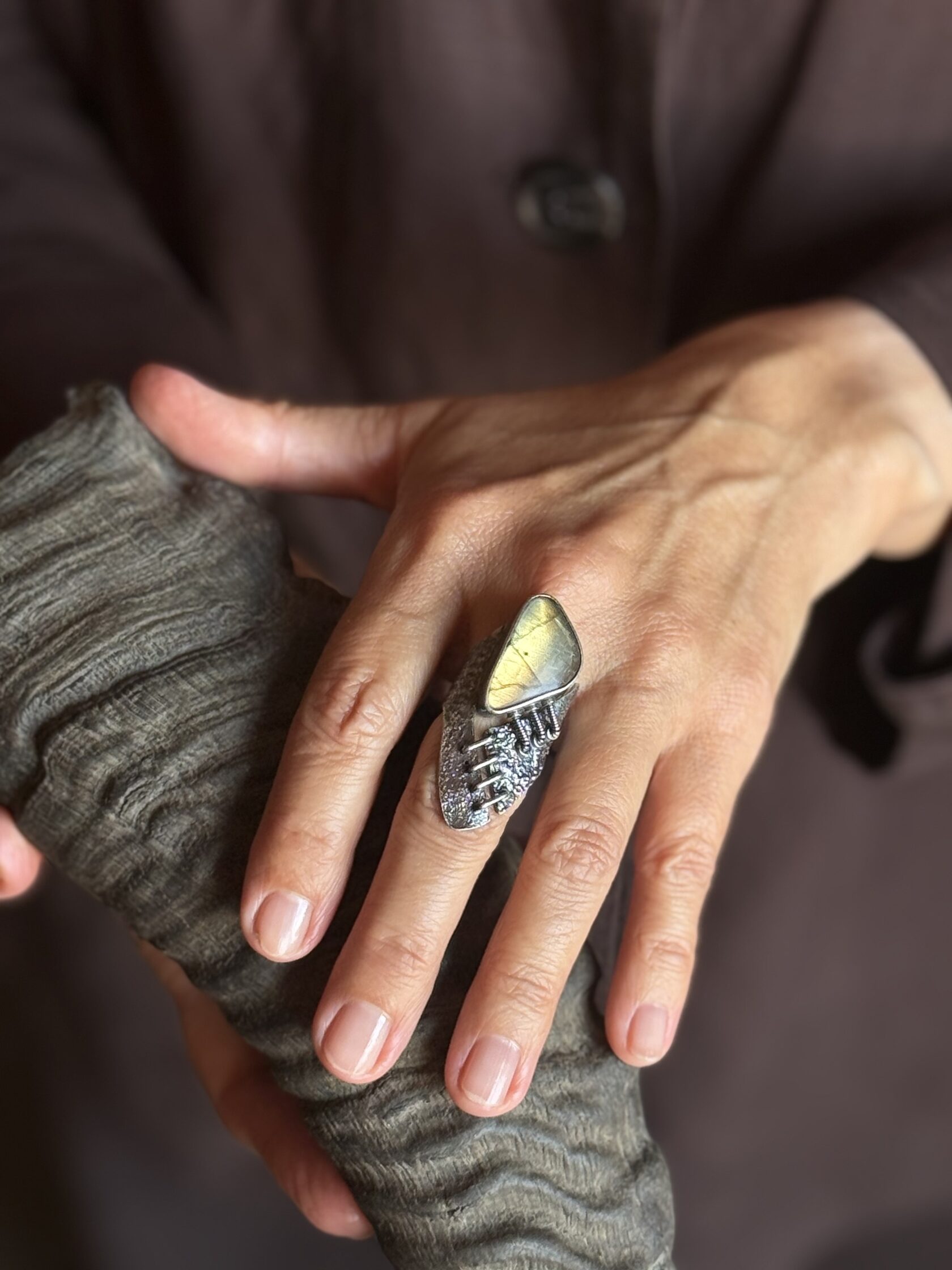
What it shows: elongated living tension developed through biomechanical language
What it does not prove: that elongation or asymmetry automatically means biomorphic
What it shows: a full biomechanical language organized through mechanical elements
What it does not prove: that everything organism-like is purely biomorphic
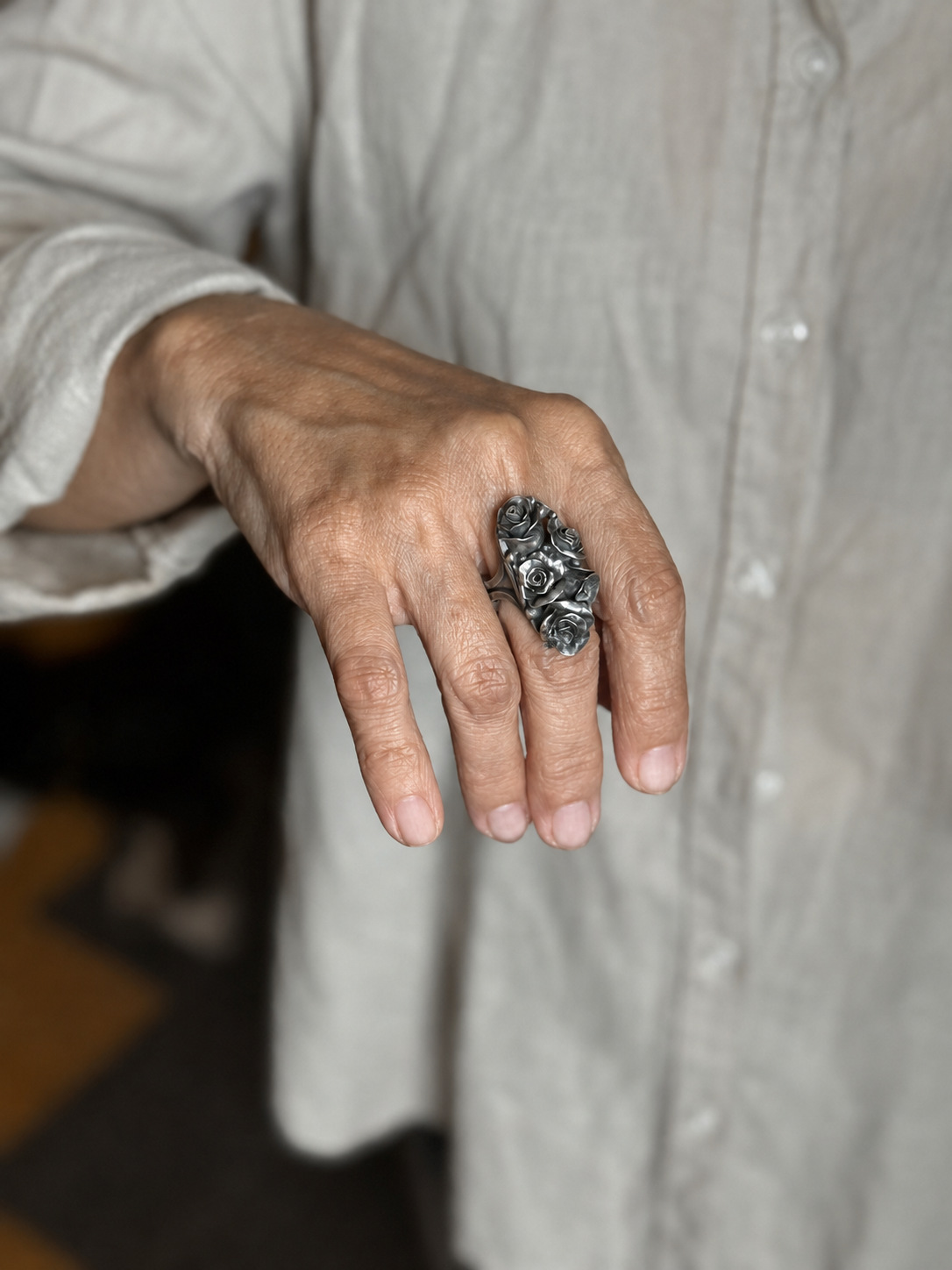
What it shows: literal floral imagery and dark-romantic botanical motif
What it does not prove: that floral automatically means biomorphic
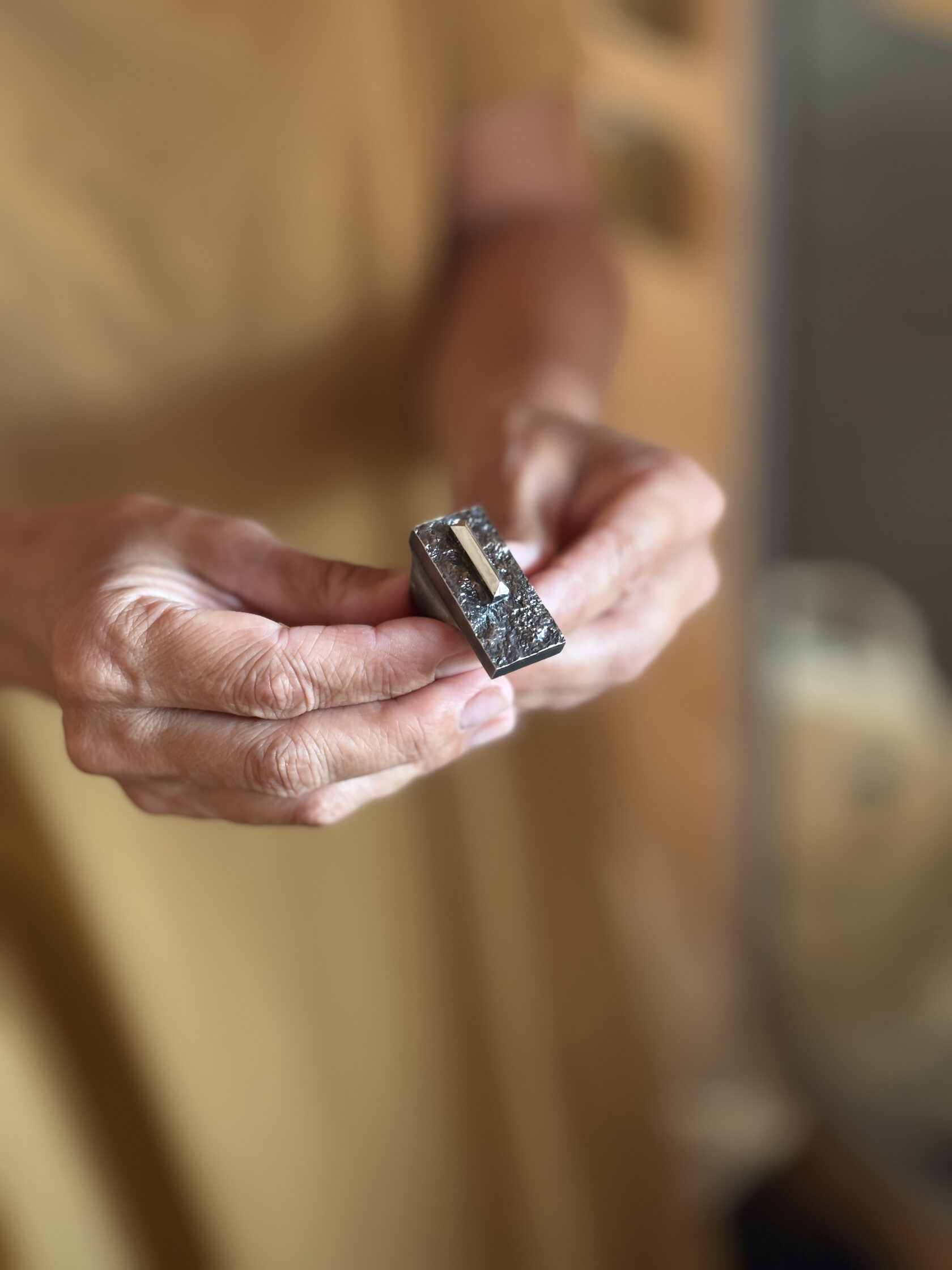
What it shows: pebble, erosion and natural mass as an organic/natural association
What it does not prove: that every mineral or rough object is biomorphic
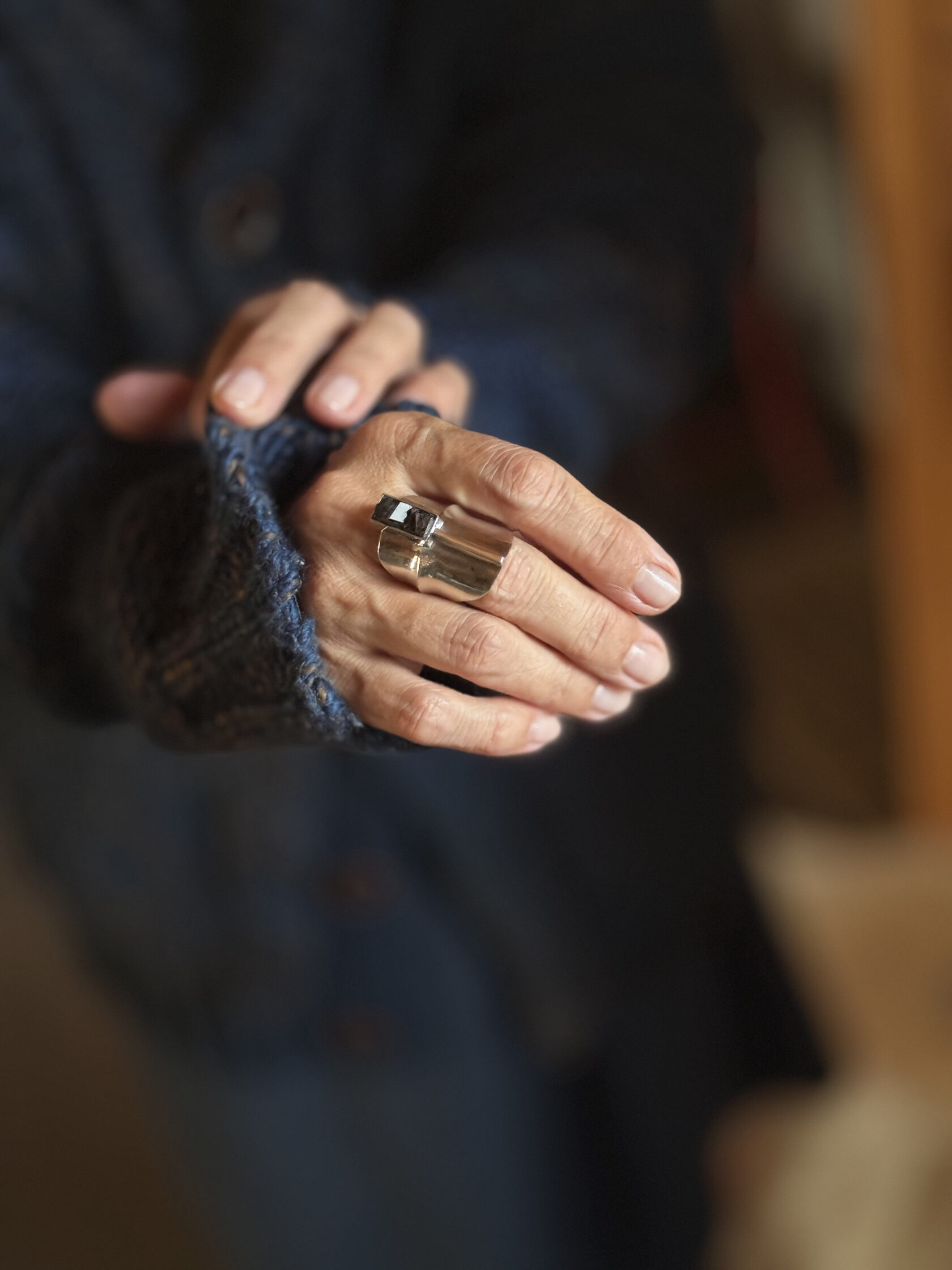
What it shows: fold, shell and skin-like geometry
What it does not prove: that a fold alone defines biomorphic jewelry
One curve, one asymmetry, one rose or one irregular surface is not enough. The organization of form matters.
It is jewelry whose form evokes life, growth, bodies, shells, branching or other living structures without necessarily depicting them literally.
The term refers to abstract forms that evoke naturally occurring forms such as plants, organisms or body parts. In jewelry, it is primarily a question of morphology.
No. Biomorphism can be built through body, fold, shell, branching or living line without a literal botanical motif.
Organic is a broader descriptive term for nature-like, flowing or irregularly organized form. Biomorphic more specifically points toward living or bodily morphology.
Botanical jewelry can literally depict plants. Biomorphic jewelry can be completely abstract; the important point is the character of form rather than the leaf or flower motif.
Biomechanical jewelry combines organic associations with mechanical organization—springs, bindings, segmentation or a living-machine quality. The categories may overlap, but they are not synonyms.
No. Asymmetry alone does not prove biomorphic character. The form needs a meaningful association with living morphology or organized natural development.
Yes. Geometry and organic association can coexist. Geometric Flowers 3 is a useful hybrid example between rigid elements and fantastic nature-like form.
Blue Loops, Soft Fold, Branches and Geometric Flowers 3 show four different routes: growth, bodily fold, branching and a motif/morphology hybrid.
Because floral or dark-romantic language describes imagery and mood, while biomorphic describes the organization of form. A literal rose can be botanical without automatically becoming biomorphic.
