
NP STUDIO / JOURNAL / ART NOUVEAU JEWELRY
What Is Art Nouveau Jewelry?
Art Nouveau is a historical style of the turn of the 20th century, not simply a synonym for modern jewelry. Its jewelry language is associated with flowing line, stylized nature, movement and a freer approach to materials.
Art Nouveau jewelry is a turn-of-the-20th-century style built around flowing lines, stylized natural forms, asymmetry and artistic use of materials. Rather than treating gemstone value as the only focus, many Art Nouveau jewelers emphasized composition, enamel, glass, horn, colour and form.
Art Nouveau is a historical style, not simply “modern design”
Art Nouveau jewelry developed within an international movement of the late 19th century and was especially active from roughly the 1890s to about 1910. The V&A dates its Art Nouveau jewellery period to about 1895–1910 and notes a high point around 1900 at the Paris Exposition Universelle.
It was not one uniform French formula. Related new styles appeared under names such as Jugendstil, Secessionstil and Modern Style. They shared a drive to create a new decorative language, but regional variants were not identical.
The line is one of Art Nouveau’s defining visual tools
One of the clearest Art Nouveau devices is the long, flowing, continuous line. It can organize the outline of a brooch, comb, buckle or pendant and connect separate elements into one silhouette.
The term “whiplash” is often used for an elongated curve that changes direction with a sense of impulse. But it is vocabulary, not an authenticity test: one curved line does not automatically make a jewel Art Nouveau.
The important point is structural. In Lalique’s work, leaves, stems and waves can determine the outline of the object itself rather than sit inside a pre-existing frame.
Nature was stylized, not simply copied
Art Nouveau frequently drew from flowers, leaves, insects, birds, water and waves. Orchids, irises and butterflies appear often, but the important move is transformation rather than literal illustration.
Natural forms may stretch into a line, merge with a figure, become a wing or define the whole silhouette. Floral subject matter alone is therefore not enough to identify the style.
The V&A connects René Lalique and Philippe Wolfers strongly with the natural world, including orchids, irises, flowers, waves and butterflies.
Asymmetry and movement
Many Art Nouveau compositions avoid rigid static symmetry. Curves can imply growth, flow, unfolding or transformation, and the silhouette may be dictated by the motif itself.
This can make jewelry feel unusually alive. Symmetry, however, is not disqualifying; asymmetry is characteristic, not compulsory in every object.
Materials were chosen for artistic effect
This is one of the most important shifts in Art Nouveau jewelry. Conventional high jewelry often emphasized expensive gemstones as visible value. Art Nouveau jewelers did not reject precious materials, but many changed the hierarchy and placed artistic effect first.
The V&A notes that Lalique selected materials for aesthetic effect and artistic refinement rather than mere preciousness or brilliance. He worked with enamel, glass, horn, silver, gold and gemstones.
This freedom made colour, transparency, matte surfaces and unusual textures structural parts of design.
Enamel, translucency and colour
Enamel became one of the key visual media of Art Nouveau. It could provide not just colour but a sense of light passing through the object, especially in plique-à-jour enamel without a continuous metal backing.
The V&A highlights plique-à-jour in work by Philippe Wolfers and other makers. Light could become part of a wing, petal or wave.
Enamel, glass and translucent materials could therefore be as important to the composition as opal, pearl or a faceted gemstone.
Women, insects and fantastical forms
Alongside plants, Art Nouveau jewelry often includes women, flowing hair, wings, dragonflies, butterflies and hybrid motifs in which human, animal and botanical forms merge.
These images can be sensual, symbolic or fantastical, but the more useful stylistic clue is the plastic language: flow, transformation and freedom of outline.
René Lalique and a new jewelry language
René Lalique is one of the central figures of Art Nouveau jewelry. He did not invent the entire movement, but the V&A describes him as Art Nouveau’s most important jeweler and emphasizes the influence of his visual language.
His work combined stylized nature with glass, enamel, horn, silver, gold and gemstones. He moved away from a conventional hierarchy in which precious-stone value was the main argument, choosing materials for colour, transparency, surface and artistic effect.
His treatment of silhouette was equally important: a leaf, wave or insect could define the whole object.
Philippe Wolfers and Art Nouveau beyond Lalique
Art Nouveau was broader than one workshop and one country. Philippe Wolfers worked in Brussels and, like Lalique, was strongly influenced by nature. The V&A highlights his orchids and technically demanding plique-à-jour enamel.
British examples could overlap with Arts and Crafts. Liberty launched its Cymric jewelry line in 1899, drawing from both movements. Regional variants therefore shared a new vocabulary without becoming identical.
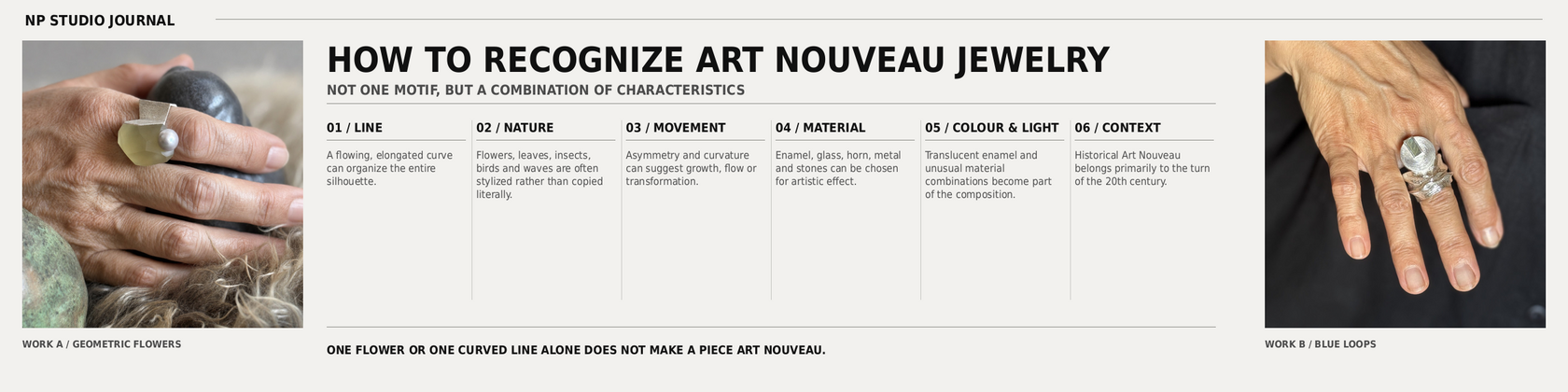
How to recognize Art Nouveau jewelry
Do not look for one mandatory feature. It is more useful to consider a cluster of characteristics. Appearance alone cannot authenticate period jewelry; historical attribution also depends on date, maker and provenance.
Art Nouveau and Art Deco are not the same
Art Nouveau is generally associated with organic flowing line, nature-oriented motifs and mobile compositions. Art Deco came later and more often emphasizes geometry, order, repetition and machine-age influences.
That short distinction is enough here; for the separate article, see What Is Art Deco Jewelry?
Can contemporary jewelry be Art Nouveau-inspired?
Yes. A contemporary maker can use an Art Nouveau-like organic line, botanical themes, flowing asymmetry, enamel or freer material combinations. The accurate wording is Art Nouveau-inspired or a contemporary reinterpretation.
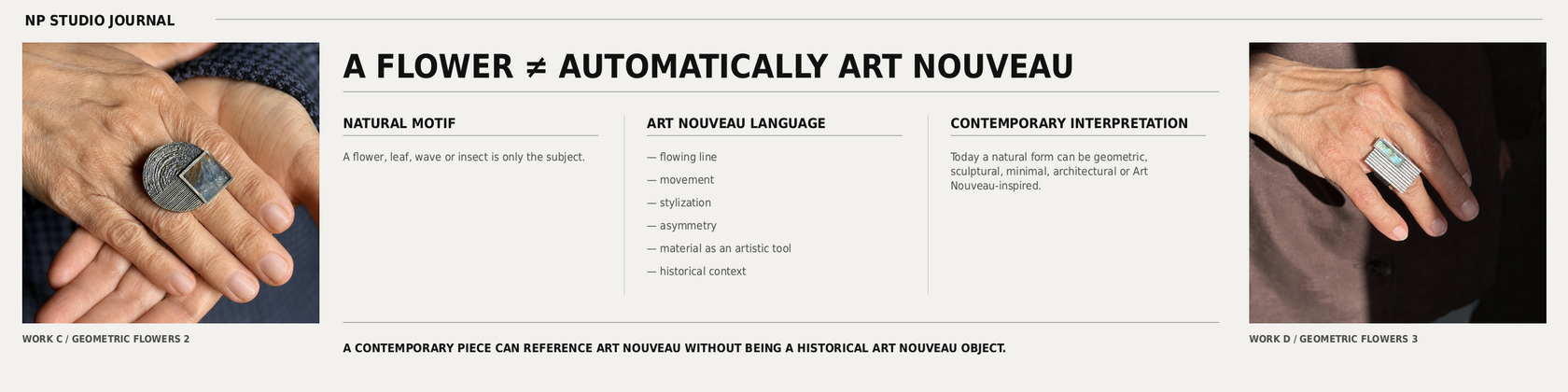
A contemporary ring does not become a historical Art Nouveau object because it contains a flower or curved line. Historical Art Nouveau belongs to a specific movement and period. For distinct contemporary visual languages, see What Is Avant-Garde Jewelry? and What Is Brutalist Jewelry?.
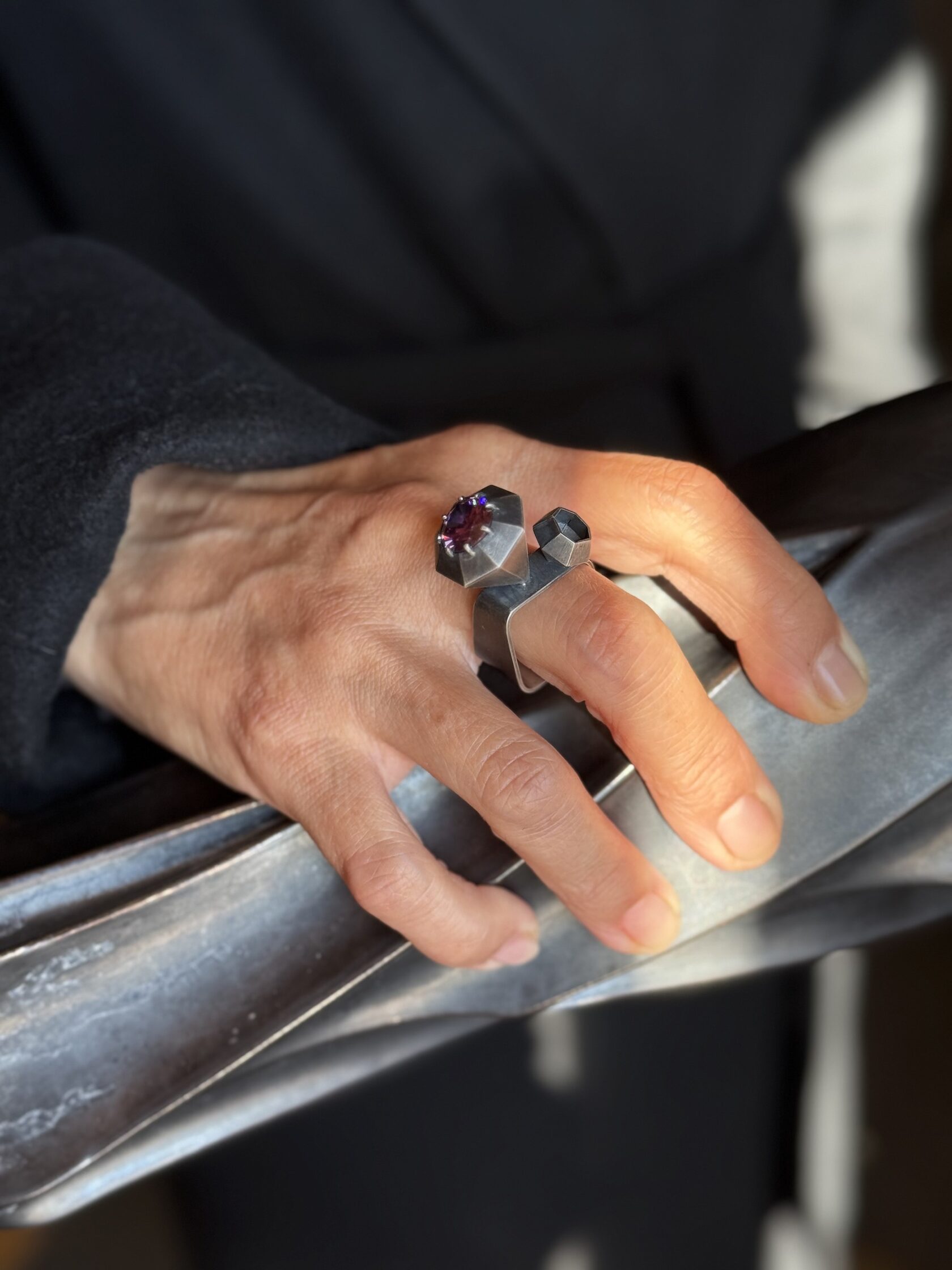
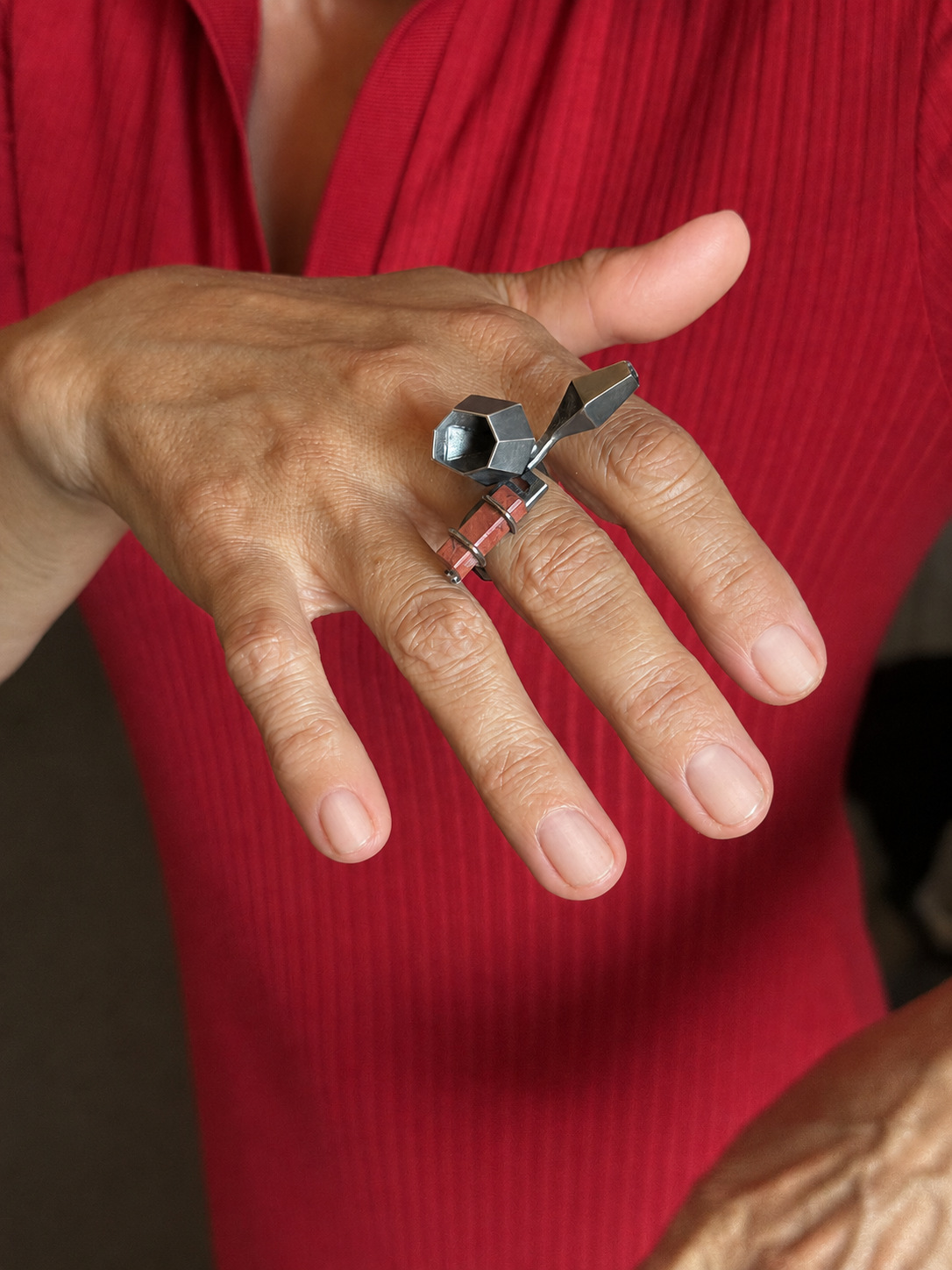
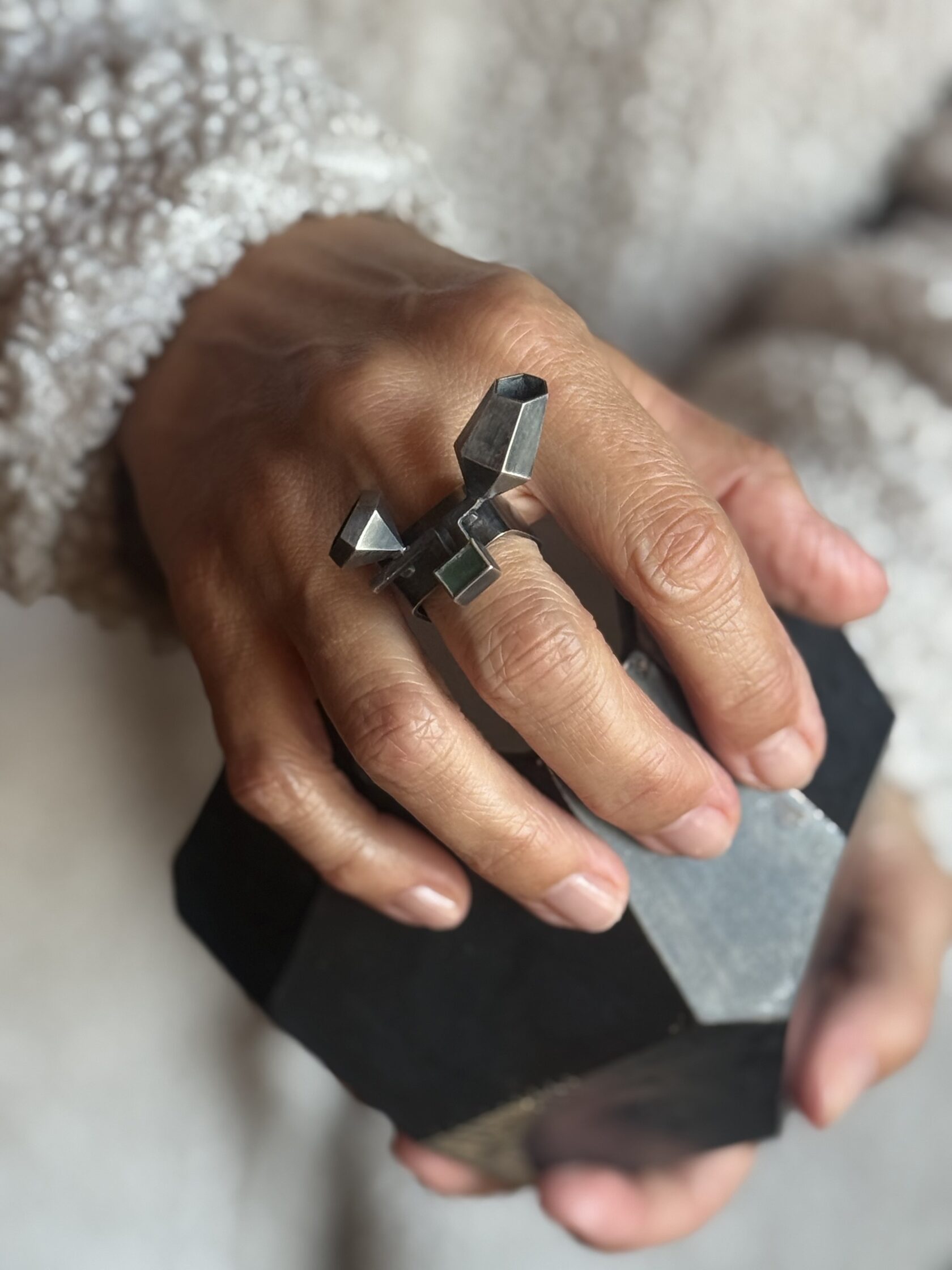
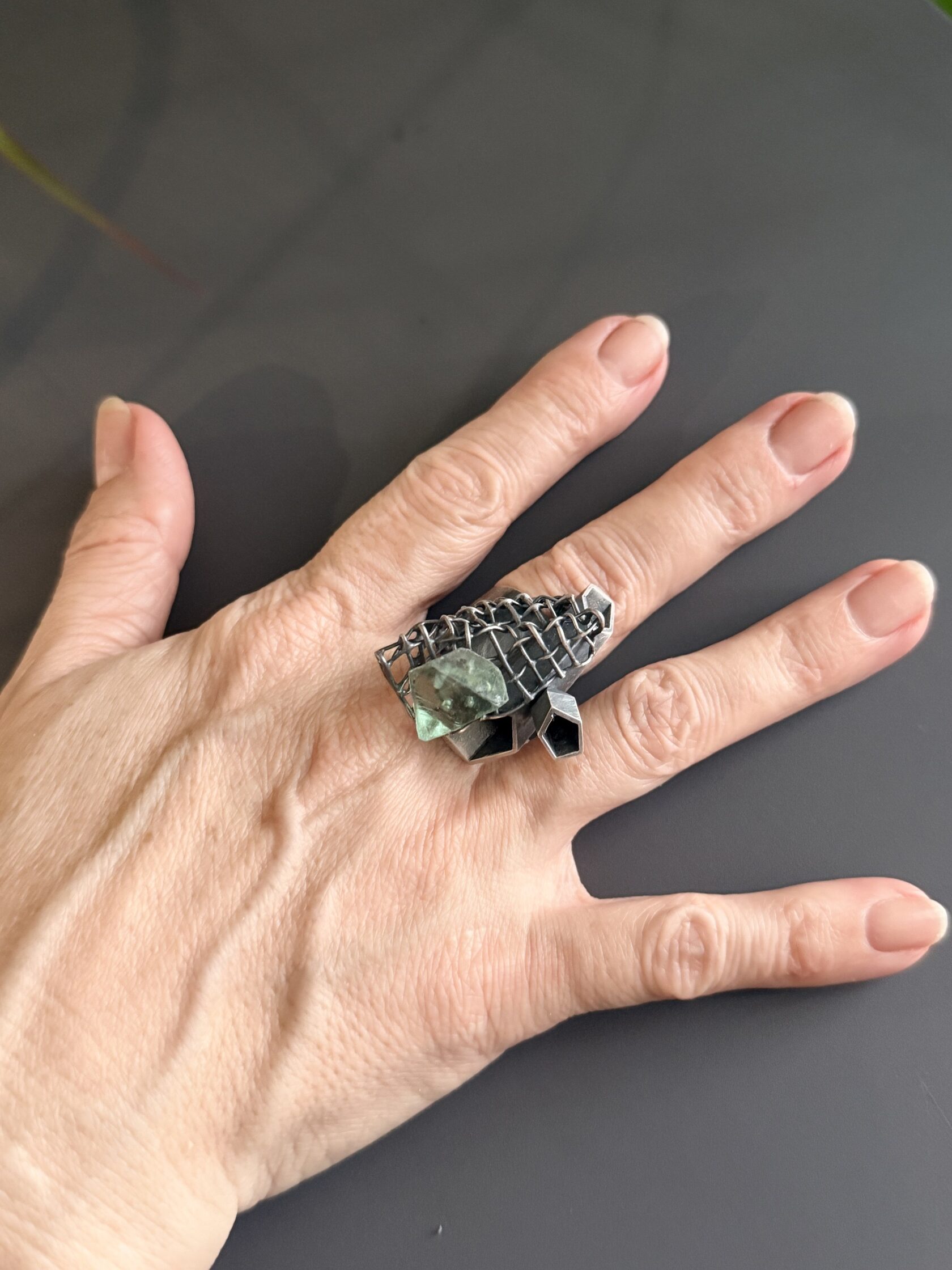
Four contemporary NP Studio works: nature, geometry and the boundary between them
These works were made in the 21st century and are not historical Art Nouveau objects. They are useful contemporary examples of why a natural motif alone does not define the style.
Geometric Flowers
The flower theme remains, but facets, a rectangular shank and metal crystals create a rigid geometric language.
Blue Loops
Hand-shaped forms suggest fantastical plants and create the most organic feeling in the set, while remaining contemporary.
Geometric Flowers 2
Tulip-like forms are constrained by rectangular architecture and dark patina.
Geometric Flowers 3
Fluorite, silver mesh and layered structure create marine and floral associations.
Why Art Nouveau still matters to contemporary jewelry
Several Art Nouveau principles remain relevant without copying period ornament. Jewelry can be treated as a total composition in which line and silhouette matter as much as the stone; materials can be chosen for artistic effect; nature can be transformed rather than copied.
These ideas remain useful to contemporary jewelry as ways of thinking, but they do not establish a direct historical lineage from Lalique to every current maker. For a separate contemporary language based on forms that evoke living structures, see What Is Biomorphic Jewelry?.
If you are interested in jewelry as an artistic category rather than a historical style, see What Is Art Jewelry?.
Conclusion: Art Nouveau is more than a floral motif
Art Nouveau jewelry is best understood through a combination of line, stylized nature, movement, artistic material choices and turn-of-the-20th-century historical context.
One flower, one dragonfly, one asymmetric curve or one enamel panel is not enough. The style lies in how these elements work together.
That is why a contemporary piece can convincingly reference Art Nouveau while remaining contemporary: influence and historical identity are different things.
Frequently asked questions
What is Art Nouveau jewelry?
Jewelry associated with the historical Art Nouveau movement of the late 19th and early 20th centuries, often using flowing line, stylized nature and expressive materials.
When was Art Nouveau jewelry popular?
The main period is roughly the 1890s to around 1910; the V&A dates Art Nouveau jewellery about 1895–1910, with a high point around 1900.
What motifs are typical of Art Nouveau jewelry?
Common motifs include flowers, leaves, orchids, irises, insects, butterflies, dragonflies, birds, waves and female figures. Stylization matters as much as subject.
What materials did Art Nouveau jewelers use?
Alongside gold, silver and gemstones, many used enamel, glass, horn and other materials for colour, translucency, texture and artistic effect.
Why is René Lalique important to Art Nouveau jewelry?
Lalique was one of the central figures of the movement and developed an influential language of sinuous natural forms and unusual material combinations.
How is Art Nouveau different from Art Deco?
Art Nouveau is earlier and more closely associated with organic line and nature; Art Deco came later and more often emphasizes geometry, order and repetition.
Is all floral jewelry Art Nouveau?
No. A flower is only a motif. Style depends on visual language, material, composition and, for historical attribution, period and provenance.
Can contemporary jewelry be Art Nouveau-inspired?
Yes. Contemporary work can reference flowing line, botanical stylization, enamel and unusual materials, but should not be called a historical Art Nouveau object without period provenance.
