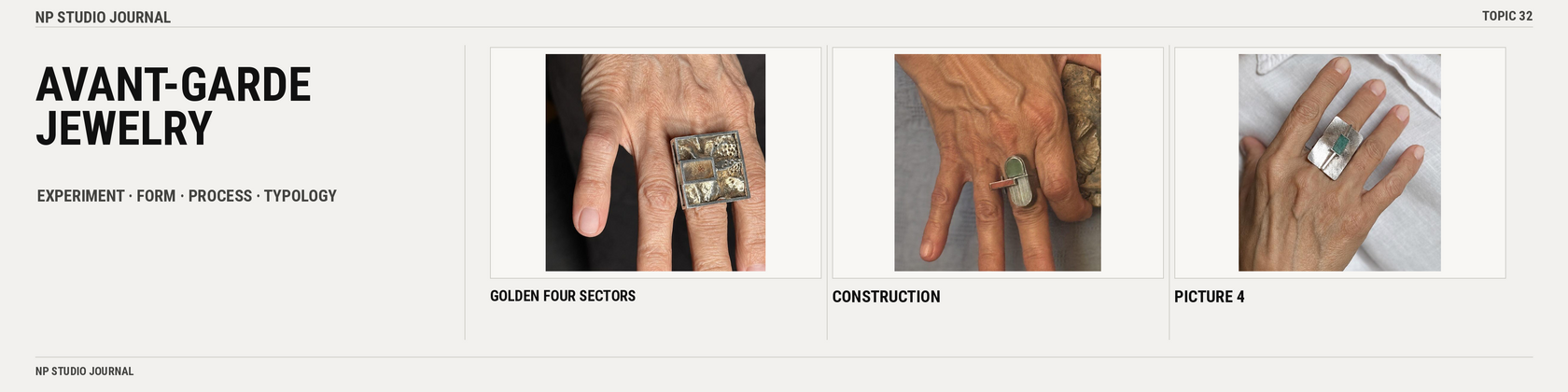
Golden Four Sectors
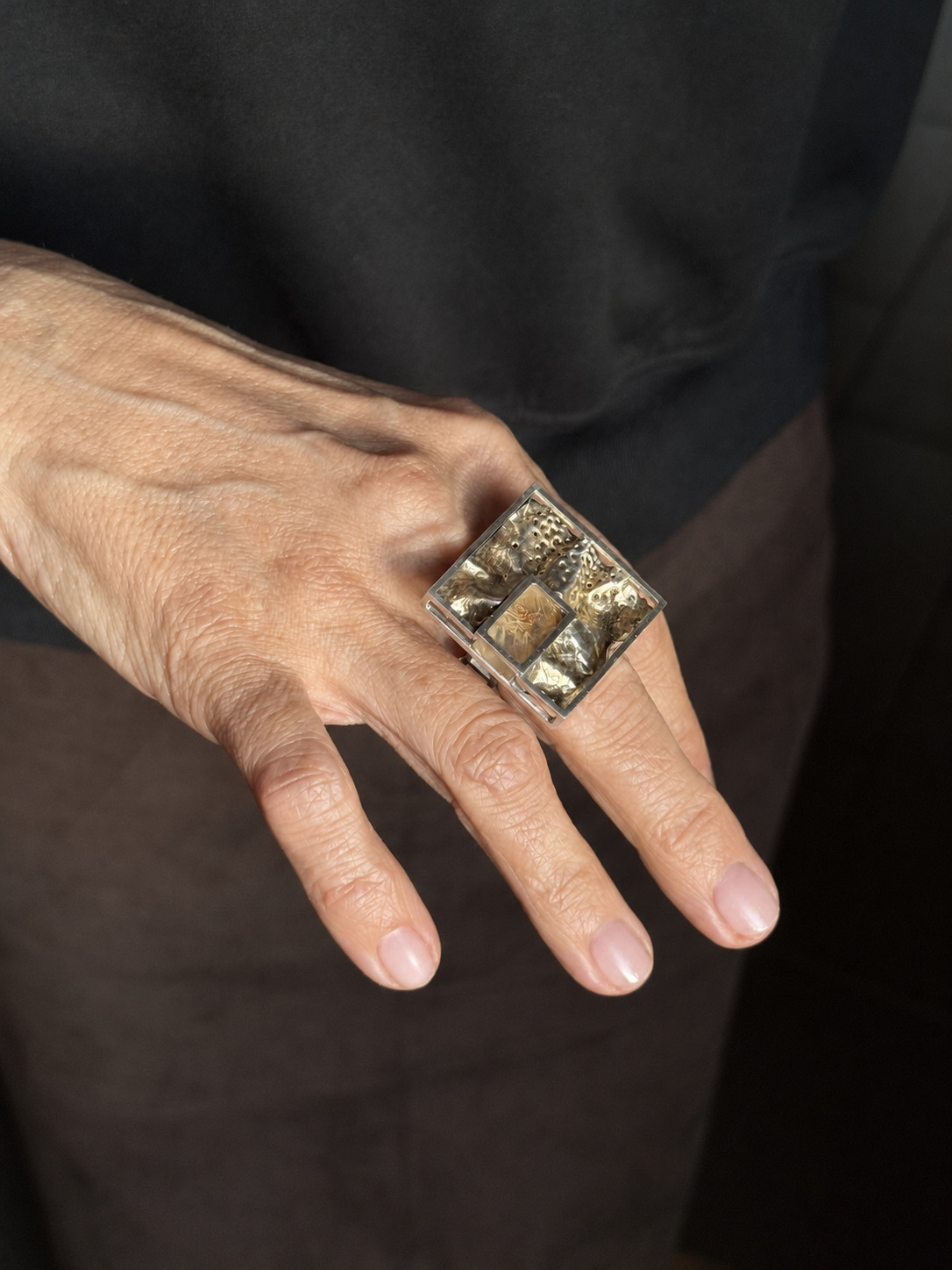
Segmented field and frame logic: the ring starts to operate as a plane with multiple independent zones.
NP STUDIO / JOURNAL / AVANT-GARDE JEWELRY
Avant-garde jewelry is not simply unusual, strange or oversized jewelry. It becomes avant-garde when a maker deliberately tests or rethinks expectations about form, material, process, typology, scale, the body or even what counts as jewelry.
Avant-garde is therefore not one visual style. A minimal ring and a complex object can be equally experimental—or equally non-avant-garde—if unusual appearance is not connected to an experimental idea.
Avant-garde jewelry is not simply unusual or oversized jewelry. It becomes avant-garde when it deliberately tests or rethinks expectations about form, material, process, scale, the body or even what counts as jewelry.
MoMA uses “avant-garde” for artists, movements and works that break with precedent and are regarded as innovative and boundary-pushing. For jewelry, that suggests a useful approach: do not look for one avant-garde appearance; ask what expectation the object is testing or changing.
One work may be geometric, another organic; one minimal, another complex; one fully comfortable, another deliberately tests wearability. None of those traits is a universal definition.
Strangeness, rarity or visual shock may be effects of experiment, but they are not proof of it. Avant-garde requires a deliberate experimental idea.
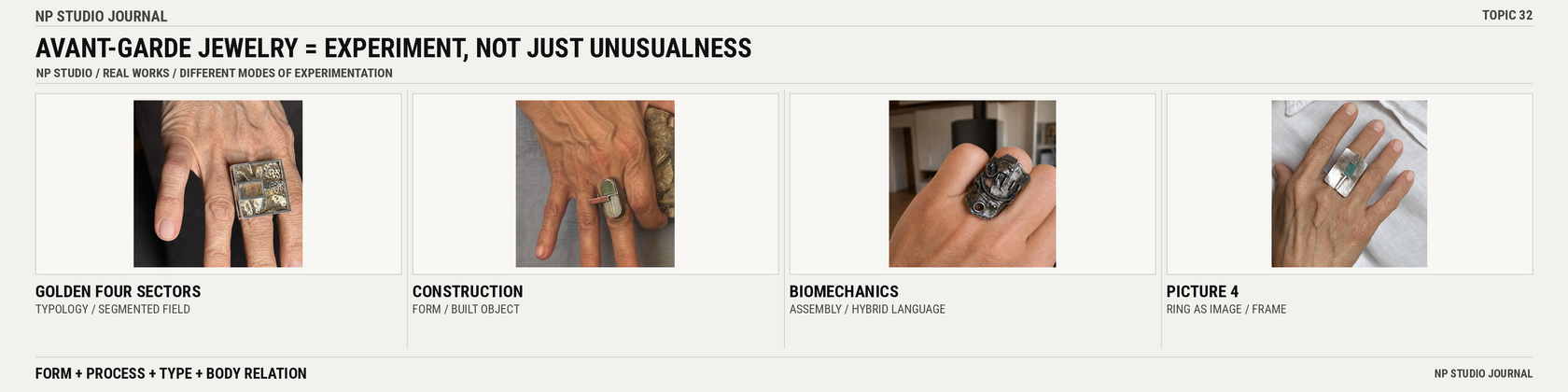
Formal experimentation begins when the maker changes more than decoration: silhouette, planes, projections, voids, center of gravity or the relationship between the ring top and shank can all be reconsidered.
Construction reads as a built spatial object. Projection, supports and void become more important than the conventional formula of band plus central stone. This does not make every architectural form avant-garde, but it shows how form itself can become the experiment.
Black Cube moves in the opposite direction through reduction. Experiment can involve removing and compressing just as much as adding complexity.
Typology asks what kind of object this is and how jewelry is expected to work. Avant-garde practice can intervene here by turning a ring into a frame, small picture, platform, field, object or wearable construction.
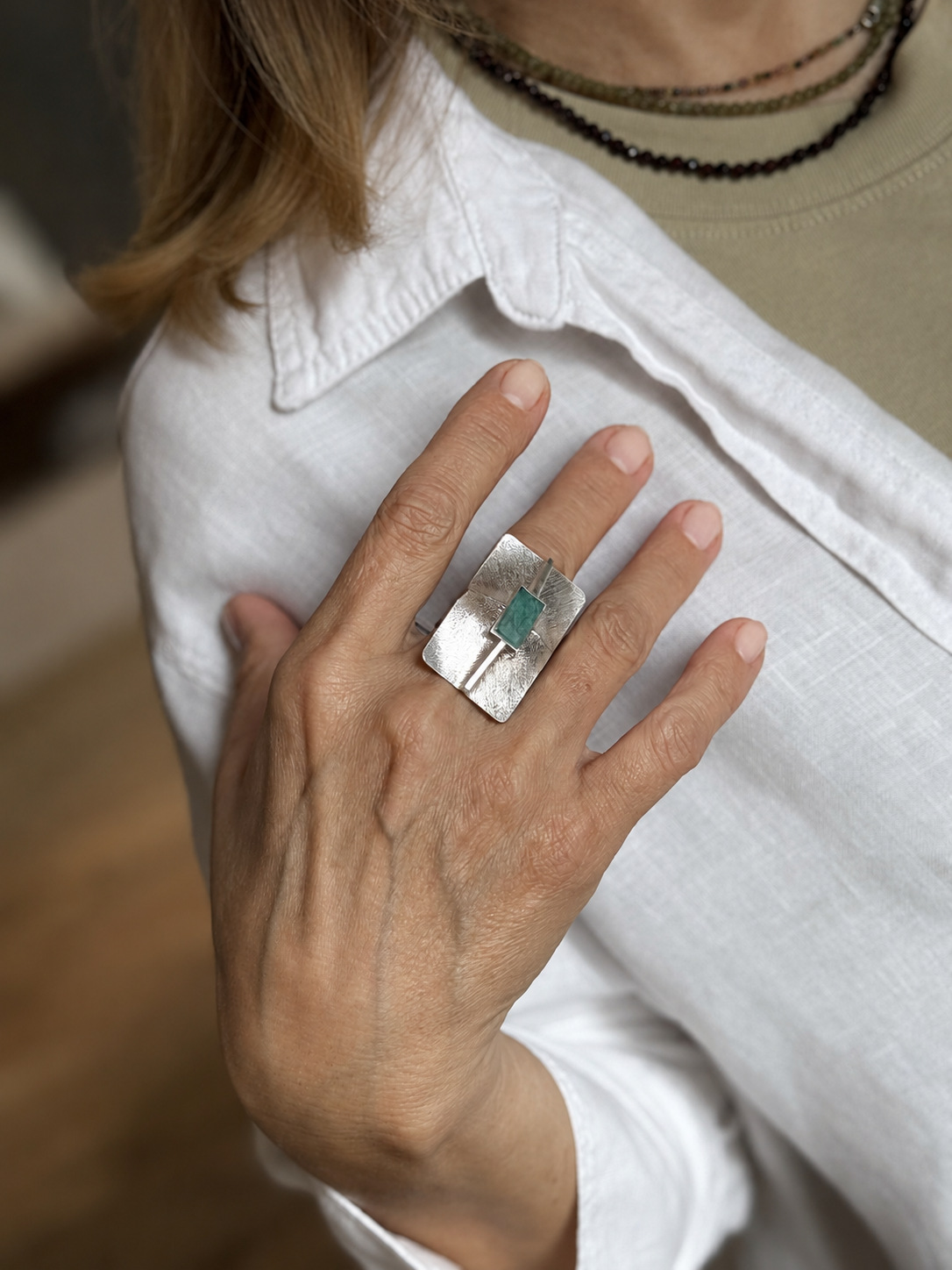
Golden Four Sectors is organized as a rectangular field within a frame, with textured zones and stone functioning almost like independent parts of an image. Picture 4 makes the typological shift even clearer: four concave silver surfaces form a small composition worn on the hand.
A typological experiment does not require abandoning wearability. The shift can happen inside the function of a ring.
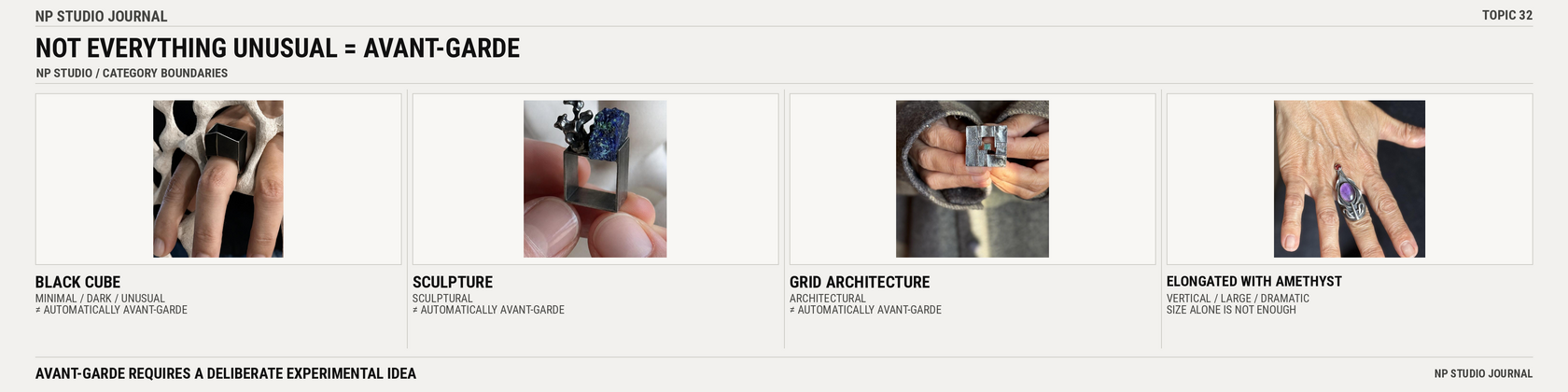
Some works become experimental because they propose a different way to assemble jewelry. Parts can remain visually independent, collide, operate like an engineered system or produce a hybrid between multiple languages.
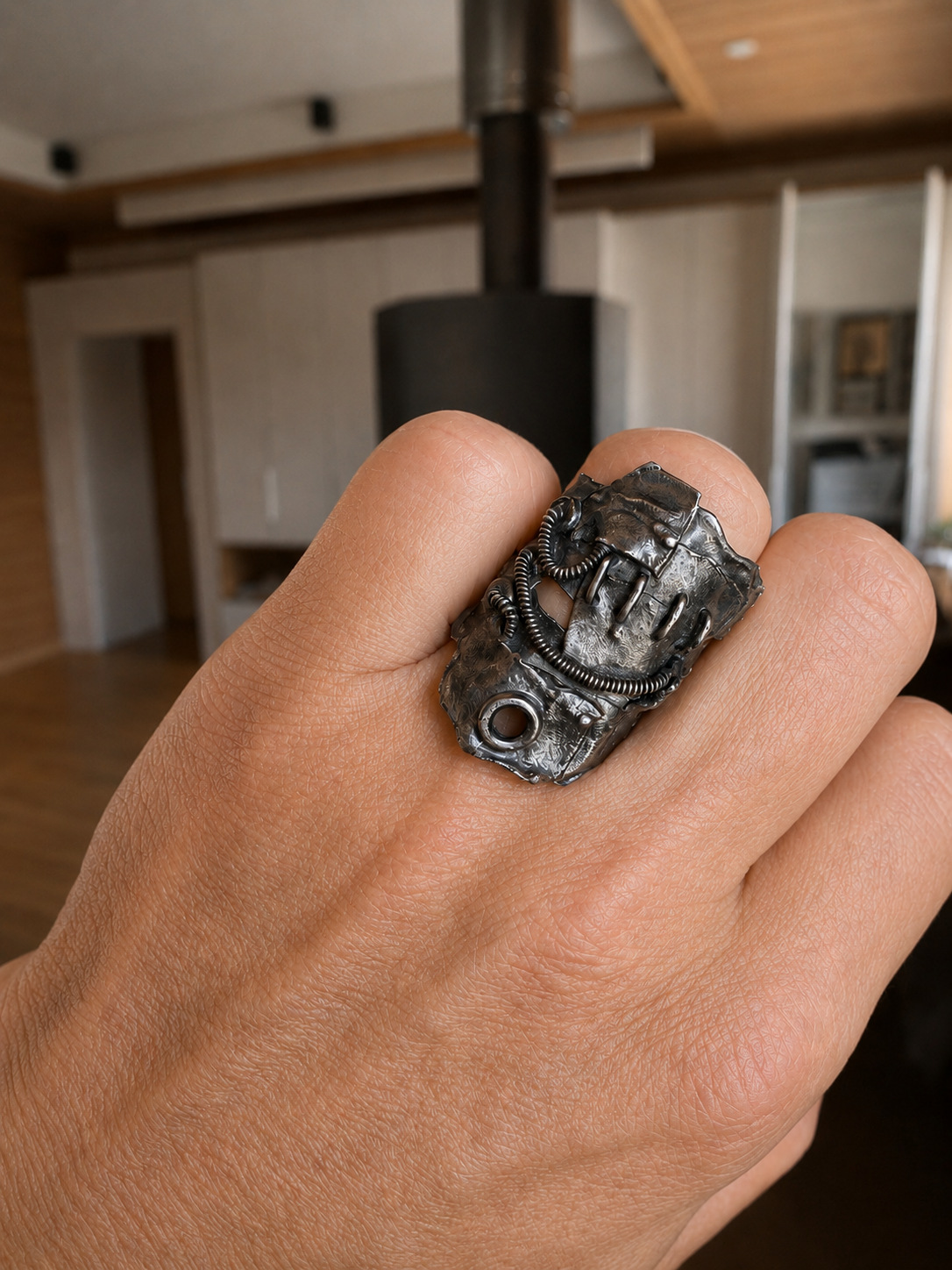
Construction with a Disc uses platform, disc, cylinder and stone as distinct components. Biomechanics goes further by combining organic associations with springs, bindings and mechanical organization.
COMPLEX ≠ AUTOMATICALLY AVANT-GARDE. Complexity becomes relevant only when the assembly itself tests conventional jewelry logic.
Avant-garde jewelry does not require unusual materials. Gold, silver and gemstones can participate in experimental work just as plastics, found objects or mixed media can.
What matters is what the maker does with the material and why. Silver Stone uses a real granite imprint in heated silver, turning surface into evidence of direct contact between material and process rather than merely a decorative texture.
UNUSUAL MATERIAL ≠ REQUIRED. Experiment can happen within traditional sterling silver if process changes how the object is read.
Scale can alter the way jewelry interacts with the body. An elongated upper section may visually cross the fingers, exceed conventional ring boundaries or make hand movement part of the composition.
Elongated with Amethyst is useful for this boundary: its vertical form changes the relationship between ring, finger and hand. But scale by itself proves nothing.
Large scale can simply be a statement effect. Avant-garde requires a deliberate experimental decision, not only visual dominance.
The same applies to comfort. UNCOMFORTABLE ≠ REQUIRED. Some artists deliberately test wearability, but avant-garde jewelry can remain fully wearable and comfortable.
Contemporary jewelry is a broader professional field of current authorial practices. It can contain highly experimental work and work that remains comparatively conventional in form.
Avant-garde describes a more specific orientation toward breaking expectations, testing boundaries or rethinking form, process, typology and body relation.
CONTEMPORARY ≠ AUTOMATICALLY AVANT-GARDE. Being made now does not by itself establish experimentation.
Art jewelry approaches jewelry as an artistic medium in which idea, form, material, process, body and context may carry meaning. Avant-garde and art jewelry can overlap strongly, but they ask different questions.
Art jewelry asks how jewelry functions artistically. Avant-garde asks what expectation the work deliberately tests, challenges or rethinks.
ART JEWELRY ≠ AUTOMATICALLY AVANT-GARDE. Artistic function does not require radicality.
A statement ring is primarily defined by visual role: it becomes a focal point and attracts attention. Avant-garde jewelry is defined not by visual dominance but by experimental intent.
A large, bright or dramatic ring can be statement jewelry without rethinking form, material or typology. Conversely, a quiet minimal object can be experimental if it genuinely changes conventional jewelry logic.
STATEMENT ≠ AUTOMATICALLY AVANT-GARDE.
Sculptural jewelry emphasizes volume, mass, void, spatial construction and object-body relation. Avant-garde is not a synonym for three-dimensionality.
Sculpture is deliberately included as a boundary example: it clearly works as a small three-dimensional object, but SCULPTURAL ≠ AUTOMATICALLY AVANT-GARDE.
To call the work avant-garde, the analysis still needs to identify what the sculptural form actually tests or rethinks.
These four boundary examples are useful because each can look unusual while unusualness itself remains an insufficient criterion.
Handmade construction by itself does not make jewelry avant-garde. One-of-a-kind status by itself does not make a piece avant-garde: a unique object may be experimental, but uniqueness alone does not mean avant-garde.
Brutalist jewelry and avant-garde jewelry are different categories. Brutalist language focuses primarily on relationships between mass, material, surface and construction. The two can overlap, but Brutalist jewelry is not automatically avant-garde.
Biomorphic jewelry and avant-garde jewelry are different categories. Biomorphic language is concerned with morphology that evokes living forms, growth, bodies and natural structures. Biomorphic jewelry may be experimental, but it is not automatically avant-garde.
Biomechanical jewelry and avant-garde jewelry are different categories. Biomechanical language combines organic and mechanical structures. It can overlap with avant-garde practice, but biomechanical jewelry is not automatically avant-garde.
Form, process, material, scale or typology must do more than look different: they need to test a boundary or propose another way of thinking about jewelry.
Segmented field and frame logic: the ring starts to operate as a plane with multiple independent zones.
Ring as built object: projection, supports and void become the content of form.
Hybrid assembly combines organic and mechanical organization and changes conventional jewelry construction.
The ring becomes a small visual field: four silver planes and amazonite work as a wearable composition.
This is not a catalogue of ten “avant-garde rings.” The matrix demonstrates different modes of experimentation while separating experimental intent from unusualness, scale, darkness, sculpture or architectural form alone.
What it experiments with: ring typology, segmented field, frame and an internal picture-plane logic
What it does not prove: that rectangular or unusual composition automatically means avant-garde
What it experiments with: the ring as a built spatial object with projection, supports and void
What it does not prove: that architectural automatically means avant-garde
What it experiments with: assembly, hybrid language and collision between mechanical and organic associations
What it does not prove: that dark, complex or biomechanical automatically means avant-garde
What it experiments with: typology: the ring becomes a small image / visual field worn on the hand
What it does not prove: that every large top or planar composition is avant-garde
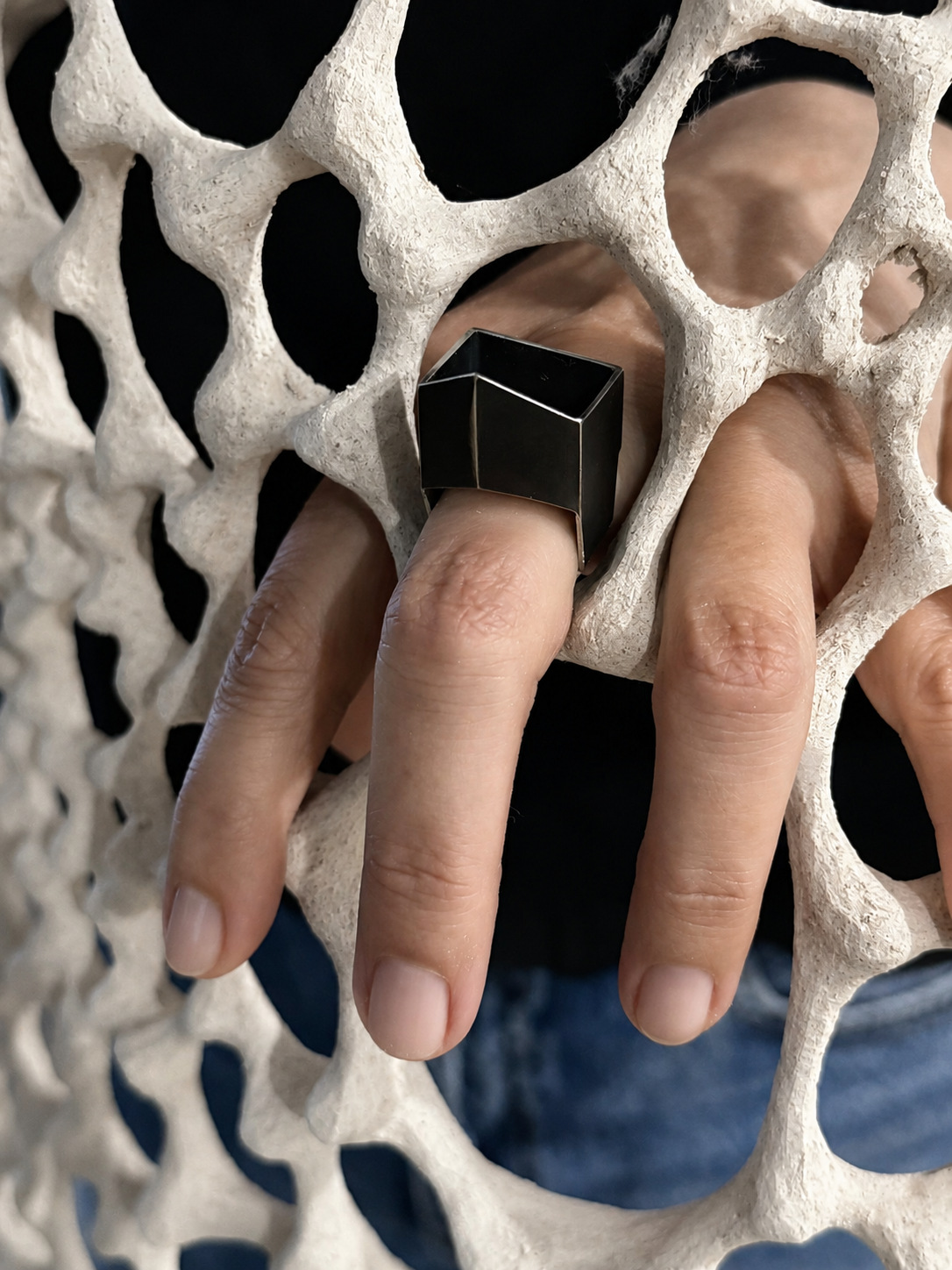
What it experiments with: reduction, minimal geometry and compact object logic
What it does not prove: that minimal, black or unusual automatically means avant-garde
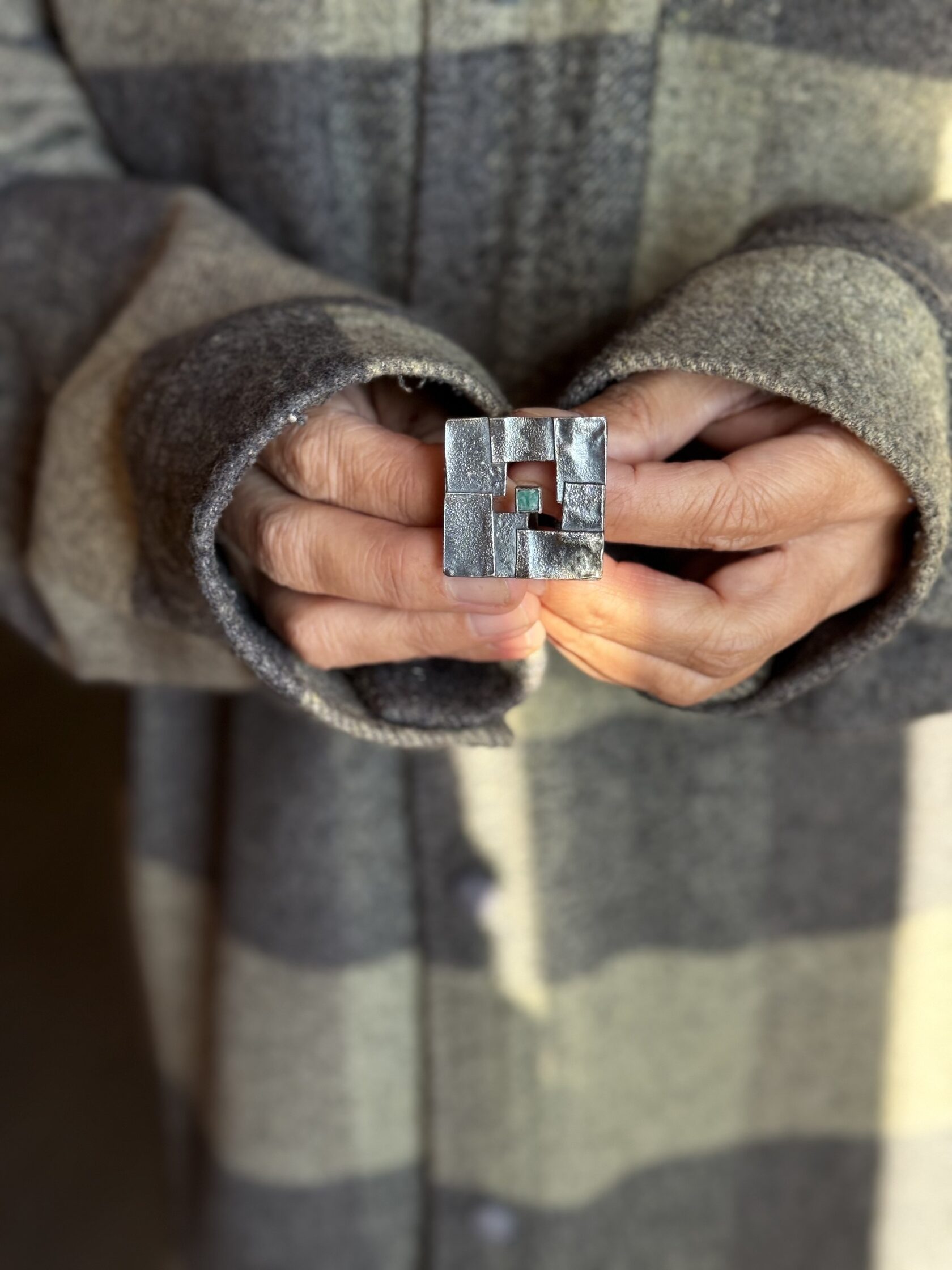
What it experiments with: architectural module, rhythm and a plane assembled from small parts
What it does not prove: that architectural thinking alone is avant-garde
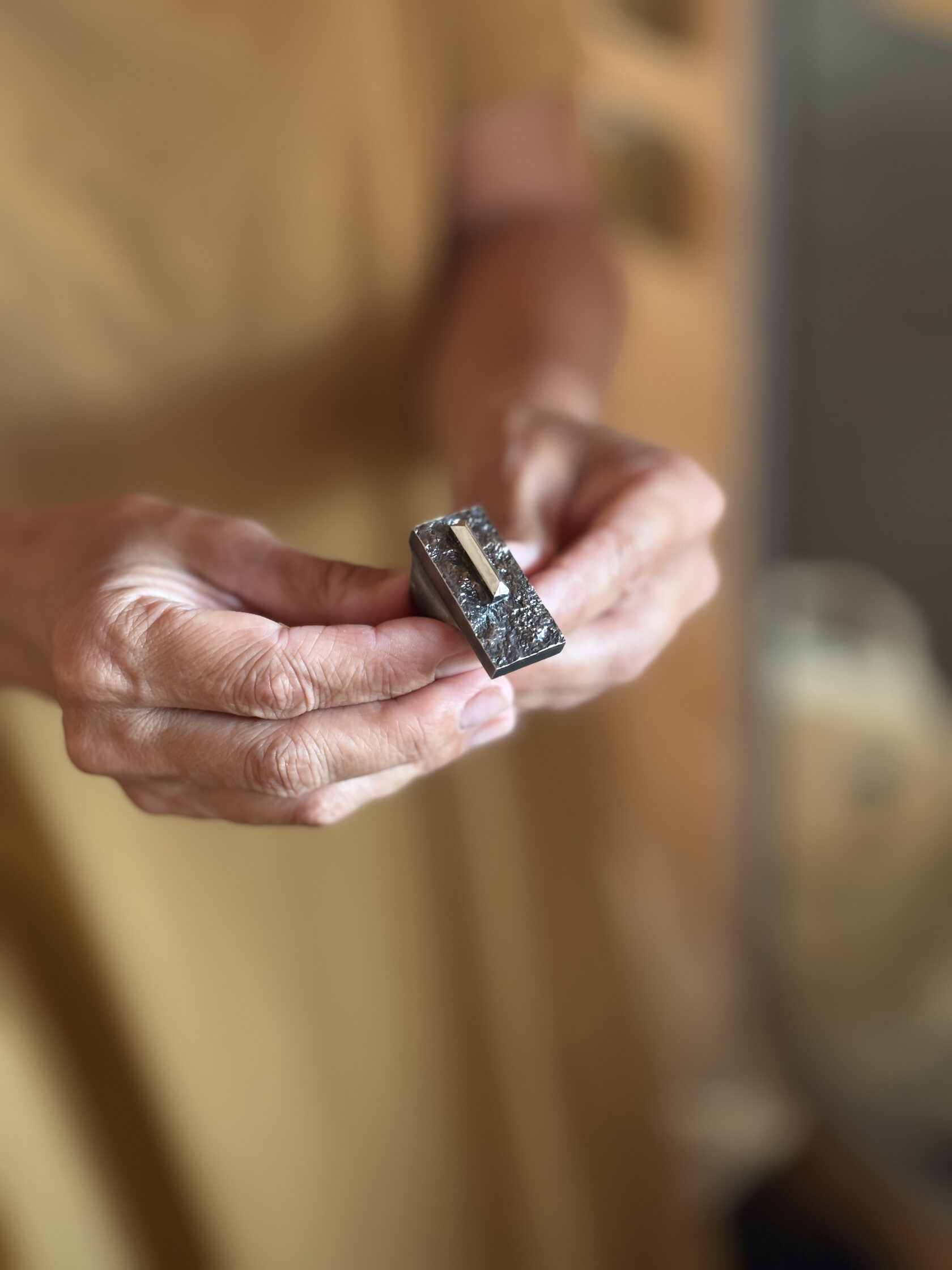
What it experiments with: process, real granite imprint and non-standard surface logic
What it does not prove: that unusual texture automatically means avant-garde
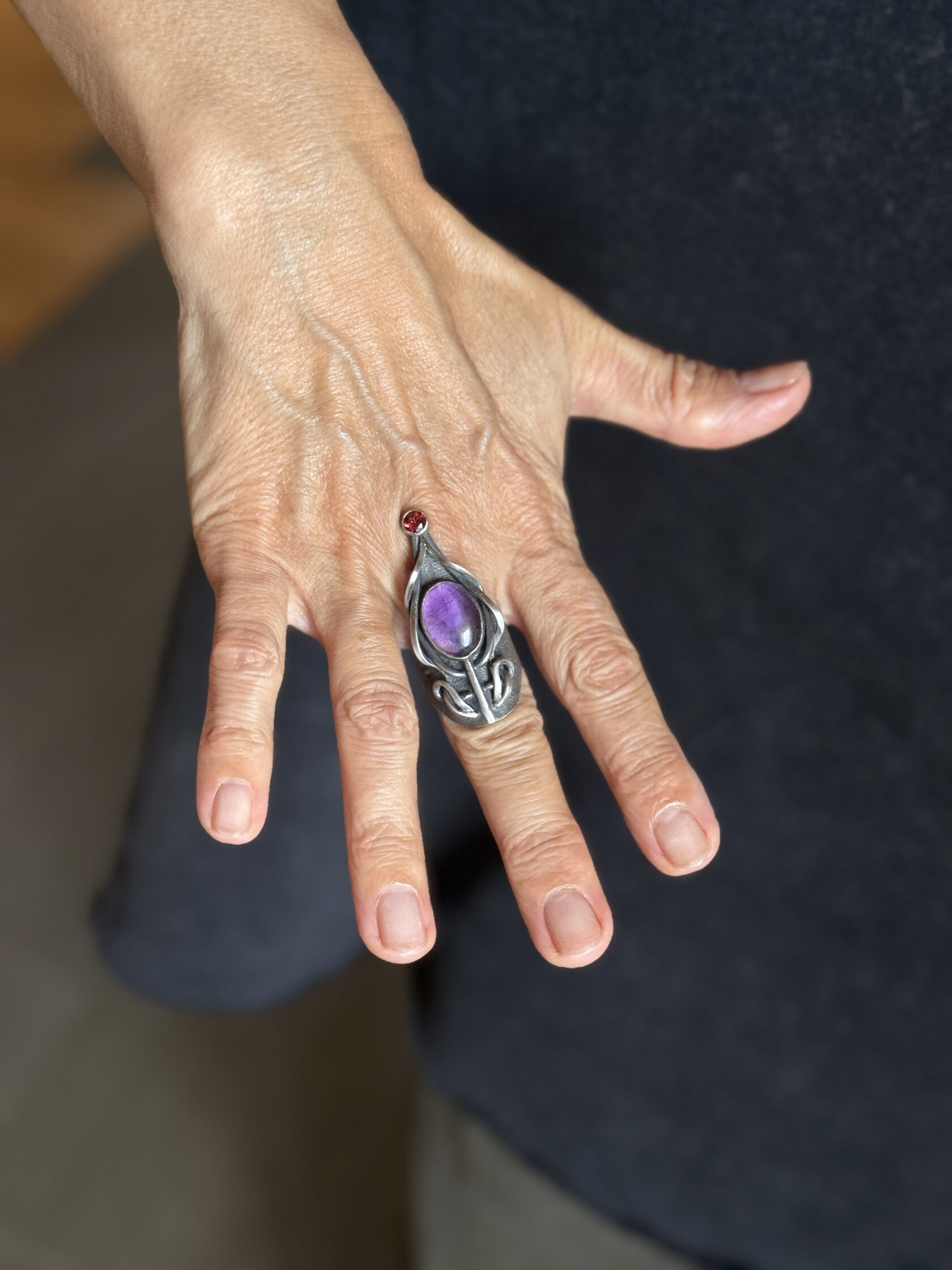
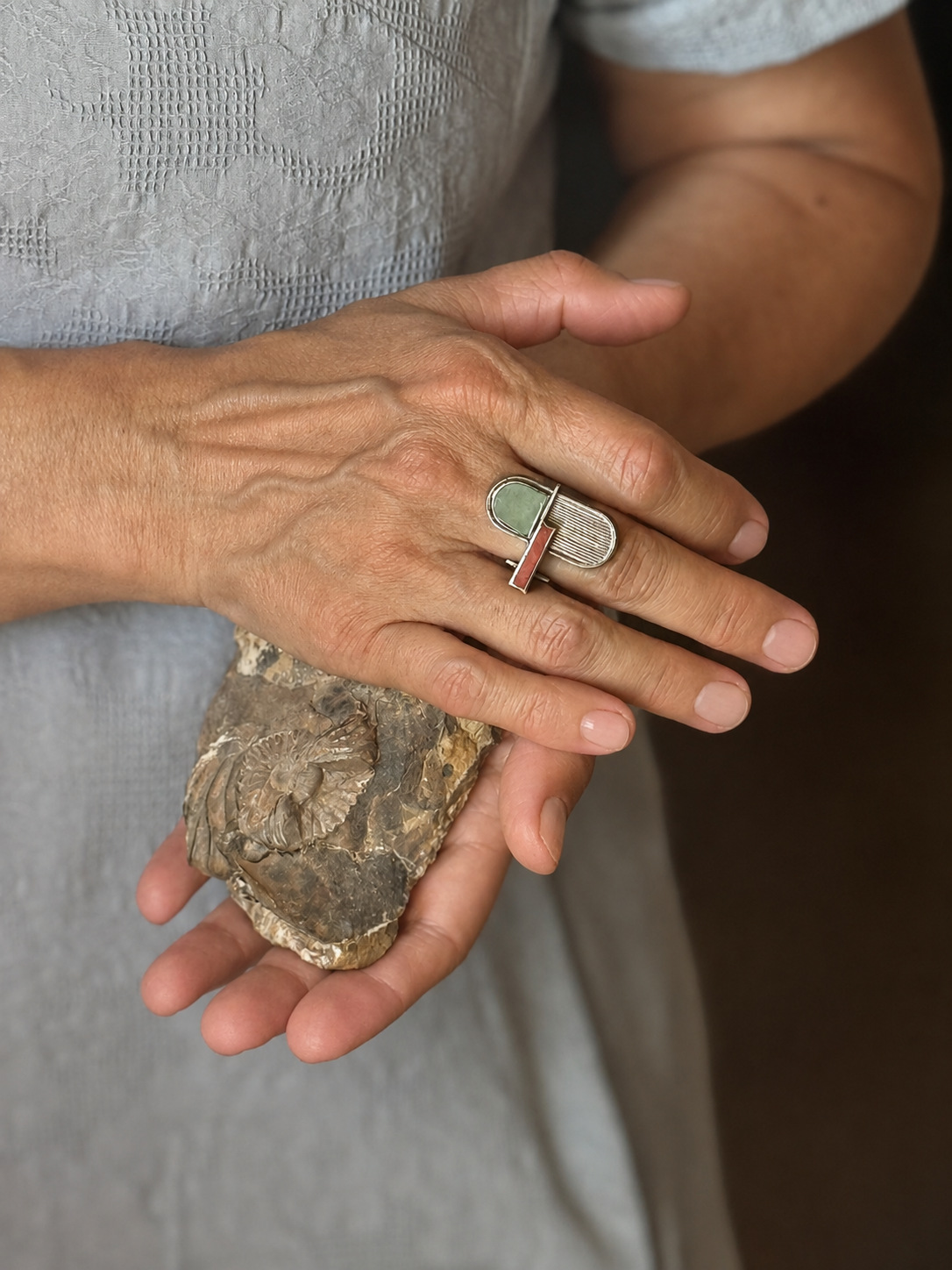
What it experiments with: scale, verticality and an elongated relationship to finger and hand
What it does not prove: that large / vertical / dramatic automatically means avant-garde
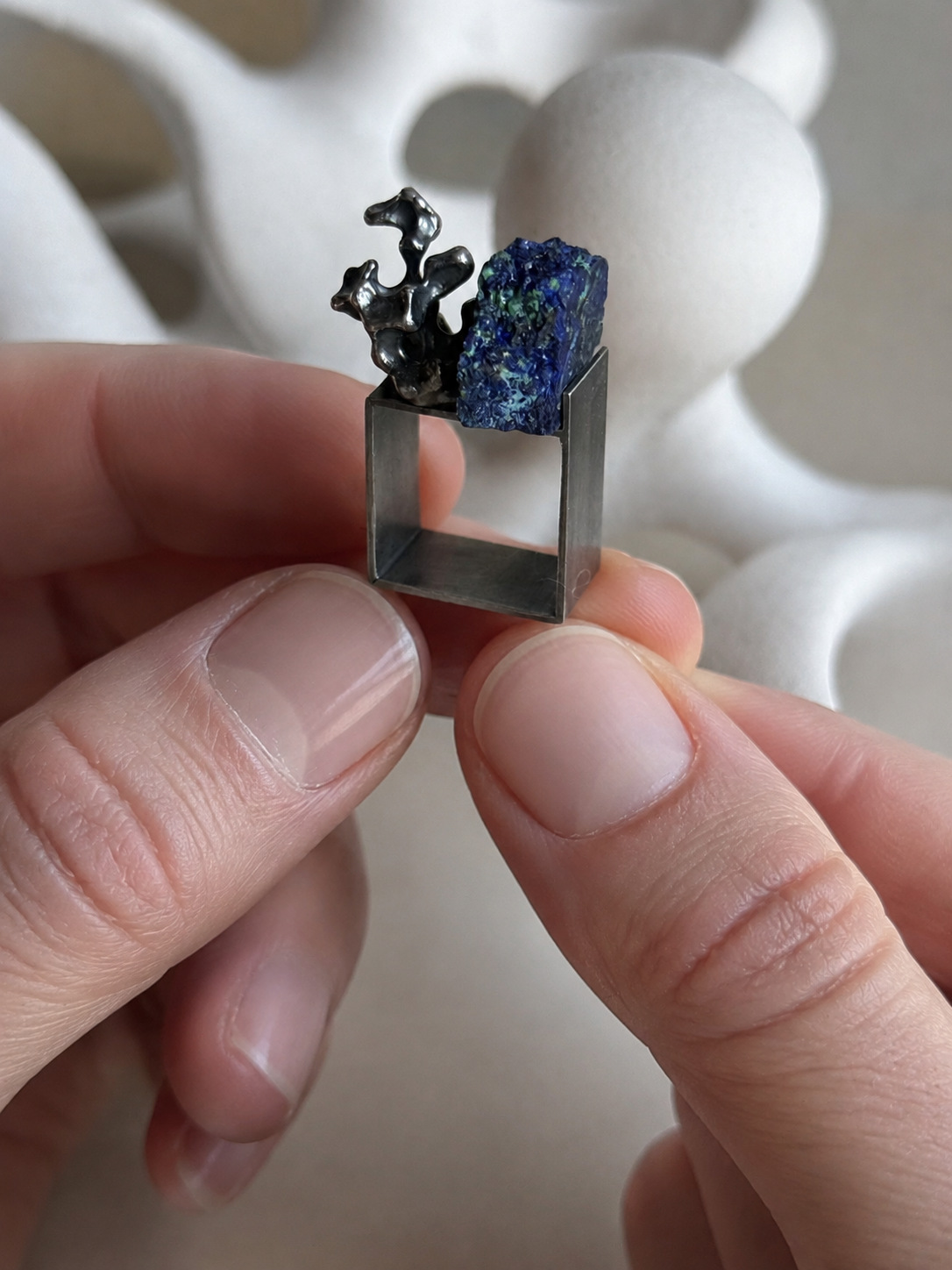
What it experiments with: three-dimensional objecthood and a shift from conventional ring toward small sculpture
What it does not prove: that sculptural automatically means avant-garde
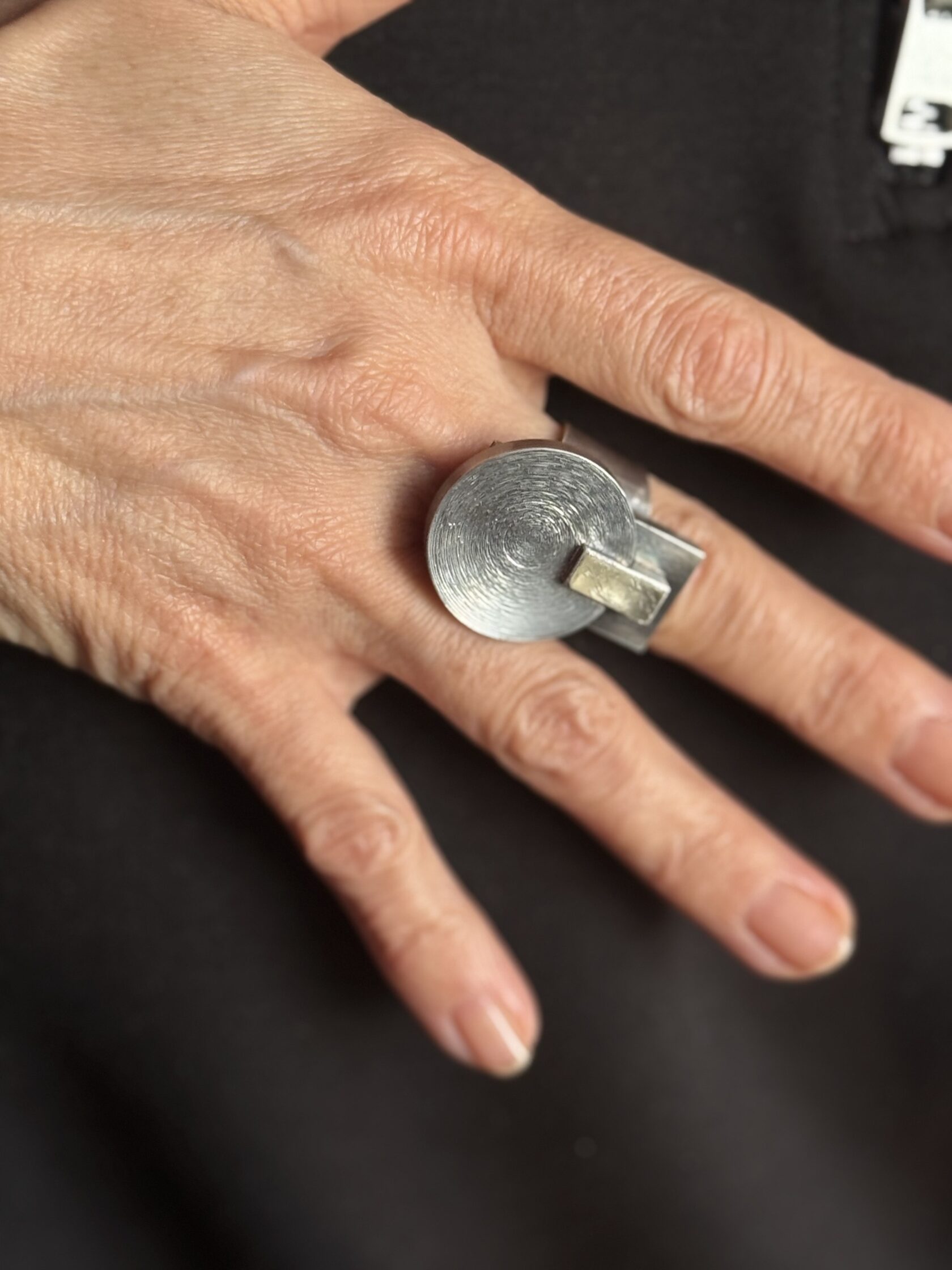
What it experiments with: assembly of distinct geometric parts and a disc intervention in ring typology
What it does not prove: that complex construction automatically means avant-garde
It is jewelry that deliberately tests or rethinks expectations about form, material, process, typology, scale, the body or even the function of jewelry itself.
No. Avant-garde has no single required look. The common factor is an experimental orientation, not a particular geometry, colour or surface.
Contemporary jewelry is the broader current professional field. Avant-garde describes a more specific orientation toward experiment and boundary-testing.
Art jewelry focuses on jewelry functioning as an artistic medium. Avant-garde focuses more specifically on what expectation the work deliberately tests, challenges or rethinks.
No. Strangeness can be an effect of experimentation, but it does not prove that a deliberate experimental idea exists.
No. Scale can become an experimental tool, but a small minimal work can also be avant-garde if it genuinely changes conventional jewelry logic.
No. Some works deliberately test the limits of wearability, but avant-garde jewelry can remain fully wearable and comfortable.
No. Experiment can happen in traditional materials including sterling silver and gemstones if form or process changes how the object is understood.
Golden Four Sectors, Construction, Biomechanics and Picture 4 demonstrate four experimental directions: typology, form, assembly and the ring as a visual field.
Because minimality, sculptural form and darkness describe appearance. Avant-garde requires a deliberate experimental idea that tests or changes an existing expectation.
