Sterling Silver vs Stainless Steel Jewelry: What’s the Difference?
Sterling silver and stainless steel can look similar in color, but they are fundamentally different materials. They behave differently during forming, soldering, surface finishing, repair and everyday wear.
The useful question is not “which is better overall?” but which material fits the job: do you want expressive patina and hand-worked surface, future repair or resizing potential, relatively low-maintenance daily wear, or a particular material language in the design itself?
Sterling silver and stainless steel are different jewelry materials: sterling silver is generally more compatible with traditional jewelry fabrication, repair, patination and resizing, while many stainless steels are valued for hardness, surface stability and relatively low-maintenance wear; neither is universally better.
Sterling silver and stainless steel: the basic difference
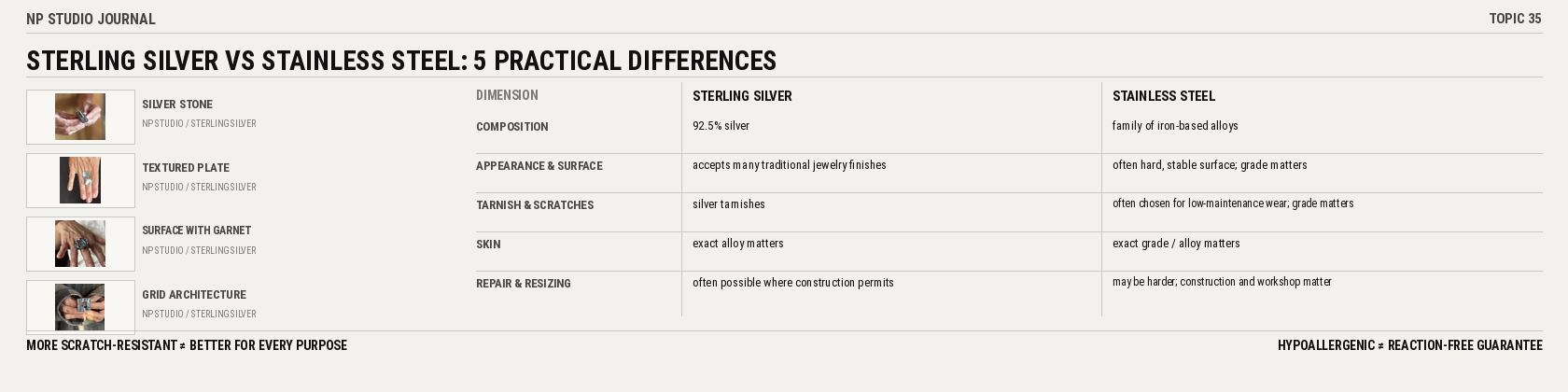
Sterling silver is a silver-based alloy containing 92.5% silver. Stainless steel is not one recipe but a family of iron-based alloys in which chromium is central to corrosion resistance; properties vary substantially by grade.
STERLING SILVER ≠ STAINLESS STEEL. They are not two visually similar versions of the same metal. Their chemical basis, workshop behavior and material traditions are different.
Criterion
Sterling silver
Stainless steel
Alloy basis
Silver-based: 92.5% Ag.
An iron-based family containing chromium and other alloying elements.
Material category
925 specifies silver fineness but not the full recipe of the remaining 7.5%.
Stainless steel includes multiple families and grades; one grade cannot represent all stainless jewelry.
Jewelry fabrication
Fits established bench processes such as forming, soldering and later reworking.
Processing depends on the grade and may require different tools or techniques.
Surface
Polish, matte finish, texture and patina can become strong parts of the artistic language.
Can be polished, satin, matte or industrial; surface behavior depends on grade and finish.
Resizing
Often possible when construction permits.
Some steel rings can be difficult or uneconomic to resize; construction and process matter.
NO UNIVERSAL WINNER
The better choice depends on the specific object, design priorities and expected use.
What is sterling silver?
A 925 mark means 925 parts silver per 1,000 parts of alloy, or 92.5%. The remainder consists of alloying metals that change the mechanical behavior of fine silver.
925 ≠ PURE SILVER. Sterling is real silver, but it is an alloy rather than fine silver 999. The full composition question is covered separately in What Is Sterling Silver?.
For this comparison, the relevant point is that sterling remains workable enough for forming, soldering, texturing and later bench reworking.
What is stainless steel in jewelry?
Stainless steel is a family of iron-based alloys rather than one universal material recipe. Austenitic, ferritic, martensitic, duplex and other families differ in composition, strength, formability, magnetic behavior and nickel content.
It is therefore inaccurate to treat one grade as a definition of all stainless steel jewelry. Common austenitic grades such as 304 and 316 contain nickel, while other stainless grades can contain much less nickel or none as a deliberate alloying addition.
STAINLESS STEEL ≠ AUTOMATICALLY NICKEL-FREE
If metal sensitivity matters, the relevant information is the actual grade or specification—not the generic phrase “stainless steel.”
Appearance and artistic surface
Both materials can appear bright, matte or satin-finished, so color in a photograph is not always enough to identify the metal. The difference becomes more useful when surface itself is part of the artistic task.
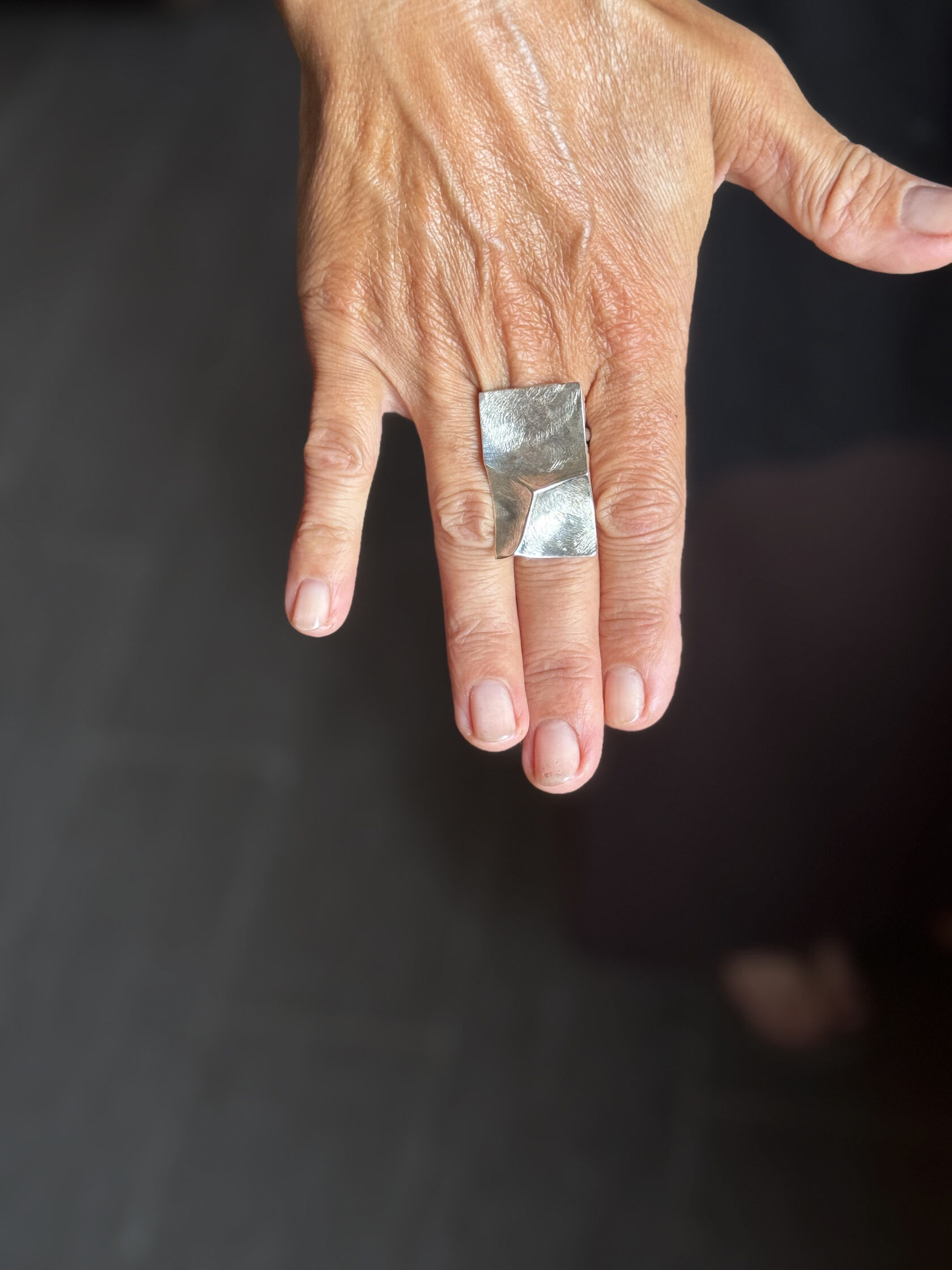
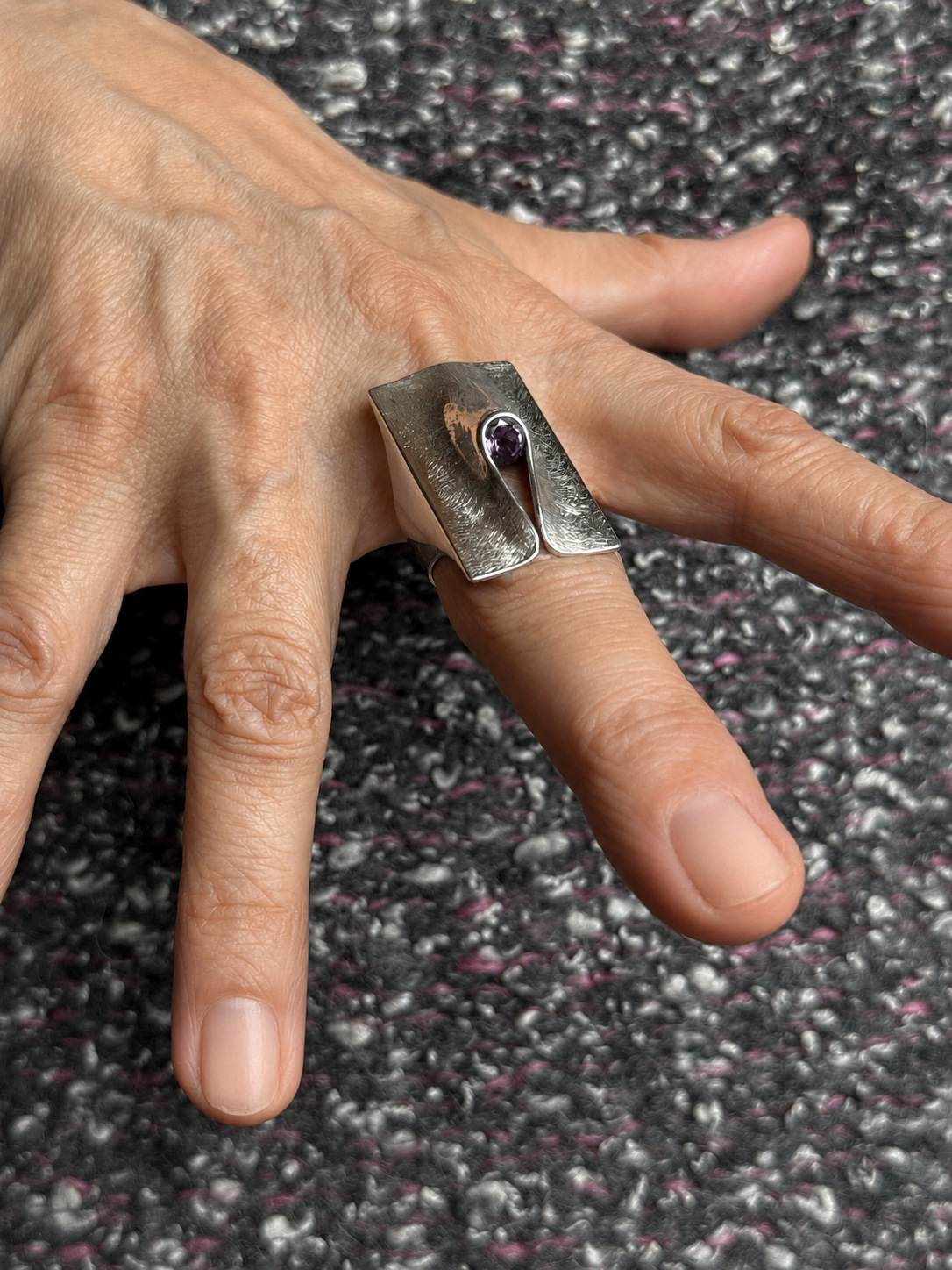
Sterling silver readily supports combinations of forging, abrasion, polish, dark patina, relief and selective highlighting within the same object.
LOW-MAINTENANCE ≠ MORE SUITABLE FOR EVERY JEWELRY DESIGN. A stable everyday surface can be an advantage of steel in one context, while in artist-made jewelry the ability to accept patina, tool marks or a changing finish can be part of the intended object.
Tarnish, scratches and everyday wear
Sterling silver can tarnish through surface reactions with its environment. Stainless steel generally maintains a more stable everyday surface because chromium supports a protective oxide film, but that does not mean every steel “never changes” or “never scratches.”
TARNISH ≠ RUST. Silver tarnish and corrosion of ordinary steel are different processes. Stainless steel is valued for corrosion resistance, but performance still depends on grade, environment and surface condition.
Sterling is relatively soft and can accumulate visible wear more readily. Many stainless grades have higher strength and scratch resistance, but finish, geometry and actual use can matter just as much.
MORE SCRATCH-RESISTANT ≠ BETTER FOR EVERY PURPOSE
Scratch resistance is only one property. Repairability, re-finishing and the artistic role of the surface may matter more in another design.
Neither sterling silver nor stainless steel can be declared universally suitable for every sensitive skin type from the material name alone. The actual alloy and the individual response matter.
A 925 stamp specifies silver fineness; it is not a universal allergy certificate. Stainless steel is likewise not automatically nickel-free: many common austenitic grades contain nickel.
HYPOALLERGENIC ≠ GUARANTEED REACTION-FREE. If skin reaction is the main question, the material/allergy boundary is covered separately in Topic 34: Is Sterling Silver Hypoallergenic?.
Repair, soldering and resizing
Sterling silver is a conventional bench-jewelry metal. Where construction permits, it can be annealed, soldered, formed, locally reworked and often resized. But the word “silver” does not guarantee that every complex ring will be easy to alter.
Stainless steel can also be cut, welded and machined, but the correct process depends on grade, thickness and construction. Some steel rings require different equipment, and resizing may be difficult or uneconomic.
Professional ring-stretcher guidance for conventional jewelry metals specifically cautions against mechanically sizing hard-metal rings such as steel and titanium with that kind of tool.
CONSTRUCTION MATTERS MORE THAN THE MATERIAL LABEL ALONE
“Silver can always be resized” and “steel can never be resized” are both too absolute.
Why NP Studio works with sterling silver
For NP Studio, sterling silver is not chosen because steel is “worse.” It fits the studio’s working processes: forming, soldering, forging, reticulation, patina, local polishing, texture, stone integration and the possibility of returning to an object for later reworking.
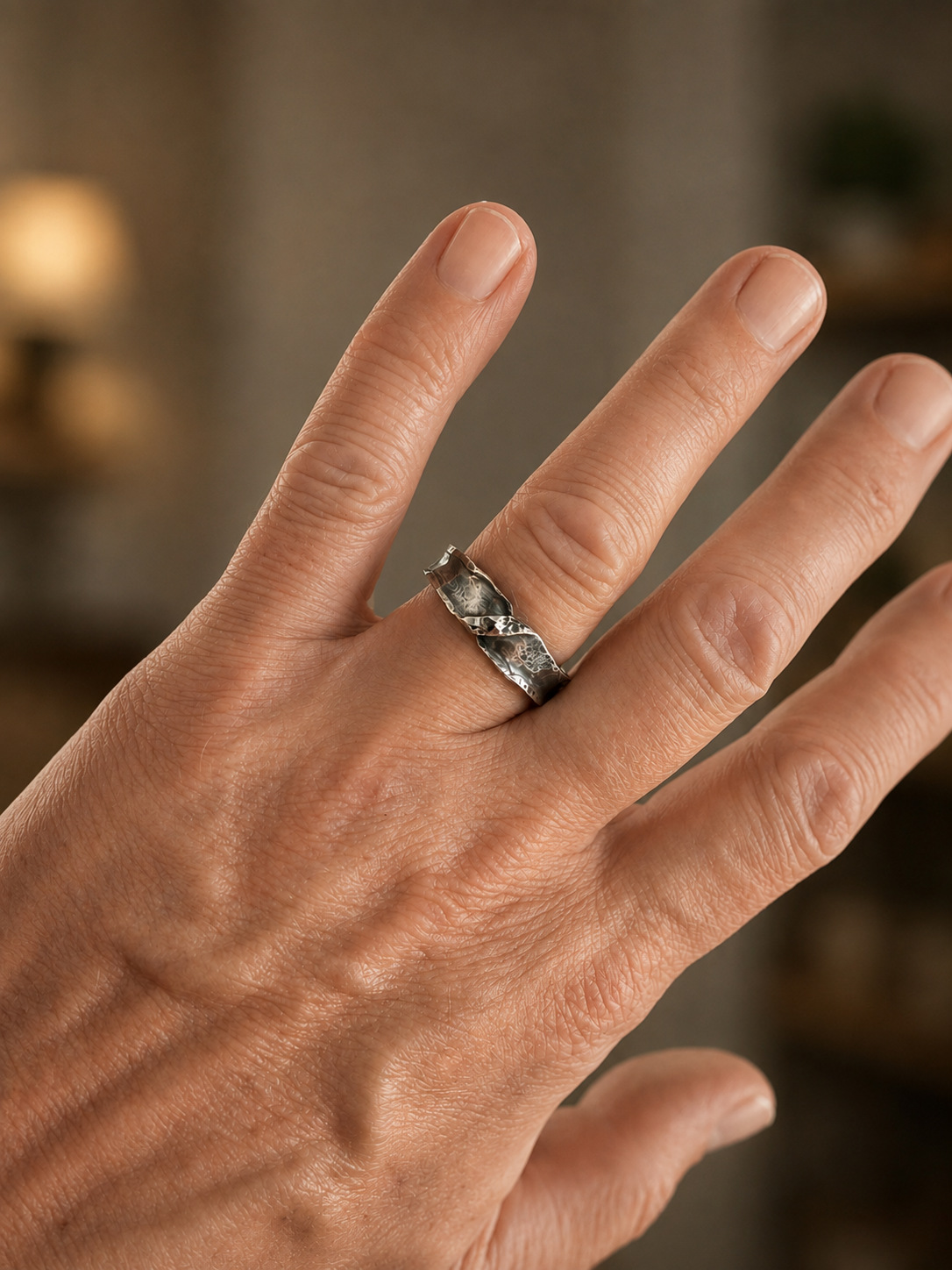
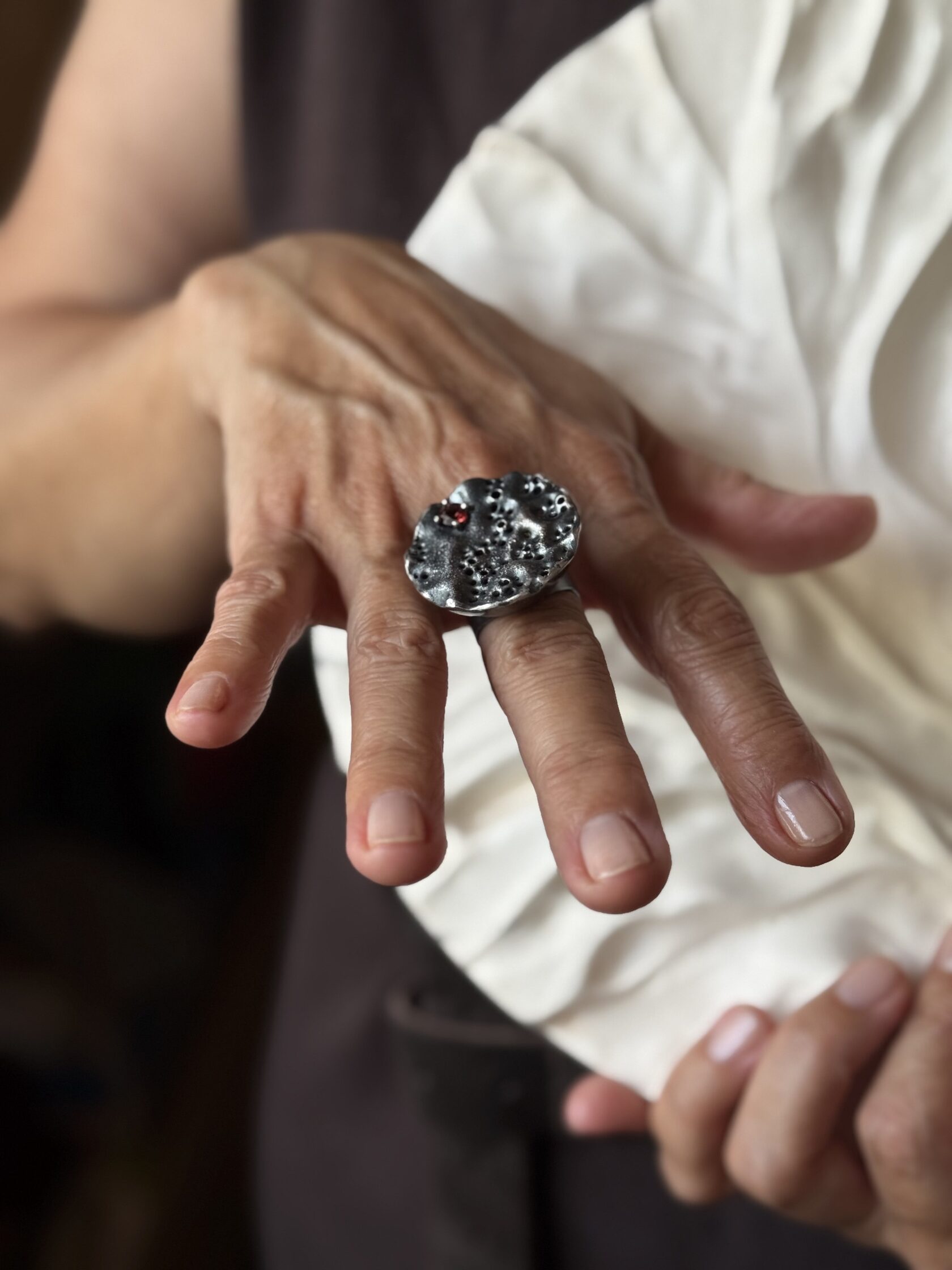
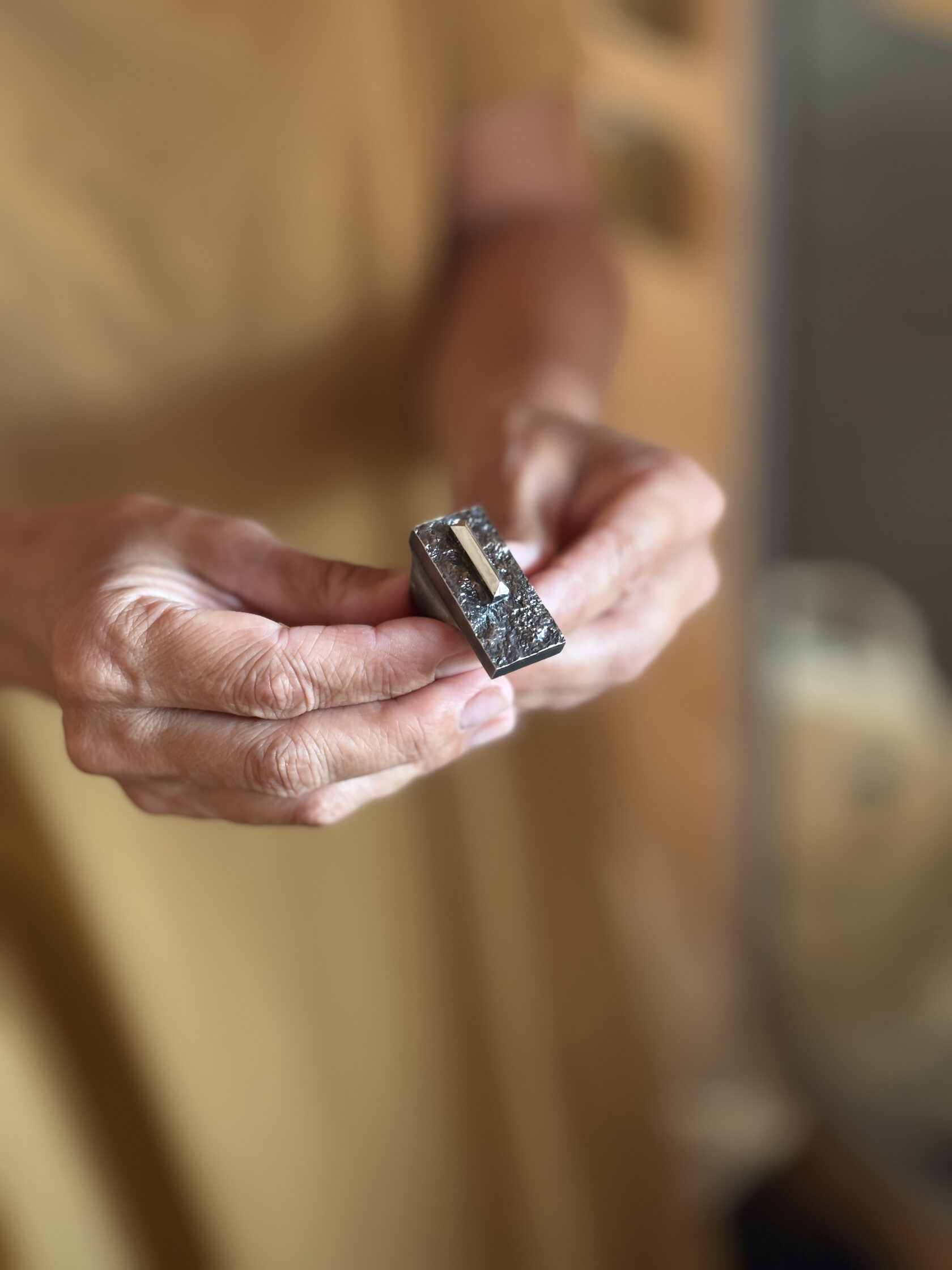
Here heated sterling silver receives a real imprint from natural granite. The metal becomes a carrier of texture and process rather than a neutral background.
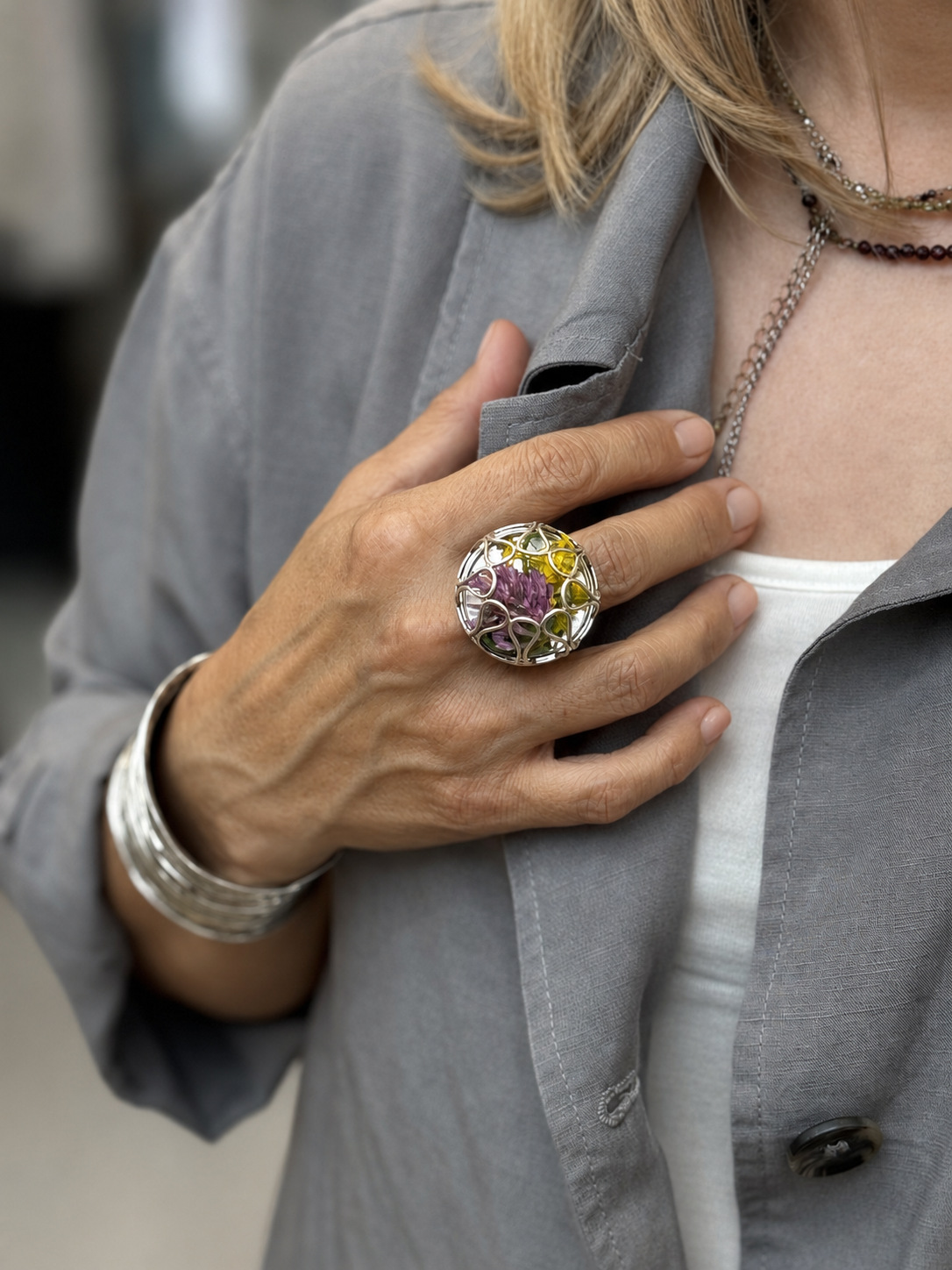
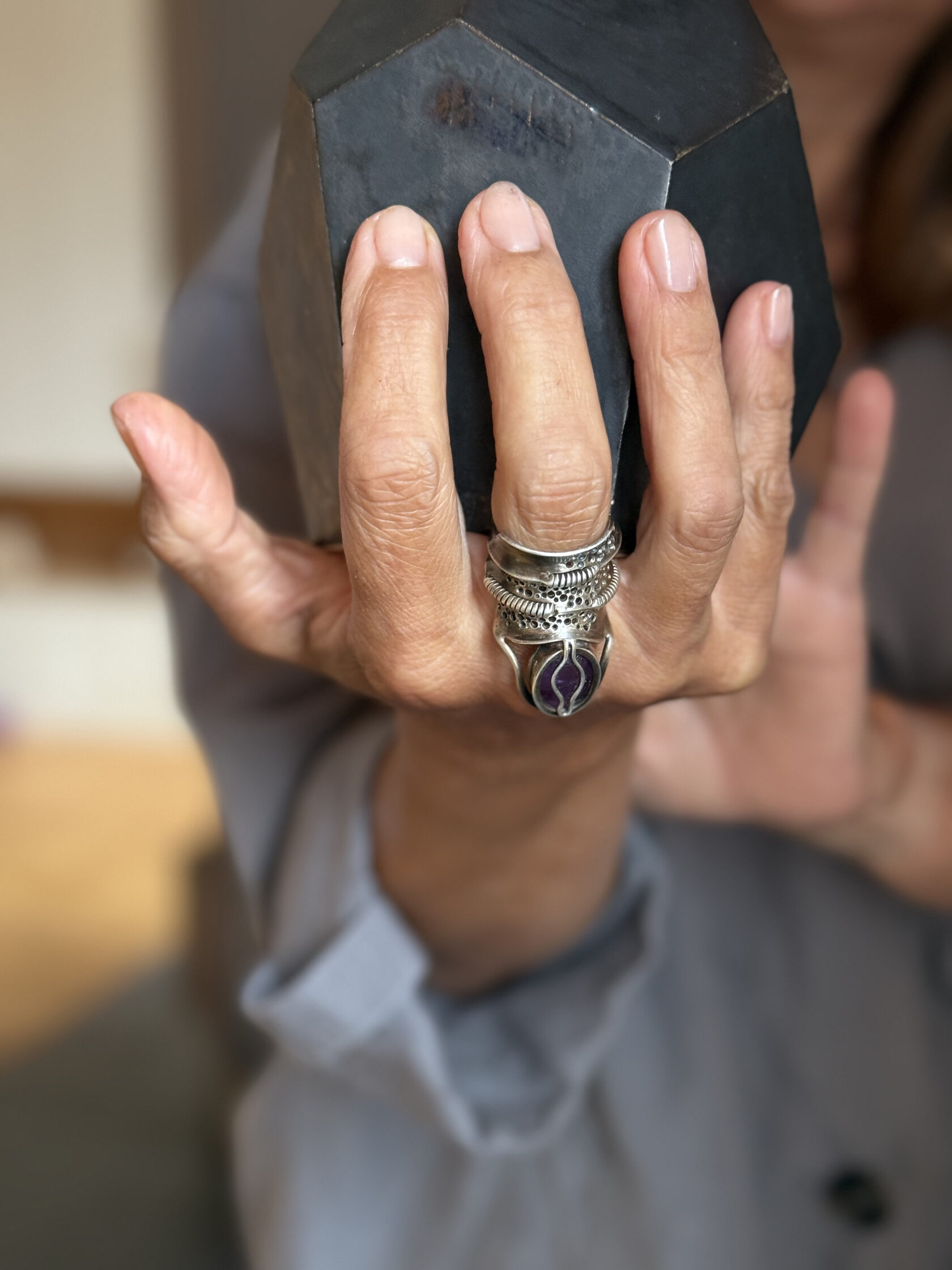
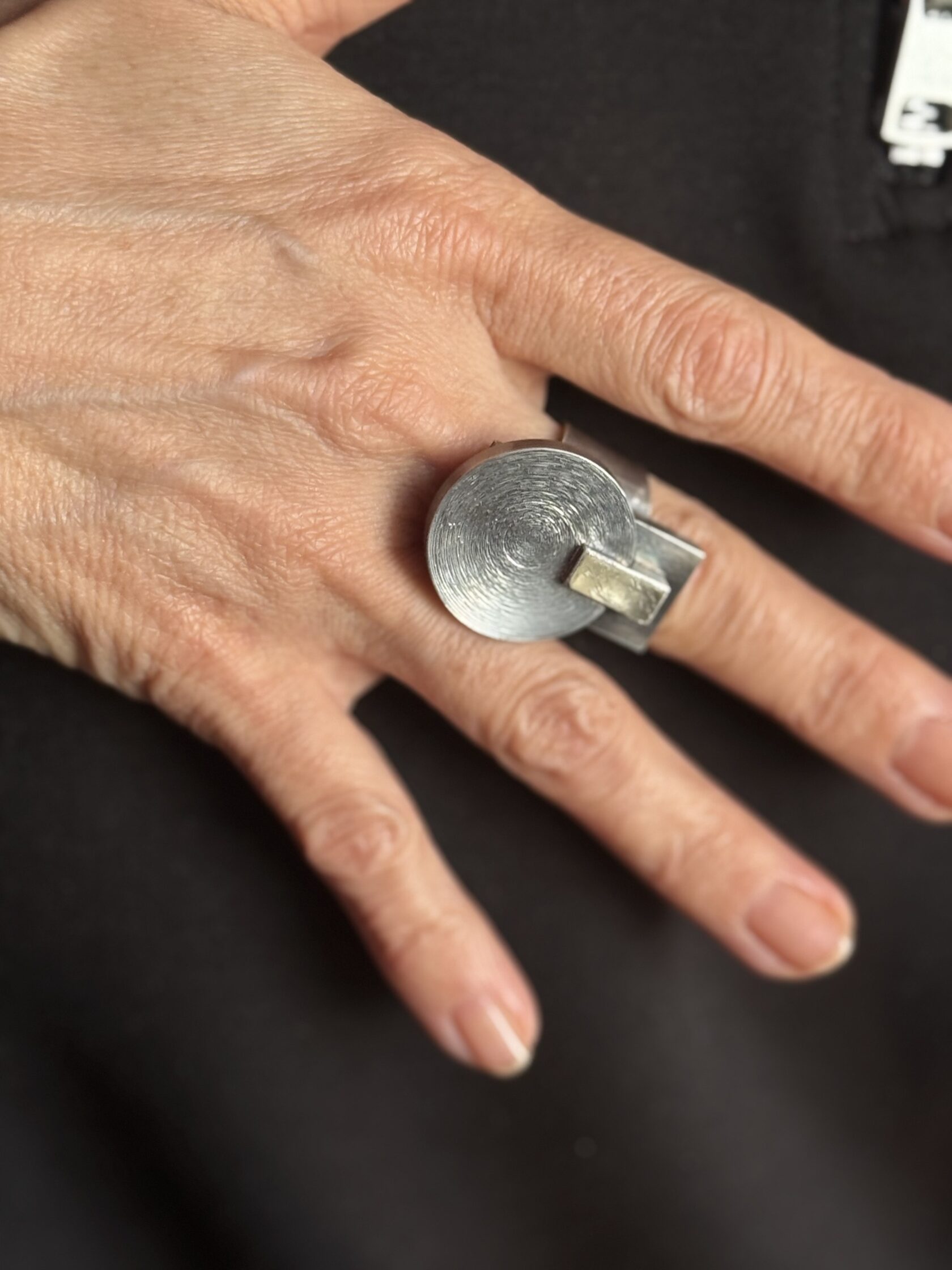
Silver works here as a fabrication material: platform, disc, cylindrical element, setting and patina become one construction. The ability to solder, form and rework individual parts matters more than abstract material “strength.”
NP STUDIO USES STERLING SILVER ≠ CLAIM THAT STEEL IS AN INFERIOR MATERIAL
It is a material choice for a specific artistic and technical workflow, not a universal ranking.
If a project needs a specific construction, stone or size, that can be discussed separately through Custom.
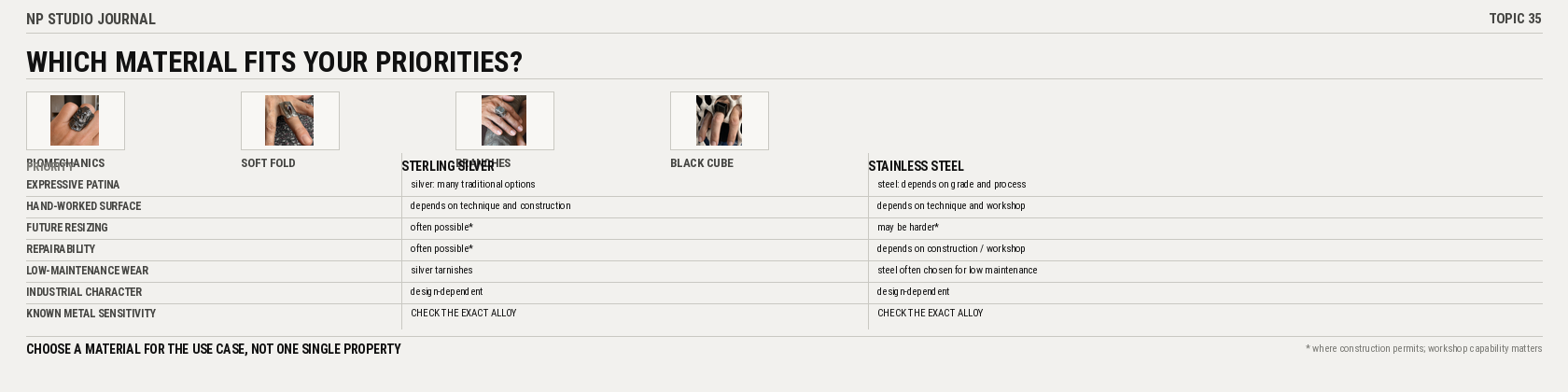
Which should you choose?
Match the material to your priorities rather than searching for a universal winner.
Priority
Sterling silver
Stainless steel
Expressive patina and surface
Often a strong fit: patina, selective polish, forging and complex texture can become part of the object.
Can support many finishes, but artistic processing follows a different technical logic.
Future repair or resizing
Often familiar to traditional jewelry benches when construction permits intervention.
Feasibility depends strongly on grade, construction and available equipment.
Low-maintenance everyday surface
Can tarnish and may need periodic cleaning or refinishing.
Many grades are valued for corrosion resistance and a relatively stable surface.
Industrial visual character
Possible through form and finish while remaining a precious-metal alloy.
Can naturally support a more technical or industrial material character.
Hand-worked artistic surface
Well suited to forging, patination, reticulation, texturing and local reworking.
Can also be artistically worked, but processes and tool logic differ.
Documented metal sensitivity
Check the actual alloy; 925 alone is not an allergy certificate.
Check the actual grade; stainless steel is not automatically nickel-free.
Expected future modification
Often practical for additional bench work.
Depends on grade, manufacturing route and the construction of the specific piece.
FAQ
Which is better: sterling silver or stainless steel?
Neither is universally better. Sterling often suits traditional jewelry fabrication and expressive hand-worked surfaces; many stainless grades are valued for hardness, corrosion resistance and relatively low-maintenance wear.
What is the difference between sterling silver and stainless steel jewelry?
Sterling is a silver-based alloy containing 92.5% silver. Stainless steel is a family of iron-based alloys containing chromium and other elements. Their chemistry and workshop behavior are different.
Which scratches more easily: sterling silver or stainless steel?
Sterling is relatively soft and usually acquires visible wear more easily. Many stainless grades resist scratching better, but grade, finish and real use all matter.
Which tarnishes more: sterling silver or stainless steel?
Sterling silver can tarnish through surface reactions. Stainless steel is generally more surface-stable in ordinary wear, but performance still depends on grade, environment and finish.
Which material is better for sensitive skin?
There is no universal answer from the material name alone. Actual alloy composition, nickel exposure and individual sensitivity matter.
Does stainless steel contain nickel?
Some widely used grades, including many austenitic stainless steels, contain nickel. Other grades can contain much less or no deliberate nickel addition.
Can a stainless steel ring be resized?
Sometimes, but it depends on grade, construction and manufacturing method. Some steel rings are difficult or uneconomic to resize.
Which material is easier to repair?
Sterling silver is generally more familiar to traditional jewelry benches and is often easier to solder or rework. Actual repairability still depends on the design.
Which material works better for artistic jewelry?
Both can be used artistically. The choice depends on whether the maker needs forging, soldering, patina, industrial rigidity, welding, a particular surface or another technical language.
Why does NP Studio work with sterling silver?
Because it fits the studio’s processes: forming, soldering, forging, texturing, patina, stone integration and later reworking. This is not a claim that stainless steel is inferior.
A material comparison becomes more useful when it is connected to real objects. The Works archive shows sterling silver used in forging, matte surface, patina, complex assembly and stone-set rings.