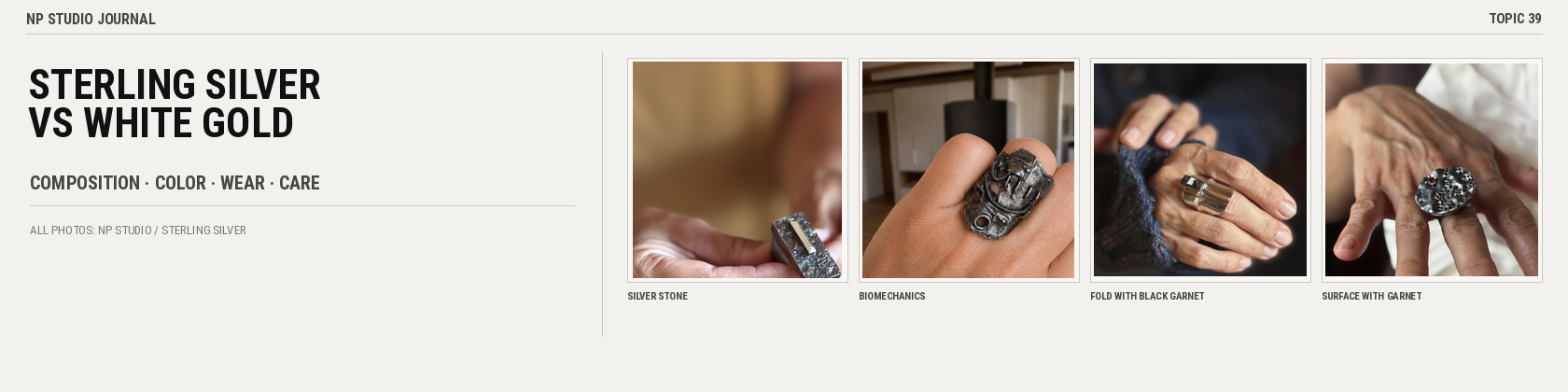
Sterling Silver vs White Gold: What’s the Difference?
Sterling silver and white gold can look close at first glance, especially in polished finishes and cool light. But they are different alloys with different precious-metal content, different surface behavior and different maintenance expectations.
Direct answer
Sterling silver and white gold can look similar, but they are different alloys with different precious-metal content, cost, surface behavior and maintenance. Sterling silver contains 92.5% silver and can tarnish. White gold contains a stated proportion of gold alloyed with other metals, and many pieces are rhodium plated for a brighter white appearance. The better choice depends on design, finish, wear pattern, budget and maintenance expectations.
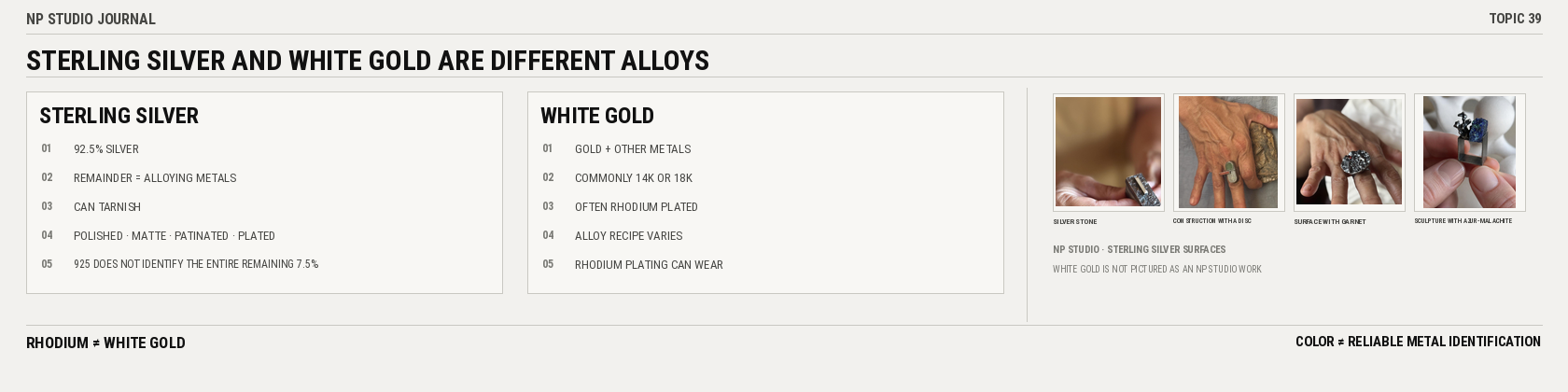
Sterling silver means a silver alloy in which 92.5% of the mass is silver. The remaining 7.5% is made of alloying metal or metals. Traditional sterling commonly uses copper, but the 925 mark by itself does not reveal the full alloy recipe.
White gold is a gold alloy. In jewelry, common fineness levels include 14K and 18K. These marks describe how much gold is in the alloy, not how white the metal looks. In other words, 14K / 18K ≠ color grade.
925 ≠ complete alloy recipe
The 925 mark confirms silver content, but it does not automatically tell you which specific metals are used in the remaining 7.5%. The composition and hallmark are explained further in What Is Sterling Silver 925?.
Why can they look so similar?
Polished sterling silver can look very bright. Rhodium-plated white gold can also appear crisp and cool white. Lighting, photography, polishing, matte finishing and patina all influence perception.
That is why color alone ≠ reliable metal identification. A photo by itself is not enough to identify the metal confidently.
White gold and rhodium are not the same thing
White gold is the alloy itself. Rhodium is a possible surface coating. Many white gold pieces are rhodium plated for a brighter, cooler appearance, but rhodium plating ≠ white gold itself.
Plating can wear with time, and some pieces may need re-plating to restore the original finish. Rhodium is not a permanent white shell.
Tarnish, scratches and wear
Sterling silver can tarnish. That is normal surface behavior and does not mean the piece is structurally failing: tarnish ≠ structural failure. Fine scratches and wear marks also accumulate over time, especially on polished areas. In some designs, patina is an intentional finish rather than a problem.
White gold is not immune to wear. Scratches still happen, and when rhodium plating is present, the underlying alloy can look warmer as the coating thins. It would be inaccurate to claim that white gold does not scratch.
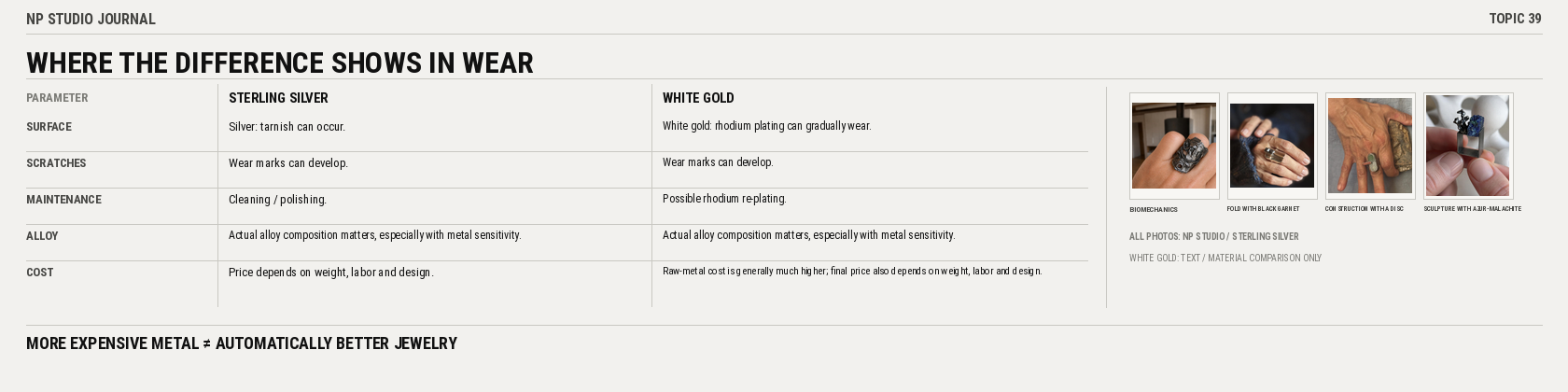
Criterion
Sterling silver
White gold
Composition
92.5% silver + 7.5% alloying metals
Gold alloy of a stated karat; the alloy system varies by recipe
Color
Can range from bright silver to darkened patinated silver
White to gray-white appearance; the exact surface look often depends on rhodium plating
Tarnish
Can tarnish naturally
Usually does not tarnish in the same way as sterling silver, but the surface still changes with wear
Scratches
Wear marks and scratches accumulate
Scratches also accumulate; rhodium plating can wear
Finishes
Polished, matte, textured, patinated, sometimes rhodium plated
Polished, matte, often rhodium plated
Visual conclusion
Color by itself is not a reliable way to identify the metal
Maintenance
Sterling silver often needs occasional polishing or cleaning if the owner wants to keep a bright surface. White gold may involve rhodium maintenance when the appearance depends on plated brightness.
For stone-set rings, maintenance depends not only on the metal but also on the gemstone, construction and setting style. Larger rings with stones benefit from periodic professional inspection.
Sterling silver: polishing, careful cleaning and storage that helps slow tarnish.
White gold: possible re-plating when the original finish depends on rhodium.
Both metals: monitor stone settings if the ring is worn actively.
Alloy composition and sensitivity
The key issue is the actual alloy recipe, not the category name alone. White gold ≠ always nickel-free. Some white gold systems contain nickel; others use different alloy systems such as palladium-based formulations. Likewise, the 925 mark does not reveal the exact remaining 7.5% in sterling silver.
If sensitivity matters, ask for the real alloy composition rather than assuming from the metal name alone.
Price and value are not the same thing
White gold usually carries a higher raw-metal cost than sterling silver. But the final price of a ring is never just about metal: weight, labor, setting complexity, gemstones, finishing and design all matter.
That is why metal price ≠ value of design. A more expensive metal does not automatically produce a better design, and a more accessible metal does not make a piece “inferior” in artistic terms.
What about large or sculptural rings?
For large author-made rings, the amount of metal becomes a real factor. Sterling silver can support substantial forms at a lower raw-metal cost, which is one reason it remains practical for sculptural work.
That is not a universal recommendation against white gold. If a gold alloy is the intended choice, it can still be fully valid — the scale and budget simply work differently.
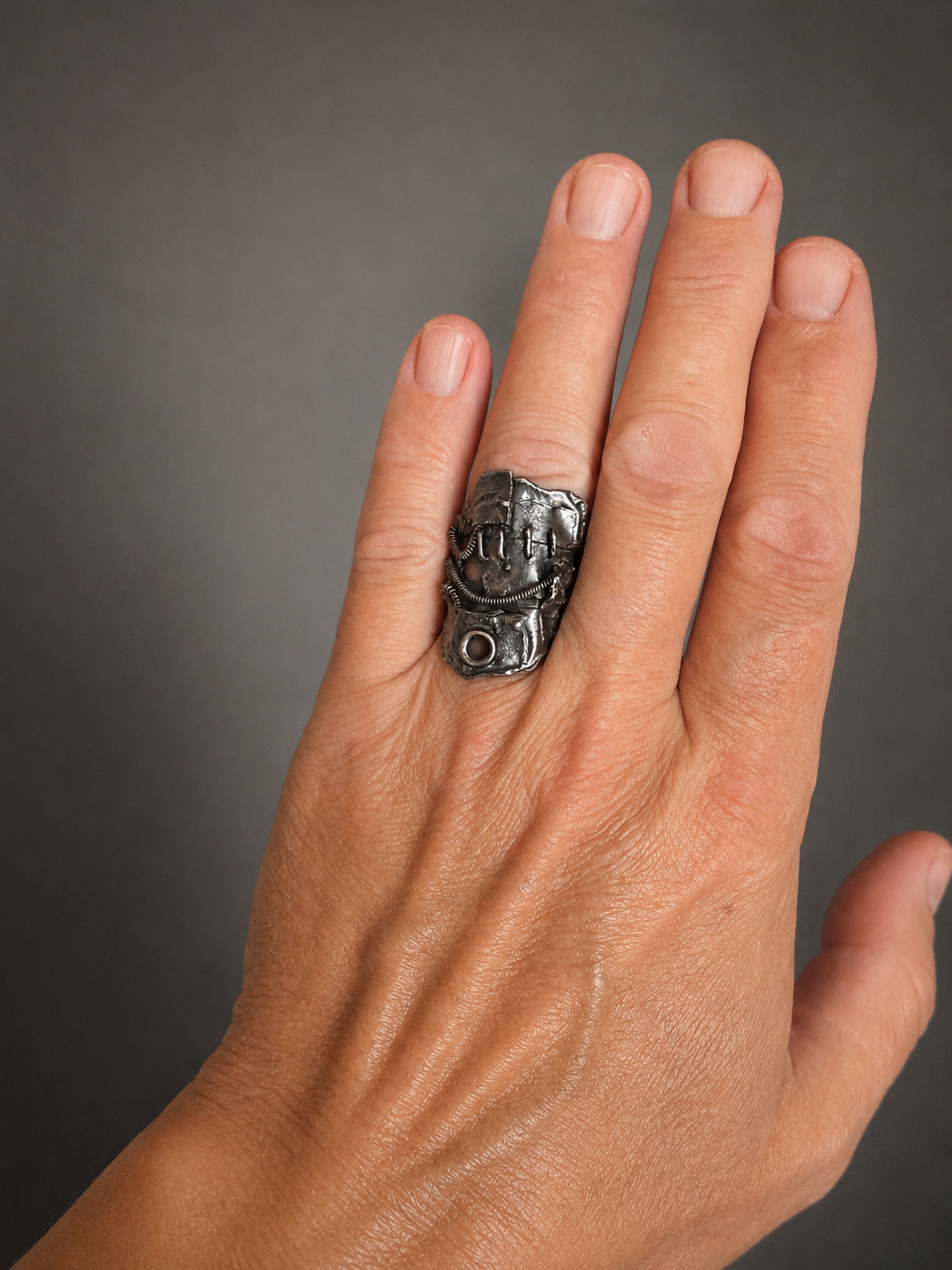
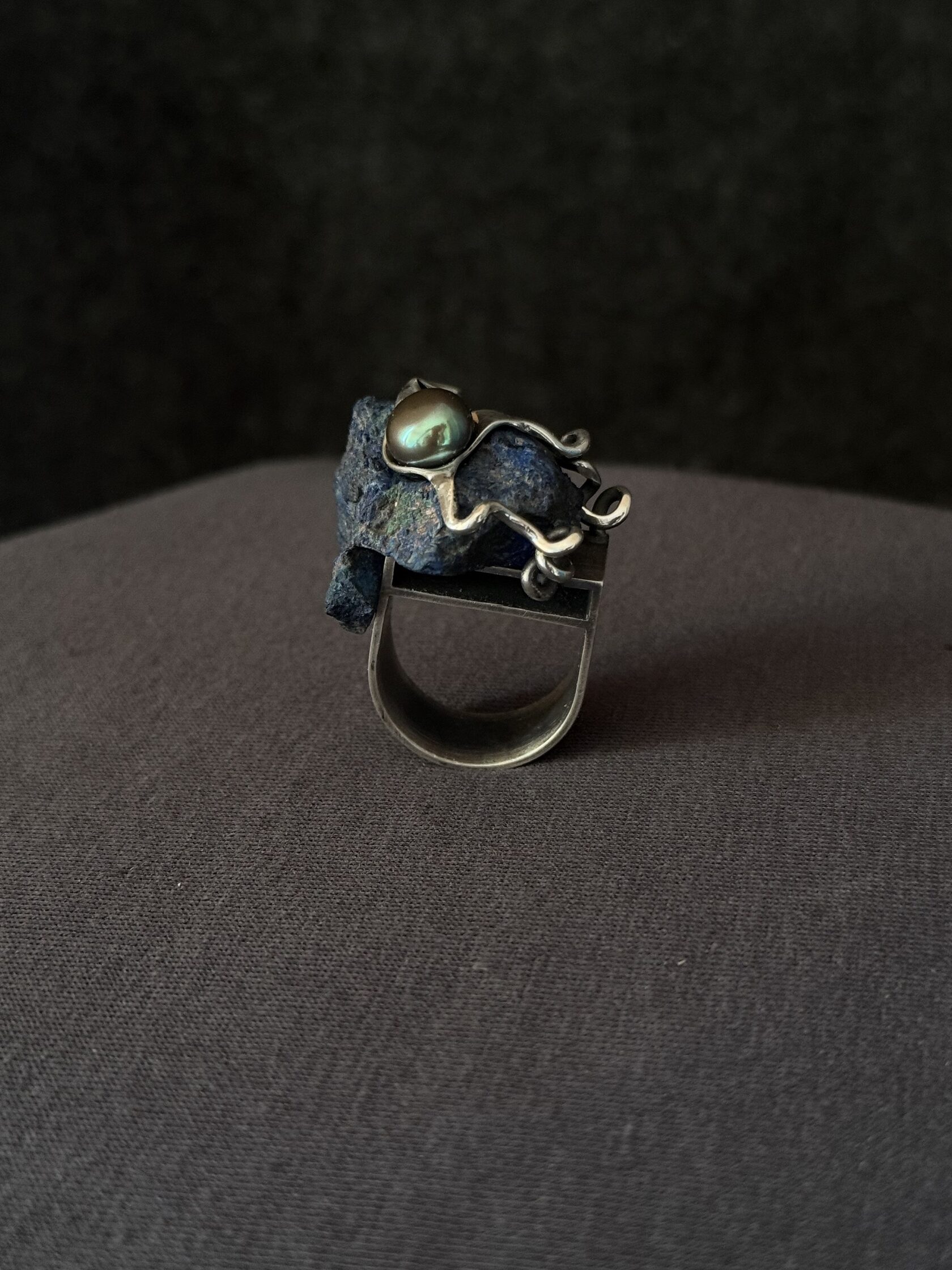
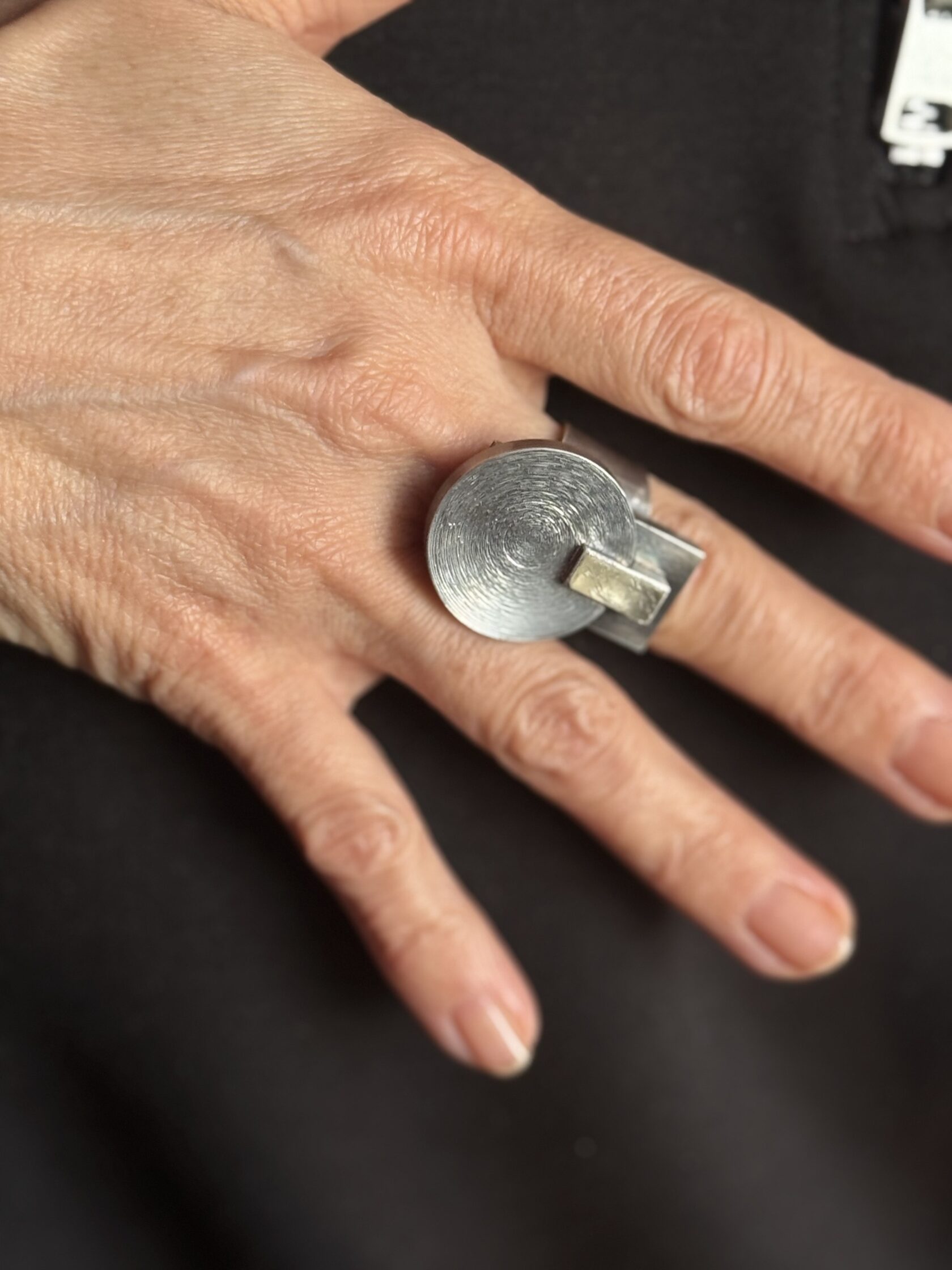
This piece shows how sterling silver can support a materially present form and a process-driven surface without needing to move into a more expensive gold alloy.
It does not prove that large rings “should be silver.” It simply shows why silver stays practical for substantial author-made forms.
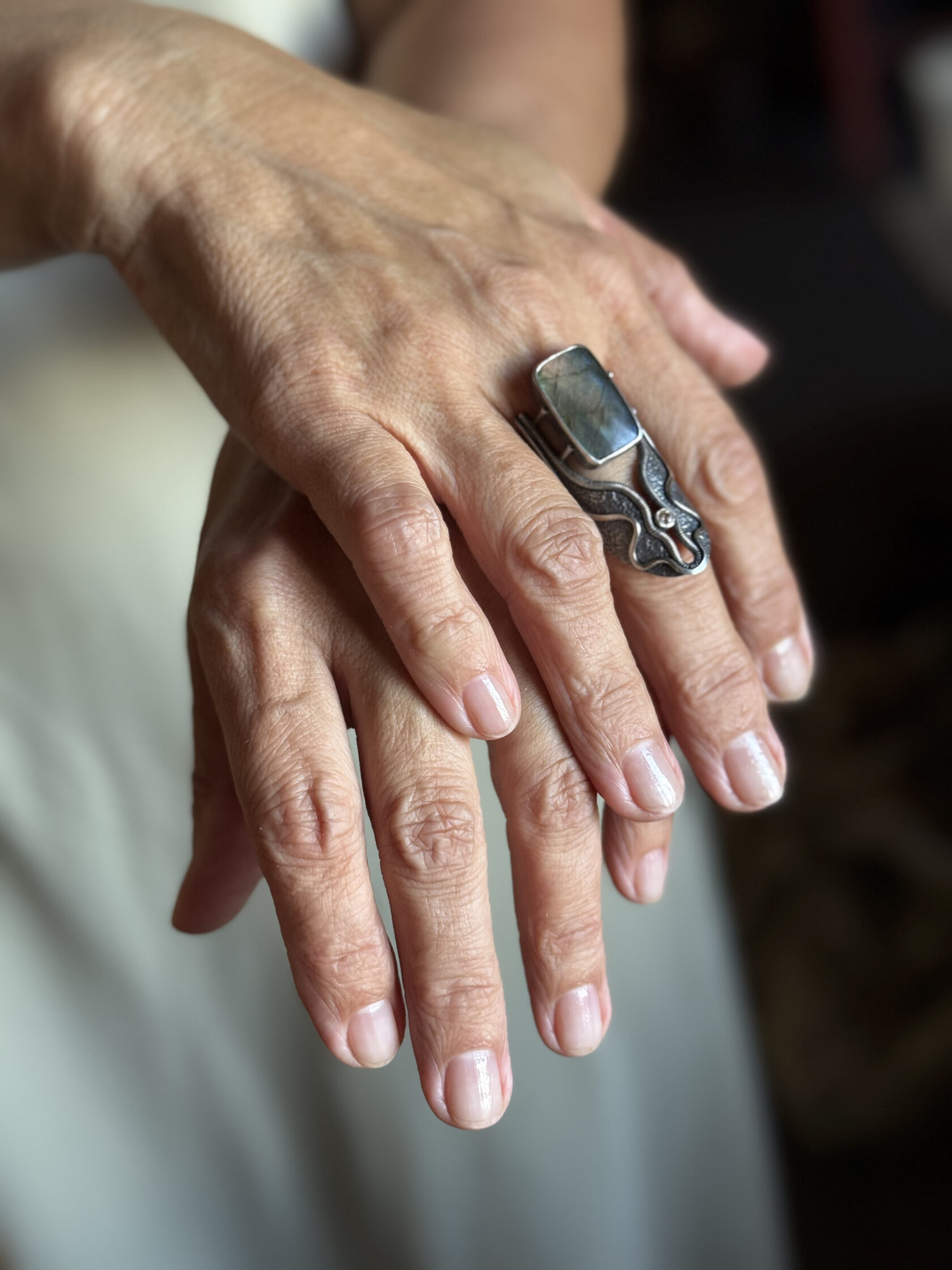
A large stone, pearl and spring-like elements read as one silver construction. It is a useful example of how scale makes metal quantity economically visible at the design stage.
How to choose between sterling silver and white gold
There is no universal winner. The better choice depends on budget, finish preference, tolerance for tarnish, tolerance for re-plating, sensitivity concerns, ring scale and how the piece will actually be worn.
Question
What to consider
Budget
White gold usually costs more in raw metal; this matters even more in large rings.
Desired finish
Do you want a bright cold surface, matte texture, dark patina or a visibly material surface?
Tarnish tolerance
If natural tarnish is unwelcome, sterling silver may require more active surface care.
Re-plating tolerance
If you do not want coating maintenance, ask whether the look of the white gold piece depends on rhodium plating.
Sensitivity
Ask for the actual alloy composition rather than assuming from the metal name.
Mass and scale
Sterling silver is often economically practical for large sculptural rings.
Frequency of wear
Any frequently worn ring will show wear; construction and maintenance matter in both metals.
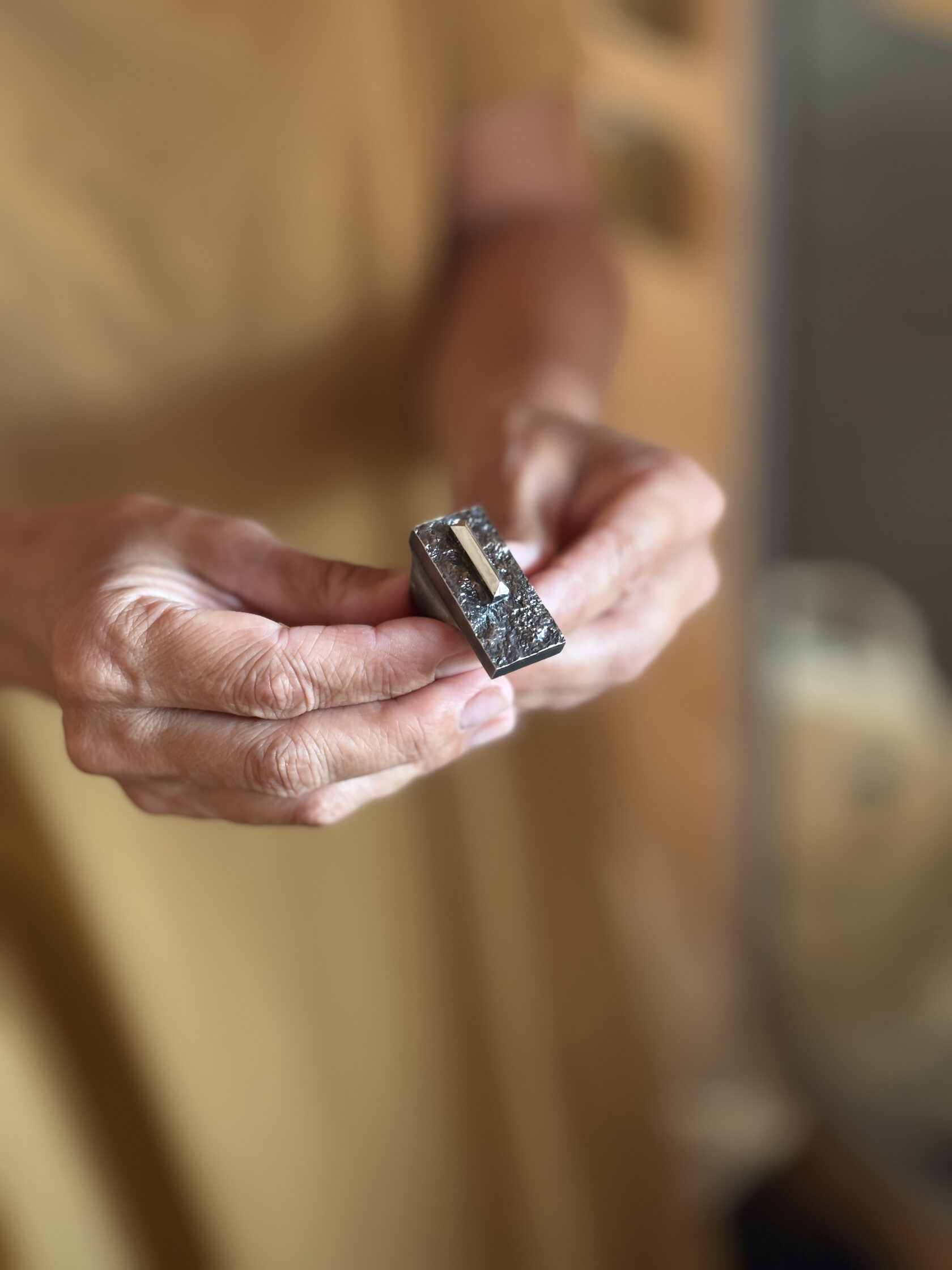
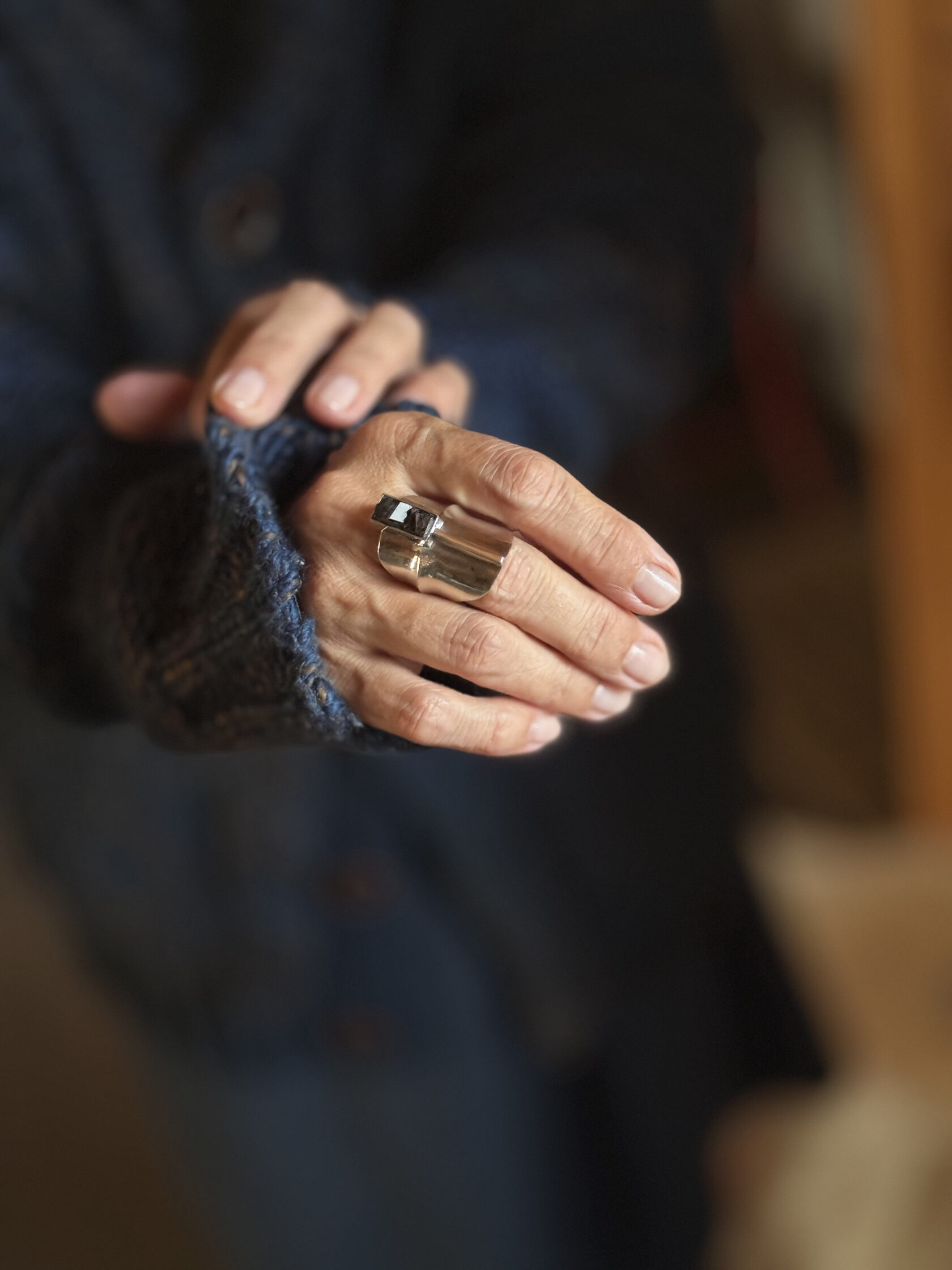
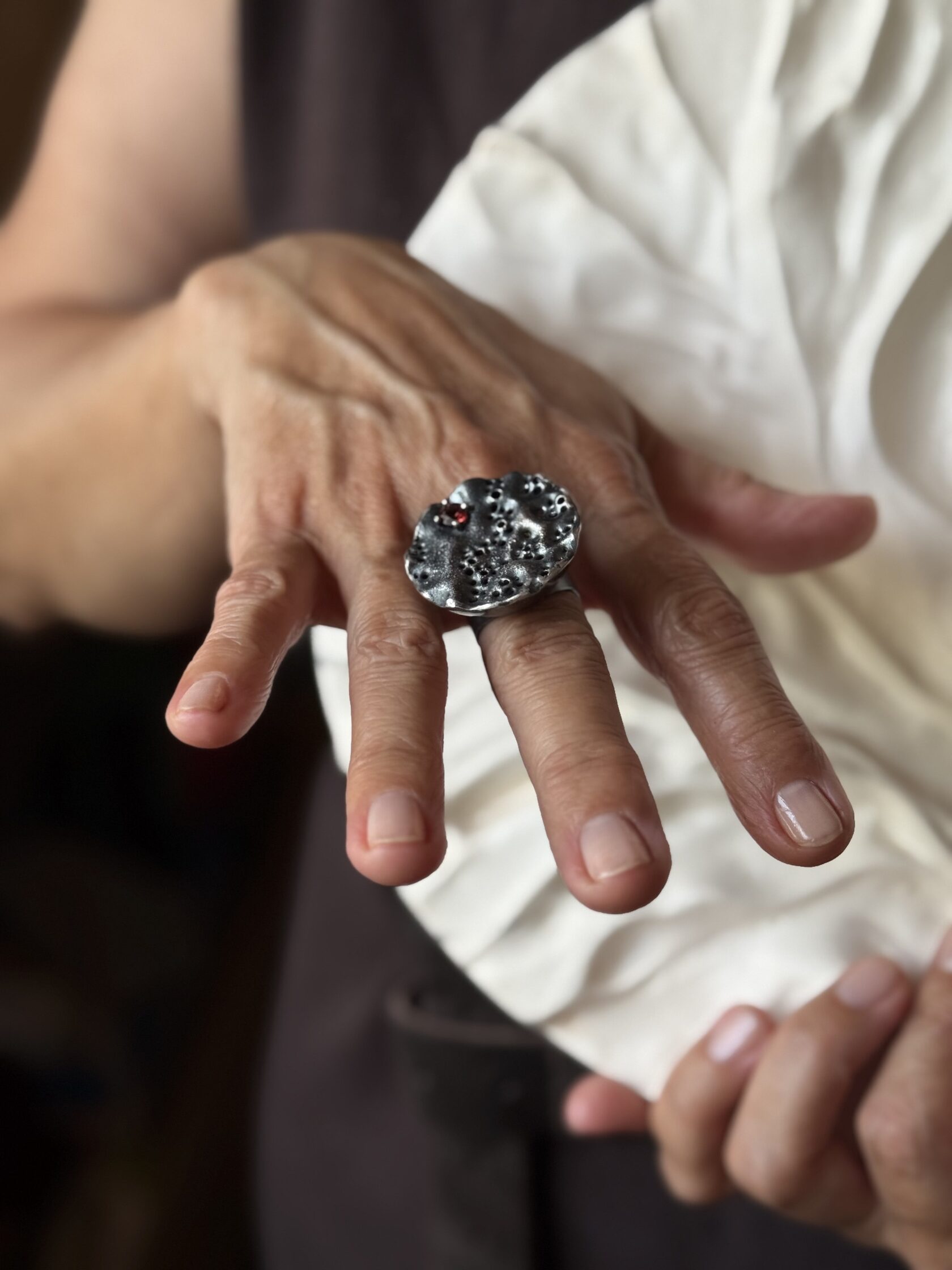
Below are real NP Studio works. All of them are sterling silver examples only, not white gold. They help show how different sterling silver can look: bright, polished, dark, patinated or heavily textured.
1. Do sterling silver and white gold look the same?
Sometimes they can look similar, especially in polished finishes and cool light, but they are different alloys. Color alone is not a reliable identifier.
2. What does 925 mean on sterling silver?
It means the alloy contains 92.5% silver by mass. It does not automatically reveal the exact composition of the remaining 7.5%.
3. What do 14K and 18K mean on white gold?
They describe the proportion of gold in the alloy. They are not a whiteness scale.
4. Is white gold always rhodium plated?
No. Many pieces are, but white gold and rhodium plating are not the same thing.
5. Does white gold tarnish like sterling silver?
Usually not in the same way, but that does not mean its surface never changes with wear.
6. Which scratches more easily, sterling silver or white gold?
Both can scratch. The real result depends on the alloy system, finish, construction and wear pattern.
7. Which metal needs more maintenance?
Sterling silver is often associated with tarnish care, while white gold may involve rhodium maintenance. Which feels “more” depends on what the wearer expects from the surface.
8. Does white gold always contain nickel?
No. White gold recipes vary. If sensitivity matters, ask for the specific alloy composition.
9. Why is white gold usually more expensive than sterling silver?
Usually because the raw metal costs more. But the final price also depends on weight, labor, construction, stones and design.
10. Which metal makes more sense for a large sculptural ring?
There is no universal winner. Sterling silver is often more practical in raw-metal cost for large forms, but the final choice depends on budget, artistic intent and material preference.
If you are choosing between sterling silver and white gold, it helps to discuss ring size, finish, surface character, stones and expected wear pattern at the same time.